


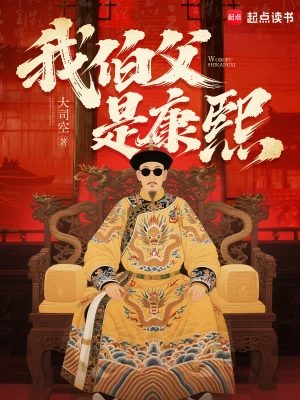
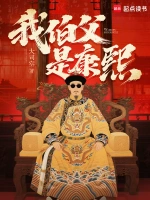
My Uncle Is the Kangxi Emperor
我伯父是康熙
- Status
- Ongoing
- Length
- 612k Words
- Genre
- Historical
- Subgenre
- Qing & Republican Era
- Updated
- 28d ago
- Source
- Qidian
Stats
Tags
Synopsis
More by this author
In booklists 9

Treasure Hunt Reading List 📚
A collection of books I’ve enjoyed, found worth reading, or wanted to gripe about.
For Fans of a Cold and Ruthless Style
Packed with substance. Personally, I prefer a colder, more ruthless style.
My Reading List
Some books I read from time to time
The General Store: A Bit of Everything
Twenty years of reading, and I'll read anything.


Night Watchman's Reading List
Every day, I'm digging for gold in the persimmon grove.
The Rising Sun: Good Books Soaring Up the Monthly Ticket Rankings
The first monthly-ticket chart surge of the new year features the stories most worth following at the year's start. Pick your opening-day centerpiece and get a head start on your 2026 reading!
Recently Subscribed Books
Keeping track of the books I've subscribed to recently


Echoes of Time
I've discovered that web fiction comes in all shapes and sizes, and it's absolutely delightful.
Books I'm Following Now, After 15 Years as a Veteran Bookworm
I've been reading web novels since 2002. Here are the books I'm following now, shared with everyone.
Readers also read
 Great Ming: His Father Is Useless, So He Must Summon the Founding Emperor
 Seizing the Direct Descendant in the Red Mansion
 A Literary Master in Ancient Greece
 Germany: 1914
 Simultaneous Transmigration: Is Everyone Starting Out in Prison?
 A Dream of the Beiyang Fleet
 In the Name of an American Citizen
 A Dual Status Panel Descends into the Abyss, and the Assassin's Potion Is Right at the Entrance
 The Black Witch's Journey to Another World
 Cleansing the Demons
 Story of Minglan: I'm a Son of the Xu Family
 The Beautiful Martial Arts Sect
 My Brother-in-Law, the Eighth Prince
 I Deceived Kangxi
 My Father Is Kangxi
 The Carefree Marquis
Reader comments 33
Google Translate
Here it comes
Millions Evacuated
Why are you pooping in my recommendations?
I never read novels of this type or similar types, but they appear in my recommendations for no reason and I can't remove them. It's really disgusting.
The Jin Dynasty was "the Holy Dynasty of Fuwei ruled the world with filial piety", while the Manchu Qing Dynasty was "the Holy Dynasty of Fuwei ruled the world with emotion". Even filial piety was gone, only affection and love. Whether it is a TV series or a novel, traveling to the Manchu Qing Dynasty is all about romance, love and competition for favor.
Is it okay to finish my father is Kangxi? The mountains have collapsed. It's fine to just finish it in a simple way with at most a dozen chapters.
The author's words are like farts and have no credibility at all.
The writing is long and stinky, and each one has a different flavor.
To be honest, I really didn't see that you attached great importance to this book. You have said that you are very busy with social activities since a few years ago. Everyone can understand it. Who hasn't socialized and used favors? Today is the tenth day of the Lunar New Year. You know how many updates there are. From a few days ago, you I said that I would resume normal updates and still update three times a day. Now it seems that I can do two updates a day. I would like to thank you. Now you ask me to believe that the book has five million words. I will not believe it at all. I also don't want to compare you with other authors. It's hard to say that you are the busiest in the world. I don't even bother to talk about the plot. I used to write daily rhythms well but now I can't escape. Sometimes you don't have to hold back to write thousands of words, and you don't bother to talk about real water and the like. I just want to say something from the bottom of my heart. , If you can't do it, don't say it. It's really not possible. You have to lose your character. I'm not like those who read silently and hold back after consuming. I can't bear it. You said you can't ignore your good grades. I really didn't see how much you value it!
Delete my post? You are so awesome. I applaud you. What I said yesterday must have touched the depths of your heart. It must be very uncomfortable.
To be honest, it was a bit too watery. It was the first time I experienced how reading a novel can make me tired. I won't say those words over and over again. Each time a word is used to refer to the protagonist's attitude, etc., And then he quotes from scriptures to say that so-and-so did what in ancient times, and what consequences were caused due to his attitude. It would be fine if it was only once or twice, but now it is almost the same throughout the whole novel. Whatever the protagonist does, says or even makes an action can lead to countless examples that are not related to the plot. I can't even tell whether I am reading a novel or a history book. I have read all the books written by the author, but without exception, I couldn't help but give up after subscribing more than halfway, or the author himself was a eunuch. This one is even better. It made me tired from reading it.
What mistakes are easy to make in historical novels❓
Before the Ming Dynasty, the emperor was not called "Emperor". In the Song Dynasty, he was mostly called "Guanjia", and in other dynasties, he was often called "Your Majesty". In the Ming Dynasty, the emperor was occasionally called "Emperor", and in most cases he was called "Your Majesty". After Kangxi of the Qing Dynasty, people began to be generally called "Emperor". Princes and princes call themselves: Princes in the pre-Qin and Han Dynasties can be called "Gu", and a few can be called "Ignores". After the Wei, Jin, Southern and Northern Dynasties, the title of "Ignores" gradually became exclusive to the emperor, and princes, princes and princes can only be called "Gu" or "I". Song, Yuan and Ming called themselves "I" or "I". Before the Qing Dynasty, princes and princes rarely called themselves "this king". Starting from the Kangxi year of the Qing Dynasty, princes generally called themselves "this king". In ancient times, women called themselves: "nujia" was a modest name for women after the Song Dynasty. Women in the Han and Tang Dynasties more often called themselves "concubine", and noble women could call themselves "I" and "I". Before the mid-Ming Dynasty, most dynasties used copper coins for daily transactions, with very little gold and silver. It was only in the mid-to-late Ming Dynasty that silver became the mainstream currency. -In the late Ming Dynasty, "meeting votes/deposit checks" appeared among the people. There were no unified rules. Most of them were deposits and withdrawals/exchange receipts from acquaintances or local circulation, and were not legal currency. In the early years of Daoguang in the Qing Dynasty (1823): Rishengchang Bank was established, and private banks began to issue standardized banknotes, focusing on cross-regional exchange. They were only circulated in Shanxi merchant trade circles and major commercial ports, and were not yet popular. In the third year of Xianfeng in the Qing Dynasty (1853): the official issued the Ministry of Revenue official banknotes (official banknotes), which were forced to circulate nationwide. At the same time, the network of private banknotes expanded to the whole country, and official and private banknotes ran parallel. The use of banknotes entered an explosive period and became the "starting point of popularization." High-leg tables and chairs only completely replaced the low tables for sitting on the floor in the Song Dynasty. During the Han and Tang dynasties, people knelt and sat on the tables to eat and discuss matters. The furniture was mainly low tables and couches. The memorial system was only established during the Kangxi period of the Qing Dynasty. Officials in the Tang and Song Dynasties used "memorials", "tables" and "statements" when submitting memorials, while in the Ming Dynasty they used "memorials" and "memorials". There is no such thing as "memo" or "zhezi". In ancient formal occasions, the hand-over gesture was performed with the left hand outside and the right hand inside. The right hand outside was a special "unlucky gift" for funerals. "Better greetings" is a unique etiquette of the Qing Dynasty. It was mostly used by subordinates to superiors and juniors to elders. During the Tang and Song dynasties, people often performed cross-hand salutes and bows to greet greetings when they met, and there was no such thing as "sending greetings". Before the Yuan Dynasty, subordinate officials rarely called superior officials "adult". In some dynasties, subordinates called eunuchs "adult", and in some dynasties, they called their parents and elders "adult". Beginning in the Yuan Dynasty, lower-level officials would occasionally call officials of second-rank and above "sir". From the middle and late Ming Dynasty, only officials of third-rank and above would be called "sir" by their subordinates. Officials with lower ranks could not be called "sir". However, in the late Ming Dynasty, there began to appear a few cases where officials above the fourth rank were called "adult". Before the mid-Qing Dynasty, following the rules of the Ming Dynasty, only officials of third rank or above would be called "adult". Starting from the mid-Qing Dynasty, calling officials "adult" gradually became common for lower-level officials. Attention! ! ! What is mentioned above is that lower-level officials refer to higher-level officials. No matter which dynasty, it is absolutely impossible for higher-level officials to call lower-level officials "sir". Some novels even write about emperors or nobles calling other officials "sir". This is simply contrary to Tiangang! ! ! Finally, let's talk about the problem of civilians calling officials Before the middle and late Qing Dynasty, civilians in various dynasties and generations called officials differently, and most of them called them "officials" and "masters". From the middle to late Qing Dynasty, civilians also called officials "adult". {"NickName":"Restriction and Supervision","UserId":417773267}