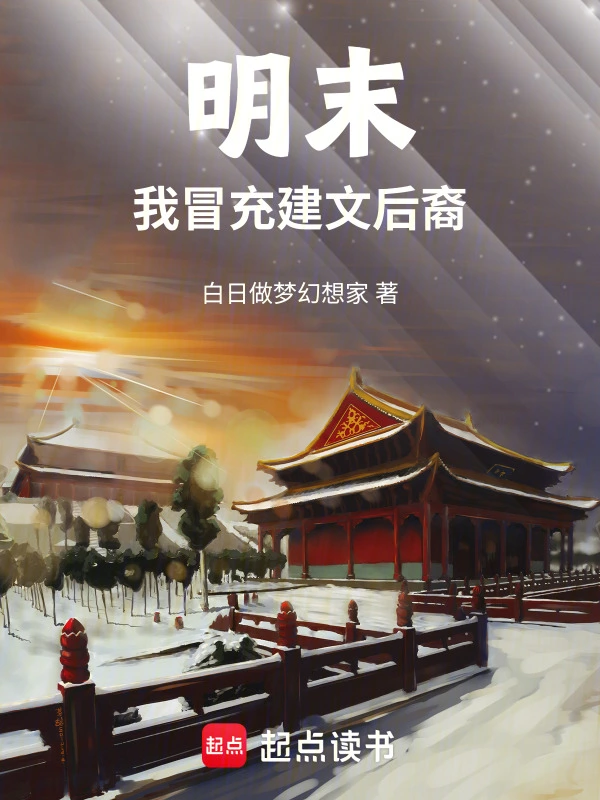
Late Ming: I Pose as a Descendant of the Jianwen Emperor
明末,我冒充建文后裔
- Status
- Ongoing
- Length
- 729k Words
- Genre
- Historical
- Audience
- Male
- Subgenre
- Song-Yuan-Ming Dynasties
- Updated
- 3d ago
- Source
- Qidian
Stats
202Chapters
812Votes
5.5kRecs
35.5kFans
Tags
Honours
Synopsis
More by this author
In booklists 3
【Historical Novels】
A history-loving bookworm sharing novels with friends who are out of things to read. If you like any of these, come back and give them a like. Thanks!
50Books1.3kFollows5dUpdated


If You Like Cool Style, You Can Check It Out
Full of useful information. I personally prefer the cold style
39Books46Follows1moUpdated



No System, Not Mainstream, Full of Character
There are so many popular novels, but you still feel like none of them suit your taste. Maybe your perspective has changed, or maybe you're longing for a certain kind of feeling. Then come on in and take a look! Most of the picks here aren't popular titles, but they're definitely worth savoring in peace.
11Books15Follows5dUpdated
Readers also read
 Germany: 1914
 Great Ming: His Father Is Useless, So He Must Summon the Founding Emperor
 A Literary Master in Ancient Greece
 Seizing the Direct Descendant in the Red Mansion
 The Tang Dynasty's Rebellious Grandson: Your Majesty, Call Me Crown Prince!
 Daming: Brother Emperor, You Have Harmed Me.
 I Am a Tyrant in Nanming
 You’ve Truly Made Things Difficult for Me, Your Majesty
 Late Tang: A Guide to Winning Over Your Father-in-Law
 Chongzhen: I Will Operate in Reverse and Revitalize the Ming Dynasty
 Great Ming: Moral Blackmail? I, Chongzhen, Have No Morals!
 No One Understands How to Save the Ming Dynasty Better Than I Do
 The Female Sword Fairy in the Dream Ran Out
 White Snake: Start by Cutting Off Hu Xuxian
Impersonating Jianwen. . . People pretend to be in order to have appeal. What appeal did you gain by pretending to be Jianwen during the Chongzhen period? Who is willing to follow his descendants who can even force his own uncle to self-immolate?
I don't know why the author wants to defend Huguang. This is the middle period of Chongzhen. Unless you can defeat it in March and immediately control the iron barrel, it's not that you look down on Zhang Xianzhong. The combat power of the rebel army is really not good at this time. When the regular army encounters a large number, it will not be able to attack you. The Huguang bandits will 100% send troops to attack you, and there is no time to develop. Don't talk about breaking into the army and resisting from the front. If you dare to join the bandits, you will definitely be punished. You might as well follow Huang Chao's example and go south, join the Kou Sanguang and join Hainan, there are grain production areas and high-quality coal and iron, recruit pirates to build your own ships, and have money, improve technology, build high walls, and accumulate grain, you will become the king when you are still a scholar. After this kind of development has been developed for two years and no one has disturbed it, the Northern Expedition can be carried out. First, take Fujian and Jiangxi, and then immigrate to Taiwan from Fujian to open up wasteland.
In the middle and late period of Chongzhen, this name was equivalent to nothing. To be honest, it was of no use. At this time, the world no longer cares about which king the emperor is.
Zhu Biao's lineage is unlikely to have descendants
Before Zhu Di entered the palace, he was a "Qing palace", and then he said that Emperor Jianwen burned himself. What is interesting is that the person in charge of the Qing palace was a Jurchen eunuch. There are no records of the Jiansu people and Wu Shu people who were descendants of Zhu Biao after the Chenghua period. Zhu Biao's youngest daughter, Zhu Di, refused to marry him, and Yongle died in depression for ten years. Until the 14th year of Yongle, when the academician Hu Guang returned to his hometown, he could still see the old people of Jianwen being cleaned up. Zheng He's voyages to the West and the southern expedition to Annan consumed southern military households in order to ensure Beijing's military superiority over the south, relieve the vassal king from his administrative power, increase the vassal king's salary and rewards, and lower the threshold for hereditary officers to join the ranks. He revised the records of Emperor Taizu of the Ming Dynasty three times and changed himself and the King of Zhou into legitimate sons. To put it bluntly, Zhu Yunwen's attempt to force him to rebel might have been all fabricated lies. People like him can keep Zhu Yunwen's descendants alive!
Who cares about Zhu Yunwen's descendants at this time? There are royal families everywhere. There are many royal families in Zhang Xianzhong's team, and they have no appeal at all.
During the rebellion in the late Ming Dynasty, identity was not important, so why did they pretend to be descendants of Jianwen?
Li Zicheng did not pretend to be a descendant of anyone. The late Ming Dynasty was different from the late Han Dynasty. At the end of the Ming Dynasty, birth was not valued at all. You could achieve things if you had the ability. You didn't need to pretend to be someone's descendant.
It is easy to write the history of the Ming Dynasty into some parts of the braided drama of the Qing Dynasty❗
"Slaves": Eunuchs in the Ming Dynasty called themselves "slaves". "Emperor": The Ming Dynasty rarely called the emperor this way, but it was commonly used in the Qing Dynasty. "son": The Ming Dynasty princes did not call themselves this in front of the emperor. "Aiqing": Before the Qing Dynasty, emperors rarely called officials this way. "Memorial, Zhezi": This only appeared in the Qing Dynasty. Although it is the same document as the memorial, the difference is huge. "Futai, Fantai, Niantai": These are the names of the Qing Dynasty. Those with "Tai" were all commonly used in the Qing Dynasty, and were rarely used in the Ming Dynasty. "Master": In the Ming Dynasty, only top nobles and first- and second-rank officials were allowed. State and county officials were not called "Master". "Sir": In the Ming Dynasty, it was only used for first- and second-rank officials, nobles, and elders of the father's generation. Prefecture and county officials below the third or fourth rank are not called adults. "Prince": In the Ming Dynasty, people rarely addressed princes as "Prince". This was commonly used in the Qing Dynasty. "My King": This was also a self-proclaimed name only in the Qing Dynasty. "Bank Notes": Only available in the mid-Qing Dynasty. At the end of the Ming Dynasty, only money orders circulated among local acquaintances. "Greetings": Etiquette among officials and bannermen in the Qing Dynasty. This etiquette did not exist in the Ming Dynasty. "Eunuch": In the Ming Dynasty, only senior eunuchs had official positions, and ordinary eunuchs were called chamberlains. Only in the Qing Dynasty did all eunuchs be collectively called eunuchs. "Our family": Eunuchs in the Ming Dynasty called themselves "I" to their subordinates, not our family. "Military Gate": the name used in the Qing Dynasty to address generals such as admirals. In the Ming Dynasty, civil officials such as governors and governors were called governors. "Kneeling Ceremony": Ming Dynasty officials temporarily knelt down when presenting to the emperor and stood up immediately after the ceremony. Subordinates do not easily bow down to superior officials. In the Qing Dynasty, emperors often knelt down to listen for a long time, and subordinates also generally knelt down and knelt down when meeting their superiors. There are also many words commonly used by banner people after the Qing Dynasty: Leave here, leave, errand, be an errand, return errand, master, reward some future, dare to love, grace,... Come,... Get panic, ye, persuade, weigh, send, dawdle, get rid of, we, laoshizi, fragrant pastry, alley, see the sky, noon, baba, scold, wait to see, place, arrange, in vain, scorn, chill Zi, estimate, make fun of, deft, guard against shortcomings, no way, wilted, bad, accurate, blind, coincidental, today, tomorrow, yesterday, the sun, body, follower, scold, laugh, toss, make up. Together, thinking about, talking about, seeing, hitting a snag... {"NickName":"Supervision and Restriction","UserId":406440657}
It's already the end of the Ming Dynasty, and the Ming Dynasty has exhausted its energy. It's just a direct rebellion. We must make Jianwen's descendants nondescript.
Can Jianwen's descendants earn a shared power bank with their reputation points?
If you look at the many uprisings in the late Ming Dynasty, none of them took up the banner of Jianwen, you will know that this is not good. To put it simply, the weak dare not, and the strong do not. What's more, in the novel, "To surrender to Zhang Xianzhong, you actually have to convince others to find an immediate boss for you?" What logic
After seeing the latest chapter 188, I have something to say to the author. Is Chongzhen a good emperor? Definitely not. It can be said that the demise of the Ming Dynasty had a lot to do with his personal character, governance methods and political character. He was like a blind child holding the sharpest sword. The harder he swung the sword, the more he destroyed the rickety old house. In the end, he exhausted his little strength and the house collapsed. He saw the ruins of the world and had the desire to clean up the country, but he was impatient and short-sighted, his governance methods were simple and crude, he was gullible but quickly disgusted with people, he had no self-awareness and was aloof and headstrong. You can even say that a faint king with some political skills and government can make the Ming Dynasty last a few more years. I agree. We hate his incompetence, so the end of the Ming Dynasty is a very attractive writing direction. We will imagine that if there is a person who has the ability, skill, political credibility, and can clear the fog of history, there will be a better timeline at that point in time. So we can criticize Chongzhen's character, criticize his ability and even curse him. However, Chongzhen is not a clown, he is a tragic figure. His abilities are not worthy of his position, but his strength, integrity, diligence, and frugality are rare. He is not a subjugated king in the conventional sense. His useless efforts throughout his life and Meishan's suicide can hold the final bottom line for Ming Dynasty and give him a little respect. Chapter 188 depicts that Chongzhen wanted 200,000 taels from Wang Chengen, which is a bit too much. It is a bit joking and ironic. Keep the most basic respect for Chongzhen and let the protagonist do what Chongzhen should have done but could not do. The writing is more heroic and charming, and it is more attractive to readers than stepping on a tragic historical figure into the mud.
The feasibility of attacking Huguang
There are two very popular comments in the comment area. One is that Jianwen people have no appeal, and the other is that they want to go south to invade Guangdong, Guangxi, and Fujian. Jianwen Xiaofan forced his own uncle to death, and Ming Chengzu Jingnan took away his nephew's throne. Xiaofan has something to do with the lower class people. It doesn't matter. Two hundred years later, people will only remember that their uncle snatched the throne from their nephew. The appeal of Jianwen's descendants is not only small but also very powerful. The people at the bottom need tangible benefits to bind them, but the scholars at the bottom must use orthodoxy to do so. Bundle up and distribute the land to the peasants at the bottom as profits. Naturally, there will be people to protect you. Join the army to protect your family and the land. With the righteous name, the scholars at the bottom will find a way out and are willing to help you manage the people. This is the basis for becoming a bandit. The rogue bandits could not defeat the regular army, but they could defeat the garrison army. The feasibility of successfully attacking Nanyang and attacking Xiangyang was very high. The court confirmed that they should be suppressed when they became sitting bandits. However, the Ming Dynasty was too large and bloated. It took time to send military orders to encircle and suppress troops. Moreover, Such major events as dividing the troops to encircle and suppress the bandits can only be carried out after asking Chongzhen for instructions. The buffer period is enough for Zhang Xianzhong's troops to develop and give money and land to the people. Some people are willing to join the army. Let them fight in the field against the regular army and they will basically collapse at the first touch. But let It is more than enough for them to defend the city and the land in their hands. It will take them a year to digest Huguang. Huguang is surrounded by mountains to the east and west, with the Yangtze River in the south as a buffer. It is mainly to defend against the regular army in the north. As for some people who say that the Jingchu Four Battles are difficult to defend, Ming The imperial capital has been at peace for more than two hundred years, and the southern soldiers are not good at fighting. They don't need to spend a lot of energy to guard against flanking attacks. Huguang, which has been developed for more than two hundred years in the Ming Dynasty, has not been destroyed by Chongzhen in eight years. It has land, people, and food, so it can be used as a base for development. In terms of expansion, the late Ming Dynasty has entered the age of firearms, vigorously developing firearms, and providing food and clothing to the soldiers. The author's writing style is not good and the writing is a bit mindless, but the idea is feasible, and some people just criticize without any basis. In the current Internet environment, readers don't care about the writing, but the author must criticize without thinking.
Zhu Yunwen gave birth to a son by a concubine, what's the use of pretending to be his descendant?
1) The early days when Huang Taiji established the Twenty-Four Solid Mountains (eight banners of Manchu, Mongolian, and Han) Under the same flag color (such as blue): Manchuria with blue, Mongolia with blue, and Han army with blue, all under the jurisdiction of the same flag owner (Baylor). This is the analogy you made before: a division (flag leader) has three brigades (Manchurian/Mongolian/Han military commanders) under its jurisdiction -The Xianglan Banner flag owner has the highest private power over the Manchurian commanders, Mongolian commanders, and Han military commanders under his flag. The Manchurian Gushan Ezhen, the Mongolian Gushan Ezhen, and the Han army Gushan Ezhen are just the administrative and military leaders in charge of these three armies, not the banner masters. When mobilizing, the flag owner can mobilize all the Manchu, Mongolian, and Han troops under the flag color. 2) After entering the customs, especially starting from Kangxi, the power slowly changed The imperial power continued to suppress the power of the flag owner. The flag owner gradually lost the real power to directly control the banner leaders and mobilize troops. Gushan Ezhen (Dutong) became an official appointed by the imperial court, directly responsible to the emperor, and was no longer entirely a retainer of the banner owner. The flag owner only retains the dignity of his status, as well as some of the etiquette within the flag, the old personal status privileges, and the military and political power of troop deployment and military affairs was returned to the emperor. In the early Qing Dynasty (the early years of Huang Taiji and Shunzhi): Jierhalang, the leader of the Xianglan Banner, had Manchu, Mongolian, and Han armies under his banner. To the Kangxi Dynasty: The Manchurian, Mongolian, and Han military commanders of Xianglan Banner were all officials appointed by Kangxi. The flag owner cannot arbitrarily order the mobilization of the Xianglan Han army and Xianglan Mongolia to go on an expedition. The emperor must issue an order to send troops. ❌ Wrong writing: The Eight Banners of Manchuria, the Eight Banners of Mongolia, and the Eight Banners of the Han Army are 24 independent flags, each with its own flag owner. The "Two Banners of the Han Army" can be sent separately to fight. ✅ Correct: There are only 8 flag colors and 8 flag owners. Each flag color is divided into three sets of military collars (Twenty-Four Solid Mountains) of the Manchu, Mongolian and Han armies. There is no independent "Han Army Flag Master" or "Mongolian Flag Master". During the war, when historians and generals described the results of the battle, they would only say: The Xianglan Banner was defeated. This means that the Manchu, Mongolian, and Han armies under Xianglan were defeated together. I will not write about the defeat of the Mongolian Banner and the Han Army Banner. Because they are just branches under the same flag.
The protagonist doesn't have a golden finger, so it doesn't look real. There are too few plots for sadistic villains, including emperors, thieves, slave builders, and gentry. In the final battle of the movie, the villain accounts for nearly half of the scenes. The villain is uncomfortable from beginning to end. This is the mode of cool writing.
Wearing an indispensable body enhancement device, the bacteria on the protagonist's body can kill half of the people of the Ming Dynasty.
What do you think about using the name Jianwen Emperor in the late Ming Dynasty?
At the end of the Ming Dynasty, Hongguang Longwu Yongli of the Southern Ming Dynasty and King Lu of the Supervisory State were all fighting among themselves. They actually went around under the banner of Emperor Jianwen. I really thought that the gang of Lianpi and Pingkou were good-natured. What happened to Zhu Di after he ascended the throne? It is not difficult to find the historical materials that compiled Zhu Yunwen. In the nearly 200 years after Yongle, Zhu Yunwen's reputation in officialdom and among the people was basically the same as that of Liu Ziye and Gao Yang. Even under the banner of Chen, Han, Han and Song, he sounded better than Jianwen.
Why should it be Jianwen's dumping offspring? Can't it be from Yun Tom?
At the end of the Ming Dynasty, you had to deal with a group of excessively greedy upper-class gentlemen, redistribute national assets, and establish a community idea that could accommodate the people at the bottom. Only then could it be possible to avoid the chaos of the Qing Dynasty. Otherwise, the people below should rebel, and they would not be able to fill their bellies with slogans such as the sun, moon, mountains, and rivers. The Manchu Qing Dynasty was indeed the leader of slave-owning bandits, but at least it knew how to give soup to the people below when it was full. Relying on an illusory descendant of Jianwen is not enough to achieve success. If you dare to reach south of the Yangtze River, all the masters in the dynasty will have to fuck you first. Unless there is a plug-in, otherwise it is really an unsolvable book.
I'm thinking that if the protagonist ascends the throne and becomes emperor, then should he open the coffin of Yan Ni's Ming Tombs, kill the corpses, and crush the bones and raise the ashes? 😁 After all, Yan Ni's position is that if he doesn't open the coffins of the Ming Tombs, kill the corpses, and raise the ashes, he would be sorry for the hatred he claims to be the enemy of the country and family.
Pretending to be a descendant of Jianwen is a good topic. If it really comes true, could it be the ancestor of the Ming Dynasty?
Shouldn't the founding emperor establish a new dynasty?
The decadent Ming Dynasty is not worth it. It will perish quickly. It will cause all the suffering to the people. Only the two unified dynasties perished because of the peasant uprising. The feudal system was further deepened on the basis of the Yuan Dynasty. In essence, the feudal dynasties are garbage. At this time, we can try to slowly develop capitalism.
If Zhang Xianzhong was so able to listen to advice, everyone wouldn't think that he can't win against Li Zicheng in his battle for the world... I want to give up after reading more than sixty chapters... But I don't have to read other books... Let's read it first...
It's still interesting to read the latest version.
I have read a lot of anti-Qing novels, and the concept of this one is okay. The Ming Dynasty cannot be supported, and Chongzhen will die. This person Chongzhen is really incompetent and furious. He should kill whether he should kill or kill indiscriminately. I wanted to become Emperor Hua, but the country I took over was also in turmoil. In the end, relying on the ability to recognize people and using the right people, I calmed down the civil strife, regained the Hetao, and became Hua Liting twice. Such a wise and powerful emperor was described as a coward by history books. Zhu Zhanji was a mediocre person. He took the initiative to abandon the strategic foundation laid by Zhu Di, abandoned the border guard post, and moved the guard post inward, causing Baozong to go on an expedition. In the latest chapter, Huang Taiji retreated, and Jianwen's descendants adjusted their strategy and turned around to attack Nanjing. This is really awesome, it writes something different. Then there is the judgment of Hong Chengchou, which is three-pointed and penetrating. Personally, I believe very much in the story of Hong Chengchou and Da Yuer's affair. Hong Chengchou is the ancestor of the Qing Dynasty, Fulin's father, and Xuan Ye's grandfather! In fact, it can also be seen from the portrait that Xuan Ye and Hong Chengchou are too similar.
Can you hold high the banner of Zhu Yuanzhang to endorse your own policies?
As a descendant of Jianwen, it is impossible not to emphasize Lao Zhu at all. I hope to praise Lao Zhu as a saint who has achieved victory like sweeping fallen leaves.
Not bad, there is fine juice
The descendant of Jianwen appears, and the famous scene in the last sentence of the first chapter is OK. The overall plot is OK. If it doesn't break a million words, it will probably reach the threshold of a fine product. It is about women who pull their crotches. Either study more or use less women.
Why is the protagonist a descendant of Jianwen? Wouldn't it be nice to be the founding emperor yourself?
The descendants of Jianwen don't have much appeal.
The top-level institutional design is too idealistic
A good system is a system that is suitable for the traffic conditions and governance situation at that time. Otherwise, it will be like the system in Dabian, with a bunch of various things mixed together, which is cumbersome and time-consuming, and cannot be implemented at all.
Just feel good, it's not necessary