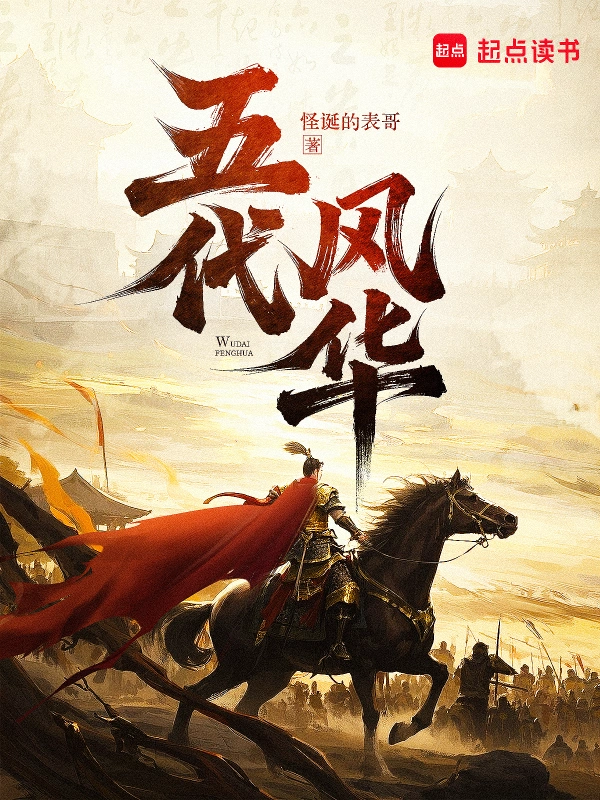
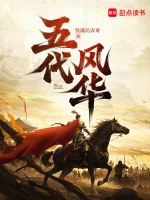
Splendor of the Five Dynasties
五代风华
- Status
- Ongoing
- Length
- 2.2M Words
- Genre
- Historical
- Audience
- Male
- Subgenre
- Five Dynasties Ten Kingdoms
- Updated
- 1d ago
- Source
- Qidian
Stats
Tags
Honours
Synopsis
More by this author
In booklists 16
One of the Best Products Ordered from Thousands of People: Volume 3
The choice of thousands of orders, every word is precious. In this book list, there is no mediocrity, only wonderful books that have been verified by thousands of people.
Chronicles of the Five Dynasties: Blades and Poems in Troubled Times
Heroes are vying for the throne, mountains and rivers are splitting apart, and you can watch the images of troubled times struggling, plotting, love and hate in the cracks of history - this most noisy and silent era is waiting for you to unfold.
Self-Reserved Books Area
This book list is purely a record of the books I want to read but haven't had the chance to read yet, so as not to forget about the wonderful uses I suddenly discovered.
History Book List
History bookworms, share this with friends who are book-hungry. If you think it's okay, come back and give it a like, thank you!
On the Road to Becoming a God
Master Shan has always insisted on recommending good books that he has read personally. Book lovers are welcome to give enthusiastic recommendations. In their free time, single owners will click on the book review area to browse friends' recommendation messages. Friends who have clicked in, please click to add it to your favorites. Thank you all and wish you a happy writing✌️✌️✌️


[Yu Feiyu Recommends Books] 2026 New and Popular Works! (First Half of the Year)
Record the new and popular male channel works in the first half of 2026. The [Wanding Time] mentioned in this booklet is the day when the Wanding badge is distributed to the work. In January, 13 new copies were ordered. In February, 6 new books were ordered. In March, 18 new copies were ordered. In April, 8 new books were ordered. In May, 17 new books were ordered. In June, 16 new copies were ordered.

Tingfeng Pavilion (A Small Pavilion for Collecting Good Books)
Please collect more and follow this book list. It will be updated from time to time. You are welcome to give the book list Amway and likes in the highlights of this book. Thank you (recently some of the included novels Amway have been deleted for some reason)


The Song Keeps Singing
It's a very distant thing for red beans to grow in the southern country Lovesickness is nothing, no one cares about it Drunk in the city that never sleeps, neon lights everywhere There's so much promiscuity in the wine glass Most willing to forget the ancient poems The most disdainful thing is lovesickness Guard your love and be afraid of people laughing Still afraid that people will see clearly Come see the red beans bloom again in spring I didn't see any lover picking it up Fireworks embrace
Historical Archives
The long river of history flows endlessly; the thousand-year scroll is full of ups and downs.


The Old Comrade Is Personally Chasing the Book List
Fifteen years of online writing, personal reading list. Although I have collected them, they are all good books that I am currently reading or have read.
Uncle Recommends Books
An old bookworm like an uncle will recommend books from time to time only if he likes them. Be serious and have attitude. I started reading classics in the fourth grade of elementary school. I started reading martial arts in the second grade of middle school. I started reading Dragon Sky in college. I bought physical books at work and read Starting Point. Since joining the workforce, I have maintained a daily reading habit for more than 20 years. Checked out the forum. Rich appreciation experien

Book List for Greasy Middle-Aged Men 2
The first book list is full! Keep recommending!
History Book List, Mainly History.
Mainly history. Full Stars: Ten stars, you can watch it from one star to the next.
You and I Are Different
Color

Personal Collection
Novels that I like to read
Pasture...
None
Readers also read
 Germany: 1914
 Seizing the Direct Descendant in the Red Mansion
 A Literary Master in Ancient Greece
 Great Ming: His Father Is Useless, So He Must Summon the Founding Emperor
 Simultaneous Transmigration: Is Everyone Starting Out in Prison?
 Looking North to the Realm
 The False Man of Jiangzuo
 A Great Industrial Nation, Starting with a Fake Student Abroad
 A Dual Status Panel Descends into the Abyss, and the Assassin's Potion Is Right at the Entrance
 A Nobody Becomes King
 The Wei and Jin Dynasties Don’t Bow to Zhou
 Prime Minister in White
 Jiangshan Scenery
 I'm Not Foolish, I'm Just Purehearted
 Mantang Huacai
 End of Song Dynasty
 Come and Find
Book review:
1. The setting of the protagonist Wu Tai is good. When the Five Dynasties and Ten Kingdoms were fighting against the Han Dynasty, there were often middle and low-level generals fighting with each other, which was conducive to the transition of early meritorious service; 2. The era was well chosen. The later Han Dynasty was exhausted, as long as it can become a great It has swallowed up all the checkpoints in the north, and it is just a matter of time in the south. If you don't look for trouble, you won't be too aggrieved; 3. The title of the book is not good, the appeal is average, and the story you want to tell cannot be seen; 4. The first chapter is not well written. , It can be seen that the author wants to throw a joke, but the three consecutive questions and answers and two turns are very blunt and brainless; 5. The details in the latter part are very good and immersive, but it gives me the feeling of political struggle, but this book It's the fifth generation, and big guys like Feng Dao live cautiously... The protagonist jumps up and down like a jester; Overall rating: 3 stars Character: minus one point Plot development: minus one point
The protagonist is so good at doing things and keeps his head stuck in his belt
If he was still a small soldier and an officer, he would take risks every day. Since he came back to attack the capital, he has been taking risks. When he went to Chu as an envoy, he had been showing off his personal bravery. It is good to lead by example in a war, but often a brother goes on adventures without guidance. It does not look like a Machiavellian historical novel, but like a martial arts novel.
Cousin's new historical work is set against the backdrop of the Five Dynasties and Ten Kingdoms, the troubled times with the most frequent regime changes in history. It tells the story of the protagonist's rise in troubled times. The work is as solid as ever in terms of historical research. The opening chapter cuts into major events such as the historian's family extermination and Guo Wei's seizure of power, making the story full of compactness and tension. At the same time, it also touches on officialdom etiquette, market The delicate description of life in the well creates a strong sense of immersion in the era. The protagonist's growth experience from a small person to gradually affecting the course of history is also quite gripping. The plots of retreating to advance and ambushes not only demonstrate the protagonist's wisdom and strength, but also are a sideways portrayal of the cruel reality of the Five Dynasties period when human life was insignificant.
The writing is wonderful, the plot is fascinating, the character settings are reasonable, and the logic is clear. Those imagination stories are simply unreadable.
The two authors I read before have both opened new books and they are both chapter 1. I just saw it🤣
It's too difficult to catch up. Just keep it, I'm afraid my cousin won't have the motivation.
Happy New Year
Two monthly tickets, I hope it will be a wonderful story, Mantang Huacai is not to my taste...
The requirements are not high, just have the level of the late Song Dynasty
After reading Chapter 233, most of them have a lot of scenes with women. Do you need to keep using women to advance the plot? I feel a little tired.
Watch "Five Generations of Elegance" on Google Gemini
"Five Generations of Elegance" is a milestone in the field of online historical novels. The author "Weird Cousin" uses extremely high writing power to write the extremely chaotic and fragmented history of the Five Dynasties and Ten Kingdoms into a magnificent epic. This work is not only a wonderful novel, but also an accurate historical painting. The following is a breakdown of why this work deserves the highest praise from four in-depth dimensions: The "hard-core" strength of historical research The Five Dynasties and Ten Kingdoms (907-979 AD) is one of the most difficult periods to write about in Chinese history. Regime changes are like a revolving lantern, the relationships between characters are complicated, and historical records are full of contradictions. •High degree of restoration: Weird Cousin shows an astonishing amount of reading of historical materials. He had a profound study of the geographical territory, military establishment, economic conditions and even the tax system at that time. •No plug-ins to reduce intelligence: Many historical novels will have the protagonist use modern technology to "crush" the ancients. However, this book respects the laws of history. Every step forward by the protagonist is a reasonable deduction based on the material, population and political games at that time. Vivid "group portrait" creation The most fascinating thing about this novel is that it is not a one-man show of the protagonist, but a symphony of all the heroes of that era. •Breaking stereotypes: historical villains or losers are given flesh and blood in the book. The author writes about their helplessness, their ambition, and why they made that choice at that point. •IQ Online's opponents: The politicians and generals in the book are all excellent people. Every court struggle and every battlefield game is a collision of top wisdom, which makes readers hooked. Grand and exquisite "strategic" vision When my weird cousin writes about war, he definitely does not just write about how brave the generals are and how unafraid of death the soldiers are. •Wars are about logistics: the book spends a lot of space on how to transport grain and grass, how to cultivate war horses, and how to support the local economy. This "big picture view" makes war scenes extremely real. • Geopolitical deduction: The author analyzes the strategic position of the Sixteen States of Youyun, the tug-of-war between the separatist regime in the south and the Central Plains dynasty in the north as clearly as a textbook. The "heavy sense of history" in the bones The text of "Five Dynasties Elegance" has a calm and grand ancient style, but it is not obscure when reading. •Feelings of compassion: In that cruel and troubled time when "he who has strong soldiers and horses is the emperor", the author did not blindly praise the war, but saw the suffering of the people at the bottom through the eyes of the protagonist. •Chasing the Glimmer of Order: The core of the entire book is the protagonist's attempt to re-establish civilization and order among the ruins. This sense of mission gives this novel a spiritual core that transcends ordinary cool novels. In summary, "Five Dynasties" is a historical masterpiece that needs to be calmed down and savored carefully. The eccentric cousin used his craftsman-like spirit to light a fire in the chaotic Five Dynasties period, illuminating the unique character and splendor of that era.
DeepSeek watches "Five Generations of Elegance"
Dancing on the Tip of the Knife: On the Troubled Times Narrative and Mortal Epic of "The Elegance of the Five Dynasties" In the creative pedigree of Weird Cousin, the master of online literature, "The Elegance of the Five Dynasties" occupies a special position. This historical novel, serialized on the Qidian Chinese website, exceeded 10,000 orders in March 2026, becoming another milestone for the author after "The End of the Song Dynasty" and "The Brilliance of the Tang Dynasty". However, it is about much more than commercial achievements - it is a survival book about "how ordinary people survive the meat grinder of history." Troubled times as the starting point of the narrative The Five Dynasties and Ten Kingdoms were one of the most broken and darkest periods in Chinese history. It is no accident that "The Elegance of the Five Dynasties" chooses the third year of Qianyou in the Later Han Dynasty as the starting point of its narrative. In this year, Emperor Yin Liu Chengyou killed Minister Gu Ming, Guo Wei raised his army, the Later Han Dynasty was overthrown, and the Central Plains was devastated. The author uses a slave named "Xiao Yi" in Shi Hongzhao's mansion as an incision to compress the grand history into the narrow gap of individual destiny. The identity of the protagonist in his previous life is very ingenious - a modern stuntman. This setting strips away the common "knowledge crushing" privileges of time travellers: he is not a historian and cannot predict every political node; he is not an engineer and cannot bring about a technological revolution. All he has is a body that can fight and the ability to observe words and emotions that he has honed on the set. This "low-profile golden finger" is precisely the most precious quality of "Five Generations of Elegance": it allows the protagonist's every survival to be based on the fight of flesh and blood and the extreme operation of the mind. The Grammar of Survival The narrative rhythm of the novel is like an ever-accelerating escape. From the strife within the Shi's Mansion, to the bloodbath after the emperor's attack, to the destruction of the Guo Mansion and the hiding in Kaifeng City, the disasters are increasing layer by layer, and the sense of oppression follows. The protagonist doesn't get a moment to breathe, and neither does the reader. Behind this narrative strategy is a precise grasp of the essence of the Five Dynasties and Ten Kingdoms. In that era when "the one with strong soldiers and horses was the emperor", the boundaries between loyalty and betrayal were as blurred as fog, and today's powerful ministers were tomorrow's prisoners. The arrogance of the Shi family and his son, the hasty evacuation of Guo Wei's house, and the helpless feeling of watching the benefactor's family being massacred in the attic of the Daxiangguo Temple - these scenes constitute the most naked footnotes on troubled times: in the face of the torrent of history, what individual wisdom and courage can change is often just to live one more day. The protagonist's "wisdom" therefore has a special quality. It is not the wisdom of a strategist who is strategizing, but the survival instinct after being forced into a corner: sniffing out a conspiracy from a "murder mission", making false promises in the wooing of marriage and marriage, and looking for a gap in the city under martial law. This wisdom is bottom-level, physical, and steeped in fear and calculation. As a commentator said, his "ruthlessness" was forced out of troubled times. The Weight of Mortals The most moving power of "Five Dynasties" comes from its gaze on "mortals". The protagonist is on the run with the lives of three children on his shoulders. This setting itself is a narrative statement: in addition to the grand narrative of the heroic epic, there is a heavier responsibility - to keep the innocent alive. The author uses solid writing to outline the texture of that era: slaves were filled in wells like grass, dignitaries were wiped out overnight, loyal servants died for their old masters without their masters knowing it. These details add up to a breathtaking sense of immersion. The reader follows the protagonist "dancing on the knife's edge of history", every step he takes is on the knife's edge, and every breath he takes may be the last. It is worth noting that this immersion forms an interesting dialogue with the author's previous creative trajectory. Some readers pointed out that the writing skills displayed in "Five Dynasties" are "obviously stronger than that of "Man Tang Huacai". Compared with the previous work, in which the protagonist gradually moved toward a "revolutionary narrative", "Five Generations" is restrained and restrained, compressing all the dramatic tension into survival itself. Living, in that era, was the greatest resistance. New possibilities for historical online articles In the genre of historical online articles, "Five Dynasties Elegance" represents a shift worthy of attention. It has neither the mechanical deity of the "system flow" nor the steady management of the "farming flow", and is closer to a "survival horror" type logic. The cruelty of history is no longer an object to be conquered here, but a constant threat. This shift may be related to the changes in the tastes of online readers, but the more fundamental reason lies in the author's respect for history itself. The charm of Five Dynasties and Ten Kingdoms lies precisely in its "incomprehensibility": Why did Shi Hongzhao know the danger but refused to take the first step? Why did Guo Wei's family still struggle to escape death even though they were aware of the crisis? "Five Generations of Elegance" does not give cheap answers, but allows the protagonist and readers to explore together in the fog of history. As of March 2026, the novel has been serialized to 1.18 Million words, and the protagonist is still on the run. This unfinished journey itself is a metaphor: in the world of Five Dynasties and Ten Kingdoms, there is no end, only the next crisis. The value of "Five Dynasties" may lie in its refusal to provide false comfort - it tells us that in an era when rites and music are broken, surviving itself is a kind of heroism. Weird Cousin used this work to prove that the charm of historical novels does not lie in allowing readers to take on the role of princes and generals, but in allowing us to understand: the tenacity with which ordinary people who disappeared silently in the cracks of history books resisted the crushing fate of fate.
Come on, come on, update well
10 Coins on the first floor, capped by the leader!
As mentioned, I hope my cousin can make a breakthrough this time and not stay in his comfort zone. It's really good to dance with swords all the time, but it makes you tired all the time. Farming and development are also necessary~
An author with obvious strengths and weaknesses
Conspiracies can be written, but machinations are not. I can write about the small-scale battle between trapped beasts, but I can't write about the large-scale battle and farming. The sketches that highlight the character's characteristics are very strong, deeply shaping the character's heart and not changing well. Therefore, the character is superficial and has lust but no love. The most fatal thing is that the author is path-dependent on the turning point of the crisis and has no confidence in creating tension in a calm plot. Therefore, the protagonist can never settle down and is always fighting to the death. There is no condition to create conditions to drag the protagonist into a crisis... It is a pity that the starting point is not watery nowadays. The writing has the quality of a movie, but it is too deliberate and makes people feel uncomfortable.
Aren't you going to stop writing history in this life? Why are you back again? Let yourself go and let go of history. I can afford another fifty years.
Se Ruduo, my dear Se Ruduo, we miss you 🙂
Yan Jianfei: Questioning the authenticity of the unification strategy of "first south and then north" in the early Song Dynasty 2509-094 (total issue 3211) originally published in the 34th issue of "Song Dynasty Cultural Studies"
Share Mr. Yan Jianfei's latest article summary In the study of Song history, the early Song Dynasty is one of the fields with the most abundant research results, and it is also the stage with the least historical materials. The limited historical data makes it easy for scholars to grasp the historical development context of this period, and also makes this stage more easily restricted by narratives, which in turn obscures the true face of history. The unification strategy of "first south, then north" is a typical example. First of all, it needs to be explained that the people of the Song Dynasty did not have a clear statement of prioritizing the south and then the north. The summary of the unification process in the early Song Dynasty by the scholars of the first south and then the north means that in the unification plan, Song Taizu and Zhao Pu gave priority to the elimination of the southern regime, and then sent troops to the Northern Han and Khitan. Regarding the strategy of unifying the north first from the south and then the north in the early Song Dynasty, there were some critics, some affirmers, and some people discussed its implementation. However, the premise that existing research has neglected is whether this strategy actually exists. If there was no unification strategy from the south to the north in the early Song Dynasty, then the existing research is undoubtedly a castle in the air. To confirm the authenticity of this strategy, one must first review the relevant documentation. 1. Document review of the unification strategy of "first south and then north" There are four relevant literature records of the unification strategy of "first south and then north" in the early Song Dynasty: Song Taizu visited Zhang Yongde to attack the Northern Han Dynasty, Song Taizu visited Zhang Hui to attack the Northern Han Dynasty, Song Taizu visited Zhao Pu on a snowy night, and Song Taizu and Taizong discussed unification. The visit of Emperor Taizu of the Song Dynasty to Zhang Yongde can be found in the "Xuzhi Tongjian Changbian" (referred to as "The Changbian") and "History of the Song Dynasty·Biography of Zhang Yongde". "Changbian" says: Zhongwu Jiedu envoy and concurrently serving Zhongyangqu Zhang Yongde moved to Wusheng Jiedushi envoy. ... At that time, the general had something to do in the Northern Han Dynasty. Due to the secret visit strategy, Yongde said: "Taiyuan's soldiers are small but strong, and they are supported by Khitan, so they cannot be taken hastily. I foolishly thought that there would be more guerrillas every year to disturb their fields, so I still sent spies to Khitan to cut off their aid first, and then take advantage of it." It said: "Good." "Song History·Zhang Yongde Biography" records are simpler, and there is no information from the "Changbian". According to "Changbian", in August of the first year of Jianlong (960), Zhang Yongde entered the court, and Song Taizu consulted him about the attack on the Northern Han Dynasty. Zhang Yongde advocated delaying the attack on the Northern Han Dynasty, reducing the strength of the Northern Han Dynasty by interfering with the farming of the Northern Han Dynasty, and alienating the relationship between the Northern Han Dynasty and the Khitan. The story of Song Taizu's visit to Huazhou regiment training envoy Zhang Hui is found in "Changbian" and "Song History". "History of the Song Dynasty·Biography of Zhang Hui" says: In the second year of Jianlong, before Taiyuan was conquered, he went to the imperial court to ask for advice. Hui said: "Ze Lu was rebelled against Li Jun, and the wounds have not recovered. The army is booming, and I am afraid of heavy manpower difficulties. It is better to fight for the army and educate the people, and to wait for the rich to make plans." He was given clothes, gold belts, saddles and horses, and ordered to return to the state. "Long Edition" has no escape information. Zhang Hui also suggested delaying the attack on the Northern Han Dynasty because Zelu's people had not recovered their strength. Both Zhang Yongde and Zhang Hui advocated delaying the attack on the Northern Han Dynasty. The difference was that what Zhang Yongde advocated was a long-term strategy, while what Zhang Hui advocated was an immediate strategy. However, none of them mentioned policies towards other regimes. Considering the possibility that the Song Dynasty had not gotten rid of the sixth generation of short-lived dynasty at that time, people at the time did not necessarily think that the Song Dynasty could be unified. Zhang Yongde and Zhang Hui do not necessarily have a unification blueprint in mind: while advocating "Back North", they should "First South" to promote the unification process. It is logically untenable to regard the above two historical materials as supporting materials for the policy of first south and then north in the early Song Dynasty. The most important historical material of the strategy of first south and then north is Song Taizu's visit to Zhao Pu on a snowy night. This incident can be found in "Shao Hearing and Seeing Records", "Changbian", "Eastern Capital History·Zhao Pu Biography", "Song History·Zhao Pu Biography", etc. The "Shao Family Hearing and Seeing Records" written by Shao Bowen in the second year of Shaoxing (1132) is the earliest and detailed record: Zhao Pu did not dare to take off his clothes every time he retired from the court. One day it snowed heavily, and towards night, Pu said that the emperor would not come out again. After a while, after hearing the knocking on the door, everyone came out, and the emperor stood in the wind and snow. Everyone was anxious to greet him, and the emperor said, "I have made an appointment with the King of Jin." Taizong had arrived, and they all sat in the general hall on the ground under heavy grass and burned meat over hot charcoal. When Pu's wife was drinking wine, the emperor called her as his sister-in-law. Pu calmly asked: "The night has been cold for a long time, why did your Majesty come out?" The emperor said: "I couldn't sleep, and there were other people's homes outside the bed, so I came to see you." Pu said: "Your Majesty, the world is small? Today is the time for the southern and northern expeditions. I hope to hear what is planned." The emperor said: "I want to go to Taiyuan." Pu said after a while. : "I don't know what I know." The emperor asked why, and Pu said: "Taiyuan is on the west and north sides. If we attack it in one fell swoop, I will be responsible for the troubles on both sides. Why not stay until we can flatten the countries, and then there will be no escape in the land of small targets." The emperor smiled and said, "That's what I want, and I will test your ears." Then he decided on the plan for Jiangnan. There are many problems with this record. Li Tao pointed out: "According to Taizu's words, 'There are other people's homes outside the bed', so Jing and Hu have not yet been leveled at this time. Taizong Yin Kaifeng in the autumn of the second year of Jianlong, and the king of Jin in the sixth year of Kaibao. Shao Bowen's "Seeing and Wedding Records" says, ' "I have made an appointment with the King of Jin", so I changed it to "my brother", which is true. It also says "the plan for the south of the Yangtze River has begun to be decided", which is particularly wrong. If it were called Jing, Hu and Xichuan, it would be correct. ""Changbian" has been rewritten accordingly. Judging from the annotations in "Changbian", although Li Tao dated the visit to Pu on a snowy night to July of the first year of Kaibao, he believed that this conversation should be before the Pingjing Lake in the first year of Qiande (963). "History of Song Dynasty·Zhao Pu Biography" was written between the second and fifth years of Qiande. "Dongdu Shilue·Zhao Pu Biography" was written five years after Qiande. The specific time is not mentioned, but it provides new information, that is, the wife of Zhao Pu, who was a wine trader, was the daughter of He Ning, the prime minister of the later Jin Dynasty. Based on the above situation and the heavy snow, Liang Wei speculated that the snowy night visit to Pu was in the third year of Qiande; Liu Zhe, based on the title of "King of Jin", believed that it should be in the sixth or seventh year of Kaibao. There are obvious problems with Liu Zhezhi's theory. On the 23rd day of the eighth month of the sixth year of Kaibao, Zhao Pu, the prime minister, was dismissed as the governor of the three cities of Heyang because of his dictatorship. On the 20th day of the ninth month, Zhao Guangyi, the Yin of Kaifeng, was granted the title of King of Jin. Therefore, Zhao Guangyi was granted the title of Queen of the Jin Dynasty and Zhao Pu should have left the capital. Even if he had not left the capital, given Song Taizu's disgusting attitude towards Zhao Pu at the time, it was impossible for the three of them to gather together in the sixth year of Kaibao to discuss the unification matter. In addition to the above problems, there is another major flaw in "Visiting Pu on a Snowy Night" that scholars have paid less attention to. That is, when Taizu asked about conquering the Northern Han Dynasty, Zhao Pu replied: "Taiyuan is on both sides of the west and north. If you move down in one fell swoop, I will be solely responsible for the troubles on both sides." This is completely inconsistent with the border defense situation of Song Taizu's dynasty. The northern frontiers of the Taizu Dynasty of the Song Dynasty were the Khitan and the Northern Han Dynasty, and the western part of the Northern Han Dynasty were the vassal towns of Fuzhou, Linzhou, and Xiazhou of the Song Dynasty. There were no frontier troubles. Although these vassal towns maintained their semi-independence, they did not act domineeringly during the Taizu Dynasty. Instead, they sent troops to attack the Northern Han Dynasty many times. And judging from the wars between the Later Jin Dynasty, the Northern Song Dynasty and the Liao Dynasty, the main battlefield was always in Hebei. Due to the complex terrain, Hedong was not the route for the Khitan's southern attack. The Northern Han Dynasty and the Khitan repeatedly attacked the Later Zhou Dynasty and the Northern Song Dynasty, which shows that the existence of the Northern Han Dynasty not only failed to shield the Central Plains Dynasty, but also intensified the northern border troubles of the Central Plains Dynasty. The Song Dynasty's garrison troops on the Song-Han border also far exceeded those on the Song-Liao border (details below). Therefore, it is impossible for Zhao Pu, the prime minister of Song Taizu's dynasty, to say, "Taiyuan is on both sides of the west and north. If I move down in one fell swoop, I will be solely responsible for the troubles on both sides." The authenticity of the story of the visit to Pu on a snowy night is naturally greatly reduced. As we all know, after Song Taizong dynasty Li Jiqian rebelled against the Song Dynasty, there were border troubles to the west of Hedong; but the border troubles in the west were compared with the Khitan in the north only after the large-scale war broke out between Song Renzong and Song Xia. Therefore, judging from the content of the dialogue, the story of Xueye's visit to Pu should have occurred at least after the mid-Northern Song Dynasty. Zhou Biday, the prime minister of the Southern Song Dynasty, said: "Probably there are quite a lot of absurdities in "The Record of Shao's Hearings and Seeings", and the people and their years in the book are rarely correct." Modern people have also noticed that many of the stories contained in the book are made up by Xiangbi. Because Shao Bowen opposed Wang Anshi's new law, he recorded a large number of false stories that slandered Wang Anshi. This is another example. The fourth piece of material in the strategy of first south and then north is Song Taizu and Taizong discussing unification. This matter can be seen in Wei Tai's "Dongxuan Records", "Dongdu Shiluo·Liu Jiyuan Biography" and "Song Dynasty Facts Garden". The "Dongxuan Records" written in the 9th year of Yuanyou (1094) by Zhezong of the Song Dynasty is the earliest one: Changyu Taizong said: "Since the Five Dynasties, China has been suffering from wars and disasters, and the country's wealth has been exhausted. We must first take Xichuan, then Jing, Guang, and Jiangnan. Then the country will be rich. Today's Qing enemy only stops at Khitan. Since the beginning of luck, Yi Qingzhong The country. The east of the river is in control of the two tribes. If we take the east of the river, we will be connected to the border with the two tribes. It is better to keep Jiyuan and serve as my Pinghan. When I am ready, it is not too late to take it." Therefore, Taizu began to conquer Hedong in the last year, and Taizong succeeded to the throne and defeated the Jin Dynasty in one fell swoop. Judging from "Xichuan must be taken first, followed by Jing, Guang, and Jiangnan", this conversation should have occurred before Song Taizu sent troops to Jinghu in the first year of Qiande (963). However, like the visit to Pu on a snowy night, "Hedong is in control of the two Tibetans. If you suddenly capture the east of Hedong, you will be connected with the two Tibetans. If you can only survive to succeed the Yuan Dynasty, you can be my Pinghan." It is exposed that this passage also came from the middle of the Northern Song Dynasty and cannot be regarded as evidence that Song Taizu's dynasty moved from the south to the north. "Dongxuan Notes" was rated very low by Song people. Chao Gongwu believed that "what he was doing was unbelievable... And absurd", and Wang Zhi believed that he was "using his private joy and anger to slander his predecessors." This record can also be added as evidence. In summary, it can be seen that the above four historical materials all have problems. Based on the above historical materials, we cannot conclude that the Song Taizu Dynasty had a unification strategy of first south and then north. Of course, this does not mean that the monarchs and ministers in the early Song Dynasty did not discuss and plan for unification, but the content was not discussed in "Visiting Pu on a Snowy Night" and so on. If we focus on the actual situation of unification in the early Song Dynasty, we will find that the order of south and then north is not consistent with the practice of unification in the early Song Dynasty. 2. Emphasis on both the north and the south, focusing on the north: the practice of unification in the early Song Dynasty Before discussing the practice of unification in the early Song Dynasty, there are two issues that need to be explained. First, the "early Song Dynasty" here only refers to the Song Taizu Dynasty. After Song Taizong came to the throne, the south has been basically pacified, and there is no choice between the south and the north. Secondly, in addition to the Northern Han Dynasty, scholars are divided on whether "North" includes the Khitan. In view of Song Taizong's two northern expeditions to Youzhou, this difference only makes sense in the Song Taizu Dynasty. As far as existing research is concerned, the vast majority of scholars believe that "North" includes Khitan. However, judging from the border defense situation in the Song Taizu Dynasty, there was no large-scale war on the Song-Liao border, and Song Taizu did not station heavy troops on the border. After the Xiongzhou Peace Conference in the seventh year of Kaibao, the two sides reconciled. Therefore, although we can find many records of Song Taizu's obsession with the Youji area (of course, many of them visited Pu on a snowy night, and were attached to later generations, such as Song Taizu and Zhao Pu discussing the map of Youzhou presented by Cao Han, and Song Taizu's setting up a sealing warehouse to redeem Youji, etc.), These are inconsistent with the historical events of the early Song Dynasty. However, we cannot conclude that Song Taizu had a plan to use troops to capture Youji. In other words, Youzhou was not in Song Taizu's case. Wang Yuji and Li Huarui have both analyzed it, and Li Wen is more convincing. As we all know, the order of unification in the early Song Dynasty is Jinghu, Houshu, Southern Han, Southern Tang, Zhangquan, Wuyue, and Northern Han. However, this is only based on the results. This order is not completely consistent with the order of military use in the early Song Dynasty. In the first year of the Qiande Dynasty (963), Zhou Baoquan asked for help from the Song Dynasty. Li Chuyun, the deputy envoy to the Privy Council, was the governor of the capital and sent eleven envoys to send soldiers from An, Fu, Ying, Chen, Chan, Meng, Song, Bo, Ying, Guang and other prefectures to gather in Xiangyang to attack Zhang Wenbiao. "I knew that this time the Jinghu Uprising was put down. The troops mainly used soldiers from various states. Li Chuyun was ordered to lead thousands of cavalry to Jiangling. He forced Gao Jichong to land in Jingnan and continued to send troops to Hunan to pacify Jinghu in one fell swoop. In the second year of Qiande. (964) In the first month of the year, Song Zhaoyi's military governor Li Jixun and others led more than 10,000 infantry and cavalry troops to attack Liaozhou of the Northern Han Dynasty. Liaozhou governor Du Yantao and 3,000 men surrendered to the Song Dynasty, and the Northern Han Dynasty recruited a Khitan army of 60,000 troops to attack. , Jixun, Zhangde Jiedu envoy Luo Yanhuan, Xishan inspection envoy Guo Jin, Neigu Province envoy Cao Bin and others also led 60,000 troops to the battle and defeated the Khitan and Northern Han armies at the foot of Liaozhou City. On the 10th of the second year of Qiande. In January, the Song Dynasty sent troops to Shu in two directions: Fengzhou Road and Guizhou Road. Wang Quanbin, the commander of the Zhongwu Army on the Fengzhou Road, Cui Yanjin, the commander of the infantry commander, and Wang Renfan, the deputy envoy of the Privy Council, and Long Jie Youxiang all commanded. The envoys Shi Yande, Hu Jie Youxiang envoy Zhang Wanyou, etc. Commanded 20,000 infantry and cavalry troops, and 10,000 soldiers from various states. On the way back to the state, the guards and infantry envoys Liu Tingrang, and the Neihu envoys Cao Bin and Long Jie were sent. Zhang Tinghan, the commander of Zuoxiang, and Li Jinqing, the commander of Hujie, commanded 10,000 infantry and cavalry troops and 10,000 soldiers from various states. Long Jie and Hu Jie were the main bodyguards of the Sima Army and the Infantry Army respectively. They were later renamed Longwei and Shenwei and belonged to the upper four armies of the Forbidden Army. Judging from the commanders, the 30,000 imperial troops dispatched by the Song Dynasty were mainly the infantry of the Guards Sima, rather than the more elite front division troops. Taizu was quite confident in destroying Shu. It only took sixty-six days for the Song army to send troops from the capital to Mengchang. In the first year of Kaibao (968), there was civil strife in the Northern Han Dynasty. In August, Song Taizu "Yi Zhaoyi". Jiedushi and Tongping Zhangshi Li Jixun deployed for the army capital before marching to Hedong. The guard infantry commander made Dang Jin his deputy. Xuanhui Nanyuan envoy Cao Bin served as the capital supervisor. Dizhou defense envoy He Jiyun deployed for the vanguard. , Huaizhou defense envoy Kang Yanmao was the capital supervisor; Jianxiong Jiedushi envoy Zhao Zan was in charge of Fenzhou Road deployment, Jiangzhou defense envoy Si Chao was his deputy, and Xizhou governor Li Qianpu was the capital supervisor." It can be seen that the Song army came from Luzhou and Fenzhou Two routes attacked the Northern Han Dynasty, and the troops dispatched included both the Northern Han border troops and the central imperial army. In November, the Khitan army came to help, and the Song army was forced to withdraw. In the second year of Kaibao (969), the Song Dynasty. Taizu of the Song Dynasty made various preparations for this personal expedition. He sent 18 people including Li Ying, the imperial censor, to various states, and sent 49 envoys to send troops to Taiyuan. He stationed himself in Lu, Jin, Ci and other prefectures, and ordered Cao Bin, the envoy of Xuanhui Nanyuan, and Dang Jin, the commander of the infantry guards, to lead the troops to Taiyuan first. He also sent Li Jixun, the envoy of Zhaoyi Jiedu, to deploy the army in front of the Hedong camp. Jianxiong Jiedu envoy Zhao Zan served as the capital of the Ma Bu Army and went to Taiyuan. Later, Zhangde Jiedu envoy Han Chongyun was deployed as the northern capital, and Yiwu Jiedu envoy Qi Tingyi was his deputy to attack Khitan reinforcements in the Dingzhou area. After Song Taizu arrived at Taiyuan City, he attacked the city from all sides and deployed Dizhou Defense Envoy He Jiyun at Shiling Pass to block the Khitan reinforcements. After Taiyuan could not be attacked for a long time, the Khitan again sent tens of thousands of cavalry. Taizu of the Song Dynasty was forced to retreat. Judging from the "tens of thousands of horses" of the Khitan reinforcements, they should be tens of thousands of cavalry. In addition to the Central Forbidden Army and the troops stationed in the northern Han Dynasty, Taizu also mobilized the army of the Forty-Nine Prefectures. It was said that the whole country was unable to capture Taiyuan. In September of the third year of Kaibao, Song Taizu deployed the troops and horses of the Hezhou Daoxing camp with Pan Mei, the defense envoy of Tanzhou, and Yin Chong, the training envoy of the Langzhou regiment. Ke said, "He still sent envoys to send soldiers from various states to the city of Hezhou." Unfortunately, the number of soldiers mobilized this time was unknown, and the Southern Han Dynasty was destroyed in September of the seventh year of Kaibao. Taizu of the Song Dynasty took Cao Bin, the envoy of Xuanhui Nanyuan, as the commander, and ordered Pan Mei, the envoy of Shannan East Road, Li Hanqiong, the Marquis of Yu of the Horse and Horse Guards, Liu Yu, the Marquis of Yu of the Infantry Guards, and Cao Han, the envoy of the Yingzhou regiment, to attack the south of the Yangtze River. Considering that the Southern Tang Dynasty was the strongest among the ten countries, the Song Dynasty's attack on the Southern Tang Dynasty lasted for more than a year. The Song army successively defeated the Jiangnan army of 200,000 to 300,000 soldiers in Jinling, Wankou, Runzhou, Ezhou, Hukou and other battlefields. Pan Mei, the envoy of the Beiyuan, was appointed as the governor of the capital, and Yang Guangyi, the commander of the right wing of Hujie, was appointed as the governor of the capital, and they attacked the Northern Han Dynasty. They also ordered Zhenzhou Xishan inspection and Mingzhou defense envoy Guo Jin to conduct horse-based operations for Hedong Daoxin, Dai and other prefectures. The imperial edict sent troops to the Northern Han Dynasty. Hao Chongxin, the general envoy to the west, and Wang Zhengzhong, the governor of Jiezhou, left Fenzhou. Yan Yanjin, the deputy envoy of the Underwear Storehouse, and Sun Yanxuan, the deputy envoy of the Underwear Storehouse, went out to Qinzhou together with the governor of Zezhou. An Shouzhong, the governor of Puzhou, left Liaozhou, and Qi Yanchen, the deputy envoy, inspected Jinxizhou. Mu Yanzhang, the governor of Ruzhou, left Shizhou. Hou Mei, the deputy envoy of Luoyuan, and Guo entered and exited Xin and Dai. However, after the death of Song Taizu in October, Song Taizong issued an order to withdraw his troops. Judging from the appointment of military generals, the Song court dispatched the central imperial army and the imperial army stationed around Hedong, but their number is unknown.
Doesn't my cousin like to write historical articles?
I remember that in the back of the room, Piao Longji burst into tears and said that he didn't like writing historical texts, time travel, or farming. He wanted to write fantasy and human hearts. Why did he take up history again? No way, right? ?
I just want to see how many 50 years there are
At first I was recommending the end of the Song Dynasty and the Tang Dynasty everywhere, but because a certain chapter said that the heroine's IQ fluctuated, I deleted the post and banned it. Until now, I have been cryptic in my response to the ban. Haha, I want to try again and see if I can be happy for 50 years.
The Five Dynasties had the glory of chicken feathers, and no history books were willing to write more about it. You killed me and I killed you. Order was chaotic and people cannibalized people.
The beginning is messy and has no logic at all.
As proof, this book will collapse later!!!! My cousin can only write about conspiracies and conspiracies, such as thousands of people guarding the city of Chang'an. This nonsensical operation sounds very flammable, but in fact it has zero operability and cannot write the right path at all, and build a base area. He doesn't have the ability to rely on strength to eat up the hard work step by step . In the early stage of historical novels, you can rely on your nonsensical operations to accumulate strength. In the later stage, it basically depends on internal strength. Who in history has achieved political power not by strength, but by your conspiracy and trickery? It doesn't make sense, so we can see that the author's book will collapse in the later period. It stands to reason that his style is suitable for writing about cultivating immortals. Didn't my cousin say that he won't write history in the future, but I don't know why he came to write history again. According to his style, only It may be that he keeps losing his character in the middle and later period , and the old readers have almost run away . I don't know how long I can deceive new readers. I advise my cousin to do it and cherish it, or to study further, and don't engage in history Nihilism is just the flow!!!!!!!
If my cousin could see it...
I like the characters and stories created by my cousin so much. They are persevering and courageous, facing the abyss but never being assimilated by the abyss. Although the abuse has been constant since the beginning of the Tang Dynasty, I hope my cousin can stabilize his mentality. I believe that the person who can write Li Xia is also a stubborn and determined paranoid monster. This writing style and technique are very appealing to me, and I believe they are also very appealing to many people. Therefore, I believe that there are many readers supporting my cousin, but only a few people choose to speak out. In fact, sometimes I don't understand why a group of people who don't read books (or are they reading my cousin's books?) Come to the comment area to slander a work that has not yet begun. The last book was actually the same, and they started criticizing it before writing a few chapters... I believe the author himself will be full of grievances and indignation, but the Internet This is the factual principle of the Internet. It is an amplification of human nature. If you do something wrong inadvertently, it will be infinitely amplified. Keyboard warriors will not put themselves in my shoes and consider whether it is necessary for me to rant in the comment area of a new book or to mismanage the review area of a previous book. They will only resort to emotions: taunting. New readers, please don't be alarmed, my cousin's writing skills are always online. If my cousin can see it, I wish you another nirvana and rebirth in this book.
Two posts have been blocked in three days. I am also very curious about how many years the operation team will sentence me after they come to power. If the sentence is lower, it is because I am not stylish enough!
The last few pictures are disgusting
The last few pictures have really disgusted me. Just write Xiao Yi as invincible. Use a Wushuang to defeat everything. When there is a problem, the Wushuang will solve the opponent's coach. Is this what the historical article says? There is no need to go to such trouble, just write about Xiao Yi Wushuang who unified the five generations and that's it. What's the point of writing about Machiavellian plots? Anyway, in the end, Wushuang solves the problem. You can highlight the one I am invincible and you can do whatever you want!
Are all readers so generous nowadays?
This author actually has more than 2,000 monthly votes
This book is not like a historical novel, but more like martial arts that is overly dramatic. The protagonist is more like a knight, without any political literacy, and does not reflect the talents of his subordinates. The political content in the book is like child's play.
New book about cousin
This subject happens to be my favorite. To be honest, I really like the first half of Man Tang Hua Cai written by my cousin. I really like to read it. My cousin writes absolutely top-notch plots and stories. This is really what my cousin is good at. I hope my cousin can bring out the momentum of writing the final song of the Song Dynasty while retaining the advantages of Man Tang Hua Cai. He must have a good attitude towards readers and stand upright when he is beaten. Writing this book well is the greatest compensation for readers.
The more I read, the more frustrated I feel. Why is this?
In terms of general trend, I feel that even if the protagonist does nothing, the world will be peaceful in more than ten years. The protagonist talks about establishing rules, unification, and peace. That should be attached to Zhao Da, and then wait for him to ascend the throne and then help him regain Yanyun and so on, and do what history has not done. I feel that the same is true if there is no protagonist in "The Second Tuesday Emperor". After all, they are only short-lived. The protagonist and Guo Xin are not necessarily as good as Guo Rong and Zhao Da. Of course the plot writer has the final say. Looking at it from a smaller perspective, the protagonist has achieved so much credit. He is the benefactor of the emperor, he has conquered Chu in the south, and he has won all the battles in the north. How can you compare with Zhao University? Guo Rong is still competing with Zhao University. Is he worthy of this meritorious service? What does he have? It's like being friends with peers. Now that the author has written this, Er Zhao has withdrawn from the stage of history and can only accept and be a dog. Furthermore, I find Guo Xin's character creation really frustrating. The protagonist can endure it, but can he be supported? Maybe the author feels that if the protagonist ascends the throne, there will be nothing to write about later. I always felt like it was a bit broken at the end and it was hard to read, but the author is still very strong. Many novels become unreadable after more than 200 chapters.
This is the first time I read a novel with good writing and such a speechless plot.
To be honest, I feel like the writing is a bit radical.
In fact, in all war scenes from the beginning, you know from the very beginning that Xiaoyi cannot lose, because the author's writing is too radical. Once he loses, everything is lost, and there is no chance of a comeback. This leads to a poor viewing experience. After all, is the plot and process of the ending really important to us readers? What's more, the cousin's big war scene is actually very average in writing. I think it's okay to give it a try when you're starting out, but now that you've reached this position, is it really reasonable to be life-or-death every time you fight? It feels like the author is crazily pushing the plot now, and everything else is to pave the way for the plot. It's obvious that this kind of dangerous plot is just for Xiao Yi, and Xiao Yi has a lot of famous generals, but when it comes to the fight, I still think what you said is not okay✋I will follow my ideas or fail. I'm afraid that when Xiao Yi becomes the emperor, he will have to go to war in person and fight against the odds.