


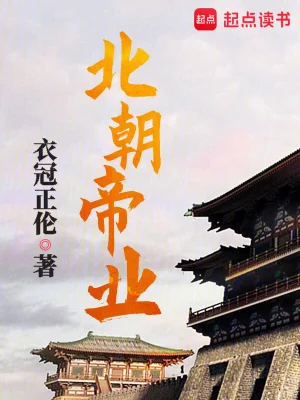
The Imperial Enterprise of the Northern Dynasties
北朝帝业
- Status
- Completed
- Length
- 4.6M Words
- Genre
- Historical
- Subgenre
- Jin-Sui-Tang Dynasties
- Updated
- 1y ago
- Source
- Qidian
Stats
Tags
Synopsis
More by this author
In booklists 39
Explore more →
Off-the-Beaten-Path Picks: Hidden Gems Outside the Rankings
I lean toward niche hidden gems. They may not be popular, but every one is top quality. If you like the list, leave a like to support the authors. Thanks!
Historical Fiction Reading List, Primarily History
Mostly historical fiction. The scale goes up to ten stars, but even a one-star book is worth a look.
Purely Subjective Reviews
This list is entirely based on my personal taste and mostly contains books I'm currently reading. If I remove one, it means I've stopped reading it or it's finished. I also keep a few books I've dropped but still want to rant about.

Reviews, Hidden Gems, and Underrated Reads
A big thumbs-up to all the writers working hard on their journey to greatness.
The Great River Flows East
To establish the heart for Heaven and Earth, to secure a future for the people, to carry on the lost teachings of the sages of the past, and to bring peace to all generations. Zhang Zai. Display the heads at the post station on Gaojie Street, among the foreign envoys’ residences, so they may be seen for thousands of miles: those who dare offend the mighty Han will be executed, no matter how far away they are. Ban Gu. The moon of The Legend of Qin shines over passes that have stood since the Han;

Scouring the Sea of Books for a Gem, Will I Find One to My Taste?
The sea of books is boundless, and good reads are hard to find. Here's a list for you. I hope you enjoy it.
Zheng Anjun's Little Book Nook
* ( ) ( ) ✨ ( ' - ' ) 🌟 o(0🎀0)**************o These are novels I've read and enjoyed. I add more every month. If you find a book you like, please remember to leave a like and a comment, fellow readers. ✨ Many thanks for your support! _(:з」∠)_
Imperial Ambitions
When autumn comes on the eighth day of the ninth month, my flowers will bloom and all others will die. A thousand miles of rivers and mountains, a scene of grandeur: how many heroes have come and gone? Thrones are built on bones, imperial roads on yellow sand. The history books record them all in a few simple strokes. Three Kingdoms: Empire of the Realm, by Xiaoxiao Majia No. 1 Three Kingdoms of Immortals and Warriors, by Baiyin Longma
Top-Tier Picks
Only picking books with enough to keep you interested and not too many flaws.
Decent Enough to Read
These are books I've read and thought were pretty good. I don't like stories that try too hard to look cool. Substance matters, and the plot has to make sense. The author matters too, of course. I'm in a reading slump lately. If you've come across any good books, please recommend them. Thanks! So many books on the charts lately are comedy stories full of silly characters, or shallow wish-fulfillment tales about leveling up and fighting monsters. Even the xianxia stories I love have mostly turned
Pasture...
None
All Kinds of Genres, Solid Reads With No Major Red Flags
All kinds of genres
My Books
Good worldbuilding, a sensible plot, and some books I enjoy

Smart Characters, Sound Logic, and Healthy Values
Historical and xuanhuan novels, all with sound values and intelligent characters
🍡'S Book Bag
It is hard to say what genre this is. I am simply sharing some books I personally like. This is very subjective, so please do not insult anyone. I came here to ramble because I was worried that commenting under these books might cause arguments.
Books That Have Kept Me Company Through the Years
My tastes are pretty eclectic, and I feel like I've become pickier over the years. These are novels I've stuck with for a long time, along with a few that hold a special place in my heart.
A Veteran Reader's Sincere Recommendations
Books I've read and enjoyed, recommended to anyone who's run out of things to read. Maybe you'll like them as much as I do.


Tang Feng Modao's Reading List
After years of reading, I've found books that suit my tastes and hope I can share them with everyone.
Good Reads, Though Some May Be on Hiatus
All kinds of great novels!
Novels That Keep Me Reading: Mostly Fantasy, Sci-Fi, and Xianxia
These are some books I like, so give them a try if you want(´-ω-`) I'll update the recommendations from time to time. I haven't been finding many stories I like lately, so there may not be as many recommendations. Thanks for understanding(*^ω^*) If the books I recommend aren't quite to your taste, maybe we're looking for different things, or maybe I'm in a reading slump and desperate enough to read anything(`⌒´メ)

Not for Beginners, Yeah!
They're all great books
Chen's Reading List
Very good
Classics: Prose and Ideas
Words bear the radiant traces of thought; stories weave dazzling dreams from imagination. Looking back on the past and gazing toward the future, our hearts alone are what we must cherish as real.
Collection
Some decent novels
Readers also read
 Chronicles of the Red Mansion
 An Important Town in the Residual Tang Dynasty
 In the Ming Dynasty, the Days When the Cows and Horses Turned Over
 The Corpse Plague of 1916
 League of Legends: I Just Turned Pro, and You're Saying the League Is Dead?
 Han Descendants of the Jin Court
 The Wily Qin
 Simultaneous Transmigration: Becoming a Legend Before the Story Begins
 Starting with Saving Manchester United
 Northern Qi: My Father Is Emperor Wenxuan
 The Wei and Jin Dynasties Don’t Bow to Zhou
 War, Court Intrigue, and Lap Pillows: Austria’s Divine Destiny
 The Tang Dynasty’s Music Examiner
 The Crowned Emperor of Tang
 Heaven's Cauldron
 The Han Legacy and the Noble Houses
Reader comments 53
Google Translate
I'm sorry, I hope it won't form a path dependency.
In the previous book, Li Xian and Li Dan both blew themselves up, and some readers criticized it at the time. Is this book good? Yu Wenjue blew himself up, taking away Dugu Xin and Yu Wenyu. It simply and crudely avoids the problem of how to deal with these "difficult to deal with" characters. What is destiny? The protagonist has saved the Kansai elders and soldiers many times, saved and revived the people's livelihood economy of the Western Wei Dynasty, and coupled with Yuwentai's passing of the throne on his deathbed, this is the greatest destiny! Why are you afraid of your father-in-law seizing power, or of turning against each other? Just use the Yang scheme to crush it! Those who accept the filth of the country are called the masters of the country. If you receive bad luck from your country, you will be the king of the world. Even if he kills Dugu Xin and Yu Wenyu by himself for the sake of power in the future, what's the problem? As a person who aspires to become a unified emperor, the protagonist should not have such a big baggage of small personal ethics. Isn't it okay to design and arrange subordinates to do dirty work if it's not convenient for you to handle it yourself? Do you need a villain to help you clear the way? No matter how I explain it in the next few chapters, I can't be convinced. In my opinion, this is the path dependence of the previous book's writing. It smells like escape, bound by moral baggage, and simply and crudely uses villains to do the dirty work. The protagonist should have morals, but there is no need to be shaped like a white lotus.
Let's write about the politics of the Eastern Wei Dynasty during Gao Huan's period. The Gao Huan family was so demonized by online marketing accounts that the entire family was completely unrecognizable in public view, and they openly stated that they were crazy. The ruling class of Gao Qi was also stigmatized, but in fact, if the Gao family was as bad as they said, they would not have ruled for decades, and they would not even be the most powerful country in the post-Three Kingdoms era. There would also be no situation where most of the ceremonial clothing and legal systems of the Northern Qi Dynasty were inherited by the Sui Dynasty. Sui Dynasty: [So the order was made to adopt the method of Eastern Qi. The real decline began in the late Gaozhan period and the Gaowei period. This article focuses on the politics of Gao Huan's period and how he stabilized his rule and consolidated his power. In the future, I will gradually help you sort out the history of Northern Qi and restore a true Northern Qi. Failure to understand will lead to misunderstandings, and misunderstandings will lead to preconceived notions. This is also the reason why the Gao family of the Northern Qi Dynasty was demonized. ,,,,,,,,, It was against this background that Gao Huan stepped onto the stage of history. After the Battle of Hanling Mountain, which forced Emperor Xiaowu away and moved the capital to Yecheng, Gao Huan became the true master of Guandong. However, since the end of the Northern Wei Dynasty, the people in the Guandong region have been devastated by the perennial wars. Officials have conquests, and all the power is transferred to others, but they are not enough to support each other. Instead, they cause conflicts among each other, and the people are worried and resentful, and they can no longer live in peace. Gao Huan must change this situation when he becomes the ruler in order to maintain his rule. Therefore, Gao Huan made the following adjustments to national policies. ["Book of the Sui Dynasty·Shi Huo Zhi"]: When the six towns were disturbed, they moved inward and settled in the suburbs of Qi and Jin. Qi Shenwu followed this and achieved great success. Wei Wu moved westward and fought for many years, and the area between He and Luo was exhausted. In the first year of Tianping, the capital was moved to Ye, and 1.3 Million shi of millet were produced to support the poor. At that time, the number of people in Liufang who came to the west from Emperor Wu was not more than ten thousand. The rest all moved north and were given to Chang Lin. In the spring and autumn, silk was given to pay for clothing. First of all, due to years of war, the people were unable to carry out normal agricultural production, resulting in a large number of poor people, so Gao Huan provided food to the poor, and there were also a large number of Xianbei soldiers left behind after Emperor Xiaowu left. Gao Huan asked them to move to the north, provided food and money, and stabilized the normal life of the Xianbei soldiers. ["Book of the Sui Dynasty·Shi Huo Zhi"]: In addition to the regular tunes, ▲go to the places where there is plenty, break silk and buy millet to fill the national reserve▼. ▲On the margins of rivers and Jinji in various states, official warehouses were used to store the goods for water transportation▼. In the four prefectures of Cang, Ying, You, and Qing, salt officials were set up near the sea to boil salt and collect money every year, so that the military and state funds could be supported. ▲Since then, the warehouses have been plentiful. Even if there are floods, droughts, and famines, the warehouses have been opened to revive them▼. In Yuanxiang and Xinghe, the number of years old is large, and the grain dendrobium reaches nine coins. "Zizhi Tongjian": Since the Wei Dynasty, farmers and merchants have lost their jobs, and the people of the six towns have moved inward, eating Qi and Jin, and Huan has become a hegemon. The east and west were divided and wars continued for years. The prefectures and counties in Henan were transformed into lush grass, public and private affairs were exhausted, and many people starved to death. ▼Huan ordered all the prefectures to set up warehouses and grain canals along the river, Jin and Liang to feed the army and prepare for famine▲. He also boiled salt by the sea in the four prefectures of You, Ying, Cang and Qing. The expenses of the military and state are so large that Zhou can support them▼. ▼At this time, the crops in the east are growing year by year, the dendrobium grains have reached nine cents, and the people of Shandong have recovered a little. ▲After solving the problem of poor people and soldiers, giving them food can only solve the immediate problem. Sooner or later, the food will be eaten out. Therefore, in addition to normal taxes, the state pays money to purchase food storage in wealthy places to solve the problem of food shortage. Then, official grains were stored in the river mouths of each state, and water transportation could be dredged to provide quick support to people in various states who were in short supply of food. The entire Kanto region is close to the ocean, so it can increase national fiscal revenue by boiling salt. Under Gao Huan's multiple measures, the people began to produce stably and steadily, with a bumper harvest every year, and the official grain reserves were sufficient. In places where natural disasters occurred, the stored grains were used to relieve the people at any time. This cycle of conscience made the price of grain in the Eastern Wei fall to the lowest level in the Wei, Jin, Southern and Northern Dynasties, and the people lived and worked in peace and contentment. Zhu Anxiang's doctoral thesis "Currency Research of the Wei, Jin, Southern and Northern Dynasties" of Zhengzhou University says this about grain prices during this period: "Yuanxiang" and "Xinghe" in the first piece of material are the second and third reign titles established by Emperor Xiaojing, specifically between 538 and 539. ▼Due to successive years of bumper harvests and significant increases in grain output, grain prices have fallen, reaching as low as 9 cents per hu, [this was the lowest grain price recorded in the entire Wei, Jin, Southern and Northern Dynasties]▲. After food prices were stabilized and people were able to live and work in peace and contentment and carry out normal agricultural production, it was natural to solve the problem of household registration loss due to perennial wars in the late Northern Wei Dynasty ["Sui Shu·Shi Huo Zhi": At that time, the law was relaxed, and many people left their old residences and were not free from corvee taxes. ▲Shenwu ordered Sun Teng and Gao Long to divide the households without registration and get more than 600,000▼. So the overseas residents returned to their original belongings, and the number of people who were rented and transferred increased greatly. When Wen Xiang inherited the throne, Hou Jingbei rebelled and moved to Henan. Trapped in military revolution. After finding out that Hou Jing was in chaos in Liang, he ordered him to practice Tai Xin Shu, and he had a little bit of land in Huainan. Its new attached states and counties only impose light taxes. Gao Huan accepted his confidant Sun Teng and Gao Longzhi as the household expansion ambassador, and reintegrated more than 600,000 people who had lost their household registration due to the war into the national management system. While increasing the population, it also brought benefits to the national tax revenue. Therefore, with the implementation of Gao Huan's various policies, the people of Guandong, which had been war-torn since the late Northern Wei Dynasty, began to live a normal life, living and working in peace and contentment in agricultural production, the national tax wealth increased, the national strength also significantly increased, and the social order was stabilized. ,·:,▼,,,▲ ["Book of Northern Qi·Shenwu Ji": Renshen, Shenwu Dynasty in Ye. In April, Shenwu asked people to move to different places. In the ninth month of Jiayin, ▲Shenwu Yizhou, prefecture and county officials were very obedient, so he asked for an envoy to ask about people's sufferings▼. . After the capital was moved to Yecheng, because many officials left over from the late Northern Wei Dynasty violated the law, special officials were sent to all directions to investigate the sufferings of ordinary people. ["Book of the Northern Qi Dynasty·Shenwu Ji": In February Yiyou, Shenwu Yibin, Si, Fen, Jian, Jin, Dongyong, Nanfen, Tai, Shaanxi▼Jiuzhou frost and drought, people are hungry and dispersed▲,▼Please open the address Warehouses for ▲Where famine occurred, Gao Huan ordered the opening of warehouses to provide relief to the people. ["Book of Wei·Xiaojing Ji": In the fifth month of Guimao, ▲gave different kinds of clothing to widows, widows, lonely and poor people. ["Book of Northern Qi·Shenwu Ji": In March of the second year of Guisi, Shenwu visited Ji and Ding prefectures to pay homage to the capital. ▼In view of severe drought in winter and spring, please take responsibility and provide relief to the poor▲, ▲Excuse the crime of death▼. He also asked the old man to be given a board position, each with his own differences. There are many records about Gao Huan opening warehouses to provide relief to victims due to natural disasters, as well as helping poor and disabled people. This cannot be false. It can be seen that Gao Huan still attaches great importance to the people's sentiments ["Book of Wei·Xiaojing Ji"]: In the ninth month of the ninth month, a hundred thousand people in Faji settled in Yecheng, and stopped in the fortieth day. In Xinwei, there are differences in Qu Shen's death penalty and the following. On the tenth day of winter, in the first month of Guihai, a new palace was built, a general amnesty was granted to the world, and the Yuan Dynasty was changed. Those who are over eighty will be given silk hats and staffs, those who are over seventy will be given silk, and those who are sick and disabled will be given millet and silk▲. ▲The man who built the city will give it another year▼. Gao Huan was keen on providing relief to the poor and disabled people, giving them food and cotton, which could be used as currency in ancient times. People who completed their labor service were also given a reward of being exempted from taxes and taxes for one year. Rewarding means exemption from taxes and taxes. For the ordinary people and soldiers who had left their bodies in the wilderness all year round because of wars, Gao Huan ordered relevant personnel to bury them ["Book of Wei Xiaojing Ji"]: In the first month of Wushen, the tenth day of winter, the imperial edict can send envoys to inspect the hungry people in Hebei Province. If there are dead bodies where Xingxing and Fukou pass, they will be hidden. ▼Don't let the dead bones of the spiritual platform be felt in the dream; the bones of Guanghan are exposed, and people cry at night when they hear it▲. "Wei Shu·Xiaojing Ji": In June, Jisi, Xinghua Linyuan was involved in litigation. Xin Wei issued an edict to the minister to bury the body and bury the body, and to imprison the prisoners. In ancient times, burying corpses was a good policy. The ancients attached great importance to resting in peace after death. Exposing corpses in the wilderness was not in line with the values of the ancients. Gao Huan attaches great importance to whether the government affairs are clear and transparent ["Book of Wei·Xiaojing Ji": In the fifth month of Xinsi, ▼King Xianwu of Qi came to the court, and asked all officials to take charge of political affairs ▲, ▲Mingyang It is humble, accepting remonstrances and suppressing evil, handling prison lawsuits personally, praising and dismissing those who are diligent and lazy; Gao Huan entered the Yecheng Political Council to accept good advice, crack down on traitors, personally handle prison lawsuits, and supervise local officials. All the eagles and dogs kept in the palace backyard were thrown away. Maintain the purity of government affairs. ["Book of Wei·Xiaojing Ji"]: In the tenth month of winter, Wei Jin, a member of Zhongshushe, was sent to Xiao Yan as an envoy. At the end of Yi, King Xianwu of Qi invited the prisoners from Mang Mountain to release their shackles and provide them with human widows. For the prisoners of war in Mangshan, Gao Huan did not kill them rashly, but restored their freedom and allocated them to civilian widows to form new families. As a famous hero in history, how did the controversial Cao Cao treat the prisoners of war who were also captured after the war ["Zizhi Tongjian": So Shao's army was alarmed and collapsed. Shao and Tan rode horses and crossed the river with eight hundred riders. Cao Cao couldn't catch him and collected all his luggage, books and treasures. ▲The remaining people who surrendered were trapped in all possible traps, and more than 70,000 people were killed in front and behind▼. During the Battle of Mangshan, Gao Huan did not kill the prisoners. After a few years, they all regained their freedom and were given to civilian widows to start new families. After the Battle of Guandu, Cao Cao killed all the prisoners and killed 70,000 people. It can be said that he was a judge of superiority. When a book friend was arguing with me, he used Cao Cao as an example to compare with Gao Huan. Cao Cao, the city-slaughter maniac, really didn't deserve to be compared with Gao Huan. Gao Huan would correct any regulations that caused inconvenience to the people ["Zi Zhi Tong Jian": ▲The Prime Minister of the Eastern Wei Dynasty used the state to adjust silk in different ways, and the people were suffering ▼, ▲The order was made to use forty feet as a piece▼. It was mentioned above that in the late Northern Wei Dynasty, most local officials did not abide by the law and harmed the people. Therefore, Gao Huan praised the honest officials through selection and set an example, which was used to rectify the local government ["Zi Zhi Tong Jian" : The Prime Minister of the Eastern Wei Dynasty rejoiced with Fang Mo, the governor of Xuzhou, Yang She, the governor of Guangping, Dou Yuan, the governor of Guangzong, and Xu Dun, the governor of Pingyuan. "Northern History·Fang Mo Biography": ▲The history books of Shenwu and the governors of various states describe Fang Mo and Yang Dun, the governor of Guangping, Dou Yuan, the governor of Guangzong, and Xu Jiliang, the governor of Pingyuan, etc., And they are considered as encouragement▲. Mo once initiated the martial arts, and as the world was not at peace, it was appropriate to surrender the general to marry him, to gain the hearts of the generals and gain their acceptance. Let people do as they please, and the court will follow them. "Book of Wei·Yang Dun Biography": At the beginning of Wu Ding Dynasty, ▼Qi Xianwu King Yidun and Zhongshan Prefect Su Shu served as officials and respected the law. The imperial edict said: "In the past, there were five folk songs and two different chants. They were all driven by benevolence and Qin who traveled thousands of miles to unite the country. Therefore, Yang Dun, the prefect of Guangping, and Su Shu, the prefect of Zhongshan, combined the industry and concealment. They were responsible for Zhenji, good governance, good governance, and good reputation among the people. With the help of talented people, he ascended to a high rank, died one after another, and was mourned by the government and the public. In pursuit of Qingde, Gai Gai But for the old chapter, each can be rewarded with a hundred pieces of silk and five hundred hu of grain. ▼The commander-in-chief and the Xian envoy heard about it▲" Fang Mo was praised by Gao Huan and was used as a model to promote local governors. How did they handle local government affairs? ["Northern History·Fang Mo Biography": Soon, ▲ became the governor of Yanzhou. Choose someone who is honest and honest, widely spread favor and trust, and have subordinates who abide by orders. Anyone who commits a crime will be known to them. Even if the number is small, the people will be safe. Transferred to Xuzhou governor. Shi Fangmo was in Yanzhou, and Pengcheng admired him for his political power. He became the governor, and he was delighted with his situation. Being in charge of government is like being on a flawless hill. First, when the state's soldiers were all driven by their assistants, they died of hunger, cold and disease, numbering in the thousands. When the time comes, they will all be inspected and not disturbed. They will take a vacation instead of bathing. ▲The supervisor will inspect it personally. He also hired servants and made clothes, and returned home all the year round, with food and clothing for everyone, and the whole family had a lot of money. ▲At that time, Liang and Wei were on good terms, and those who allowed people to enter their borders were praised and sighed. ▼Before the Battle of Shayuan, in order to maintain the stability of the rear, Gao Huan had to completely pacify the four warlords in Guandong before deploying the main force to attack Yuwentai. The failure of the Battle of Xiaoguan made Gao Huan pay more attention to Yuwentai. If there is a large-scale crackdown on corrupt nobles and Han bureaucrats at this time, Gao Huan's regime will suffer a serious crisis ["Zi Zhi Tong Jian": Du Bi, a doctor in Xingtai, used civil and military officials to do a lot of corruption while in office, and said that he wanted to cure it. Huan said: "Come here, I'll tell you! ▲Corruption has been a custom in the world for a long time▼. ▼Most of the family members of the current governors are in Guanxi. Yuwen Black Otter often tempts each other, and the fate of favors is uncertain; there is another Wu Weng Xiao Yan in Jiangdong. , Specializes in clothing, etiquette, and music, and the scholar-bureaucrats in the Central Plains look at him as Zhengshuo. If I am anxious to correct the rules and regulations, and do not make excuses, I am afraid that all the governors will return to the black otter, and the scholars will all flee to Xiao Yan, and the people will be scattered. ▲! You should wait a little longer, and I will not forget it."] Du Bi advised Gao Huan to rectify corruption immediately, but the problem of corruption has been a long-standing trend since Emperor Xuanwu of the Northern Wei Dynasty and cannot be changed overnight. If this problem is solved immediately when Gao Huan goes to Guanxi, the consequences mentioned by Gao Huan are very likely to happen, but he also responded to Du Bi that he would deal with this problem.
Nanbeng, the emperor's novel has a single female protagonist, and she is still a virgin when she is twenty. I almost thought it was a female pornographic novel 😅
The protagonist of this novel is not only pretentious, but also pretentious. The process of power development is very smooth and without any disturbance. He acts like he is the son of destiny, which feels particularly hypocritical. What's even more disgusting is that the heroine is an only child, and he is not afraid of the people under his command being alienated. I really admire the innocence in the story about historical hegemony.
The Eight Pillars of the Western Wei Dynasty refer to eight people: Yu Wentai, Yuan Xin, Li Hu, Li Bi, Zhao Gui, Yu Jin, Dugu Xin, Hou Mo and Chen Chong. Two of them are special: First, Yuwentai. He pioneered the military system and was the de facto founding king of the Northern Zhou Dynasty. After Yuwentai laid the foundation of the Northern Zhou Dynasty, his son Yuwenjue established the Northern Zhou Dynasty with the help of Yuwentai's nephew Yuwenhu. The Northern Zhou Dynasty was the foundation of the Sui Dynasty. Yuwentai is the leader of this group of people, so he must be above all other Zhuguo. Second, Yuan Xin. He is from the clan of the Western Wei Dynasty. He only has a temporary position and has no effect at all. In addition, there are the six pillar countries. They hold real power, and each of them is in charge of two generals, so this is why we have the term twelve generals. Each general is also in charge of two kaifu, and each kaifu leads an army, so there are 24 armies in total. Li Hu, his grandson is Tang Gaozu Li Yuan. Because his name was Li Hu, in order to avoid his name, tigers in the Tang Dynasty became giant insects. Li Hu himself was a famous general in the Western Wei Dynasty, with both civil and military skills. In his early years, he followed He Batayue, and later he followed Yuwentai. During the Western Wei Dynasty, he became the Duke of Longxi County. Li Bi, his great-grandson was Li Mi, the leader of Wagang Village, also once proclaimed himself emperor and competed with Li Yuan for the world. Li Bi followed He Bayue in the crusade against Wanqi Chounu. He took the lead and was unstoppable. After that, he followed Yu Wentai and became the general of the Zhuguo in the Western Wei Dynasty. Zhao Gui was Er Zhurong's subordinate in his early years, and later followed He Bayue and Yu Wentai. Under Yu Wentai, he recovered Hongnong, Shayuan and other places, and was granted the title of Zhongshan County Duke, becoming one of the Eight Pillar States of the Western Wei Dynasty. It's a pity that this buddy teamed up with Dugu Xin to get rid of Yuwen Hu, but failed and was killed. Yu Jin, he is special, he is from Luoyang, Henan, but he is from the Xianbei ethnic group. Also following Yu Wentai, he proposed the strategy of moving the emperor westward. During the Western Wei Dynasty, he served as one of the Eight Pillar States. Dugu Xin was so famous, a famous handsome man at that time. His eldest daughter married Yu Wenyu, Emperor Ming of the Northern Zhou Dynasty, his fourth daughter married Li Yuan, the father of Emperor Gaozu of the Tang Dynasty, Li Yuan, and his seventh daughter Dugu Jialuo married Emperor Wen of Sui Dynasty Yang Jian. So he is the father-in-law of three emperors (including posthumous titles)! Unfortunately, his plan to get rid of Yu Wenhu failed and he was killed. Hou Mo and Chen Chong followed Er Zhurong to put down the Ge Rong Uprising in his early years. Later, he followed He Bayue to defeat the Yuan Hao Rebellion. After that, he followed Yu Wentai and put down the rebellion of Hou Mo and Chen Yue. He was a person who came to the forefront little by little based on his military exploits. During the Western Wei Dynasty, he served as an official in one of the Eight Pillar States and was named Liang Guogong. After that, he was also killed by Yu Wenhu. Among the eight brothers, the descendants of Yuwentai, Li Hu, and Li Bi all served as emperors, especially the descendants of Li Hu, who established the Li Tang Dynasty for more than 300 years and had a far-reaching influence. Dugu Xin is the most special one. He is the father-in-law of the emperor. The emperors of the Northern Zhou, Sui and Tang dynasties all recognized him as their ancestor. Two, among the twelve generals, only Emperor Wen of the Sui Dynasty had his family. Many people are curious. Although there were ancestors of the emperors of the Tang Dynasty in the Eight Pillar Kingdom just now, why did they not see the ancestors of the emperors of the Sui Dynasty? In fact, he is hidden among the twelve generals. In addition to the Eight Pillar Kingdom, the Western Wei Dynasty also had twelve generals. They are: Yuan Yu, Yuan Zan, Yuan Kuo, Yuwen Dao, Yu Wengui, Li Yuan, Da Xiwu, Hou Mo, Chen Shun, Yang Zhong, Doulu Ning, He Lanxiang, and Wang Xiong. First, Yang Zhong, the father of Emperor Wen of the Sui Dynasty. Among them, Yang Zhong was the father of Emperor Wen of the Sui Dynasty, Yang Jian. He was from Huayin, Shaanxi. In the early years, he followed Er Zhurong and Dugu Xin. After escorting Emperor Xiaowu of the Northern Wei Dynasty to Chang'an, he successfully defected to Yuwentai's banner. Since then, he has made many military exploits and defeated the Eastern Wei and Nanliang many times. He was named the Hussar General and the Duke of Chenliu. Although he was not one of the Eight Pillar States in the Western Wei Dynasty, after the establishment of the Northern Zhou Dynasty, Yang Zhong was promoted to Grand Sikong and General of the Zhu State. It was precisely because of the foundation laid by Yang Zhong that Emperor Wen of the Sui Dynasty Yang Jian had the strength to establish the Sui Dynasty. Second, there are three people in the Western Wei clan. It is worth noting that among the twelve generals, there are three clans of the Lao Yuan family, namely Wang Yuanzan of Guangping, Wang Yuanyu of Huai'an, and Yuan Kuo of Qi. In fact, they are just in name and have no actual power. King Yuan Kuo of Qi was later established as a puppet emperor by Yu Wentai. Thirdly, there are also 2 people in the Yuwen family. In addition, there are two other members of the Yuwen family, namely Yuwen Dao and Yuwen Gui. Director Yuwen is Yuwentai's nephew and belongs to Yuwentai's direct lineage, so he naturally holds real power. Yu Wengui was also a member of the Yuwen family. After he defected to Yuwentai with Emperor Xiaowu, he also won the respect of Yuwentai. Fourth, the remaining 6 are relatively average. Hou Mo Chen Shun is the elder brother of Hou Mo Chen Chong, one of the Eight Pillar Kingdoms. In his early years, he followed Er Zhu Rong to defeat Ge Rong, and later followed He Bayue to guard Jingxing. When Emperor Xiaowu of the Northern Wei Dynasty Yuan Xiu went to Chang'an, Hou Mo and Chen Shun also came with him. He had a good relationship with Yuwentai, so he immediately became Yuwentai's confidant. In addition, there are 5 other people, including Gaoyang County Founding Duke Xi Wu, Yangping County Founding Duke Li Yuan, Fanyang County Founding Duke Dou Luning, Boling County Founding Duke He Lanxiang, and Wuwei County Founding Duke Wang Xiong.
The protagonist's wife is only pregnant when she is 26 years old. It is not certain whether the child is a boy or a girl. There is still a risk of premature death, and since she has no concubines, she will not have any more children during the period when she gives birth to the child and takes good care of her health. She is so sure that she can live to be over 60 years old. , So fond of modern marriage, it would be better not to have a child. He passed the throne to his nephew. He died in his 40s, causing his son to be killed by his nephew. Refer to Chen Baxian Yu Wentai, who, like Feng Qi in the late Ming Dynasty, did not realize that long-lived emperors are rare and that forty or fifty is the normal life span.
I read a comment saying that the heroine is a single heroine, and the wife has not consummated the marriage for several years. Is this true? If it is true, I will not read it. The historical hegemony article does not say that you cannot have a single heroine, but at least you have to have more cubs Look at the few loyal Sui Emperor Yang Jian in history. Their husband and wife can be said to have created a miracle in the life of an emperor and empress in ancient China. , Yang Jian and Queen Dugu Jialuo gave birth to five sons and five daughters, one mother and one mother. In ancient times, the mortality rate was high. Even if it is a single female protagonist, the protagonist must have several more children in the early years like Emperor Wen of the Sui Dynasty, at least three sons. Otherwise, if you die when you are old, or if you only have one child and dies, who will inherit the family business? What I hate most are those who hand over their family property to relatives _(:3 ⌒゙)_
The protagonist of this novel has been cheating and going smoothly throughout the whole process. So far, he has basically followed the trajectory of history, and there is nothing exciting about it. Furthermore, the protagonist feels very hypocritical. He is just a Wang Mang-type character. If he comes to power, how will he be different from those traditional emperors.
Biography of Li Tai
This article roughly takes Li Tai's official promotion as a clue, and omits many plots of farming and interpersonal interactions. It is just a pastime after catching up on updates. I hope everyone will not hesitate to make corrections. Li Tai, courtesy name Boshan, was a Taoist from Di in Longxi and the sixth grandson of Li Hao, King Zhao of Liangwu. Hao Sheng turned over, so Liang Xiaoqi general. Qianshengbao, attached to the Wei Dynasty as the general of Zhenbei and the Duke of Dunhuang. Bao Shengcheng served in the Wei Dynasty as General Longxiang, Prefect of Xingyang, Marquis of Guzang, and was presented to the governor of Yongzhou. Chengsheng Qian, served in the Wei Dynasty as a general of hussars, opened the mansion with three divisions, and presented it to Taiwei Gong. Qian Sheng Xiao, Taizhong doctor. Xiaoshengtai. His family background was from a high family in the West, and he had the same name as in the Wei Dynasty. Tai Yi was born in Luoyang in the second year of Yong'an. Later, when there was a military turmoil, he was driving in Ye, and Xiao and his disciples lived in Qinghe. Taiyou is smart, alert and decisive, and speaks elegantly. Shi Haoyou's disciples were all fond of luxury, and most of them were known for their arrogance and wantonness. Tai Du was good at learning and doing well. Fan Yang's Lu Shuhu, brother of Xiao's wife, had tasted the Qinghe River, and Xiao had invited all the disciples into the hall to pay homage. Shuhu inquired about learning, and Taiyuan was very surprised at the number words. He said to Xiao: "Today, the Banban is in chaos, and the high court is ruined. The one who can restore the splendor of the emperor's family must be this son." Before the end of the year, be careful to offer your land to return to justice. The Western Army went out eastward and fought with the Eastern Wei Dynasty at Mang Mountain. The Western Army was defeated, and Xiao's father and son were separated. Xiao lived in Dongzhou, and Tai followed the crowd to Kansai. At that time, Taiyu Wentai, a great practitioner in the Western Wei Dynasty, was also named Tai. In order to avoid the taboo, he used the word Tai to spread in the world. Shen Yixi's army was defeated, and he suspected that he had concealed the military aircraft, so he decided to stick to Chang'an. Boshan Yishen's sect was also affiliated with several members of the Hui tribe. At that time, several Hui supervised the right army, and Zhao Gui supervised the left army. If you run the army without discipline, you will advance timidly and retreat easily, which will lead to the defeat of the division. After Hui led his troops to the palace, his troops were greatly mourned, and they hated Gui deeply. Boshan wrote a letter to defend himself, explaining the reasons for victory and defeat, describing the feelings of hometown loyalty, and explaining the effectiveness of strengthening the country. Hui wrote to Xingtai, and after reading it, he was deeply impressed by it. The two of them were released, and Situ was added as a sign of comfort. Hui Youzhong Yi Zhongbo Mountain sent his son to associate with him. He Basheng, the Taishi of the Western Wei Dynasty, was an old friend of Boshan's uncle Hu. He also met Boshan deeply. He fell in love with him as a son and nephew, and he trusted each other in future affairs. At the end of the year, all the armies were paraded in Jingyuan, and Boshan Yi Taiwei's officials came to see it. When hunting in the field, Boshan drew his bow and reined in his horse, and he was in a group, his grace was outstanding among the crowd. When Tai saw it, he looked around and said, "You are so strong. Whose handsome boy is this?" He Basheng said to him, "This boy is Li Boshan. He comes from the family of Wenmu Gong and has recently returned to Yiyi." Tai looked at Shuo Hui and asked, "Is it the person who wrote the previous letter?" Hui cupped his hands and said yes, and said to him, "This boy is a handsome boy from Guandong. If the Lord calls him to inquire, he will definitely gain something. " Taiguo called Boshan to see him and discussed several things with him. He was happy and sighed, "I lost Mangshan, but I won this Boshan. God will not be kind to me." He gave Boshan the gold seal, appointed the minister of Waisanqi, and granted him the title of male from Gaoping County. Su Chuo, the minister, also valued his talents. Boshan and Chuo paid a visit to Zhou Huida. When Huida saw him, he praised him and said, "You are such a charming young man. I hate that all my daughters are married, so I cannot have such a good son-in-law." He was also granted the title of Mo Cao of Daxingtai Prefecture to join the army. Not long after seeing the matter, Boshan wrote "Kaochengfa" to dedicate it. He wrote: "In ancient times, when establishing affairs and promoting government, the most difficult thing was that the law must be implemented and the words must be believed! If the construction is not effective, the government will be neglected and neglected. If a scholar is not examined, the official will be mediocre and lazy. I have observed that the six things that often happen to an official are greedy people who value goods, timid people who lose authority, mediocre people who are not talented, lazy people who waste the people, and impetuous people who lack caution. It is necessary to examine the differences. Only if the law is consistent and the principles are clear, can the government and the people do their best. Today's national destiny is difficult because of the lack of material resources. Everyone in the government and the government should share this concern and manage the situation. " When Tai got it, he was overjoyed and said: "How can the brave men in the world shrink because of their childishness? Li Boshan's courage in making plans now is just like my young brave days." Then he removed Boshan's record and joined the army, and was given a Xihe horse and old saddles and bridles. Among the few people who have received this kind of favor, Boshan is the only one. In the summer, a letter was written on Boshan Mountain about rivers and canals. Tai used it, so he promoted Boshan Daxingtai to serve as Zhonglang and Dushui envoy, and gave General Fubo the task of leading rivers, canals, weirs and embankments. At the end of the year, Taiming Boshan brought thousands of horses from Xiazhou and fed them to Luochuan. When Boshan passed through Xiazhou, he encountered Hu bandits, so he joined forces with Huazheng Gong Yuwengui and Changle Gong Shuohui to fight against them. They defeated the bandit Liu Zhenqiang and captured ten thousand cattle and sheep. Offering the captives white water, Tai was greatly pleased, and he took off his robe and gave it to him. He was also awarded the title of Governor of Boshan, Prince of Luochuan County, and General Zhenyuan. Tai discussed Beizhou affairs with other officials. Leling Gongyi Peak was intended to restrain the feudal lords and grant the Hu chieftains titles and titles to allow them to govern themselves in order to achieve stability. Chang Shangong Yu Jin proposed checks and balances, alienating various tribes and causing them to fall into chaos. Tai asked Boshan, and Boshan advanced the policy and said: "The public's high opinions can bring about temporary peace, but it is not a permanent solution. Although there are few people in Beizhou, the water and grass are abundant and suitable for cultivation. If we can move the people to the border and set up camps there, we can jointly defend the interior. If this is the case, Jihuan dares to take a look at the situation. " Tai said: "It will cost a lot of money, and I am afraid that the treasury will be difficult to support." Boshan responded by presenting "Kaizhong Law" and said: "The foundation of what I discussed is to be built in Yantai. The government measures the number of households in the prefecture and counties and sells the salt without overusing the market, so that all the people can enjoy the taste, so that the salt is provided regularly and the people have regular food. The salt is established, so the people are transported to the border, and the salt is distributed according to their labor. If the grain and fodder can be diverted and replenished on the spot, the government and the people will have enough food!" "So he ordered Boshan to camp the three defense cities in the north and to guard the border areas. He also asked, "Who knows about Dongxia Prefecture? Boshan said to him: "Li Xianqing, Duke of Wu'an, is known for his loyalty and bravery. He knows about Dongxia Prefecture." Tai responded and jokingly said: "I didn't expect this person to be promoted among the younger generation." " At the end of the eleventh year of the Tong Dynasty, the Taifu military parade was held in Baishui. Boshan made an appointment with Zhao Gui, the Duke of Zhongshan, and won a great victory. Gui was obsessed with him, and the people were shocked. At that time, Feng Jihu invaded Dongxia Prefecture, and the governor Li Mu sent an envoy to report Before the end of the review, Boshan led his troops to Guangwu and defeated the rebel army. He joined forces with Yu Wengui and Yang Zhong to attack Qunhu and defeated them. Later, when Yuwen Zhonghe in Liangzhou was in trouble, Boshan moved the general of the Hussars and the governor of Tianshui County to supervise the military affairs of the five counties of Longyou. All the powerful officials in the township obeyed orders. When the time came to settle down in Longdi, the heroes rushed to serve as minions. The rebellion was suppressed. Boshan was promoted to the general of chariot and cavalry for his merits, and was granted the title of Marquis of Guzang County.
The author is still not good at describing war scenes. He has prepared dozens of chapters before the war, but when it comes to the battle, it is often summarized in one stroke. It is a pity. I suggest you read Shao Song Dynasty to learn what is really good writing. It does not mean that your writing is not good, but the gap will be revealed when you compare it. The author himself has a profound cultural background. If he can find out the omissions and fill in the gaps, he will definitely be able to improve to a higher level. Otherwise, it may appear to be a historical text, but in reality it is a palace drama disguised as history. It will inevitably have too much decoration but not enough grandeur. Wouldn't it be a waste of this good literary talent?