


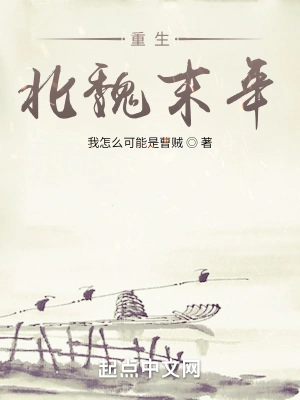
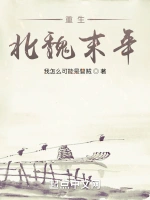
Reborn in the Final Years of Northern Wei
重生北魏末年
- Status
- Completed
- Length
- 1.3M Words
- Genre
- Historical
- Subgenre
- Jin-Sui-Tang Dynasties
- Updated
- 3y ago
- Source
- Qidian
Stats
Tags
Synopsis
More by this author
In booklists 18
Historical Fiction Reading List, Primarily History
Mostly historical fiction. The scale goes up to ten stars, but even a one-star book is worth a look.
Reading List No. 3: Historical Fiction
Good historical fiction
A Categorized History Reading List
Books I've read and am currently reading
My Books
Good worldbuilding, a sensible plot, and some books I enjoy

Smart Characters, Sound Logic, and Healthy Values
Historical and xuanhuan novels, all with sound values and intelligent characters
Time and Space, Alternate Worlds, History, and Fan Fiction!
I personally enjoy derivative fan fiction. Science-fiction transmigration stories are worth a look.

Great Books I've Read from Start to Finish
My personal collection This list is mainly for my own convenience. If that’s not for you, move along.
A Fresh Take on History
Regrets from history
Follow Me! There's Bound to Be a Hidden Gem You Haven't Read! Let Me Help End Your Reading Slump!
Follow so you don't lose your way! New recommendations every day, right on schedule! Every book I recommend is one I've personally subscribed to and tried out. I make sure each one is worth recommending!
A Varied Taste, No Limits on Genre
A personal reading list, based mainly on my own taste.

A Genre-Hopper's Reading List
I don't read crossover anime fan fiction, and I don't like romance plots. My standard for adding a book is that I'd be willing to pick it up again for a second or third read when I'm in a reading slump.
Ahua's Food for the Soul
Ah Hua has a bit of an artsy streak, so you can count on the writing in this list to be good and not dumbed down. Ah Hua also has a bit of a playboy streak, so I don't like repeating the same type. (I also really like the books on the rankings, such as The Paradise of Reincarnation, The First Sequence by Zhouzi, and Apocalypse Forecast, but I'll leave them off the list since you can find them yourselves.)
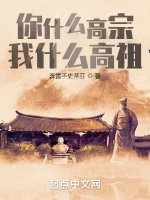
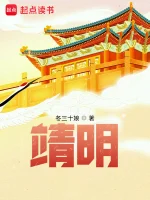
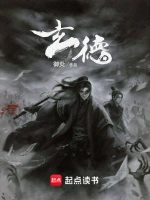
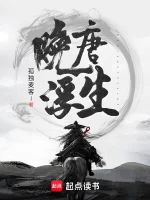
Meticulously Researched History
Books with solid logic and immersive stories
Yuan Yuan Recommends Books (Historical Transmigration: Bringing an Era of Chaos to an End)
Who but me can end this age of chaos? Bury one dynasty and usher in another: this is my mission. The wind rises, clouds take flight; my might extends across the land, and I return to my home. If only I had brave men to guard the four corners of the realm.
Just Browsing
A Record of a Mortal's Journey to Immortality left me hanging
Well, a Veteran Reader's Bookshelf
Most of the books on this list are on my bookshelf. I've already finished most of the older books I like, so this list mainly features promising new authors. P.S. These reviews are purely based on personal taste. Please don't hate on me if you disagree QwQ ✨ And thanks for all the follows and gifts 🌷🌷🌷✨
Xingxing’s Reading List
This person is lazy
With This Reading List, Mom Never Has to Worry About Me Running Out of Books
Includes both quality picks and promising new books. A bit of everything, with recommendations across many genres. Strong stats, good quality, or hardworking authors. No abandoned stories, and updated daily.
Readers also read
 An Important Town in the Residual Tang Dynasty
 Chronicles of the Red Mansion
 In the Ming Dynasty, the Days When the Cows and Horses Turned Over
 The Corpse Plague of 1916
 The Father of France
 War, Court Intrigue, and Lap Pillows: Austria’s Divine Destiny
 Northern Qi: My Father Is Emperor Wenxuan
 Have I Revived the Han Dynasty Today?
 The Struggle for the Throne in the Jiajing Era
 The Wei and Jin Dynasties Don’t Bow to Zhou
 Han Descendants of the Jin Court
 A New Chronicle of the Later Han
 Eastern Jin: My Father, the Powerful Minister
Reader comments 30
Google Translate
It's getting colder, so give Little King Gao some extra clothes
It is almost impossible to Sinicize the Northern Qi Dynasty. Gao Huan's historical evaluation is that he was a Xianbei Han, while Yuwentai was a Sinicized Xianbei. The subjects of Gao Huan's uprising were Xianbei soldiers in the six towns. These people lost their promotion opportunities during the sinicization of the Northern Wei Dynasty and were unlikely to agree to sinicization. For Gao Huan, sinicization will shake the foundation.
It is definitely no small miracle that this Qi Dynasty Guozuo can live for a hundred years!
The system is still essentially the same as that of the Northern Wei Dynasty. He didn't dare to touch a single hair of the noble family, and it was useless to set up a framework of the imperial examination system. Political corruption and bad struggles are ignored, and they are still complacent in using this to contain the officials. From some plot reasoning, it can be seen that the power of military commanders is still very great, and it has not even changed much compared with the Northern Wei Dynasty. In other words, military commanders can still launch coups at any time like the Northern and Southern Dynasties. The loopholes in the local system are even greater. There is no separation between civil and military affairs. The clan still serves as the governor of the state and county, and it is still using the already backward state and county system. The relationship with the surrounding nomadic people is not clear. The territory is large, but the management is extremely chaotic! Economically, there is no such thing as building a canal or building a post station, and the commercial economy will not be very developed. In agriculture, the land equalization system is still too rigid, and it actually imposes a head tax to limit population growth, which is a recipe for death. The gentry clans are not restricted, which means that the local gentry clans still control astonishing resources. Coupled with the crude and backward state and county system, centralization of power is simply impossible to achieve! The most stupid thing is that the authority of the founder of the country established the basic principle of "establishing virtuous people" and let the princes compete for positions. From then on, the Qi court will definitely never have peace. All civil and military officials are keen to form gangs to speculate and flatter the princes. After failure, a large number of people will be implicated, and the conflicts will become more and more serious. The institutional princes of the Qi Dynasty were all powerful factions, and the fierce competition for the throne started with the "Nine Dragons to seize the direct descendants", and if they contacted the noble families, it would turn into the "Eight Kings Rebellion" at any time. This system, this political ecology... Simply combines the shortcomings of the four dynasties of the Northern Qi, Sui, Tang, and Yuan dynasties. The debuffs are all stacked up. It is absolutely a miracle that it can survive for a hundred years.
The sinicization of the Eastern Wei Dynasty is necessary, otherwise it will fall into the same dead cycle as in history and will be surpassed by the Western Wei Dynasty sooner or later. But is it too hasty for the author to directly state the need for Chinese translation? The entire wealth of the Gao family is composed of sergeants from the Six Towns. As they were born in the Six Towns, they are as privileged as the children of the Eight Banners. Why should they follow your reforms and give up their privileges? Gao Huan tried to reform several times in history, but failed. Doesn't he understand the harm of the Hu-Han conflict to the Gao family's regime? He just understood that, so he tried to change it several times but finally gave up. If the world was not settled yet, he would disturb his own base. Isn't this his majesty taking the lead in conspiracy and betraying his own interest group? The six towns are the foundation for the Gao family to settle down and live. Especially since this book has just started and you don't have another force that can fight against the Six Towns, how dare you. Now you can only support a Han official in a low-key manner, and then let them become the upstarts of the Gao family group at the right time before we can talk about reforms. Now there are soldiers and civilians in the Six Towns from the inside out. What can you do to make them give up their privileged class? The Six Towns run through the entire Northern Qi Dynasty and several generations of emperors of the Gao family. They are the biggest resistance to reform, but they are also the real confidence of the Gao family. Talking about reform before the six towns are weakened is empty talk. It is not an exaggeration to say that Gao Cheng betrayed his class at the beginning. At least wait until Lao Gao weakens the six towns in Yubi several times before talking about it. At that time, you will basically be in power. Use Han people to supplement the six towns. Only by weakening the space left can we talk about reform. Now there is only one card at the beginning. How to change it? It is very smart from the inside out. One dares to say it openly, and the other dares to really listen to it. There are few books in the Southern and Northern Dynasties. I really hope this book will be a good one.
Reforms without bloodshed are all the obscenities of minors, especially those involving huge interests such as land distribution and officialdom. Basically, all historical texts are unreadable when it comes to easy reform. It is not a big problem for the protagonist Qing Yinhu to offend the wealthy families in Hebei, because the basic base is the remnants of the six towns, and they have not yet had time to form a local wealthy family. He also changed the official system to restrict Yin officials, offending Xianbei officers and nobles as well as the wealthy families. If there is a rebellion later, the logic can still be fooled. If the reform is completed just by talking about it, it would be too naive, but I guess there will be no rebellion. The author seems to have no idea how to arrange reasonable low points and conflicts. The protagonist is going smoothly to the point of being boring...
Did the reduction of family planning in the classical imperial period mean that China would be subjugated and annihilated? ? Have you ever understood the outcome of various governments under the guidance of Malthusian theory in the 19th century? The French government maintained its power for more than a hundred years with a population of 40 million, and then Germany, with a population of 80 million, was crazy about having children and completely established European hegemony. Industrialized fertilizers, the cornerstone of modern agriculture, were born before World War I. The previous population explosion was achieved by classical agriculture, and it has nothing to do with the New World! Under the same conditions, potatoes and corn provide less calories per acre than rice and wheat. Otherwise, why are cereals still the staple food in various countries? Potatoes provide 76 calories per 100 grams, rice is 345 calories, and wheat is 344 calories. The Qing Dynasty achieved a population of 400 million under classical agriculture through allotment of people into acres. And if the main population of China is too low, it will be difficult to ensure the continuation of civilization. Currently, the mainstream of academic circles believes that if a single civilization cannot guarantee a 15 to 20 times greater size advantage over the sum of all surrounding civilizations, then the civilization will inevitably lose control of the radiation zone forever when it enters a period of decline. The core area will continue to shrink rapidly and even die in the cycle of decline and expansion. Since ancient times, the Han nationality has relied on its huge population during the expansion period. The population ratio in the core area has never been lower than 90% during the decline period. When the foreign invaders exceed the expansion control curve (almost inevitable for the Chinese population area), their own ability to control radiation begins to be lower than the remaining control radiation of the original host nation, which is the assimilation of the foreign ethnic groups by the Han people. If the population is controlled, the increase in heat output of classical agriculture mainly depends on population pressure. When the heat gain is lower than the population size, the population begins to grow. When the population size is lower than the heat gain, it enters a new round of expansion. When the population size is balanced with heat gain and the traffic barrier is too strong and external interference is reduced, the population will be dynamically balanced. In other words, while the surrounding population grew, the population of the Chinese Empire stagnated. The long-term tax base system of the Chinese Empire made the back end of the population pressure curve steepen rapidly, and a large number of people joined the aristocratic families with lower pressure (i. E. Land annexation). The total pressure remained unchanged and the pressure was transmitted to the remaining population. When the pressure exceeds the self-regulatory capacity of the population, the dynasty cycle rate begins. The Qing Dynasty divided everyone's pressure equally by dividing the land into acres. The intersection between population pressure and the self-regulatory capacity of the population was extended infinitely. The main mechanism of action was transformed into the curve of the expansion of the exploiting class and the population's ability to support the population.
Another one whose brain was burned by Li Xian! The so-called advantages of Li Xian are no match for its disadvantages! The biggest question is what is virtuous? Who will decide? How to pass it on to future generations? Why was it basically the direct lineage system in ancient times? Just because this is an innate standard, it will not cause confusion in inheritance. Take the Tang Dynasty and the Manchu Qing Dynasty as examples. Mutinies continued after the Xuanwu Gate Rebellion in the Tang Dynasty because all the princes felt that they were Li Er. The Kangxi Dynasty was eliminated, and the rest were all based on the eldest son inheritance system (including secretly establishing the crown prince, which was essentially the eldest son). So many dynasties have no use in establishing virtuous people, why? The disadvantages are too great. Under the meritocracy, none of the prince's brothers can survive. They will be killed after they ascend the throne in the future. Ministers are also frantically choosing sides. Party strife is inevitable. How can we manage the country? For a dynasty, stability is the most important thing. With the top brass fighting cruelly, how can the bottom work?
It's a pity that this book did well last year. The author thought about it and read it twice. It was criticized by readers, so I read it with peace of mind for a while. Now we have to dual-player again, not to mention the issue of updates, as long as the quality of online updates is slow, it will be fine. The key is that you don't have the strength to double open! The Southern Dynasties in this book are Chen Baxian and Yu Wentai, but with the size of Daqi, it would not be difficult to unify them. Domestic integration after reunification is also a big problem. It has been divided for so long, the identity of the Southern Dynasties, and the Xianbei Sinicization reform. The Turks have risen in the northern grasslands, and Rouran is half-dead, supporting Rouran against the Turks. Tuyuhun in the northwest is not strong at this time, so you can push it past, and then there is the Anxi Protectorate. Develop and immigrate to the south, develop coastline shipping, and establish the Annan Protectorate. On the way to the Sui and Tang Dynasties, there was so much to write about. It was originally a historical masterpiece, but now it's a bit boring.
What's the plan for reputation? No matter what you do, the feudal dynasty cannot last more than 300 years. Are you still thinking about this when you are feudal?
As modern people, we really cannot agree with the so-called meritocracy, especially when the world has not yet been unified. After party disputes and coups, people were killed, and the prince was in internal strife, how could he still have fun? Forget it, abandon this book, this trick is too poisonous