


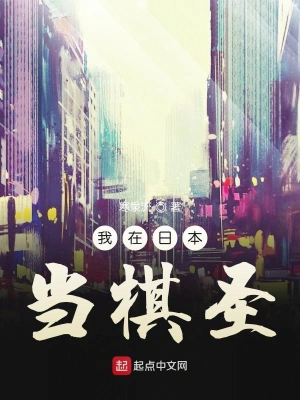
I Became a Shogi Saint in Japan
我在日本当棋圣
- Status
- Completed
- Length
- 1.1M Words
- Genre
- Urban
- Subgenre
- Urban Life
- Updated
- 5y ago
- Source
- Qidian
Stats
Tags
Synopsis
More by this author
In booklists 10





My Personal Picks: The Best of the Best, Half of Them Obscure and Niche
A little of everything, from niche and obscure to classics. I started reading Water Margin: The Sequel in third grade, and now I've been reading for a full 33 years. I've read countless novels. There are plenty of good books I can't think of right now, as well as books I remember being decent but have forgotten, so I'll add them as they come back to me. Basically, three stars means they're worth a read; don't expect any five-star ratings. Here are some I'm following lately.


Novels I've Read Before
Caught my eye

Japanese-Style Reading List
These are all niche Japanese-style books!




Reborn in Japan (Including Japanese Entertainment)
These are Japanese rebirth novels I personally enjoy. I've put together a small list, so feel free to take a look. Please don't complain if they're not to your taste~

A Mixed Bag of Books
A bit of everything, collected for myself
Books with Fresh Ideas
Books I'm following, not for beginners.

Brother Chen's Little Reading List
Some popular books, a few obscure ones, and some I read to earn credits

Fifteen Years of Qidian
Some books I can't forget

A Ten-Year Bookworm's List of New Buds to Pick
New sprouts.


In a Reading Slump
Any good books to read? Please share some titles.
Readers also read
 Reborn in High School, but the System Thinks I'm Seven?
 1955: A Personal Think Tank of Experts
 The C Student Doesn't Want to Be the Top Gaokao Scorer
 You Went to Military School, Where Did You Get a Room Full of Honor Certificates?
 Slaughtering My Way Through the Marvel Universe: Starting with The Boys
 Ace of Diamond: From Tokyo to Japan's No. 1
 Reborn in Tokyo's Bubble Era
 The Road Less Traveled
 The World of the Extreme Path: Tempering My Body Through Terror
 I'm Really Not Some Great Swordmaster
 Transmigrating to Tokyo’s Bubble Era
 Tokyo: Unnatural Forensics
 The Era of the Heavenly Lord
Reader comments 34
Google Translate
Two or three things about this book (answered together)
First, about the quality of Japanese people The overall quality of Japanese people is indeed good now, because it is a developed country and the penetration rate of higher education has increased. There is no need to praise the quality of the Japanese people too much. Even now, in small cities or rural areas of Japan, there are not many behaviors of low quality in our eyes, but they will not be photographed for publicity (public knowledge takes the blame) Just like Chinese tourists in the eyes of foreign media a few years ago, in the 1980s and 1990s, 'China' here can be replaced by Japan and South Korea. Countries are just at different stages of development. Second, about Osaka Nishinari District Did you know that the Japanese government will not mark Nishinari on the map at all? I can't even find this place on Google Maps. Most of the residents of Nishinari were the settlements of migrant workers during the period of rapid economic development after the war in the last century. However, as they grew older, their value decreased and they were abandoned by Japanese society. Xicheng is the area where the three major cancers of HDD converge. The police stations here are all bunkers. There have been 24 riots in history, the most recent one in 2008. If you are interested, you can check it out online. The scene does not meet some people's definition of Japan. Third, regarding the discrimination against Nisei This has nothing to do with quality. This kind of discrimination exists no matter which country, developed countries discriminate against developing countries, developed regions discriminate against underdeveloped regions, whether it is our country or Japan, or even any country on the earth, this phenomenon will occur. This is a kind of psychological superiority, but not everyone will show it. Just like Katsuhiko Shirakawa and the Watanabe couple in this book, they know that the protagonist lives in Nishinari, but their attitude remains unchanged. So don't ask again, 'Are the Japanese really so unqualified?' This is not only required by the plot of this article, but it has nothing to do with quality (excluding those who show severe discrimination) And Osaka people really believe that Nishinari, one of the three major slums in Japan, has dragged down Osaka's image. What's more, the setting of this book is not long after the economic bubble bursts, and social conflicts will definitely intensify this behavior. Fourth, the problem of bullying in Japanese schools I don't know if the behavior in the book is a bit excessive, after all, I have not studied in Japan, but the plot requires it, and it can be seen from some Japanese film and television works and news that bullying is not uncommon in Japanese schools. People who often watch Japanese movies and TV dramas should know the word "atmosphere". There are very few maverick people in Japanese society. Most of these people, such as the protagonist, will be looked at in a strange light. Finally, thank you all for your support, please collect, recommend and reward! Bow and thank you~~
Specific shortcomings Excessive force, the plot mainly relies on slaps in the face. After about 40 chapters, the author can read novels of the same type. Writing about Japan, I personally feel that there are two types One goal, the process is the scenery of the goal process plus other trivial daily life, such as Absolute Ichiban One There is no specific goal, pure daily life ➕ Rebirth of Japanese high school students due to emergencies Your kind of scene should be the kind of scenery with goals and bursting forward towards the goal ➕ Trivial daily life, but you wrote it into a frustrated daily life ➕ A small amount of goal progress It's not that slap-in-the-face style is not possible, but it may be a bit exaggerated to make the protagonist almost everyone's enemy. But I saw that the chess plot around chapter 40 is a little warm and daily, and the longer part is full of bullying and power oppression The author is going to write a reversal based on Kinoshita's relationship, but the first impression is really bad. Above
Since the author wrote about the cycle of three tribulations. Then we have to mention the most famous three calamities of Luoxihe in history. Today I will do a popular science. This is the decisive game of the Luo Xiha Samsung Cup semi-final against Korean chess player "Cui Du" Choi Cheol-han. The opening black piece 1357 started with a mini Chinese flow, which quickly expanded from the top. This was an invincible move by Korean chess players at that time. (AI believes that you only need to touch the star position 1 to slow down the layout speed and crack it) Luo Xihe flew out at 8 on the lower right, then jumped out at 10, and 11 went to the corner; the two sides began to fight fiercely. Fast forward to the scene of three tribulations White 1 and 3 collect their energy. Black's 6 and 8 can continuously remove White's tail, but this has nothing to do with the overall situation. Black 10 is a typical cycle of three calamities. Neither party can give up. According to the rules, there will be no winner. Because this is the decisive game, the winner must be determined. At that time, China and South Korea were already discussing the issue of extra games... Luo Xihe, who did not have much time, made a "hand of God" during the countdown - Bai 30 pressure! This is a selection point that even AI cannot find now. (The cycle of three tribulations involves an excessively large board size and excessive fluctuations in winning rates, which can now be regarded as the crystallization of human wisdom) It seems that this is just a move to adjust the mood when you can win but have no choice but to draw, but it hides a huge "conspiracy"! Cui Zhehan didn't think much at all, Black 31 responded and failed! At this time, the 37th three-way jump should be the forehand. Xihe began to regain his strength... Bai 36 was cut off, but Cui Du was still at a loss. When it comes to Black 39, these exchanges seem meaningless... The preparations are ready! Black 45 hits, and when the cycle of three tribulations is about to appear, White 46 sticks! Take the initiative to make the chess cycle of three calamities become your own back-hand calamity. It turns out that Black must not give in to this three-tribulation cycle, and White does not have to insist as long as he gets enough compensation. In the exchange on the right, White created a great calamity material and can now give up the Baron. Although the reason is very simple, under the pressing pressure of the countdown, I resolutely discarded the 30-eye big dragon and recalculated the overall situation. This requires not only a will of steel, but also calculations like ghosts and gods. Final game In the end, white wins 1 goal on the board, and half wins black on the 7th goal. Regardless of the rules, White ultimately wins. Luo Xihe also carried the momentum of victory, defeating Lee Chang-ho 2:1 in the final, breaking the monopoly of Korean Go players at that time, and also sweeping away the decline of Chinese Go champions for five years at that time. I have written so much useful information, I hope it can be refined
Does the author know the Japanese competition system? The seven major title battles are all two-year. The C round qualifiers and the B round qualifiers are in the first year. The A round qualifiers and this competition are in the second year. As a new initial stage, only by participating in various qualifiers in the first year can you compete for the title in the second year.
The author can make the Korean Wave hit earlier, and then let the protagonist enter the stage and participate in international competitions to break the Korean Wave. Korean pop's layout and ideas for playing chess can almost be regarded as evil in Japan. In the early days when Japan was No. 1 In Go, there was always a market for large-scale combat. The mainstream in Japan pursues the beauty of appearance and situation. However, people do not have the computing power of AI, and the deliberate pursuit of situation makes this large-scale style become a loft in the sky. The violent pursuit of reality and speed in Korean pop emerged as a result. The style of Korean Go is closely related to the utilitarianism and narrow-mindedness of its nation. (Some Korean chess players are also fond of off-board moves.) Among them, they will use violence to gain ground, and then mess around to get something out of the fire. This style of fishing first and then washing caused Chinese and Japanese chess players to suffer a lot. For this reason, many chess players have gone astray on the chess path. For example, Cui Zhehan's "Violent Go" and Chen Yaoye's "Gutter Flow". Then Ke Jie appeared, who learned from others' strengths. He has Lao Nie's layout, Gu Li's middle management, and Yu Bin's officials. His impartial style made the most dormant "zombie style" Lee Sedol lose his temper. Become the number one Go player in the world. This is also in line with AI Qizheng's chess thinking later. As for the impact and influence of the emergence of AI on modern Go, I will analyze it next time.
I just want to ask why so many Go novels are written with Little Japan as the background? ? ? Does writing about Go in qd also require 404? ? ?
What do you want this chess soul value for? After tens of thousands of points, you can't upgrade your skills, upgrade your thinking, exchange for new tricks, or improve your Qi power. If you fail to become a national player at the age of 20, you will have no hope for life. You are already 16.7, And you are still hanging around in the amateur circle, without any shocking performance. Then just hang out like this? I will enter the first dan next year, and the second and third dans the year after that? Only at the age of 27.8 Did he get the right to challenge for a major title? Stone Buddha Lee Chang-ho defeated his master and won a big title when he was just ten years old.
Statement before reading (must read)
First, although this book takes Go as the main line, it will be interspersed with a lot of daily life that may or may not be related to Go. It is essentially a story. Second, I only paid attention to Go when AlphaGo played against Lee Sedol, and I know a little about the rules, but I have not learned them systematically. So when it comes to the content of chess games, I mostly mix in terminology that I know or don't understand about Chunqiu Brushwork. Go masters are welcome to comment and popularize science in the comment area, but as for novels, they should be treated as entertainment┐(─__─)┌ Thirdly, please have a friendly discussion in the comment area. Arguments are okay, but please do not attack or insult others personally. Thank you for your support (*°∀°)=3
. . . I always feel that you don't need to activate the path calculation peak in the first few hands or at least the first two hands. If you encounter someone who thinks about it for a long time, just wait for a long time?
Those who like reading this book are probably people who are interested in Go in reality. At least I love Go.