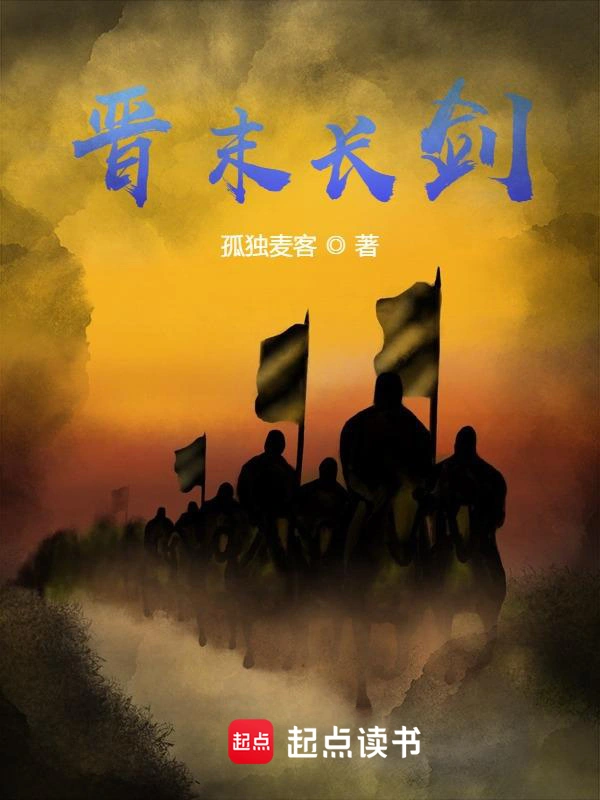
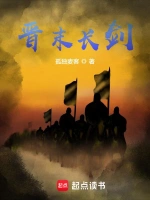
The Long Sword at the End of Jin
晋末长剑
- Status
- Completed
- Length
- 5.1M Words
- Genre
- Historical
- Audience
- Male
- Subgenre
- Jin-Sui-Tang Dynasties
- Updated
- 9mo ago
- Source
- Qidian
Stats
Tags
Honours
Synopsis
More by this author
In booklists 182
Explore more →


Pang Gege’s Book Picks: Romance and Multiple Heroines
Dear reviewer, please spare me! This is just a simple list of female protagonists. (Revised extensively to remove sensitive wording about book recommendations) Since book lists are difficult to get approved, you can visit the list creator's column for details. 🔥My private list, just for fun🔥 Created on March 10, 2019. Hi, everyone! I'm Fat Pigeon. Every day, I pick out high-quality, popular classics for you. Hope you enjoy them.
515 Half-Price Book Sale: Week Two
[More discounted books coming soon, all at half price] [New arrivals on this list: May 25–31] [How to join: App home screen → 515 Book Lovers' Festival → Book Purchase Gifts] [Discount start times vary by book, and some deals last only 3 days. Stay tuned!] [Click my profile picture to see more lists]

Goodbye to 2025: The Masterpieces We Finished This Year
A collection of masterpieces, capturing their finest moments. This list gathers not only stories that reached their conclusions in 2025, but also the dialogues, monologues, and vows that made your heart skip a beat. May the soul of every good story be preserved here.
Full Novels Now Available! Come Feast on August's Newly Completed Reads
Everyone, eyes on me! I've got an announcement: a whole bunch of great books are wrapping up in August! Out of things to read? Not a chance! Tired of waiting for updates? Those days are over! After a thousand days of saving books for later, today is the day we feast!
Dazzling New Books! May Our Great Motherland Prosper and Flourish
New releases that really stand out! Fantasy, xianxia, urban, historical, sci-fi, light novels... (The flowers-for-a-booklist event is paused. Books added to the list in exchange for flowers earlier will stay for at least a month. I'll read comments recommending new books from now on, and add the best ones to the list.) Let's enjoy fine writing together and discuss our differences. If you know a good book, leave a comment. I'll read every suggestion and add the ones I like to my shelves. Final
The Green Hills Are Still There, and the Sunsets Are Red Several Times! History Book List
Five Thousand Years of China, Recommended High-Quality Historical Writings
Bazhàng River Book Recommendations
【Recommending great novels across all genres, mostly premium titles with over 10,000 monthly subscribers】 【These are all books I personally enjoy】 If you've read something good that isn't on the list, leave a comment. I'll check it out when I have time, and if I like it, I'll add it. Thanks! 🌸🌸🌸 Recommending books! Recommending books! Keeping a record of the things I once loved.

【Recently Finished and Currently Following】Novel Recommendations
Welcome to Yuan Qichuan's reading list! 😄 There are countless novels on Qidian, but only a handful are truly enjoyable: the ones you can patiently keep reading, and that pull you in so completely you forget the time and skip meals. The point of this list is to help readers searching for something to read find their way. Of course, everyone has different tastes, so feel free to move along if these aren't your thing. My previous list had reached its 100-book limit, so here I'll review novels I'v
When You're Out of Books: Hidden Gems and Promising New Reads
Some classics are worth getting lost in or forgetting to eat and sleep for. Some stories are worth reading again and again from beginning to end. Once the noise of the years has settled, these books will make your reading life feel all the more beautiful and fulfilling.

Writers on the Path to Enlightenment
A thumbs-up to all the writers who love literature.
The Struggle to Find Something to Read
There are Platinum-level authors, Level 5 authors, excellent books, and promising new authors and stories. If you know a good read, feel free to recommend it in the comments. Thanks!
Shennong Tastes Every Herb
Focused on hidden gems and promising new novels that could be immortal-grade. Fellow readers, feel free to recommend good stories too.
Qidian Great Books Collector
A good book and a fine pot of tea. Even after savoring them, their flavors linger.
[Yuewen 2016-2024 Summary of Twelve Heavenly Kings]
[Yuewen 2016-2024 Summary of Twelve Heavenly Kings] [The following are books that cannot be added to the book list] [2016 Twelve Heavenly Kings] [Science Fiction New Queen] Twenty-Two Swordsman Style "Return to the End of the World" [2016 Twelve Heavenly Kings] [New Generation Adventure Leader] Liu Shiba "The Last Captain Who Touched the Gold" 2016 Twelve Heavenly KingsThe First Modern Cultivation SeatLiu Shui Qu Shang "The Cultivation Madman on Campus" [2017 Twelve Heavenly Kings] [2017 No. 1
Every Book Is a Gem!
Genre doesn't matter, and neither does whether the author is famous. What matters is whether it's good and well written. I only recommend quality books, across all kinds of genres. Reading different kinds of books feels like experiencing different lives. You can't go wrong by saving this list! It'll let you roam across the Six Realms: gods, demons, immortals, monsters, ghosts, and humans. Whether ancient or modern, Chinese or foreign, these books can help readers thrive in any situation, regardl

[Roundup] Silly Yun's Hundred-Herb Bookshop
I often browse rankings and sample books to see if they're any good. This list features novels I personally consider solid fare or true gems. Finding something to read during a slump is tough, so if you find something here to your taste, give me a follow~

The Reading Slump Chronicles
Featuring books with especially good prose, including new titles, top-quality works, and promising new novels.
Favorite Picks
Finding good books and collecting the best
Off-the-Beaten-Path Picks: Hidden Gems Outside the Rankings
I lean toward niche hidden gems. They may not be popular, but every one is top quality. If you like the list, leave a like to support the authors. Thanks!

Hall of Fame and Promising New Reads
Acclaimed masterpieces and promising new novels with the potential to become classics.
Seeking the Dao, Still on the Road
LV5s on the verge of ascending and achieving the Dao, excellent books, promising newcomers, and new releases. Take a look, and take a closer look.
The Bookish Manor
This list has room for only fifty books, so every new addition means another has to go. Abandoned or censored books get removed first. Feel free to recommend a book you think is great, though I may not add it. Most of the books here are ones I've read myself. After all, you can't speak about a book you haven't read. The overall quality is pretty good, selected with eight years of experience. Follow the list if you enjoy it.
Mainly Recommending Lesser-Known Historical Periods
This list focuses on stories from lesser-known historical periods, including the Spring and Autumn and Warring States periods, the Qin and Han dynasties, the Jin, Northern and Southern dynasties, the Five Dynasties and Ten Kingdoms, the transition from the Yuan to the Ming, and foreign history. I'll carefully select books with good writing and compelling stories to recommend. Those with especially original premises and strong writing will get extra attention. These are books that aren't dumbed
Complete Collection of Works by the New Platinum Authors of 2025
One book makes its author a Platinum writer; one stroke of the pen kindles divine fire.
Readers also read
 Germany: 1914
 Great Ming: His Father Is Useless, So He Must Summon the Founding Emperor
 Seizing the Direct Descendant in the Red Mansion
 A Literary Master in Ancient Greece
 Hong Kong Films: In Wo Hop To, Uncle Deng Begs Me to Take Charge
 Looking North to the Realm
 Splendor of the Five Dynasties
 I’m Not a Suit-Wearing Thug, I’m a Chameleon Actor!
 In Shrouding the Heavens, I Rule All Worlds from a Chat Group
 Starting a Business in Late Tang
 Expand and Advance
 Han Descendants of the Jin Court
 A Floating Life in the Late Tang
If you want to see what dynasty the author writes about in his next book, please vote. The management will give me a thumbs up. Thank you.
1. Liu Bang and Xiang Yu in the late Qin Dynasty 2. Liu Xiu, the great magician in the Western Han Dynasty 3. Three Kingdoms 4. Gang Li Er in the late Sui Dynasty 5. The late Northern Song Dynasty 6. Mongolia in the rising period of the Southern Song Dynasty 7. Fighting against Zhu Yuanzhang in the late Yuan Dynasty (Actually, I really want to see this, Mingfen) Don't spray) 8. Qianhuang Taiji in the late Ming Dynasty 9. Qing Dynasty (because there are some things that cannot be written in the late Qing Dynasty, so let's go to the Qing Dynasty) I think 167 is better, I recommend 7, because there are very few people who write about the late Yuan Dynasty from the starting point, and even fewer who write well.
The author has good writing skills, profound historical knowledge, and is willing to learn a lot of information and documents for writing articles. But I still want to make a few suggestions, because in my opinion this book could be better. Problem 1: Fake time travel Although the protagonist is set to be a time traveler, he is actually an ancient man wearing a time travel coat. The time traveler itself is the biggest cheat. One is the leading way of thinking, the other is the leading ideological concept, and the third is the information advantage. But the biggest drawback of this article is actually the combat effectiveness. It's not that you can't use this cheat, but the advantages of the first three are almost not reflected. In fact, the plot logic of this article is very simple, which is to raise troops → fight. The more soldiers you raise, the bigger the battle you will fight. Every time I win, I never lose, and the more I fight, the stronger I get. The plot of the time traveler itself has never been written. Apart from anything else, at least farm tools can be improved with thinking that is thousands of years ahead. With such a big information gap ahead, it can be arranged in the court or in the local area. The protagonist is always pushed by the general trend. When will others come to fight, when will we attack, when will the crisis come, and when will we take countermeasures. Except for the layout of troops, there are no forward-looking measures anywhere else. The author always uses a mutually beneficial approach when attracting talents. I still don't believe it. Not everyone in this world is only interested in profit. There are always great talents and ideological ambitions, right? The time-travelers used their advanced thinking to reduce the dimensionality of these people, and their personality charm suddenly increased. Aren't gay people more useful than those who share the same interests? But it has never been written about, and there are only a few words about the protagonist's own ideological ambitions. Expelling the Tartars and restoring China has always been the climax of historical novels, so it is a pity that there is not enough words to describe these thoughts. I would say that if the author continues to write a new book in this way, he might as well not set up a time traveler and just write an alternate history. The protagonist is a historical figure in parallel time and space, not a time traveler. 2, 6:,,,,,, This book only has two points: raising troops to fight, and stealing other people's harems. The expansion of territory is too small to be counted. 3: ? First, because the author does not dare to let the protagonist break out of historical inertia, the butterfly effect is almost not reflected in the early and middle stages of the book. Big characters die when they should, and big things happen when they should. The protagonist is like the dust raised by the inertia of history, drifting into stars little by little. Therefore, the plot cannot be actively promoted. The author can only wait for the stage of historical development to write the plot, instead of slowly promoting history and developing the plot himself under the instigation of the butterfly effect. The second reason is that a lot of pen and ink are spent describing the supporting characters. In my humble opinion, out of a hundred supporting characters, just pick ten to describe them in three dimensions, and the rest should be described as paper figures. There are too many characters in this book whose backgrounds clearly don't need to be introduced extensively. Moreover, this book is not willing to give up garbage time. The so-called garbage time refers to the low point of the plot. The author is not willing to skip these times quickly. The story of the wheel still needs to be filled in. In summary, the above two points caused the plot to drag out. Having said that, the author has the most profound knowledge in characterization, and is good at describing and portraying through language and expression, especially the psychological activities of female characters. But it still lacks a bit of flavor. What flavor is it? Looking at the whole text, is there one person whose personality charm is highlighted? I feel that the author's level is enough to depict these, but I feel that the author does not seem to have the awareness to depict these. In general, the author described the people in life vividly, but he never thought of establishing the characters as protagonists, missing a key ideological touch.
After chasing hundreds of chapters, all that's left now is superficial writing and perfunctory: "Long Sword in the Late Jin Dynasty" What's wrong with you?
The recent update of "Long Sword of the End of Jin Dynasty" is really disappointing. The plot advances slowly and the focus is scattered, making people feel anxious and frustrated. The crown prince's establishment was originally a climactic moment that had been longed for, but in the end it was written in a dull and uneventful way. The "lottery" of the prince's fate is finally revealed, and readers expect to see his inner shock - whether it is hesitation, excitement, or thinking about the future - but the result is empty. His feelings for his father, his stance towards his mother's clan, his judgment of the world's situation, and his vision for future governance were all not reflected. Where is his entourage? Where are the confidants? Where was the team's reaction? Their layout, dialogue, and even a few words have been omitted. The attitudes and emotions of key figures such as courtiers, relatives, and nobles have all become backgrounds. Hundreds of chapters of foreshadowing are laid out in one go at the critical moment. It's like being in love for hundreds of chapters, kissing a hundred times, and finally saying "the bride is menstruating" when the marriage is about to be consummated—a basin of cold water that directly extinguishes the reader's emotions. What's more serious is that this is not the first time that "the climax has gone off the rails": Hengwen was selected as the prince-in-law, Liangzhou was pacified, Li Cheng was destroyed, and the war in the south... Every node that should have been a big book was understated. The emotions accumulated by the readers for a long time were finally treated coldly, which is chilling. On the contrary, it is an invention of the second generation of Jiangnan officials and a trivial piece of local power. It is written in detail and lengthy, but lacks substantial nutrition. Do you want to talk about family, country and the world, or do you want to indulge in the indulgence of the children of aristocratic families? It should be the main axis of institutional reflection, power collision, cultural construction, and national strength, but it has been marginalized again and again. After following hundreds of chapters, what readers really care about is not the dispensable bits and pieces. What's worse is that the so-called "important ministers" are all stereotyped, looking alike and without personality. Which of these people in history was not scheming and good at maneuvering? But you describe them as puppets manipulated on strings, without intelligence or emotion. The struggle for power is originally a battle of life and death, but how could it be written in such a dull and light way? The positions, lives, and interests of noble families, relatives, common people, and soldiers are complicated and intertwined. It should be a wonderful contrast, but it is completely ignored. The prince's administrative team, his philosophy of governing the country, and even the psychological activities of the women around him are all highlights that can be explored in depth, but you discarded them all and did not write about them. To construct a thick historical novel, you need these skeletons, rather than relying on a few template characters and anecdotal lines. If you really don't have the energy to come up with ideas recently, it's better to pause the update. Even if you let us wait, it's better than the current state of obviously "cramming the word count". We can understand if you want to earn more royalties, but readers are not taken advantage of. Chapter after chapter, two-thirds of the content is just watershed: empty dialogues, repetitive plots, boring psychological descriptions, and barely a few motivating sentences in each chapter. This book has a wonderful early setting, a solid structure, and great potential. It could have become an epic work. But now, it has become a mixture of patchwork, perfunctory, cliché and hydrology. The chapters are updated quickly, but the quality has plummeted. Reading each chapter is like being stuffed with a bowl of porridge, which is tasteless and a waste of time. Especially, whenever the plot reaches a breaking point, you just choose to pass it by and devote a lot of space to describing meaningless scenes and dialogues - this is not telling a story, but "handing in homework". Can the current content really leave three or five sentences worth recalling? I'm afraid it's difficult. We pursue this book to see the ups and downs of fate, the collision of systems, and the struggle of human nature, not to see you perfunctorily updating and filling in the word count. You write more than just a novel, you build trust with your readers. Please don't let us think that the enthusiasm for chasing hundreds of chapters will only be regarded as traffic figures in the end.
After reading about the first 300 chapters of "The Long Sword of the Late Jin Dynasty", I complained and gave up the book.
It's really hard to read his book. I write a line here and a line there. When one of them first came out, he dug out all the eighteen generations of other people's ancestors, and then he became an official and passed it on to others. The writing was smooth in the early stage, focusing on the main character and what happened behind it. The plot of the story was not explained clearly. From time to time, a long paragraph was introduced to introduce this and that. I was confused when I read it. I couldn't do it in just a few sentences. It was just for the sake of literature.
Let's talk about why you should look at the long sword in the late Jin Dynasty. There is at least one reason.
Let's talk about why you like the long sword in the late Jin Dynasty. Everyone has at least one reason! I'll start with the following: My favorite four periods in ancient times 1. Wei, Jin, Southern and Northern Dynasties 2. Late Tang 3. Late Ming 4. Republic of China These four periods are relatively dark in history and relatively turbulent in society, but they are all brilliant culturally. To borrow from Du Mu's "Two Poems on Runzhou": "Most of the people in the Southern Dynasties were broad-minded, but unfortunately the Eastern Jin Dynasty was the most romantic." The lingering charm of the Wei and Jin Dynasties not only had a great impact on ancient Chinese literature, but also had dozens of sequels to its representative work "Shishuoxinyu". Even the radiating circle of Confucian culture has a wide influence. For example, the master of Chinese poetry in Japan's Meiji era, Onuma Kazuyama, wrote "A kind of romantic style I love most, a poem about Wei and Jin characters in the late Tang Dynasty." It is for this reason that I searched for the late Ming Dynasty in the book shortage after the completion of Xiu Shen Gaiden Immortal Realm, and accidentally came across Late Tang Fusheng. The book is rigorous in research, full of details, and the writing style is plain and calm. It goes against the routine of scientific and technological literature and is a true historical novel. Compared with Fusheng in the late Tang Dynasty, Mai Ke seems to be more confident, his writing style is more relaxed and humorous, and of course he drives the innocuous car harder, but in any case, the author of this book is very attentive and truly devoted and deduced, so this is a real historical novel rather than a romance novel cloaked in history - the author does have a thorough and in-depth understanding of the history of the two Jin Dynasties.
Two small bugs in the late Jin Dynasty long sword
Two small bugs in the long sword in the late Jin Dynasty The first one: Chapter 53 of Volume 2 "Advice", Shao Xun's clear and sharp words, Wang Yan actually had no reaction Shao Xun met Wang Yan "Situ." Shao Xun changed his tone again and said with a smile: "I will take care of that place in Xiangcheng for Situ. Practice some soldiers in your free time, Luo If there is something wrong in the sun, I must go north for a moment to ensure the safety of the imperial court. On the other hand, there is a beautiful place on the northern edge of Guangcheng Ze, with mountains behind it and water, surrounded by long embankments and shaded by green trees..." "Okay." Wang Yanzhen couldn't do anything to him and waved his hand to stop him. This bug should increase Wang Yan's psychological activities for the following reasons: The Wei and Jin Dynasties had a profound influence on Chinese classical culture. It was the era of "human consciousness" in the history of Chinese aesthetics. It can be said that without the Wei and Jin Dynasties, Lao and Zhuangzi were almost forgotten (Wen Yiduoyu), and without the Wei and Jin Dynasties, it would be almost impossible for literati paintings in ancient China to be born. When future generations talk about the Wei, Jin, Southern and Northern Dynasties, they often say, "Most of the Southern Dynasties were broad-minded, but unfortunately the Eastern Jin Dynasty was the most romantic." "Backed by mountains and facing water, surrounded by long embankments and shaded by green trees. In the spring, flowers are in full bloom, and the words are full of fluids and blooms." The words are very handsome, and coupled with Shao Xun's background, Wang Yan can speak such beautiful words. Wang Yan is stumped and not surprised. There should be no trace of psychological activity. You should know that the "Speech Chapter" of "Shishuoxinyu" is specially included, for example: Wang Zijingyun: "Walking up from the mountain valley, the mountains and rivers complement each other, making it overwhelming. It is especially difficult to bear in autumn and winter." Jianwen In Hualin Garden, Gu said to the left and right: "The place of understanding does not have to be far away. Just like the forest and water, you can have your own thoughts in Hao and Pu, and feel that birds, beasts, and fish come to your relatives." Let me give you another example: A letter written by King Wu Yue to his wife: The flowers are blooming on the road, so you can return home slowly. The flowers are blooming on the road, and you can return home slowly. The nine words reveal warmth in the ordinary, and reveal feelings in the warmth. Therefore, Wang Shizhen, a scholar of the Qing Dynasty, once said: "'The flowers bloom on the Moshang, you can slowly return home', and the two words have been praised throughout the ages." (Prince Qian Wusu did not know how to read, but he sent a poem to his wife: "The flowers bloom on the Moshang, you can slowly return home." It only takes a few words, but the beauty is infinite. Although the literati wrote it, it cannot be surpassed. Dongpo performed it as three quatrains of "Flowers on Moshang", which goes: "Flowers on Moshang" The butterflies are flying, and the country is still different from the past. The remaining people have grown old several times, and the wandering girls have returned slowly with songs. "In the Five Dynasties, no country was as elegant as the Southern Tang and Western Shu, and it was not as good as Wu Yue. This is enough to explain the ridicule.) The flowers bloom on the Moshang, but they slowly return. It was widely circulated and was compiled into a folk song by later generations, called "Flowers on the Moshang". Later, literati such as Su Shi and Chao Buzhi also created works with the title "Flowers on Moshang", leaving behind many popular poems. The imperial poetry score also includes Mo Shang Hua's Ci Pai ("Dongpo Ci Hua": "Qiantang people like to sing "Mo Shang Hua" and "Slow Song", which reflects the legacy of King Wu and Yue." The tune is named after this.) Three poems about Mo Shang Hua (co-quoted) Wandering Jiuxian Mountain, I heard the children's song "Mo Shang Hua" in Li Zhong. An old man said: The Princess of Wu Yue must return to Lin'an every spring. The king left a letter to the concubine and said: "The flowers on the road are blooming, so you can return home slowly." The Wu people used his language as a song, which is full of thoughts and sounds, and it is sad to listen to it, but his poems are despicable and wild, which is what Yi Zhiyun said. The flowers bloom on the Moshang and butterflies fly, and the country is still different from what it was in the past. The survivors grew old several times, and the wandering girls slowly returned home with long songs. Countless flowers are blooming on Moshang Mountain, and passers-by are vying to see the green flowers. If you want to stay in a dignified manner, you can go back slowly and teach more. Wealth and wealth were exposed during life, and flowers grew on the romantic streets after death. When Chichijun went to Lu, Youge slowly returned home to my concubine. Second point: Shunyang Internal History and Shunyang Prefect Speaking of internal history, Wang Xizhi, whom we are more familiar with, was the internal history of Kuaiji. Internal history, official name, has four meanings: 1. Official name. It was established at the beginning of the Western Zhou Dynasty and assisted the emperor in managing government affairs such as titles, salaries, abolitions, and purchases. It is placed along the edge in the Spring and Autumn Period. See "Zhou Rites." Chunguan. Internal History". 2. Official name. Qin official, in charge of managing the capital. Emperor Jing of the Han Dynasty separated the left and right internal histories. In the first year of Taichu, Emperor Wu of the Han Dynasty changed the name of the right Neishi to Jing Zhaoyin and the left Neishi to Zuo Fengyi. See "Han Shu." "On the List of Officials and Ministers". 3. Official name. At the beginning of the Western Han Dynasty, the vassal kingdoms established internal history and took charge of civil affairs. It was established in the past dynasties and was abolished in the Sui Dynasty. 4. Official name. Emperor Wen of the Sui Dynasty changed the Zhongshu Province to the Ministry of Internal History, and appointed one person each for the Internal History Supervisor and the Ling Dynasty. Emperor Yang of Sui Dynasty changed it to Neishu Province. Emperor Gaozu of the Tang Dynasty Wude first restored it to the Ministry of Internal History, and in three years it was changed to the Province of Zhongshu. Later, it was also used to refer to officials of Zhongshu Province. 5. The name of the ancient political district. In the Qin Dynasty, the area around the capital was governed by internal history, that is, it was named after the official name and was not called a county. The administrative seat was Xianyang (now northeast of Xianyang City). The jurisdiction is similar to the Guanzhong Plain of today's Shaanxi Province. During the reign of Emperor Jing of the Han Dynasty, there were left and right internal histories. During the reign of Emperor Wu, it was further divided into three administrative districts, namely Jingzhaoyin, Fengyi on the left and Fufeng on the right. They were collectively called the "Three Assistants". 6. Compound surname. The descendants of Shi Shuxing in Zhou Dynasty took Guan as their surname. See General Records. "Four Clan Briefs" quoted Han Yingshao's "Customs and Customs". Therefore, Wang Xizhi's internal history of Kuaiji should be the person in charge of civil affairs in the vassal state, equivalent to the prefect. Therefore, the second BUG of the long sword in the late Jin Dynasty is the inconsistency of the author 1. Chapter 90 of Volume 2 "Open and Honest (Part 2)" "There is indeed a difficult matter." Shao Xun said: "I heard that the internal history of Shunyang has been vacated." Here Shao Xun asked Wang Yan to give the internal history of Shunyang to Yangman 2. Volume 2, Chapter 122 "Testing" The beginning is: Shunyang Prefect Yang Man came to Guangchengze; · 3. Volume 2 Chapter 125 "Restaurant" Yang Man and Hu Wufu had a conversation, "Isn't Zu Yan the prefect in Shunyang?" Although the internal history and the prefect are of the same rank, Mai Ke is inconsistent. We prove it with historical materials "Book of Jin. Thirty-six Biographies" The king of Gaomi took over the town, and bandits could not help it. He ordered Qifan to be the internal history of Shunyang, and Jiang and Han returned home. When he passed away, he was replaced by mountain slips. When Jian Zhi arrived, he knew that Fan had won the hearts of the people. He was afraid that the people would force him to think that he was the master, so he expressed his opinion, so he recruited Fan as the captain of the Yue Cavalry School. (Historically, the person who replaced Liu Fan as the internal history of Shunyang was Luo Hui, who was killed by Wang Ru in the fifth year of Yongjia) It was also at this time that Liu Fan lost his official position as the internal history of Shunyang due to the mountain slips, and then Shao Xun asked Yang Man to replace him. (Refer to Jin Ji Jiu: Jisi of the third year of Yongjia, in March of 309 AD, Wushen, Gaomi Xiaowang passed away slightly. The Shangshu Zuopu Sheshan Jian was used as the general of the southern expedition, the governor of Jing, Xiang, Jiao, and Guangzhou military forces to suppress Xiangyang. Jian, the son of Tao, was addicted to alcohol and was not interested in political affairs; it means "Liu Fan, the internal history of Shunyang, won the hearts of the people. "I am afraid that the people will rob Fan." He ordered Fan to be appointed as the captain of the Yue Cavalry School. As a result, Nanzhou was in chaos, and all the elders remembered Liu Hong.) Let's talk about Shunyang Prefect "Book of Jin. Biography Thirty-Seven" Chen Min made a rebellion, except for Guang Shunyang Prefect and General Jialingjiang, and led five thousand troops to attack Jingzhou. ····Hong Biaoguang has distinguished honors, was promoted to be an official general, and became the governor of Liangzhou. Chen Min rebelled in 305 and was defeated in 307. Therefore, Zhang Guang moved to the post of general and governor of Liangzhou, resulting in the vacancy of Shunyang prefect in 307. It does not match the time of 309 when Shao Xun approached Wang Yan for Shunyang's internal history. Therefore, it is correct that Yang Man is the internal history of Shunyang in Mai Ke's book, and all the Shunyang prefects who appeared in the future are clerical errors. Shunyang has a county and a country. Sima Chang, the king of Shunyang, and Liu Cong entered Luo in the last years of Yongjia, but they didn't know where they ended up. Therefore, the current timeline of Shunyang Kingdom is still there. "Book of Jin. The Eighth Biography" Chang (Sima) was named Xuan Shu. He was renamed King Shunyang and given the titles of Shizhong, Tunqi Xiaowei, and guerrilla general. At the end of Yongjia, Liu Cong entered Luo and did not know where he ended up.
The author needs to play ck3
The wives he married, the concubines he took, and the sons he gave birth to were all capable and obedient and did not fight among themselves. They were like puppets on strings. Their relatives were sensible and did not make trouble, and their subordinates were loyal and did not rebel. There were so many tricks!
Why does the family exist?
When land is no longer annexed and the funds of wealthy people can be diverted to other things besides land, the monopoly of aristocratic families on land resources and land-dependent resources will be broken; When the cost of acquiring and disseminating knowledge is reduced, and the scope of education is expanded, the monopoly of knowledge by aristocratic families will be broken; When the selection of talents in the imperial court no longer relies on recommendation, nor on examination papers , and the method of anonymity will break the aristocratic family's monopoly on the upward path; When the imperial power is sent to the countryside, and the court's tax policy changes to sharing grains with the gentry, it will break the aristocratic family's monopoly on the population; Even so, class consolidation is inevitable, and aristocratic families will transform into academic, famous, capitalist, etc.!
The last volume: I want to say
After catching up with "The Last Volume", Fang realized that Changjian in the late Jin Dynasty was like a jar of aged wine - when the territory of Daliang was gradually being reorganized in the flames of war, the historical texture that had been temporarily obscured by the smoke of war was slowly unfolding with the smooth narrative. Some book friends feel that the daily life after reunification is a little dull, but I love the reality of this "refreshing feeling": when the iron horses fall silent, the smell of freshly turned earth in the fields, the crisp sound of the abacus in the market, and the sizzling rhythm of the quenching in the workshop, turn into the most vivid pulse of history. The author did not stop at the moment of conquest when the flags covered the sun, but worked hard and weaved the hard work of accumulating grains in granaries, the wisdom of ditch dredging, and the vitality of various businesses in the market into a dynamic volume of "Along the River During the Qingming Festival". The hidden thread of Shao Thief is like the Sword of Damocles hanging above the court. The undercurrent of the game between the princes and the pain of the alternation of old and new power all surge into a whirlpool under the calm lake. There is a strong tension between the thunderous tactics of the previous generation of emperors and the lack of prestige of the next generation. Under the appearance of brothers and sisters, there is clearly a powder keg of power that may explode at any time. The character of Geng Liang is like a different chess piece mixed in a chess game of power. He is sincere in his cunning, and loyal in his unruliness. Every time he appears, he can confuse the readers' predictions. I selfishly hope that he can find his own way to break the situation in the changing situation. Even if he acts a little absurdly, it will definitely add a lot of color to the story. This kind of narrative that abandons fast-food comfort and is rooted in history makes "The Last Volume" transcend the assembly line works. It is not only a history of the rise and fall of dynasties, but also a long song dedicated to the world of fireworks. In the symphony of grand narrative and subtle daily life, it plays a new rhythm of historical novels.
[New Year Book Review] A long review of a thousand words, briefly talking about the long sword in the late Jin Dynasty in my heart!
I have three sentences to say about this book: The first sentence is, no matter who becomes the emperor, I just want to sleep with the queen. The second sentence, the Chugong version of the Eight Kings Rebellion, Cao Cao agreed after reading it. The third sentence, for the sake of Master Shao, please help your brother. Since the last book, my stereotype of "traitors" is that of hard-core unpopular historical authors, especially the war game-style war scenes, which are still fresh in my memory. But if it is too hard-core, it will inevitably lack a bit of interest, so when Late Tang Fu Sheng reaches the middle and late stages, I can't stand it anymore. But this book has both deepened and eliminated my stereotype of the author. The reason for the deepening is that the two Jin Dynasties that started the Eight Kings Rebellion are extremely unpopular even in the unpopular history. The reason for the elimination is because the interest of this book is much stronger than the previous book. On the basis of serious deduction, it not only writes the characteristics of the Jin Dynasty, but also has the attributes of hard-core science popularization, giving us a lot of literacy-style understanding of that period of history, and also perfectly integrates interesting jokes into the lines. To put it simply, I want to see rivers of blood flowing, and I want to see the "Insects" swept away by the Black Clouds, Long Swords and Silver Spears. I also love watching "The Rebellion of the Eight Princesses". I enjoy the Cao-thief plot and am addicted to the farming plot. Goldfinger is also very interesting. The protagonist is a second time traveler with the martial arts, military skills and combat experience of Marshal Shao in his previous life, but the memory of the late Tang Dynasty in his previous life has been deleted, which will not affect the development of the plot. For old readers, this is undoubtedly an extremely surprising easter egg. It creates a lot of room for jokes out of thin air, giving jokers a lot of room to play and greatly improving the reading experience. But for new readers who have never read old books, there is no threshold problem and it will not affect the reading experience at all. However, as a personal suggestion, it is better to catch up on the old book "Fusheng in the Late Tang Dynasty" first, and then read the new book for a better experience. Moreover, during the update phase, it can also alleviate the pain of waiting for updates and highlight the need for a large amount of content. Summary in one sentence: This is the story of Cao Cao, a thief who was a soldier in the late Tang Dynasty, who shocked the royal family and aristocratic families in the late Western Jin Dynasty with hundreds of millions of warriors! As the plot progresses and the story gets better and better, this book is already the first "Nanbowan" in my daily update sequence. Compared with other works on the subject of the two Jin Dynasties, this book's entry point of rising from the bottom is also very unique, and it can be said to have a unique flavor. It not only echoes the protagonist of the old book, the soldier, but also avoids the prestige and reputation of the aristocratic family, and has a more immersive feeling. To rise from a noble family or a humble family, what kind of perspective is that? What I want is to be strong in martial arts, brutally tyrannize the oppressive and dark world in the late Jin Dynasty, and smash the dog food bowls monopolized by aristocratic families. In addition, the author's rigorous attitude also made me feel more at ease. What impressed me most was that a few days ago, a reader raised some questions, but I took a glance at it and didn't take it to heart at all. But it didn't take long for the author to use a single chapter with detailed data and solid research to give the questioning reader a sincere and powerful response. Based on this sincere attitude, I find it difficult not to strongly support it. But there is one thing: What kind of real man is the third watch? Commander-in-Chief, do you think it's harmful to me to wait for Wei Boya's sword? Send the reward (update) quickly, otherwise don't blame me for waiting for you to become ruthless!
1 The plot is too procrastinating. 2 The author always wants to show off historical knowledge. As the plot progresses, large sections of so-called "knowledge" often pop up, which prevents readers from thinking about the plot, gives the reader a sense of intimidation, and makes them easily bored. 3 There are too many names and uncommon words, and readers are not here to study archeology, so why waste their brains? 4 In terms of plot advancement, does the author want to restore history or something like that? Wouldn't it be better to study history directly by reading historical documents? Writing novels requires innovation, storytelling, and ups and downs, rather than using history to advance the plot. 5 In short, it is not fluent, too "educational", easy to get bored, and brain-consuming.
The author's attitude toward war tools is not as flexible as that of ancient people, such as Ma Jun and Zhuge Liang. Some wars can obviously be solved with war tools, but they have to be fought with human lives. It doesn't matter if the protagonist is an aborigine. He is obviously a time traveler, and the thinking logic of his brain has completely changed to that of ancient people. For example, he asked the civilians to fill in the moat. He could obviously build some protective tools and let the civilians fill the river. Elite soldiers shot arrows on both sides to cover, but the author insisted on these people filling it with their lives.
In the late Jin Dynasty, the long sword was like wine that could cut through blocks and strongholds, and like a sword, it could suppress unevenness.
In the late Jin Dynasty, the long sword was like wine, capable of destroying blocks, and like a sword, it could subdue injustice The Yongjia Rebellion and the Jingkang Disgrace have always been considered by later generations as two major historical humiliations, among which the Yongjia Disgrace was the most serious! The Yongjia Incident caused the earth to collapse and the country was destroyed and the family was destroyed. There are countless individuals who are devastated: For example, Guan Hanqing's "The Beautiful Lady Worships the Moon Pavilion" of the Yuan Dynasty: "The wind and rain urge people to leave their homeland, take a step and sigh. Two lines of tears hang down the face, a line of panic tears in a little rain, and a long sigh of relief in a gust of wind."; For example, the lyrics of "The Secret Girl": "How can I bear to see my husband holding his wife, The brother carries his brother, and the mother holds her son. The city is noisy, and the villages are crying. It's a pity that the cars are running, the people are in ruins, and the ancestral temple is in ruins." Specific to the individual, for example, the concubine Pei in this book was probably insulted by the rebels and then trafficked into slavery, while Queen Liang was probably captured by the rebels and her fate was unknown, and Princess Wuyang was abandoned by Wang Dun and died at the hands of thieves. Therefore, when we read "Book of Jin", we can't help but feel the hatred of insects, which no one regrets at this time. These women who are covered with smoke and dust in the corners of history, their honors, disgrace, sorrows and joys, and the tragedies of their circumstances caused by the huge historical gap, have created an emotional vortex for future generations. This vortex has turned them into words, dramas, legends, and also into the "Long Sword of the Late Jin Dynasty" written by Lonely Mai Ke. And these women are resurrected in Mai Ke's book. They are like wine that can sell a block of stone, and a sword that can suppress injustice!
"Long Sword in the Late Jin Dynasty": The invincible savior in the troubled times of Shao Taibai, the collector of princesses and queens
"The Long Sword of the Late Jin Dynasty" is a magnificent time-travel novel full of swords and shadows. The author is the well-known Lonely Mike. With unique writing style and wonderful plot, Mike brings readers into a turbulent and troubled era. Of course, what is most commendable is Mike's control of logical rationality and attention to historical details, which is quite detailed. In this age where mindless writing is rampant, it is rare to see it. The protagonist Shao Xun shows his heroic spirit of perseverance, wisdom and courage in this era full of challenges and opportunities. Shao Xun was originally just a pawn in the East China Sea King's army. Unlike the traditional protagonists of time-travel novels, he has no modern memory. He only has martial arts skills, outstanding military talents and a vague memory of the general trend of history in the late Western Jin Dynasty as if he was born with it. Through his perspective, Mike shows the overt and covert struggles and intrigues among the major forces in the late Jin Dynasty. Shao Xun relied on his intelligence and bravery to stand out in troubled times step by step, and eventually became the overlord of one party and established his own dynasty (under establishment 😁😁. He not only defeated foreign enemies, but also overcame inner struggles and hesitations, and grew into a true leader. The plot of the whole novel is tortuous and passionate, leaving a deep impression on people after reading it. (Of course, the various women of the Sima family who love to see and hear about it are indispensable - the Princess of Donghai, the former queen, the concubine... Who is really the thief of Cao in the late Jin Dynasty). The author's description of the historical background and character creation are very delicate, making people feel as if they are at the scene in person. The atmosphere of the turbulent times. "The Long Sword at the End of the Jin Dynasty" not only shows the complexity of human nature and the joys and sorrows, but also is an epic work about machinations and justice, glory and sacrifice. In general, "The Long Sword at the End of the Jin Dynasty" is a wonderful work worth reading, whether it is a reader who is interested in history or someone who likes Wang. Lovers of literature about hegemony will find fun in this novel. By reading this novel, let us follow Shao Xun's footsteps and integrate into this troubled world full of swords and swords, and explore the eternal pursuit of glory and justice. (Network deleted 😢😢)
Shao Yu (Tiger Head) as an adult
Yan Wangyu
2 Days to book it all, let's have a quick chat
First of all, I hope that the next time you cheat on the protagonist, you won't write about time travel, and change it to something casual. It will be more comfortable to read even if you have the incomplete memory of the soul. The whole text has always said that he has ambitions, but there is no specific description. Plundering excessively, being lustful, setting up troops in the fields, and showing that brothers are like brothers, The current psychological state of the protagonist can only be said to be powerful Starting from the bottom, ascending to the throne, the resistance is unprecedented. It is not unprecedented in history. He is called Zhu Yuanzhang. There is another name to think about, Wang Mang In the current chaotic world of cannibalism, again Open up a new world The target in the later stage is Cao Cao and Zhu Yuanzhang. I hope to see the psychological change of the protagonist, rather than blindly push the plot, so that he will be a low-profile Wang Mang when he finally ascends the throne The writing is quite good so far. The mid-term is a common problem for most authors. I have written a direct masterpiece. Good luck, author
As a student party, I have limited funds. I really like this book. I subscribed to you after watching the video. I finally saved up a monthly ticket and voted for you. Come on!
I really like your books. I read your last book when I was in high school. I didn't have a penny at that time and read it on a pirated website. Now I'm in college and have some money, but I'm still a student. I can only watch videos and subscribe to you. I've finally saved up my monthly votes to vote for you. Don't let us down (ノД`). Come on!
Military post, recommended for beginners to read. ❶Military training is a systematic knowledge. It is by no means standing in line and practicing hard. Our army can become the strongest army precisely because it follows scientific methods of training. You can go to station b to watch the video of the group. ❷Logistics support, our army was able to win the Huaihai Battle because of the scientific arrangement of logistics, which made our army worry-free in logistics during the war, and ultimately defeated the national army. Logistics is by no means as simple as piling up food and personnel. It must take into account the arrangement ratio of personnel, road conditions, and more cost-effective food products. ❸The composition of the army is that the Han Dynasty has "good families in six counties", the Tang Dynasty has "mandarin soldiers", and the later Jin Dynasty has "eight banners". These are all property owners, and the same is true for our army. Those who commit crimes are not allowed. The counterexample is the military households in the late Ming Dynasty. The current US military is a mess. Strict military law is only an auxiliary means, and the decisive factor is material and spiritual construction. ❹Army construction, our army can defeat the Japanese army, the Chinese army, and the US military, not only because of the wise decision-making of the leadership, but also because of the rich experience of the middle and senior levels, who can better execute the orders, and also because of the flexibility and change of the actions at the bottom. During the Korean War, many soldiers played their own role and greatly killed many US troops. Therefore, the formation of an iron army is the result of the convergence of collective heroism and individual heroism. ❺The army is economic. Our army can gradually become stronger because our army can be self-sufficient and even generate profits. If an army suffers serious losses, it will also fail. If it can generate profits, it can also weaken the enemy's economic capabilities.
Mike's book feels like a big improvement compared to the previous one.
I feel that this book is much better than the late Tang Dynasty in character creation. I think one of the biggest problems in the late Tang Dynasty is that apart from the protagonist, there are no memorable and three-dimensional supporting characters. They are basically just names, but it is difficult to leave a more impressive character. I feel that the names I see will be very unfamiliar, and I can't think of the plot. After all, it is a novel. In addition to strict and meticulous research, the elements of the novel must also be completed well, so that it can have better readability. This book has made great progress in the treatment of characters. Leaving aside the female characters, the characters of Wang Taiwei, Yu Liang, various Sima, etc. Have been relatively successfully established. I hope Mike will write better and better and make infinite progress, come on
What will happen in the last volume?
As we all know, Shao Thief's stories always account for 30% of the plot, 20% of the middle story, and the official takes half of the story. After the general trend of the world has been decided, the various small forces of the separatists are divided and defeated one by one, to the restoration of people's livelihood and recuperation, to the fight against the foreign Shao thieves after the peace is completed. There is only one topic left that is particularly critical and one that most book lovers are keen to discuss: the prince. At the beginning, I insisted that Lao Liu, as the legitimate eldest son, was not wrong and his abilities were decent. His mother's family also made great contributions in the process of Shao's thief conquering the world. From the perspective of maintaining the stability of his rule, he was worthy of inheriting the throne. Originally everything was reasonable, but in the seventh volume, Mike's description became more and more ambiguous, and a large space was devoted to positively shaping the fourth child's abilities and character, while the prince only had a short chapter to mention it in one stroke. How short is it? The length of writing about Guo Shi is longer than that of Prince. Not to mention that the description of the prince in that short chapter is partly divided by the queen and the princess. The portrayal of his personal image is also extremely flat and can even be said to be vulgar and without any highlights. Basically, the image of the conservative king in history is even worse, and the vividness of the image is not even as vivid as the third child. Speaking of unknown people, we have to talk about their respective teams. Let's talk about the fourth child first. His mother's family is the most popular in the world, and Wang Yan can be regarded as one of the celebrities in the Wei and Jin Dynasties. The Yanzhao scholars in Prince Yan's palace are all fierce. Even Guo Shi, who looks like a scribe, can have the highlight of a naked charge, and the superiors and subordinates are harmonious with each other. They are the future chiefs of the grassland tribes. The Yuwen clan of the wife clan is even more powerful in the grassland. There are other wife clans that seem to be good, but I can't remember clearly. He single-handedly established the 3,000-strong guard army of Prince Yan's Mansion. He has gained military morale and has seen blood, so he is quite capable of fighting. Looking at Lao Liu, his mother's family is from the Yingchuan family. He is too lazy to understand everything, and his uncle Liangzi is even more incomprehensible. The descriptions of the Yingchuan scholars in the Prince of Qin's palace are surprisingly negative. They are either asking for land or housing, or they are engaged in personal affairs. The only positive image is that of a barbarian from the northwest, and he was forcibly promoted by the Shao thief. It is difficult to say what kind of relationship he has with the prince, monarch, and ministers. In a word, the prince's ability to recognize and employ people has been shrouded in thin air. Not to mention that he is his father, he is far inferior to the fourth child, his background is not as good, and he is not even worthy of being the king of Shoucheng. But do you think the prince is really that bad? In fact, not necessarily. If you look closely, you will find that there is an invisible big hand at play, and the descriptions of Lao Liu and Lao Si are completely unequal. So what does the author want to do? Is it true that as soon as Shao thief died, he mortued his body and ignored each other? Not likely. The background of the times and the remaining power of Shao Thief do not allow it. My guess is that if a gun is described in the first article, then bullets will inevitably be fired in the second article. With so much description of the fourth child, I am afraid that in the future it will not be a script about the premature death of the sixth child.
"Long Sword in the Late Jin Dynasty" novel outline Story background In the late Western Jin Dynasty, the Eight Kings Rebellion caused great chaos in the world, and the people were in ruins. Wuhu took advantage of the situation to invade the Central Plains, and the land of China fell into chaos and darkness. The once prosperous Western Jin Dynasty was on the verge of collapse, the social order collapsed, the people were in dire straits, and various forces emerged one after another to compete in the Central Plains, and the curtain of troubled times began. Main Characters 1. Shao Xun: The protagonist of the novel, a time traveler, whose soul comes from modern times. Originally a householder from the East China Sea, he was highly skilled in martial arts, especially archery. He had a resolute and courageous personality, and had a heart for the world. He was determined to make his way in this troubled world, save the common people, and rebuild a peaceful and prosperous age. 2. Yu Zhi: A serious nobleman was conquered by Sikong, and Shao Xun was responsible for escorting him to safety. He usually likes to talk and is a bit pedantic, but he also hopes to contribute to his family and the court. 3. Guanqiu family: Yu Zhi's wife, dignified and virtuous, manages family affairs. 4. Little girl: The five or six-year-old daughter of the Yu family is innocent, kind, simple and cute, warm and friendly to others, and she still retains a pure heart in this troubled world. Story Outline 1. Time-travel opening: Shao Xun traveled to the late Western Jin Dynasty and became a military household in the East China Sea. He was only fifteen or sixteen years old. At this time, although he possessed modern knowledge and thinking, he was faced with the harsh class system and chaotic social environment of this era. He had no ambitions, but was restricted in everything because of his humble background, and was also discriminated against in the army. 2. Escort trip: Sima Yue, King of the East China Sea, had just become Sikong and was eager to recruit talents and conquer Yu. As a bodyguard, Shao Xun and several other young soldiers escorted Yu Zhi to Luoyang. Along the way, they experienced hardships and encountered harassment by refugees and attacks by bandits. Shao Xun relied on his martial arts and wisdom to save Yu Zhi many times, not only protecting Yu Zhi's safety, but also making the soldiers who were traveling with him fear him. 3. First arrival in Luoyang: After arriving in Luoyang, what Shao Xun saw was a city full of devastation and chaos. Forces from all sides are fighting openly and covertly, making people's lives miserable. In the Yu Mansion, he was despised by the nobles because of his origin, but with his superb archery skills, he showed extraordinary abilities and gradually attracted the attention of some people. 4. Choices in troubled times: Facing these troubled times, Shao Xun began to think about his own way out. He once considered joining the refugee commander Ji Sang like Shi Le, hoping to get ahead, but he was well aware of the ragtag nature of the refugee army and its future was uncertain. He also felt conflicted about joining Liu Yuan because of his nationality and position. In constant weighing and struggling, he decided to accumulate strength in this chaotic situation and wait for the opportunity. 5. Emerging: The situation in Luoyang became increasingly chaotic. A riot broke out in Luoyang City, and various forces fought in a melee. During the rebellion, Shao Xun saved many innocent people with his strong martial arts and calm mind, and his reputation gradually spread in Luoyang. At the same time, he made some like-minded friends, many of whom were insightful, and together they discussed the world situation and planned the future. 6. Forming a force: Shao Xun realized that in order to truly make a difference in this troubled world, he must have his own force. As a result, he began to secretly contact some soldiers, refugees, and ordinary people who were also dissatisfied with the status quo and eager to change, and formed a team of his own. They moved around Luoyang, training and rescuing refugees at the same time, and their team gradually grew. 7. Fight against the Hulu: As the Wuhu invasion intensified, Shao Xun's team ushered in a head-on confrontation with the Hulu army. Based on modern military knowledge and the actual situation at the time, he formulated unique tactics, defeated the Hu army many times, and protected the safety of the people. His reputation is getting louder and louder, and he has become the hope in the hearts of the people in the Central Plains. 8. Internal disputes: As Shao Xun's power gradually grew, some internal problems also arose. Some people who originally followed him began to have differences and conflicts in the face of power and interests, and some even tried to betray him and seize power. Shao Xun relied on his prestige and wisdom to resolve these internal crises and make the team more united and stable. 9. Alliance to fight the enemy: In order to better fight against the Hu people, Shao Xun actively contacted and cooperated with other anti-Hu forces and formed a huge alliance. In this alliance, all parties discussed strategies together and supported each other, forming a powerful deterrent to the Hu people. They launched many large-scale battles and gradually recovered some lands occupied by the Hu people. 10. Rebuilding peace: After years of hard work and fighting, Shao Xun led his alliance forces and finally succeeded in expelling most of the Hu forces, and peace and stability gradually returned to the Central Plains. Subsequently, Shao Xun began to devote himself to rebuilding social order, restoring production, and establishing education, so that the people could live and work in peace and contentment. He also became a hero who will go down in history and be praised by future generations.
Hope to see a better ending
The ending of the last book was the best-written ending in my opinion, and I hope this book will have a better ending. In the last book, Marshal Shao did not die in the palace, but in the old house of the Tiande Army in the west city. The girl next door who accompanied him in the end was also the girl next door who liked him from the beginning. Although Marshal Shao was forced to marry into the Zhe family for his great career, the girl who fell in love with him when he was poor and white will always be the white moonlight in his heart.
Why does everyone want to read the extra chapter of the latest chapter? Even most people, including me, are willing to pay to watch it? Because of the good reputation Mike has accumulated from the late Tang Dynasty to the end of the Jin Dynasty, and because everyone has experienced the two generations of soft rice kings on their journey (all-you-can-eat soft rice), unlike some paid or monthly extras, the author just wants to make money. Unfortunately, old bookworms don't buy it.
Stud
Just figure it out
Maybe life is like this
I learned about this book from bzhan. Com. I am a fan of historical novels. In my early years, I liked reading Three Kingdoms novels, such as "Evil Man", and then I liked Tang and Song Dynasties. I also read a lot of Ming Dynasty novels. Now in my thirties, I came across such a book. I am glad that I encountered this book at this time. In the early years, I would have disliked it because it was not overbearing and domineering enough. In later years, I would have thought it was too ideal. When Shao Thief's parents died, I shed tears several times because I My parents are also getting old. My father is just like the one in the novel. Although he has experienced a vigorous era, he is still left behind by this fast-developing era. He will also marvel at the performance and experience of the tram I bought. It is no longer comparable to the Corolla that he knew. My mother's legs and feet have become worse in recent years. Osteoarthritis has begun to torment her like my grandma. There is nothing I can do about it. I can only ask to pay more attention to keeping warm. In the early years, I might not be able to go back home even once a year in order to make more money, but now I suddenly find that time passes too fast. My father who was once omnipotent has gradually become silent, and my mother, who has unlimited energy, keeps complaining that she is tired. Sometimes I think that I came to this world like a monster that keeps sucking the essence of my parents. Time is too cruel. Alas, after reading the novel, I couldn't stop talking. Please cherish your family more.
The people of Zhoukou, Henan have spent a long time farming for Shao Thief💢
I am from Zhoukou. After reading the third volume, I discovered that Shao Thief started his career growing grain in my family 😡
Be sure to wrap up the ending of the last volume
The ending of the last book was the best-written ending in my opinion. The ending of this book will probably be difficult to surpass the previous one. In the last book, Marshal Shao did not die in the palace, but in the old house of the Tiande Army in the west city. The girl next door who accompanied him in the end was also the girl next door who liked him from the beginning. Although Marshal Shao was forced to marry into the Zhe family for his great career, the pure love for the girl who had fallen in love with him when he was very poor was the white moonlight that he could never forget in his heart. There are many female characters in this book, but without that kind of pure emotion, it would be difficult to have that feeling again. Perhaps the protagonist's initial feelings for Mr. Pei were barely up to par.
Last volume
As an old bookworm, I got to know Mike from the book Rise of South America, and then followed the late Tang Dynasty and the current late Jin Dynasty at the starting point. Each book has a reasonable sense of realism and is very comfortable to read. I am looking forward to the next work after the end of the Jin Dynasty.
Last volume
The last volume and essay on new book ideas (1) I have been a bookworm since the late Tang Dynasty. Maike's book is indeed very different from other historical texts. It is often said that history cannot be looked at directly and cannot be looked at closely. And Mai Ke's book polishes the details, uses historical materials, and describes the characters' psychological activities, etc.: First, it looks more real. Second, it makes more sense if you think about it carefully. Only the richness of details can reflect the richness of history. I think the core and soul of Mike's book is the weight of history, and what I like is the weight of history. So I hope that his new book can continue to maintain this kind of research and polish, which is one of the few in the historical area, and make persistent efforts. Come on! !
I've all submitted it, so hurry up and start a new book, there's a shortage of books.
I've all submitted it, so hurry up and start a new book, there's a shortage of books.