Fanqie library
Browse
- Titles
- 966
Every Fanqie book we index, searchable by title, author or tag.
-
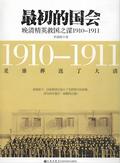 The Original Congress: the Late Qing Elite's Plan to Save the Nation, 1910-1911
Engels pointed out in "Feuerbach and the End of German Classical Philosophy": "What people expect rarely comes true. Many expected goals conflict with each other and contradict each other on most occasions, or the goals themselves cannot be realized from the beginning, or lack the means to realize them. In this way, countless individual wishes and individual The conflict of actions creates in the realm of history a situation exactly like that which prevails in unconscious nature: the purpose of
—Reads8.5Score—Shelves
The Original Congress: the Late Qing Elite's Plan to Save the Nation, 1910-1911
Engels pointed out in "Feuerbach and the End of German Classical Philosophy": "What people expect rarely comes true. Many expected goals conflict with each other and contradict each other on most occasions, or the goals themselves cannot be realized from the beginning, or lack the means to realize them. In this way, countless individual wishes and individual The conflict of actions creates in the realm of history a situation exactly like that which prevails in unconscious nature: the purpose of
—Reads8.5Score—Shelves
-
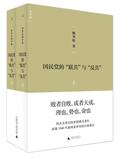 The Kuomintang's "Union with the Communist Party" and "Anti-Communism" (Two Volumes)
There were two revolutionary parties in modern China: the Kuomintang and the Communist Party. The direction in which the Chinese revolution will take depends on the strength and competition between the Kuomintang and the Communist Party. This contest lasted for nearly thirty years. In the end, the young and weak Communist Party defeated the Kuomintang and shaped the subsequent history of China. The two revolutionary parties have been separated and reunited for a long time. You have me in you, an
—Reads9.4Score—Shelves
The Kuomintang's "Union with the Communist Party" and "Anti-Communism" (Two Volumes)
There were two revolutionary parties in modern China: the Kuomintang and the Communist Party. The direction in which the Chinese revolution will take depends on the strength and competition between the Kuomintang and the Communist Party. This contest lasted for nearly thirty years. In the end, the young and weak Communist Party defeated the Kuomintang and shaped the subsequent history of China. The two revolutionary parties have been separated and reunited for a long time. You have me in you, an
—Reads9.4Score—Shelves
-
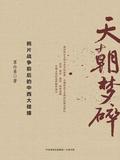 The Dream of the Celestial Empire Broken—the Great Collision Between China and the West Before and After the Opium War
This book is a historical book that tells the story of the fierce collisions in the exchanges and wars between China and Britain before and after the Opium War during the late Qing Dynasty, under the great changes unseen in three thousand years. The author is historian Qin Shiyong. The book uses a lot of documentary materials, starting from the incident of Magartney's visit to China, detailing the diplomatic communication, wars and negotiations between China and Britain before and after the Opiu
—Reads8.7Score—Shelves
The Dream of the Celestial Empire Broken—the Great Collision Between China and the West Before and After the Opium War
This book is a historical book that tells the story of the fierce collisions in the exchanges and wars between China and Britain before and after the Opium War during the late Qing Dynasty, under the great changes unseen in three thousand years. The author is historian Qin Shiyong. The book uses a lot of documentary materials, starting from the incident of Magartney's visit to China, detailing the diplomatic communication, wars and negotiations between China and Britain before and after the Opiu
—Reads8.7Score—Shelves
-
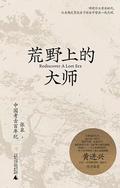 Masters in the Wilderness: a Century of Chinese Archeology
"Master in the Wilderness" tells the story of the creation of Chinese archeology in the 1920s. The author describes the birth of Chinese archeology by focusing on the development of four major institutions: the Institute of Geological Survey, the Institute of Chinese Studies at Tsinghua University, the Institute of History and Philology of Academia Sinica, and the Society of Architecture. These four major institutions have produced many famous archaeologists (Li Ji, Zhao Yuanren, Wu Mi, Jia Lanp
—Reads9.3Score—Shelves
Masters in the Wilderness: a Century of Chinese Archeology
"Master in the Wilderness" tells the story of the creation of Chinese archeology in the 1920s. The author describes the birth of Chinese archeology by focusing on the development of four major institutions: the Institute of Geological Survey, the Institute of Chinese Studies at Tsinghua University, the Institute of History and Philology of Academia Sinica, and the Society of Architecture. These four major institutions have produced many famous archaeologists (Li Ji, Zhao Yuanren, Wu Mi, Jia Lanp
—Reads9.3Score—Shelves
-
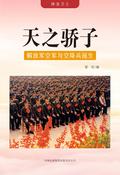 The Proud Son of Heaven - the Birth of the PLA Air Force and Airborne Forces
This book includes: 1. The creation and development of the Air Force; the Air Force Command officially announced its establishment; the Military Commission ordered the establishment of the Air Force leadership organization; the Northeast Bureau was ordered to prepare for the establishment of the Northeast Old Aviation School; the Aviation Bureau established the Air Force's first flying team; the Central Military Commission approved the establishment of the Aviation School; Air Force leaders foun
—Reads8.4Score—Shelves
The Proud Son of Heaven - the Birth of the PLA Air Force and Airborne Forces
This book includes: 1. The creation and development of the Air Force; the Air Force Command officially announced its establishment; the Military Commission ordered the establishment of the Air Force leadership organization; the Northeast Bureau was ordered to prepare for the establishment of the Northeast Old Aviation School; the Aviation Bureau established the Air Force's first flying team; the Central Military Commission approved the establishment of the Aviation School; Air Force leaders foun
—Reads8.4Score—Shelves
-
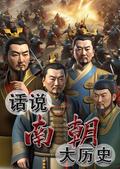 Talking About the Great History of the Southern Dynasties
This book includes the generals of the Jin Dynasty, the collapse of the Langmiao Rebellion, the rise of the Song Dynasty to the emperor, Liu Jinu's meritorious service in destroying the bandits, Wang Xiaobo claiming to be a soldier and being killed, Yang Quanqi performing martial arts and seeking marriage, Huan Jingdao's army expansion, the gathering of heroes in Jingkou Town, and the absconding of the puppet master in Jiankang City.
—Reads7.9Score—Shelves
Talking About the Great History of the Southern Dynasties
This book includes the generals of the Jin Dynasty, the collapse of the Langmiao Rebellion, the rise of the Song Dynasty to the emperor, Liu Jinu's meritorious service in destroying the bandits, Wang Xiaobo claiming to be a soldier and being killed, Yang Quanqi performing martial arts and seeking marriage, Huan Jingdao's army expansion, the gathering of heroes in Jingkou Town, and the absconding of the puppet master in Jiankang City.
—Reads7.9Score—Shelves
-
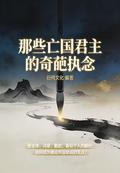 The Strange Obsessions of Those Subjugated Monarchs
Did the collapse of a dynasty begin by chance, or was it inevitable that it was already buried in the monarch's character? Emperor Huizong of the Song Dynasty wrote the most beautiful poems in thin gold style, but signed a covenant to subjugate the country; Emperor Chongzhen's "diligence" actually accelerated the fall of the empire; Li Yu's pain for his family and country could only be turned into an eternal song... What we see is not only the end of history, but also souls trapped in the throne
—Reads8.3Score—Shelves
The Strange Obsessions of Those Subjugated Monarchs
Did the collapse of a dynasty begin by chance, or was it inevitable that it was already buried in the monarch's character? Emperor Huizong of the Song Dynasty wrote the most beautiful poems in thin gold style, but signed a covenant to subjugate the country; Emperor Chongzhen's "diligence" actually accelerated the fall of the empire; Li Yu's pain for his family and country could only be turned into an eternal song... What we see is not only the end of history, but also souls trapped in the throne
—Reads8.3Score—Shelves
-
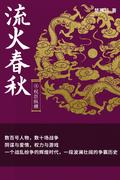 The Spring and Autumn Period of Flowing Fire 4: Powerful Ministers Manage
The Chinese version of "Game of Thrones" fully reproduces the history of a generation of heroes striving for world hegemony. Hundreds of characters, dozens of wars; conspiracy and love, power and games. A glorious era of war and strife, a magnificent history of struggle for hegemony. The Spring and Autumn Period and the Warring States Period are an important chapter in Chinese history. It kicked off with King Zhou Ping's eastward migration, reproduced the rise of Qi and Chu and the struggle for
—Reads8.3Score—Shelves
The Spring and Autumn Period of Flowing Fire 4: Powerful Ministers Manage
The Chinese version of "Game of Thrones" fully reproduces the history of a generation of heroes striving for world hegemony. Hundreds of characters, dozens of wars; conspiracy and love, power and games. A glorious era of war and strife, a magnificent history of struggle for hegemony. The Spring and Autumn Period and the Warring States Period are an important chapter in Chinese history. It kicked off with King Zhou Ping's eastward migration, reproduced the rise of Qi and Chu and the struggle for
—Reads8.3Score—Shelves
-
 Talks About the Ceding of Territories in the Qing Dynasty (Free Public Edition Book)
The prosperity of the Qing Dynasty was due to the (Nine Tigers) Wu Pingling's energy that shook all directions, and his ability to control distant vassals with his manipulation skills. Therefore, the territory was so vast that the Han and Tang Dynasties could not reach it. And its decline can move thousands of miles with one frown. Such as the cession of the Wulianghai Twenty-five Assistant Leaders and the cession of the North Horgos River in Heilongjiang. What is especially strange is that the
—Reads8.0Score—Shelves
Talks About the Ceding of Territories in the Qing Dynasty (Free Public Edition Book)
The prosperity of the Qing Dynasty was due to the (Nine Tigers) Wu Pingling's energy that shook all directions, and his ability to control distant vassals with his manipulation skills. Therefore, the territory was so vast that the Han and Tang Dynasties could not reach it. And its decline can move thousands of miles with one frown. Such as the cession of the Wulianghai Twenty-five Assistant Leaders and the cession of the North Horgos River in Heilongjiang. What is especially strange is that the
—Reads8.0Score—Shelves
-
 A Brief History of Chu State
Since the founding of the Chu State, the soldiers have expanded their territory and conquered the South Vietnamese nation from the initial fifty-mile city, and then sent their troops north to fight with the overlords of the Central Plains. The kings of the Chu Kingdom were even more majestic, witty and brave, or vying for supremacy. In its 800-year history of development, more than forty generations of kings experienced ups and downs, and its territory continued to expand. At one time, Chu State
—Reads9.0Score—Shelves
A Brief History of Chu State
Since the founding of the Chu State, the soldiers have expanded their territory and conquered the South Vietnamese nation from the initial fifty-mile city, and then sent their troops north to fight with the overlords of the Central Plains. The kings of the Chu Kingdom were even more majestic, witty and brave, or vying for supremacy. In its 800-year history of development, more than forty generations of kings experienced ups and downs, and its territory continued to expand. At one time, Chu State
—Reads9.0Score—Shelves
-
 Selected Poems of Yang Jisheng
Yang Jisheng (1516-1555) was a famous remonstrator in the Ming Dynasty. The courtesy name was Zhongfang, and his nickname was Jiaoshan. He was a native of Rongcheng (now Beihezhao Village, Rongcheng County, Hebei Province) under the direct control of the Communist Party of China. In the 26th year of Jiajing's reign, he was a Jinshi and a member of the military and military affairs department. Sitting on the horse market, he demoted the history of Di Daodian. When the matter was white, he became
—Reads—Score—Shelves
Selected Poems of Yang Jisheng
Yang Jisheng (1516-1555) was a famous remonstrator in the Ming Dynasty. The courtesy name was Zhongfang, and his nickname was Jiaoshan. He was a native of Rongcheng (now Beihezhao Village, Rongcheng County, Hebei Province) under the direct control of the Communist Party of China. In the 26th year of Jiajing's reign, he was a Jinshi and a member of the military and military affairs department. Sitting on the horse market, he demoted the history of Di Daodian. When the matter was white, he became
—Reads—Score—Shelves
-
 Collected Works of Yang Jisheng
Yang Jisheng (1516-1555) was a famous remonstrator in the Ming Dynasty. The courtesy name was Zhongfang, and his nickname was Jiaoshan. He was a native of Rongcheng (now Beihezhao Village, Rongcheng County, Hebei Province) under the direct control of the Communist Party of China. In the 26th year of Jiajing's reign, he was a Jinshi and a member of the military and military affairs department. Sitting on the horse market, he demoted the history of Di Daodian. When the matter was white, he became
—Reads8.7Score—Shelves
Collected Works of Yang Jisheng
Yang Jisheng (1516-1555) was a famous remonstrator in the Ming Dynasty. The courtesy name was Zhongfang, and his nickname was Jiaoshan. He was a native of Rongcheng (now Beihezhao Village, Rongcheng County, Hebei Province) under the direct control of the Communist Party of China. In the 26th year of Jiajing's reign, he was a Jinshi and a member of the military and military affairs department. Sitting on the horse market, he demoted the history of Di Daodian. When the matter was white, he became
—Reads8.7Score—Shelves
-
 Collected Works of Xu Wei
Xu Wei (1521-1593), Han nationality, was born in Shanyin, Shaoxing Prefecture (now Shaoxing, Zhejiang). The original name was Wenqing, later changed to Wenchang, and his nicknames were Tianchishanren, Tianshuiyue, Tiandanshui, Qingteng Laoren, Qingteng Taoist, Qingteng layman, Tianchi Yuyin, Jinlei, Jinhuishanren, Shanyin Buyi, Baiyushanren, Elbishannon and other nicknames. Chinese writer, calligrapher, painter, and military strategist in the Ming Dynasty. Stories and legends about him are also
—Reads8.7Score—Shelves
Collected Works of Xu Wei
Xu Wei (1521-1593), Han nationality, was born in Shanyin, Shaoxing Prefecture (now Shaoxing, Zhejiang). The original name was Wenqing, later changed to Wenchang, and his nicknames were Tianchishanren, Tianshuiyue, Tiandanshui, Qingteng Laoren, Qingteng Taoist, Qingteng layman, Tianchi Yuyin, Jinlei, Jinhuishanren, Shanyin Buyi, Baiyushanren, Elbishannon and other nicknames. Chinese writer, calligrapher, painter, and military strategist in the Ming Dynasty. Stories and legends about him are also
—Reads8.7Score—Shelves
-
 The Deeds of an Lushan (Free Public Edition Book)
The whole book uses the historian's writing style to record the plots of major historical events, and lists them in outline, as well as discussions, detailed in the official history. The first volume records An Lushan's birth to his favor; the middle volume records An Lushan's rebellion; the second volume records An Lushan's proclaimed emperor to his death, as well as An Qingxu, Shi Siming, and Shi Chaoyi. More than 40,000 words.
—Reads8.5Score—Shelves
The Deeds of an Lushan (Free Public Edition Book)
The whole book uses the historian's writing style to record the plots of major historical events, and lists them in outline, as well as discussions, detailed in the official history. The first volume records An Lushan's birth to his favor; the middle volume records An Lushan's rebellion; the second volume records An Lushan's proclaimed emperor to his death, as well as An Qingxu, Shi Siming, and Shi Chaoyi. More than 40,000 words.
—Reads8.5Score—Shelves
-
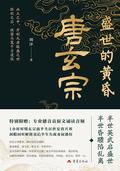 The Dusk of the Prosperous Age: Emperor Xuanzong of the Tang Dynasty
This book integrates historical facts and literature, and uses a calm writing style to carefully outline the ups and downs of Tang Xuanzong's life. In the early days of his reign, Emperor Xuanzong of the Tang Dynasty was full of ambitions, far-sighted, and appointed talented people to create the "Kaiyuan Age" and push the Tang Dynasty's national power to its peak; in the later years, he indulged in leisure activities, failed to distinguish between loyal and traitors, and neglected government aff
—Reads8.3Score—Shelves
The Dusk of the Prosperous Age: Emperor Xuanzong of the Tang Dynasty
This book integrates historical facts and literature, and uses a calm writing style to carefully outline the ups and downs of Tang Xuanzong's life. In the early days of his reign, Emperor Xuanzong of the Tang Dynasty was full of ambitions, far-sighted, and appointed talented people to create the "Kaiyuan Age" and push the Tang Dynasty's national power to its peak; in the later years, he indulged in leisure activities, failed to distinguish between loyal and traitors, and neglected government aff
—Reads8.3Score—Shelves
-
 Records of Emperor Taizongwen of the Qing Dynasty: Huang Taiji
"Records of Emperor Taizong Wen of the Qing Dynasty: Huang Taiji" has a total of sixty-five volumes, which systematically records the historical events of the Qing Dynasty Taizong Huang Taiji (reigned 1626-1643). This record details Huang Taiji's succession of Nurhachi's legacy, deepening internal reforms, improving the Eight Banners system, establishing six ministries, changing the name of the clan to "Manchuria", and naming the country as "Qing" and a series of measures that laid the foundatio
—Reads8.5Score—Shelves
Records of Emperor Taizongwen of the Qing Dynasty: Huang Taiji
"Records of Emperor Taizong Wen of the Qing Dynasty: Huang Taiji" has a total of sixty-five volumes, which systematically records the historical events of the Qing Dynasty Taizong Huang Taiji (reigned 1626-1643). This record details Huang Taiji's succession of Nurhachi's legacy, deepening internal reforms, improving the Eight Banners system, establishing six ministries, changing the name of the clan to "Manchuria", and naming the country as "Qing" and a series of measures that laid the foundatio
—Reads8.5Score—Shelves
-
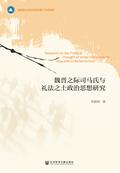 A Study on the Political Thought of Sima Clan and the Scholars of Etiquette and Law During the Wei and Jin Dynasties
The political thoughts of the Sima family and the etiquette scholars of the Wei and Jin Dynasties had a profound influence on the official Confucianism of the Wei and Jin Dynasties, but few people paid attention to it in the study of ancient Chinese intellectual history. This book systematically analyzes the political thoughts of this interest group from three levels: ideological concepts, system construction, and political struggles. It points out that Confucianism, which is a mixture of Taoism
—Reads8.2Score—Shelves
A Study on the Political Thought of Sima Clan and the Scholars of Etiquette and Law During the Wei and Jin Dynasties
The political thoughts of the Sima family and the etiquette scholars of the Wei and Jin Dynasties had a profound influence on the official Confucianism of the Wei and Jin Dynasties, but few people paid attention to it in the study of ancient Chinese intellectual history. This book systematically analyzes the political thoughts of this interest group from three levels: ideological concepts, system construction, and political struggles. It points out that Confucianism, which is a mixture of Taoism
—Reads8.2Score—Shelves
-
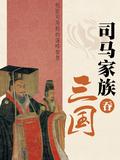 The Sima Family Conquered the Three Kingdoms: the Strategic Wisdom of the Powerful Minister Sima Yi
In the history of our country, there is a family and the regime he established that have had an important impact on history and society. This is the Sima family and the Jin Dynasty they established. The Sima family established two regimes, the Western Jin Dynasty and the Eastern Jin Dynasty. After three generations and four people, three dynasties returned to the Jin Dynasty. Sima Yi and his son were wise throughout their lives, but their descendants are not as good as each generation. Why did t
—Reads—Score—Shelves
The Sima Family Conquered the Three Kingdoms: the Strategic Wisdom of the Powerful Minister Sima Yi
In the history of our country, there is a family and the regime he established that have had an important impact on history and society. This is the Sima family and the Jin Dynasty they established. The Sima family established two regimes, the Western Jin Dynasty and the Eastern Jin Dynasty. After three generations and four people, three dynasties returned to the Jin Dynasty. Sima Yi and his son were wise throughout their lives, but their descendants are not as good as each generation. Why did t
—Reads—Score—Shelves
-
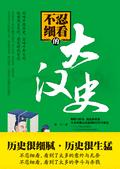 The History of the Han Dynasty That Cannot Bear to Be Read Carefully
The Han Dynasty was a peak in the development of Chinese culture, with comprehensive socio-economic, political and cultural development, and increasingly frequent foreign exchanges. It was one of the most powerful countries in the world at that time, and was called the two great empires together with Rome. Zhang Qian's mission to the Western Regions opened up the famous "Silk Road" for the first time, opening a trade channel between the East and the West. China has since become the center of the
—Reads9.2Score—Shelves
The History of the Han Dynasty That Cannot Bear to Be Read Carefully
The Han Dynasty was a peak in the development of Chinese culture, with comprehensive socio-economic, political and cultural development, and increasingly frequent foreign exchanges. It was one of the most powerful countries in the world at that time, and was called the two great empires together with Rome. Zhang Qian's mission to the Western Regions opened up the famous "Silk Road" for the first time, opening a trade channel between the East and the West. China has since become the center of the
—Reads9.2Score—Shelves
-
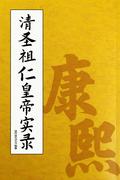 Records of Emperor Zuren of the Qing Dynasty: Kangxi
"Records of Emperor Sheng Zuren of the Qing Dynasty" is a chronological history book compiled by Rijiao Zhuguan in the Qing Dynasty. It mainly records the words, deeds, government affairs and major political events of Emperor Kangxi during his reign (from the 18th year of Shunzhi to the 61st year of Kangxi). The Kangxi Dynasty implemented the policy of "reflecting ancient and right texts", engraving books on a large scale through institutions such as the Wuying Palace Book Repair Office, and res
—Reads8.4Score—Shelves
Records of Emperor Zuren of the Qing Dynasty: Kangxi
"Records of Emperor Sheng Zuren of the Qing Dynasty" is a chronological history book compiled by Rijiao Zhuguan in the Qing Dynasty. It mainly records the words, deeds, government affairs and major political events of Emperor Kangxi during his reign (from the 18th year of Shunzhi to the 61st year of Kangxi). The Kangxi Dynasty implemented the policy of "reflecting ancient and right texts", engraving books on a large scale through institutions such as the Wuying Palace Book Repair Office, and res
—Reads8.4Score—Shelves
-
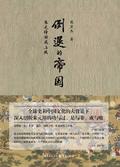 The Retrograde Empire: Zhu Yuanzhang's Success and Failure
In 1368 AD, the forty-year-old Zhu Yuanzhang proclaimed himself emperor in Yingtian Mansion after defeating various peasant uprising armies, and established the last huge empire ruled by the Han people. He also became the only true "peasant emperor" in Chinese history. As Zhao Yi of the Qing Dynasty said: "Gai Mingzu is a man who is a sage, a hero, and a thief." He is good at winning people's hearts, treats intellectuals favorably, has an excellent view of the overall situation, and has decisive
—Reads8.6Score—Shelves
The Retrograde Empire: Zhu Yuanzhang's Success and Failure
In 1368 AD, the forty-year-old Zhu Yuanzhang proclaimed himself emperor in Yingtian Mansion after defeating various peasant uprising armies, and established the last huge empire ruled by the Han people. He also became the only true "peasant emperor" in Chinese history. As Zhao Yi of the Qing Dynasty said: "Gai Mingzu is a man who is a sage, a hero, and a thief." He is good at winning people's hearts, treats intellectuals favorably, has an excellent view of the overall situation, and has decisive
—Reads8.6Score—Shelves
-
 Why China Fell Behind and Was Beaten: Accountability for Kang, Yong, and Qian
During the Kangxi, Yongzong and Qianlong periods of the Qing Dynasty, many positive policies were implemented and made important contributions to the development of the Chinese nation. However, from this time onwards, the Qing emperors and their ministers were in a closed state for a long time and were ignorant of the modern international environment and diplomatic methods that had already formed in the world. As a result, when China was involved in the international community, it took appropria
—Reads8.8Score—Shelves
Why China Fell Behind and Was Beaten: Accountability for Kang, Yong, and Qian
During the Kangxi, Yongzong and Qianlong periods of the Qing Dynasty, many positive policies were implemented and made important contributions to the development of the Chinese nation. However, from this time onwards, the Qing emperors and their ministers were in a closed state for a long time and were ignorant of the modern international environment and diplomatic methods that had already formed in the world. As a result, when China was involved in the international community, it took appropria
—Reads8.8Score—Shelves
-
 Execution of Lu: the Truth About the "Zhu Lu Rebellion" and the Power Structure of the Empress Dowager Lu Period
The content of this book is the history of Empress Dowager Lu's administration and administration in the early Western Han Dynasty. In 195 BC, Emperor Liu Bang of the Han Dynasty, who laid the foundation for Chinese history, died and his young son Liu Ying came to the throne. The real power was almost controlled by Liu Ying's mother, Queen Mother Lu. Emperor Hui died in the seventh year after taking the throne. His two sons (young emperor Gong and younger emperor Hong) became emperors one after
—Reads8.6Score—Shelves
Execution of Lu: the Truth About the "Zhu Lu Rebellion" and the Power Structure of the Empress Dowager Lu Period
The content of this book is the history of Empress Dowager Lu's administration and administration in the early Western Han Dynasty. In 195 BC, Emperor Liu Bang of the Han Dynasty, who laid the foundation for Chinese history, died and his young son Liu Ying came to the throne. The real power was almost controlled by Liu Ying's mother, Queen Mother Lu. Emperor Hui died in the seventh year after taking the throne. His two sons (young emperor Gong and younger emperor Hong) became emperors one after
—Reads8.6Score—Shelves
-
 The Strategic Secrets Used by Chinese Counselors in Past Dynasties (Part 2)
This book selects Jiang Shang, the originator of Chinese strategists, Guan Zhong, the prime minister of Qi, Yan Ying, the wise minister of Qi, Fan Li, the official of Yue, Shang Yang, the chief minister of Qin, Fan Ju, prime minister of Qin, Su Qin, the general who fought against Qin, and Lian Heng pro-Qin strategist Zhang Yi, Zhao Shangqing Lin Xiangru, Qin Dynasty Prime Minister Li Si, Han Dynasty counselor Zhang Liang, Han Dynasty Prime Minister Xiao He, Chen Ping, imperial censor Chao Cuo, C
—Reads8.0Score—Shelves
The Strategic Secrets Used by Chinese Counselors in Past Dynasties (Part 2)
This book selects Jiang Shang, the originator of Chinese strategists, Guan Zhong, the prime minister of Qi, Yan Ying, the wise minister of Qi, Fan Li, the official of Yue, Shang Yang, the chief minister of Qin, Fan Ju, prime minister of Qin, Su Qin, the general who fought against Qin, and Lian Heng pro-Qin strategist Zhang Yi, Zhao Shangqing Lin Xiangru, Qin Dynasty Prime Minister Li Si, Han Dynasty counselor Zhang Liang, Han Dynasty Prime Minister Xiao He, Chen Ping, imperial censor Chao Cuo, C
—Reads8.0Score—Shelves
-
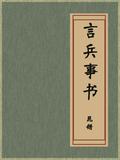 The Book of Military Affairs (Free Public Edition Book)
Chao Cuo submitted a military memorial to Emperor Wen of the Han Dynasty, which deeply analyzed the military situation at that time and put forward a series of military strategies and suggestions. The article may include insights into border defense, army construction, tactical application, etc. It aims to enhance the military power of the Western Han Dynasty and consolidate border defense. It is of great value to the study of the Western Han Dynasty's military system and Chao Cuo's military tho
—Reads8.7Score—Shelves
The Book of Military Affairs (Free Public Edition Book)
Chao Cuo submitted a military memorial to Emperor Wen of the Han Dynasty, which deeply analyzed the military situation at that time and put forward a series of military strategies and suggestions. The article may include insights into border defense, army construction, tactical application, etc. It aims to enhance the military power of the Western Han Dynasty and consolidate border defense. It is of great value to the study of the Western Han Dynasty's military system and Chao Cuo's military tho
—Reads8.7Score—Shelves
-
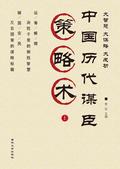 Strategies of Counselors in Ancient Chinese Dynasties (Part 1)
This book selects Jiang Shang, the originator of Chinese strategists, Guan Zhong, the prime minister of Qi, Yan Ying, the wise minister of Qi, Fan Li, the official of Yue, Shang Yang, the chief minister of Qin, Fan Ju, prime minister of Qin, Su Qin, the general who fought against Qin, and Lian Heng pro-Qin strategist Zhang Yi, Zhao Shangqing Lin Xiangru, Qin Dynasty Prime Minister Li Si, Han Dynasty counselor Zhang Liang, Han Dynasty Prime Minister Xiao He, Chen Ping, imperial censor Chao Cuo, C
—Reads8.2Score—Shelves
Strategies of Counselors in Ancient Chinese Dynasties (Part 1)
This book selects Jiang Shang, the originator of Chinese strategists, Guan Zhong, the prime minister of Qi, Yan Ying, the wise minister of Qi, Fan Li, the official of Yue, Shang Yang, the chief minister of Qin, Fan Ju, prime minister of Qin, Su Qin, the general who fought against Qin, and Lian Heng pro-Qin strategist Zhang Yi, Zhao Shangqing Lin Xiangru, Qin Dynasty Prime Minister Li Si, Han Dynasty counselor Zhang Liang, Han Dynasty Prime Minister Xiao He, Chen Ping, imperial censor Chao Cuo, C
—Reads8.2Score—Shelves
-
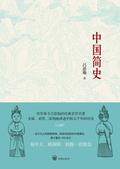 A Brief History of China
"A Brief History of China" is a popular general history of China written by the great historian Mr. Lu Simian. The book is divided into six chapters: introduction, ancient history, medieval history, modern history, modern history, and conclusion. It provides a comprehensive and concise description of China's politics, geography, society, and culture from ancient times to the 1930s. The chapters are short and concise, the text is plain and easy to understand, the organization is clear, and the in
—Reads9.3Score—Shelves
A Brief History of China
"A Brief History of China" is a popular general history of China written by the great historian Mr. Lu Simian. The book is divided into six chapters: introduction, ancient history, medieval history, modern history, modern history, and conclusion. It provides a comprehensive and concise description of China's politics, geography, society, and culture from ancient times to the 1930s. The chapters are short and concise, the text is plain and easy to understand, the organization is clear, and the in
—Reads9.3Score—Shelves
-
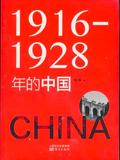 China from 1916 to 1928
The ancient Eastern Empire suddenly became the earliest republic in Asia, but it seemed to be trapped in a modern maze: The First World War far away in Europe; the May Fourth Movement just around the corner "Good guy" Li Yuanhong, iron-fisted Duan Qirui, braided commander Zhang Xun, jade commander Wu Peifu … The balance between politics and military, the game between economy and culture The intertwining of individuals and groups, the conflict between tradition and modernity Panoramic reproductio
—Reads—Score—Shelves
China from 1916 to 1928
The ancient Eastern Empire suddenly became the earliest republic in Asia, but it seemed to be trapped in a modern maze: The First World War far away in Europe; the May Fourth Movement just around the corner "Good guy" Li Yuanhong, iron-fisted Duan Qirui, braided commander Zhang Xun, jade commander Wu Peifu … The balance between politics and military, the game between economy and culture The intertwining of individuals and groups, the conflict between tradition and modernity Panoramic reproductio
—Reads—Score—Shelves
-
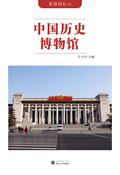 Chinese History Museum
This book mainly includes: 1. History Museum: the geographical location of the museum, the history of the museum, the museum's exhibitions, new developments of the museum, and underwater cultural relic archeology; 2. Primitive society collections: the oldest relics of Yuanmou people, Beijing people's Relic images and Hemudu relics testify to clan life and exquisite artworks of Yangshao culture; 3. Slave society collections: the best bronze Siyang Zun from the Shang Dynasty, the largest bronze Si
—Reads8.4Score—Shelves
Chinese History Museum
This book mainly includes: 1. History Museum: the geographical location of the museum, the history of the museum, the museum's exhibitions, new developments of the museum, and underwater cultural relic archeology; 2. Primitive society collections: the oldest relics of Yuanmou people, Beijing people's Relic images and Hemudu relics testify to clan life and exquisite artworks of Yangshao culture; 3. Slave society collections: the best bronze Siyang Zun from the Shang Dynasty, the largest bronze Si
—Reads8.4Score—Shelves
-
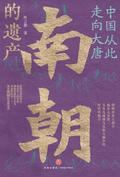 From Then On, China Moved Towards the Tang Dynasty: the Legacy of the Southern Dynasties
Is it possible for Song Dynasty Emperor Liu Yu, who was invincible on the battlefield, to unify the country? Why can Xie Lingyun still travel all day long and recite poems and compose poems while in court? Why did Emperor Wu of Liang donate himself to a Buddhist temple and ask ministers to spend huge sums of money to redeem it? Is Hou Jing's turmoil only causing trouble for one party or affecting the whole country? In addition to Zu Chongzhi's pi, what other achievements did the Southern Dynasty
—Reads9.3Score—Shelves
From Then On, China Moved Towards the Tang Dynasty: the Legacy of the Southern Dynasties
Is it possible for Song Dynasty Emperor Liu Yu, who was invincible on the battlefield, to unify the country? Why can Xie Lingyun still travel all day long and recite poems and compose poems while in court? Why did Emperor Wu of Liang donate himself to a Buddhist temple and ask ministers to spend huge sums of money to redeem it? Is Hou Jing's turmoil only causing trouble for one party or affecting the whole country? In addition to Zu Chongzhi's pi, what other achievements did the Southern Dynasty
—Reads9.3Score—Shelves
-
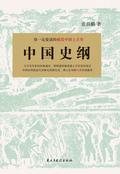 Outline of Chinese History
This book narrates the history of more than 1,600 years from the Shang Dynasty to the Eastern Han Dynasty. The book is written in the order of dynasties, but not every dynasty is written with the same pen and ink. Instead, the important events of each dynasty are selected as themes according to their own historical and philosophical standards, focusing on describing "social changes, ideological contributions and the personalities of several important figures." The book is rich in content. It not
—Reads9.1Score—Shelves
Outline of Chinese History
This book narrates the history of more than 1,600 years from the Shang Dynasty to the Eastern Han Dynasty. The book is written in the order of dynasties, but not every dynasty is written with the same pen and ink. Instead, the important events of each dynasty are selected as themes according to their own historical and philosophical standards, focusing on describing "social changes, ideological contributions and the personalities of several important figures." The book is rich in content. It not
—Reads9.1Score—Shelves
-
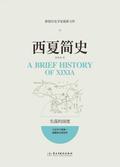 A Brief History of Xixia
Xixia is a mysterious grassland empire that carries many unsolved mysteries. Its existence makes people on the border of the Central Plains avoid it. Although it is not a blood-stained nation, its brave and warlike characteristics are enough to write the history of Xixia with ups and downs. For Xixia, the vast grassland witnessed its growth and tolerated the various killing behaviors it initiated in order to gain strength. However, the rise and development of Xixia were also accompanied by contr
—Reads9.4Score—Shelves
A Brief History of Xixia
Xixia is a mysterious grassland empire that carries many unsolved mysteries. Its existence makes people on the border of the Central Plains avoid it. Although it is not a blood-stained nation, its brave and warlike characteristics are enough to write the history of Xixia with ups and downs. For Xixia, the vast grassland witnessed its growth and tolerated the various killing behaviors it initiated in order to gain strength. However, the rise and development of Xixia were also accompanied by contr
—Reads9.4Score—Shelves
-
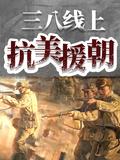 March 8Th Onlineresist U. S. Aid Korea
This album provides a panoramic depiction of the Chinese people's great war to resist U. S. Aggression and aid Korea in the early 1950s. On the premise of highly respecting history, it comprehensively reproduces the changes in the international political and military circles at that time. It is a masterpiece that comprehensively depicts the history of this war.
—Reads—Score—Shelves
March 8Th Onlineresist U. S. Aid Korea
This album provides a panoramic depiction of the Chinese people's great war to resist U. S. Aggression and aid Korea in the early 1950s. On the premise of highly respecting history, it comprehensively reproduces the changes in the international political and military circles at that time. It is a masterpiece that comprehensively depicts the history of this war.
—Reads—Score—Shelves
-
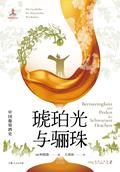 Amber Light and Li Pearls: the History of Chinese Wine
This book combs the history of Chinese wine from ancient times to the present, and looks at the status of Chinese wine culture in the context of exchanges between Eurasian civilizations. In chronological order, this book tells about the brewing, drinking, dissemination, culture and other aspects of wine in each period in China from ancient times to modern times. It is equivalent to a general history of Chinese wine. This book has 13 chapters in total, each chapter corresponds to a specific histo
—Reads8.3Score—Shelves
Amber Light and Li Pearls: the History of Chinese Wine
This book combs the history of Chinese wine from ancient times to the present, and looks at the status of Chinese wine culture in the context of exchanges between Eurasian civilizations. In chronological order, this book tells about the brewing, drinking, dissemination, culture and other aspects of wine in each period in China from ancient times to modern times. It is equivalent to a general history of Chinese wine. This book has 13 chapters in total, each chapter corresponds to a specific histo
—Reads8.3Score—Shelves
-
 Comprehensive Jian Yi Zhi Lu (Set of 8 Volumes in Total)
"Gangjian Yizhilu (set of 8 volumes in total)" is a classic historical masterpiece that integrates historical events and chronology. The book is clearly organized and covers the essence of ancient Chinese history, with a panoramic view of major events in all dynasties from ancient times to the end of the Ming Dynasty. With its refined language and systematic arrangement, it allows readers to easily grasp the historical context and gain insight into historical changes. Both history buffs and rese
—Reads9.2Score—Shelves
Comprehensive Jian Yi Zhi Lu (Set of 8 Volumes in Total)
"Gangjian Yizhilu (set of 8 volumes in total)" is a classic historical masterpiece that integrates historical events and chronology. The book is clearly organized and covers the essence of ancient Chinese history, with a panoramic view of major events in all dynasties from ancient times to the end of the Ming Dynasty. With its refined language and systematic arrangement, it allows readers to easily grasp the historical context and gain insight into historical changes. Both history buffs and rese
—Reads9.2Score—Shelves
-
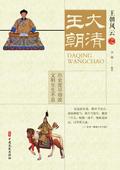 Qing Dynasty (Dynasty Storm)
This book tells the story of 296 years of Chinese history from 1616, when Nurhaci established the Later Jin Dynasty, to 1636, when Huang Taiji established the Qing Dynasty, to when the Qing emperor abdicated in 1912. During this period, rulers expanded territory and laid the foundation for modern China. There are both the "prosperous age of Kangxi and Qianlong" in the early period, and the turbulent times in the later period, when extravagance and eunuchs were prevalent. After the Western powers
—Reads9.1Score—Shelves
Qing Dynasty (Dynasty Storm)
This book tells the story of 296 years of Chinese history from 1616, when Nurhaci established the Later Jin Dynasty, to 1636, when Huang Taiji established the Qing Dynasty, to when the Qing emperor abdicated in 1912. During this period, rulers expanded territory and laid the foundation for modern China. There are both the "prosperous age of Kangxi and Qianlong" in the early period, and the turbulent times in the later period, when extravagance and eunuchs were prevalent. After the Western powers
—Reads9.1Score—Shelves
-
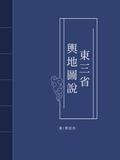 The Three Northeastern Provinces and Maps
Frontier historical and geographical works of the Qing Dynasty
—Reads8.0Score—Shelves
The Three Northeastern Provinces and Maps
Frontier historical and geographical works of the Qing Dynasty
—Reads8.0Score—Shelves
-
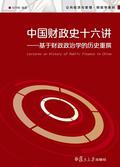 Sixteen Lectures on Chinese Financial History
The book "Sixteen Lectures on Chinese Fiscal History" does not take the accumulation of traditional historical materials as its main content, nor does it use a simple time and space framework as its arrangement form. Instead, it is committed to using the theory of fiscal politics to reinterpret the fiscal historical materials from the Shang and Zhou dynasties to contemporary times, thereby revealing the development laws of the Chinese country from a fiscal perspective. By organically blending th
—Reads8.8Score—Shelves
Sixteen Lectures on Chinese Financial History
The book "Sixteen Lectures on Chinese Fiscal History" does not take the accumulation of traditional historical materials as its main content, nor does it use a simple time and space framework as its arrangement form. Instead, it is committed to using the theory of fiscal politics to reinterpret the fiscal historical materials from the Shang and Zhou dynasties to contemporary times, thereby revealing the development laws of the Chinese country from a fiscal perspective. By organically blending th
—Reads8.8Score—Shelves
-
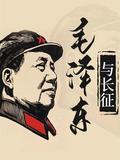 Mao Zedong and the Long March
"Mao Zedong, Zhang Wentian and the Victory of the Long March" is a book published by China Democracy and Legal Press in June 2016. The author is Cheng Zhongyuan. The Long March of the Chinese Workers' and Peasants' Red Army was a strategic shift in the history of our country's revolution. The Long March of the Chinese Workers' and Peasants' Red Army was an important event in China's modern history. It had a far-reaching impact and determined the historical direction of China to a certain extent.
—Reads8.5Score—Shelves
Mao Zedong and the Long March
"Mao Zedong, Zhang Wentian and the Victory of the Long March" is a book published by China Democracy and Legal Press in June 2016. The author is Cheng Zhongyuan. The Long March of the Chinese Workers' and Peasants' Red Army was a strategic shift in the history of our country's revolution. The Long March of the Chinese Workers' and Peasants' Red Army was an important event in China's modern history. It had a far-reaching impact and determined the historical direction of China to a certain extent.
—Reads8.5Score—Shelves
-
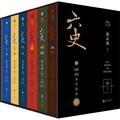 The Six Histories of Cai Dongfan (Set of 6 Volumes in Total)
"Six Histories" records the panoramic appearance and secret details of the six most representative turning dynasties in Chinese history, from their rise to their decline. The system is complete, the content is rich, and the priorities are clear. It combines the majestic spirit of history with the interest of grass and snakes. It respects historical facts and has sophisticated diction. It has many but lifelike characters. It writes the breadth and splendor of history while laughing and cursing. I
—Reads9.4Score—Shelves
The Six Histories of Cai Dongfan (Set of 6 Volumes in Total)
"Six Histories" records the panoramic appearance and secret details of the six most representative turning dynasties in Chinese history, from their rise to their decline. The system is complete, the content is rich, and the priorities are clear. It combines the majestic spirit of history with the interest of grass and snakes. It respects historical facts and has sophisticated diction. It has many but lifelike characters. It writes the breadth and splendor of history while laughing and cursing. I
—Reads9.4Score—Shelves
-
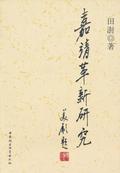 Jiajing Innovation Research
The early Jiajing period was a turning point in the historical development of the Ming Dynasty. The abnormal change of the throne and the dispute over "Dali" gave rise to a new personnel structure in the early years of Jiajing, composed of Shizong and the upstart Dali Zhang Cong and others. This great change in the political arena is itself a major revolutionary phenomenon. In order to correct the chaos, rebuild the new political order of Jiajing and consolidate Sejong's ruling position, compreh
—Reads8.8Score—Shelves
Jiajing Innovation Research
The early Jiajing period was a turning point in the historical development of the Ming Dynasty. The abnormal change of the throne and the dispute over "Dali" gave rise to a new personnel structure in the early years of Jiajing, composed of Shizong and the upstart Dali Zhang Cong and others. This great change in the political arena is itself a major revolutionary phenomenon. In order to correct the chaos, rebuild the new political order of Jiajing and consolidate Sejong's ruling position, compreh
—Reads8.8Score—Shelves
-
 Jiajing: Forty-Five Years of Intrigue and Struggle
Focus on the reign of Emperor Shizong of the Ming Dynasty, Jiajing Emperor Zhu Houcong (1521-1566). Taking time as its warp and major events and core figures as its latitude, it deeply analyzes the political situation and changes of the times during the forty-five years of the Jiajing Dynasty. The work begins with the famous "Great Ceremony Meeting" incident, and details how the young emperor Zhu Houcong succeeded in defeating the old court system headed by Yang Tinghe through this political gam
—Reads8.6Score—Shelves
Jiajing: Forty-Five Years of Intrigue and Struggle
Focus on the reign of Emperor Shizong of the Ming Dynasty, Jiajing Emperor Zhu Houcong (1521-1566). Taking time as its warp and major events and core figures as its latitude, it deeply analyzes the political situation and changes of the times during the forty-five years of the Jiajing Dynasty. The work begins with the famous "Great Ceremony Meeting" incident, and details how the young emperor Zhu Houcong succeeded in defeating the old court system headed by Yang Tinghe through this political gam
—Reads8.6Score—Shelves
-
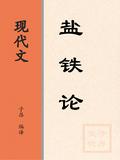 Modern Literature: on Salt and Iron
During the reign of Emperor Zhao of the Han Dynasty, the imperial court held a debate on state affairs to study whether the various policies and policies left by Emperor Wu of the Han Dynasty were still necessary to continue to be implemented. Since the meeting mainly revolved around the "salt and iron government-run" system, it was historically called the Salt and Iron Meeting. The meeting was chaired by Huo Guang. On one side were the old ministers of Emperor Wu of the Han Dynasty, including P
—Reads9.2Score—Shelves
Modern Literature: on Salt and Iron
During the reign of Emperor Zhao of the Han Dynasty, the imperial court held a debate on state affairs to study whether the various policies and policies left by Emperor Wu of the Han Dynasty were still necessary to continue to be implemented. Since the meeting mainly revolved around the "salt and iron government-run" system, it was historically called the Salt and Iron Meeting. The meeting was chaired by Huo Guang. On one side were the old ministers of Emperor Wu of the Han Dynasty, including P
—Reads9.2Score—Shelves
-
 Liao History
This book is a popular science book. It focuses on the stories of environmental scientists, relevant scientific discoveries, and human speculations on the future of environmental science.
—Reads8.2Score—Shelves
Liao History
This book is a popular science book. It focuses on the stories of environmental scientists, relevant scientific discoveries, and human speculations on the future of environmental science.
—Reads8.2Score—Shelves
-
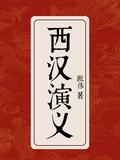 Romance of the Western Han Dynasty
"The Romance of the Western Han Dynasty" Zhen Wei's version, a majestic epic of the Chu and Han Dynasties, takes you back to the war-torn and troubled times of the late Qin Dynasty. From Qin Shihuang's power struggle in his later years and Zhao Gao's political chaos, to the emergence of Xiang Yu and Liu Bang, competing in the world, to the Feast at Hongmen and the Elegy of Gaixia... The book vividly depicts a magnificent picture of intrigue, ambition, loyalty and betrayal. There are Lu Buwei's r
—Reads8.5Score—Shelves
Romance of the Western Han Dynasty
"The Romance of the Western Han Dynasty" Zhen Wei's version, a majestic epic of the Chu and Han Dynasties, takes you back to the war-torn and troubled times of the late Qin Dynasty. From Qin Shihuang's power struggle in his later years and Zhao Gao's political chaos, to the emergence of Xiang Yu and Liu Bang, competing in the world, to the Feast at Hongmen and the Elegy of Gaixia... The book vividly depicts a magnificent picture of intrigue, ambition, loyalty and betrayal. There are Lu Buwei's r
—Reads8.5Score—Shelves
-
 Xijing Fu
One of Zhang Heng's "Essays on Two Capitals" of the Eastern Han Dynasty describes the prosperous scene of Chang'an, the capital of the Western Han Dynasty, with emphatic elaboration and implicit satire.
—Reads8.5Score—Shelves
Xijing Fu
One of Zhang Heng's "Essays on Two Capitals" of the Eastern Han Dynasty describes the prosperous scene of Chang'an, the capital of the Western Han Dynasty, with emphatic elaboration and implicit satire.
—Reads8.5Score—Shelves
-
 Miscellaneous Notes on the West Garden of Xu Xiangyang
"Xu Xiangyang Xiyuan Miscellaneous Notes" is a notebook-style historical work written by Xu Xian, a scholar in the Ming Dynasty. It is a rare type of miscellaneous notes in ancient China. Written during the Ming Dynasty, this book records a large number of miscellaneous anecdotes about Xiangyang and wider historical events, characters' words and deeds, and social styles through the author's personal experience and collection of historical anecdotes. It is one of the important materials for study
—Reads—Score—Shelves
Miscellaneous Notes on the West Garden of Xu Xiangyang
"Xu Xiangyang Xiyuan Miscellaneous Notes" is a notebook-style historical work written by Xu Xian, a scholar in the Ming Dynasty. It is a rare type of miscellaneous notes in ancient China. Written during the Ming Dynasty, this book records a large number of miscellaneous anecdotes about Xiangyang and wider historical events, characters' words and deeds, and social styles through the author's personal experience and collection of historical anecdotes. It is one of the important materials for study
—Reads—Score—Shelves
-
 Beauty Book (Free Public Edition Book)
Xu Zhen believes that beauty has ten standards and moods, namely appearance, charm, skills, conduct, residence, hospitality, decoration, assistance, food, and interest.
—Reads8.5Score—Shelves
Beauty Book (Free Public Edition Book)
Xu Zhen believes that beauty has ten standards and moods, namely appearance, charm, skills, conduct, residence, hospitality, decoration, assistance, food, and interest.
—Reads8.5Score—Shelves
-
 Southeast Chronicle
"Southeast Chronicles" is a notebook-style historical work written by an anonymous person in the Yuan Dynasty. It has about three volumes and mainly records anecdotes and social customs in the southeastern region during the Southern Song Dynasty (1127-1279). It is a work of historical materials and notes. Different from official history, it does not focus on chronological narratives, but presents readers with a multi-layered and three-dimensional historical picture through many specific details
—Reads7.6Score—Shelves
Southeast Chronicle
"Southeast Chronicles" is a notebook-style historical work written by an anonymous person in the Yuan Dynasty. It has about three volumes and mainly records anecdotes and social customs in the southeastern region during the Southern Song Dynasty (1127-1279). It is a work of historical materials and notes. Different from official history, it does not focus on chronological narratives, but presents readers with a multi-layered and three-dimensional historical picture through many specific details
—Reads7.6Score—Shelves
-
 Twenty-Five Histories: History of the Ming Dynasty
This book was compiled under the orders of Zhang Tingyu and others in the Qing Dynasty. It is the longest and most rigorous compilation among the Twenty-Four Histories. After nearly a hundred years, it has been repeatedly revised by many scholars. The narrative is clear and the materials are carefully drawn. It systematically records the political system, economic taxes, cultural ideas and major historical events of the Ming Dynasty. It is the most authoritative and systematic core historical bo
—Reads7.6Score—Shelves
Twenty-Five Histories: History of the Ming Dynasty
This book was compiled under the orders of Zhang Tingyu and others in the Qing Dynasty. It is the longest and most rigorous compilation among the Twenty-Four Histories. After nearly a hundred years, it has been repeatedly revised by many scholars. The narrative is clear and the materials are carefully drawn. It systematically records the political system, economic taxes, cultural ideas and major historical events of the Ming Dynasty. It is the most authoritative and systematic core historical bo
—Reads7.6Score—Shelves