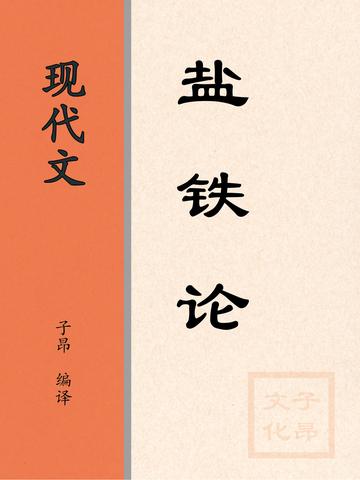
During the reign of Emperor Zhao of the Han Dynasty, the imperial court held a debate on state affairs to study whether the various policies and policies left by Emperor Wu of the Han Dynasty were still necessary to continue to be implemented. Since the meeting mainly revolved around the "salt and iron government-run" system, it was historically called the Salt and Iron Meeting. The meeting was chaired by Huo Guang. On one side were the old ministers of Emperor Wu of the Han Dynasty, including Prime Minister Tian Qianqiu and the imperial censor Sang Hongyang, who naturally defended the "salt and iron official camp" system; on the other side were new officials who believed in Confucianism and demanded the abandonment of this policy and the implementation of a free economy.
The background of the Yantie official camp was that Emperor Wu of the Han Dynasty continued to use troops and was financially strapped, so he intervened in the economy and competed with businessmen for profits. In fact, in his later years, Emperor Wu wrote the "Luntai Sin Ji Zhao" to reflect on this matter and emphasized that he should devote himself to farming in the future. By the time of Emperor Zhao, he hoped to implement it and relax controls. After Huo Guang came to power, the power struggle with Sang Hongyang and other veterans intensified, so he planned the Salt and Iron Conference to guide public opinion and attack the political prestige of Sang Hongyang and others. In essence, this is a dispute between Confucianism, which values righteousness, and Legalism, which values profit. Therefore, the debate gradually expanded to various aspects such as politics, economy, military, diplomacy, and culture. By the time of Emperor Xuan, Huan Kuan compiled this work based on the speech records of both parties. It has always been an important material for studying the history of economic thought in our country, especially the history of economic thought in the Western Han Dynasty.
Reader comments
I thought it was some kind of high-minded talk, but it turned out to be some brainless fans of Confucius giving advice on the imperial policy. Use what Confucius said regardless of the premise and the occasion. I'm sick of looking at it
How come there are no reviews for such a great book?
I thought it was some kind of high-minded talk, but it turned out to be some brainless fans of Confucius giving advice on the imperial policy. Use what Confucius said regardless of the premise and the occasion. I'm sick of looking at it
How come there are no reviews for such a great book?