Fanqie catalogue
Books by 易学者
- Matches
- 54
Fanqie books matched on the author's name.
-
 An In-Depth Explanation of the Tui Bei Tu 推背图详解
The Tui Bei Tu is a famous ancient Chinese work of prophecy and apocrypha, said to have been coauthored by Li Chunfeng and Yuan Tiangang in the early Tang dynasty. The book pairs sixty illustrations with prophetic sayings and poems, and is claimed to foretell the rise and fall of dynasties and the ebb and flow of order and chaos in later ages. Its contents range from dynastic changes to major events. Its obscure, mysterious nature and occasional parallels with historical events have made it a re
77Reads—Score—Shelves
-
 The Story of Zhang Ruoxu, Author of Spring River, Flowers, Moonlight, and Night 春江花月夜张若虚传
A biographical novel about Zhang Ruoxu, the poet who wrote “Spring River, Flower, Moon, Night,” this work uses 100,000 words to recreate the legendary life of a Tang dynasty poet in depth. It begins with his youth amid the misty rains of Yangzhou, recounting his struggles in the imperial examinations in Chang'an and his military service in Yanzhou, all the way to that spring night when he created a masterpiece for the ages. By exploring how he brought northern and southern poetic styles together
32Reads—Score—Shelves
-
 Ten Treatises on the Art of Power 权术十篇
Ten Essays on the Art of Power systematically explores the core wisdom of emperors and ministers in governing a country, covering ten dimensions of statecraft: managing subordinates, concealment and disclosure, advancing and retreating, firmness and flexibility, rewards and punishments, leveraging others, timing, the unconventional and the orthodox, circumstances, and strategy. Through an in-depth analysis of historical examples such as Zhuge Liang governing Shu, Liu Xiu ruling through the way o
10Reads—Score—Shelves
-
 The Biography of Dong Zhongshu, Sage of Heaven and Man 天人策士董仲舒传
Dong Zhongshu (179–104 BCE), a native of Guangchuan Commandery in the Western Han dynasty, in present-day Jing County, Hebei, was a master of the Gongyang school of Confucianism and a leading intellectual during the reign of Emperor Wu of Han. As a boy, he studied the Spring and Autumn Annals and was so devoted to his work that he did not look at his garden for three years. He became an expert on the relationship between Heaven and humanity. In 140 BCE, the first year of the Jianyuan era, he ans
8Reads—Score—Shelves
-
 Ten Essays on the Art of Royal Power 君权术十篇
This is an introduction of over 100 Chinese characters to the art of imperial statecraft in ancient China. Imperial statecraft in ancient China was a profound political art concerned with the exercise and balance of power. At its core was the use of various strategies and methods to control officials and consolidate imperial authority, thereby maintaining the dynasty’s long-term stability. It was not simply a matter of crude control. Instead, it emphasized combining and balancing “law, techniqu
4Reads—Score—Shelves
-
 The Biography of Zou Yan, Master of Yin and Yang 阴阳巨擘邹衍传
The founder of the Yin-Yang School was Zou Yan (c. 324–250 BCE), a native of the State of Qi in the late Warring States period. He was the key figure who systematically combined yin-yang theory with the Five Phases theory to form the doctrine of the Five Phases and Yin-Yang. His core ideas and contributions were as follows: 1. He founded the Theory of the Five Virtues in Succession. This was Zou Yan’s most important theory. He believed that the cycles and succession of the five fundamental sub
4Reads—Score—Shelves
-
 The Legend of Baili Xi, the Five-Ram Minister 五羖大夫百里奚传奇
Baili Xi (c. 726–621 BCE) was a renowned minister of Qin during the Spring and Autumn period, an enduring example of a late-blooming talent. His early life was full of hardship and wandering. He traveled through the states of Qi, Zhou, and Yu, enduring hunger and cold, and even became a herdsman enslaved in Chu. Duke Mu of Qin, having heard of his talent, ransomed him for five black rams, earning him the name “Lord Five Rams.” He was appointed chancellor in his seventies, yet went on to set Qin
3Reads—Score—Shelves
-
 Pines and Snow, a Long River: The Biography of Zhao Mengfu 松雪长河赵孟頫传
Zhao Mengfu (1254–1322), courtesy name Ziang and art name Songxue Daoren, was from Wuxing, Zhejiang. An eleventh-generation descendant of Emperor Taizu of Song, Zhao Mengfu served the Yuan dynasty as a member of the Song imperial clan, eventually becoming Academician-in-Waiting at the Hanlin Academy. He was posthumously given the title Wenmin. His artistic achievements were unparalleled. In painting, he pioneered a new style of literati painting in the Yuan dynasty and proposed the theory that “
3Reads—Score—Shelves
-
 The Art of Awakening 觉醒的艺术
Beginning with the image of the “Buddha among ordinary people,” this book goes beyond biography to systematically construct the Buddha’s “philosophy of awakening.” By explaining such ontological concepts as dependent origination and non-self, epistemological concepts such as mindfulness and right view, and ethical concepts such as compassion and the Middle Way, it reveals the contemporary value of the Buddha’s teachings as a philosophy of transformation and practice. It offers profound guidance
3Reads—Score—Shelves
-
 The Life of Sun Wu, the Sage of War 兵圣孙武传
The Sage of War: The Biography of Sun Wu vividly recounts the legendary life of Sun Wu, the military strategist of the late Spring and Autumn period. The book begins with Sun Wu’s birth into a military family in the State of Qi, then details how he fled south to the State of Wu to escape the turmoil of war. Recommended by Wu Zixu, he made his name by executing the king’s concubines during a military drill in the Wu palace, thereby intimidating the King of Wu, and was ultimately appointed a gener
2Reads—Score—Shelves
-
 Xu Fu’s Legend: In Search of Immortals in the Eastern Sea 东海寻仙徐福传奇
Xu Fu (dates of birth and death unknown) was a famous fangshi of the Qin dynasty, from Langya in the state of Qi (present-day Langya Town, Qingdao, Shandong). Learned in Daoist arts, astronomy, navigation, and medicine, he won the deep trust of Qin Shi Huang. In 219 BCE, he submitted a memorial claiming that three immortal mountains, Penglai, Fangzhang, and Yingzhou, lay in the Eastern Sea, and volunteered to seek the elixir of immortality for the First Emperor. His first voyage east, with three
2Reads—Score—Shelves
-
 The Poet as One: A Biography of Li Shangyin 诗人合一李商隐传
"The Zither's Unanswered Mystery: Li Shangyin's Life in Verse" centers on the idea that poetry and history can illuminate each other. Across four volumes, it traces the poet's life, from studying with Daoists to weathering the rise and fall of factional struggles. The novel innovatively blends historical research on the Tang dynasty with surreal storytelling, using images such as the zither, the bluebird, and blood-ink to connect three layers of time and space, breaking away from the traditional
2Reads—Score—Shelves
-
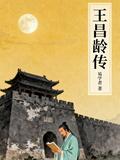 The Life of Wang Changling 王昌龄传
Wang Changling (698–757), a renowned Tang dynasty frontier poet, was hailed as the master of the seven-character quatrain. He was celebrated for his bold, stirring frontier poems and his graceful, poignant poems of palace longing. His best-known works, “Beyond the Border” and “A Song of Joining the Army,” evoke the vast landscapes of the frontier and the feelings of its soldiers. The line “A heart of ice in a jade pot” from “Seeing Xin Jian Off at Furong Tower” has become an immortal verse. His
2Reads—Score—Shelves
-
 The Mysterious Pivot of Divine Incantations 神咒玄枢
A new work is out! Come read my work on Tomato Novel. I hope you enjoy it. Your support motivates me to write, and I'll do my best to tell every story well!
2Reads—Score—Shelves
-
 The Origin and Evolution of Life in the Universe 宇宙生命起源与演化
The Origin of the Star Abyss: A Plurality of Hypotheses on the Origin of Life in the Universe is a groundbreaking work of scientific thought. It goes beyond Earth-centered ideas of life, arguing that life is a universal property that emerges from matter throughout the cosmos under the influence of physical laws. From carbon-based, water-based life to worlds of liquid hydrocarbons, quantum vacuum life, and even ripples of consciousness within the structure of spacetime, this book uses rigorous re
2Reads—Score—Shelves
-
 The Solitary and Indignant Soul of Han Feizi 法魂孤愤韩非子传
Han Fei (c. 280–233 BC) was a nobleman of the state of Han in the late Warring States period and the foremost synthesizer of Legalist thought. He studied under Xunzi and was a fellow student of Li Si. Though he stuttered, he was a gifted writer whose works were powerful and grand in style. At the heart of his philosophy was a theory of absolute monarchy built on the integration of “law, statecraft, and authority.” He advocated replacing “rule by men” with “rule of law,” insisting that “punishmen
1Reads—Score—Shelves
-
 The Sage of Ten Thousand Generations: A Biography of Zheng Xuan 万世师表经神郑玄传
Zheng Xuan (127–200), a preeminent scholar of the Confucian classics in the late Eastern Han dynasty, was revered as the “Sage of the Classics.” His scholarship brought together the Old Text and New Text traditions. Known for drawing on the strengths of others and seeking truth through practical inquiry, he founded the “Zheng School,” which profoundly shaped China's traditional study of the classics. A thousand years after his death, his principles of seeking truth, integrating different traditi
1Reads—Score—Shelves
-
 The Heavenly Mandate's Dark Bird: Songs of Shang 天命玄鸟商颂传
The Mandate of Heaven's Black Bird: A History of the Hymns of Shang is a cultural epic spanning three thousand years, offering a panoramic account of how the Hymns of Shang, part of the Book of Songs, were passed down from sacrificial songs of the Shang and Zhou dynasties to become a cornerstone of Chinese civilization. In five volumes and twenty chapters, the book draws on both archaeological discoveries and written records to reveal the original character of Shang sacrificial culture, trace th
1Reads—Score—Shelves
-
 Peach Blossoms Still Bloom: The Story of Cui Hu 桃花依旧崔护传
The Peach Blossoms Remain: The Poetic Life of Cui Hu follows the life of the Tang poet Cui Hu through the image of “a peach-hued face reflected among peach blossoms,” delicately portraying his journey from a young man in Boling to a career of ups and downs in officialdom. Combining historical research with literary imagination, the novel tells its story through the imperial examinations, love, and poetry, revealing the spirit of Mid-Tang literati and the far-reaching influence of peach blossom c
1Reads—Score—Shelves
-
 Reeds Swaying in the Wind: A Tale of the Western Zhou 蒹葭苍苍西周传
Synopsis of Theatrical Boats Theatrical boats are vessels used for theatrical performances, a distinctive form of floating stage. Their history can be traced back to the reign of Emperor Yang of Sui. His poem “Song of Music at Jiangdu Palace” includes the line “Long sleeves and clear songs delight the theatrical boats,” depicting the lavish scene of song and dance aboard dragon boats. By the Qianlong reign of the Qing dynasty, theatrical boats had reached their height. At the time, salt mercha
—Reads—Score—Shelves
-
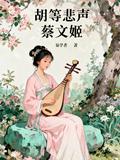 The Sorrowful Song of the Hu Jia: The Story of Cai Wenji 胡笳悲声蔡文姬传
Cai Wenji (dates of birth and death unknown), personal name Yan, was from Yu County in Chenliu and the daughter of Cai Yong, a great literary figure of the Eastern Han dynasty. A rare female talent in the history of Chinese literature, she excelled in music, literature, and calligraphy. The story of her identifying a broken string by ear at the age of six has been passed down through the ages. Her life was full of hardship: after marrying Wei Zhongdao, she was widowed, then captured during warti
—Reads—Score—Shelves
-
 The Life of Du Yu, Master of Letters and Arms 文武双曜杜预传
Du Yu (222–285), courtesy name Yuankai, was a native of Duling, Jingzhao (present-day Xi'an, Shaanxi). A distinguished politician, military leader, and scholar of the Western Jin dynasty, he was renowned for his mastery of both civil and military affairs. Born into an official family, he read widely from a young age. Though unskilled at riding and archery, he excelled at strategic foresight. He entered government service under Cao Wei and later married Sima Zhao's younger sister, Princess Gaolu,
—Reads—Score—Shelves
-
 Chunyu Yue: The Burning of Books in Xianyang 咸阳焚书淳于越传
Chunyu Yue (dates of birth and death unknown) was a Confucian scholar from the state of Qi in the late Warring States period and a renowned court scholar of the Qin dynasty. Well versed in the Book of Documents, he revered the ancient institutions of the Three Dynasties and represented the Confucian tradition of Qi and Lu. After Qin Shi Huang unified the realm, Chunyu was selected as one of the seventy court scholars and appointed as libationer, overseeing scholarly and ceremonial affairs. At a
—Reads—Score—Shelves
-
 Xunzi: The Pivot of Heaven and Man 天人之枢荀子传
Xunzi (c. 313–238 BCE), personal name Kuang and courtesy name Qing, was a native of Zhao during the late Warring States period and the great synthesizer of Confucian thought. His philosophy centered on the doctrine that human nature is evil. He argued that human nature could be transformed through education in ritual and law, emphasizing the idea of “transforming nature and arising through conscious effort” and the principle of “understanding and harnessing the laws of Heaven.” He wrote the thir
—Reads—Score—Shelves
-
 Ashes of Power: The Biography of Li Si 权焰灰烬李斯传
Set between the final years of the Warring States period and the collapse of the Qin Empire, The Empire’s Founder: The Biography of Li Si offers a sweeping portrait of the legendary life and complex fate of Li Si, the famed chancellor of the ages. It explores how this minor Chu official, awakened by the insight of “the hamster’s wisdom,” traveled west to the powerful state of Qin and used Legalist thought to help the First Emperor unify the realm, establishing such enduring institutions as the c
—Reads—Score—Shelves
-
 Forging Qin in Blood and Iron: Shang Yang's Reform 铁血铸秦商鞅变法路
Shang Yang (c. 390–338 BCE) was a leading Legalist thinker of the Warring States period. Originally a member of the ruling clan of the state of Wei, he studied under Li Kui and brought The Book of Laws to Qin. After presenting his ideas to Duke Xiao of Qin three times, he won the duke’s favor with his doctrine of power and led a sweeping program of reform. He abolished the well-field system and opened up the land for private ownership; introduced the commandery and county system to strengthen ce
—Reads—Score—Shelves
-
 The Biography of Liezi, the Revered Void-Seeker 贵虚者列子传
The Wind Rider: The Tale of Liezi is a full-length biographical novel centered on Lie Yukou, the Daoist master of the Warring States period. Drawing on fragments from texts such as the Zhuangzi and the Lüshi Chunqiu, it reconstructs his life, from orphaned child amid the wars in Zheng to enlightened master. He begins his studies under Nanguo Ziqi in the archives, cultivates himself on Mount Meng and creates the parable of “Foolish Old Man Moves the Mountains,” then establishes the Hall of the Em
—Reads—Score—Shelves
-
 The Chan Lineage's Journey from Spirit Mountain to All Worlds 灵山到万界禅宗传
Bodhidharma’s Chan teachings are the foundational practice of Chinese Chan Buddhism, introduced by the First Patriarch, Bodhidharma. Their core teachings are “wall-gazing meditation” and the “Two Entrances and Four Practices.” The “Two Entrances” comprise the “Entrance through Principle,” which awakens one to the truth that ordinary people and sages are one and the same and establishes a view of equality, and the “Entrance through Practice,” which puts the Four Practices into action. The “Four
—Reads—Score—Shelves
-
 Autumn Winds and Books: The Biography of Zhang Ji 秋风书张籍传
Autumn Letter: The Life of Zhang Ji takes inspiration from the poetic world of “Autumn Thoughts,” by mid-Tang poet Zhang Ji, and follows half a lifetime of wandering, linked by an unfinished letter home. From failed imperial examinations during the Tianbao era and the fires of war and family separation during the An Lushan Rebellion, to the hardships of a career in officialdom, the story uses the family letter as its thread to explore the spiritual struggles and attachment to home experienced by
—Reads—Score—Shelves
-
 The Ancient Soul of Iron Cliff: The Biography of Fan Deji 铁崖古魂范德机传
Soul of Poetry Pierces the Dipper: The Life of Yang Zai is a sweeping biography spanning time and space. Centered on Yuan dynasty poet Yang Zai (1271–1323), it blends history, science fiction, and philosophical reflection to paint a grand portrait of civilization passed down through the ages. Breaking free from the bounds of traditional biography, the story stretches from the eve of the Southern Song dynasty’s fall to the interstellar age of the 22nd century. Following the thread of poetic inher
—Reads—Score—Shelves
-
 The Bright Moon over Qinhuai: Sa Dula 秦淮明月萨都剌
The Guest of Heaven and Earth: The Biography of Sadula is a historical biographical novel about Sadula, a Mongolian poet of the Yuan dynasty. Through his extraordinary life, the book reveals the magnificent interplay of diverse cultures in the Yuan era, from the grasslands north of the desert to the misty rain of Jiangnan, and from the beacon fires of Yanmen Pass to the imperial examination halls of Dadu. It vividly portrays a cultural emissary who crossed ethnic boundaries. Sadula became famous
—Reads—Score—Shelves
-
 The Virtuous Life of Kan Ze of Jiangdong 德润江东阚泽传
Kan Ze (170–243), courtesy name Derun, was from Goushang in Kuaiji Commandery, present-day Ningbo, Zhejiang. A renowned scholar and politician of Eastern Wu during the Three Kingdoms period, he was born into a poor family. As a boy, he copied books to support his studies. After reading widely, he traveled to study and mastered the Confucian classics, astronomy, and calendrical science. While serving Wu, he rose to the posts of Grand Tutor to the Crown Prince and Director of the Secretariat, earn
—Reads—Score—Shelves
-
 Spring Breeze, Proud Heart, and Swift Hooves: The Biography of Meng Jiao 春风得意马蹄急孟郊传
Spring Breeze at My Back, Hooves Flying: The Biography of Meng Jiao recreates, in sweeping prose, the tragic life of the Mid-Tang poet Meng Jiao. From his arduous journey through the imperial examinations, finally passing at the age of forty-six, to the blood and tears of family love behind “The thread in a loving mother's hands,” and his unyielding courage in confronting the people's hardships, this biography blends historical research with literary imagination. Witness how a poor scholar-poet
—Reads—Score—Shelves
-
 The Legend of Liu Yong, the White-Robed Minister 白衣卿相柳永传
The Ballad of the White-Robed Minister: A Biography of Liu Yong reconstructs the legendary life of Liu Yong, the celebrated lyric poet of the Northern Song, in a fantastical style. From the spiritual beauty of Wuyi to the romantic allure of Bianjing, his poems become white cranes riding the tides and tears congealing into jade, even foretelling the rise and fall of later generations. Using poetry as a lens on history and blending surreal imagery with historical events, the book depicts the liter
—Reads—Score—Shelves
-
 Pan Yue’s Talent Flourished Through Love in the Western Jin 西晋潘岳才因情而盛
Pan Yue (247–300), courtesy name Anren, was from Zhongmu County in Xingyang Commandery, present-day Zhongmu County, Zhengzhou, Henan. A renowned writer and politician of the Western Jin dynasty, he showed talent from a young age and was called a prodigy. After entering government service, he went through numerous changes of post. Pan Yue was implicated in the plot against Crown Prince Minhuai and was imprisoned and executed after Sima Lun of Zhao launched a coup. Pan Yue’s poetry was ranked amo
—Reads—Score—Shelves
-
 The Tale of Zhang Hua, the Lamplighter 掌灯人张华传
Zhang Hua: The Keeper of the Lamp is an epic biography centered on the idea that “knowledge safeguards civilization.” It offers a sweeping portrayal of the tumultuous life of Zhang Hua (232–300), a Western Jin luminary who rose from humble beginnings to become the empire's Minister of Works. The compilation of the Records of Natural Studies forms the narrative's backbone, while the Rebellion of the Eight Princes provides its historical framework. The story depicts how his vast learning earned hi
—Reads—Score—Shelves
-
 The Record of Yu's Tracks and the Nine Tripods Buried in Sand 禹迹九鼎沉沙记
This book is both a sweeping fantasy epic and a thought experiment about “the code of civilization.” It argues that myths are not fantasies consigned to the past, but prophecies of a future still taking shape. Where the Nine Cauldrons sank beneath the sands, civilization has time and again found the place to rise anew. This is an epic of civilization that rewrites the genes of Huaxia through the patterns on the cauldrons and fulfills King Yu’s promise among the stars. It reveals that the most di
—Reads—Score—Shelves
-
 The Poet's Soul Pierces the Dipper: The Life of Yang Zai 诗魂贯斗杨载传
The Soul of Poetry Pierces the Dipper: The Biography of Yang Zai is an epic, cross-temporal biography of the Yuan dynasty poet Yang Zai, blending history, science fiction, and philosophical reflection. Spanning the thread of civilization from the Song and Yuan dynasties to the interstellar age, the book follows the legacy of poetry as it traces Yang Zai’s many facets as a poet, scholar, official, and cultural custodian. Breaking beyond the bounds of traditional biography, the work combines dual
—Reads—Score—Shelves
-
 The Sword's Soul and the Zither's Heart: The Three Lives of Wen Tianxiang and Yu Ji 剑魄琴心文天祥与虞集的三世书
"The Sword's Soul and the Zither's Heart: Three Lifetimes of Wen Tianxiang and Yu Ji" is a sweeping work of historical science fiction spanning time and space. Set in the period between the late Song and early Yuan dynasties, it depicts the grand epic of Chinese civilization's inheritance through a dialogue across time between Wen Tianxiang and Yu Ji. Centered on the principle of “the conservation of civilization,” the book weaves together history, quantum physics, and other disciplines. It both
—Reads—Score—Shelves
-
 Governing the Realm: The Biography of Wang Lang 经纶天下王朗传
Wang Lang (?-228), courtesy name Jingxing, was from Tan County, Donghai Commandery (present-day Tancheng, Shandong). A senior minister and master of the Confucian classics during the late Han and Three Kingdoms periods, he studied under Grand Commandant Yang Ci in his youth and once served as Administrator of Kuaiji. After being defeated while resisting Sun Ce, he joined Cao Cao. He served Cao Cao, Cao Pi, and Cao Rui in succession, eventually rising to Grand Minister over the Masses and receivi
—Reads—Score—Shelves
-
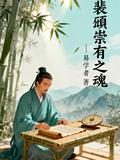 The Soul of Pei Wei's Chongyou Philosophy 裴頠崇有之魂
Pei Wei (267–300), courtesy name Yimin, was from Wenxi in Hedong and a renowned philosopher and politician of the Western Jin dynasty. He was born into the prestigious Pei clan of Hedong. His father, Pei Xiu, was a founding statesman of the Western Jin and an eminent geographer. Brilliant and widely learned from childhood, Pei Wei was also skilled in medicine and renowned for his refined character and broad-mindedness. His contemporaries praised him as “a forest and marsh of eloquence.” He held
—Reads—Score—Shelves
-
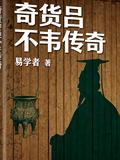 The Legend of Lü Buwei, Master of Rare Goods 奇货吕不韦传奇
Lü Buwei (date of birth unknown–235 BCE) was a native of Puyang in the State of Wei during the late Warring States period. Originally a wealthy merchant from Yangdi, he met Yiren, a Qin hostage prince, in Handan. Using the strategy of “investing in a rare commodity,” he committed his entire fortune to supporting Yiren and helped him return to Qin and ascend the throne as King Zhuangxiang. Lü Buwei was appointed chancellor and ennobled as a marquis, with a fief of 100,000 households in Luoyang. A
—Reads—Score—Shelves
-
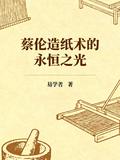 The Eternal Light of Cai Lun’s Paper-Making 蔡伦造纸术的永恒之光
Cai Lun (61–121), courtesy name Jingzhong, was born in Leiyang County, Guiyang Commandery, in the Eastern Han Dynasty (modern-day Leiyang, Hunan). He revolutionized papermaking, the foremost of the Four Great Inventions of ancient China. As a eunuch in the Eastern Han court, he rose to the posts of Palace Attendant and Director of the Imperial Workshops and was ennobled as Marquis of Longting. Building on the papermaking methods of the Western Han, he pioneered a complete process for making pape
—Reads—Score—Shelves
-
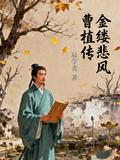 A Tragic Wind in Golden Robes: The Biography of Cao Zhi 金缕悲风曹植传
Cao Zhi (192–232), courtesy name Zijian, was from Qiao County in Pei Commandery (now Bozhou, Anhui). A renowned literary figure of the Cao Wei state during the Three Kingdoms period, he was a leading master of Jian'an literature. The third son of Cao Cao and younger brother of Cao Pi, he was deeply favored in his early years and renowned for his talent. Xie Lingyun praised him as a man of “eight pecks of talent.” His early works, such as “The White Horse,” brim with the ambition to distinguish o
—Reads—Score—Shelves
-
 The Lingering Echoes of Xiang Xiu's Bamboo Grove 向秀竹林余韵
Xiang Xiu: The Lingering Echoes of the Bamboo Grove is a work of biographical literature set against the intellectual currents of Wei and Jin metaphysics. It focuses on Xiang Xiu (c. 227–272), the most philosophically profound of the “Seven Sages of the Bamboo Grove.” Through its three-part structure of “forging iron, annotating Zhuangzi, and composing an elegy for the past,” the book shows how this thinker, caught between Ji Kang's heroic defiance and Guo Xiang's philosophical system, transform
—Reads—Score—Shelves
-
 Ten Strategies for Rulers and Their Ministers, Immortalized in History 君臣合术十篇青史留名
The art of balancing ruler and minister lies at the heart of ancient Chinese political wisdom. It reveals the complex interplay and collaboration behind the highest reaches of power under imperial rule. From Liu Bang and Xiao He complementing each other as they built their enterprise, to Liu Bei and Zhuge Liang’s final charge when the latter was entrusted with the heir; from Li Shimin and the division of “strategy and execution” between Fang Xuanling and Du Ruhui, to the reform alliance of the W
—Reads—Score—Shelves
-
 The Story of Liu Xiang of the Tianlu Pavilion 天禄阁刘向传
Liu Xiang (circa 79–8 BCE) was an important royal statesman of the Western Han dynasty and a founding figure in Chinese bibliography. Born Liu Gengsheng and courtesy-named Zizheng, he was from Pei County, in present-day Jiangsu. He entered government service at the age of twelve and served under three emperors: Xuan, Yuan, and Cheng. Though imprisoned twice for speaking frankly, he never abandoned the integrity expected of a scholar. During the reign of Emperor Cheng, he was appointed to catalog
—Reads—Score—Shelves
-
 The Legend of the Xia Dynasty, United Under Nine Tripods 九州同鼎夏朝传奇
Introduction to the Xia Dynasty The Xia Dynasty (c. 2070 BCE–c. 1600 BCE) is the first hereditary dynasty recorded in Chinese historical texts. It is generally believed to have been founded by Yu. Yu later passed the throne to Qi, marking the transition from the abdication system to hereditary succession and ushering in the era of rule by a single family. Its center of power lay roughly in what is now central and western Henan and southern Shanxi. The Erlitou site discovered by archaeologists
—Reads—Score—Shelves
-
 The New Legend of Lianshan 连山新传
It is said that when chaos first parted, Fuxi followed the Yellow River Chart to draw the trigrams; when civilization began, Shennong modeled the mountains to develop the lines. Yet the Lianshan was hidden in the Zhou court, and the Guicang concealed in the ruins of Yin. These peerless teachings of ages past were scattered into fragments in the Classic of Mountains and Seas. Now, in this fortunate year of Jiachen, when the stars return to their appointed places and the hibernating dragons stir,
—Reads—Score—Shelves
-
 Immortal Bones, Mortal Heart: The Biography of Guo Pu 仙骨凡心郭璞传
Guo Pu (276–324), courtesy name Jingchun, was a native of Wenxi in Hedong (in present-day Shanxi). During the transition between the Western and Eastern Jin dynasties, he was a renowned writer, philologist, numerologist, and feng shui scholar. Born into an official family, he was widely learned and talented, with expertise in the classics and histories, ancient writings and rare characters, as well as yin-yang theory, calendrical calculations, and divination. He moved south to Jiangdong in his e
—Reads—Score—Shelves