It is said that when chaos first parted, Fuxi followed the Yellow River Chart to draw the trigrams; when civilization began, Shennong modeled the mountains to develop the lines. Yet the Lianshan was hidden in the Zhou court, and the Guicang concealed in the ruins of Yin. These peerless teachings of ages past were scattered into fragments in the Classic of Mountains and Seas. Now, in this fortunate year of Jiachen, when the stars return to their appointed places and the hibernating dragons stir, I have gathered thirty-nine, twenty-one, and more texts: relics from Bashu, secret scrolls from Dunhuang, and rare volumes from overseas. Combining these with the celestial observations of Yangshao, the water patterns of Liangzhu, and the jade diagrams of Shimao, I have at last reconstructed the sixty-four volumes of the New Lianshan Tradition.
In ancient times, Yu the Great cast nine cauldrons to represent the nine provinces. Their designs were not demons and monsters, but maps of energy. The Yellow Emperor's Inner Canon described the five phases and six climatic influences; its words were not empty talk of yin and yang, but ecological codes. The New Lianshan now links past and present, revealing eight guiding principles for the first time:
First, the Principle of the Star Officials. By examining the circular altar ruins at Niuheliang, we have recovered the true meaning of Zhuanxu's “severing the connection between Heaven and Earth”: it did not cut off communication between humans and gods, but introduced calendar reforms to correct precession. The instrument tracking the nine stars of the Big Dipper has reappeared, proving that the “Jianmu” in the Classic of Mountains and Seas was an astronomical tower, and “Ruomu” a sundial.
Second, the Principle of the Earth's Veins. Deciphering the geothermal network beneath the Kunlun Ruins reveals that the “dwelling place of the Queen Mother of the West” was not a cave, but a system for controlling mantle plume energy. The Liangzhu dam system accords with the “Water over Thunder” hexagram, finally revealing the true meaning of Yu the Great's secret flood-control techniques.
Third, the Principle of Life and Breath. Decoding ancient DNA sequences makes it clear that “Nüwa molding humans from clay” was genetic engineering, while “Jingwei filling the sea” was coastal ecological restoration. The patterns on Bashu's bronze sacred tree are an exact match for diagrams of cell division.
Fourth, the Principle of Instruments and Applications. Analysis of the gold masks from Sanxingdui reveals nanowires of gold, proving that “Chiyou's bronze head and iron forehead” referred to advanced alloy armor. Quantum computing devices have been unearthed among the Xiongnu deer stones,
 Reeds Swaying in the Wind: A Tale of the Western Zhou
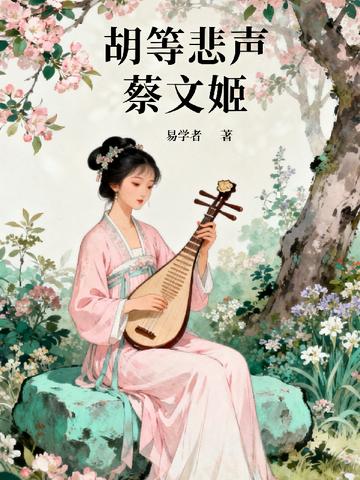 The Sorrowful Song of the Hu Jia: The Story of Cai Wenji
 The Life of Du Yu, Master of Letters and Arms
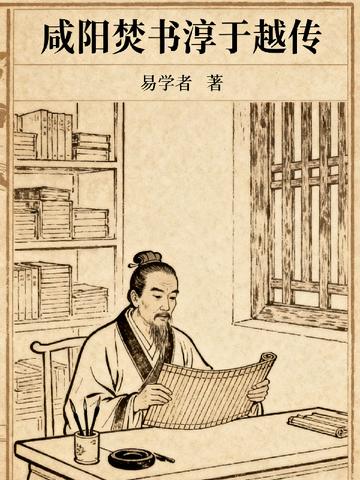 Chunyu Yue: The Burning of Books in Xianyang
 Xunzi: The Pivot of Heaven and Man
 The Life of Sun Wu, the Sage of War
 Ashes of Power: The Biography of Li Si
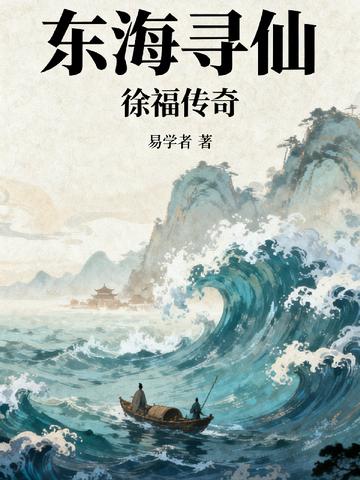 Xu Fu’s Legend: In Search of Immortals in the Eastern Sea
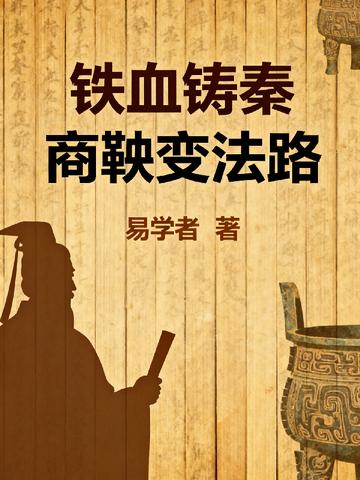 Forging Qin in Blood and Iron: Shang Yang's Reform
 The Solitary and Indignant Soul of Han Feizi
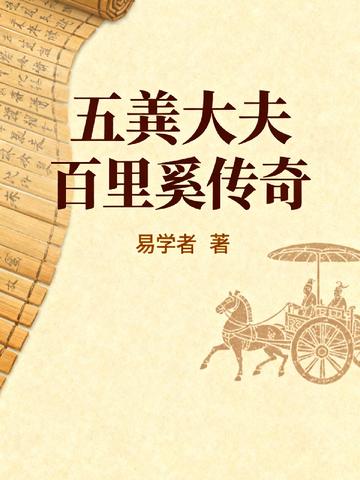 The Legend of Baili Xi, the Five-Ram Minister
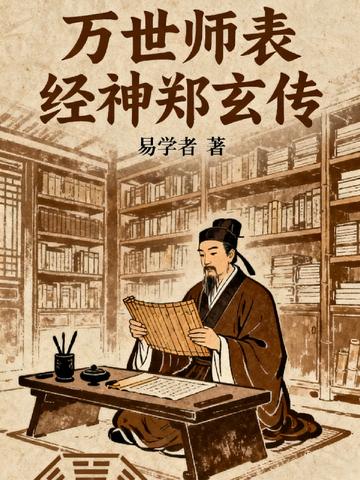 The Sage of Ten Thousand Generations: A Biography of Zheng Xuan