Fanqie catalogue
Books by 启个名字真的好难啊
- Matches
- 33
Fanqie books matched on the author's name.
-
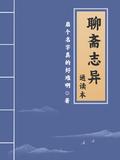 A Complete Read of Strange Tales from a Chinese Studio 聊斋志异通读本
Strange Tales from a Chinese Studio is a collection of short stories written by Pu Songling during the Qing Dynasty. It is filled with all kinds of strange and bizarre tales, many involving demons, ghosts, fox spirits, and other supernatural beings. Though the stories concern the supernatural, they ultimately reflect the many facets of human life. The stories cover a remarkably broad range of subjects. Some expose the dark side of feudal rule at the time, such as "The Cricket." Set during the Xu
2.3kReads—Score141Shelves
-
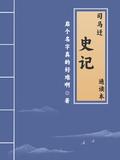 A Reader's Guide to Sima Qian's Records of the Grand Historian 司马迁史记通读本
Want to enjoy reading the classic historical work Records of the Grand Historian? This complete, easy-to-read edition is an excellent choice. It presents the work by Sima Qian, a Western Han historian, in accessible vernacular Chinese, allowing more readers to appreciate this monumental history. Records of the Grand Historian is widely regarded as the model for Chinese historical works and is the first of the Twenty-Four Histories. Lu Xun praised it as “the historian’s swan song, a Li Sao witho
986Reads—Score174Shelves
-
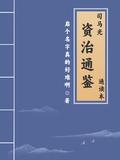 A Complete Reading of Sima Guang's Comprehensive Mirror in Aid of Governance 司马光资治通鉴通读本
Perhaps you've picked up Comprehensive Mirror in Aid of Governance, hoping to trace the course of history through the stories of the ancients, only to be tortured by obscure words and complicated grammar. Reading becomes a slow, grueling struggle, with every page like a difficult trek. The truth is, most of us don't want to be scholars who pore over every word and dissect every allusion. We're simply curious about how people in the past lived, how they weighed their choices, and how they left a
698Reads—Score148Shelves
-
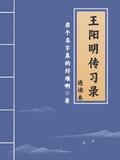 A Complete Reading of Wang Yangming's Instructions for Practical Living 王阳明传习录通读本
The Record of Instructions and Conversations is the central text of the teachings of Wang Yangming, a Ming dynasty thinker and proponent of the School of Mind. Compiled by his disciples from his lectures and correspondence, it is a collection of recorded conversations and a landmark work of Confucian thought. The book focuses on the core of the School of Mind and systematically expounds three central principles, combining philosophical depth with practical guidance. Its central ideas are "the mi
670Reads—Score122Shelves
-
 A Complete Guide to Plum Blossom Numerology 梅花易数通读本
Plum Blossom Numerology is a divination method derived from the Book of Changes and traditionally associated with the Northern Song scholar Shao Yong. Its name has quite a story behind it. Legend has it that Shao Yong once saw sparrows fighting over a plum blossom branch and casually cast a hexagram, predicting that a woman would be injured while picking flowers. The prediction came true, and the method got its name from the incident. The method’s greatest strength is its flexibility and simplic
315Reads—Score100Shelves
-
 Wang Fuzhi's Comprehensive Commentary on the Zizhi Tongjian 王夫之读通鉴论通读本
On Reading the Comprehensive Mirror in Aid of Governance is a masterpiece of historical commentary by Wang Fuzhi, a thinker of the late Ming and early Qing dynasties. He began writing it at the age of sixty-nine and completed it shortly before his death, pouring a lifetime of effort into the work, which runs to more than 600,000 characters. Based on the historical record in Sima Guang's Comprehensive Mirror in Aid of Governance, the book systematically examines the history of feudal society from
304Reads—Score103Shelves
-
 A Comprehensive Guide to Qimen Dunjia 奇门遁甲通读本
Qimen Dunjia, an ancient Chinese system of divination, is considered the foremost of the Three Great Esoteric Arts, alongside Taiyi and Liu Ren. It is regarded as Daoism's highest form of predictive study and is even celebrated as the "art of emperors." Rooted in the Eight Trigrams of the Book of Changes, it combines knowledge from numerous fields, including astrology, calendrics, yin and yang, and the Five Elements. Integrating astronomy, calendrics, military science, strategy, and philosophy,
173Reads—Score—Shelves
-
 An Annotated Guide to the Essential Techniques for the Welfare of the People 齐民要术通读本
The Essential Techniques for the Common People is a comprehensive agricultural treatise compiled by Jia Sixie, an agronomist of the Northern Wei. It is the oldest and most complete ancient agricultural text still extant in China, written around the sixth century AD. In the title, “common people” refers to ordinary folk, while “essential techniques” means the important methods of making a living, highlighting the book’s practical value. The work consists of ten volumes and covers a wide range of
162Reads—Score—Shelves
-
 A Complete Reading of the Su Shui Ji Wen 涑水记闻通读本
The Records of Sushui is a collection of notes in the form of recorded sayings compiled by Sima Guang, a historian of the Northern Song. It takes its name from the fact that the author was from Sushui Township in Xia County, Shaanzhou, and was known as the Master of Sushui. The book was never completed. It was originally a compilation of historical material that Sima Guang gathered while preparing to write A Sequel to the Comprehensive Mirror for Aid in Government, covering Song history to suppl
128Reads—Score—Shelves
-
 A Complete Reading of On the Evolution of Heaven 天演论通读本
Evolution and Ethics is an important work translated by Yan Fu, a modern Chinese thinker. Its original author was the British biologist Thomas Huxley, and the title should be translated literally as Evolution and Ethics. Yan Fu completed the translation in the late nineteenth century, creatively adapting the original to reflect the social conditions of China at the time. Its central ideas came from Charles Darwin's theory of biological evolution, putting forward the important principle of "the s
86Reads—Score—Shelves
-
 A Complete Guide to Reading Zhuangzi 庄子通读本
The Zhuangzi is a collection of philosophical essays written by Zhuang Zhou, a major Daoist thinker of the Warring States period, and his later followers. Also known as the Scripture of Nanhua, it is often paired with the Laozi as the “Lao-Zhuang” tradition and is a key text of Daoist thought. The work survives in 33 chapters, divided into Inner Chapters, Outer Chapters, and Miscellaneous Chapters. It is generally believed that the seven Inner Chapters were written by Zhuangzi himself and expres
54Reads—Score—Shelves
-
 A Complete Reading of the Divine Farmer's Classic of Materia Medica 神农本草经通读本
The Divine Farmer's Classic of Materia Medica is the earliest surviving classic work on pharmacology in China. Compiled during the Han dynasty, it was attributed to the legendary Divine Farmer, though in fact it was assembled by numerous physicians who drew together the accumulated experience of ancient practitioners. It represents the culmination of pharmacological achievements during the Qin and Han periods. The work consists of three volumes and records 365 medicinal substances, divided into
54Reads—Score—Shelves
-
 A Complete Reading of the Treatise on Cold Damage 伤寒论通读本
Treatise on Cold Damage is a classic work of traditional Chinese medicine written by Zhang Zhongjing, a physician of the Eastern Han dynasty. Completed around the third century AD, it was China's first clinical text to provide a complete system of medical principles, methods, formulas, and medicines, and is honored as the "ancestor of medical formulas." The "cold damage" in the title does not refer only to the common cold. It encompasses a range of illnesses caused by external invasion of wind a
44Reads—Score—Shelves
-
 A Complete Reader's Guide to the Classic of Mountains and Seas 山海经通读本
The Classic of Mountains and Seas is a remarkable work from China's pre-Qin period. Its wide-ranging contents cover mythology, geography, plants and animals, shamanism, and many other subjects. Its authorship and date of compilation remain uncertain; it is generally believed to have taken shape over a long period through oral transmission and additions by many hands. The book survives in eighteen chapters, divided into five chapters of the Classic of Mountains and thirteen chapters of the Classi
42Reads—Score—Shelves
-
 Hu Sansheng’s Complete Commentary on Zizhi Tongjian 胡三省资治通鉴通读本
Want to understand Hu Sansheng's edition of Zizhi Tongjian, but find yourself stumped by its obscure classical Chinese and Hu Sansheng's traditional-character notes? Don't worry, this complete reading edition is here to help! As a monumental work of history, Zizhi Tongjian is rich in historical wisdom, and Hu Sansheng's annotations only add to its value. However, both the original text and the notes are written in traditional characters, and their language is archaic and difficult. Even well-edu
35Reads—Score—Shelves
-
 A Complete Reading of Dream Pool Essays 梦溪笔谈通读本
"Dream Pool Essays" is a collection of notes written late in life by Shen Kuo (1031-1095), a scientist and politician of the Northern Song Dynasty. It takes its name from Dream Pool Garden in Runzhou, present-day Zhenjiang, Jiangsu, where the work was completed. The book consists of 30 volumes and three parts: "Brush Talks," "Supplementary Brush Talks," and "Further Brush Talks." Its contents span dozens of fields, including astronomy, calendrics, mathematics, physics, chemistry, biology, geogra
30Reads—Score—Shelves
-
 A Complete Reading of the Comprehensive Mirror in Aid of Governance: Annals and Events 通鉴纪事本末通读本
When reading the Comprehensive Mirror in the past, its annalistic format arranged historical events by date, scattering them across different years and making them quite difficult to look up. Biographical histories focused on individuals, so accounts of the same event were scattered across multiple entries depending on who was involved. The Comprehensive Mirror in Its Original Form, however, reorganizes and groups together more than 1,300 years of history from the Comprehensive Mirror by event,
22Reads—Score—Shelves
-
 A Complete Reading of Wang Fuzhi's Inner Commentary on the Book of Changes 王夫之周易内传通读本
Written by Wang Fuzhi, a thinker of the late Ming and early Qing dynasties, this important work offers an in-depth interpretation of the Book of Changes and showcases his outstanding philosophical thought and profound insights into the study of the Changes. Wang Fuzhi lived through the turbulent transition between the Ming and Qing dynasties. Driven by a commitment to preserving cultural traditions and exploring ideas, he incorporated his profound reflections on the cosmos, human life, and soci
20Reads—Score—Shelves
-
 A Complete Reader's Edition of Yulizi 郁离子通读本
The Master of Yu Li is a collection of allegorical prose by Liu Bowen, the renowned politician and writer of the late Yuan and early Ming dynasties, and is considered his representative work. Liu Bowen, whose given name was Ji and whose courtesy name was Bowen, was from Qingtian, Zhejiang. Bright from an early age and widely learned, he studied astronomy, geography, military strategy, and many other fields in depth. He was ambitious and longed to put his talents to use in politics and realize h
18Reads—Score—Shelves
-
 A Comprehensive Reader of Wang Fuzhi's On the Song Dynasty 王夫之宋论通读本
On Song is a historical and political work by Wang Fuzhi, a thinker of the late Ming and early Qing dynasties. Focusing on the history of the Song dynasty, it uses historical events to explain political views and philosophical ideas, offering considerable depth and insight. In the book, Wang Fuzhi begins with Song Taizu Zhao Kuangyin's founding of the dynasty after the Chenqiao Mutiny, then examines major events and key figures from each period of the Northern and Southern Song. His discussion
18Reads—Score—Shelves
-
 A Complete Guide to Dragon, Dragon, Tiger, and Tiger 龙文鞭影通读本
Longwen Bianying was a popular primer for children during the Ming and Qing dynasties. It was compiled by Xiao Liangyou in the Ming dynasty and later expanded and revised by Li Huiji and Xu Ying in the Qing dynasty. Its full title is Longwen Bianying, Second Collection. In the title, "Longwen" means a fine horse, while "Bianying" means that it moves as soon as the whip is raised, suggesting that the book helps children learn quickly. The book is written in four-character rhyming lines, with regu
18Reads—Score—Shelves
-
 A Complete Reading of the Record of Daily Knowledge 日知录通读本
The Records of Daily Learning was written by Gu Yanwu, a great scholar of the late Ming and early Qing dynasties, and took more than thirty years of painstaking work. Its title comes from a saying in the Analects: "Learn something new every day, and don't forget what you have already learned." It means that we should acquire new knowledge every day without forgetting the skills we already have, and it also reflects Gu Yanwu's commitment to lifelong learning. The book covers many subjects, includ
17Reads—Score—Shelves
-
 The Complete Guide to Strategic Minds 智囊通读本
Wisdom: An Encyclopedia of Ancient Chinese Wisdom is a collection of accounts of wisdom from across the ages, compiled in his later years by Feng Menglong, a writer of the late Ming Dynasty. It is hailed as an “encyclopedia of Eastern wisdom.” In an era of turmoil at court, Feng Menglong set out to “use wisdom to serve the world.” He surveyed the classics and histories, as well as unofficial accounts and popular lore, collecting stories of wisdom from the pre-Qin period through the Ming Dynasty.
14Reads—Score—Shelves
-
 A Reader's Edition of Wang Fuzhi's Commentary on the Book of Changes 王夫之周易外传通读本
The Outer Commentary on the Zhouyi is a highly influential philosophical work by Wang Fuzhi, a renowned thinker of the Qing Dynasty. The book consists of seven volumes. Wang Fuzhi, courtesy name Ernong and pseudonym Jiangzhai, was from Hengyang, Hunan, and held an important place in the intellectual world of the early Qing Dynasty. This work was written in the twelfth year of the Shunzhi reign (1655), after the Ming Dynasty had already fallen. Wang Fuzhi's life was full of hardships. He first r
14Reads—Score—Shelves
-
 A Complete Reading of Wang Fuzhi's Record of Questions and Reflections 王夫之问思录通读本
Records of Thought and Inquiry is another major work by Wang Fuzhi, alongside Commentary on Zhang Zai's Correcting Ignorance. It carries his profound insights and reflections on the universe, human life, and society, leaving a precious legacy for later generations. Wang Fuzhi lived through the turbulent transition between the Ming and Qing dynasties. The dramatic changes in society prompted him to reflect deeply on many issues, and Records of Thought and Inquiry was born in this context. The wo
12Reads—Score—Shelves
-
 A Complete Reading of Wang Fuzhi's Commentary on Zhang Zai's Zhengmeng 王夫之张子正蒙注通读本
Annotations on Zhang Zai's Zhengmeng is a major work by Wang Fuzhi, a philosopher of the late Ming dynasty. Through his commentary on Northern Song thinker Zhang Zai's Zhengmeng, Wang inherited and elevated Zhang's naive materialist thought, securing the work an important place in philosophy. Zhang Zai's Zhengmeng is the distillation of his philosophical thought. Although Zhu Xi's Commentary on Zhengmeng appears to praise it, it distorts Zhang's theories to a considerable extent. The commentarie
12Reads—Score—Shelves
-
 A Complete Reading of Wang Fuzhi's Commentary on the Book of Documents 王夫之尚书引义通读本
Wang Fuzhi, known by the literary name Jiang Zhai and honored as Master Chuanshan, lived through the fall of the Ming dynasty. Deeply affected by the turmoil of the times and the people's suffering, he resolved to write and publish his ideas. The six volumes of Shangshu Yinyi contain fifty essays, each addressing a separate topic without being linked to the others. By extending certain ideas from the Ancient Text of the Book of Documents, Wang Fuzhi set out his own thought. Beginning with the re
11Reads—Score—Shelves
-
 A Complete Guide to the Ma Yi Method of Face Reading 麻衣相法通读本
The Book of Ma Yi Physiognomy is said to have been written by the Daoist Ma Yi during the Northern Song Dynasty. It is China's earliest surviving systematic treatise on reading the human face and body, and holds an important place in the field of physiognomy. Based on the theory of yin and yang and the Five Elements, the book constructs a complete and complex system of face reading. It holds that the facial features and different parts of the body correspond to different yin-yang and Five Elemen
8Reads—Score—Shelves
-
 Wang Fuzhi's Complete Commentary on the Four Books: Mencius 王夫之四书大全说孟子
The section on Mencius in Wang Fuzhi's Complete Commentary on the Four Books is an important part of his philosophical system. Wang Fuzhi lived through the turbulent transition from the Ming to the Qing dynasty, an era of social upheaval and clashing ideas. With a thinker's keen insight, he used his commentary on Mencius to express his own views, profoundly influencing later understanding of Mencius's thought and the development of philosophy. In his interpretation of Mencius, Wang Fuzhi adhered
6Reads—Score—Shelves
-
 Wang Fuzhi's Complete Commentary on the Four Books: The Doctrine of the Mean 王夫之四书大全说中庸
In Wang Fuzhi's monumental scholarly work, Explanations of the Complete Compendium of the Four Books, his interpretation of The Doctrine of the Mean is distinctive and illuminated by wisdom, offering later generations profound insights into understanding the text. Wang Fuzhi lived during the transition from the Ming to the Qing dynasty. The upheaval of the times led him to reflect deeply on the traditional classics. In interpreting The Doctrine of the Mean, he upheld a materialist viewpoint and
4Reads—Score—Shelves
-
 A Complete Reader of Wang Fuzhi's Yellow Book 王夫之黄书通读本
The Yellow Book is an important work by Wang Fuzhi, a thinker of the late Ming and early Qing dynasties, completed in 1656. With its distinctive perspective and profound ideas, the work presents Wang Fuzhi's deep insights into crucial issues such as the state, the nation, and politics. It reflects his thoughts on the crises of his era and his hopes for the future. On the subject of national identity, Wang Fuzhi strongly emphasized distinguishing between the Hua and the Yi. He believed that the H
3Reads—Score—Shelves
-
 Wang Fuzhi's Complete Commentary on the Four Books: The Analects 王夫之四书大全说论语
Wang Fuzhi's interpretation of the Analects in his An Explanation of the Complete Collection of the Four Books offers us a fresh perspective on Confucian classics and traditional philosophical thought. Wang Fuzhi lived during the transition from the Ming to the Qing dynasty. He witnessed social upheaval, while scholarship and intellectual thought were also in a state of crisis. Through his interpretation of classics such as the Analects, he sought to restore their original meaning and find pract
3Reads—Score—Shelves
-
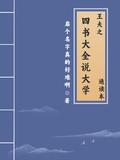 Wang Fuzhi's Complete Commentary on the Great Learning 王夫之四书大全说大学
Wang Fuzhi's interpretation of The Great Learning in Explanations of the Complete Collection of the Four Books embodies his profound philosophical thought and practical approach to statecraft, offering later scholars a distinctive perspective on the text. At the level of ontology, Wang Fuzhi analyzes The Great Learning through the lens of the theory that qi is the sole origin of all things. He points out that all things are condensations of qi, so "investigating things" means understanding and e
2Reads—Score—Shelves