


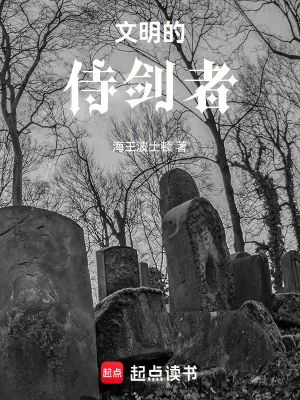
Swordbearer, Is My Golden Finger an Evil God?
侍剑者,我的金手指是邪神?
- Status
- Completed
- Length
- 1.2M Words
- Subgenre
- Eerie Mystery
- Updated
- 2mo ago
- Source
- Qidian
Stats
490Chapters
0Votes
12.2kRecs
29.3kFans
Tags
Synopsis
More by this author
In booklists 1

Readers also read
 I, the Celestial Master, Learned Ghost-Hunting from Supernatural Films
 I Start the Story of Seizing the Body and Being an Undercover Human Being.
 Forensic Pathologist 1994
 Starting an Equipment Slot in Uncle Jiu's World
 League of Legends: I Just Turned Pro, and You're Saying the League Is Dead?
 Echoes of the Old Days
 Has the Paladin Fallen Today?
 Simultaneous Transmigration: Becoming a Legend Before the Story Begins
 Starting with Saving Manchester United
 The Outer God’s Child Walks the Earth
 The Mystery Detective of the Steam World
 What Witch? I'm a Deadly Apothecary!
 The Light of Gaia: Starting with Ultraman Ace
 Starting Today, I'm a Magical Girl
Reader comments 47
Google Translate
The protagonist of a Western fantasy novel is called Gongsun Xuanyuan
The protagonist of this book does have a refreshing feeling. In terms of personality, it has a sense of immediacy like the protagonist of the Japanese manga Asasi. The other female supporting characters say that the protagonist is particularly clean and pure. The protagonist himself also behaves relatively plainly, or stupidly without a God's perspective. The overall impression is that of a teenager, and the shaping of the world view is very flavorful. But I really can't help but tell you what the author is thinking. If you are not pursuing fast-paced pretending and slap-in-the-face fun, but pursuing a slow-burning and plain atmosphere, then let me ask you a Western fantasy novel. Name it Diga after a name similar to the Magic Network or the Internet. When pretending to be a god and saying your name to the bishop, you name it Gongsun Xuanyuan. Do you think it still has this atmosphere?
Overall it's good, but the relationship between the protagonist and his family is really bad.
I skipped through it, but I read the original version, so I should be qualified to find fault with it. However, I personally feel that the protagonist is really not a likable protagonist, or the author's explanation is inconsistent. At the beginning, the protagonist explains that he does not want a title and does not want to fight. Later, he complains that his father gave up and he is as capricious as schizophrenia. This is really not a place that people like. A qualified protagonist should be confident and firm, whether he is cunning or aboveboard. Then there is the communication between the protagonist and his family, which is really stiff. What's more, he didn't actually ignite where it should have burned! ! The foreshadowing of the Twilight Princess's arrival was quite good. Just when the reward was about to come, the whole plot should have suddenly exploded, but it was gone after just one chapter? !
The author's writing skills are not good, or in other words, the author should be relatively young, so the protagonist he writes seems very childish and stupid. Not a mockery. Up to now, it is impossible to tell what the main line of action of the protagonist is, whether there is any plan for this main line, and how to execute it. There is clearly an optimal route, but the point of view is deliberately blocked and written like a fool.
The main character is a bit stupid, but the rest is okay
Some thoughts and guesses about the atmosphere of this book and the logic of character behavior (only personal thoughts and guesses, please do not take it seriously. You can refer to it based on your personal feelings and clarify your doubts based on your own experience)
From the last book to the present, when I saw the title of this book, I thought it was a Western fantasy novel. I was a little surprised that the author suddenly changed his style, and I hesitated whether to read it. But after reading it for two days, I realized that although the details were somewhat different from the previous book, the atmosphere in this book was actually very similar to the concepts revealed. The author may indeed describe a bit too much about daily life and the characters' words and deeds, which has little effect on advancing the plot, and some readers may not be interested. But I personally feel that these descriptions are just right and not lengthy. They allow me to understand the characters' personalities and motivations better and make them feel vivid to me. This is one of the author's writing styles. To be honest, the author's last book touched me because of this style of writing. Some of the author's ideas are reflected in both books. For example, Broughton's attitude towards gods is that everything human beings should build with their own hands, rather than praying to gods and Buddhas. Even after learning about the existence of gods, his attitude towards the gods did not change much. It was more like equal "friends", respecting each other, and the awe of those who hold the power enough to change human society and expecting the other party to only watch humans develop in a certain degree of safety and not to use this power to overly affect human society, rather than the belief or fear of believers in gods. (Although I personally think that if the achievements of the Seven Gods are true, there is nothing wrong with believing in them, but it is understandable for the character of the protagonist) However, compared to Lingya, who was relatively divine in the previous book, Broughton is obviously much more humane, and Broughton has relatives, friends, and even a girlfriend. Compared to being directly selected by Gaia after the death of the first life, the plot begins immediately after time travel and becoming a little girl with no worries. For Ling Ye, who has a relatively clear "mission", Broughton has his own life for seventeen years after time traveling. This also makes Broughton unable to behave like Ling Ye, and he will not be as capable as Ling Ye, and he can always make rational decisions, or the best decision for the overall situation and mankind. Therefore, it is normal for some of Broughton's behaviors to seem "irrational", which is determined by his environment and personality. As a time traveler, Broughton's subconscious concept made him feel that his father, who was almost crazy and demanding on his family for the sake of illusory gods and doctrines, was an unfit father without seeing anything extraordinary. His father's abandonment of him and his emphasis on his brother also made Broughton feel alienated from the family from the bottom of his heart, causing him to run away from home to study elsewhere. It can be said that love, especially father's love, was largely absent from Broughton's childhood. But Broughton is his father's child after all. His food, clothing, and even the expenses and opportunities for him to run away from home to study were all given by his father and his family. Maybe his father was not qualified, but his father did not hurt him. Both harm and favors exist. Because of this, Broughton seems a little paranoid and irrational about matters related to his father. Even though he has some understanding of his father's behavior after being exposed to extraordinary and family responsibilities, the paranoia he has cultivated since childhood cannot be eliminated in a day or two. As a child who was "given up" early, when facing his brother, Broughton actually had an inferiority complex in his heart of being treated as a "waste" and an unwillingness for his brother to be taken seriously. This inferiority and unwillingness turned into Broughton's competitiveness towards his brother. Therefore, Broughton did not want to gain power through his brother, nor did he want his brother to know that he had extraordinary power. On the one hand, he didn't want his brother to know that he "shyly" turned around and picked up the power that he once despised (although Broughton didn't know the existence of the extraordinary at the time); on the other hand, the childishness in Broughton's heart made him feel that if he told his brother that he had extraordinary power based on his own strength, it would be the same as a young child showing off to his elders that he had achieved perfect scores in addition and subtraction. And his brother also had an almost jealous emotion towards Broughton, which originated from his father's "tolerance" towards Broughton. It can be seen from the book that the elder brother is the "only successor" to his father, so it can be said that the elder brother spent most of his childhood in the shadow of his father, and he must not relax for a moment, because he is the heir of the family and has to bear the responsibilities of the family. But Broughton can do what he wants to do without having to bear these responsibilities or being harshly criticized by his father, because Broughton needs to be protected, "an ordinary person who is different from himself." With this kind of inner comfort, the elder brother could feel comfortable dedicating his childhood to this "responsibility that only he can bear". If Broughton also mastered extraordinary power, this inner comfort and slight sense of superiority would collapse. This is why the elder brother had such a big reaction to Broughton's contact with extraordinary things, and why he felt that Broughton could not have extraordinary power. Facing his fiancée, it is actually to be expected that the protagonist will react so strongly against his faith. It can be seen from the protagonist's attitude towards faith that even when the protagonist has no awakened memory, the modern three views still play a role in the protagonist's subconscious, and the priority is far above the common sense of this world. Since the protagonist can have a quarrel with his family over faith issues when he has no awakened memory when he was a child, it is natural that he will not accept marrying his fiancée, whether in name or in reality, because he insists on modern views on marriage. This is actually in line with the image of a seventeen-year-old boy who "grew up in a somewhat imperfect childhood environment with modern concepts. He is a little paranoid and a bit strong, but he will stand on his own stand and do his best to deal with the suffering he encounters and do his best to be kind to himself without harming himself or the people around him." Writing this, I will mention Gongsun Xuanyuan and Dijia again. In fact, the article mentioned that there are Chinese names in this world, that is, the country isolated by the sea, so naming Gongsun as a god is not really a big deal. The main reason is that there is too little foreshadowing in the article and no vaccinations are taken, which really ruins the atmosphere. But considering that the protagonist's name may be related to some of the protagonist's settings, and in order to have a sense of substitution, the protagonist cannot be a foreigner in his previous life, so if you want to manipulate the name, there is no way to let the name appear here, so I am not unacceptable. As for Tiga, this is purely the author's personal taste, but it is not impossible for the protagonist's character to do such a thing, and although this is indeed a bit dramatic, for me personally, this feeling of finding a guest character in the article is already a kind of fun when reading this author's article. One more thing, the author's article is really not suitable for such a royal title, it is easy for people to misunderstand, so let's change it (
No malice intended, just out of curiosity and wanted to ask the author.
In the chapters where the protagonist says his name is Gongsun Xuanyuan, does your collection and other data fluctuate greatly? I jumped to watch it, but it was still quite out of character, and the sense of immersion was almost gone. Will the data be stable after it is put on the shelves again? I read in the comments that you are an old author who has been writing books for more than ten years. It's impossible that you don't know such poisonous points, but you still write it like this. You should have your own writing logic and thinking judgment about the market. But I see in the comment section that you always explain the inevitability of these poisonous points by spoiling the settings behind it. You can't lose confidence in your core settings. Finally, I still want to say, if the data is not good, can I insist on finishing the book?
It is understandable to be stupid before the age of seventeen, but it is incomprehensible to be stupid after awakening the memory of the past life. The more you look at it, the more stupid you feel, and it is a bit delicate and artificial. It is not like a big man. After all, you can be regarded as a person in two lives. I still want to do things, I think, I think, but I just don't understand. There are so many mysteries in my family. Oh, I just don't want to understand. Don't worry about it.
The biggest problem with this book is the protagonist. I really don't understand what kind of protagonist the author wants to create. He looks like a giant baby.
Sorry, not to my liking. The pace is slow. The most important thing is that the protagonist is too ordinary. The protagonist is not beyond the world. If you remove the golden finger, he is just like an ordinary citizen with a monthly salary of 5,000. Ordinary people who become mentally disturbed after winning a million-dollar lottery. Too bland.
Fairy grass before whitening, poisonous grass after whitening
The plot before the identity was cleared was very good, and although the protagonist occasionally showed his stupidity, it was still acceptable. However, after the Wanqiao God Religion was cleared, the series of church operations and interactions between gods and men were completely unbearable to watch. The author does not have enough experience. He probably never even served as a team leader when he was studying. The operation of the church is still essentially a process of managing people. It is not called management by allocating power to others and saying that I am equal; it is also not that all one's resources are only linked to a self-service vending machine and weirdly only treats people who know each other (people who have friendship or only have a casual relationship). ) Is open to passers-by and allows them to freely recruit people. The power and privileges of a true God church are only open to a small group of private individuals who have no special contribution and have just met. This is like telling the emperor and eunuchs that the key to the treasury has been given to you. Pay two coins for whatever you want. Remember to bring your relatives. What's the difference. Do you think the ultimate gain from this is justice and piety, or a group of privileged people who have grasped (Eunuch Bingbi) + (Minister of Imperial Envoy) and a group of exploited people who call you sb? Don't say that the Seven Gods don't need faith, so it doesn't matter. Gods who really don't need faith will kneel down and lick every wage earner they know like a treasure? In the early days, there were only a few or dozens of people you could lick. After the faith is established, there are hundreds of thousands or millions of believers. How can you still communicate with the dozens of people in front of you in the current way? Are you going to pretend to be aloof when the time comes? What do you think a normal mind would think about this god?