


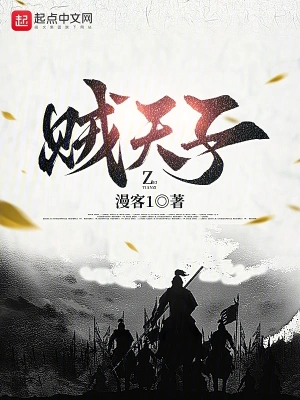
The Rebel Son of Heaven
贼天子
- Status
- Completed
- Length
- 3.3M Words
- Genre
- Historical
- Subgenre
- Alternate History
- Updated
- 1y ago
- Source
- Qidian
Stats
Tags
Synopsis
More by this author
In booklists 17
Reading List 001
The interesting and the not-so-interesting
The Wine Feast Book List
A good work is made from a great idea and great writing. Urban fiction, creative stories, xianxia, ghosts and monsters, fantasy progression novels, survival-focused stories, tales of becoming a sage, light novels, dating-show fanfiction: I recommend books I like and books you like. There’s something here for everyone.
The Great River Flows East
To establish the heart for Heaven and Earth, to secure a future for the people, to carry on the lost teachings of the sages of the past, and to bring peace to all generations. Zhang Zai. Display the heads at the post station on Gaojie Street, among the foreign envoys’ residences, so they may be seen for thousands of miles: those who dare offend the mighty Han will be executed, no matter how far away they are. Ban Gu. The moon of The Legend of Qin shines over passes that have stood since the Han;


Recommendations from a 20-Year Veteran Bookworm: Unique and Toxin-Free
Mainly historical, urban, xianxia, and sports fiction. Sensible plots, excellent writing, no characters losing their wits, and no pretentious literary posturing.
My Reading List
Books I've read
In a Reading Slump? Veteran Readers, Come On In
I've added a recommendation rating system. Five stars: A must-read masterpiece in its category, the kind you'll regret missing. Four stars: A great pick in its category. Generally, a book needs solid prose, pacing, and plot to make the cut. Three stars: A mixed bag. Whether it appeals to you is up to the author's skill. My main recommendations are historical, gaming, and urban fiction.
A List of Books I Really Love
Over the past few years, I've found the rankings less and less reliable, so I've decided to recommend books myself. (Following me won't do any good. Remember to click the bookmark button below instead.)
Classics Never Go Out of Style, Remember Me When You Run Out of Books
Revisit the classics, savor books during a reading drought, and personally test the poison. Fellow readers are sure to love this list. Mystery and thrillers are my favorites, though I also enjoy lighthearted comedy. Storytelling is the most important standard.
A Little Book Bag With Absolutely No Standards
I actually use this list as a bookshelf. I add books I've finished or that haven't finished updating yet, then wait until they've built up enough chapters to binge. So I have no particular standards for what I collect here. I don't care about recommendations, favorites, or monthly ticket rankings. I just go by the book's appeal, its updates, and whether it has been abandoned. Anyway, everything on this list is something I've read, so if you find something you like, give it a try. The rest doesn'
Curated Reading List
Must-reads for a reading slump. Discover new books and great stories, and watch promising new authors grow alongside their fans.
Rebellion Stories After Transmigration
A story about someone who transmigrates to another world and uses modern knowledge and core socialist values to start a rebellion
A 20-Year Veteran Reader's Reading List
A little of everything, but every book I recommend has a sensible plot and good writing.


What I Like to Read
All kinds, including gender-bender stories and the like
Kkkkkk6k6k
Just keeping track of the books I'm reading. The name is random, and so are the recommendations. No need to spend time on this list, just take a quick look if you happen to come across it.
A Reading List by Author Gu Toujiazhi Xiansheng
Only the books Bone follows every day will appear here.
The Stockpile Sanctuary: Likes Appreciated
I hope everyone can find stories they love here.


Urban, Gaming, Historical, Celebrity, and Student Stories
These are all novels I've read and really enjoyed. Sharing them with everyone.
Readers also read
 Seizing the Direct Descendant in the Red Mansion
 A Literary Master in Ancient Greece
 Great Ming: His Father Is Useless, So He Must Summon the Founding Emperor
 Germany: 1914
 Hong Kong Films: In Wo Hop To, Uncle Deng Begs Me to Take Charge
 A Nobody Becomes King
 You’ve Truly Made Things Difficult for Me, Your Majesty
 I’m Not a Suit-Wearing Thug, I’m a Chameleon Actor!
 In Shrouding the Heavens, I Rule All Worlds from a Chat Group
 The Eternal Blade
 Splendor of the Five Dynasties
 Cleansing the Demons
 The White General
 The Peerless Commoner
 Marquis of Jing'an
 The Bright Zhou
 The Perfect Son-in-Law
Reader comments 37
Google Translate
You are both responsible and established. If you like the status given by the court so much, then what kind of rebellion are you going to do? You still look down on the rebellious people next door who are at least aboveboard. How can you pretend to be so secretive and fight for the rest of the world to go to bed? While saying that the imperial court sucks, you still want to lick the shit out of it.
Finally, let me give you some thoughts.
I have been following this book from the beginning until now. At the beginning, I could feel that the author's writing power was actually quite limited, and the protagonist was poorly portrayed. The image of the protagonist is not very likable. As a time traveler, there is no "golden finger". The only thing the author gives to the protagonist is his amazing bravery. However, as most modern people, the protagonist of time travel and hegemony should have no historical foresight, advanced economic system, or reform of agricultural equipment. Of course, this is also the current situation of most ordinary people. From another perspective, this kind of writing is also quite attractive. The heroic ordinary protagonist travels through time and fights for hegemony, and starts to make a fortune as a bandit. The superposition of various buffs is quite interesting, which makes up for part of the lack of writing skills. The author also depicts the process of the protagonist's fortune in a general way. The protagonist has little awareness of the talents under his command, and even has few scholars. He inexplicably quickly accumulates a thick family fortune. With the opportunity to compete for hegemony, the protagonist also inexplicably learns the ability to march and fight. Although his own power's political system, economic system, and agricultural field have no outstanding performance, he finally conquers the entire world. If we just write like this and follow the route of Genghis Khan conquering the world, conquering the entire Eurasian continent along the way, and occasionally describing the dynasty management, it should be a good ending, but the author prefers not to. The author insists on describing the process of dynasty management in a large space, but the author is not good at writing this aspect. After entering the chapter of dynasty management, the author was a little overwhelmed because the protagonist made his fortune too quickly and had no time to cultivate talents in various fields. For example, in the agricultural field, the author did not elaborate on how many talents were cultivated who could reform agricultural equipment and increase crop yields, how many talents were cultivated in the commercial field with excellent business vision and business acumen, and how many talents were cultivated in the scientific research field who could invent inventions that surpassed the times. Then the author suddenly wanted to carry out reforms, but the problem was that the process of the protagonist's fortune was too fast and he had cultivated many civilians and officials under his subordinates. Most of them were born in large aristocratic families to carry out the basic implementation of reforms. The protagonist's character was indecisive and he wanted to make most of the projects complete. The problem in Shanshi Mountain is that many of the projects under the protagonist's hands belong to those who remember Li Yi. Even if those projects are not talked about by their families, will their families do anything wrong? In this case, the protagonist is still useless. Apart from the bead curtain, I wonder how the court can deter those big families. A large aristocratic family has thousands of good people pushing out one or two of their children to do some illegal hookups, while the rest of the family does some related non-illegal business. How can it deter those aristocratic families by only punishing the offender himself? How can the asset transfer of the criminal be traced under the supervision of the ancient times? In the absence of an implicated system, the aristocratic family will have no scruples. After all, the money and the land are also obtained, and the worst is to quit one or two scapegoats. Finally, there is the protagonist, who improves the status of merchants and allows the children of merchants to take the imperial examination. In this case, basically the vast majority of aristocratic families will have many people engaged in business. In the past, when everything was low-grade and only those with good education were good, the smartest people were basically in the official career. However, after the protagonist's policy, a small number of very smart people will turn to business. In addition, without the threat of the implicated system, the ability of social and economic crimes has rapidly evolved, and has evolved to the point where the ancient political system cannot regulate it. Such a policy can easily give birth to aristocratic families that are integrated with politics and business. What should we do if aristocratic families in more remote areas begin to raise private soldiers? Just get rid of the chief culprit? In that case, it is easy for aristocratic families to make a comeback. After all, those private soldiers don't know they are committing crimes. They are just practicing when they are busy farming and when they are free, you can chase them or not. In ancient times, there were no surveillance systems, nor telephones or telegraphs. It might take months or years for information from remote areas to reach the capital. In this case, policies that are unfavorable to aristocratic families will basically not be implemented. Policies that are beneficial to aristocratic families will result in a family that has no estimate. Under such circumstances, it will not even be transmitted to the descendants of the protagonist, and it is estimated that it will be finished in the protagonist's generation.
The author, if you can…can't…control…the omitted…number…in…the words…for a moment, it's…really…uncomfortable….
The author is extremely fond of assassination methods
Conquering the world does not rely on excellent weapons, brave soldiers, and strategies. It relies on such despicable means as assassination! It's not that there were no assassinations in ancient times, but which political power relied on assassinations to win the world? It brings down the structure of this book! ! !
I can only say that the protagonist is a very naive person
In the latest chapter, the protagonist still wants to cancel the involvement. To be honest, I really can't see the protagonist growing up at all. How can I still not understand such childish thoughts even when I am in this position now? According to the social concept of ancient times, if you don't set the cost of making a mistake higher, do you think you can control it? Do you think that nowadays there are surveillance systems to catch people, and you are not implicated. If someone else commits a serious crime and just runs away, can you catch it in ancient times? Anyway, you are not involved, and you don't have to worry about your family. You can just run away. What can you do? It's really hard to tell. I feel like the protagonist hasn't grown up at all since he traveled to conquer the world. The author can't write about the growth of the protagonist at all. It just feels like he just traveled through time.
The writing is really interesting. There is a hint of ancient style but the overall narrative is concise and the pace is very lively. The plot is advanced, the characters are portrayed with a foothold and a way out, and climaxes come one after another in a straightforward narrative. It's been a long time since I've written a comment, but this article was so short and concise that I really liked it. I hope my comments are like applause for the author!
Brother, I am about to catch up on the latest chapter of this book, but I have to abandon the book. Because it's toxic, I can't accept it! The reason is as follows. When the Khitan went south, Fan Yang's army couldn't hold it anymore. They asked you for help from the southeast. You sent troops to support it. That's no problem! But you led 10,000 people to support you. I can't understand this. The key is that you still have to cross the Pinglu Army's territory. Don't say that Zhou Xu thinks he has no hope of conquering the world. My son is less than one year old, and there is only one leader of his clan, and his prestige is not high. The protagonist leads 10,000 people across other people's territory and fights foreigners on another warlord's territory. The author, please tell me what your idea is. You can send your own clansmen to send troops to support, and you will be righteous, or you can recognize Meng Qing as your adopted son and let him go to Ducheng! When the protagonist reaches this stage, he usually sits at the back and controls the overall situation. He goes up and fights all day long. This is the early stage of starting a business, and there is nothing you can do about it. Therefore, this point is completely written by the author.
I feel that the plot after becoming the emperor is too empty, and the overall feeling gives people a depressing atmosphere. It is obviously the early years of the dynasty, and the writing is about prosperous things, but the emotions expressed in the text have a feeling of twilight years. Many policies feel too taken for granted, and it seems really uncomfortable.
It's tasteless to eat, it's a pity to throw it away
From eating food that is tasteless, it is a pity to throw it away to eating food that is tasteless, it is a pity to throw it away. I am becoming more and more speechless.
After reading more than 500 chapters, I really can't stand it anymore.
At first, I thought the protagonist was brave and resourceful, but after seeing more than 500 brave characters, he no longer looked brave. He was simply reckless, not to mention resourceful. There is no need for any book to add gunpowder, and the role of gunpowder is exaggerated. From the Tang Dynasty or even earlier to the early Ming Dynasty, gunpowder rarely played a decisive role in ancient wars. Since you have the advantage of being a time traveler, why don't you write about this?