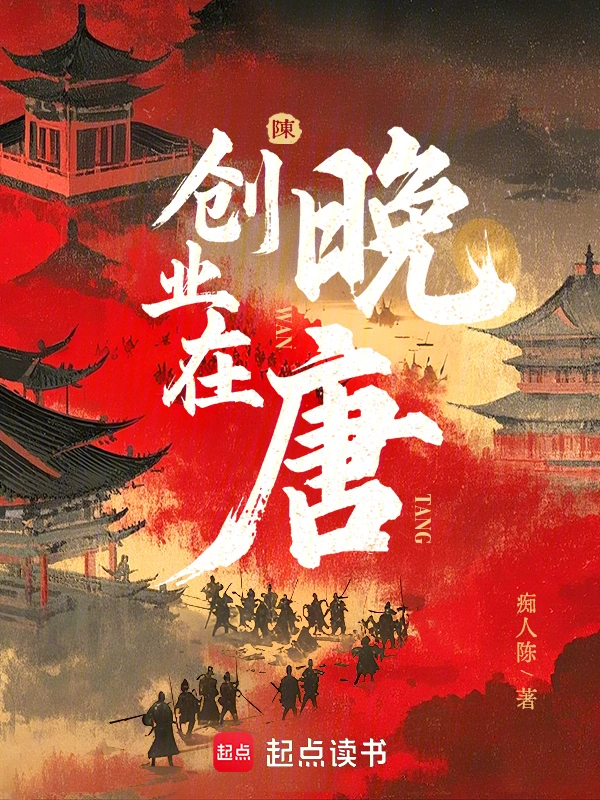
Starting a Business in Late Tang
创业在晚唐
- Status
- Ongoing
- Length
- 6.0M Words
- Genre
- Historical
- Audience
- Male
- Subgenre
- Jin-Sui-Tang Dynasties
- Updated
- 1d ago
- Source
- Qidian
Stats
Tags
Honours
Synopsis
More by this author
In booklists 29
Explore more →
515 Great Books Half Price: Final Week
【Discounted books are being added regularly. Everything is half price!】 【New books added to the list: June 8–14】 【How to join: Me → Activity Center → “They're Here! Grab 100+ Must-Read Books at Half Price”】 【Discount start dates vary by book. Some discounts last only three days, so check back often!】 【Click my profile picture to see more lists】

Say Hello to 2026: They're Updating 10,000 Words a Day in the New Year
Let stories take over your New Year's holiday. This list of 20 books, each with over 10,000 chapters and rapid updates, is here to cure your holiday reading slump. Plenty to read, with updates coming fast, so you can enjoy stories all break long!

Always on the Hunt for Hidden Gems
Are you a Fang? Run out of books to read and don't know what to pick? Faced with a mountain of novels, you can't tell which ones are any good. That's when you need someone to point out the ones with high ratings and strong reader retention, and tell you which titles are similar to one another. You'll find all of that in my circle. Use it to find your next read. I started this list to recommend good books to everyone.
The Bookish Manor
This list has room for only fifty books, so every new addition means another has to go. Abandoned or censored books get removed first. Feel free to recommend a book you think is great, though I may not add it. Most of the books here are ones I've read myself. After all, you can't speak about a book you haven't read. The overall quality is pretty good, selected with eight years of experience. Follow the list if you enjoy it.
Yinglong's Black Library Is Open
This is a personal book list that uses love to promote new books and serial works. Completed books will be deleted after a period of time. Please watch and collect. Recently, there have been more and more fantasy writing about dragons, and I have found more interesting books. Recently, there have been more and more COC steampunks. I just found out today that many old authors have opened new books and continue to find their favorite books. The quality of new books in Qidian History District conti
A Reading List of Fresh New Web Fiction
Novels I’m enjoying as I read them.


History / Fantasy / Games / Anime: Books Worth Recommending
I'll put up some books I'm reading right now. I'll try to pick more titles that don't show up often on other lists. Rated out of five stars. The scores are entirely based on my own impressions, so take them with a grain of salt. If you know any good books, leave a recommendation in the comments ( '▿ ' ) You're also welcome to share your thoughts or suggestions ฅ( ̳• ◡ • ̳)ฅ And if you like this list, please give me a follow -(¬∀¬)σ I'll regularly remove books that have too few likes and see if
Book List I Read
Some daily books
Listening to the Wind Pavilion: A Little Book Nook for Great Reads
Please follow and save this list. I'll update it from time to time. Feel free to recommend books and give them a like in the list's discussion section. Thanks! (Some of the novels I'd added recently seem to have had their recommendations removed for some reason.)
Historical Fiction Picks
Mostly realistic historical fiction, with smart characters
A Reading Slump Is the Norm
2026 2024: Another difficult year-end, but at last, a new year 2023: A new year, a new chapter 2022: Hit a wall and went in circles looking for a door. Guess I'll need an axe. 2021: Stepped in a pile of crap in real life during the first lunar month. Sigh, at least the world of web novels is safe. 2021: Stay safe. It's 2020, and it's so hard to find anything readable these days. Either the male lead grovels over a woman, or a bunch of women grovel over the male lead... And the mindless panderi
Classified History Book List
Works I've seen and are currently watching
Historical Archives
The river of history flows ever onward; across a thousand-year scroll, heroes and events meet amid changing fortunes.
Little Book Nook: Follow and Save Your Favorites
Please follow and save this list, and give the novels here a like. Feel free to recommend them in the novels' discussion sections too. Likes, everyone! Thanks!
Recommended by a Veteran Reader of Fifteen Years
You can’t go wrong with these recommendations.

A Veteran Reader's New Booklist
A good read


I Am a Reading Sage
Twenty years sailing the sea of literature, with a reading list of over three hundred thousand books.
A Veteran Reader’s Bookshelf
Mostly behind-the-scenes stories, business management, and epic fantasy, with a few other genres mixed in.
Picking Pearls from the Sands of the Ganges
This list is simply a collection of stories I like. They do not even have to be complete, as long as they have something that shines. Though I have grown older in years without gaining much wisdom, I have made peace with myself. Because those who are alive still have to keep moving forward. Sometimes I think about the outlines of stories I would like to write, but my prose is poor and I have no time to write them. It is a great regret.

777 Healthy and Happy
777 Hope in the future


Little Book List
I think the books that are okay are at least not too toxic.
Historical Literature Has No System
High rationality
A Reading List for a 12-Year Veteran Reader: Solid Picks and Better
I've been reading for twelve years, from beginner-friendly web novels to ones aimed at veteran readers. I've gotten pickier over time, and I hope this list can help others discover books they'll enjoy.
I've Been Reading for Over Ten Years. Here Are Some New Books Worth Sticking With.
Updated regularly
Readers also read
 Great Ming: His Father Is Useless, So He Must Summon the Founding Emperor
 Germany: 1914
 A Literary Master in Ancient Greece
 Seizing the Direct Descendant in the Red Mansion
 Simultaneous Transmigration: Is Everyone Starting Out in Prison?
 A Charcoal Burner in the Qing Dynasty, 1848
 Tiger Guard
 A Great Industrial Nation, Starting with a Fake Student Abroad
 A Dual Status Panel Descends into the Abyss, and the Assassin's Potion Is Right at the Entrance
 The Ming Dynasty’s Black Sails
 Splendor of the Five Dynasties
 Cleansing the Demons
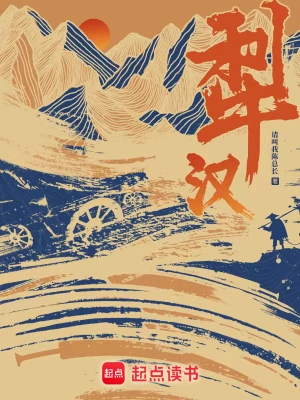 Li Han
Funds of fairy grass!
This book is one of the best historical texts I have read in recent years! First of all, the article is smooth and natural. It is white when it should be white, and it is literary when it should be written. It is not pretentious or pretentious, nor is it too superficial and has no charm. Secondly, the protagonist's image is full and real. He has both the agility and intelligence of modern people and the ambition and pride of ancient warriors to defend their home and country, and his personality is full of charm. Thirdly, the supporting characters are flesh and blood, and a few strokes can express a person's character, which is rich but not complicated. It's just that we're still in the middle of a war (I haven't finished it yet), so I hope I can describe more about the construction of the base area in the future. After all, Canglin knows enough about etiquette. If you want to end the troubled times, you need to be both king and domineering.
This historical article with the background of the late Tang Dynasty is very well written, and it can be seen that the author has carefully checked the information. But this does not mean that the author wrote it in a particularly old-fashioned way. On the contrary, this is a very interesting group portrait historical article, which contains the customs and customs of that era, as well as the struggles and calculations of the little people. The characters are lifelike and worth reading.
It is a very heroic book, especially when you see the protagonist singing and dancing with other people at a banquet or around a campfire, you feel as if you have traveled to this era, which is very contagious. Also, when I saw the soldiers calling for justice during the war and shouting "Zhao Da live me", I felt very passionate and shocked. I could feel that these characters seemed to come alive from the book. Don't say that I am a sailor, sailors don't have so much to say. This may not be the best historical text, but it is the book that impressed me the most.
I read it in one go, and what I have written so far is very suitable to my taste. Yes, there are few works on the subject in the late Tang Dynasty. If the author writes well, he will definitely be outstanding. If the writing is good, all my monthly votes will be yours 😄
There are too many typos. Why don't you check it after you finish writing?
( ̄(エ) ̄(({"NickName":"Book Friends 20200130231242816","UserId":342423070} ̄(エ) ̄)( ̄{"NickNam e":"GDOLGA","UserId":314680549}{"NickName":"Love Tiger Walk","UserId":397882953}(エ) ̄) ̄(エ)🪿What are you doing tonight,
What mistakes are easy to make in historical novels❓ Before the Ming Dynasty, the emperor was not called "Emperor", the Song Dynasty mostly called him "Guan Jia", and other dynasties often called him "Your Majesty". The Ming Dynasty began to occasionally call the emperor "Your Majesty", and in most cases he called the emperor "Your Majesty". After Kangxi of the Qing Dynasty, people began to be generally called "Emperor". Princes and princes call themselves: Princes in the pre-Qin and Han Dynasties can be called "Gu", and a few can be called "Ignores". After the Wei, Jin, Southern and Northern Dynasties, the title of "Ignores" gradually became exclusive to the emperor, and princes, princes and princes can only be called "Gu" or "I". Song, Yuan and Ming called themselves "I" or "I". Before the Qing Dynasty, princes and princes rarely called themselves "this king". Starting from the Kangxi year of the Qing Dynasty, princes generally called themselves "this king". In ancient times, women called themselves: "nujia" was a modest name for women after the Song Dynasty. Women in the Han and Tang Dynasties more often called themselves "concubine", and noble women could call themselves "I" and "I". Before the mid-Ming Dynasty, most dynasties used copper coins for daily transactions, with very little gold and silver. It was only in the mid-to-late Ming Dynasty that silver became the mainstream currency. -In the late Ming Dynasty, "meeting votes/deposit checks" appeared among the people. There were no unified rules. Most of them were deposits and withdrawals/exchange receipts from acquaintances or local circulation, and were not legal currency. In the early years of Daoguang in the Qing Dynasty (1823): Rishengchang Bank was established, and private banks began to issue standardized banknotes, focusing on cross-regional exchange. They were only circulated in Shanxi merchant trade circles and major commercial ports, and were not yet popular. In the third year of Xianfeng in the Qing Dynasty (1853): the official issued the Ministry of Revenue official banknotes (official banknotes), which were forced to circulate nationwide. At the same time, the network of private banknotes expanded to the whole country, and official and private banknotes ran parallel. The use of banknotes entered an explosive period and became the "starting point of popularization." High-leg tables and chairs only completely replaced the low tables for sitting on the floor in the Song Dynasty. During the Han and Tang dynasties, people knelt and sat on the tables to eat and discuss matters. The furniture was mainly low tables and couches. The memorial system was only established during the Kangxi period of the Qing Dynasty. Officials in the Tang and Song Dynasties used "memorials", "tables" and "statements" when submitting memorials, while in the Ming Dynasty they used "memorials" and "memorials". There is no such thing as "memo" or "zhezi". In ancient formal occasions, the hand-over gesture was performed with the left hand outside and the right hand inside. The right hand outside was a special "unlucky gift" for funerals. "Better greetings" is a unique etiquette of the Qing Dynasty. It was mostly used by subordinates to superiors and juniors to elders. During the Tang and Song dynasties, people often performed cross-hand salutes and bows to greet greetings when they met, and there was no such thing as "sending greetings". {"NickName":"Restriction and Supervision","UserId":417773267} Before the Yuan Dynasty, subordinate officials rarely called superior officials "adult". In some dynasties, subordinates called eunuchs "adult", and in some dynasties, they called their parents and elders "adult". Beginning in the Yuan Dynasty, lower-level officials would occasionally call officials of second-rank and above "sir". From the middle and late Ming Dynasty, only officials of third-rank and above would be called "sir" by their subordinates. Officials with lower ranks could not be called "sir". However, in the late Ming Dynasty, there began to appear a few cases where officials above the fourth rank were called "adult". Before the mid-Qing Dynasty, following the rules of the Ming Dynasty, only officials of third rank or above would be called "adult". Starting from the mid-Qing Dynasty, calling officials "adult" gradually became common for lower-level officials. Attention! ! ! What is mentioned above is that lower-level officials refer to higher-level officials. No matter which dynasty, it is absolutely impossible for higher-level officials to call lower-level officials "sir". Some novels even write about emperors or nobles calling other officials "sir". This is simply contrary to Tiangang! ! ! Finally, let's talk about the problem of civilians calling officials Before the middle and late Qing Dynasty, civilians in various dynasties and generations called officials differently, and most of them called them "officials" and "masters". From the middle to late Qing Dynasty, civilians also called officials "adult".
If I were the author...
Take the role of the author and combine your own opinions to make a bold prediction of the future situation 1. Inventory of the forces of all parties 1. Huang Chao Army The role of Huang Chao Army is as follows (1). Enter Chang'an to attack the prestige of the Tang court, and at the same time pave the way for the vassal town pattern after the Chao Army is pacified. (2). The elite of Chao army packed up and surrendered to Zhao Da to increase the talent reserve. (3). Entering Caizhou and triggering the rebellion of Cai thieves. Therefore, it was inevitable for the Chao army to enter Chang'an. During this process, a group of old warlords who were loyal to the Tang Dynasty retired, and careerists began to come to power. The Huangchao Rebellion profoundly changed the political structure of the vassal town in the late Tang Dynasty. There can be a lot of foreshadowing and hidden arrangements at this stage, and it is estimated that there are hundreds of thousands of words to explain clearly. 2. Cai Thief's Power The functions of Cai Thief's power are as follows (1). It can drive away wolves and swallow tigers. Cai Thief's power has spread to more than 20 neighboring states. Defeating Cai Thief, these territories can be legitimately taken over. In history, Zhu Wen wiped out Cai's thieves, Zhang Quanyi led Dongdu, Zhao Ji led Chen Xu, and Zhao Deqian led Shannan East Road to surrender to Zhu Wen. Zhu Wen's power directly skyrocketed. This historical opportunity for a geometric explosion in strength must be seized. (2). You can use the hands of Cai Thief to clean up some characters that are difficult to deal with. (3). Zhao Da has a close relationship with Zhongwu. Historically, many Cai thieves were the main force in the southern vassal towns. Zhao Da can completely use his status as the leader of Caizhou to divide and win over each other and accelerate the unification process when he goes to the south. Qin Zongquan has been offline in advance. Sun Ru feels that his qualifications are still relatively low and he may not be able to lead Cai Thief to create such a big wave. Qin Zongquan's ecological niche can be replaced by Lu Yanhong or Li Hanzhi. Both of them are wolf-like and lawless figures, and are particularly suitable for doing dirty work. 3. Power in Hebei (1). Hedong: General Ya Bing Ya is too powerful and there is a risk of civil strife. You can try to plant some secrets during Li Keyong's Daibei Rebellion. It is best to move the town to Li Keyong and replace it with a weak leader to increase internal friction and weaken its strength. (2). Lulong: The most powerful vassal town in Hebei but also the easiest to win. After all, there is a tradition of foreign town troops leading troops into Youzhou to celebrate the birthday of the commander-in-chief. The conflict between the two brothers Li Kuangchou and Li Kuangwei can be exploited, and Liu Rengong can be marginalized. This person really has something. (3). Chengde: A group that is internally stable. The only variable is the Lee Kuangwei rebellion, which can be used. (4). Wei Bo: Complete solution is time-consuming and labor-intensive, and it is easy to miss the window period to unify the world. Historically, Zhu Wen's strategy was good. He eliminated the tooth soldiers and vassalized Wei Bo, turning them into a large blood-sucking package. After unification, he cut down the vassal vassal. (5). Hezhong: Wang Chongying's two sons can be used to compete for the throne. (6). Yicheng, Zhaoyi, Yichang and Datong are not important. In short, Zhao Da's influence in Hebei is relatively weak. Li Keyong's Daibei Rebellion was a good opportunity to exert influence. The breaking point for Hebei lies in the battle between Hedong and Lulong. There is too much room for maneuver here, and winning these two towns is not a problem. 4. Li Keyong One of the two bosses in the late Tang Dynasty, he was second only to Zhu Wen in military affairs. His political ability was low, but his personal charm was extremely strong. It is especially suitable for closed sectors, such as Guanxi or Shuzhong. It can suppress the local forces Li Keyong, but cannot integrate them. This can provide a starting point for Zhao Da to unify in the future. 5. Zhu Wen Super boss in the late Tang Dynasty, versatile in both civil and military affairs, and a true hexagonal warrior. Contrary to Li Keyong, Zhu Wen has great ability to integrate local forces, so he is not suitable for closed sectors. If Zhu Wen takes control of Guanxi or Shuzhong, given time, he can really integrate the Western Wei Dynasty and the former Shu will be in trouble. So Zhu Wen's arrangements and suggestions are as follows: (1). Kill him directly by destroying the nest. (Not recommended, it is easy for people to lose the sense of immersion when such an important character is offline. The most important thing in historical novels is the sense of immersion) (2). Still insisting on Xuanwu, Zhao Da used the nest to seize Zhongwu, and attacked Xuanwu directly with Huainan to death. (The disadvantage is that there may be less scenes) (3). Move the town to the south, replace Ma Yin's ecological niche, accept the attack of Cai thieves, use Zhu Wen's hands to integrate the southern vassal towns, and delay Zhao Da's move south (the advantage is that the southern vassal towns The strength is inherently insufficient, and Huainan is in the hands of Zhao Da. It is only a matter of time before Zhu Wen is overthrown) 6. Dangxiang has not gained much momentum yet, so it can be taken care of in the early stage, dealt with after unification, or taken over in one go. 7. Khitan They haven't gained much momentum yet, but they must take action to suppress it, otherwise they will be in trouble after destroying the Bohai Sea in the east and taking Yingzhou in the west. It is better to make plans in advance. 2. Inventory of vassal towns in each plate 1. Guanxi plate: Li Keyong + Shence Army warlord + Tang Central Committee After the integration of the Kansai plate, it is easy to form the power of the Western Wei Dynasty to strengthen the Qin Dynasty. It is particularly troublesome to attack, so if you want to find a way to make it unable to integrate, Li Keyong, Shence Army and Tang Central Committee will definitely not be able to urinate in a pot. Just wait for their dog brains to come out and Zhao Da comes to pick peaches. 2. Hebei plate: Dangxiang Tuoba clan moved to Hedong + Shence Army Yiwu + Three Towns of Heshuo + Khitan The Tuoba clan replaced Li Key with the ecological niche, weakened Dangxiang's power in advance, paved the way for the future Western Expedition, and added The Shence Army Yiwu, who is not familiar with anyone, Lu Long is still Li Kuangchou and Li Kuangwei. These two brothers have great ambitions but little talent. Adding these two together in Hebei will only make it more chaotic, and it is even less likely to be integrated. They will be defeated individually after Zhao unified the Central Plains. 3. Central Sichuan plate: the remnants of the Chao army + Tian Lingzi Yang Fugong + local forces The remnants of the Chao army have replaced Wang Jian's ecological niche, and the other two are novices. When Zhao Da attacks Guanxi, he can be destroyed by sending a partial army. 4. Jiangnan plate: Zhu Wen + Cai thief (not many people have written about it) Zhu Wen replaced Ma Yin's ecological niche, accepted the impact of Cai thief, and used Zhu Wen's hand to integrate the southern vassal town. The southern vassal town was inherently weak in strength, and Huainan was in the hands of Zhao Da. Zhu Wen would be the size of Nanchen if he died. After Zhao Da unified the north, it would be more fun to repeat the Sui and Chen route, drive Zhu Wen southward step by step, and destroy Zhu Wen in Jiaozhou, or not kill her at all and drive him to the Champa Kingdom south of Jiaozhou. 3. The route to unify the world 1. Conquer the Central Plains: Use the hands of the Cai thieves to capture Zhongwu, Xuanwu, Heyang, Dongji, and Shannan East Road; conquer Erzhu, Shipu, Qi Kerang, and Wang Sifan from the east to unify the Central Plains. 2. Conquer Hebei: Destroy Yichang on the eastern front, and use Li Kuang's help to control Lulong; use Wang Chongying's two sons to fight for the throne on the western front to capture Hezhong, and go north to attack Hedong with Lulong; use Li Kuangwei's rebellion to destroy Chengde, vassalize Wei Bo, and unify Hebei. 3. Conquer Guanxi: Li Keyong's political level determined that he could not integrate Guanxi, so he took advantage of the contradiction between Tang Ting and Li Keyong to conquer Guanxi. (Zhao Da has a hidden identity as a consort, which can be used) 4. Conquer Shuzhong: After unifying the north, send a partial army to destroy it. 5. Defeating the South: Wang Shenzhi and Qian Liu met and surrendered. At this time, destroying the South would be a crushing victory. A little personal opinion, I hope it can be helpful to the author. I especially like the character Zhao Da written by the author. He is full of heroic spirit. I haven't seen such an amazing character for a long time. I hope the author can keep it up. I have a hunch that this book and Fusheng of the Late Tang Dynasty will become the unparalleled twins of late Tang literature. Welcome to discuss and correct any shortcomings {"NickName":"Crazy Chen Benchen","UserId":336851137}
Great writing, but
I feel like I should be like Shao Thief who collected all the wives and daughters of his enemies. Now Zhao Da is still a little white lotus. Why is he so pure?
The character of the protagonist should be maintained well
Along the way, the protagonist calls everyone "Lao Yang, Lao Song, Lao Han" for the first time, regardless of whether they are familiar with each other or whether their official position is greater than his own, and he always hugs each other or puts his arms around the neck and pats the shoulders. It is written that when the protagonist meets the current emperor for the first time, he must laugh, put his arms around his neck, pat his shoulders, and call him "Old Li". Only in this way can the protagonist be seen as kind and loyal, and his character can be established.
Damn it, in the first year of Qianfu, the protagonist hurriedly took Zhang Hui in, otherwise swine fever would be a problem in a few years.
Ha ha ha ha
I finally figured it out. The writing on military and political affairs is pretty good, but when it comes to pretentiousness and emotional drama, I write it so poorly that I almost thought it was written by two different people. Flaws aside, it looks pretty good in most cases.
The last few chapters have been overly sensationalistic and really embarrassing. It really gave me goosebumps when I saw that pig's trotter talking. It smelled like a model film from the last century that was so perfect that it went crazy.
The rhythm is pretty good
The rhythm in the middle and early stages is quite good and fascinating, but in the middle and later stages, the interest in homogeneity has weakened. In addition, the advantages of modern people in pig's feet are too low and tend to be non-existent, especially in terms of technology. I have never eaten pork, and I have seen pigs run away. Even if I don't know how to make it, I can let the craftsmen modify it according to their own wishes.
Building an army based on righteousness will be destroyed by righteousness. The protagonist only knows how to be righteous and keeps shouting righteousness without redefining and improving the theory of righteousness. If this continues, there will be two results. If you become the emperor in the future, that is hypocrisy. No one will care whether you are wronged or framed. The second is to significantly corrupt the Military Disciplinary Committee.
The heroism is there, but Zhu Wen and Li Keyong are forced to lower their intelligence and improve their strength. The north has been suffering from successive wars for many years, and it is already so impoverished that it cannot afford a large-scale elite army. The more the tug-of-war continues, the more it will deplete civilian and military power. It is obviously a disloyal and miscellaneous army, but it has the effect of being a die-hard elite for Zhu Wen's cheating.
Although... But
Although the author's writing is good, I always feel that something is wrong. The protagonist, a modern person who travels through time (a sports student), knows everything except the technology tree. It's not like he doesn't understand the technology tree or simple principles, right? If you don't understand firearms, I can understand it. If you don't understand the proportions or principles of waterwheels, gunpowder, cement, and high-smelting furnaces, you can let craftsmen try them. It's obviously to suppress combat effectiveness. After reading almost 400 chapters, I feel that the protagonist is not actually a modern person who traveled through time, but more like a "sports student" during the Republic of China who traveled through the past and learned from the characters of the Three Kingdoms to compete in the world. (Personal opinion, don't comment if you don't like it)
Discuss an issue
It is said in Chapter 222 that "victory is justice." If this is the central idea, it is easy for a failure to lead to a lack of justice.
The protagonist uses force to reach the highest point 🙂
The sphere of influence of the Baoyi Army (directly under the red line, affiliated within the blue line), as of Chapter 833
The sphere of influence of the Baoyi Army (directly affiliated within the red line, affiliated within the blue line), as of Chapter 833 The trend has been accomplished!
The biggest shortcoming of this book is that the writing about the war looks awkward, and there is no grand official sealing ceremony. The protagonist is promoted by himself, and his subordinates are rarely canonized collectively. In this way, the meaning of the protagonist's promotion is not felt, and there is no feeling of being a high official in the border area. 😒😒😒😒😒😒😒
The warriors at the end of the Tang Dynasty were very good at fighting no matter whether they were large-scale soldiers or junior soldiers. They were cruel, cunning and brave. Their individual soldier quality should be the best in the cold weapon era. After the ferocious beast-like tooth soldiers were given enough rewards or to defend their homes, they would keep killing as long as they could move on the battlefield. In this era, the Central Plains and the North don't even think about passing the law. They might have to cut it off state by state. Otherwise, why would these warriors obey you, Zhao Da? The author is also pursuing the quality of the book, and he doesn't know if he can finish the 4 million words.
I feel like I'm going to collapse, otherwise the poison will be prescribed later. Is it a pioneer for the king or a turner of the tide? I guess the poison will be prescribed.
Good! Very good!
An extremely rare book. The narrative rhythm is steady and orderly, passion and reason coexist, and the protagonist is well-versed in human affairs without losing his original intention; the plot progress is reasonable, fascinating, and has a strong sense of substitution; the protagonist decides the major points, and the subordinates work on the details. Only key points are written, the details are appropriate, and the distribution is reasonable. I haven't read the history section in several years. It's really difficult for authors who aren't really good at history to produce good works. The protagonist must live in ancient times, and his words and deeds must be consistent with the times, and the supporting role must be brilliant, and must be extremely rational, intelligent and understanding of human affairs. It is really rare to see such a book now. After all, having a brain is still three or four floors higher than having a brain. Awesome!
Author, your last few chapters have been too watery. Even the son of 🐖Wen was watery for several chapters. Haven't you thought about how to write about the Northern Expedition? You could understand it before the Northern Expedition, but the Northern Expedition was still messy. Li Keyong hunted a deer and sent a letter to Zhao Huaian. He was watery for several chapters. This is not a group portrait, author.
A strong man with no shortcomings, he can make a boring war very interesting. He has a rare writing quality. With this level, it is probably easy to write Western fantasy.
Zhu Wen is a genius for being able to hold on until now. I can't figure it out.
This book gets better and better as it gets written later, and is more enjoyable than The Floating Life of the Late Tang Dynasty.
After reading 50 chapters, my subscription was in vain.
I don't like to see group portraits, but there are still endless group portraits
I see that the later system design is becoming more and more like the Ming Dynasty. The key point is that the social environment at that time did not allow the Ming Dynasty system. At the end of the Tang Dynasty, the emperor's centralization of power was no problem, but it had to be done step by step. From now on, you will go directly to the feudal Ming Dynasty system. You are really not afraid of the death of the second generation.