


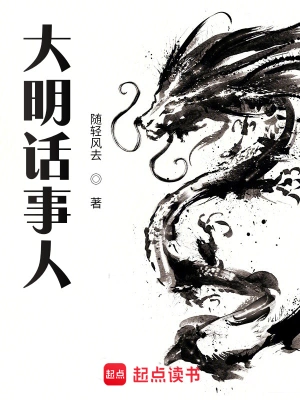
The Ming Dynasty's Spokesman
大明话事人
- Status
- Completed
- Length
- 2.7M Words
- Genre
- Historical
- Subgenre
- Song-Yuan-Ming Dynasties
- Updated
- 1y ago
- Source
- Qidian
Stats
Tags
Synopsis
More by this author
In booklists 35
Explore more →
A Quiet Moment with a Book 📖
Updated whenever I continue reading 📖 Stocking up on quality fare...
Historical Fiction Reading List, Primarily History
Mostly historical fiction. The scale goes up to ten stars, but even a one-star book is worth a look.


A Gathering Place for Readers with Nothing to Read!
In this vast sea of people, you may never know me, and I may never know you. But we can laugh together and get angry together over the same passage or story. That's a wonderful thing. We meet through books, and our connections are born from them. Is it books that bring us together, or society that keeps us apart? I don't know, and it doesn't matter. Still, it's a shame when good books go undiscovered. Some are written quite well but have few readers, buried in a vast sea of books. That's why I m




【Great Books Are Meant to Be Shared】(Personally Vetted, Well Worth Reading)
I've read every book on this list myself. Only the interesting ones make the cut. Please follow and send flowers.
The Great River Flows East
To establish the heart for Heaven and Earth, to secure a future for the people, to carry on the lost teachings of the sages of the past, and to bring peace to all generations. Zhang Zai. Display the heads at the post station on Gaojie Street, among the foreign envoys’ residences, so they may be seen for thousands of miles: those who dare offend the mighty Han will be executed, no matter how far away they are. Ban Gu. The moon of The Legend of Qin shines over passes that have stood since the Han;


The Dust of History
Occasional recommendations from a longtime bookworm




The Books of Taixu Pavilion
How this list works: Each of the experts in my group recommends me one book. If I've already read their first pick, they can recommend another one I haven't read. I'll do my best to get through them, aiming to read at least 20 books this year.
History: Alternate History and Transmigration
Historical fiction that seems pretty good.




As If an Old Friend Had Come
In the bloom of youth, I dream without knowing. When I wake, I must return.



Top-Tier Reading List
A selection of books whose perspectives and ideas I find reasonable
Historical Novels
Recommended historical novels, both rigorous and entertaining, all set in ancient dynasties


What I Like to Read
All kinds, including gender-bender stories and the like

Green-Haired Rabbit
Be a laid-back reader: savor good books, quietly show my support for authors I like, and drop the ones I don't. Under the sunshine, raindrops patter, the wind howls, and snow piles up layer by layer. Leaning by the windowsill with a cup of tea, coffee, or juice, I've had the habit of reading after lunch for a long time now. I've dropped countless books, but some I've read again and again, and they taste different each time. I read quietly and tip quietly, supporting the authors I like with my ac


History (Read)
A good pick for when you're out of books to read



My Favorites (You Know the Ones)
There's no best, only better!
Plant-a-Tree Reading Event (Historical Fiction Edition)
A veteran reader's list, volume one: excellent books on ancient Chinese history, all in one place. If you like mindless fiction, this list isn't for you.




Lu Renjia's Reading List
Some books from Sanjiang's daily reading guide (1–5 stars)

Novels Qidian Says Make Me a Reading Sage
A single comment can uncover all of Qidian's hidden gems, while one book can ease your reading drought for a time. Detailed ratings: First tier: Pioneers, the founding works of their genres Second tier: Classics, beneficial from the first page and impossible to put down Third tier: Treasures, worth every penny of a full subscription Fourth tier: Worth a look, even following updates is a pleasure Fifth tier: For later reading, stockpiling provisions against future reading droughts
A Dedicated Reading List for Historical Fiction ⭐⭐⭐⭐
A collection of recommended historical novels

Pure Thrills
When I first started reading, I loved fantasy and epic worlds. Later I got into urban stories and wild, imaginative plots, then historical fiction. Now I'm back to fast-paced wish-fulfillment stories. I've been reading for ten years: if the pacing is slow, I won't read it; if it's too short, I won't read it either.
Recommended by a Fifteen-Year Bookworm
Five stars, perfect score. Some of the novels I've saved have excellent writing, characters, and settings; others are simply a matter of personal taste.



First-Order Post Office: Ongoing Recommendations for Excellent Immortal Grass with Strong First-Order Sales!!!
A book's first-day subscription count marks the moment it finally goes on sale. That number directly reflects how well the work is doing and how much support it has from readers. The higher the first-day subscriptions, the more readers are following it and the more popular it is. The subscription-to-collection ratio compares subscriptions with bookmarks. Generally, a lower ratio means readers are more loyal, and the book has a better chance of continuing to grow in popularity. This list recomm

Worth a Try
Web novels worth rereading. I don't keep books by authors who abandon their novels, no matter how good they are.

Some Novels I’ve Followed or Finished in Twenty Years of Reading
Books I personally find readable.
Readers also read
 An Important Town in the Residual Tang Dynasty
 Chronicles of the Red Mansion
 The Corpse Plague of 1916
 In the Ming Dynasty, the Days When the Cows and Horses Turned Over
 League of Legends: I Just Turned Pro, and You're Saying the League Is Dead?
 How Can You Be a Traitor Without Money?
 How Grand Is the Adviser!
 Simultaneous Transmigration: Becoming a Legend Before the Story Begins
 Starting with Saving Manchester United
 Great Ming: I, Yan Maoqing, Really Am Blessed
 A Record of Cultivation on Wulong Mountain
 The Fierce Minister of the Great Song
 The Ming Dynasty Official
 The Immortal Official
 The Ming Dynasty's Young Student
 Striving in the New Ming Dynasty
Reader comments 50
Google Translate
Let's learn more about the fiefdoms of the Ming Dynasty vassals. Please don't take it for granted and spread rumors.
After reading the latest chapter, I was speechless when I saw the comments. Some slaves of the vassal king appeared again, and some even made outrageous remarks, saying that the enclosure of land by the Manchu Qing Dynasty was equivalent to returning the land enclosed by the vassal prince to the common people. I don't even know how this brain circuit is formed. First of all, I hope everyone can clarify a concept, this is the Ming Dynasty. In the Ming Dynasty, there would no longer be any literati or emperor who was so mentally retarded that he gave most of the land to the prince, and then watched helplessly as the prince had many so-called slaves. According to the Ming Dynasty imagined by this kind of people, there may be rebellions by vassal kings every few years. You guys go check out Southwest Toast. Look at the Ming vassal king again. Look at how much territory and population the Southwest Tusi has? See how many times there have been rebellions? I can only say that I, King Fan of the Ming Dynasty, am truly patriotic and in love with the emperor. Over the past few hundred years, I have rebelled several times. First. Note that the land of the Ming Dynasty vassal kings was not centralized. It's fragmented. For example, the vassal king of Henan may only have dozens of acres of land in his own city, and more than ten acres of land in the next county. There are more than ten acres of land in Hubei, and another dozen acres of land in Hunan. Really, I didn't lie to you, the counties in Hunan really have the land of King Fan of Henan. If you look at the county annals, it's all recorded. So it is a lie that the land of King Shu in the late Ming Dynasty occupied most of Chengdu and Sichuan, and the legend of King Fu is also false. Even the Ming Dynasty's enfeoffment system was unclear about such rumors. The feudal king himself didn't even know where his land was. Second, the vassal kings of the Ming Dynasty did not have the right to tax. Yes, although you have land, you cannot tax it, so you cannot collect money. The money was collected by local civil servants and then given to the vassal king. But everyone who understands understands. The civil servants of the Ming Dynasty were not even afraid of the emperor, so were they still afraid of the vassal kings? These tax dollars are often misappropriated, either for disaster relief or for the military. King Fan who has not received a salary for decades is a real person. Third, what are the specific lands of the feudal king. There are many rumors about taking away some people's land. Talking about raising pigs or something like that. Please, the feudal lord cannot leave the city. You can't send people out to collect taxes, and you don't know where the land is. Excuse me, under such conditions, the land became King Fan's. Who would plant the land? The land actually belongs to the people. The so-called giving land to the feudal king actually means counting the fields and increasing taxes on these land owners. To put it bluntly, it means paying an extra tax to King Fan. Fourth, taxation does not mean that tax can be levied What does this mean? There are differences in the types of land owned by feudal lords. There is no historical data that tells you that the land owned by the feudal lord is farmland. If you read the county annals, you will know that the land of the feudal lord includes everything from swamps, orchards, woodlands, etc. There are even mountains. In fact, most of the feudal king's lands were rotten. Only when the court and the emperor are crazy will they give good land to the vassal. There is a lot of land here that does not produce value, so there is no tax. Moreover, the Ming Dynasty had not yet completed a whipping law and levied a tax in kind. Until the fall of the Ming Dynasty, even one whip technique was not completed. There are many counties and many places that still levy physical taxes. Fifth, never rise This is Zhu Yuanzhang's policy. In the early Ming Dynasty, after Zhu Yuanzhang distributed land to military households and common people, in order to encourage production, he said that there would be no need to pay taxes on newly reclaimed land. Therefore, in the Ming Dynasty, there were a large number of tax-free fields left over from the Zhu Yuanzhang era, the Yongle era, and the Renxuan era. These fields were called Xiantian, idle land in the official documents of the Ming Dynasty. Everyone knows that King Fu has a lot of land, but no one knows how it came about. It is actually these tax-free fields. The civil servants discussed the matter of King Fu's fiefdom. You can see the memorials sent by the civil servants to the emperor. This is the method they proposed. Why did Zhang Juzheng measure the land? Just for these tax-free fields. Note that the Ming Dynasty never exempted the gentry and powerful people from taxes. Although many people talk about having a nose and eyes, they really don't. What people are exempted from is corvée, not tax. Sixth, the people of the Ming Dynasty liked to use the feudal king's land to evade taxes What many people don't know is that the people of the Ming Dynasty were not afraid that their fields would become the feudal prince's land. On the contrary, many people tried their best to convince the government that their fields belonged to the feudal lord. Because you can evade taxes. When taxing, there are two waves of people, one to levy taxes from the court, and one to levy taxes from the vassal king. So some people began to fool the government. When the taxes from the imperial court came, the common people said that this year King Fu had been granted a title, and all my fields had become the land of the vassal. When the feudal tax came, I said, my family has a total of twenty acres of land, two of which are feudal land, here is the money. Don't think it's ridiculous, it really does happen. In ancient times, it was very troublesome to check this kind of information, and it was a human society. The people who collect taxes are all local officials. If you bribe and show favors, you can really do it. Seventh, people need to cultivate fields. Please remember this. If you can deprive hundreds of thousands or even millions of people of their land with just one sentence, not to mention how they survive, what their mood is, and what society will be like, if they accept it, then who will cultivate the land of the feudal king? Serf? Slave? It's not like the Ming Law cannot be found. Which law stipulates that there are serfs? You don't have to believe in the laws of the Ming Dynasty, but please believe in the IQ of the emperor and the court of the Ming Dynasty. If the vassal king could really allow hundreds of thousands or millions of serfs to farm the land, then they could also allow 50,000 of them to forge iron and make weapons, and let 50,000 of them secretly train to form an army. The kind of serf that many people imagine. Lord of the vassal, that kind of European medieval thinking was forcibly substituted into the Eastern dynasty. It seems reasonable, but in fact it cannot stand any scrutiny at all. Because the Ming Dynasty really had slaves and slave owners. That is the toast of the southwest. They can really control everything in the territory. They can plant whatever they ask you to do, and do whatever they ask you to do, or else they will die. Therefore, the southwestern chieftains always rebelled and always fought against the Ming Dynasty, because they really had soldiers and they could really control the people in their own land. These common people are really slaves. They can start wars at will. Build a military fortress. Compare Toast, and then compare King Fan in the Ming Dynasty, who was well-behaved, powerful and had many slave trees. Let me share with you an important achievement of the civil servants of the Ming Dynasty. That is to encourage farming. Encourage people to plant winter wheat. Because the risk of resistance to natural disasters is higher, although the yield may not be high, the profit may be small, the taste may not be good, etc. If the Ming Dynasty government really had such great power that it could change land property rights at will and turn people into so-called serfs at will, then why was it so difficult to encourage people to farm? I would like to add that I don't know why some people still don't believe it and have raised a lot of questions. What I said is based on historical data. Then let me tell you another fact. The Manchu and Qing dynasties also collected land taxes from the vassals of the Ming Dynasty. Yes, although the Ming Dynasty perished, the Manchu and Qing dynasties still collected taxes from the vassals of the Ming Dynasty. Many people always like to compare the Qing Dynasty with the Ming Dynasty, comparing territory and taxation, but the Ming Dynasty can never compare with the Qing Dynasty's finances. Everyone needs to know how taxes were determined in the Qing Dynasty? The Qing Dynasty did not update any new systems when they entered the customs. They did not have the ability to create new systems, so they followed the Ming Dynasty's tax system, including tax rates and tax items. Therefore, the Manchu and Qing taxes included the Liaoxiang used by the Ming Dynasty to fight against the Manchu Qing Dynasty, and also included the land tax of the Ming Dynasty vassal kings. Even if the Ming Dynasty vassal king died, the people still paid taxes to the Ming Dynasty vassal king. If you think how the feudal kings persecuted the people and made the Ming Dynasty poor, then just go and see the Qing Dynasty. Everyone knows that the taxes are collected uniformly and calculated according to the acres of land. This actually includes the land tax of the vassal kings of the Ming Dynasty.
I'm really impressed. Why are some people bragging about the Japanese pirates' fighting prowess again?
In the latest chapter, several people came to the novel to make random comments. What did the Japanese pirates say when they came to Nanjing? If you were to understand the whole story, you wouldn't say such childish words. First of all, it is true that the Japanese pirates ran to Nanjing City, but they did not fight all the way to Nanjing City. They were chased by the Ming army all the way to the gates of Nanjing. They were chased by the Ming army all the way to the gates of Nanjing. They were chased by the Ming army all the way to the gates of Nanjing. They were chased by the Ming army all the way to the gates of Nanjing. They were chased by the Ming army all the way to the gates of Nanjing. Stop spreading rumors here. They were originally small in number, strong in execution, and committed crimes on the move. In ancient times, there were no cars. They were positioned, and the Ming army pursued them all the way, allowing them to continue to reduce their numbers. In theory, it was fast enough. Are you interested in seeing how gangsters committed crimes in the 1970s and 1980s? There were trains and planes, thousands of armed police pursued and intercepted them, and the gangsters were still allowed to move to several provinces. This kind of wandering crime is inherently difficult to catch. Not to mention that there are few cavalry in the south, and it is normal for them to be less mobile than the Japanese pirates. The Japanese pirates also captured many ordinary people as leaders. In the late Ming Dynasty, Zhang Dai later lived in seclusion and wrote history. He recorded many righteous men among the people. These righteous men refused to lead the way for the Japanese pirates, or deliberately led them astray, causing them to be killed. To popularize science, the Japanese pirates in the Ming Dynasty were organized by several daimyo in the south. This is recognized by Japanese historians. The Ming Dynasty paintings that have been handed down to this day also depict Japanese pirates, and even the flags on the Japanese pirate ships bear the reign name of the Japanese emperor. The Japanese pirates are Japanese. Stop talking about the Japanese pirates being Chinese. The Ming Dynasty officials also made a summary of the Japanese pirates and believed that they acted well and gave orders in an orderly manner, and they were very thieves. In fact, this is indeed the case. The Japanese pirates' command system was different from that of the Central Plains soldiers. At that time, the Japanese pirates were commanded with fans. Compared with the Ming Dynasty, most of the Japanese pirate fleets were at a disadvantage, but this does not mean that the Japanese pirates were weak. Their soldiers were really not bad, and they even organized hundreds of cavalry to attack cities along the coast. You heard it right, the Japanese pirates even brought their cavalry over. The Japanese pirate rebellion was not caused by tribute trade, but because the daimyo in southern Japan were in the Warring States Period and lacked money and food, so they turned to the Ming Dynasty. For them, if they could pay tribute and get benefits, they could pay tribute, and if they could rob, they could rob. Later, the Japanese pirate rebellion ended. One was that the coastal areas of the Ming Dynasty strengthened their strength and won repeated battles. The other was that Japan was almost unified. These daimyo themselves were unable to protect themselves and had no strength to invade. In addition, it was also because the Ming Dynasty discovered these masterminds, repeatedly sent envoys to question, and threatened big names such as Otomo Yizhen. The diplomatic offensive and military force led to the Japanese pirate rebellion to subside. So don't believe in the mythical stories of One Piece like Wang Zhi. Do you think that because you are Chinese, you can make Japanese people listen to you? Say goodbye to the envoys of the Ming Dynasty. These famous people are extremely perfunctory. They admit their mistakes. They admit that there are Japanese pirates. They just don't admit that the Japanese pirates are caused by themselves, and they won't change it. After the death of the Pirate King, the invasion of Japanese pirates began to increase. This person was a middleman found by the Japanese daimyo, a black glove, and the Japanese were his masters. Stop looking at those marketing accounts. They really need to be good enough to teach others. If you read the author's novels, they will get better historical knowledge.
Wang Situ held a meeting
I am Situ Wang, Hubu, and I have been feeling unwell recently. The chief assistant is unable to leave the house. He will be alone in the meeting tomorrow. I drank to drown my sorrow and anger, but fortunately my little sister passed on a routine: "If you don't make up your mind when trouble comes, you will tease your brother-in-law, and you will use your strength to overcome your cleverness to ridicule the scholars." One word to wake up the dreamer is like pouring wine on your head. Why use allusions to expose shortcomings? Let me tell you the past events: "With nothing to do, Shen Shangshu sat back and watched his allies get demoted. He was never impeached by the Ministry of Industry of Song Dynasty, so he manipulated public opinion and sold his name. It's hard to return to Mr. Zhao's family. He has gold and jade but rotten wood inside. There is no advice to serve Mr. Zeng, and his body is empty and has no achievements." I wanted to pretend to be ignorant, but I was blind. A hard slap in the face makes me feel refreshed. Lao Lin is a tiger and I am a fox. (Some words and sentences have been changed based on the first edition)
The author's writing style and historical background are very good, but this guy's books never rebel. I don't know why, even if Zhang Juzheng has been in power for more than ten years, the descendants of his family are immediately liquidated by those in power and his opponents.
Fiction is not reality, as long as the poisonous points are not too outrageous. After all, life and ideals are different. Nowadays, novels are written about a time when before the mainstream of cold weapons, farmers joined the regular army, and in a few years, industry was approaching modern times. What kind of trains, rifles and mortars are coming out, traveling through thousands of pounds of strength, traveling through time to compete with first- and second-level officials for political skills, traveling through time to be a prince or emperor for less than a year, and have great power, etc. I just want to say: I can't deceive myself even though I have been filtered by Jiangzhi! Recommend some less poisonous books to me
Since he was a primary school student, the author's label has changed from a god-like transition to an invincible style. The protagonist is invincible, but unfortunately the rationality is gone. A little martial artist manipulates the court like this and dies in reality eighty times.
What a good book
Combining modern dross with dross from hundreds of years ago is quite innovative.
Great book! Cool!
I have read two hundred and seventy-seven chapters, and I enjoy them one after another. I really admire the author's conception! It's so well written that I can't stop writing it!
Very novel writing ideas, interesting! I like the story of Ming Dynasty, please support the author.
Youku will soon launch "Li You", starring Dragon King. Does the author know the level of this play?