


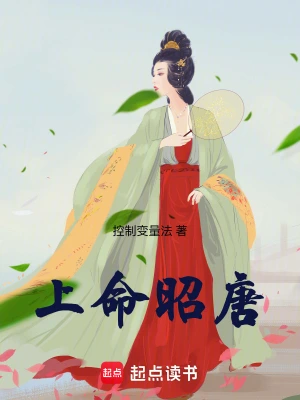
The Mandate of Heaven Shines on Tang
上命昭唐
- Status
- Ongoing
- Length
- 1.9M Words
- Genre
- Historical
- Subgenre
- Five Dynasties Ten Kingdoms
- Updated
- 3mo ago
- Source
- Qidian
Stats
Tags
Synopsis
More by this author
In booklists 9

A List of Masterpieces: Only Classics I've Read or Promising Newcomers, Here to Cure Your Reading Slump
I only recommend books I’ve read: the all-time classics or exciting new releases, across every genre. I’ll keep updating, and you can let me know about any good books I should add. (Readers can use the upvote-to-downvote ratio to judge a book.)
History
History
Chronicles of the Five Dynasties: Blades and Ballads in a Chaotic Age
Warlords vie for supremacy, the land is torn apart. Watch a cast of characters struggle through the cracks of a chaotic age, caught between political intrigue and love and hate. The loudest and most silent era is waiting for you to turn the page.
Historical Novels I Could Stick With
For personal use

In a Reading Slump? Look Here!!!
A record of the good books I've read
My Reading List
Collecting books that suit my taste
Rescue for a Reading Slump: Veteran Reader Edition!!!
A ten-year veteran reader's personal recommendations. I've read every book myself, and I guarantee they won't be dull, formulaic, or brainless. No cringe, stupid, bland, or overly formulaic stories! P.S. I especially like recommending niche genres, tightly plotted stories, and books with big ideas.
My Kind of Books
This list contains books I've read or am currently following. I don't expect to get many followers; I just hope to help readers with similar tastes find something to enjoy.
History (Read)
A good pick for when you're out of books to read
Readers also read
 A Literary Master in Ancient Greece
 Great Ming: His Father Is Useless, So He Must Summon the Founding Emperor
 Seizing the Direct Descendant in the Red Mansion
 Germany: 1914
 Hong Kong Films: In Wo Hop To, Uncle Deng Begs Me to Take Charge
 Han Descendants of the Jin Court
 Northern Qi: My Father Is Emperor Wenxuan
 I’m Not a Suit-Wearing Thug, I’m a Chameleon Actor!
 In Shrouding the Heavens, I Rule All Worlds from a Chat Group
 The Wei and Jin Dynasties Don’t Bow to Zhou
 The Wily Qin
 The Taiping Records
 Usurping the Jin
Reader comments 52
Google Translate
Nowadays, the rules of the book review area are corrupt and traitors are everywhere. This is due to the lack of updates. If the author diligently updates 10,000 words every day, then the traitors will be afraid and retreat, and the moral gentlemen will rejoice. This is a feat worthy of praise by Yao and Shun! I have heard that calves born in sheep pens do not behave like sheep when they grow up. You are at the starting point and your computer keyboard is often used, but you have lost interest in updating it. Is this reasonable? Qidian is strong because it has inherited the etiquette and skills of its ancestors. If you stop breaking the news, you will have nowhere to release the pressure and become tired instead. Isn't this the same as abandoning the roots of the tree and pursuing the treetops? If this continues, great disaster will surely happen! The reason why Bai Jin can earn tens of thousands of royalties and not be harmed by villains is precisely because they are willing to listen to what upright gentlemen have to say! But Pujie cannot get royalties, and is even looked down upon by his girlfriend. This is because they are close to evil villains. I hope you can think carefully about the difference. There is one thing for which the author can cry bitterly, and six things for which the author can sigh. Since ancient times, when performing actions, the words are often very passionate. If they are not passionate, they will not be able to move the actor's heart. Harsh words are akin to slander. Author, you should think carefully about whether such a thing is right or wrong. Those authors who updated less, delayed, or missed updates had no time to feel sad about themselves, so they were drowned in the torrent of works, leaving only later authors to feel sad about them; later authors felt sad and did not learn from it, and future authors felt sad about it.
I tried to come up with a posthumous title for the Tang Dynasty emperor.
The author's previous article on changing the posthumous and temple names of the Tang emperors aroused my interest. After reading some information and combining my own views on different aspects of the Tang emperors, I would like to talk about the posthumous and temple names I proposed. Welcome to discuss it. It's just a family opinion. If you don't like it, don't criticize it. Principles: ① Try to use one word to summarize particularly complex two-character words; ②The level is clear, from high to low, it is divided into beautiful posthumous titles with temple names, beautiful posthumous titles without temple names, medium posthumous titles without temple names, or beautiful posthumous names and evil posthumous titles with evil meanings; ③The word "filial piety" is not used as a general posthumous title. , Those with deficient filial piety will not be given the word filial piety, only those with flawless filial piety will be given the word filial piety; ④ Mainly adopt written law, that is, interpret the posthumous title according to the posthumous law as much as possible, and secondarily adopt case law, referring to the posthumous titles of similar emperors in previous generations; ⑤ The temple name is not taboo, and Daizong is clearly Shizong. 1. Li Yuan, Emperor Taiwu of the Tang Dynasty, the temple and posthumous names are all Li Yuan's original temple and posthumous title. Taiwu refers to Tuoba Tao. Although Li Yuan is not high level, he is the founder of the unified dynasty after all. Gaozu and Taiwu are more suitable. 2. Li Shimin, Emperor Taizong and Emperor Wen of the Tang Dynasty, I won't explain this. 3. Li Zhi, Emperor Huanqing of the Tang Dynasty, if the temple and posthumous names are strictly stipulated, then Li Zhi credited Wu Zetian for almost destroying the Tang Dynasty, so he should not have a temple name. At the same time, he had the largest territory in the Tang Dynasty, which could not be ignored. Therefore, he used a two-character posthumous title to conquer the land far away, which is called Huan, to fall into the country is called Qing, and for Yinjing Duoshu is called Qing. 4. Li Xian, the Tang Dynasty Emperor, was deposed after a few months in power. It can be said that the Wu family was too powerful. After being restored, he was poisoned to death. This cannot be blamed on others, so I referred to the posthumous title given by the author. 5. Li Dan, Emperor Hui of the Tang Dynasty. Although Li Dan was not a wise emperor, he was influenced by Princess Taiping and others in the court and could not be solved, but he could protect his whole body. I think it is a bit too much to be brutal. Give him a derogatory posthumous title, and he is gentle and accepts advice. It can also be regarded as case law, refer to Han Hui and Jin Hui. 6. Li Longji, Tang Dynasty Emperor Shenli, the author gave Emperor Wenwu and Li of the Ming Dynasty. I think there are too many and too abrupt. I think it is better to use two words. In the early Kaiyuan period and the Anshi Rebellion in the later period, people were called gods. Killing innocent people was called "Li". Brutal cruelty was called "Li" (killing three sons in one day). 7. Li Heng, Tang Emperor Yi, Li Heng Lingwu succeeded to the throne and regained the capital, but did not solve the Anshi Rebellion. He even delayed the Anshi Rebellion longer due to his own actions. He appointed eunuchs and set a precedent in the middle and late Tang Dynasty (although he is not entirely to blame). He killed the virtuous king, so he gave him a posthumous title. It was disrespectful to call him Yi. 8. Li Yu, Emperor Shizong of the Tang Dynasty Xiaowu Emperor, Li Yu's most important achievement was to completely quell the Anshi Rebellion during his tenure, without any major shortcomings, so he gave the temple name and posthumous title with reference to Han Shizong. 9. Li Shi, Emperor Xiaozhuang of the Tang Dynasty, the most important thing during his tenure was to solve the chaos caused by the two emperors and four kings in the feudal town. In the later period, he also tried to make money, but if Li Chun had not taken over, the money would be of no use. If he failed to succeed, he could also add the word "si" to express regret for his past mistakes and make amends, but I considered that Zhuang was already a posthumous title, and the connotation of praise and criticism was already included in it, so I did not add it. 10. Li Song, Tang Dynasty Emperor Xiaohuai, (Shunzong) Li Song was forced to abdicate and become the Supreme Emperor within less than a year of his reign. At most, he could be said to be ambitious, but his achievements could not be mentioned. He was said to be righteous and good, he was called Huai, he was compassionate and short-minded, he was called Huai, and he died after losing his throne. Longevity, I also considered that he had made great achievements during his period as a prince, so I gave him the posthumous title Huai. The author gave it Shun. Li Song is indeed like Emperor Shun of the Han Dynasty who made great achievements but was short-lived. However, I considered that he added the word "filial piety" in front of him. "Filial piety" is a bit off topic, so I changed it to "Huai". 11. Li Chun, Emperor Zhongzong of the Tang Dynasty. Emperor Ming, I changed the temple name from Xianzong to Zhongzong, because I felt that since he was the lord of Zhongxing, the most suitable one was Zhongzong. Besides, it would be a shame to have such a good temple name as Zhongzong. 12. Li Heng, Emperor Ling of the Tang Dynasty, (Mu Zong) Li Heng is recognized as a faint emperor. The issue of vassal towns has resurfaced, and he has no merit, so he refers to the posthumous title given by the author, chaos without harming Ling (causing chaos but not being able to clean it up,). 13. Li Zhan, Emperor Ai of the Tang Dynasty, (Jingzong) Li Zhan was also a foolish emperor. He abused the eunuchs around him and was killed, so he was given the posthumous title of Ai (it felt too much to give the bad posthumous title of Youyang). 14. Li Ang, Tang Emperor Xi, (Wenzong) Li Ang's most important thing was the Manna Incident. He wanted to get rid of the eunuchs but ended up being controlled by them. He had good intentions, but he should be criticized when things went wrong, and there was no merit worth mentioning. The author gave Ping, which is a reference to Emperor Ping of Han, the king of the Western Han Dynasty. 15. Li Yan, Emperor Wuzong of the Tang Dynasty Emperor Xiaohe, I am not satisfied with this posthumous title myself, but I really can't think of a very appropriate posthumous title. I understand Li Yan. He has merit and virtue, so he was given the posthumous title. However, he only reigned for six years. People are subject to death and political affairs, so they cannot be given too high a posthumous title, such as Cheng Kanglie. The main characteristics of his reign are ZTE. There is no one. Wenzhi and martial arts are not particularly prominent as the main characteristics. His impression is It seems to have revived the Tang Dynasty a little. Originally, Xuan was very suitable, but the successor (original) Tang Xuanzong had already used Xuan as the temple. The previous posthumous title of Li Heng was Xuan, so Xuan was not suitable. Another characteristic of him was to appoint virtuous prime minister Li Deyu, but I can't find the posthumous title of appointing virtuous people in the posthumous law, so I had to refer to the case law of Emperor Hanhe of the Eastern Han Dynasty, who created the Yongyuan Dynasty and had a short lifespan. I'm not very satisfied with the temple name either. After all, after deleting so many temple names, a lot of "beautiful" characters have been vacated. Wu's temple name is a bit inconsistent with his status as a few other people with temple names, but I also thought that after deleting so many temple names, he could still have a temple and the gold content would automatically increase, so I didn't change it. 16. Li Chen, Tang Emperor Xiaojing, (Xuanzong) Li Chen's rule in Dazhong was not very good. All the thieves in the late Tang Dynasty all started in Dazhong, and they largely relied on Wuzong's foundation. The name of Xiao Taizong was mostly for show, so he did not give a temple name. However, considering that there was no major shortcoming in governance, and it was rare to have more than ten years of peace and tranquility in the last years of the dynasty, he was given the posthumous title of Jing with reference to the author. 17. Li Miao, Emperor Huo of the Tang Dynasty, (Yizong) Li Chen could still perform and maintain it for a while, but Li Miao couldn't perform well and was a coward, so he was given a bad posthumous title. Refer to what the author gave, saying that he wanted to forget the way and was confused. 18. Li Xuan, Emperor Min of the Tang Dynasty, (Xizong) Li Xuan was of course also a faint emperor. According to the author's reference, when the country is worried, it is called Min, and when there is disaster, it is called Min. Finally, let's talk about the temple name and posthumous title of the protagonist in the future. As the master of ZTE, the highest temple name the protagonist can get is the Zhongzu. The ancestor has been given to his great-great-grandfather Li Bing, and the Zhongzu is only owned by the protagonist, which is more unique and clear. If you consider the merits of Taizong and still call him a sect, then the protagonist can also be called a sect instead of an ancestor. The protagonist's honorary title is Emperor Tang Wukang, and the four are the heroes of the three generations. You can refer to the Yingzong proposed by the Song people (the heroes of the three generations); you can also consider that the title of this book is named Zhaotang, and the protagonist's original temple name is Zhaozong. I have several ideas for posthumous names, but I have no idea. To be simple and crude, I would refer to Emperor Guangwu and directly posthumously name Guangwu, but I don't think it is necessary to be like others. If there are single characters, then the posthumous titles Cheng, Kang, and Lie can be given if both civil and military names are present. If you refer to Guangwu or add another character, the double characters can be considered Guangwen (a bit deliberately overshadowing Guangwu, and Liu Yuan has also used it), Guanglie, and Guangzhao (temple names other than Zhaozong can be used, reflecting the superior fate of Zhaotang, but the posthumous title Zhao does not have this meaning, so the disadvantage is that it does not strictly comply with the posthumous law). It seems that they are all possible and suitable.
To the author: Everyone is king, man is king before he is king. Morality and ethics are not universally binding, but the difference between humans and animals is that humans have moral attributes. Ethics is the underlying structure of morality. It is ridiculous for a person who has no morals and disregards human ethics to advertise that his ambition is to save all people from water and fire.
It just tastes like a feudal emperor.
After reading so many historical novels about being an emperor, it is rare to see such freedom. Many emperor novels always want to be a moral gentleman. You are here to be a feudal emperor, and I am here to read novels. This is the right thing.
For the first time, I realized the literal meaning of the word "caomin"
As the title says, the author's writing is so good. It's rare to write such a good online article about Li Luan after reading for more than ten years. It's not too much to appoint a Du Fu in the online literary world 😁 In some other online articles about the last generation, the thrill of the protagonist defeating the strong with the weak will largely cover up the misery of the end of the dynasty. If you read too much, you will feel that the background setting is suspended, and it is no different from ordinary stories about upgrading and fighting monsters. The interest of history itself is lacking a lot. This is not the case with this book. At least so far, the author has a good grasp of the balance between the golden finger of the time traveler and the chaotic reality. If it does not collapse in the middle and later stages, it will definitely be immortal.
When I saw the author's comment on Huang Chao, I wanted to express my own opinion: I don't know if the author has a completely negative attitude towards the peasant uprising. Anyway, there are many comments in that chapter that are trying to slander it The author said that "careerists and bandits" disrupt order and harm the people, but ignores the social foundation of the peasant uprising If the peasants were not forced into desperation, would they give room for careerists to take advantage of? Why was the peasant uprising in the northwest the most serious at the end of the Ming Dynasty? It's because the farmers in the northwest can't survive no matter what, so they can't be wiped out no matter how hard they are suppressed. This has nothing to do with careerists. There are careerists everywhere. In the late Ming Dynasty, only the northwest had careerists, but not the southeast? It's just that the farmers in the southeast can still survive, so it's difficult for ambitious people to achieve great things If Huang Chao suddenly dies suddenly on the eve of the Huang Chao uprising, it will not help. Wang Chao and Zhang Chao will appear Huang Chao should be scolded for cannibalism and indiscriminate killing! But don't forget "The Sorrow of Cai Ren", this is not Huang Chao's doing. The wealthy families naturally don't need to eat people. It seems that Huang Chao is morally superior. It is nothing more than annexing land, hoarding exotic houses, and letting the people at the bottom "volunteer" to become Cai Ren.
The early story is well written and very readable. In the later period, it gradually became all harem stories. . . Pity
Other than that, does the emperor really want to inherit the dirty Tang tradition by attacking his two sisters-in-law? He also emphasized that they were all violated by the rebels😒😒😒
Damn it, this protagonist is more slutty than Lao Shao, the swordsman in the late Jin Dynasty
For the convenience of book friends and myself, the pictures found online (deleted for infringement)