


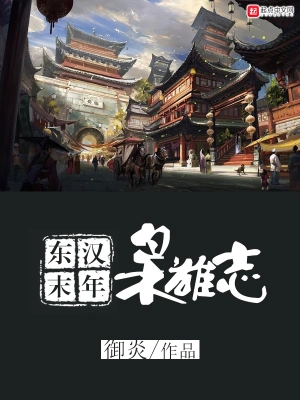
The Ambitious Hero of the Late Eastern Han
东汉末年枭雄志
- Status
- Completed
- Length
- 4.2M Words
- Genre
- Historical
- Subgenre
- Qin-Han & Three Kingdoms
- Updated
- 5y ago
- Source
- Qidian
Stats
Tags
Synopsis
More by this author
In booklists 247
Explore more →
Ensemble Casts, War, Civilization, History, Exploration
For fans of ensemble casts and war stories, sci-fi, history, and the exploration of civilizations and worlds. If you enjoy these, save the list and have a read.
Historical Fiction Reading List, Primarily History
Mostly historical fiction. The scale goes up to ten stars, but even a one-star book is worth a look.
Wang Cai Doesn’t Like Catnip
I won't write many recommendations, but I promise they're all quality reads. I update this list slowly, since I have to find books I can actually stick with first (= ̄ω ̄=) No need to send flowers, it's a waste of money.

Long Reviews: Ongoing Updates
A selection of bestsellers serialized from 2017 to 2026, along with all kinds of completed classics. Please favorite this list to show your support! Books are selected according to the following seven criteria: 1. Number of subscribers 2. How popular the chapter comments are 3. Number of tips and donations 4. How positive the reviews are 5. Honors and rankings on various charts 6. How many lists the book has appeared on 7. Whether it pioneered a genre, introduced a fresh premise, or led the way
Always Searching for Good Books, Never Stopping
[A Miscellaneous Reading List] Recommending all kinds of works Once you enter the sea of books, you lose your life to it; though your heart has no regrets, you keep turning the pages. When all the splendor fades and you look back at dusk, only books and poems remain in the world. The world is so big, and meeting is fate. This list brings readers new releases, excellent ongoing works, and classic completed novels. "Add it to your collection, add it to your collection, please add it to your colle
Writing Miracles
Books are selected for this list based on sales and readership. Everyone is welcome to recommend promising new books in the comments.
Shennong Tastes the Hundred Herbs
Some books I've read
Highly Recommended Reads
👊 If you like these, save the list and check them out.
A Record of Great Historical Novels
[Historical Fiction Recommendations] Historical novels only I'm mainly recommending some great completed historical novels and promising new ones for everyone to check out! The rankings are full of ups and downs, but I take it all in stride with a smile. Veteran readers, do these books look familiar? I only recommend top-notch historical fiction! Historical fiction fans, come on in. If you like the list, please give it a like, follow me, and save it by clicking the star below. Many thanks fo
《Treasure Trove Bookshop》: Anime and Light Novels, No AI-Generated Stories
Mostly anime and historical fiction. I write reviews but don't give ratings. Most of these books are complete. Some explore extremely niche topics, while others are famous blockbusters. Whether it's a morning glory tucked away in a corner where nobody sees it or a rose beloved by everyone, each has its own brilliance. These books all have some degree of originality. I won't use AI to bring in older books, and I've also filtered out some ongoing works, so I rarely use AI or quote it at all. Parti
Novels That Are Still Readable
I've been reading novels for over twenty years, and there aren't many I can still enjoy these days. Five stars means a must-read! Four stars means worth reading! Three stars means take it or leave it! Two stars means it's basically unreadable! As for one star? No such thing!
The Green Hills Remain, While the Sunset Glows Again! Historical Bookshelf
Five thousand years of Chinese history: excellent historical novels with over 10,000 subscriptions, recommended here.
The Gold-Standard Recommender’s Book Nook
Every novel on this list is a top-quality completed work from a different genre.
Infinite Worlds, Martial Arts, Folklore, Wizards, Xianxia, History, Professions, Sports
These are mostly books I've read and enjoyed. My tastes lean toward: ① Infinite-loop, supernatural mystery, wizard, beast-taming, and card-based stories... ② Strange tales and xianxia, folk mysteries, and myths of the Classic of Mountains and Seas... ③ Steampunk, cyberpunk, post-apocalyptic wastelands, and evolution and mutation... ④ Business rivalries, history, sports, games, sci-fi, and fantasy... ⑤ Stories about professions: doctors, painters, writers, actors, directors, basketball players, r

Recommendations from an 18-Year Veteran Bookworm
A longtime web-novel reader. I only recommend good novels with distinctive plots or exceptional writing, and I'll keep adding to the list! P.S. I'm not a fan of cultivation novels. New authors are welcome to promote their books, but I won't add them unless they suit my taste. Thanks for understanding!

My Niche Reading List
History, wuxia, sci-fi, entertainment, reborn stories... A few books I like, though some may be a bit niche. As for reborn business novels, I'm a numbers person, so I mainly recommend books that I feel have few major flaws, detailed data, brisk pacing, a clear central plot and solid logic, without being melodramatic. They should also feel realistic and immersive.
[History]
Historical fiction
A Booklist of Great Reads: Five Years as a Bookworm, Quality Guaranteed.
System, technology, and farming. Pure farming stories, anime, invincible protagonists, semi-invincible protagonists, and lighthearted comedies are all types I enjoy, so I'll add them to this list too. I hope readers will recommend similar books to me.
Bowing to the Swaying Shadows of Flowers
I want it all!
🌼 [Premium Reading Pavilion] Promising New Reads ☘ Top-Tier Completed Novels and Popular Ongoing Series
“The road through the mountain of books is paved with diligence; the sea of learning is boundless, and the boat that crosses it is hard work.” ✊ 🔥☘🌱🇨🇳🇨🇳🌼🌼🌼👍👍🌹🌹🌹🔥 I’ve been reading online fiction for about twenty years. Some books are so good that once you pick them up, you can’t put them down. They make your blood race. I’m striving to build a top-quality book list. Any book with a strong reputation for quality is welcome! I also recommend promising new books!! 🔥🔥🔥🔥 There are no genre restrictio

Books I've Finished
Like 😊

Followed, Masterpieces, Hidden Gems: Twelve Years of Picks Books the Curator Is Currently Following.
Books I'm reading lately: the newest and most interesting ones. All readers are welcome! If a book is to your taste, feel free to add it to your library. Go ahead and dig in. I'm always on the front lines taste-testing these books, so if one is poisonous, I'll definitely be the first to die from it ๏[-ิ_•ิ]๏ I just realized that the books I'm following aren't enough to fill this list, so I've added a few completed works as well. Hope you enjoy them. By the way, do you still remember the first bo

Underrated Gems and Niche Power Fantasies
This list focuses on feel-good stories, niche gems, and fan fiction. The more I read, the less I can get into overly complicated stories. These days, I just want to have fun and enjoy myself. Some books have left a lasting impression, so I figured I'd record them here. There's a mix of popular classics and quirky personal favorites.

Books I Enjoy
Books I like 📖
Readers also read
 Germany: 1914
 Great Ming: His Father Is Useless, So He Must Summon the Founding Emperor
 Seizing the Direct Descendant in the Red Mansion
 A Literary Master in Ancient Greece
 Forum Troll, Romance Master
 I Found the First Emperor
 A Plan to Revive the Northern Song
 Hong Kong Films: In Wo Hop To, Uncle Deng Begs Me to Take Charge
 I’m Not a Suit-Wearing Thug, I’m a Chameleon Actor!
 The Sun and Moon Endure Forever
 My Big Brother Is Called Zhu Chongba
 Striving in the Last Years of Hongwu
 Wanli 1592
 Xuande
 I'm Not Yuan Shu
 I Can Take His Place
 Lanfang
 Snow of the Jingkang Era
 Strategies for the Zhenguan Era
Reader comments 50
Google Translate
The Romance of the Three Kingdoms won't tell you the economic competition behind the Battle of Guandu
In 189 AD, Emperor Ling of the Han Dynasty passed away, leaving a pair of orphans and widowers to inherit the Han Empire. However, he was not worried because he left his son with left and right guardians: eunuchs and relatives. The relative's name is He Jin, who is the elder brother of Queen He. He holds a high position as a general and theoretically controls the world's troops. The leader of the eunuchs was named Jian Shuo, and he also had a troop of soldiers: the Eighth School Lieutenant of Xiyuan. The Eighth School Lieutenant of Xiyuan was the emperor's personal army formed by Emperor Ling of the Han Dynasty. He has been greedy and stingy all his life. In order to save money, he did not hesitate to price his official position in the imperial court. In the past 20 years, he finally saved some money and invested it all in this army. But Emperor Ling of the Han Dynasty still couldn't defeat God's will. Before the corpse had cooled down, the left and right guardians he left behind started to fight against each other. In the end, He Jin was killed, and the eunuchs temporarily withdrew from the stage of history. The Xiyuan Army and the Luoyang Army were both absorbed by the northwest warlord Dong Zhuo. To be fair, Dong Zhuo wants to do things well. He vigorously promoted and reused all the powerful nobles who had been hidden in the "disaster of party imprisonment". Xun Shuang, who was born in the "Xun family of Yingchuan", went from a commoner to the high position of prime minister in only 93 days. By the way, he is the uncle of Xun Yu, Cao Cao's mastermind. Cai Wenji's father, Cai Yong, was also granted the title of Marquis. "I've been good to you, and you should repay me well!" The noble family indeed repaid Dong Zhuo enthusiastically, but not with flowers and applause, but with troops and swords. Only half a year later. The "Eighteen Route Princes" set out from the southeast, northwest, gathered under the banner of the noble leader Yuan Shao, and headed straight for Luoyang. Their reason is very simple: Dong Zhuo is just a frontier warrior, why should he talk and laugh with us? Without a protector, the imperial power is just a showpiece? The old order has been smashed by Dong Zhuo with a hammer. We just use the name of protecting the emperor to fish in troubled waters justly. It's messy, it's messy, it's completely messy. The last fig leaf of beauty was torn off by Dong Zhuo and Yuan Shao. They didn't care about the exposed smooth skin, while others just wanted to kiss the beauty and die after enjoying it. Cao Cao's dream was to be a general who conquered the West, but now, his expedition was nothing. The once prosperous and powerful Han Empire has now become a hell on earth with corpses everywhere. Cao Cao recorded all this in Yuefu poems: There are righteous men in Guandong, who raise troops to fight against the heroes. In the early days of Huimengjin, his heart was in Xianyang. The combined strength of the army was uneven, and the geese were hesitant and flying. Snobbery makes people fight, and the heirs fight against each other. The title of Huainan brother is carved in the north. The armor is infested with lice, and thousands of people die from it. White bones are exposed in the wild, and there is no rooster crow for thousands of miles. One of the hundreds of things left behind by the living people will break people's hearts just thinking about it. Too miserable. Cao Cao's dream was shattered, but a new dream rose in his heart: "I want to change everything." Yes, he wanted to wear the beauty's clothes back one by one. Inflation The collapse of social order begins with financial collapse. When Dong Zhuo was in Luoyang, he carried out a large-scale "currency over-issuance" in the hope of looting the market and accumulating military spending and wealth. He abolished the five-baht coin, which was a heavy and beautiful hard currency, and melted and recast all the coins. The new currency was a small coin that was lighter in weight and poorer in purity. There is more money, but the money in the hands of ordinary people has depreciated. Bad money drives out good money, which is a direct reflection of the market. To be more specific, it means that prices are soaring and people are in dire straits. It used to cost 50 yuan per stone, but now it costs 500,000 yuan. But the purchasing power of the common people has not increased. What a scam. The soaring prices also caused Dong Zhuo's wealth to shrink significantly. Damn it, I originally wanted to make money to support the army, but now it seems I haven't made much money. Anyway, there is plenty of copper, so use it all to make coins. Qin Shihuang collected weapons from all over the world and cast them into 12 golden figures. Emperor Wu of the Han Dynasty's Immortal Terrace was also melted down by Dong Zhuo and minted coins to buy food. It seems that there is more money, but Dong Zhuo is even poorer. Inflation in the market has reached 10,000 times, no matter how much money you have, you can't withstand such a toss... What's more, wars are going on all over the world, and most of the fields are deserted. In other words, the world is experiencing a food crisis. When troubled times begin, all gold, silver, jewelry, real estate, and land lose their meaning. Only food that can satisfy one's hunger is hard currency. Currency can only generate value if it is exchanged for physical objects. If there is no physical object to exchange, even if there are mountains of copper coins, it will be nothing more than a castle in the air. Dong Zhuo just sat in the castle in the air, at a loss. Since money is used to purchase materials, why not directly produce materials? While Dong Zhuo and others didn't understand it, Cao Cao had already seen the key to solving the problem. He wants to practice farming. Food is the urgent need If you want to use two words to describe the princes of the late Han Dynasty, it can only be: Poverty. Dong Zhuo was an official in the Prime Minister's Kingdom and occupied a favorable position in the court, but he had money and no place to spend it. He was so poor that he only had money. Yuan Shao's army sometimes needs to go up the mountain to collect wild dates to eat. Yuan Shu was even worse. The soldiers were so hungry that they had no choice but to roll up their trousers and go down to the river to catch fish and clams. Fortunately, his territory is in the south. So, Cao Cao decided to launch the "mass production" movement. Since "there is no cockcrow for a thousand miles", that means there are a lot of unclaimed wastelands, right? In 196 AD, Boss Cao confiscated all the wasteland near Xuchang and established a state-owned farm. Then let the army and refugees farm. The property rights of these lands belong to the imperial court, and the farm tools and cattle are also provided by the imperial court. You only need to work hard with your bare hands, and the harvest at the end of the year will be 40 to 60 cents. The imperial court accounts for 60% and the cultivators account for 40%. At first glance, it seems that the farmers have suffered a loss, but it is not easy to have a bite of food in troubled times, let alone now that we can have enough food and continue to produce... The soldiers and farmers are all grateful, okay? At the end of that year, Boss Cao's account had an extra million stones of grain. Yuan Shao, Yuan Shu and other fellow sufferers still live in a primitive society of hunting and gathering wild fruits. There is fragrant rice in Boss Cao's canteen, and they are still fighting for a fish and a handful of dates... "The rice is delicious, hiccup." "Don't grab it, this fish is mine, hey, hey." Logistics determines success or failure, and whoever can establish a stable financial system will have the opportunity to win. But Cao Cao's farming system is far from that simple. We have talked before that the reason why the Han Empire came to an end was because most of the nutrients at the grassroots level were retained by the noble families in the middle. Including land, taxes, talents, soldiers... The middlemen make the difference, and both buyers and sellers lose money. But after the beginning of the troubled times, some noble families were violently wiped out by rebels, bandits, and warlords. As a result, it became possible for the court and the grassroots to communicate directly. Cao Cao's farming system is a ladder for communication between the upper and lower levels. With the confiscation of the ownerless wasteland, the court has fixed assets in its hands. By recruiting refugees to farm, there will be stable tax revenue. By arming the refugees, there will be a steady stream of soldiers. Land, taxation, soldiers, and the court have everything. In the gloomy world of the Han Empire, hurricanes broke through the clouds in troubled times, and Cao Cao keenly caught an opportunity and expanded the cracks in the clouds, finally allowing the sun to shine on the earth again. He is the fire thief. He wants to build a new order on the ruins of the old order. Wait a minute, I seem to have missed the "talent" option just now, right? Don't worry, the drama will begin soon. Where do talents come from? The Three Kingdoms is a dazzling stage, and those who are qualified to show graceful dances on stage are only noble nobles, such as Yuan Shao, Yuan Shu, Cao Cao, Xun Yu, Zhuge Liang... And the lower-level tycoons can only be waiters serving tea and water. For example, Xu Chu and Ma Chao. The so-called "talents" all come from this group of people. The Three Kingdoms may seem chaotic, but in fact there is one main thread: all kinds of struggles for hegemony, coups, and wars are all fought for dominance by powerful families. Zhengfang is led by Yuan Shao and Sima Yi and has strong strength. There are only a few people on the opposing side: Cao Cao, Liu Bei, and Zhuge Liang. The "talents" are all mixed in, performing loyalty, betrayal and stubbornness for their own interests. There may be individuals among them who betray their class, but there is never a class that betrays their interests. Xun Yu, Cao Cao's number one talent. When he was 29 years old, he went to Yuan Shao's home as a guest. After a glass of wine, he came to his own conclusion: "This man is not successful." Xun Yu turned around and went south, joining Cao Cao, who had not yet made a fortune. They all saw the ills of the times, and they all found a cure, which was to accumulate strength in the cracks between the noble families. In those years, they went through countless ups and downs hand in hand. After Cao Cao killed the famous people and gave way, the Yanzhou nobles felt: Lao Cao is not one of their own, so get out of here. They welcomed Lu Bu to move into Yanzhou, and only Xun Yu retained 3 counties, waiting for Cao Cao's return. In the Battle of Guandu, the entire court hoped that Yuan Shao would win. Only in this way would his future be bright. At that time, only Xun Yu and Guo Jia told him: You can win, come on. Later, the surgery they performed on the imperial court was almost successful. But Xun Yu suddenly looked back: The Han Dynasty without the gentry was no longer the Han Dynasty of that year. But the Han Dynasty only had nobles, so why did it have to be the Han Dynasty? This was Xun Yu's sadness and Cao Cao's despair. When the powerful noble families did not grow up, the era belonged to the Han Dynasty. After the aristocratic clan had already developed and grown, the era belonged to the Jin Dynasty. Only the middle path of growth belongs to the Three Kingdoms. The person who could have omitted this process was Yuan Shao. Sima Yi's position was originally left to Yuan Shao by heaven. But the Battle of Guandu disrupted the course of history. The choice of Yuan Shao and Cao Cao In a person's life, it seems that there are many choices, but the reality is often helpless. In the face of many choices, people often have no choice. Yuan Shao never had a choice. He was born in the "Yuan family of Runan", a family with "four generations and three nobles". Sangong was the head of the civil servants of the Han Dynasty, equivalent to four generations of people who had been prime ministers. There are only four people who serve as the Three Dukes, but down the line, there are countless family members growing up wildly. The Three Dukes, governors, prefects, generals... The Yuan family has spread out a huge network. And this network is always spreading boundlessly. The tribe's wives, brothers-in-law, teachers, classmates, subordinates... And the relationships between these people are like this in the so-called "disciples and former officials all over the world". In the late Han Dynasty and the Three Kingdoms, Yuan Shao was the leader of the family. As for Yuan Shu, to a greater extent he was just enjoying himself. Yuan Shao is the leader of the "Runan Yuan Clan", so he is also the spokesperson of the world's powerful families. If you understand this, you can see many things clearly: He can easily capture Jizhou, and he can easily secure his position, and he does not have many rebellions like Cao Cao, because everyone recognizes him as the eldest brother, and he is popular. He knew that farming was good, but he just couldn't do it. Once you engage in farming, it goes against the interests of the basic market, and you must not do anything to poach yourself. During the Battle of Guandu, everyone in Cao Cao's camp was writing to him to express their goodwill. In their view, Comrade Yuan Shao is a class brother, and he went south to the Central Plains to liberate himself. Helping Cao Cao, what kind of international joke are you kidding? Yuan Shao, he represents the interests and hopes of the noble family. Cao Cao also had no choice. Although his family was also very wealthy and many people were officials, in the eyes of nobles like Yuan Shao, Cao Cao was just a nouveau riche, a country bumpkin, and an eunuch with an ugly legacy. In those days, it would have been impossible to enter the upper-class mainstream society if our ancestors had not studied and been officials and accumulated experience over several generations. Except Yuan Shao, Sima Yi is from the Sima family of Wen County, Xun Yu is from the Xun family of Yingchuan, and Chen Qun is from the Chen family of Yingchuan... In the list of powerful noble families, the only one who does not have a place is the "Cao family of Qiao County". Under the crushing pressure of reality and ideals, Cao Cao can only represent the poor family. So, he spent his whole life fighting against the times: engaging in farming, getting rid of the constraints of the gentry, developing the financial system independently, and establishing soldiers that belonged only to the imperial court. Suppressing wealthy families, life and death enemies have nothing to say. Seeking talented people, Cao Cao issued a talent seeking order three times in his life. He said with great fanfare that he would not look at background but only ability, in order to find talents from poor families without background. Yuan Shao and Cao Cao, one took advantage of the situation and the other went against it. The Battle of Guandu was actually a struggle between two routes. If Yuan Shao wins, the Western Jin Dynasty will be established 60 years in advance, and the wealthy families will not have to wait so many years for their carnival feast. If Cao Cao wins, there is hope for the Western Han-style dualist empire. But he failed in the end, and even the state of Wei was taken away by Sima Yi. In the end, he was just making wedding clothes for others. The reason lies with Cao Pi. The flags of wealthy families are flying in the Three Kingdoms Cao Cao has fought to conquer the world throughout his life. He can use his wisdom and strength to compete with the times and wealthy families, but in the end he still did not win completely. Cao Pi, who has nothing, has what qualifications to challenge? He could only compromise. After Cao Cao died, Cao Pi ascended the throne of Wei King. The situation at that time was very embarrassing. If you continue to be loyal to the Han Dynasty, it will be unfair. You've already added nine tins, and you said you want to be a loyal minister, so who can you blame? It can be said that Cao Cao had no choice but to do it for the Han Dynasty, but Cao Pi couldn't. If you want to go one step further and become emperor, the nobles will not agree. When you were the king of Wei, you bullied others. Now that you are the emperor, why don't you rebel? To leave an emperor of the Han Dynasty is to leave a hope for yourself. Just when Cao Pi didn't know where to go, Chen Qun came with the "Plan on the Nine-Rank Zhongzheng System". After just a cup of tea, the two hit it off. Half a year later, the interests of the nobles were guaranteed, and Cao Pi obtained the throne. Nine-grade Zhongzheng system is specially customized for nobles. This system divides talents into nine levels based on family background, academic studies, and moral character. A higher comprehensive score indicates a higher level, and the level determines the starting point and end point of becoming an official. High-level talents will never be a small official in their lifetime. Low-level talents will not be able to become high officials in their lifetime. The most important criterion is family background. Haha, what kind of family background does a child from a poor family have, so under the ninth grade Zhongzheng, a poor family will always be a poor family, and a rich family will always be a rich family. Cao Pi ascended to the throne and ruined Cao Cao's empire. Cao Cao was able to achieve great things by attacking wealthy families and supporting poor families. On the one hand, he accumulated a huge basic base, and on the other hand, he gave hope to poor families. This is Cao's Wei State. Once Cao Cao's route is abandoned, what is the difference between Cao Pi and Yuan Shao? In this case, why should the noble family be loyal to the Cao family? Why not choose someone of your own? Decades later, Yuan Shao's unfinished business will be inherited by Sima Yi. The State of Wei was also abandoned in the trash can by the powerful nobles, but they didn't know whether it was classified as dry garbage or wet garbage? This is Cao Cao's tragedy and fate, but history has returned to the normal track and is flowing forward. In 249 AD, after the Gaoping Ling Incident, the Wei State had moved towards a complete gentry society, and they decided to extend a helping hand to their class brothers in Shu and Wu. Let the flag of the wealthy family fly in the Three Kingdoms.
Feelings after reading the book
There is nothing heroic about this book. In other words, most of the works on the Three Kingdoms theme today are not heroic. It is not that there are no heroes, but it is difficult to find the heroes who stick to them throughout. Human nature is fragile. When the beauty in human nature bears an unbearable weight, it will either be reborn in spiritual nirvana, or it will abandon the beauty and expose the ugliness. We are happy to look at the darkness, but we cannot always look directly at the darkness. We must look up to see the light, even if it is only moonlight, starlight, or even candlelight. Whether a book, novel, or literary work describing the story of the Three Kingdoms should be heroic is a very complicated question. You can depict the deep affection of Liu Guan and Zhang to your heart's content, you can also carefully shape Cao Mengde's true character as a treacherous hero, you can write down the relationship between the emperor and his ministers, you can splash ink on the heroes of Jiangzuo, you can drive north to Mobei, Reappearing the power of the Han Dynasty, one can kowtow for a lifetime, and devote oneself to death... Why are only the Spring and Autumn, Warring States and Three Kingdoms periods praised by people compared to the Chu, Han, Sui, Tang, and Five Dynasties, all of which were princes competing for hegemony? Why is the era of the Three Kingdoms more well-known to everyone, and the story of the Three Kingdoms is even more popular? Is it because the book Romance of the Three Kingdoms is one of the four great classics? Or is this TV series a classic? Using the above two points to prevaricate is not enough to explain the problem. It is the people's familiarity with the Three Kingdoms that creates the name of the classic Romance of the Three Kingdoms, and it is also the people's familiarity with the Three Kingdoms that makes its TV series a classic. This cannot be reversed. The difference lies only in the perspective of the times. People lamented that Zhuge Liang was unable to regain the Han Dynasty, and was eventually despised by heaven People lamented that Guan Yunchang was so careless that he died in Maicheng People lamented that Uncle Liu Huang had been running for twenty years, and Yiling fell short People lamented that Jiang Boyue fought with all his strength, and the state affairs were difficult Some people lamented Luoyang city was burned down to destroy the dignity of the Han Dynasty Some people lamented that the empty box in the chancery table was used to defend the virtuous man who had given in. Some people lamented that the feudal lords were having a feast after Dong Zhuo's defeat in Xingyang. Some people lamented that the war at Chibi was blown away by the wind and the world was torn apart Some lamented that Marquis Wucheng was careless for a moment and his blood was spilled on the river bank >Some people lamented that Sun Bofu, a young hero, died from a secret arrow Some people mourned that Zhou Gongjin was still thinking about Sun Qi all over the mountain Some people lamented that the Lu family had two heroes, and they were like a prodigy When I looked at the Chu and Han Dynasties, I only lamented for King Xiang Fan Zeng When I looked at the Sui and Tang Dynasties, I was trapped in the confusion of ranking and utilitarianism Chaos When I read the Five Dynasties, all kinds of tastes were bitter in my tongue and heart The Spring and Autumn Period and the Warring States Period were splendid chapters woven with bamboo slips and spears The Three Kingdoms in the late Han Dynasty were soul-stirring forged by the morality of red liver The Spring and Autumn Period and the Warring States Period were full of etiquette, justice and seeking change The Three Kingdoms in the late Han Dynasty held up loyalty and courage. This is why the story of the Three Kingdoms is so popular, and why the deeds of the characters in the Three Kingdoms will be passed down through the ages. This is what the Romance of the Three Kingdoms prominently depicts. The charm of that era is the heroic spirit from beginning to end. But the Three Kingdoms is a historical period. In other words, creating Three Kingdoms works is essentially the same as creating works from other historical periods. It's just the inherent impression that the Romance of the Three Kingdoms has given everyone, which makes it difficult to create the Three Kingdoms theme. It is not easy to write well, it is not easy to write well, it is even more difficult to write well and be recognized by everyone. When recreating the Three Kingdoms, I think the most important things are people and love. If it involves modifications such as time travel and rebirth, we must also pay attention to situation. The combination of the three creates a three-dimensional Three Kingdoms. The TV series New Three Kingdoms is undoubtedly a good drama, and the portrayal of its important characters is still among the best in the industry. However, overall the friendship is too thin, and it seems to live on conspiracy theories. The weight of history is even more wiped out by the lines that make people laugh and the supporting roles that are not in place. So this drama has always been a mixed bag of good and bad. Comparing it with the classic Romance of the Three Kingdoms TV series, it is even more clear-cut. Although the plot of the Alliance of Military Advisors is a bit chaotic, the character creation is really excellent, and due to the needs of the plot, the friendship between the monarchs and ministers of the Wei Kingdom is even more faintly superior to the old version of the Three Kingdoms, which is greatly appreciated. Characters, friendship, elegance, perception, etc., These are all aspects that should be paid attention to in Three Kingdoms-type film and television works. Compared with film and television works, the works carried by text have different requirements and different standards in the minds of viewers/readers. There is a joke that "one Three Kingdoms can feed half of the historical Internet literary world" Maybe it was feasible at a certain time, but it is not feasible now. What kind of story are you going to tell? Can the main characters like Liu Guan, Zhang Cao and Sun be well established? Can that heroic spirit be or is it necessary to portray the characters? How to highlight the characters' situations... If the historical facts are changed through time travel, how should the situation be changed? What choices will those historical figures make under the new general trend... These questions are not easy to answer alone, let alone comprehensive consideration and close connection. So when many novels are re-created, they shift the key parts and no longer use heavy pen and ink to depict historical heroic feelings, but change the perspective. Either looking at side characters, or focusing on friendship and friendship, in order to weaken and reduce the difficulty of writing, in this way, other aspects will be highlighted, and the author's own characteristics will be used to depict his own Three Kingdoms picture. New Three Kingdoms scripts and Three Kingdoms Secrets fall into this category. The same is true for this book - Xiongzhi in the late Eastern Han Dynasty. It focuses on social contradictions and the overall situation, and focuses on "the self-cultivation and advancement process of an actor" and "the transformation of various social systems". In this way, it will bring about a different and unheroic Three Kingdoms. The Three Kingdoms with those who traveled through it highlighted the "potential" and its related issues, how to deal with the situation, and how to deal with the character's behavior after the situation changes. This is a very painful behavior. So in order to avoid trouble, the protagonist of the Han Dynasty [Zhenghe Wen] will take back Cao Cao, kill Cao Cao, kill Liu Bei and other actions. Han thieves must kill Liu Huangshu, and Han Han thieves must kill Cao Mengde Kill the emperor's uncle to conceal benevolence and righteousness, kill Mengde to capture Jiuxi. Xiao Xiongzhi killed Liu Bei because Liu Bei was the master of benevolence and righteousness. He was born to be the master of benevolence and righteousness. If he didn't kill, the Han thieves would not be able to achieve great success. If he didn't kill, the Han thieves would not be able to live up to their reputation. This is an objective question, a problem that any Three Kingdoms Struggle for Hegemony text will face. You cannot say [the time traveler has the ability and opportunity to kill Liu Bei/Cao Cao, but thinks that "the Three Kingdoms without Liu Bei/Cao Cao is incomplete", and therefore lets Liu Bei/Cao Cao go]. That is another manifestation of wisdom. So, a new big question arises. For the needs of the plot, the author wrote Cao Liu to death in the early or middle period. So, where is the heroism of the Three Kingdoms? Cao Cao's traitorous character, Liu Bei's benevolent gentleman, Zhuge's dedication... How should these be reflected? If you create a hero/hero with originality, it is difficult in a novel based on the Three Kingdoms. An author with such writing style would not have to dwell on the first few questions. So what kind of work is "Hongxiongzhi" in the late Eastern Han Dynasty? His books are also called: I always think about usurping the Han Dynasty, Guo Yipeng, a trainee for famous ministers from the age of zero, The only path of a class betrayer, I knelt for thirty-seven years before I stood up, I fought against the "people" with the common people, I look at the cold world with a fiery heart. The story of a man who is always planning to usurp the Han Dynasty to gather the power of the country, fight against the worms of the country, crush the enemies, and promote development. The characters created in the early stages of the book are distinct and the events are clear. In the later period of the book, this aspect became weaker, due to the change in the focus of the article. If the early part of the book is about the protagonist Guo Peng's growth and struggle for hegemony, in the later part of the book, when Guo Peng, a trainee who started training at the age of zero, grows into a senior actor wearing several masks, the protagonist of the book has transformed into the Wei State founded by Guo Peng, a big government that extends its tentacles to the grassroots and will continue to compete with aristocratic families for power in the future. There is no heroism in such a book, or in other words, when Guo Peng steps towards the throne of power, puts on layers of masks, and forms tentacles behind him to penetrate everywhere, this book cannot tolerate the existence of heroism. It's not that there are no heroes, it's not that there are no heroes, but the spirit of loyalty that fills the beginning and end of life and rolls over the waves can no longer be spread like in the Romance of the Three Kingdoms. When the rolling waves of the times were rolling on the shore and Guo's ax of innovation was about to fall, demons and monsters appeared one by one. Those polite people sitting in front of the desk turned into grinning elves and ghosts. They wanted to plunder wealth from the common people, and they wanted to suck blood from the unified government to support themselves. For a single person, this may not be the case, but for aristocratic families who have passed down the inheritance one by one and are always pursuing further progress and eternal prosperity, they must eagerly absorb plunder. In such a unified dynasty, a dynasty of "virtuous kings", "wise ministers" and "loyal people", the heroism has been very dim. At the beginning I said, look up and see the light. In this life of constant struggle, the protagonist Guo Peng saw a lot of light, and sent away a lot of light, and even ended it with his own hands. When Guo Peng finally became a noble man and was alone, he felt the darkness and malice of the world again and again. At this point, there is not much time left in his life. The teacher Cai Yong who he deceived into studying in the palace is one, his first wife Cao Shi, who supports each other day and night, is one, and the eldest son Guo Jin who personally taught imperial education after his death is one. , There are also children and grandchildren around the knees, there are vigorous students, There are simple Li Shu, and there are honest gentlemen, And that beautiful future that is expected and unattainable, so scared, so scared that future generations will not be able to realize their plans, so scared that the Guo Dynasty will not escape the feudal death cycle, so scared that one day the children and grandchildren will be silenced by those "people". This is an unheroic book, Even the biggest hero in the book—— Guo·Loyal Minister of the Han Dynasty·Famous General of the World·Suppressing the Rebellious Minister·Great Confucian of the World·Lu Zhi's Disciple·Forced to Zen Jean·Holy Emperor Mingjun·Oriental Supreme·Peng They are all wearing several layers of masks at all times, preparing to subvert the current situation and join forces with the common people to fight against the "people"! Guo Jin: What is the difference between father and emperor, Junxue, and Confucianism. Guo Peng: My lonely prince, you have to remember that after learning Confucianism, they will say: Why did your Majesty rebel? But if you learn the art of monarchy, they will only call you a coward and a tyrant behind your back. But your achievements and your dynasty will be remembered forever. Do you care about their scolding? Guo Jin: I don't care. Guo Peng: Yes, I don't care. You have to remember that your foundation is Li Shu. As long as they come back, we don't need middlemen to make profit! Guo Jin: Ah? Guo Peng: It's okay...
The emperor's uncle is dead, and the Yuan family is all in mourning. The Central Plains has been decided, let's plan for the four directions. Liu Biao and Liu Zhang are dead bones in the tomb. Han Sui and Ma Teng are the lone wolves in the northwest. Sun Quan and Sun Ce were the children of Huangkou. The Han Dynasty was in decline and no one could take over. The four sides have established a new chapter. Press the islands in the east and conquer the other side in the west. Collect the Baiyue in the south and drive out the Yi and Qiang in the north. Benefiting the whole world and shocking the frontiers. Collect the troops and build the cauldron, divide the efforts and enjoy the meal. The world is in control, and the king is in the wilderness. Good or bad, or dare not forget. The name will be passed down through the ages, and the reputation will remain forever.
A burst of blood begins to melt, The three-foot dragon spring casts the national platform. Sweeping across all areas of Kuangyu Nei, Pengjing traveled thousands of miles to find talented people. The emperor has been the proprietor for more than seventy years, but his body is no more than the earth's middle vein. Why are the merits so great? Just because there will be no future from now on.
The book is over. Guo Zifeng is dead. The empire he founded has survived for 400 years. His reputation has gone from great prosperity to extreme decline in the subsequent years. After all, his reputation has been ruined as his enemies said. He did not give those powerful families a way to survive. Why should they be so famous? The nobles have to manage politics and work with some mud-legged people in the court. They are of the highest quality. They only need to be swept away by the deer's tail, kneel down, take medicine, and drink alcohol to guide the country and become famous. Why don't you Guo Peng give me this way of survival? It's good to destroy it. It's good to destroy it. Really, really, I want to sweep away all these rotten, backward, cannibals, ruin and oppression. How I hope that the empire I built will be overthrown by a group of practical men full of ideals. He is looking forward to it, looking forward to it, but he never sees it until the end. In the end of the Eastern Han Dynasty, the hero, in the name of the hero, went to change the world. He has the vision of today's people and the understanding of ancient people; he has done it, he is people-oriented, this person is not a landlord, a powerful person, a nobleman, a family, but a group of people with no name, no appearance and no place, a family of five with more than ten acres of land, or a group of people with no clothes and no roof. Generations of poor peasants in Wa live like earthworms. Their lives are really cheap and they are so humble. But this is the cornerstone that supports Guo Peng's land in the Wei Dynasty. It is the strongest force in China. They are not willing to give in. They also want to live like human beings, so he appears. Guo Peng appears. His body is Guo Peng, but his inside is The people, the people use his body to fight for a way to survive for the people. He has walked this road all his life, but in the end he succeeded half of it. He is tired, let him sleep for a while, let him quietly watch the world underground, he will come back, and will appear again in other ways and other forms, as long as when the people are oppressed
The protagonist has endured for eighteen years, so he should say this to Yuan Shu, nine years and nine years later, I have endured humiliation and heavy burdens by your side for eighteen years. All the bosses who are better than me are dead. Now you and my former bosses are also going to die. I, Guo, finally live a human life. Don't worry, I will complete what you expect and desire on your behalf.
I want a step...
"I want to climb to the highest step by step! I want to be Zhao Gao!" This sentence comes from ____? A: "A Dream of Red Mansions" B: "The Romance of the Three Kingdoms" C: "Three Lives, Three Worlds, Ten Miles of Peach Blossom" D: "The Biography of Mi Yue" E: "Looking for Qin"
"History of Wei (Manuscript)·The Chronicles of Taizu" Also found in the "Records of Taizu" of the Wei Dynasty: ——In September of the third year of Jian'an in the Han Dynasty, the land was auspicious, Qilin came to the world, and the people of Luozhong saw their birth for two days. In the past, there were disputes in China, the disintegration of the Han Dynasty, and the rise of evil spirits. All the surnames could not survive, and the country's prestige could not be damaged. They all relied on the King of Wei. The rebels in Jiangzuo gathered troops to defeat the dynasty and accepted the invaders with false intentions. The king of Wei defeated them with the army. Now Jiangzuo has been restored to sanctification, and China has relied on it to reunite. It is true that the contribution of the king of Wei is immeasurable. I am the Emperor of the Han Dynasty, and I am fortunate to have inherited the great power. However, I am sitting here in vain today. I have neither accomplished the task of restraining the emperor, nor am I able to achieve political harmony. I have no strength from my ancestors, and I do not show the power of the royal family. I feel so ashamed that I have no shame to offer sacrifices. Now the King of Wei has defeated the Sun rebels and returned to Jiangzuo. This merit and virtue has never been seen before in history. I am fortunate to see that when the Han Dynasty was in decline, the King of Wei continued his life to this day. This is a great blessing to the world and to me. Now the auspicious auspiciousness comes to the world like nectar, the unicorn rides on the mountains to appear, and there are two days in the sky, east and west, is this the will of God? This is God's will. I really have no sages from my ancestors, but I am willing to imitate the virtues of my ancestors, obey the law and abdicate, help all people to drive prosperity, and welcome sages to China. I have been supported by the King of Wei to this day, and the Han Dynasty has been supported by the King of Wei to this day. How lucky it is! I don't want to go against the will of heaven and betray the virtues of the ancestors, so I ask the King of Wei to plan for the world, for the people, and for the future. Follow the wishes of heaven, the wishes of the people, and my wish to abdicate, and inherit the rule! When the edict came to Ye, Taizu was at a loss. The people's discussion was noisy, and the officials came to the court to give advice. The right servant of Shangshu sent Feng admonition: Today, the world is full of auspiciousness, the unicorn wants to reveal the king, and the rising sun represents the setting sun. Doesn't this mean that the emperor of the Han Dynasty is approaching and the sky belongs to the Wei temple? The emperor of the Han Dynasty also understands, so he sincerely obeys the will of heaven and Zen, what should the king say? Taizu angrily rebuked: I have ordered you not to say anything again! Feng said to the Japanese: "I have spoken firmly, and I have spoken for the people of the world! Today's intention belongs to Wei, and the emperor of Han also belongs to it, why does the king insist on resigning? Kou said: Since the seventh year of Guanghe, Jiuzhou has been in turmoil for ten to seven years. The rebels and ministers have separated themselves, and wars have continued for years. The people are in trouble, and the world is hanging upside down. The king rises up to face the difficulties, quells the thieves, and returns to Jiuzhou. He is the virtuous king to whom Qilin belongs! At this time, it is truly God's will, it is God's will! Xiangcao of Wei kowtowed and said: For seventeen years, the king's army was able to defeat all the traitors in the world and once again build the prestige of the Han Dynasty and its nine states. Suppose there is no king, how much prosperity will the world have? How much peace and happiness will the people have? How much arrogance will the rebellious ministers have? How much dignity will the Han Dynasty have? For this kind of kindness, the world wants to reward it with the highest dignity, and the Han Dynasty wants to reward it with the highest dignity. How can it be rewarded? The staff officer ordered Zhong Kengri: Dong was in trouble, the Han Dynasty relied on the king to maintain its majesty, the Yuan family was arrogant, and the world relied on the king to know the courtesy of ministers. Who can compare with the merits of the king? How can the ministers in ancient times have merits and virtues as good as the king? This is moved by heaven, and it belongs to Wei Zong. Why does the king resign? The Han temple is exhausted, Wei Zuo is prosperous, this is God's will, and the emperor of the Han Dynasty also understands it. In this way, if the king does not follow the will of God and pleases the people's support, I dare to be different! The ministers kowtowed and said: The king does not follow the will of God and please the people's support, so I dare to be different! Taizu was dizzy for a long time, and he was at a loss. He wanted to straighten the ministers, but the ministers kept knocking. Taizu's hand was straight to the ministers, but the ministers rebelled. Taizu was sweating. Qi Rong said: You people want to be rich and honorable, so that you can humiliate yourself and become a Han minister. How do people in the world see this? How do people in the world see this? Aren't you cooking the orphans in oil and putting them on the fire? Shangshu Ling Yu said: The king is mistaken. This is the will of God and the people's will. What crime is there? The king wants to sin, and asks Heaven to sin. Heaven will accept the sin, and we will also accept the sin. The ministers kowtowed and asked again. Taizu was angry and scolded him but ignored him.
There are several other things that are very important: 1. Official term system 2. Guo Jin's imperial mausoleum was built overseas [such as Malacca] to ensure sea power 3. The ancestral system of the emperor's "abdication" (the term of office for central officials is seven years, and it is not said how many terms they can serve) 4. Land annexation: ①Laddered tax system (over the limit, it is collected according to commercial tax) ②Increase "land transaction stamp tax" (to ensure the legality of the transaction, it can also be collected in other fields) 5. Clan system: ①Son ennoblement, enfeoffment Outside of East Asia, defend the mainland of the Wei Dynasty (inherited by the eldest son) ② Those who have no inheritance rights are responsible for "basic life, medical care, education" and other expenses before they are minors. After they become adults, the clan is no longer responsible, but they can make a living for themselves, including serving as officials 6. Modern scientific system Try, research, and build (you can also do it after retirement) 7. System construction (refer to the summary. Ensure the emperor's rights without placing too much burden on the emperor): Emperor . (Internal and external) ↑ (Individual financial control) ←Hall of Heroes ←Public Security and Arrest Department ↖ ↖ ( , ) ※, (No direct leadership) [Joint Meeting of the Ministries of the Executive Yuan] ※ Small meetings are held regularly, and ministers negotiate and coordinate policy issues ※ The cabinet attends the meeting, and the emperor arranges for the South Study Room to attend as a non-voting representative ※ Regular large meetings, the emperor, cabinet, and ministers attend as non-voting attendees ※ Major matters are left to the emperor for decision-making ※ Eunuchs can be arranged to attend the meeting as a non-voting witness ※ Eunuchs regularly review the affairs of various ministries ↗ ↖ ※ ※Assist the ministries ※The cabinet evaluates and gives suggestions ※Coordinates the ministries ※If there are objections, the cabinet ministries consult ※Logistics work ※Unable to coordinate and hand over to the emperor for adjudication ※Plan decision-making and filing in the South Study Room Staff desk ↑ ↖ ↖ Time management Regulations Installation Operation Directive Thought Planning Preparation Practice Command (Directly under the emperor, supervising hundreds of officials, independent system) Dali Temple (Directly under the emperor, judicial trial, independent system) Chinese Altar: ●In the past, those who founded the Xia Dynasty and made significant contributions to the country and the nation can enter the [Chinese Altar] to enjoy the incense and worship of the country and the nation. They can worship the [Chinese Communist Lord, Human Ancestors, Sages, and National Honors] as the main subjects. ※ (The Communist Party of China can offer sacrifices to the "Three Sovereigns and Five Emperors", human ancestors can offer sacrifices to "Shennong tastes a hundred herbs", sages can offer sacrifices to "Guan Zhong" to respect the king and resist the barbarians, national honors can offer sacrifices to "Li Mu and Huo Qubing" for fighting against the Huns, "Su Wu" for his integrity, etc.) ●When the emperor ascends the throne, the "China Altar" is the first place of sacrifice. ●Guo Pengchan gave up the throne and could use this as his first sacrifice. ●Cultivation of national and ethnic views. Guoxun Yuan: Officials who have made great contributions to the Wei State are allowed to be admitted to the hospital to enjoy royal and national incense. The previous emperor designated the candidate. After the emperor died, the designated ministers also retired (term system), and the reigning emperor could compile a book, print it and distribute it to the world to promote the country's honor (generally speaking, when the emperor abdicates, the ministers should have almost retired. This does not matter whether it is civil or military.). Hall of Heroes: commemorates heroes, fallen soldiers, etc. Propaganda Department: Audit of book, graphic and text publishing, newspapers and public opinion, etc. Public Security and Arrest Division: Public Security, Public Safety, etc. Eunuch system: ① Set up [Xianzhong Temple], those who have made significant contributions to the royal family are allowed to enter the temple ※ For eunuchs without roots, the ancients also valued the incense left behind, which can make eunuchs more loyal ② Set up [Inner Academy] to teach eunuchs in the Ming Dynasty to learn designated knowledge, so that the eunuch system can be passed on better , to defend the imperial power ③ Set up the [Neiwu Hall], select eunuchs with good bones, and cultivate military talents ④ Special contributors can be allowed to enter the [National Honors Academy] Finance Committee: Separate taxation and expenditure, carry out armed tax collection, and at the same time, royal personnel (also collateral) can be used to collect taxes, etc.
Guo Peng is the only male protagonist who makes me admire him. I sincerely believe that someone like him can really become an emperor after traveling through ancient times and bring hope to the people.