


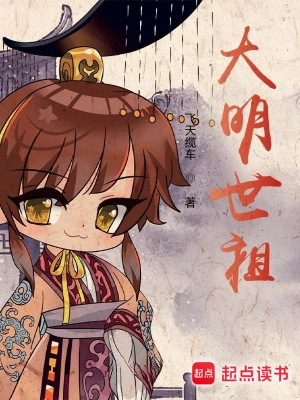
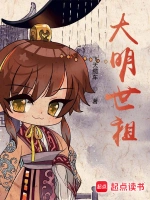
The Ming Dynasty's Founding Emperor
大明世祖
- Status
- Completed
- Length
- 3.3M Words
- Genre
- Historical
- Subgenre
- Song-Yuan-Ming Dynasties
- Updated
- 2y ago
- Source
- Qidian
Stats
Tags
Synopsis
More by this author
In booklists 14
The Bookish Manor
This list has room for only fifty books, so every new addition means another has to go. Abandoned or censored books get removed first. Feel free to recommend a book you think is great, though I may not add it. Most of the books here are ones I've read myself. After all, you can't speak about a book you haven't read. The overall quality is pretty good, selected with eight years of experience. Follow the list if you enjoy it.

Collecting and Recommending New Books, Looking for Ones I'll Like
Looking for some new books. There's nothing good on the rankings.
I Love History, Even Though Real History Is Heavy!
Mainly transmigration novels set in the late Ming and early Qing. I'll also recommend good novels set in the Tang and Song dynasties.
A Little Book Bag With Absolutely No Standards
I actually use this list as a bookshelf. I add books I've finished or that haven't finished updating yet, then wait until they've built up enough chapters to binge. So I have no particular standards for what I collect here. I don't care about recommendations, favorites, or monthly ticket rankings. I just go by the book's appeal, its updates, and whether it has been abandoned. Anyway, everything on this list is something I've read, so if you find something you like, give it a try. The rest doesn'
Purple Eyes, White Hair
Easy to get into, and pretty good
Transmigration Through History: Masterpieces from East and West
Transmigrate to ancient times and build an empire

Chu Qiu's Reading List
Writing: Simply put, this refers to an author's basic command of language and ability to tell a story. Themes: This means the ideas and messages traditionally found in literary works. Web novels do have their own peculiarities, of course, but I venture to say that a web novel's themes can generally be judged from two angles. First, the issues the author seeks to examine, along with the ideas and emotions conveyed through the work. Second, the perspective from which the work approaches its subjec
Snail's Books
History / military / industry / technology / transmigration
Thanks, Updated from Time to Time
Xinjiang’s Book Nook
Ming Dynasty Historical Fiction
Never submit, never pay tribute. The emperor guards the frontier, and the ruler dies for the state. Those few words capture the spirit of the Ming dynasty. At the same time, it had no shortage of ridiculous emperors. So how did the dynasty last for more than two hundred years? Let's find out through these novels.
Transmigrators in the Ming Dynasty
Clever, engaging historical fiction
Strong Recommendations from a History Major of 14 Years
Only books rated good or better. I majored in history, so this list mostly features historical fiction. I've been vetting books since 2014, so rest assured and enjoy. If you like the list, please save it. Many thanks in advance! P.S. One book gets pinned for every 10 likes.
Late Ming and Early Qing
Don't rebel while traveling back to the Qing dynasty, or I'll serve you the power-drill special

Reading for Love, An Old Hand at Web Novels
Just for the love of it.
Readers also read
 Chronicles of the Red Mansion
 An Important Town in the Residual Tang Dynasty
 In the Ming Dynasty, the Days When the Cows and Horses Turned Over
 The Corpse Plague of 1916
 League of Legends: I Just Turned Pro, and You're Saying the League Is Dead?
 The Prosperous Longwan Era
 The Great Bandit
 Simultaneous Transmigration: Becoming a Legend Before the Story Begins
 Starting with Saving Manchester United
 Transmigrated to the Ming Dynasty to Become a Tyrant
 The Great Ming
 The Wily Qin
 The Tang Dynasty Rises Again
 I Am the Great Powers
 My Great British Empire
 The Great Ming in 1860
Reader comments 47
Google Translate
There is no need to continue watching when you see the protagonist sitting back and watching the massacre of South Korea for the sake of power. The protagonist no longer cares about human life for the sake of power. He treats the people as nothing but trivial matters.
I simply drew it and spent a few hours correcting it if I made a mistake. The author Jun, I hope to give you a good review and a pin. 🙂🙂🙂
In fact, many authors who wrote novels in the late Ming Dynasty paid too much attention to legal principles and people's hearts. They all pursue the idea that he who wins the hearts of the people will win the world. In fact, how many people know that those who win the hearts of the people win the world? The "people" never refer to ordinary people in Guizhou! What does the general trend of the world have to do with them? Did Qin's unification of the six kingdoms rely on the popular support of the people? Let's talk about Liu Bang, did he rely on the people's support to defeat Xiang Yu? What is its relationship with the people of Guizhou? Let's talk about the Tang Dynasty. The Li family raised troops in Taiyuan, and they themselves were a powerful family. Let's talk about the Song Dynasty. Song Taizu Chen Qiao's mutiny had nothing to do with the people's hearts. Okay, you can still refute me above, then I will talk about Yuan and Qing. Who among you dares to say that the Yuan and Qing Dynasties relied on the people's opinions to rule the world? Push me forward with force, those who follow me will prosper, and those who go against me will perish. I have the ability to lift tables, it's just that simple and crude. The prerequisite is that the people under the rule have a mouthful of food to eat. Is the people's support? It has nothing to do with them.
Map of Shizukan of the Ming Dynasty
There are many people in late Ming Dynasty novels, both rebellious and non-rebellious. The key to this difference lies in the author's fundamental views on issues in the late Ming Dynasty. Those who choose to rebel believe that the entire system of the Ming Dynasty is rotten, and there is no other way except to tear it down and start over. Those who choose not to rebel believe that they can take the reform route within the system to prolong the life of the Ming Dynasty. Of course, it does not rule out that the author actually knows it very well, but writes nonsense just to sell money. Looking at the ideas given to Chongzhen on Zhihu, you will know that there is a market for the second view. Plan 1: When the central government can still organize large-scale battles with hundreds of thousands of people, take the initiative to hand over power to governors, forcibly create warlords, and cut their own flesh. Plan 2: Continue to let Wei Zhongxian bring trouble to the court, rob the poor and provide eunuchs. Plan 3: Abandon Liao completely and cede the traffic lines of the Western Liao Corridor to the Qing army, greatly reducing the supply pressure of the Qing army breaking into the fortress, making it easier for them to use robbery as a job once a year. Plan 4: Make peace with Hou Jin, hoping that once the peace treaty is signed, Huang Taiji's operation interface will no longer be able to click on sending troops. Plan 5: Give up the entire north, welcome all the border troops to join the Qing Dynasty, and then prepare a welcome banquet in Jiangnan to wait for them to come and ask for their wages. Plan 6: Send selfless robot warriors who do not eat or drink to collect taxes in Jiangnan. Plan 7: Introduce high-yielding crops and plant them throughout the country through persuasion and education. Plan 8: First use hypnosis to make yourself believe that you understand the Ming Dynasty better than Zhang Juzheng, and then send selfless and desireless robot soldiers to implement Zhang Juzheng's New Deal. Plan 9: Resume the voyage to the West, let the Ministry of Household Affairs pay for shipbuilding, return the money earned to the internal funds, and convince yourself that nothing will happen if you do this. By the way, you can use good words to persuade the sea coachmen to voluntarily give up the trade volume. Plan 10: Introduce Western technology, buy an Aladdin's magic lamp, and make a wish to establish an industrial system. Plan 11: Rely on the Nine Heavens Xuannv's dreams to help you learn military knowledge and reorganize the Beijing camp. Plan 12: Persuade the Mongols to give face to the Ming Dynasty and give up their wealth and life to be loyal to the Ming Dynasty. Plan 13: Give up the dominance of Confucianism, fight against the entire ruling class as a pagan emperor, and let the Catholics and Taoist sects free to mobilize the masses. Plan 14: Use the cornucopia to generate funds for compulsory education. Plan 15: Send fearless villagers from the Age of Empires to colonize Southeast Asia. Plan 16: Paddle through the windless zone and colonize Australia. Plan 17: Tear up and rewrite all geography and economics books and colonize North America. Plan 18: Eliminate redundant positions in the army and persuade them to surrender. Plan 19: Loot the feudal king's house and hope that they are all parameciums who don't even know how to hide when a knife is held to their necks. Plan 20: Reuse the clan and convince yourself that the landlord named Zhu is no longer a landlord. Plan 21: Strengthen the walls and clear out the wilderness, and persuade the people who have been cleared out to starve to death at home and not to rebel. Plan 22: First assume that the soldiers have been brainwashed by themselves and the gentry are all cabbage, and then let the army tax the gentry. Plan 23: Continue to increase the intensity of commercial tax collection and abolish domestic commodity circulation. Plan 24: Ask Zheng Zhilong to give up the profits from sea trade for the sake of national justice. Plan 25: Plant two acres of land in the palace, sow seeds, water some water, and in autumn warships, cannons, officers, and sailors will grow, and you will have a powerful navy. Plan 26: Let the southwestern chieftains and their subordinates believe that they can live a blissful life by serving as cannon fodder on the anti-Qing front lines. Plan 27: Assume that "Chongzhen + Lin Dan Khan = Genghis Khan", continue to support Lin Dan Khan, let him use the emperor's imperial edict to defeat Huang Taiji, and then go to Shanxi and Shaanxi to rob. Plan 28: On the one hand, trade with the Mongols, and on the other hand, implement an economic blockade on Liaodong by turning the Mongols, Ming Dynasty border troops, and merchants into saints. Plan 29: Get 10,000 military workers from 1940 and let them go to the rear of the Qing Dynasty to guerrilla in nuclear-powered sailing ships. Plan 30: Train the prince to guard Nanjing and prepare for the Xuanwu Gate Incident. Plan 31: Issue banknotes to persuade people who use currency all over the world to be robbed. Plan 32: Restore mining tax and reproduce the feats of Gao Huai and Yang Rong. Plan 33: Reform the imperial examination and let all bureaucrats curse their 19th generation ancestors. Plan 34: Remove the exiled officials from Jiangnan and use tax collectors to manage the city. Plan 35: Set up the East Factory, so that there will be two East Factory. Plan 36: Kill the Donglin Party. Since there is no Donglin Party to kill, a group of people need to be awarded the honorary title of Donglin Party first. Thirty-six is a good number, so I won't dig into other fantastic ideas. With such a group of people with wild imaginations as the foundation, can there not be many Fu Ming novels?
Found the number Continue to update
Emperor Hongwu was the fertility champion among the emperors of the Ming Dynasty. He gave birth to 26 sons. Among them, the eldest son Zhu Biao was granted the title of prince. The 26th son Zhu Nan died young and was not divided among the other sons. There are 24 actual princes in total, including King Zhu Xi of Qin, King Zhu Fan of Jin, King Zhu Di of Yan, King Zhu Zhu of Zhou, King Zhu Zhen of Chu, King Zhu Zhu of Qi, King Zhu Zi of Tan, King Zhu Qi of Zhao, King Zhu Tan of Lu, King Zhu Chun of Shu, and King Zhu Bai of Xiang. King Zhu Gui of Dai, King Zhu Mei of Su, King Zhu Zhi of Liao, King Zhu Zhu of Qing, King Zhu Quan of Ning, King Zhu Lun of Min, King Zhu Su of Gu, King Zhu Song of Han, King Zhu Mo of Shen, King Zhu Ying of An, King Zhu Huan of Tang, King Zhu Dong of Ying, and King Zhu of Yi. Among them, those who had no children included Zhu Qi, the king of Zhao, Zhu Zi, the king of Tan, Zhu Bai, the king of Xiangxian, Zhu Dong, the king of Yingjing, and Zhu Ying, the king of Anhui. Those who ascended the throne and proclaimed themselves to be exterminated by the empire were King Zhu Di of Yan, those who conspired to exterminate the country were King Zhu Su of Qi, King Zhu Su of Gu, and the fourth grandson of Ning Wang Zhu Quan Zhu Chenhao. Those who committed extremely evil crimes include Zhu Diancheng, the fifth grandson of King Zhu Yi of Yi, and sixth grandson Zhu Xian of Liao Wang Zhu Zhi. By the end of the Ming Dynasty, there were 13 remaining princes of the Hongwu clan: King Qin, King Jin, King Zhou, King Chu, King Lu, King Shu, King Dai, King Su, King Qing, King Min, King Han, King Shen, and King Tang. The survival rate is 54%, the childlessness rate is 21%, and the crime rate is 21% Prince Zhu Biao had five sons together. The eldest son Zhu Xiongying died young, and the second son Zhu Yunwen ascended the throne. Three princes were actually named, namely Wu Wang Zhu Yunxi, Heng Wang Zhu Yunxi, and Xu Wang Zhu Yunxi. Due to the successful rebellion of King Yan Zhu Di, he ascended the throne and became emperor. Therefore, they did not recognize the princes entrusted by Emperor Jianwen and deposed them as common people. At the same time, these three kings died inexplicably and had no heirs. Therefore, the kings of Wu, Heng, and Xu have no children, the survival rate is 0, and the heirless rate is 100%. Emperor Yongle had four sons, among whom the eldest son Zhu Gaochi ascended the throne as emperor, and the fourth son Zhu Gaoyuan died young. The actual titles include Zhu Gaoxu, King of Han, and Zhu Gaosui, King of Zhao. Among them, the prince who plotted against the country was Zhu Gaoxu, King of Han Dynasty By the end of the Ming Dynasty, the only princes of the Yongle family were from the Zhao Wang lineage. Survival rate is 50%, crime rate is 50% Emperor Hongxi had 10 sons. Among them, the eldest son Zhu Zhanji ascended the throne and became emperor. The fourth son Zhu Zhanyin died early and was granted the title of King Qixian. The remaining eight sons were all crowned princes. They are Zhu Zhanyu, the king of Zheng, Zhu Zhanyong, the king of Yue, Zhu Zhanyong, the king of Xiang, Zhu Zhanyu, the king of Jing, Zhu Zhanxi, the king of Huai, Zhu Zhan'ai, the king of Teng, Zhu Zhan'an, the king of Liang, and Zhu Zhancui, the king of Wei. Among them, the kings of Yue, Teng, Liang, and Wei were all ruled without sons. By the end of the Ming Dynasty, the princes of Renzong lineage include King Zheng, King Xiang, King Jing and King Huai. The survival rate is 50% and the childlessness rate is 50%. Ming Xuanzong had two sons together, the eldest son Zhu Qizhen and the second son Zhu Qiyu, King of Tan. Among them, the eldest son Zhu Qizhen ascended the throne as emperor. The second son, Zhu Qiyu, ascended the throne as emperor after the Tumubao Revolution. He was later deposed as King Xi after the Suimen Revolution. He died that year, leaving the country without a son. So, the survival rate of the princes of Emperor Xuande's lineage is 0, and the heirless rate is 100%. The Yingzong of the Ming Dynasty had 9 sons. Among them, the third son Zhu Jianshi died early and was not named. The eldest son Zhu Jianshen was re-enlisted as the crown prince by King Yi in the first year of Tianshun. The remaining 7 sons were all named princes. They are Zhu Jianlin, the king of virtue, Zhu Jianchun, the king of Xu, Zhu Jianshu, the king of Xiu, Zhu Jianze, the king of Chong, Zhu Jianjun, the king of Ji, Zhu Jianzhi, the king of Xin, and Zhu Jianpei, the king of Hui. Among them, the kings who have no heirs are Zhu Jianchun, king of Xu, Zhu Jianzhi, king of Xinmu, and Zhu Jianshu, king of Xiuhuai. The lineage of King Hui was eliminated in the Jiajing Dynasty for committing crimes against the country. By the end of the Ming Dynasty, the remaining princes of the Ying clan were King De, King Chong and King Ji. The survival rate is 43%, the childlessness rate is 43%, and the crime rate is 14%. Ming Xianzong gave birth to 14 sons. Among them, the eldest son, the second son of the emperor, the crown prince Zhu Youji, and the tenth son died young. The third son Zhu Youtang became the emperor, and the remaining ten sons were named princes. They are Xing Wang Zhu Youqi, Qi Wang Zhu Youcai, Yi Wang Zhu Youbin, Heng Wang Zhu Youyi, Yong Wang Zhu Yousong, Shou Wang Zhu Youkui, Ru Wang Zhu Youji, Jing Wang Zhu Youli, Rong Wang Zhu Youshu, and Shen Wang Zhu Youkai. Among them, the kings who have no heirs are King Qi, King Yong, King Shou, King Ru, King Jing, and King Shen. The Xingwang lineage As Zhu Houcong, the son of Xingxian King Zhu Youqi, inherited the throne, Xingguo was eliminated. By the end of the Ming Dynasty, the remaining princes of the Xianzong line were King Yi, King Heng and King Rong, with a survival rate of 30% and an heirless rate of 60%. Ming Xiaozong had two sons together. The eldest son Zhu Houzhao ascended the throne and became the emperor. The second son Zhu Houwei died young and was posthumously named King Wei Yao. The survival rate of the princes of the Xiaozong line is 0%, and the heirless rate is 100% Ming Shizong had 8 sons, including the eldest son, Prince Aichong Zhu Zaiji, the second son, Prince Zhuangjing Zhu Zaihen, the fifth son Zhu Zai, the sixth son Zhu Zai, the seventh son Zhu Zai, and the eighth son Zhu Zai all died young. Therefore, the actual princes were named Yuwang Zhu Zaijing and Jingwang Zhu Zaizhen. Among them, Jingwang Zhu Zaizhen had no heirs except Yu Wang Zhu Zaixing ascended the throne as emperor, and the country of Yu was eliminated The survival rate of the princes of the Sejong line is 0%, and the heirless rate is 100% Mu Zong of the Ming Dynasty had 4 sons. Among them, the eldest son, Prince Xianhuai Zhu Yiyi, and the second son, Prince Jingduo Zhu Yiling, died young. The third son, Zhu Yijun, ascended the throne as emperor. Therefore, the prince was actually named Zhu Yili, King of Lu. By the end of the Ming Dynasty, the lineage of King Lu was still alive, so the survival rate of the princes of the Mu clan was 100% Ming Shenzong had eight sons, the second son Zhu Changxu, the fourth son Zhu Changzhi, the eighth son Zhu Changpu died young, and the eldest son Zhu Changluo ascended the throne as emperor. There are four actual princes, namely Fu Wang Zhu Changxun, Rui Wang Zhu Changhao, Hui Wang Zhu Changrun, and Gui Wang Zhu Changying. Since at the end of the Ming Dynasty, all the above-mentioned princes were alive, the survival rate of the princes of the Shenzong line was also 100%. Ming Guangzong had 7 sons, the second son Zhu Youji, the third son Zhu Youji, the fourth son Zhu Youmo, the sixth son Zhu Youxu and the seventh son Zhu Youyi died young. The eldest son Zhu Youxiao ascended the throne as emperor. Therefore, the prince was granted the title of King Xin Zhu Youjian. But because the eldest son Zhu Youxiao had no heirs, his brother Zhu Youjian, the king of Xin, eventually succeeded him and ascended the throne as emperor. Therefore, the survival rate of the princes of the Mingguang clan is 0 The Emperor Xizong of the Ming Dynasty had three sons, namely, Prince Huaichong Zhu Ciran, Prince Mianhuai Zhu Cizhen, and Prince Xianhuai Zhu Cijiong. However, these three sons all died young, so there was no tetrarch in the Xi clan. Ming Sizong had seven sons, including the second son Zhu Cixuan and the fifth son Zhu Cihuan. The sixth and seventh sons died early. The eldest son Zhu Cixiang was named the prince, and the remaining two sons were named princes, namely Ding Wang Zhu Cijiong and Yong Wang Zhu Cizheng. On the eve of the demise of the Ming Dynasty, both kings survived, so the survival rate of the Sizong princes is 100% To sum up, in the 276-year history of the Ming Dynasty, a total of 87 princes were granted, including 22 posthumous princes and 65 actual princes. At the end of the Ming Dynasty, among the princes who were actually granted the title, those who were removed from the title due to the death of heirs included the kings of Tan, Xiang, An, Ying, Liang, Xiu, Xing, Qi, Yong, Shou, Ru, Jing, Jing, Rui and Hui. The kings of Qi, Gu, Ning, Yi, Liao and Han were expelled for crimes. So there were 32 princes in total during the Chongzhen period of the late Ming Dynasty: Qin, Jin, Zhou, Chu, Lu, Shu, Dai, Su, Qing, Min, Han, Shen, Tang, Zhao, Zheng, Xiang, Jing, Huai, De, Chong, Ji, Yi, Heng, Rong, Lu, Fu, Rui, Hui, Gui, Ding, and Yongwang.
Many people in the recent book review area said that the author was assimilated by the indigenous people and did not have the superiority of a time traveler! Said the author should have different pursuits! Of course, readers are not the only ones who have this idea. Recently, many historical texts from Qidian have begun to initiate various advanced movements in ancient times! For a moment, the Qidian Historic District seemed like "a red flag waving"! This trend is somewhat taken for granted, thinking that one person who travels through time can really create a trend. In fact, this idea is quite naive. Maybe the authors want to show off that they are not "little white writers", but it is obvious that they have gone from one extreme to the other! "The economic base determines the superstructure." Mobilizing the power of the people will fail even if the modern majority has an economic base, let alone the feudal era where there is no economic base at all? What are you thinking about? ,? Why do the landlords and gentry help you spread your hatred of landlords? In the feudal era, productivity was limited, and most civilians were controlled by the landlord class in limited land. How can you mobilize these civilians scattered across the country? ,? How to ensure that the policy remains unchanged? ","! To put it bluntly, in the feudal era, a powerful servant of a landlord beat all the government officials in the county every minute. Look how powerful Zeng Guofan was after he mobilized the power of the landlords and gentry! Every era has its own national conditions. What we want is to guide the way forward, not to try to reach the sky in one step. Rushing forward is not allowed! ,,,,! It is true that the protagonist is a time traveler, but he is not a god. It would be good if he could control the situation during his lifetime. It is nonsense to try to achieve it in one step and establish a system that will never change. If you do this, you will be following the old path of Zhu Yuanzhang. The most dangerous thing is to remain unchanged! PS: The last picture is the "New Chang'an City" that I repainted based on Chang'an City in the Tang Dynasty when I was bored. If the protagonist wants to make Chang'an the capital, rebuilding Chang'an is only for reference...
Does the author understand the ancient tax system and commodity prices? The tax rate per mu ranges from 10 to 30 cents, and the tax rate is 1% to 3% or even lower. Such tax collection is simply a joke. The tax received is not even enough for administrative costs, let alone development. People today like to use the tax rate of the one whip method as a basis, but they have no understanding of the price changes at that time. In fact, the actual tax rate of Zhang Juzheng's one whip method was lower than that in the early Ming Dynasty. People nowadays like to write novels about light corvees and low taxes, and they like commercial taxes and despise agricultural taxes. They have no idea that the heavy burden on ancient farmers was not taxes at all, but the plunder of corrupt officials and excessive corvee. In fact, the simplest and most reasonable tax rate is the 11th tax. If the compulsory corvee is exempted, the people's life will be very good. Isn't this much better than just beeping randomly? Taxation is a very serious current matter, related to national stability and social development. If the author is writing a novel, could you please understand ancient price levels, administrative costs, military costs, social development and other issues before writing?
Personally, I still like to read Mingchuan novels, such as: novels from the (Apocalypse) (Wanli) (Zhengde) (Xuande) (Yongle) and (Hongwu) periods. But most authors more or less state that they all have the same (toxic point)! 1: The emperor (your majesty) is called emperor, 2: the queen (your highness) is called empress. 3: The vassal king (His Royal Highness) uses the title of Prince, and the self-proclaimed (lone king) (lonely) (widow) and others use the title of my king. 4: Civil servants and military generals always use (a certain adult) regardless of their rank, 5: (Memorial) (Memorial) (Memorial) (Memorial) always use (Memorial) or (Zhezi). I thought I was watching a palace drama of the Qing Dynasty. These ideas are always unclear if I don't change my reading.