


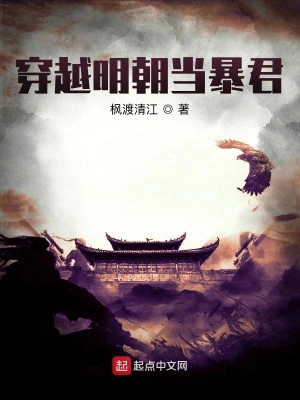
Transmigrated to the Ming Dynasty to Become a Tyrant
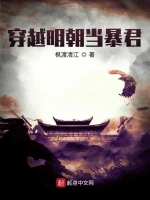
穿越明朝当暴君
- Status
- Completed
- Length
- 2.0M Words
- Genre
- Historical
- Subgenre
- Song-Yuan-Ming Dynasties
- Updated
- 1mo ago
- Source
- Qidian
Stats
Tags
Synopsis
More by this author
In booklists 21


My Memories
These are novels I've read to the end.


Top-Tier Completed Novels
This list mainly contains completed books I've read and enjoyed.
A Book Lover’s Dream
I read all kinds of books, so this list has a bit of everything. I don't enjoy tragedies and prefer feel-good stories. This isn't a professional reading list, and the descriptions are brief, but I've definitely enjoyed and finished every book here.

Completed Novels I’ve Read
I've been reading web novels for about 15 years. I used to read everything, but now I'm always in a reading slump. These days, I mostly read historical, sports, infinite-loop, entertainment, and fanfiction stories, along with books by a few authors whose styles suit me. At first, what matters most to me is the protagonist's characterization. After that, I care whether the plot fits who the protagonist is.


Shennong's Classic of Materia Medica: Good Herbs
These are just books I thought were decent. My tastes are unusual, so I don’t expect everyone to agree with me.
A Study of the Ming Emperors
A list devoted to Ming Dynasty stories I've read and enjoyed.

For All Time ✔ Book Nook: Mainly Paid Subscription Books
Clear-minded protagonists with the bearing of the strong, clear goals, and well-organized actions. No saintly do-gooders, no idiots, and no groveling at women's feet. Each book has something worthwhile. So far, I've only recommended published books I've subscribed to. I'll make a separate list for unpublished promising new novels when I have time.

The Mixed-Grain Bookshop
Stories I often read
Dark Themes: Twisted Human Nature
Seal the darkness at the bottom of a bottle, and brew the most savage red. Light is called light precisely because darkness sets it off, but all of this meaning has been imposed by human beings. Whether one becomes a Buddha or a demon, the road is paved with countless bones. This list mainly recommends dark novels of all kinds. I will regularly update the collection and clear out books each month. If you know of any excellent dark novels I have missed, please leave me a message.

Little Books I Read
For personal use


Single or No Female Lead, Currently Reading, A Mixed Bag of Genres!
I've been reading for over ten years, too! I've personally sampled every book on this list. 1. I read a wide variety of genres, basically everything except romance. 2. Aside from historical transmigration stories where the protagonist becomes an emperor (but please, no romance), I only read stories with one or no female leads. I generally avoid so-called ruthless, dark stories, and I don't read stories with saintly protagonists either. The books I read tend to have fairly sensible values. 3. My


Suffering from a Reading Drought? Read These
Reading slump


Happy Reading for Couch Potatoes
The books I recommend are all above average and cover a variety of styles. You can't go wrong following this list. Big names are welcome to recommend books to me, too.
The Shennong Poison Test
All kinds of promising newcomers with the potential to become great authors.
A Bookworm's Picks After 17 Years, Only Books I Love
I only recommend books I've read and enjoyed. I hope you like them too.
The Most Epic Books Under Heaven: An All-Around Reading List! 👍
All classics!

An Omnivorous Reader
A huge assortment of books, mostly anime and manga and urban fiction.
Classic Literary Treasures
A bit of everything

Help These Budding Authors Grow
Invest, grow rich, and rely on nurturing promising new authors. Keep it light and fun.

My Reading List
".~.~."

Historical Transmigration
Some classic transmigration novels. Feel free to add more!
Readers also read
 The Corpse Plague of 1916
 An Important Town in the Residual Tang Dynasty
 Chronicles of the Red Mansion
 In the Ming Dynasty, the Days When the Cows and Horses Turned Over
 League of Legends: I Just Turned Pro, and You're Saying the League Is Dead?
 The Sun and Moon Endure Forever
 I Am the Carpenter Emperor
 Simultaneous Transmigration: Becoming a Legend Before the Story Begins
 Starting with Saving Manchester United
 The Ming Dynasty: Starting with Caution
 My Big Brother Is Called Zhu Chongba
 The Great Bandit
 Jiajing Inherits the Ming
 From the Start, I Asked Chongzhen to Abdicate!
 A Hundred Million Sign-In Reward
 Wanli Protects the Ming
 I Am the Imperial Tutor of the Great Ming
Reader comments 35
Google Translate
To develop Taiwan, the imperial edict first exiled domestic criminals, thieves, and untouchables to develop the country. It would be easier if they died. After asking North Korea to pay tribute to the population, Ming Dynasty helped them solve the land annexation. Taiwan's raw land became familiar land, and the army was sent to clear the land.
A large part of the Ming Dynasty's financial expenditure was to supply the northern border areas and prevent the invasion of nomadic people north of the Great Wall today. During the Yongle period, active attacks were often adopted, but this approach often consumed too much manpower and material resources, and the nomads did not stay somewhere waiting for you to attack. Therefore, Yongle basically did not take the initiative in the future (except for the unexpected Tumu Fortress incident), and established a large number of defense systems and large-scale garrisons in the so-called nine-border area. With such a large number of people, the problem of military pay has become prominent. There are several main ways to deal with military pay: farming; democratic movement; Beijing movement. The settlements were mainly military settlements, but after Yongle, a large number of settlements were occupied by private individuals, and the income of the military settlements also decreased sharply. The importance of the democratic movement is reflected. However, the land in the border areas is also relatively barren, and the pro-democracy movement usually transports food to the border areas from hundreds of miles away. Later, those in charge of the pro-democracy movement also found it troublesome and either ran away or hired specialized businessmen to handle the matter. Later, when the pro-democracy movement failed, we had to rely on central financial allocations and use money to buy food near the border and supply it to the local army. In the end, the central government's financial allocation accounted for a large proportion. So where does the money come from? Jiangnan was the most economically developed region in the Ming Dynasty, and of course it is still today. The tax revenue of Jiangnan accounted for a large part of the fiscal revenue of the Ming Dynasty. Therefore, if the tax revenue of Jiangnan increased, the fiscal revenue of the imperial court would be greater. The fiscal revenue of the Suzhou Prefecture is often greater than the revenue of the Chief Secretary (Province) in some remote areas. The reason why the financial revenue of the southern Zhili region is so large is the so-called "Jiangnan heavy tax". The rent of official land is much higher than the tax of private land. In fact, official land and private land are both privately owned land, but historically official land was state-owned land acquired by Jia Sidao in the late Song Dynasty. Its land rent was very high, and the original rent continued in the Ming Dynasty. By the Zhengtong period, many official fields had been abandoned due to natural disasters or heavy taxation, or had been hidden away by means of "spreading" or "shocking". In this way, officials had to allocate excess taxes to other lands in order to reach the "original amount." As this cycle continues, less and less land is held by the government, and the remaining land has to bear more taxes. If things go on like this, problems will easily arise, and it will be difficult for the court to collect taxes. Therefore, the so-called "Zhou Chen Reform" began during the Zhengtong period. To put it simply, this reform no longer differentiated between official land and private land, and divided taxes according to the fertility of the fields. Land taxes were levied at a certain proportion, and the collection of land taxes was settled in silver. Starting from the Zhengtong period, financial reforms, mainly in the Jiangnan region, gradually began. The general trend is that physical goods are exchanged for silver, and the types of taxes are gradually reduced (actually, miscellaneous taxes illegally added to taxes are also included and combined into one tax). At the same time, labor was converted into silver according to a certain proportion, and the land owned by each household was used as the standard for payment. More importantly, this series of reforms began to unconsciously give rise to the concept of "living within one's means". Every year, officials need to estimate the current year's fiscal revenue and expenditure, and then tax according to this amount. To give an example I heard in class: I was studying in college, and the past practice was that if we had to mow a lawn for study today, everyone would contribute some money. There is a party tomorrow, and everyone has to pay for it separately. Everyone has to pay for whatever the school needs, and they also have to work hard and provide their own tools. The current practice is to pay tuition fees uniformly at the beginning of school, so everything the school has to do throughout the year is deducted from its financial revenue, and students no longer need to work to pay for it. The series of reforms from the Zhengtong period to the Wanli period are actually the content of Zhang Juzheng's "One Whip Method". Therefore, rather than saying that the one-whip method is Zhang Juzheng's invention, it is better to say that it is Zhang Juzheng's recognition of a series of previous financial reforms. The financial system of the Ming Dynasty was relatively complete by the time of Zhang Juzheng. Unfortunately, the three great levies of Wanli and the rise of the Hou Jin Dynasty forced the imperial court to send "three additional taxes", which increased taxes on the basis of the original taxes. The place was overwhelmed, peasant riots and slave rebellions occurred one after another, and the Ming Dynasty was destroyed by Li Zicheng (in fact, he lost half of the country). Another important problem in the Ming Dynasty was the corruption of the Salt Law. The Banknote Law, which was closely related to the Salt Law, was also abolished very early (that is, banknotes). Nowadays, there are many people studying the salt law reform, but I don't understand it well enough to talk nonsense. In fact, academic circles have very little understanding of the changes in the financial system after Wanli. Because Shen Shixing compiled the Wanli "Da Ming Huidian" during the Wanli period, there are complete materials to study the issues before this period. But what happened when we arrived at Chongzhen in the late Wanli period? We have to try our luck in the massive historical materials.
Fighting with his own son? Embarrassing. Can't you call your sons to your side and explain to them what you are doing? Clearly explain the limitations and benefits of each policy. What is public opinion used for? If the thoughts of leaders do not penetrate deeply into the people, are leaders just decorations? Seeing several sons fighting back and forth like elder brothers in the Qing Dynasty, speechless, not enlightening and guiding the children as they grow up, watching brothers fighting, this emperor is done.
It is necessary to organize and train a new army, build a flintlock assembly line, and conduct quality inspections. If possible, Annan will be conquered. Free land will be distributed to the refugees with the promise of no tax for 10 years. Matchlock guns will be sold to the refugees. The refugees who have land dare to fight with anyone if they have land. If there is no land, they will rob it. All Annan people will be exiled to Borneo. Once developed, all will be killed.
There is a man who is anti-civilian. I asked you, do you have any misunderstanding about the civil service group? Do they really have that much energy? Will the emperor fall into the water at every turn? Zhang Juzheng's method of whipping was to make the civil servants and gentry scream? But did Zhang Juzheng fall into the water? What else can a civil servant do besides pinching his nose to recognize it? In other words, even if Zhang Juzheng dies and is liquidated, the emperor will still have to take the lead. Wei Zhongxian killed many people in the Donglin Party. What did the civil servants do? They were not building shrines and shouting at nine thousand years old. Those who had some backbone were just writing articles in the local area and instigating the Five Gentlemen and Six Gentlemen. It was Chongzhen who had to speak out to bring down Wei Zhongxian. After Chongzhen succeeded to the throne, he showed great power. He first destroyed the eunuchs and then suppressed Donglin. What were those Donglin gentlemen doing? Why don't you just get out of here? Qian Qianyi, the leader of the Donglin Party, was screamed at by Wen Tiren. Is this the case? Get out of here and go to the wild. So it can be seen that the civil servants are not a group at all. They are full of internal contradictions, do not have that much energy at all, and are full of weakness and compromise. It's not a big tiger at all, a real tiger, but tiger skin. Now that you have come up to be the strongest enemy of the entire civil servant group, you simply don't know what to say. It is even more impossible to clean up Jiangnan. Why? Because you, the emperor, haven't even managed the Northern Zhili region around Beijing. How can you manage Jiangnan, which is thousands of miles away? In fact, you don't have to argue with the civil officials at all, and you don't have to work hard to rectify Jiangnan. You just need to deal with Beizhili. Because there are 72 guards in Beizhili, with a total of 42,300 military households. As long as the emperor can sort out these military fields and the 400,000 military households, there is nothing you can't do in the world? The question is do you dare? The scholar-bureaucrats occupied the fields but did not eat the military fields. These military households were left without land and became tenant slaves. Who owns these fields? Those nobles who have retired from the country, those local hereditary generals, these are the real tigers, the big tigers. They say how did Emperor Zhengde die? It's not just that we have to fight all day long. When we fight, we have to clear the land and deploy troops. Whose life is this touching? If you are a true tyrant, don't pick on weaklings and deal with the 72 guards in Beizhili first. As Bismarck said: As long as the emperor has control of the officer corps, he can do whatever he wants. You control the military household in Beizhili, and you can do whatever you want. Why did Taizu Chengzu dare to kill civil servants like chickens, because he had an army of 400,000 people around the capital holding them in his hands!
The more I write about it, the weirder it becomes. Both the government and the public have the confidence to oppose the emperor. It is so absurd that they massacre the people with firearms near the emperor's carriage. He also said that the Ming Dynasty will one day perish, so it is better to enjoy it as soon as possible.
I have read more than two hundred and sixty chapters, and it keeps repeating, the protagonist wants to do something, someone jumps out, and the protagonist kills someone. The protagonist wants to do something, someone jumps out, and the protagonist kills someone. The protagonist wants to do something, someone jumps out, and the protagonist kills someone. The protagonist wants to do something, someone jumps out, and the protagonist kills someone. The protagonist wants to do something, someone jumps out, and the protagonist kills someone. The protagonist wants to do something, someone jumps out, and the protagonist kills someone. The protagonist wants to do something, someone jumps out, and the protagonist kills someone. Are there really people in the late Ming Dynasty who are not afraid of death? ? ? ? The plot keeps repeating, repeating, repeating...
Now Zhang Zhang is fighting wits and courage with the Donglin Party, and he is a bit tired of aesthetics. And the Donglin Party is too stubborn. Wouldn't it be more reasonable to join the feudal bureaucrats if they can't defeat them? Moreover, it would be more in line with their thinking to sell the interests of businessmen in exchange for the advancement of themselves and their families, rather than die of the poor Taoist friends. No matter what happens, you have to hedge your bets.
It's so ordinary that it can't even be considered a cool article. In addition to beheading the nine tribes, in feudal society, the scholar-official class was similar to the current middle class. No emperor would destroy the entire scholar-official class! Too obscene. Generally
I want to say that everyone knows that the Donglin Party is the most rubbish, and they are basically responsible for the Ming Dynasty and the Ming Dynasty. Why does Jin Yong still criticize the Ming Dynasty, such as Zhu Yuanzhang in Yitianli, and the factory flower in the Longmen Inn, but he praises the Qing Dynasty. When I was young, I was indeed influenced by TV movies and felt that the Ming Dynasty was not good. Now that I think about it, the old scum was really damaged. Is it because his ancestors sold the Ming Dynasty and joined the Qing Dynasty? That's why he is like this. If anyone knows, please help.