


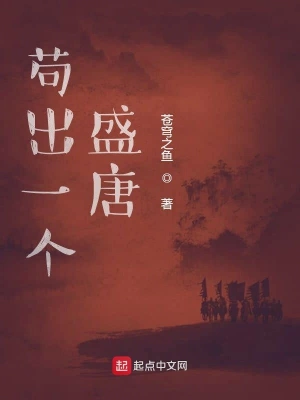
Surviving My Way to a Glorious Tang Dynasty
苟出一个盛唐
- Status
- Completed
- Length
- 1.7M Words
- Genre
- Historical
- Subgenre
- Five Dynasties Ten Kingdoms
- Updated
- 4y ago
- Source
- Qidian
Stats
Tags
Synopsis
More by this author
In booklists 9
My Favorite Historical Fiction (Mostly Power Struggles and Lesser-Known Dynasties)
Experience the weight of history. This list includes both new and old books. Recommendations are welcome~ (P.S. I recommend some books in the comments.)
Historical Novels I Could Stick With
For personal use
Old Ram's Dog Meat Shop
A century-old establishment, with ninety-nine years still to go! Our specialty: selling dog meat under a mutton sign!

Books I Like
Sharing some books I've read that I currently think are good, original, and fun.

Updated Occasionally: Books I've Read and Collected. Entertainment, Top Students, Industry
Ten years of life have made my tastes more realistic and given me a growing appetite for mind-bending stories


My Personal Taste: No Vulgar or Tasteless Reads
No brainless harem fantasies. No mindless wish-fulfillment. No infantile protagonists who make everyone around them seem stupid. I like books with originality and something to say. The characters feel like real people, each with their own depth. My tastes are niche, and I refuse to compromise. I hand out leaderboards to authors when I feel like it. That’s just how I roll. I only recommend books I’ve read. I won’t recommend anything I haven’t. Having the protagonist become emperor for no reason



My Personal Bookshelf
My personal collection
Shanzhu’s Food for the Soul
My spiritual nourishment 🤪
Must-Reads for When You're Out of Books
This list is for books with characters of normal intelligence. I don’t like harem novels or haremlit, and I’m not interested in stories that constantly rely on showing off and face-slapping. I prefer realistic settings, sensible plots, and smooth transitions between events. I’m not into cutesy transformations, gender-bending, or stories that rewrite history or mythology.
Readers also read
 Germany: 1914
 A Literary Master in Ancient Greece
 Great Ming: His Father Is Useless, So He Must Summon the Founding Emperor
 Seizing the Direct Descendant in the Red Mansion
 Forum Troll, Romance Master
 The Great Bandit
 The Age of the Yellow Sky
 Hong Kong Films: In Wo Hop To, Uncle Deng Begs Me to Take Charge
 I’m Not a Suit-Wearing Thug, I’m a Chameleon Actor!
 The Sun and Moon Endure Forever
 Transmigrated to the Ming Dynasty to Become a Tyrant
 My Big Brother Is Called Zhu Chongba
 Madmen of the Late Tang
 A True Account of Survival in the Southern Ming
 Three Kingdoms: Cross the River by Following the Sima Clan
 Wielding the Blade Across the Sixteen Kingdoms
 Contending for Wei
 The Rivers and Mountains of the Northern Commandery
Reader comments 37
Google Translate
Seeing someone asking why they are so afraid of Zhu Wen, let's first look at what Zhu Wen did in history: In the first year of Tianyou (904), Zhu Wen discussed bringing Tang Zhaozong to Luoyang. Worried about the opposition of the ministers of the Tang Dynasty, he ordered his adopted son Zhu Youliang to kill Prime Minister Cui Yin, Jing Zhaoyin Zheng Yuangui and others under the pretext of Zhaozong's edict. Zhu Wen then ordered the people of Chang'an to move according to their place of residence, demolish palaces and houses in Chang'an, float the wood down the Weishui River, and build palaces in Luoyang. When Emperor Zhaozong of the Tang Dynasty arrived in Luoyang, all the guards of the Six Army of the Tang Dynasty had been scattered. The guards around Zhaozong and the people in the palace were all sent by Zhu Wen. On the way from Chang'an to Luoyang, Zhaozong was accompanied by more than 200 children from the Xiaohuangmen, playing ball, and inner garden. Zhu Wen was not at ease with these people and ordered people to get them drunk and kill them all. In August of the first year of Tianyou (904), he instructed Zhu Yougong, the commander of Zuo Longwu, Shi Shucong, Jiang Xuanhui, the commander of Youlong Wu, and others to take advantage of the darkness of night and lead troops into the inner palace in the name of entering the palace to perform an event. They killed Pei Zhenyi, wife of Hedong in the harem of Zhaozong, and broke into the Jiaolan Palace of Queen He where Zhaozong was. Zhaozong escaped wearing single clothes and walked around the pillars of the palace. He was caught up and killed at the age of 38. After the death of Emperor Zhaozong of the Tang Dynasty, Zhu Wen established Zhaozong's second son and ninth son Li Wei as emperor. He was thirteen years old and was known as Emperor Ai of Tang Dynasty in history. Empress He was revered as the empress dowager. The following year, Zhu Wen ordered Jiang Xuanhui to kill Li Yu and other nine sons of Zhaozong. In the same year, Zhu Wen massacred more than 30 courtiers headed by Pei Shu in one fell swoop at Baimayi in Huazhou. Li Zhenyi was still not satisfied and said to Zhu Wen: "This generation often claims to be a clear stream, so we should throw it into the Yellow River to turn it into a turbid stream!" Zhu Wen laughed and immediately ordered people to throw these corpses into the rolling Yellow River. History calls this incident the "Baimayi Disaster". After this change, the Tang Dynasty had completely lost its foundation for rule. Although Emperor Ai of the Tang Dynasty was still on the throne, it was actually equivalent to the destruction of the country. According to the historical trend, Zhu Wen is obviously full of malice towards Li Tang. How can such a person negotiate with him? It's not realistic at all. This is a general direction in principle, and the author made it clear from the beginning.
Pig's Feet said that Zhu Wen's proclaiming emperor was seeking death. In my opinion, it was a clever trick to stabilize internal people's hearts. The author also said that the Tang Dynasty had no popular support in Guandong. In other words, there was no objection to Zhu Wen's proclaiming emperor at the lower levels, but what about the upper levels? To put it simply, if the general manager is promoted to chairman, are the general manager's secretary and his subordinates happy? Of course I'm happy! When Zhu Wen was the King of Liang, his subordinates were officials of the Tang Dynasty. No matter how many awards Zhu Wen gave, they were always unjust and unjust. After Zhu Wen became emperor, his subordinates were legitimate ministers of Daliang. So at this time, when Zhu Wen proclaimed himself emperor, he went east to give Zhu Wen a divine assist. Liang Jun had been fighting for many years and the divisions and veterans were tired. Wouldn't the Tang army be tired? You must know that when the Liang Army campaigned in Guandong, the Tang Army's combat range was wider than that of the Liang Army. It really fought from east to west, from south to north, three thousand miles from east to west, and two thousand miles from north to south. Is the Tang Army really the author's tool? What's more, the Tang Army had just finished the battle for Huainan with the Liang Army. The Liang Army was exhausted, and the Tang Army was also exhausted. However, the Tang Army was the attacker when going east, and the Liang Army was the defender. The Liang Army was waiting for work! Moreover, the Tang Dynasty occupied a large area from Yinshan Mountain in the north, Lianghu Lake in the south, Shazhou in the west, and Shaanzhou in the east in a short period of time. It seemed to be strong, but in fact it was weak. The ethnic groups in places like Hexi Longyou were mixed, and if you were not careful, chaos would occur frequently. Although the three kingdoms in the Western Regions, including Khotan, restrained each other, the Tang Dynasty had just arrived and its foundation was even weaker. They were still using troops on the Qinghai-Tibet Plateau. However, Tubo had been fighting with the Tang Dynasty for hundreds of years, and people's hearts were not so easy to conquer. What's more, the author seemed to have laid a big plan for a careerist. , Once something happens on the plateau and spreads to the Hexi Corridor, Tang Ting's operations in the west will be completely destroyed, and Guanzhong is also likely to be shaken. The author's arrangement of Pig's Foot going east to fight Liang Ting is an excellent introduction. It can be said that Tang Ting's situation seems to be good at this time , in fact, they were attacked from three sides, and the vassal towns all over the world's return to Tang Ting was based on the Tang Ting's victory in recent years. Once Tang Ting failed, the vassal towns would not be in power, and chaos would be imminent. Therefore, the author's arrangement for Tang Ting to go eastward was a stupid move! (Unless the plot kills Zhu Wen, who is suddenly killed by his own son or dies suddenly due to illness, as in history, with Zhu Wen's ability in history, a pig's trotters coming east will lead to death! Of course, the author can also arrange a halo of wisdom, so that the wise and powerful Emperor Li Ye defeated Guandong in the first battle and Hebei in the second world war. Jin Wang Li Keyong returned to the Tang Dynasty before his death, and then the soldiers of the Tang Dynasty and Shatuo Under the leadership of Emperor Li Ye, they pushed down Monan and attacked Liaodong. The Khitan fled, and Yelu was crowned. Later, Jiangnan sent a message and the Tang Dynasty was resurrected! ) In addition, the author's description of the Khitan was too exaggerated. You must know that the 400,000 cavalry at the peak of the Liao Kingdom was just Chui Chui. At this point in time, the Khitan was not even the overlord of Liaodong, and the Bohai Kingdom was still there! It wasn't until 926 that the Khitan completely destroyed the Bohai Kingdom and became the overlord of the Northeast! The real rise of the Khitan into a dual empire capable of rivaling the Central Plains Dynasty had to wait until Shi Jingtang was sent to Youyun Sixteen Prefectures. Before that, the Khitan was just a prince, not even the overlord of the grasslands. Both Liu Rengong of Youzhou and Daibei Shatuo were able to rub against the Khitan (Li Yazi defeated Yelu Abaoji so that they did not dare to show up in Liaodong). Therefore, the author's exaggeration of the Khitan feels like he is preparing a second big boss for this book, forcibly arranging foreign enemies for the resurgence of the Tang Dynasty! In fact, the ZTE of the Tang Dynasty was not there. Since the mid-Tang Dynasty, the economic sector, political sector and even social and cultural atmosphere of the entire Tang Dynasty have undergone tremendous changes. If reforms and adjustments are not made accordingly, the ZTE will be nothing more than an obscenity.
Why did the Sui and Tang Dynasties spend most of their time fighting Goguryeo in addition to eating and sleeping? If you look at the geographical environment of Liaodong, you will find that it is simply a small Central Plains. There are large fertile plains to develop agriculture, mountains and mining areas to develop smelting, and rivers and oceans to develop fisheries and salt industries. Why? Why did several Tibetan towns in Hebei Khitan in the late Tang Dynasty not dare to go south to conquer the Sixteenth Prefecture of Yanyun on their own? Why did it become so difficult to defeat the Khitans in the Song Dynasty? It was because they successfully utilized resources after sinicization and transformed from a tribal country. Why was it so difficult to defeat the Jurchens in the late Ming Dynasty? Because the Jurchens took the lead in Sinicization, they became a semi-feudal and semi-tribal military country. Their national system can support them in long-term wars. Compared with agricultural countries and nomadic countries, it seems that the nomadic countries have great advantages. The nomads look quite scary, but in fact they are herding while fighting. If it goes on for a long time, their fragile resource reserves will soon be exhausted. So why didn't the Central Plains dynasty completely eliminate the nomadic countries? They were eliminated, but the rulers found it was not worth it. Except for Emperor Wu of the Han Dynasty who had emotional reasons and completely killed the Huns regardless of losses, subsequent dynasties set the 400mm precipitation line as the limit. So having said so much, author, I really can't stand it if you dare to add too many buffs to the Khitan, especially the siege buffs.
The introduction to the novel shows its biggest shortcoming - no technology and no business. You, a modern person, traveled to ancient times and did not use your strengths (technology, historical knowledge). Instead, you played intrigues with the princes and court officials who climbed up from the bottom, using your own shortcomings to attack others' strengths. How could you succeed? Just because you are a salesperson? It can only be a halo of wisdom. I know that the author said this in the introduction because he was tired of reading novels that went back to ancient times and invented guns and steam engines, and then pushed them forward. But you can't go from one extreme to another and tie yourself up. If a normal modern person traveled back in time to ancient times, why wouldn't he make some simple inventions? After reading the main text, this is indeed the case. The supporting character's IQ dropped drastically and he was fooled around by the protagonist. And the protagonist, a modern salesman, is also very skilled in military training. Isn't this more outrageous than the protagonists in other books who invent soap and glass?
Speaking of the Tang Dynasty, I have to admire Li Longji, a wonderful man who was wise in the first half of his life and mediocre in the second half. It was he who caused the Anshi Rebellion and single-handedly created the disaster of the vassal towns in the Tang Dynasty. It was also because of him that the eunuchs in the Tang Dynasty were arrogant and domineering, and even deposed the emperor. He was the best eunuch in the feudal dynasties of China, even better than the eunuchs in the Eastern Han Dynasty.
In Chapter 10, standing in a military posture is very dangerous. It is better to directly distribute weapons and queue up, and then use Qi Jiguang's "New Book of Discipline School" to train troops. Many of our army's military training methods are not suitable for ancient times and require very strong beliefs. Would the children of Chang'an in the late Tang Dynasty be willing to accompany the emperor to train troops in a way that people at the time considered very shabby? Moreover, there are many weaklings who faint when standing in queues these days, even after just standing for an hour or two. Where does your emperor have the nerve to ask the sergeant to stand while the skin peels off? I guess no one will come on the third day after doing this, but it will be rumored that the emperor is crazy.
I have always believed that the main contradiction in ancient China was not land annexation at all, but more people and less land. Even if there was no land annexation, there was an upper limit to the income from land and food in ancient times. There were more people and less land, and the land and food were not enough to eat. Even if there was no land annexation, people would soon starve to death, and countless people would rebel. Starting from the beginning, land annexation is only one of the superficial symptoms. Land annexation only speeds up the process. Simply suppressing land annexation, no matter how well it is done, may continue the dynasty for hundreds of years, but it will not change the final outcome. And land annexation occurs all over the world, also in Europe, and it is more serious, and it is not unique to China.
What a fake. I have watched a few TV series about soldiers. I thought I could build a strong army by knowing a few training methods. Do you really think that you can build a strong army just by relying on discipline? It's so ridiculous. Strategy and tactics, military formations, offensive and defensive transitions, and formation changes. Don't learn any of that. It's really ridiculous. It looks okay at the beginning, but I'm really speechless later on. I'm so self-righteous. I'm so happy.
Patrol the western border and climb the Great Wall. Rubbing the wall tiles, the torrential rain swept from the sky, swept by the wind, hit the tip of my nose, and meandered on my cheeks like nosebleeds. The Great Wall from Lintao in the west to Liaodong in the east was finally completed with supervision and parades. Echoing the entire national territory at different latitudes of time and space. Perhaps the next emperor, general or minister named Li or others will climb the Great Wall, talk loudly, and fight to the death. Only the Great Wall will be the witness of everything. After thousands of years of wind and rain, it has become a national totem, standing in the east of the world. The few words in the history books are a long life for the soldiers who left home and went to the country. The image of them bloody battlefields and singing without clothes has long gone. Old soldiers never die or take off their armor, but they just gradually wither away. Only Qinqiang has resounded throughout the eight hundred miles of Qinchuan and has been sung for five thousand years.
The emperor is the greatest logistics manager. If the emperor is not at home to stabilize the backyard, it will be useless even if you conquer the entire earth. What will you write next? The prince will seize the throne. If the generals who are fighting in front of the prince know the truth, the first thing they do is to coerce you to go back and seize power. You are really not suitable for writing historical novels. If you can't, you can also write a pastoral novel.