


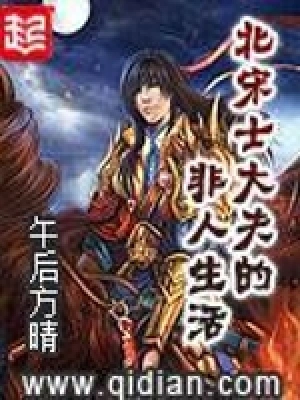
The Inhuman Life of a Northern Song Scholar
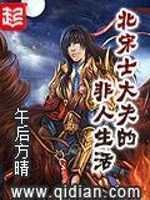
北宋士大夫的非人生活
- Status
- Completed
- Length
- 4.5M Words
- Genre
- Historical
- Subgenre
- Song-Yuan-Ming Dynasties
- Updated
- 13y ago
- Source
- Qidian
Stats
Tags
Synopsis
More by this author
In booklists 23
History
History
Recommended by a Veteran Reader, Not for Beginners!
Recommended classics. I started reading novels at fifteen, and I'm forty-two this year, so that's nearly twenty-four years! From the Four Great Classical Novels to Jin Yong, Gu Long, and Wen Rui'an, from bookstores to web fiction... Reading is not just a pleasure; it also takes thought. Online novels are becoming increasingly childish and vulgar, and there are fewer and fewer classics... There are more and more garbage System stories!



Where Are the Classics After Ten Years of Reading?
Every era has classics born of their time. We call these classics god-tier books.
A Veteran Reader's List
Stories come from life, yet rise above it.
High-Quality Reads with Divine Potential, Not Yet God-Tier
No mindless wish-fulfillment or beginner-level novels.
Updated Occasionally: Books I've Read and Collected. Entertainment, Top Students, Industry
Ten years of life have made my tastes more realistic and given me a growing appetite for mind-bending stories


My Personal Taste: No Vulgar or Tasteless Reads
No brainless harem fantasies. No mindless wish-fulfillment. No infantile protagonists who make everyone around them seem stupid. I like books with originality and something to say. The characters feel like real people, each with their own depth. My tastes are niche, and I refuse to compromise. I hand out leaderboards to authors when I feel like it. That’s just how I roll. I only recommend books I’ve read. I won’t recommend anything I haven’t. Having the protagonist become emperor for no reason


Books I Like
I recommend books from every genre, and my tastes are pretty broad. I especially love sci-fi, mecha, urban fantasy, magic, transmigration, and gaming! I’m pretty picky about what I read. If a novel has too many deal-breakers, I can’t keep going. When I run out of books, if I can’t find anything good, I just reread the books on this list two or three times. So there are basically no new books or promising early works here. Sorry if you’re looking to promote something: I probably won’t recommend i


Novels Worth Revisiting!
Keeping track of novels worth revisiting


Book Search Log
Ten years of searching through Qidian's sea of books. I've listed some that I think are pretty good. There's no particular system to it; these are just books I think are reasonably well written. Enjoy them, fellow readers.
My Reading List
Books I've read and enjoyed.


Those Books and Their Stories~
Reading interesting books and talking about interesting things.
An Ordinary Granary
A collection by a bookworm of ten years. Only completed works, so you can skip the long wait for updates.
Just Browsing
Above the passing line

An Old Man's Taste
Different strokes for different folks. I can't promise these will suit your taste, but I can promise they're above average!
Books on My Shelf
Classic works that are worth reading.
Books Worth Giving a Second Chance
Books I've read twice or more.

Quiet Talks of Love and Romance
A ten-year roundup of classic good books
The Little Tyrant of History
Farming stories, wish-fulfillment fiction, and golden fingers: there's something for everyone

An Old Friend's Book Nook
I'm a bookworm who absolutely loves reading. Unfortunately, there are only so many gems out there. Most books are knockoffs of someone else's style or framework, and their authors don't even put in the effort. If the numbers aren't good, they abandon the story halfway through. It breaks my heart. When I'm in a reading slump, I don't want to lower my standards, so I've found that revisiting the classics can be fun too. I made this bookshelf to keep a stash ready for the next time I run out of thi

Great Books I've Read
Sharing some good books I’ve read
This History Is Pretty Interesting (^ワ^=)
This list is for historical fiction, both old and new. No newbie wish-fulfillment stories, please! No abandoned books! Every title is handpicked, with completed classics and promising new reads!!
Classic Great Reads
Not to be missed
Readers also read
 Daming: Asking for the Throne at the Beginning, Lao Zhule Went Crazy
 My Only Method: I Will Add More Points to Become Stronger at the End of Ming Dynasty
 My Father Is Wen Tianxiang, and We Win the Battle of Yashan from the Start
 A Guide to Building Civilization in a Primitive Tribe
 Which Version of the Otaku Infinite-World Genre Is This?
 I Want to Become Grand Secretary
 A Life of Wealth and Glory
 Becoming a God Starting as a Dungeon Fighter
 The Big Stage of Beika: Playing Shinichi Kudo from the Start
 The Ming Dynasty's Chief Minister
 Disciplining the Song Dynasty
 The Ming Dynasty Behind the Mask
 Playing Around in the Tang Dynasty
 The Dashing Talented Scholar of the Great Song
 The World of Heluo
 Reviving the Tang Dynasty
 Creating Heaven
 The Dark Song Dynasty
Reader comments 29
Google Translate
After reading the introduction, I always said where is Song Haohao? Besides having great power as a civil servant, what are the benefits? Foreigners come to bully me every day. Military commanders have no dignity, land annexation is serious, and rogue bandits are everywhere. This was a prosperous age for literati, but it had nothing to do with the common people.
I have reservations about the author's views on the Song Dynasty. The development of a country requires all aspects. The Song Dynasty was too biased towards civil rule, which resulted in strong economic strength but too limited military positions, resulting in weak military strength. Although the Song Dynasty had the largest standing army in history, its combat effectiveness was not good. As the saying goes: If you are willing to fight, you will perish; if you forget to fight, you will be in danger! Military strength is one of the foundations of a country and cannot be ignored! The strength of the military is the most fundamental guarantee for a country to stand among the nations of the world! The Song Dynasty used culture to suppress military affairs, which resulted in the military being managed by civilians. The Privy Council was the general military institution in the country, while the Privy Council was controlled by civilians. This resulted in laymen commanding experts. As everyone knows, experts watch the door and laymen watch the excitement. This is a taboo! It is undeniable that the Song Dynasty had its advantages, but its disadvantages were also too obvious. Just imagine, if the economic strength of the Song Dynasty developed to the same military power as the Han and Tang Dynasties, would the Khitan, Jin, and later Mongolia have the opportunity to develop as powerful? The Song Dynasty had a strong economy, and even the small Xixia and Dali could not do anything about it. They had to give the Khitan, gold, and annual coins in exchange for peace. It's really tragic! Personally, I think that the system of the Song Dynasty itself had problems. Once bitten by a snake, it would be fearful for ten years. The Song Dynasty was afraid of repeating the mistakes of the separatist feudal towns in the Tang Dynasty, so it was wrong to adopt a policy of suppressing military force with civility. Just because a house collapsed and killed someone, the Song Dynasty would never build a house again. There was a mistake in the logic of the Zhao family when the country was first founded! An enlightened culture and a strong economy are all good things, but there is no protective cover. Only a strong army can protect these! Just like if you put a ton of gold in the open air and there is no one to protect it, there are no military police, do you think no one will rob it? 😰
I have to say that it is very good to be able to write a historical novel with such devotion and to match the details as much as possible. There are also various quotations from scriptures. It seems that the author has a deep knowledge of Confucianism, which is equivalent to a giant panda in this era. But there are still shortcomings! First of all, there is too much preaching and it is boring! Please confirm the positioning of this work again. This is not a textbook, this is a novel! This is a novel! This is a novel! ! ! There is no need to mention the three elements of the novel. Please review it yourself. Characters are the heart of a novel! Secondly, although the author is good at Confucianism, he has no awareness of being a modern person. What readers like about a book is not only the quality of the book, but also the style of writing and the concept. To put it bluntly, it is the outlook on life and values. The concepts are so far apart that I can't stand it... Although I also like traditional Chinese culture, I don't agree with the three views of the protagonist in the author's novel. As a purely historical novel this book is good, but! As a time-travel historical novel, as I said above, the author does not have the consciousness of a modern person, and neither does Zheng Lang in his novel!
If you don't know much about the Song Dynasty or have only a little knowledge about it, please keep your words in mind. After reading it, you will find that they like to compare it with the Tang Dynasty. So let me make a comparison. First of all, you have to understand a dynasty. At least you have to know the background of its creation. Let's talk about the Tang Dynasty first. The Tang Dynasty can be regarded as the continuation of the Sui Dynasty. Let's not talk about the Sui Dynasty. Brutal or not, the Sui Emperor established the Three Provinces and Six Ministries system with the purpose of completely destroying the clan system since the Han and Jin Dynasties. As a result, it offended the interests of the famous families, and at the same time failed to establish a new class that could be relied on. As a result, all the powerful people in the world rebelled, causing the death of the Sui II II. In the end, Li Tang picked up the fruits planted by the Sui Emperor. The two emperors of the Sui Dynasty actually laid a solid foundation for the Tang Dynasty. The two emperors of the Sui Dynasty first crippled the Turks, making it impossible for the Turks to attack southward in a short period of time. Although Emperor Yang of the Sui Dynasty failed to conquer Goguryeo, it also dealt a serious blow to Goguryeo, causing Goguryeo's development to lag behind, and it was unable to attack southward in a large scale. Therefore, Li Tang was able to unify the pass within a short period of time. By the time the nomads in the north recovered from the Sui Dynasty's attacks and were able to invade south on a large scale, Li Tang had basically unified the south. Anyone who has studied history should know this. Looking at the Song Dynasty again, the Song Dynasty inherited from the Zhou Dynasty. Chai Rong died young and laid little foundation for Zhao Kuangyin. Apart from a well-trained army, there was very little territory. At this time, during the Five Dynasties and Ten Kingdoms period, various regions were divided and divided, and there were several forces in the south. The Khitan in the north gradually became stronger after Yelu Abaoji's reforms. From then on, the Khitan was no longer a nomadic tribe, but a country with both nomadic pastoralism and farming. In 936, Shi Jingtang ceded 16 states to Khitan. For the Central Plains dynasty, which was dominated by infantry and a farming nation, losing the "mountain front" (the seven states of You, Ji, Ying, Mo, Zhuo, Tan, and Shun in the sixteen states are southeast of the northern branch of the Taihang Mountains) meant that all the Hebei fences were withdrawn. Shi Jingtang ceded the sixteen states and handed over the dangerous land in the north to the northern nomads. From then on, the Khitan cavalry could rush straight to Heshuo along the open plain south of Youji, which not only gave the Khitan rulers favorable conditions for southward harassment, but also put the Central Plains Dynasty in an unsafe and passive position in the military struggle with the Khitan. It also made the Central Plains Dynasty lack an offensive stronghold in the north. Losing this place would make it very strategically passive. At the same time, Yanyun Sixteen Prefectures is an advanced agricultural area, and its agriculture, handicrafts and other cultural activities are more developed than those in the Khitan proper area. Therefore, the Khitan rulers changed Youzhou to Nanjing and promoted it to the companion capital. This is the best proof. The Khitan held on to the dangerous territory of Youyun Sixteen Prefectures, and used it as a base to launch frequent attacks into the Central Plains when attacking. When retreating, they could hold on to this strategic location to block the attacks of the Central Plains dynasty in the south. When Shi Jingtang ceded the northern key territory of the Central Plains Dynasty to the Khitan, the Song Dynasty would not be born until several decades later. The front foundation of the Song Dynasty and the Later Zhou Dynasty not only faced pressure from rivals in the south, but also faced pressure from the Khitan in the north. When the Song Dynasty was born, the Liao Kingdom Khitan had already experienced almost 100 years of development, and Khitan had become a semi-agrarian and semi-nomadic country, and its strength was at its peak. Therefore, the innate conditions for the birth of the Song Dynasty were far worse than those of the Tang Dynasty. In terms of its birth background, the Tang Dynasty was obviously much more advantageous than the Song Dynasty. No one should object to this. OK, then let's compare the opponents of both sides. Let's talk about the Tang Dynasty first. The main opponents of the Tang Dynasty were Turks, Goguryeo, and Tubo. Goguryeo was suppressed many times during the Sui Dynasty and never recovered, so it never posed a threat to the Tang Dynasty; and until the Tang Dynasty destroyed Goguryeo, Goguryeo was just a tribe and did not develop into a real country. Tubo has always been dominated by tribes. Although it later developed under Songtsen Gampo, it has not developed because it is located on a plateau. Although Tubo's combat effectiveness is relatively strong, once it reaches the level ground, its combat effectiveness has no advantage over the infantry of the Central Plains. As for the Turks, the Sui Dynasty used military and political means to attack them. At the same time, due to the civil strife in the Turks, the Turkic Khanate had split into two parts, the east and the west. Their internal struggles intensified, and the Sui Dynasty suppressed the main Turks. Although the Turkic strength recovered somewhat after the fall of the Sui Dynasty, it never returned to its heyday. Li Jing of the Tang Dynasty led Li Shifu, Chai Shao, Xue Wanche and others to a surprise victory. They defeated the Turks in Dingxiang, captured Jieli and surrendered more than 50,000 of his tribe. Since then, the Tang Dynasty has been controlling the Turkic tribes. From the above point of view, the opponents faced by the Tang Dynasty, Turks and Goguryeo, had been severely attacked by the Sui Dynasty before and had not experienced relatively peaceful development. However, the Tang Dynasty had a better time and attacked them before they developed, thus suppressing the opponent. As for Tubo, which had some development, the Tang Dynasty was almost always punctual except for Li Longji's heyday. It relied more on consuming the other party and making peace with each other to barely suppress the other party. Therefore, none of the opponents of the Tang Dynasty were actually countries in the true sense, and the Sui Dynasty left a better foundation to the Tang Dynasty. Let's look at the Song Dynasty again. The opponents of the Song Dynasty, taking the Northern Song Dynasty as an example, were mainly the Khitan and Liao Kingdoms. Almost 100 years before the establishment of the Song Dynasty, the Khitan had already established a state and had transformed from a tribe into a country. Shi Jingtang's cession of the Yanyun Sixteen Prefectures further made the Song Dynasty's strategic geography very passive. On the one hand, Xi'an and other western areas were not suitable for use as imperial capitals due to drought, and on the other hand, due to the wars in the late Tang Dynasty. Therefore, the Song Dynasty had very little room for choice, and the opponents it faced were very powerful. The Tang Dynasty had the foundation laid by the Sui Dynasty, but what about the Song Dynasty? It took many years of conquest among the Five Dynasties and Ten Kingdoms to unify the south, so the Song Dynasty basically started from scratch. If the Tang Dynasty was a quasi-rich second generation with a certain family background, then the Song Dynasty was a poor man who made his fortune from scratch. The competitors of the Tang Dynasty were tribes that had been suppressed and weakened by his father, the Sui Dynasty. The competitors of the Song Dynasty were the Khitan, which had developed 100 years earlier and occupied the geographical advantage of the sixteen states of Yanyun in the north. Different opponents have different starting points. In the early days of the Song Dynasty, there were many northern expeditions to the Liao Kingdom to seize the Sixteenth Prefecture of Yanyun. If Zhao Kuangyin had not died at an early age, coupled with the fact that Zhao Guangyi was a military idiot, and the extremely low status of the Song Dynasty warriors (I want to strongly criticize this point, if the status of the Song Dynasty warriors was half that of the Tang Dynasty warriors, then the Song Dynasty would definitely have a very strong fighting capacity), the Song Dynasty would have been very likely to seize the Yanyun Sixteenth Prefecture. So it should not be difficult to see that there is a huge gap between the opponents of the two sides. You cannot simply say that the Song Dynasty was weak, and there was no peace in the Song Dynasty, but the Tang Dynasty even made peace. Of course, I am not saying that the Tang Dynasty was not good. Okay, then let's talk about military power. The Tang Dynasty was obviously an army dominated by infantry, with some organized cavalry. In fact, the winning rate of the Tang Dynasty's foreign wars was not very high. Except for Li Jing's battle against the Turks and later Xue Rengui's battle against Goguryeo, the other winning rates were not very high. Especially when facing Tubo, the winning rate is even lower. The Song Dynasty army was basically infantry and had no organized cavalry. However, in the early stage, whether it was defending the city or attacking, the victory rate against the Khitan opponent was quite high. However, the Song Dynasty had no cavalry and could not expand the results, so it often could only defeat the opponent, which did not bring much damage to the opponent. Relatively speaking, although the Tang Dynasty's cavalry had a lower winning rate, it was more lethal. In the several wars between the Song Dynasty and Tubo, the Song Dynasty basically defeated the other side. Tubo during the Song Dynasty did not have a martial spirit that was castrated by religion later. Another aspect of military power is the duration of combat effectiveness. From the founding of the Tang Dynasty in 618, to the Anshi Rebellion in 755, the Tang Dynasty basically failed to recover. During the period from 618 to 755, the Tang Dynasty also experienced civil strife such as Wu Zetian. Although Wu Zetian was a strong political woman, she was more than capable of defending the city but insufficient in attacking. The Tang Dynasty's military power was not strong during Wu Zetian's reign. Therefore, the Tang Dynasty's strong military power lasted for a short period of time. Even in the Southern Song Dynasty, the military power of the Song Dynasty still had the powerful combat effectiveness of the Yuejia Army. Because the infantry versus cavalry was more about defeating rather than annihilating the opponent, the combat effectiveness of the early Song Dynasty was obviously underestimated. The Tang Dynasty failed to recover after the Anshi Rebellion, while the Song Dynasty suffered many hardships and invaded the Liao Kingdom in the late Northern Song Dynasty. In the early years of the Southern Song Dynasty, Yue Fei almost attacked Huanglong. In the late Southern Song Dynasty, he also invaded the capital of the Jin Kingdom to avenge the capture of the two emperors of the Northern Song Dynasty. Later, the Mongolian cavalry that swept across the world entangled troops from all over the world (Arabs, Russians, etc.) To attack the small Southern Song Dynasty. It took 45 years and a great sweat to barely destroy the Song Dynasty. Do you dare to say that the Song Dynasty's army was weak? The military system of the Tang Dynasty adopted a system in which the central government was weak and the limbs were strong. Jiedushi had too much power, and wars relied more on foreigners, such as An Lushan and others. Therefore, the Tang Dynasty gave these aliens very great rights. In fact, it was not corruption but these aliens that finally led to the Anshi Rebellion. From then on, the Tang Dynasty failed to recover. This shows that the military system of the Tang Dynasty was very unreasonable. The military system of the Song Dynasty was strong in the center and weak in the limbs, and it was a system of civilian officials suppressing military attachés. This military system was correct for modern society, but it was not good for the feudal dynasty in the era of cold weapons and backward transportation and information. But if the status of military attaches in the Song Dynasty was higher and the rights of civilian officials were smaller, then the military system of the Song Dynasty might not be unreasonable than the military system of the Tang Dynasty. It can be seen that in terms of military strength. The Song Dynasty was no worse than the Tang Dynasty. In terms of duration, the Song Dynasty was stronger. In terms of horizontal comparison, the Tang Dynasty was not necessarily more powerful than the Song Dynasty. If you have seen this and still think that the Song Dynasty was weak, I don't want to explain anything. The economic and technological comparison between the Tang Dynasty and the Song Dynasty. Forget it, this should go without saying. No one should think that the Song Dynasty's economy was weaker than the Tang Dynasty.
Some thoughts, some spoilers After reading the entire book, I understood why the title The Inhuman Life of the Scholar-officials in the Northern Song Dynasty was really about abuse of their masters. During Zheng Lang's life, he was proficient in music, chess, calligraphy and painting as a young boy. He became famous all over the world for the Three Yuan Dynasty and was deeply favored by the emperor. He first learned about Taiping Prefecture and built Daxu, which alleviated the food crisis. Later he learned about Hangzhou, investigated smuggled salt, changed the tax system, and established eunuchs. He almost doubled the income of Hangzhou and started the colonial road of the Northern Song Dynasty. When Xixia invaded, Zheng Lang personally led the troops to Lingzhou City and set up a spy camp. He caused chaos in Xixia many times and ensured peace in the northwest. The establishment of banks allowed the money buried underground to flow, which greatly changed the economic structure of the Northern Song Dynasty. To bring peace to the south and to overhaul the Yellow River, China has been in trouble for two thousand years. Transforming Confucianism, talking about studying things to gain knowledge, opening more factories, opening up new routes, introducing new crops, laying the foundation for the scientific and technological revolution, the industrial revolution and the crop revolution, and finally pacifying Xixia and eliminating the major troubles of the Song Dynasty. It is such a feat that won the love of two emperors. However, facing the scholar-bureaucrat system of the Song Dynasty, life was extremely aggrieved. They gave up credit every day, devalued themselves, and lived cautiously. Ye Xinde has a calm personality. If he is strong-willed by nature, maybe after Zhao Zhen the world will have the surname Zheng╮( ̄▽ ̄")╭ I feel that the most comfortable people in the Northern Song Dynasty are the gentlemen and the like. Regardless of the emperor or the prime minister, they can criticize whoever they want, and even take pride in defeating the prime minister. Anyway, they are only demoted, and their reputation will remain clean for the rest of their lives. Zheng Lang can't help but cry when he sees the dying Zheng Lang paying tribute to Zhao Zhen at the end
A ten-year-old child can write three chapters in one word, which is ridiculous, and the few chapters of this forced pretentiousness are disgusting to read. The starting point of being a historical masterpiece is becoming more and more inferior.
The life of the scholar-bureaucrats in the Song Dynasty was indeed not that of a human being. They were almost like immortals. The most serious crimes they committed were exile. Even if you betray your country, you can become a husband.
I seriously doubt that this protagonist really traveled through time. Not to mention his low emotional intelligence, he is also pedantic and fell into the eyes of books.
I don't dare to read it. The first scene of time travel only ends after 5 chapters. You wrote this in the Year of the Monkey and the Moon of the Horse.
Every time I see a master and a slave falling in love with each other, I just abandon the book.