


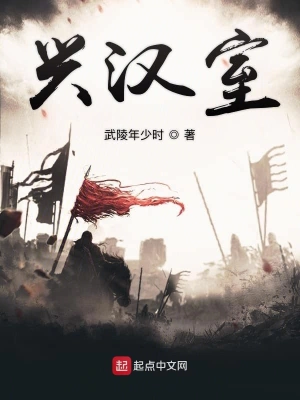
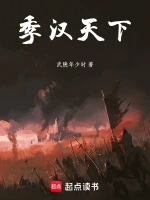
Reviving the Han Dynasty
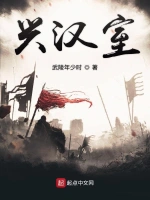
兴汉室
- Status
- Ongoing
- Length
- 3.0M Words
- Genre
- Historical
- Subgenre
- Qin-Han & Three Kingdoms
- Updated
- 1y ago
- Source
- Qidian
Stats
Tags
Synopsis
More by this author
In booklists 152
Explore more →

A Reasonable Reader's Picks: The Logic Should Mostly Hold Up, with a Bit of Everything
I've been an avid reader for almost ten years, so my tastes are pretty varied. I recommend books for readers who want something beyond simplistic fiction: fewer tired tropes, fewer saintly characters, and fewer mindless face-slapping scenes. I also like books with relatable protagonists. More precisely, these characters act in ways that feel human. They can be good or bad, but their choices have to make sense. P.S. Please save and like the list so I can see what you enjoy. The list has reached
One of a Kind
Really, really, really... too lazy to write reviews Õ_Õ Recommendations without much thought +_+ But every book on this list is a heartfelt pick. No filler 🍙, no pretentious nonsense 🐳, and most importantly, no cookie-cutter plots 🙉 (creativity and good writing are the basics) 🎋🎋🎋 🐤 Note 1: My reviews probably won't be very good. First, I'm too lazy to write them unless a book is especially good or I'm in the mood 🌚. Second, I personally dislike spoilers. Some list owners see a book with a great
Mainly Recommending Lesser-Known Historical Periods
This list focuses on stories from lesser-known historical periods, including the Spring and Autumn and Warring States periods, the Qin and Han dynasties, the Jin, Northern and Southern dynasties, the Five Dynasties and Ten Kingdoms, the transition from the Yuan to the Ming, and foreign history. I'll carefully select books with good writing and compelling stories to recommend. Those with especially original premises and strong writing will get extra attention. These are books that aren't dumbed
Bowing to the Swaying Shadows of Flowers
I want it all!
Reading List No. 3: Historical Fiction
Good historical fiction
A Categorized History Reading List
Books I've read and am currently reading
A Girl Wanders Through Historical Fiction
A girl who loves historical fiction and has spent years reading Qidian's history section. I've also saved some fantasy and high-fantasy works with a historical feel.

Talent and Passion in Equal Measure
A writer’s depth determines the dramatic tension of a story and how vivid its characters feel. The passion an author puts in determines a work’s soul. This list doesn’t include formulaic, hollow, and tedious works.
Currently Reading
A selection of books I'm currently reading
Historical Fiction Recommendations: The Three Kingdoms, Power Struggles, the Warring States, and the Sui, Tang, Song, Yuan, Ming, and Qing Dynasties
The great river flows east, washing away the ages and all their heroes... I enjoy historical fiction, especially stories set in the Three Kingdoms era, so here's a simple list of recommendations. ಥ_ಥ You can't please everyone, but I hope you'll like what I like. 💕You're welcome to recommend books here. If I see something interesting, I'll give it a read. (P.S. This list is only for books in the historical fiction category.) … Follow 🌟🌟🌟 and save the list! Please send flowers, likes, saves, a
Decent Enough to Read
These are books I've read and thought were pretty good. I don't like stories that try too hard to look cool. Substance matters, and the plot has to make sense. The author matters too, of course. I'm in a reading slump lately. If you've come across any good books, please recommend them. Thanks! So many books on the charts lately are comedy stories full of silly characters, or shallow wish-fulfillment tales about leveling up and fighting monsters. Even the xianxia stories I love have mostly turned
Recent Favorites: Showbiz, Urban, Period, and Historical Fiction
They're all male-protagonist novels. Most have sound values, likable personalities, plenty of jokes, and none are dumbed-down wish fulfillment. The characters are written with care, the supporting cast is smart too, and the heroines are likable. My second account's list leans more toward historical fiction, with some overlap. It's called A Ten-Year Bookworm's Reading List.


An Older Reader's Currently Reading List
Fifteen years of web novels, collected in a personal reading list. Add as many as you like: these are all books I've read or am currently reading and enjoyed.
Historical Novels I Could Stick With
For personal use

I Like All Kinds of Transmigration Stories, but Not Fantasy or Alternate History. I Especially Love Historical and Anime Stories
Mostly transmigration stories. I've read every book here from start to finish before recommending it, so updates will be slow


History / Fantasy / Games / Anime: Books Worth Recommending
I'll put up some books I'm reading right now. I'll try to pick more titles that don't show up often on other lists. Rated out of five stars. The scores are entirely based on my own impressions, so take them with a grain of salt. If you know any good books, leave a recommendation in the comments ( '▿ ' ) You're also welcome to share your thoughts or suggestions ฅ( ̳• ◡ • ̳)ฅ And if you like this list, please give me a follow -(¬∀¬)σ I'll regularly remove books that have too few likes and see if
Historical Fiction
I'm a hardcore shut-in from the Paradox community, especially fond of CK2 and EU4. I lack the skill to write myself, so I can only search for the good works by those talented authors.
Historical Novels That Capture the Spirit of Their Era (Static List, Updates Unlikely)
Some are nourishing, some are mediocre, and some are toxic.
Chu Qiu's Reading List
Writing: Simply put, this refers to an author's basic command of language and ability to tell a story. Themes: This means the ideas and messages traditionally found in literary works. Web novels do have their own peculiarities, of course, but I venture to say that a web novel's themes can generally be judged from two angles. First, the issues the author seeks to examine, along with the ideas and emotions conveyed through the work. Second, the perspective from which the work approaches its subjec
【Personal Treasures】Niche Reading List
These are mostly books I'm currently following. They cover quite a few genres, and my tastes are pretty varied. Please be kind in the comments. If you're interested, leave a like, and feel free to comment with any suggestions ( ∩՞ټ՞∩) Meow~~【I caught COVID in real life, so updates are on hold】

Cultivation Gems: Urban, Historical, and Sci-Fi
All are good books I've read myself

What I Read and Love
Fantasy, history, and urban fiction
Books from Qingyun Pavilion
I like cultivation and historical novels, and occasionally check out fantasy, too. I’ve read every book on this list and recommend only the ones I approve of. I just like them.
Books Worth Staying Up All Night to Read
Mostly promising early-stage serials
Readers also read
 Great Ming: His Father Is Useless, So He Must Summon the Founding Emperor
 Seizing the Direct Descendant in the Red Mansion
 A Literary Master in Ancient Greece
 Germany: 1914
 Forum Troll, Romance Master
 The Ambitious Hero of the Late Eastern Han
 A Plan to Revive the Northern Song
 Hong Kong Films: In Wo Hop To, Uncle Deng Begs Me to Take Charge
 I’m Not a Suit-Wearing Thug, I’m a Chameleon Actor!
 The Sun and Moon Endure Forever
 The Age of the Yellow Sky
 The Great Bandit
 The World of the Ji Han Dynasty
Reader comments 50
Google Translate
There were three people in the emperor's harem, Dong Wan, Fu Shou and Song Du. Song Du is a bit like Yin Lihua, and she and the emperor are childhood sweethearts, but I don't know if it will end like Yin Lihua. Fu Shou was relatively virtuous in history, but it was a pity that he was born at the wrong time. However, the environment in this life is different, but his nature has not changed. In fact, he is the most suitable for Muyi Tianxia. Dong Wan, in terms of identity, is the result of political exchange, which is very embarrassing, just like Guo Shengtong in history. The author should also draw on the grievances between Guo Shengtong and Yin Lihua when writing about the relationship between Dong and Song Dynasty. Guo Shengtong was very miserable in history. I wonder how the author will write Dong Wan's ending. However, historically the Guo family was a powerful force in Hebei, and Liu Xiu relied on the Guo family in the early stage. However, the emperor controlled and utilized Dong Cheng here, and it seemed that the Dong family was in a much worse situation. But precisely because of this weakness, although the Dong family will be abandoned after being used, I don't think the emperor will kill them all. Moreover, Guo Shengtong himself didn't know why in history, but the author's Dong Wan is very shrewd, not clever, but able to understand. He is far better than his father Dong Cheng in recognizing the situation and positioning himself. This is a genius in palace fighting. In comparison, Song Du and Fu Shou are far behind. Of course, we cannot miss the influence of the eldest princess and the newcomers who may enter the palace in the future. Another question is whether the author still has the energy to add complicated and delicate palace battles to the grand historical, war, and political articles. So you, the author, have to work hard, otherwise it will take you several years to write just for this length of time. I couldn't write until the end 😥, so I still need to increase my speed.
After reading the previous part again, I feel that both the emperor and the court officials hated Wang Yun, and Wang Yun also did it himself. The emperor was really arranged by Wang Yun in various ways. When Wang Yun became powerful, the emperor wanted to get involved in politics, but Wang Yun directly contradicted him and didn't even bother to deal with it. Ma Rixi, Sun Duan, and the Yang family were all his allies from the beginning, but they were also punished by him. They didn't even get the reward for killing Dong Hou. Later, Huang Wan, a human spirit like him, was deposed. Did he really not know Wang Yun's actions behind his back, and wanted to use Sangong as a puppet? The Guandong relationship represented by Huang Wan also had no good impressions of him. Looking at it this way, everyone in the court was offended by Wang Yun. Also, the emperor knew Wang Yun's temper well and was fed up with him. What's more, when he saw him, he thought of the days when he was precarious and could be arranged by others. If it were other trivial matters, the emperor would tolerate it. But he colluded with Yuan Shao and violated the emperor's will. With the emperor's mean and unkind temperament in the book, he found such a good opportunity and didn't take action immediately? The Kansai clique in North Korea and China hated his political views. Dong Chengle watched the excitement, and the Kanto clique was also dissatisfied with him. I don't know if the author arranged it this way, but it is true that the emperor was not very sad in the article.
Let's design a Three Kingdoms killing card for "Xinghan Chamber"~
Liu Xie Faction: Han Stamina: 4 Skills: Limited skill: Hibernation Skill effect: When the stamina is 1, tap the general card and get the effect "Hibernation". The damage and debuff effects caused by other players are invalid for you, and the duration is one round Skill description: I am young, who can settle down in the Han Dynasty? Awakening skill: Xiong Fei Skill effect: Launched when the physical strength is 1, restore 1 point of physical strength and increase the upper limit of physical strength by 1 point, remove the skill "Xiong Fei" and obtain the following skills "Pro-government", "Sin Ji" and "Xing Han" Skill description: Revival of the Han Dynasty is today! Skill: Pro-government Skill effect: When a player of the same force survives on the field, the number of cards you draw during your turn and the upper limit of the cards in your hand +1, and the upper limit is 3. :, : :1,, " Skill effect: skip the judgment link and make a judgment in the card playing stage: when the judgment is red, you can choose to restore 1 point of physical strength to any player on the field; when the judgment is black, you can force a player to deduct 1 point of physical strength, or remove two hand cards or an equipment card, only once per round Skill effect: When a player of the same power on the field activates a skill, you can make a judgment. When the suit is red, you will get the same skill effect and use it on another player; when the suit is black, you can choose to get a card in your hand or get 1 point of physical strength back. Skill description: I am the country
This book is really wonderful, with almost no poisonous points, and is really suitable for all ages. I have read a lot of works on the Three Kingdoms theme, and most of them are good stories. There are only a few that I can read, but they are a bit short. There are many characters in this book so far, but all of them have online IQs. It is really good. Even a small figure in history can sometimes make big waves if given a chance. No one can underestimate anyone. As for the technology tree, I really don't think it's necessary to climb it too early, and you don't even need to force it. It's only the end of the Han Dynasty. Genghis Khan was able to dominate the world with cavalry in the early Yuan Dynasty, and he didn't use much gunpowder, guns, and artillery. Not to mention that the Ming Empire was a world power in the early days, and it was still easy to cut down at the end of the Han Dynasty. There is absolutely no need to forcefully climb the technology tree. You can provide appropriate guidance and make some preparations. I didn't want to say so much, but too many novels are about traveling through the past and climbing up the technological tree. It's really boring to read. I always just want to use the current technological force to solve things that happened more than a thousand years ago. I never know how to write the four words of "pleasing seedlings to encourage growth", and I don't know what it means to make the best of the situation and let nature take its course. Alas, I really can't read it. The pace of this book is very good at the moment. What kind of reaction will a person make under what circumstances based on his or her status? This is really well written. I hope the author will continue to write better and better. I will order it all and give it a thumbs up 😄
There are too many bad reviews in the book circle, not because of the quality of the book, but because this book is very picky about readers. Let's sort out the characteristics of this book: 1. It is mainly about political struggle, supplemented by military struggle. This is actually in line with the realistic logic of the start of Chang'an's execution of Dong: before the Guo-Li Rebellion, the Han Dynasty still accumulated power and there were many loyal ministers. In other words, the biggest political and talent advantages that Cao Cao accumulated over Yuan Shao were now transferred in advance and at least ten times magnified to the protagonist. The situation in the world: Cao Cao's group was initially formed but was controlled by Yuan Shao; Sun Ce was still a subordinate of Yuan Shu; Liu Bei stationed troops in Xiaopei as Tao Qian's guest general; Yuan Shao was the most powerful, occupying Jizhou and part of Qingzhou, but faced siege from Yuan Shu, Gongsun Zan, and Tao Qian. The princes of the world, even the second- and fifth-year-old Yuan Shu, still need to rely on the famous weapons of the generals of the Han Dynasty to maintain their appearance. It is obvious that this logic exists by taking advantage of the general trend of the world and dividing the princes politically, thereby taking the opportunity to appear to have promoted the Han Dynasty in three ways. However, it is more difficult to achieve the real three-pronged Han Dynasty, that is, political reform, but the author writes this very well. 2. Palace fights and political fights merge into one. Almost all other historical novels will not write about the protagonist's harem struggle, because the vast majority of readers don't like it. But if placed in the historical context of the Han Dynasty, it is impossible for political struggles not to involve palace fighting. If we look at the history of the Han Dynasty, every change in the court structure will inevitably lead to harem struggles. For example, Liu Xiuli's dethronement involved reliance on and warning to the powerful powers of Hebei. The title scene of the book: Empress Dong was established to support the Dong Cheng Group against the gentry alliance in order to strengthen imperial power and cultivate reform thugs; deposed Song Dynasty nobles to unite all parties to achieve a thunderous blow against the powerful Kansai scholar group that obstructed reform; deposed Empress Dong to eliminate the group of Dong Cheng's relatives who had become selfish and unwilling to be used as reform pawns. These scenes are very logical and exciting. 3. There is political struggle at every step of reform. In most Qidian history books, as long as the emperor wants to reform, it seems that all policies are directly implemented. Only this book clearly describes how the protagonist's reform uses the internal fighting of the noble clans to move the cake of the noble clans step by step, and each step clearly describes the struggles and compromises of the various forces. For example, in order to master the power of selecting officials and gradually implement a simplified and adjusted version of the imperial examination system, the protagonist has laid the groundwork for a long time, from taking advantage of the opportunity to select nine secretaries on the eve of taking office to introducing the examination method for the first time, to restoring the Taixue requested by scholars but taking the opportunity to fine-tune the subject content and open the way for poor families to enter school, and then From taking advantage of the Hedong Rebellion and the Annotation Incident to collect books to lay the foundation for the spread of knowledge and to calibrate future imperial examination textbooks in advance, to tightening the power of local counties and taking the opportunity to build local schools to support the power of small landlords from poor families, to establishing the Imperial College to compromise the big gentry but in exchange for the initial promotion of the system of selecting officials through examinations. Every step of this clearly describes the strategies of each faction in making and dividing the cake. 4. A unique stage of characters from the late Han Dynasty. In fact, the Guo-Li Rebellion destroyed not only the last majesty of the Han Dynasty but also its last talent reserve. Huang Wan, Ma Rixi, Shi Sunrong, Yang Qi and other capable ministers in the late Han Dynasty are not famous because they died under the sword of Guo and Li. However, if you look at their resumes during their lifetime, they are all very talented and die-hard royalists. Yang Biao, the royalist in Xudu, is only their junior. Therefore, many of the early chapters of this book are devoted to descriptions of these unknown famous officials. In the middle and later stages, there are alternative descriptions of famous generals and officials of the Three Kingdoms such as Jia Xu, Xun You, Cao Cao, Zhou Yu, Fazheng, and Zhang Liao. For example, this book attempts to construct the life course of Cao Hou, the general of the Han Dynasty's Western Conquest, which is also a very good experience. In addition, a very exciting point of this book is that it shows that they both have a public spirit of sacrificing themselves for the revival of the Han Dynasty, but they also have a selfish desire to fight for the interests of the family. Therefore, they both support and oppose the protagonist. How to balance this is a test of writing and writing, because human nature is complex. Only such characters can be full and lifelike. This really breaks the monotonous pattern of the starting point historical novel where the protagonist is all selfless subordinates. 5. As for the so-called mean and ungrateful character of the protagonist in the book friend's review, I actually didn't see it. At least the author treated the hero well, and he had no choice but to kill Dong Yuanxun, Wang Yun, the only one who killed Dong Yuanxun. Moreover, the protagonist was given a second chance, and he did it himself, and died in a way that preserved the honor of the hero. It is true that the protagonist has no feelings, but there is nothing we can do about it. His wife has her own family interests to consider. Who is the protagonist's true comrade? Song Guiren is innocent and romantic, and she really likes the protagonist, but it is because of this that she will be taken advantage of by the Kansai scholars. Her crime of "bewitching the emperor" is revealed and cannot be ignored. If she is not abolished, the anti-Kansai power group in the court is likely to receive the wrong signal. Empress Dong also really likes the protagonist, but it is impossible for her to abandon her family for the emperor's reform cause. If she is not abolished, Dong Cheng will not fall. The protagonist will have no reform agent, which is not in line with political interests. In fact, the article describes that the protagonist almost softens his heart. Besides, she didn't grant death to either of them, she was just thrown into the cold palace. In the Han Dynasty, many more concubines died because of palace fights than lived. Moreover, most of the emperors of the Han Dynasty were traitorous and ruthless. Liu Bang killed heroes, Emperor Jing beheaded his teacher, Emperor Wu killed everyone, Liu Xiu deposed Empress Guo, etc. It was not just the Han Dynasty. Emperors of all dynasties were basically traitorous and ruthless. This is the imperial family. Strictly speaking, this emperor's profession is doomed to live a lonely life. The stories in the Qidian History Zone about fighting for hegemony are really all about the harem loving each other, the ministers being selfless, and the reform being implemented in one step...
I see some people saying that this book's performance will not be worse than "The Overthrow of the Han", but they are simply overthinking. It is impossible for this book to compare with the performance of "The Overthrow of the Han", which is adapted to popular literature communication methods. In terms of plot alone, this book is not bad, but the author does not know how to write characters, and there are not many likable characters in the book, including the protagonist and heroine. You can't hope to spread influence with this kind of writing. To give you the simplest example, fans of this book want to make jokes about other books (such as bomb kernels, Hound dogs, Pandora's height, etc.) But don't know what is available.
The author, with all due respect, is Liu Xie who was reborn in the Three Kingdoms period. Unless you have the system, the final outcome will be death wherever you go. At this time, the princes are standing side by side and the heroes are divided. Without a certain strength to break this situation, it will be useless in rebirth! The ancients were not stupid, but your sharp tongue may not be as good as others.
Let's talk about it, everyone can stop reading it after Er Yuan dies. Before Er Yuan died, the protagonist could barely be regarded as a politician, but after his death, he was just a politician. He can only play some tricks and tricks, things that cannot be put on the table. First of all, this person is not someone who has been worn by modern people, he is just wearing a layer of skin. There is no human touch at all, he is mean and ungrateful. In order to defeat the enemies of the previous dynasty, he used the women in his harem at their expense. In order to suppress the Yang family, Song nobles were sacrificed. In order to eradicate Dong Cheng and suppress other noble families, Dong and Empress were sacrificed together. Zheng Bo and Duan Yuyan also didn't hear that his wife died. Just one sentence, disgusting🤢, what else can you say about being wise and powerful, I can qnmd. I would like to advise those who come after you to stop watching it as soon as Er Yuan dies, otherwise you will be disgusted to death later.
To be honest, after watching it, I felt that the emperor of the Han Dynasty was really humiliated. Is this the emperor? This is my son, he has all kinds of intrigues over big things, and it takes a long time to fight over small things. This is so difficult when the emperor has prestige. He is really the most humiliating emperor. In fact, from the beginning to the end, basically none of the decrees issued by the protagonist, no matter how big or small, can be implemented as long as the decree is issued. All kinds of intrigues, this is the most humiliating emperor in Chinese history, right? Is this the emperor? This is my son, right?
I have reread it for the fifth time, and I feel that the most exciting part comes after Yuan is defeated. To be honest, when I read the chapters about Song Du and Empress Dong for the first and second time, I felt a little bit poisoned by the comments, but now I feel more and more deeply about the author's layout, the emperor's determination and courage to implement the New Deal, and because of this, he seems ruthless and unkind. When I first read The Case of the Song Capital and the Case of the Empress, I often forgot the previous chapters because of the slow updates. As a result, I felt that the Case of the Capital of Song was silly because only the emperor was deceived in the palace. The case of the Empress seemed indecisive because of the emperor's procrastination, which ruined the character. It also seemed that Liu Jiang was too lenient, which was very annoying. After reading it now, because I read it continuously, I found that every one of these things is "no small matter in the palace." Let's talk about the background of the Songdu case. The Songdu case broke out when Fufeng's investigation encountered obstacles during the investigation of households, and the obstacle was the pregnant Song family of Songdu's father. But in the past, in order to divert the emperor's attention, Huang Wan sent Su Ze to help Hu Miao's subordinate Pang Tong to check households, which caused the oppression of the powerful people in Kansai. So the Songdu case became a wedge for "the emperor is angry and does thunderous things". This triggered a political struggle in the form of implementing the New Deal because of the palace struggle. Moreover, the emperor directly dismissed Yang Qi, the leader of the Kansai people, through this incident! There are many strange things about the Songdu case. Not to mention that the matter itself was handled by Yang Zhong at his suggestion and by Song Hong through the Hu Cong recommended by him. It is said that the emperor was suspicious and sent Mu Shun to investigate. After being reminded by the empress, he was suspicious of Mu Shun. The empress, Fu Shou, and palace officials in Song Du knew about Xiang Luo's strange situation. Wu Ran and Zhen Mi all overheard the matter, and Huang Wan outside the palace knew that there would be something big happening in Song Du's palace. It is impossible to say that the emperor did not know about this matter. It can only be that the emperor was waiting for an opportunity to break out the matter and implement the New Deal. Does the emperor know that Song Du is innocent? I'm afraid I know. Just looking at the killing of the Guo family, "the queen refused to give a step", and when Fu Shou came to plead for mercy, she "finally calmed down" and asked Fu Shou to take care of Song Du's mother and son. These details all show that the emperor had a clear conscience. But for the sake of political affairs, she could only wrong her mother and son. Let's talk about the Queen Dong case. The background of the outbreak was the destruction of Haoqiang's Wubao. Some people rebelled and rebelled. The strong and powerful people were very resentful. Dong Cheng, Shi Sunrui and other Kansai people formed a faction, and the trend of killing Dong was already established. Because Dong Cheng used the census to liquidate the Song family, he actually promoted the implementation of the census, and many of the grievances of the powerful were directed at him. Moreover, Dong Cheng and the Kansai people were connected and had the potential to be invincible. The emperor no longer wanted his father-in-law, so there was a murder case in which the eldest princess in the palace and Fu Shou joined forces and unexpectedly occurred. Is the emperor really indecisive, unwilling to deal with the queen, and pitying the possible eldest son of the emperor? No, he even wanted to kill two people. There is an eyeliner next to the queen, named Miao Si. First of all, he is the emperor's eyeliner, and secondly, he is also the eldest princess's eyeliner. It was also he who revealed it to the eldest princess, the queen, and the eldest prince. It was he who let Cheng Kuang, who had betrayed the Queen, take the medicine, and he knew that the medicine was life-threatening. After the queen survived, the emperor also unilaterally believed his words. He believed that Empress Dong had framed others and punished Empress Dong. The emperor, through this "indecisiveness", successfully conquered Cao Cao and asked him to take over the burden of Dong Cheng's "sword". From this, he gained an effective executor to promote the abolition of Wubao. By the way, this matter was used to eliminate another Guandong scholar leader, veteran Huang Wan. And Empress Dong is really a poor woman. Her husband's family, father's family, and husband are all threats to her. Fortunately, she managed to survive and save her life. In the latest chapter, the implementation of land inventory and cumulative land tax has stalled. This time the emperor's life was unknown, and he succeeded in killing Fu De and the dishonest ministers. He also pushed Fu and the prince into the spotlight, forcing Fu Shou to go to see the emperor in panic. I wonder if you all understand this determination to carry out great policies at the expense of the harem and relatives again and again? I don't know which force will be unlucky next. I wonder if it will be the Yingchuan people who are starting to gain momentum?