


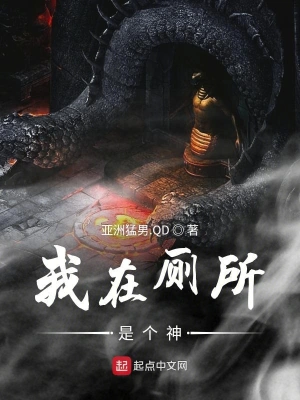
I'm a God in the Bathroom
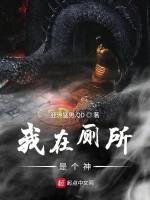
我在厕所是个神
- Status
- Completed
- Length
- 1.2M Words
- Genre
- Cultivation
- Subgenre
- Mythic Cultivation
- Updated
- 5y ago
- Source
- Qidian
Stats
Tags
Synopsis
More by this author
In booklists 11

The Divine Way of the Heavenly Court
🌹🌹This list🌾⭐🌾 mainly features novels about⭐divine dynasties⭐, ☀⭐the divine way⭐, ⭐gods⭐, ⭐incense and faith🌟, ⚡merit⚡, fortune, blessed lands and heavenly caves, founding patriarchs, sect building, 🔥literary energy🔥, and 🔥Confucian cultivation🔥. Fellow readers, feel free to recommend books that fit the theme! 🍁🍁Please follow🍁🍁, 🌹🌹send flowers🌹🌹 and follow the list!




A Snack Bar of Intriguing Premises (Might Not Fill You Up If You're Out of Books, but Come Take a Look)
I tend to prefer simple, easy-to-read stories. What matters most to me is whether the premise is fun and whether the story is entertaining. (I'll update this list from time to time.)
A Mixed Bag of Divine Dao, Fortune, and Immortal Dynasties
This list mainly features stories about incense and faith, immortal dynasties and the fortune of a nation, and divine cultivation. Fellow readers, feel free to leave your recommendations.
A Bookworm Addicted to Novels
A veteran reader's reading notes
Cosmic Book City
Promising new books and divine classics. Men’s fiction or women’s fiction. Urban stories or xianxia. Sci-fi, fantasy, or supernatural. If it’s good, I’ll add it. This list is free and not for sale. …………………………………………………………………… 【Leave a message, follow, or send flowers if you want your book added. Those readers get priority.】 …………………………………………………………………… (Completed classics are below. If you’re out of books to read, scroll down!)

White Porcelain Plum
Methods

Burning to Disc: A Collection of Books I Personally Enjoy
Just recommending books I've read recently. They might not suit everyone.


Rational Protagonists, Dark Fiction, New Releases
I recommend books based on first impressions, whenever the mood strikes.

Lost in the Pages
Novels I've read and still remember
Grocery Store No. ∞
These ghostwriters (contract laborers) are alright, I guess. What happened to the Property Law and Antitrust Law books? They've disappeared.

Personal Favorites
Updated whenever I feel like it
Readers also read
 Heaven's Curse
 Two Worlds: Becoming an Immortal After Failing to Establish My Foundation!
 Immortal Husk
 A Daily Divination: The Immortal Venerable of Longevity
 Slaughtering My Way Through the Marvel Universe: Starting with The Boys
 Journey to the West: The Treasure Vase of the Great Dao
 I Can Exchange for Merit Templates
 The Road Less Traveled
 The World of the Extreme Path: Tempering My Body Through Terror
 Universal Salvation
 Cultivating Immortality, Starting with Butchering Pigs
 The Strongest Daoist Master in All Worlds
 I Was Born with Three Eyes, and You Say I'm No Demon?
 I Came to This World to Establish the Divine Way
 I Am God's Eldest Legitimate Grandson
Reader comments 50
Google Translate
The God of the Toilet Ability 1: When someone else can't hold it in, he runs into the toilet and there will be no paper towels for half an hour. When there are people, the banknotes that can be exchanged for 10 yuan quickly become coins. Ability 2: Smooth floors. When the opponent runs into the toilet, he will definitely fall. Ability 3: Water will splash on his body.
As the protagonist is a toilet god, it would be a pity not to make farmyard manure (and then derive the magical power of all things in the land: by consuming dada with divine power, it can accelerate the growth or increase the growth effect of crops and plants)
I hope the protagonist is not handsome, but he must show off the toilet pump and use it as a magic weapon to pump people. The toilet war god should look like the toilet war god.
Toilet God Toilet God is the god of toilets in ancient Chinese legends, also known as Zigu. However, folklore and related records are inconsistent. "Baize Tu" says: "The essence of the toilet is called Yiyi." "Miscellaneous Five Elements Book" says: "The god of the toilet is named Hou Di." "Yi Yuan" written by Liu Jingshu of the Southern Song Dynasty says the same thing. In Volume 5, Tao Kan goes to the toilet, and when he encounters the toilet god, the Hou Emperor gives instructions on his future affairs. Niu Sengru's "Yougui Lu" of the Tang Dynasty says: "The name of the toilet god is Guo Deng." During the Six Dynasties, there was no consistent explanation for the toilet god. Since then, due to the popular belief in Zigu among the people, Zigu has gradually been called the toilet god. Basic information Fairy name: Toilet God Alias: Zigu Religious sect: Folk God Related works: "Baize Picture" Overview Toilet God Every time during the Lantern Festival, women at home will welcome the Toilet God. The custom is very strange. On the day before the festival, a dung dustpan is decorated with a hairpin ring and a hairpin with flowers. A silver hairpin is inserted into the mouth of the dustpan and placed next to the pit toilet as an offering. At the same time, another confession is set up, candles and incense are lit, and the children are asked to salute it. The Toilet God is also called Zigu God (also known as Keng San Girl in later generations), and there was belief in it during the Six Dynasties. It is said in "Xianyilu" that Zigu was from Laiyang and named He Mei. She was taken as a concubine by Li Jing and was jealous of Li Jing's wife. On the fifteenth day of the first lunar month, he was killed in the toilet. Later, the Emperor of Heaven took pity on her and appointed her as the toilet god. She is called the toilet god, but Zigu is not in charge of toilet affairs, but can predict things. Therefore, people often use brooms, grass, or chopsticks, and hairpins on their clothes to ask gods to descend. Women would tell him their concerns or pray on behalf of their unmarried daughters. Relevant records Welcome and send off Zigu, the toilet god The record of Zigu, the toilet god, was also first seen in Volume 5 of Liu Jingshu's "Yiyuan", which says: "There is a god Zigu in the world. According to ancient legends, she was a concubine of a family who was jealous of the eldest wife. She always did dirty things to her and died of gratitude on the fifteenth day of the first lunar month. Therefore, people in the world use the day as their shape, At night, I greeted him in the toilet or by the pigsty. He said, "Zixu is not here, and his son-in-law is also here. Cao is his eldest wife. My sister-in-law can play." When the catcher feels that the wine is coming, he also feels that the appearance is bright and colorful, and he can't hold it. It predicts the future of sericulture. She is also good at shooting hooks. If she is good, she will dance well, but if she is bad, she will sleep on her back. "After "Yiyuan", Dongyang of the Southern Song Dynasty, "Qi Xie Ji", Liang Zongmao's "Jingchu Suishi Ji", Sui Dynasty Du Taiqing's "Jade Candle Treasure Book", etc. All have descriptions about Zigu. "Qixie Ji" says: "On the first half of the first lunar month... On the evening of the first lunar month, I welcome Zigu for divination." "Jingchu Suishuiji" says: "On the evening of the 15th day of the first lunar month, I welcome Zigu to predict the future of sericulture and to predict various events." Volume 1 of "Jade Candle Collection" says: "On the evening of the 15th day of the first lunar month, I welcome Zigu for divination." ⑧In addition to quoting the affairs of Zigu recorded in Yiyuan, they also quoted the affairs of the Empress (the emperor's concubine) recorded in the Donglan and Zawu Xingshu, etc., Seeming to combine Zigu and the toilet god Empress into one. "Jingchu Sui Shi Ji" only makes doubtful remarks, saying: "The spirit of the empress will be based on Zigu?" "The Jade Candle Book" is affirmative, saying: "The spirit of the emperor will be based on Zigu when he sees women." It can be seen that from the early Southern Dynasties to the Sui Dynasty, in the process of the spread of the custom of welcoming Zigu, Zigu and the toilet god Houdi were gradually combined into one, and Zigu became the toilet god. About the Tang Dynasty, another description of Zigu's life experience appeared. "Cha Xiang Shi Xuan Chao", Volume 19, quoted from "Dongpo Collection", narrates a question and answer between Zigu and Su Dongpo, saying: ""Dongpo Collection" has a Q&A with the fairy: "The servant asked the third aunt (that is, the other name of Zigu - the quoter's note), she is the immortal god, and the third aunt said: Manqing's disciple. If you want to know what happened, I will write a biography. The third aunt said: I am a native of Shouyang, my surname is Mei, my courtesy name is Liqing, and my father is a commoner. She taught me: You are born with differences, and you will be more valuable in the future. So I sent you to study at Li Zhi, a native of the state. After less than a month, I became proficient in nine classics. After my father died, my mother married a concubine. On the 10th day of the lunar month, the governor falsely accused his beloved husband and put him in jail, so he took me as his concubine. When she was not more than 10 years old, she ordered her to be captured and thrown into the toilet. Then I ordered my concubine to be in charge of the human affairs department. I asked: Who was it? Sangu said: He was from the Tang Dynasty. He also asked what official he was after. This is the so-called "King Sangu" in the world, and it is customary to look at the sun in the first month to welcome Zigu, which is her god. "The name of the husband-in-law is recorded in "Xianyilu" in Volume 4 of Chen Yaowen's "Tianzhong Ji", which says: "The God of Zigu in the Tang Dynasty was from Laiyang. His surname was He, and his given name was Qiqing (all his books were written as Liqing). He had studied and distinguished since he was a child. In the third year of Chuigong in the Tang Dynasty (687), Li Jingna, the governor of Shouyang, was his concubine, and his wife was jealous. It was the fifteenth day of the first lunar month. Later, the spirit cloud appeared. "Zigu had already appeared in the Southern Song Dynasty (according to "ancient legends" in "Yiyuan", this story may have appeared before). After the Tang Dynasty, she had a husband who was a governor in the Tang Dynasty, and she had a place of origin, a name, etc., Which undoubtedly benefited future generations. Not only that, but the "Grateful Death" mentioned in "Yiyuan" was changed to "killed by his wife in the toilet out of jealousy", which seems to arouse people's sympathy and admiration. Yu Zhengxie's "Guisicun Manuscript" of the Qing Dynasty also quoted the previous paragraph of "Xianyi Lu", but added the conclusion of "God has mercy on him, and he is destined to be the god of toilets". "Tao Zang·Sou Shen Ji" and "Three Religions Sou Shen Encyclopedia", which were written in the Yuan Dynasty and slightly edited in the Ming Dynasty, used the above records to write Zigu's biography. "Sou Shen Ji" added Zigu's supernatural deeds based on them. It says: "His (referring to Li Jing) wife was jealous of him, so she secretly killed her and put her body in the toilet. The spirit lingered around her, and every time she heard crying, she would appear faintly, and there was the sound of swords and shouts. It must be a supernatural thing." AF In the old days, folk belief in the Zigu God was very common, and there were activities to "welcome Zigu" in many places. However, the methods of greeting everyone are different. "Yiyuan" and "Qixie Ji" both say: On the night of the 15th day of the first lunar month, make his shape, wear clothes in ruins, and greet him in the toilet or by the pig pen. "Ji Shen Lu" says: "It is a custom in Jiangzuo to look at the night in the first month of the year. It is a custom to take a rice dustpan, put it in the clothes, and insert it into the mouth to make a powder plate for divination." "Youhuan Jiwen" says: "Ask Zigu to insert the rice dustpan and put it on the gray table to draw it." "The Scenery of the Imperial City" written by Liu Tong and others in the AH Ming Dynasty said: "The night before and after looking at it, women were doing bundles of grass, wearing paper flour, and wearing handkerchiefs and shirts and skirts. They were called girls. Niang (i. E. Zigu), two virgins tucked her in, offered horse dung as a sacrifice, and played drums and sang the song "Ma dung Xiang". The place where AI welcomes guests varies from place to place, but most of them are in the toilet, so they are all named after "toilet". Welcome and send off the toilet god For example, in Zouxian, Shandong, it is said to "invite the toilet girl", in Guangdong, it is said to "invite the toilet pit girl", in Hangzhou, it is said to "call the toilet girl", and in Suzhou and Shaoxing, it is called "the three girls in the pit". Some people in Shaoxing welcome guests in the gray warehouse, so they are called "Cinderella Girl". Some people in Suzhou welcome people at the door corner, so they are called "Menjiao Girl". Some people give it different names due to different objects. For example, Jiangxi uses a melon ladle to symbolize Zigu, so it is called "Gua Lao Girl". In the same way, Ningbo, Zhejiang, calls it "Shaoji Girl", Haining, Zhejiang calls it "Luotou Girl", and there are also people who call it "Broom Girl", "Needle Girl" and "Wei Gu". Jianli, Hubei, Fengxiang, Shaanxi and other places are directly called "Zigu". AJ In short, because of the different ways and places to welcome Zigu, the Zigu toilet god has various names. The content and purpose of welcoming Zigu in various places are nothing more than two points. The first is divination of silkworms and other things. Liu Tong et al.'S "Scenery of the Imperial City" states that after "three blessings", "the gods will jump up and down, and those who can't stop worshiping will rest (good luck); if they can't afford it, they will be blamed." AK In some areas of Fujian, another custom has been formed from the meaning of good and bad fortune in divination. "Fujian Miscellaneous Notes" by Shi Hongbao of the Qing Dynasty says: "It is a Fujian custom that women are good at supporting Zigu. In the upper houses, she is called aunt on the seventh day of the seventh month, and in the lower houses, she is called Dongshi Niang on the night of the Yuan Dynasty. In addition, girls with no names in the lower houses often uncover the spring couplets posted in front of their doors and burn them in front of Zigu, thinking that one day they will get a good son-in-law who is a scholar." The second is to perform the play of "shooting hooks". The specific method is unknown. According to "Youyang Zazu", "Mengxi Bi Tan" and other records, Zigu was also invited to compose poems, write, play chess and other games. From the above-mentioned activities to welcome Zigu in various places, it can be seen that Zigu's main responsibilities are not to run people's toilets, but to predict the good and bad luck of people's affairs and to have fun with others.
Hiss, the god of the toilet? I'm always scared when I go to the toilet, not knowing if I'm being spied on. Just this kind of priesthood? What does it matter? The gods monitor the human world. You just say what does the toilet god care about? Monitor other people's toilet use? Monitor what flow blockage? That's it? How can we build a sacrificial temple? There are still people coming to offer incense? The entry point of the theme is surprising. It's just that I didn't use my brain when writing.
As a "flavorful" book, these chapters are becoming more and more flavorful. When I was a novice, I liked to watch monsters level up and fight for treasures. Nowadays, the taste is getting more and more cunning🤫 The author's perspective is great. He did not travel to the Eastern Tang Dynasty where all the saints were falling, the immortals peeked into the screen, and humanity was prosperous, but he was a little god who traveled to a remote village in a small remote country. From bottom to top, it shows us all the sentient beings in the world of Journey to the West. Wu Cheng'en was miserable. He failed in the imperial examination and his official career was not smooth. He could not bear the darkness of the officialdom and resigned. The novel he wrote was of course "Although my book is called Zhiguai, it does not explain the ghosts. It actually records the changes in the world and provides some warning." Shinto relies on humanity, and the divine court is like the officialdom. There is a scene of speculation, intrigue and intrigue. The protagonist will clean up from the bottom up, clear the sewers, and wash away all the fun. Return to Journey to the West, a clear sky and a bright day in the world. 🐶 The Fengshen system is a large structure composed of an organic holistic cosmology based on Tao and the concept of calamity cycles. The main content of the transformation of the calamity cycle in "The Gods" is the large-scale destruction and reconstruction of the world of gods, ending with the Gods. Naturally, in this book, major catastrophes are about to occur, and minor catastrophes continue. As the saying goes, "Every cause must have its effect, and your retribution is the toilet." What I want to say is that I will probably fight with the plague and ghosts in the future. They are all organized and work in accordance with the regulations. It will probably be exciting.
There is a couple. The man is very cowardly and always lets his girlfriend try before doing anything. The girlfriend is very dissatisfied with this. Once, the two of them went to sea. When they returned, a hurricane destroyed the boat. Fortunately, the girlfriend grabbed a piece of wood to save their lives. The girlfriend asked her boyfriend: "Are you afraid?" The boyfriend took out a fruit knife from his arms and said, "Afraid, but if a shark comes, I will use this to deal with it." The girlfriend just shook her head and smiled bitterly. Soon, a cargo ship discovered them. Just as they were ecstatic, a group of sharks appeared, and the girlfriend shouted: "Let's swim hard together, it will be fine!" But the boyfriend suddenly pushed his girlfriend into the sea with force, and swam toward the cargo ship alone with the board on his hands, and shouted: "I will try first this time!" The girlfriend was stunned, looking at her boyfriend's back, tears streaming down her face. At this moment, she was completely desperate. The shark was approaching step by step, but the shark seemed not interested in the girlfriend and swam directly towards the boyfriend. The boyfriend was torn apart by the shark fiercely. He shouted to his girlfriend at the top of his lungs: "I love you! I will always love you!!" The boyfriend's voice echoed in the sea, and blood seeped everywhere. The girlfriend was finally rescued, and everyone on the deck was in silence. The captain sat next to the girl and said, "Miss, your boyfriend is the bravest person I have ever seen." "No, he is a coward." The girl said coldly. "How can you say that? We have been watching you with telescopes just now. We clearly saw him severing his wrists with a knife after pushing you away. Sharks are very sensitive to the smell of blood. If he doesn't do this to buy time, you may never appear on this ship..." When the girlfriend heard the truth, it was like a bolt from the blue. She was devastated and heartbroken. She just wanted to jump into the sea and die with her boyfriend immediately. At the critical moment, the captain grabbed her: "If I were you, I would live well and fill up the sea with an excavator to avenge your boyfriend." The girlfriend was silent for a few seconds and asked calmly: "Which company has the best excavator technology?" Captain: "Look for Lan Xiang from Shandong, China!"
Long Tao Tie (life and death are destiny, wealth is in heaven)
One is destiny, two is luck, three is feng shui, four is accumulation of yin virtue, five is reading, six are seven aspects and eight are gods!
The land of grain reincarnation has great potential. What is the "place of reincarnation of grains"? It is a place of respect. The original text of Chapter 44 of "Journey to the West" is as follows: "The traveler said: 'When I just came in, there was a small door under the right hand. There was a filthy beast inside, and it must be a place where grains are reincarnated. You can send it (referring to the statue) there.' The fool gathered some strength, jumped down, took the three holy statues on his shoulders, and carried them out. Come on. When I got there, I opened the door with my feet and saw that it was a big toilet. He laughed and said: 'This Bi Ma Wen is really good at talking! Let's call it the place of reincarnation of grains! '" The priesthood has three magical powers, namely, divination of silkworms, nine-grade cleaning bucket, and improvement of cultural fortune. The book friend summarized it very well, agriculture, learning, and purification. I don't know anything about farming and divination, but there are toilet facilities such as biogas pools that can provide fuel and fertilizer. This should be very important. Xue, I see that the toilet god is preparing to become a literary copywriter. The greater his reputation for literary talent, the greater his authority. There is also a purification. I read that book friends summarized and enjoyed it in detail. Purification, decomposition, and the filth of "this is the enemy." (It's sunflower water, Xiaodangjia added sunflower water). But don't forget, this is the productivity limit of ancient Chinese rural latrines. The witness to the development of human civilization is not words, language, or legends, but toilets! ——.🐶 ,,, Promote the development of science and technology and liberate productivity. Let everyone go to the toilet every day! Other supporting facilities for the bathroom: city water supply system and sewer system. In the future, it can support manufacturing industries: papermaking (toilet paper!), Ceramics, metallurgy, glass (mirrors). In the mid-to-late period, the home toilet can be upgraded to a bathroom with a bathing function. I didn't find out if there is a bathing god? But there is a "bathing star" in Ziwei Dou Shu, and I don't know if there is any conflict with the theocratic functions. After upgrading the bath, you can install a home heating system and a solar water heater. This is a bit far.
Send some interesting questions to everyone,
How far is the heaven from the mortal world? How big is the heaven? How far is the underworld from the mortal world? How big is the underworld? , A day in heaven is equivalent to how long it is in the human world, and a day in the underworld is equivalent to how long it is in the earth.