


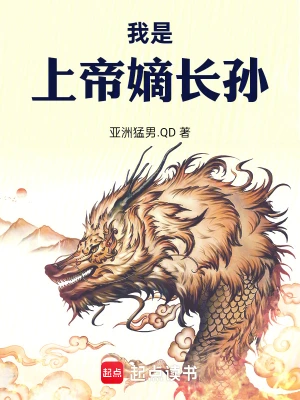
I Am God's Eldest Legitimate Grandson
我是上帝嫡长孙
- Status
- Ongoing
- Length
- 251k Words
- Genre
- Cultivation
- Subgenre
- Mythic Cultivation
- Updated
- 1y ago
- Source
- Qidian
Stats
121Chapters
0Votes
2.6kRecs
52Fans
Tags
Synopsis
More by this author
In booklists 1
Readers also read
 A Record of a Mortal's Journey to Immortality: From the Start, Lying in Wait at the Seven Mysteries Sect to Take Han Li as My Disciple
 Cultivation of Immortality: Picked up Half a Book of Centuries
 Eternal Life for 80,000 Years
 Strange Tales from a Chinese Studio: The Most Sinister One Has Arrived
 Simultaneous Transmigration: Is Everyone Starting Out in Prison?
 The Great Sage Who Sealed the Gods
 Attaining Godhood in Darkness, Repeatedly Deducing the Path to Sainthood
 A Great Industrial Nation, Starting with a Fake Student Abroad
 A Dual Status Panel Descends into the Abyss, and the Assassin's Potion Is Right at the Entrance
 The Supreme Golden Palace
 Killing Three Corpses and Nine Insects, Is My Cultivation Method the Most Difficult?
 The Jade Emperor
 I'm a God in the Bathroom
 I Was Born with Three Eyes, and You Say I'm No Demon?
 I Came to This World to Establish the Divine Way
Reader comments 20
Google Translate
No, the protagonist wants to be a religious leader, to rebuild the Taiping Heavenly Kingdom, and to have Golden Finger. He is mainly a modern time traveler. He looks like he has never seen a woman before. He can even dream about obscenity. It really lowers the character of the protagonist.
The surname does not have to be Zhang, the grandfather can also be surnamed Gong. Gonggong competed with Zhuanxu for the God of the North, but failed and crashed into Buzhou Mountain. The sky tilted to the northwest, and he fled to the northwest to the west. In the West, he established himself as emperor. Hong Xiuquan's Hong and Gonggong's Gonggong, haven't they all been contacted?
Did Hong Xiuquan debate with the missionaries and see what the AI said?
Hong Xiuquan did have important religious debates with Western missionaries, the most famous of which was the debate with the British missionary Joseph Edkins in 1861. This debate not only demonstrated Hong Xiuquan's unique religious thoughts, but also profoundly affected the West's attitude towards the Taiping Rebellion. The following are the key details: ### ⚖️ 1. Debate background and core differences 1. **Cause of Debate** In 1861, Joseph Joseph arrived in Tianjing (today's Nanjing) and submitted to Hong Xiuquan the article "The Form of God is a Metaphor and the Invisibility of the Real", advocating the orthodox Christian view that "God is invisible", and citing scriptures such as the Gospel of John as support. Hong Xiuquan insisted that "God is tangible" and claimed to be the second son of God. He regarded Jesus as his elder brother and believed that he saw the holy face of God in his dream. 2. **Fundamental Conflict** - **Form of God**: Joseph emphasized that God is a spiritual body (invisible), while Hong Xiuquan described God as a "majestic old man with a long beard" and claimed that he had a blood relationship with God. - **Trinity**: Christian orthodox teachings believe that the Father, the Son, and the Holy Spirit are a trinity. However, Hong Xiuquan denies the divinity of Jesus, only regards him as the "Son of Man", and proclaims himself the second son of God. - **Only-begotten Son Controversy**: When Hong Xiuquan commented on the Gospel of John, he deliberately deleted the word "only" in "Only-begotten Son" to protect his status as "the second son of God". ### 📜 2. Debate process and Hong Xiuquan's response 1. **Zhu's handwriting** Hong Xiuquan used Zhu's writing to annotate Joseph's article item by item, changing "metaphor" to "fact", and attached a poem to refute: > "The most annoying thing about God is an idol. The world is not allowed to see his image. Christ is my own biological child because he was in my father's womb..." This handwriting is now in the British Library. It is the only existing theological treatise written by Hong Xiuquan. 2. **Compared with Early Christian Heretics** Joseph Joseph discovered that Hong Xiuquan's views were highly similar to the **Arians** who were denounced as heretics in the 4th century (the sect denied the divinity of Jesus). However, Hong Xiuquan refuted the trial of Arius at the Council of Nicaea and declared that the Arians were the "right way." ### 🌍 3. Interactions and attitude changes of other missionaries 1. **Luo Xiaoquan: from mentor to critic** - In 1847, Hong Xiuquan studied the Bible with the American missionary Luo Xiaoquan, but he left because he was rejected for baptism. - In 1860, Luo Xiaoquan was invited to Tianjing. He initially had expectations for the Taiping Heavenly Kingdom, but he fled a year later because Hong Xiuquan refused to accept orthodox teachings and publicly accused his teachings of "abominable heresy." 2. **The collective disappointment of Western missionaries** The missionaries originally expected the Taiping Rebellion to promote the spread of Christianity in China. Later, they discovered that Hong Xiuquan used religion to serve political goals, so they united with Western governments to support the Qing government in suppressing the Taiping Rebellion. ### 💎 4. Historical significance - **Religious Independence**: The debate highlighted Hong Xiuquan's localization of Christianity as a political tool and strengthening his theocratic rule through "God worship". - **Diplomatic Impact**: Western powers regarded the Taiping Rebellion as a "heresy" and abandoned their neutral stance and supported the Qing Dynasty. The debate between Hong Xiuquan and the missionaries was not only a theological dispute, but also a collision between ideology and political power. Although his persistence maintained the internal cohesion of the Taiping Rebellion, it accelerated its international isolation and became one of the important factors in the failure of the movement.
I forgot how Joan of Arc died.
Are you, a foreigner, a grandson of God? As long as you are found and don't burn you to death, it will be considered as a church of mercy. It is like claiming in the Central Plains that one is the son of God and the grandson of God. You are the Holy See, Huang Quan is just a decoration.
I don't understand how this kind of marketing account rumor can be so popular.
Heresy, either keep writing about God or keep writing about mythology. Readers who want to eat Western fantasy but can't bear to read old books, or they should go all the way to the end with the only god. Otherwise, you should stop talking about God not being God and mythology not being mythology. After that, you will become a eunuch.
In 1865, about 10,000 remaining Taiping soldiers were sold by the Qing government to the Iquique mining area in Peru as "indentured laborers" and forced to engage in hard labor such as saltpeter mining. In 1867, the local miners' uprising broke out. The remaining Taiping Army participated and elected Weng Derong from Hunan and Chen Yonglu from Guangdong as commanders, and reorganized into the "Brown Army". In 1868, the Taiping Army defeated the Peruvian army on the outskirts of Iquique and captured 200 Indian mercenaries. In June of the same year, they disguised themselves as Indians and captured the Boneda Fortress, capturing 300 Peruvian soldiers and the fortress commander. In 1869, the Taiping Army cooperated with the Chilean army for the first time and participated in key battles such as the Battle of Chiwan.
The fall of the Taiping Heavenly Kingdom
The reasons for the collapse of the Taiping Rebellion were multifaceted, including internal limitations and joint suppression by external reactionary forces, which can be summarized as follows: 1. Internal contradictions and corruption - Infighting within the leadership group: The Tianjing Incident (1856) was the turning point. Core leaders such as Yang Xiuqing and Wei Changhui killed each other, seriously weakening military and political power and shaking the morale of the military and the people. - Feudal transformation: The top leaders of the Taiping Heavenly Kingdom gradually became separated from the masses and imitated the lifestyle of feudal emperors (such as building palaces and accepting concubines). They deviated from the original slogans of "equality" and "average" and lost public support. - Strategic mistakes: The Northern Expedition went deep alone and lacked support, leading to failure; when Tianjing was besieged, it failed to effectively organize a strategic breakout and defended passively. 2. Limitations of Thoughts and Policies - Religious Limitations: With "God Worship" as the core of its ideology and a blend of Christianity and Chinese folk beliefs, it is difficult to be fully accepted by traditional gentry and ordinary people, and may even cause cultural conflicts. - Utopian policies: The "Equal Land and No Taxes" proposed in the "Celestial Land Acquisition System" were out of touch with reality and failed to be effectively implemented. The later "New Chapter of Zizheng" also failed due to lack of social foundation. 3. Joint suppression by external forces - Counterattack by the Qing army and local armed forces: The Qing government used Zeng Guofan's Hunan Army, Li Hongzhang's Huai Army and other Han landlord armed forces. These armed forces were well-organized and powerful in combat, and became the main force of suppression. - Interference of the Great Powers: After the Second Opium War, the Great Powers gave up "neutrality" and instead supported the Qing government, providing advanced weapons and military advisors, and jointly with the Qing army to strangle the Taiping Rebellion. These factors combined to lead to the ultimate collapse of the Taiping Rebellion after the fall of Tianjing in 1864.
I heard that the biggest political obsession is whether a Jew can be the president of the United States, and whether a black man can believe in Christ. Jews feel that their Old Testament is older than Jesus, so they spend Christmas together in a Chinese restaurant. Jesus should have looked at the decay of the old religion at that time just like Sakyamuni Muhammad and wanted to reform it to bring new hope and vitality to the people.
The profile has been reviewed, see here
Zhang Wanxian accidentally came to the piggy ship heading to America. Carrying a golden finger, he was mistaken for the eldest son of King Hong Tian of the Taiping Heavenly Kingdom. Zhang Wanxian explained to the believers of God in America: The King of Heaven is the second son of God, I am the eldest grandson of God, the Holy Son is the concubine, my father is the legitimate grandson, and I should be the eldest grandson and should inherit the land promised by God. Zhang Wanxian explained to the Maya and Inca natives: You are originally the people of the Yin and Shang Dynasties, living in the Americas. When I come here, I will restore your Chinese clothes and Yanhuang blood. Countless years later: Who said that I am the eldest grandson of God Yes? I am the eldest grandson of God. My ancestor's name is Zhang Bairen.