Fanqie library
Browse
- Titles
- 1.5k
Every Fanqie book we index, searchable by title, author or tag.
-
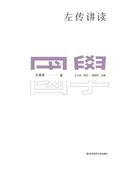 Zuo Chuan's Lecture and Reading
A book to understand and thoroughly read "Zuo Zhuan". Readings by famous teachers, detailed annotations; analysis of difficult points, and expansion of literature and history. Follow professors from the Chinese Department and experts in Chinese studies to appreciate the beauty of Chinese classics. The full name of "Zuo Zhuan" is "Chun Qiu Zuo Shi Zhuan". It is one of the three "Chun Qiu" biographies. It is an exegesis of "Chun Qiu" based on facts. It was included in the "Nine Classics" and "Thir
—Reads9.2Score—Shelves
Zuo Chuan's Lecture and Reading
A book to understand and thoroughly read "Zuo Zhuan". Readings by famous teachers, detailed annotations; analysis of difficult points, and expansion of literature and history. Follow professors from the Chinese Department and experts in Chinese studies to appreciate the beauty of Chinese classics. The full name of "Zuo Zhuan" is "Chun Qiu Zuo Shi Zhuan". It is one of the three "Chun Qiu" biographies. It is an exegesis of "Chun Qiu" based on facts. It was included in the "Nine Classics" and "Thir
—Reads9.2Score—Shelves
-
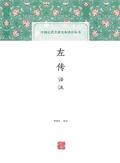 Zuo Chuan's Translation and Annotation (Two Volumes)
"Zuo Zhuan" is the earliest extant chronicle in my country with detailed chronology. It is also an outstanding literary work and has a huge influence on later generations of prose and linguistics. This book is based on the original text, with annotations and full vernacular translation. The text is precise and fluent.
—Reads8.6Score—Shelves
Zuo Chuan's Translation and Annotation (Two Volumes)
"Zuo Zhuan" is the earliest extant chronicle in my country with detailed chronology. It is also an outstanding literary work and has a huge influence on later generations of prose and linguistics. This book is based on the original text, with annotations and full vernacular translation. The text is precise and fluent.
—Reads8.6Score—Shelves
-
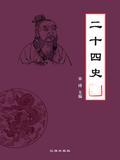 Twenty-Four Histories
"Twenty-Four Histories" mainly records the nearly five thousand years of development of ancient Chinese society since the Yellow Emperor and the rise and fall of dozens of dynasties, reflecting the orthodox concepts and the spirit of the times in each period. Therefore, it is the most authoritative treasure house of information for studying Chinese history and ancient Chinese culture, and can be called an encyclopedia of Chinese civilization. Reading the "Twenty-Four Histories" makes people wise
—Reads—Score—Shelves
Twenty-Four Histories
"Twenty-Four Histories" mainly records the nearly five thousand years of development of ancient Chinese society since the Yellow Emperor and the rise and fall of dozens of dynasties, reflecting the orthodox concepts and the spirit of the times in each period. Therefore, it is the most authoritative treasure house of information for studying Chinese history and ancient Chinese culture, and can be called an encyclopedia of Chinese civilization. Reading the "Twenty-Four Histories" makes people wise
—Reads—Score—Shelves
-
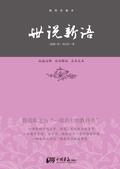 Shishuoxinyu
"Shishuoxinyu" is a classic Chinese traditional aristocratic novel. It mainly records the conversational styles and anecdotes of characters in the late Han, Wei and Jin Dynasties. The book contains a total of 36 chapters and 1,130 articles. It covers politics, economy, society, literature, thought and many other aspects. Therefore, it is also an important material for studying the history of this period. It not only truly reflects people's thoughts, life and social style at that time, but also s
—Reads8.9Score—Shelves
Shishuoxinyu
"Shishuoxinyu" is a classic Chinese traditional aristocratic novel. It mainly records the conversational styles and anecdotes of characters in the late Han, Wei and Jin Dynasties. The book contains a total of 36 chapters and 1,130 articles. It covers politics, economy, society, literature, thought and many other aspects. Therefore, it is also an important material for studying the history of this period. It not only truly reflects people's thoughts, life and social style at that time, but also s
—Reads8.9Score—Shelves
-
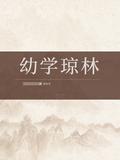 Kindergarten Qionglin
"Young Learning Qionglin" is an enlightening children's book in ancient China. The author is Cheng Dengji, whose courtesy name is Yunsheng, who was born in Xichang in the late Ming Dynasty. This book was originally titled "Instructions for Preschool Education", also known as "Idiom Test" and "Story Source Search". Qiu Rui, a Jinshi during the Jingtai period of the Ming Dynasty, Zou Shengmai during the Jiaqing period of the Qing Dynasty, Fei Yourong, Ye Pusun and Cai Dongfan during the Republic o
—Reads8.0Score—Shelves
Kindergarten Qionglin
"Young Learning Qionglin" is an enlightening children's book in ancient China. The author is Cheng Dengji, whose courtesy name is Yunsheng, who was born in Xichang in the late Ming Dynasty. This book was originally titled "Instructions for Preschool Education", also known as "Idiom Test" and "Story Source Search". Qiu Rui, a Jinshi during the Jingtai period of the Ming Dynasty, Zou Shengmai during the Jiaqing period of the Qing Dynasty, Fei Yourong, Ye Pusun and Cai Dongfan during the Republic o
—Reads8.0Score—Shelves
-
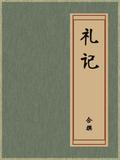 Book of Rites
"Book of Rites" is an important anthology of laws and regulations in ancient China. The content of the book mainly describes the ritual system of the Pre-Qin Dynasty. It embodies the philosophical thoughts, educational thoughts, political thoughts, and aesthetic thoughts of the Pre-Qin Confucians. It is an important material for the study of the Pre-Qin society and a collection of Confucian thoughts.
—Reads8.6Score—Shelves
Book of Rites
"Book of Rites" is an important anthology of laws and regulations in ancient China. The content of the book mainly describes the ritual system of the Pre-Qin Dynasty. It embodies the philosophical thoughts, educational thoughts, political thoughts, and aesthetic thoughts of the Pre-Qin Confucians. It is an important material for the study of the Pre-Qin society and a collection of Confucian thoughts.
—Reads8.6Score—Shelves
-
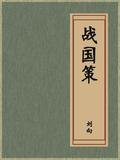 Warring States Policy
"Warring States Policy" is good at describing events clearly and realistically describing characters. It uses a lot of fables and metaphors, and its language is vivid and full of literary talent.
—Reads9.5Score—Shelves
Warring States Policy
"Warring States Policy" is good at describing events clearly and realistically describing characters. It uses a lot of fables and metaphors, and its language is vivid and full of literary talent.
—Reads9.5Score—Shelves
-
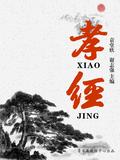 Filial Piety
"The Classic of Filial Piety" centers on filial piety and expounds Confucian ethical thoughts in a relatively concentrated manner. It affirms that "filial piety" is a norm set by heaven. "A husband's filial piety is the scripture of heaven, the righteousness of earth, and the conduct of man." The book points out that filial piety is the foundation of all virtues. "There is no better behavior than filial piety." The king can use filial piety to govern the country, and the subjects can use filial
—Reads9.3Score—Shelves
Filial Piety
"The Classic of Filial Piety" centers on filial piety and expounds Confucian ethical thoughts in a relatively concentrated manner. It affirms that "filial piety" is a norm set by heaven. "A husband's filial piety is the scripture of heaven, the righteousness of earth, and the conduct of man." The book points out that filial piety is the foundation of all virtues. "There is no better behavior than filial piety." The king can use filial piety to govern the country, and the subjects can use filial
—Reads9.3Score—Shelves
-
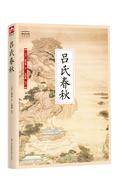 Lu's Spring and Autumn Annals (National Academy of Chinese Studies)
"Lu's Spring and Autumn Annals" collects the mixed and unmixed words of hundreds of schools of thought, covering the principles of heaven and earth, all things and all living beings in ancient and modern times! The content of the whole book is based on the theories of Confucianism and Taoism, integrating the theories of various schools into one. It is an excellent summary of China's political, military, philosophical, and strategic thoughts before the great unification of the Han Dynasty.
—Reads9.1Score—Shelves
Lu's Spring and Autumn Annals (National Academy of Chinese Studies)
"Lu's Spring and Autumn Annals" collects the mixed and unmixed words of hundreds of schools of thought, covering the principles of heaven and earth, all things and all living beings in ancient and modern times! The content of the whole book is based on the theories of Confucianism and Taoism, integrating the theories of various schools into one. It is an excellent summary of China's political, military, philosophical, and strategic thoughts before the great unification of the Han Dynasty.
—Reads9.1Score—Shelves
-
 Four Books and Five Classics
The Chinese classics of Chinese studies are the foundation for settling down and settling down! Read the Four Books and Five Classics to understand the wisdom of life! "Four Books and Five Classics" is the collective name of the Chinese Confucian classics "Four Books" and "Five Classics". "Four Books" refers to "The Analects", "The Great Learning", "The Doctrine of the Mean" and "Mencius" "Five Classics" refers to "The Book of Songs", "Shangshu", "Book of Rites", "Book of Changes" and "Chun Qiu
—Reads—Score—Shelves
Four Books and Five Classics
The Chinese classics of Chinese studies are the foundation for settling down and settling down! Read the Four Books and Five Classics to understand the wisdom of life! "Four Books and Five Classics" is the collective name of the Chinese Confucian classics "Four Books" and "Five Classics". "Four Books" refers to "The Analects", "The Great Learning", "The Doctrine of the Mean" and "Mencius" "Five Classics" refers to "The Book of Songs", "Shangshu", "Book of Rites", "Book of Changes" and "Chun Qiu
—Reads—Score—Shelves
-
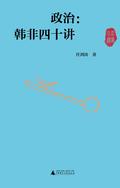 Politics: Han Fei's Forty Lectures
There have always been two interpretations of "Han Feizi": one is the literal interpretation of exegesis, and the other is the sublimation interpretation of philosophy or law. This book takes a different approach and interprets the true value of "Han Feizi" from the perspective of political science: 1. Returning Han Fei to his historical true colors, he was the theoretical completer of the first great political transformation in Chinese history, that is, from monarchy to empire; 2. Traditional C
—Reads9.3Score—Shelves
Politics: Han Fei's Forty Lectures
There have always been two interpretations of "Han Feizi": one is the literal interpretation of exegesis, and the other is the sublimation interpretation of philosophy or law. This book takes a different approach and interprets the true value of "Han Feizi" from the perspective of political science: 1. Returning Han Fei to his historical true colors, he was the theoretical completer of the first great political transformation in Chinese history, that is, from monarchy to empire; 2. Traditional C
—Reads9.3Score—Shelves
-
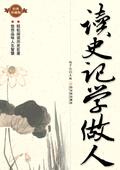 Learn to Be a Good Person by Reading Historical Records (Classic Collector's Edition)
"Historical Records" is a masterpiece of history written by the famous Chinese historian Sima Qian. It ranks first among the "Twenty-Four Histories" and is known as "the historian's swan song, the rhymeless "Li Sao"". "Historical Records" is like a treasure mountain, "viewed from the side as a ridge or a peak from the side." No matter which angle you read it from, you will be inspired and gain something. "Reading Historical Records and Learning to Be a Human Being (Classic Collector's Edition)"
—Reads9.3Score—Shelves
Learn to Be a Good Person by Reading Historical Records (Classic Collector's Edition)
"Historical Records" is a masterpiece of history written by the famous Chinese historian Sima Qian. It ranks first among the "Twenty-Four Histories" and is known as "the historian's swan song, the rhymeless "Li Sao"". "Historical Records" is like a treasure mountain, "viewed from the side as a ridge or a peak from the side." No matter which angle you read it from, you will be inspired and gain something. "Reading Historical Records and Learning to Be a Human Being (Classic Collector's Edition)"
—Reads9.3Score—Shelves
-
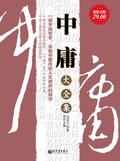 The Complete Collection of Zhongyong
The theme of "The Doctrine of the Mean" is to educate people to consciously practice self-cultivation, self-supervision, self-education, and self-improvement, so as to cultivate themselves into gentlemen of the new era with ideal personality, uprightness, benevolence, and harmony, and jointly create a realm of "peace and harmony" in which "neutralization is achieved, heaven is established, and all things are nurtured." "The Complete Collection of The Doctrine of the Mean" combines examples from
—Reads9.3Score—Shelves
The Complete Collection of Zhongyong
The theme of "The Doctrine of the Mean" is to educate people to consciously practice self-cultivation, self-supervision, self-education, and self-improvement, so as to cultivate themselves into gentlemen of the new era with ideal personality, uprightness, benevolence, and harmony, and jointly create a realm of "peace and harmony" in which "neutralization is achieved, heaven is established, and all things are nurtured." "The Complete Collection of The Doctrine of the Mean" combines examples from
—Reads9.3Score—Shelves
-
 Tiger Seal Sutra (Free Public Edition Book)
Ancient Chinese military books. Xu Dong, a native of Wu County in the Northern Song Dynasty (now Wuxian County, Jiangsu Province), took four years to compile it in the first year of Jingde (1004). It has 20 volumes and 210 articles, discussing 210 issues. The main purpose of the "Tiger Signal Sutra" is to talk about people's plans at the top, geographical advantages in the middle, and weather and timing at the bottom. It also covers the wind and angles to predict weather conditions, people and h
—Reads8.6Score—Shelves
Tiger Seal Sutra (Free Public Edition Book)
Ancient Chinese military books. Xu Dong, a native of Wu County in the Northern Song Dynasty (now Wuxian County, Jiangsu Province), took four years to compile it in the first year of Jingde (1004). It has 20 volumes and 210 articles, discussing 210 issues. The main purpose of the "Tiger Signal Sutra" is to talk about people's plans at the top, geographical advantages in the middle, and weather and timing at the bottom. It also covers the wind and angles to predict weather conditions, people and h
—Reads8.6Score—Shelves
-
 Collected Works of Luo Hongxian
Luo Hongxian (1504-1564), courtesy name Dafu, Haonian'an, Han nationality, was a native of Huangchengxi, Jishui, Ji'an Prefecture, Jiangxi Province (now Gucun, Jishui County). He was a scholar of the Ming Dynasty and an outstanding geographical cartographer. Throughout his life, he devoted himself to the study of geography and other sciences, "researching maps and observing history". He found that many maps at that time were inaccurate in density and distance, so he went out to investigate and c
—Reads8.6Score—Shelves
Collected Works of Luo Hongxian
Luo Hongxian (1504-1564), courtesy name Dafu, Haonian'an, Han nationality, was a native of Huangchengxi, Jishui, Ji'an Prefecture, Jiangxi Province (now Gucun, Jishui County). He was a scholar of the Ming Dynasty and an outstanding geographical cartographer. Throughout his life, he devoted himself to the study of geography and other sciences, "researching maps and observing history". He found that many maps at that time were inaccurate in density and distance, so he went out to investigate and c
—Reads8.6Score—Shelves
-
 Collected Works of Jin Nong
Jin Nong, a calligrapher and painter of the Qing Dynasty, was the first of the Eight Eccentrics of Yangzhou. The names were Shomen, Sinong, Jijin, Mr. Dongxin, Jiliu Shanmin, Qujiang Waishi, Xiye Jushi, Shou Taoist, etc. He was a native of Qiantang (now Hangzhou, Zhejiang), and lived in commoner life. He likes to travel, but he returns home without encountering anything. Later he lived in Yangzhou and sold calligraphy and paintings to support himself. He is fond of novels and loves to learn, and
—Reads8.7Score—Shelves
Collected Works of Jin Nong
Jin Nong, a calligrapher and painter of the Qing Dynasty, was the first of the Eight Eccentrics of Yangzhou. The names were Shomen, Sinong, Jijin, Mr. Dongxin, Jiliu Shanmin, Qujiang Waishi, Xiye Jushi, Shou Taoist, etc. He was a native of Qiantang (now Hangzhou, Zhejiang), and lived in commoner life. He likes to travel, but he returns home without encountering anything. Later he lived in Yangzhou and sold calligraphy and paintings to support himself. He is fond of novels and loves to learn, and
—Reads8.7Score—Shelves
-
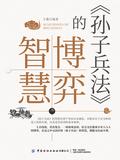 The Game Wisdom of "Sun Tzu's Art of War"
"Sun Tzu's Art of War" is a 2,500-year-old book on the art of war written by Sun Wu, a general of the Wu State whose ancestral home was Le'an, Qi State during the Spring and Autumn Period. Its content is broad and profound, its thoughts are sophisticated and rich, and its logic is rigorous and rigorous. It is a concentrated expression of the essence of ancient military thought. Now it has gone global and has been translated into many languages and published overseas. It also plays an important
—Reads8.9Score—Shelves
The Game Wisdom of "Sun Tzu's Art of War"
"Sun Tzu's Art of War" is a 2,500-year-old book on the art of war written by Sun Wu, a general of the Wu State whose ancestral home was Le'an, Qi State during the Spring and Autumn Period. Its content is broad and profound, its thoughts are sophisticated and rich, and its logic is rigorous and rigorous. It is a concentrated expression of the essence of ancient military thought. Now it has gone global and has been translated into many languages and published overseas. It also plays an important
—Reads8.9Score—Shelves
-
 Dan Dao Lu Dongbin (Free Public Edition Book)
Describes Lu Dongbin's alchemy practice and Taoist thoughts.
—Reads8.6Score—Shelves
Dan Dao Lu Dongbin (Free Public Edition Book)
Describes Lu Dongbin's alchemy practice and Taoist thoughts.
—Reads8.6Score—Shelves
-
 Handan Chronicles (Free Public Edition Book)
Lu Dongbin, one of the Eight Immortals, had already asked someone to come to Penglai Mountain Gate as a messenger to sweep flowers. That day he passed through Dongting and arrived at Yueyang Tower. Seeing that there was no one to pass by, he headed northwest again. As I was walking, I suddenly saw a fairy spirit rising in Handan. Then he turned to the northeast and the clouds fell at the head of Zhaozhou Bridge. It turned out that there was a scholar named Lu in Qiaotou. He was nearly thirty yea
—Reads8.7Score—Shelves
Handan Chronicles (Free Public Edition Book)
Lu Dongbin, one of the Eight Immortals, had already asked someone to come to Penglai Mountain Gate as a messenger to sweep flowers. That day he passed through Dongting and arrived at Yueyang Tower. Seeing that there was no one to pass by, he headed northwest again. As I was walking, I suddenly saw a fairy spirit rising in Handan. Then he turned to the northeast and the clouds fell at the head of Zhaozhou Bridge. It turned out that there was a scholar named Lu in Qiaotou. He was nearly thirty yea
—Reads8.7Score—Shelves
-
 Lu Zuzhi
The compilation of Lu Dongbin's deeds compiled in the Ming Dynasty collects legends and documents about Lu Dongbin from past dynasties.
—Reads8.7Score—Shelves
Lu Zuzhi
The compilation of Lu Dongbin's deeds compiled in the Ming Dynasty collects legends and documents about Lu Dongbin from past dynasties.
—Reads8.7Score—Shelves
-
 Collected Works of Lu Yan
Lu Yan, also known as Lu Dongbin. A famous Taoist priest in the late Tang and Five Dynasties. Mingyan, nicknamed Chunyangzi, calls himself a Taoist. Known as Lu Zu or Chunyang Patriarch in the world, he is one of the Eight Immortals in folk mythology. Earlier records from the Song Dynasty called him "Guanzhong Yiren" or "Guanyouren". After the Yuan Dynasty, it was more consistent that he was from Yongle Town, Puban County, Hezhong Prefecture (now Ruicheng, Shanxi), or from Dongping (governed in
—Reads8.7Score—Shelves
Collected Works of Lu Yan
Lu Yan, also known as Lu Dongbin. A famous Taoist priest in the late Tang and Five Dynasties. Mingyan, nicknamed Chunyangzi, calls himself a Taoist. Known as Lu Zu or Chunyang Patriarch in the world, he is one of the Eight Immortals in folk mythology. Earlier records from the Song Dynasty called him "Guanzhong Yiren" or "Guanyouren". After the Yuan Dynasty, it was more consistent that he was from Yongle Town, Puban County, Hezhong Prefecture (now Ruicheng, Shanxi), or from Dongping (governed in
—Reads8.7Score—Shelves
-
 The Story of Flying Swords by Lü Chunyang in the Tang Dynasty (Free Public Edition Book)
It mainly tells the story of Lu Chunyang (Lu Dongbin) in the Tang Dynasty who became an immortal and how he used flying swords to eliminate demons and subjugate them. The book combines Taoist belief in gods, myths, legends and fantasy elements, depicts Lu Dongbin's spiritual practice, adventures in immortality and his various deeds in the world. It reflects the influence of Taoist culture and is a reference for studying ancient mythology and Taoist culture.
—Reads8.5Score—Shelves
The Story of Flying Swords by Lü Chunyang in the Tang Dynasty (Free Public Edition Book)
It mainly tells the story of Lu Chunyang (Lu Dongbin) in the Tang Dynasty who became an immortal and how he used flying swords to eliminate demons and subjugate them. The book combines Taoist belief in gods, myths, legends and fantasy elements, depicts Lu Dongbin's spiritual practice, adventures in immortality and his various deeds in the world. It reflects the influence of Taoist culture and is a reference for studying ancient mythology and Taoist culture.
—Reads8.5Score—Shelves
-
 Summary of Star Destiny
This work "Summary of Star Destiny" is written by Yelu Chun, an ancient astrological book
—Reads8.4Score—Shelves
Summary of Star Destiny
This work "Summary of Star Destiny" is written by Yelu Chun, an ancient astrological book
—Reads8.4Score—Shelves
-
 Quan Yuan Qu
"Quan Yuan Opera" is an epic epic of opera art that shocked the literary world and amazes the time. It is like a majestic treasure house of literature, standing quietly in the long history of Chinese culture, waiting for every reader who loves traditional culture to come and open it. Like a key, it paves a smooth road for readers to the palace of opera in the Yuan Dynasty, leading people through the fog of time and space to appreciate the glorious achievements of the opera art of that era. "Quan
—Reads8.3Score—Shelves
Quan Yuan Qu
"Quan Yuan Opera" is an epic epic of opera art that shocked the literary world and amazes the time. It is like a majestic treasure house of literature, standing quietly in the long history of Chinese culture, waiting for every reader who loves traditional culture to come and open it. Like a key, it paves a smooth road for readers to the palace of opera in the Yuan Dynasty, leading people through the fog of time and space to appreciate the glorious achievements of the opera art of that era. "Quan
—Reads8.3Score—Shelves
-
 Overseas Buyeo (Free Public Edition Book)
A long heroic legendary novel in the vernacular of the Qing Dynasty. A biographical novel describing Zheng Chenggong's glorious life. Through the description of historical events, this book shows that when the country was in crisis and the nation was in danger, Zheng Chenggong rose up to lead the people on the southeast coast in the struggle to resist the Qing Dynasty and restore the Ming Dynasty. At the same time, he was bound to fight against the Dutch invaders who had the most advanced weapon
—Reads8.2Score—Shelves
Overseas Buyeo (Free Public Edition Book)
A long heroic legendary novel in the vernacular of the Qing Dynasty. A biographical novel describing Zheng Chenggong's glorious life. Through the description of historical events, this book shows that when the country was in crisis and the nation was in danger, Zheng Chenggong rose up to lead the people on the southeast coast in the struggle to resist the Qing Dynasty and restore the Ming Dynasty. At the same time, he was bound to fight against the Dutch invaders who had the most advanced weapon
—Reads8.2Score—Shelves
-
 Unofficial History of the Yuan Dynasty (Free Public Edition Book)
The ancestors of the Yuan Dynasty were originally named Mongolia, and their country was north of the Jurchens. They took the three characters Qiwowen as their surname. There is an ancestor named Alan, who lives as a widow in the extreme northern desert. Light often shines in her belly, and she gives birth to three sons. Ji Zi said that Bo Duan Yi'er was tall and tall, but Shen Yi was taciturn. Later, the descendants became prosperous and did not belong to each other. It was passed down to the ni
—Reads8.6Score—Shelves
Unofficial History of the Yuan Dynasty (Free Public Edition Book)
The ancestors of the Yuan Dynasty were originally named Mongolia, and their country was north of the Jurchens. They took the three characters Qiwowen as their surname. There is an ancestor named Alan, who lives as a widow in the extreme northern desert. Light often shines in her belly, and she gives birth to three sons. Ji Zi said that Bo Duan Yi'er was tall and tall, but Shen Yi was taciturn. Later, the descendants became prosperous and did not belong to each other. It was passed down to the ni
—Reads8.6Score—Shelves
-
 Hearsay (Free Public Edition Book)
The content is mostly anecdotes. It was created from the middle and late Daoguang years of the Qing Dynasty to the early Xianfeng years. It contains more than 110 novels, most of which are legendary works with twists and turns. In addition to exposing the darkness of official governance and the weakening of people's morals, Pan Lunen also extended his writing to the family, the most basic and common social unit, and extensively described the corruption of various human relations in this social c
—Reads8.5Score—Shelves
Hearsay (Free Public Edition Book)
The content is mostly anecdotes. It was created from the middle and late Daoguang years of the Qing Dynasty to the early Xianfeng years. It contains more than 110 novels, most of which are legendary works with twists and turns. In addition to exposing the darkness of official governance and the weakening of people's morals, Pan Lunen also extended his writing to the family, the most basic and common social unit, and extensively described the corruption of various human relations in this social c
—Reads8.5Score—Shelves
-
 Anecdotes of Modern Celebrities (Free Public Edition)
"Anecdotes of Modern Celebrities", not divided into volumes, the author is signed Xingpo Jushi, Xingpo Jushi, a scholar of the Republic of China. The year of birth and death is unknown. Biography is unknown. It mainly records the unofficial histories of dozens of people in the late Qing Dynasty and the Republic of China. The authenticity is unknown, but it has certain reference value.
—Reads8.7Score—Shelves
Anecdotes of Modern Celebrities (Free Public Edition)
"Anecdotes of Modern Celebrities", not divided into volumes, the author is signed Xingpo Jushi, Xingpo Jushi, a scholar of the Republic of China. The year of birth and death is unknown. Biography is unknown. It mainly records the unofficial histories of dozens of people in the late Qing Dynasty and the Republic of China. The authenticity is unknown, but it has certain reference value.
—Reads8.7Score—Shelves
-
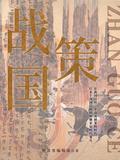 Warring States Policy
This is a unique country-specific history compiled based on the writings of strategists during the Warring States Period. It records the colorful historical features of the 12 major vassal states from the early years of the Warring States Period to the 240 years of the unification of Qin. In an era of turmoil and drastic changes such as the Warring States Period, politicians who traveled between countries were the darlings of the times. They often came to the court as counselors and strategists,
—Reads8.5Score—Shelves
Warring States Policy
This is a unique country-specific history compiled based on the writings of strategists during the Warring States Period. It records the colorful historical features of the 12 major vassal states from the early years of the Warring States Period to the 240 years of the unification of Qin. In an era of turmoil and drastic changes such as the Warring States Period, politicians who traveled between countries were the darlings of the times. They often came to the court as counselors and strategists,
—Reads8.5Score—Shelves
-
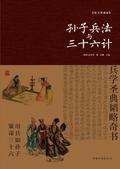 Sun Tzu's Art of War and Thirty-Six Strategies (Pure Beauty Collector's Edition)
This book combines two classic works, Sun Tzu's Art of War and Thirty-Six Strategies, into one. Based on the original work, it adds columns such as notes, translations, readings by famous experts, practical strategies, and business cases. The style is scientific and concise, and the text is full of wisdom. At the same time, he also carefully drew hundreds of exquisite illustrations to help readers truly strategize and win thousands of miles away in the increasingly competitive contemporary socie
—Reads9.3Score—Shelves
Sun Tzu's Art of War and Thirty-Six Strategies (Pure Beauty Collector's Edition)
This book combines two classic works, Sun Tzu's Art of War and Thirty-Six Strategies, into one. Based on the original work, it adds columns such as notes, translations, readings by famous experts, practical strategies, and business cases. The style is scientific and concise, and the text is full of wisdom. At the same time, he also carefully drew hundreds of exquisite illustrations to help readers truly strategize and win thousands of miles away in the increasingly competitive contemporary socie
—Reads9.3Score—Shelves
-
 Jingdong Archaeological Records (Free Public Edition Book)
Geographic research works. Based on historical and geographical special books such as "Historical Records" to "Ming Dynasty Records", this book conducts detailed research on many historical and geographical conditions from Beijing to Shanhaiguan. It includes a test of Ji, a supplementary annotation of Eryan Zhuan in "Hanshu", an analysis of Shimen, an analysis of the errors of Yang Ling Temple in "Yi Tong Zhi", and an analysis of Liucheng. There are twenty-three chapters, including Examination o
—Reads8.6Score—Shelves
Jingdong Archaeological Records (Free Public Edition Book)
Geographic research works. Based on historical and geographical special books such as "Historical Records" to "Ming Dynasty Records", this book conducts detailed research on many historical and geographical conditions from Beijing to Shanhaiguan. It includes a test of Ji, a supplementary annotation of Eryan Zhuan in "Hanshu", an analysis of Shimen, an analysis of the errors of Yang Ling Temple in "Yi Tong Zhi", and an analysis of Liucheng. There are twenty-three chapters, including Examination o
—Reads8.6Score—Shelves
-
 Notes on Calligraphy (Free Public Edition Book)
Theory of Landscape Painting. The author talks about his experience in creating landscape paintings under the guise of meeting an old man among the Shigu Rocks in the Taihang Mountains. In fact, the author summarizes the experience in landscape painting creation from the Eastern Jin Dynasty to the Sui, Tang and Five Dynasties. Throughout the article, a dialogue with the old man Shigu is used to clarify the theory of painting, with incisive arguments and thorough analysis. He put forward the "six
—Reads8.6Score—Shelves
Notes on Calligraphy (Free Public Edition Book)
Theory of Landscape Painting. The author talks about his experience in creating landscape paintings under the guise of meeting an old man among the Shigu Rocks in the Taihang Mountains. In fact, the author summarizes the experience in landscape painting creation from the Eastern Jin Dynasty to the Sui, Tang and Five Dynasties. Throughout the article, a dialogue with the old man Shigu is used to clarify the theory of painting, with incisive arguments and thorough analysis. He put forward the "six
—Reads8.6Score—Shelves
-
 Directory of Famous Paintings of the Tang Dynasty (Free Public Edition Book)
The first chronological history of biographical paintings in China. The author is a native of Wu County. He lived from the Yuanhe reign of Emperor Xianzong of the Tang Dynasty to the Huichang reign of Emperor Wuzong of the Tang Dynasty (806-846). Zhu Jingxuan wrote this book based on the principle of "search for his traces, do not record those who do not see them, and write down those who see them". The book divides paintings into four categories: figures, animals, landscapes, and buildings and
—Reads—Score—Shelves
Directory of Famous Paintings of the Tang Dynasty (Free Public Edition Book)
The first chronological history of biographical paintings in China. The author is a native of Wu County. He lived from the Yuanhe reign of Emperor Xianzong of the Tang Dynasty to the Huichang reign of Emperor Wuzong of the Tang Dynasty (806-846). Zhu Jingxuan wrote this book based on the principle of "search for his traces, do not record those who do not see them, and write down those who see them". The book divides paintings into four categories: figures, animals, landscapes, and buildings and
—Reads—Score—Shelves
-
 Complete Biography of Tang Zhongkui (Free Public Edition Book)
Also known as "The Legend of Zhong Kui in the Book of Tang Dynasty" and "The Legend of Zhong Kui in the Book of Tang Dynasty". Narrate Zhong Kui's life story. Zhong Kui, the son of Zhong Hui, a Confucian scholar of the Tang Dynasty, was born with a strange appearance and extraordinary intelligence. He failed to take the exam in Beijing and returned home in shame. He went to Zhongnan Mountain alone. His wife died of illness when her husband did not return. Zhong Kui took the exam again and won th
—Reads8.7Score—Shelves
Complete Biography of Tang Zhongkui (Free Public Edition Book)
Also known as "The Legend of Zhong Kui in the Book of Tang Dynasty" and "The Legend of Zhong Kui in the Book of Tang Dynasty". Narrate Zhong Kui's life story. Zhong Kui, the son of Zhong Hui, a Confucian scholar of the Tang Dynasty, was born with a strange appearance and extraordinary intelligence. He failed to take the exam in Beijing and returned home in shame. He went to Zhongnan Mountain alone. His wife died of illness when her husband did not return. Zhong Kui took the exam again and won th
—Reads8.7Score—Shelves
-
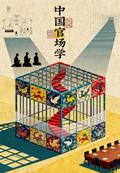 Chinese Bureaucracy
Different from abstract political theory works, the content of this book is derived from the two authors' decades of practical experience in officialdom. It records in detail the specific processes of local government affairs, judicial case handling, and shogunate collaboration in the Qing Dynasty. It provides first-hand material with great reference value for studying the political system, officialdom ecology, and local governance models of the Qing Dynasty. It is a high-quality reference book
—Reads8.1Score—Shelves
Chinese Bureaucracy
Different from abstract political theory works, the content of this book is derived from the two authors' decades of practical experience in officialdom. It records in detail the specific processes of local government affairs, judicial case handling, and shogunate collaboration in the Qing Dynasty. It provides first-hand material with great reference value for studying the political system, officialdom ecology, and local governance models of the Qing Dynasty. It is a high-quality reference book
—Reads8.1Score—Shelves
-
 Anhui Consultative Council Charter (Free Public Version)
In 1907, the Qing government prepared to establish a constitution and ordered the establishment of advisory bureaus in each province. In October 1909, the Anhui Provincial Consultative Bureau was formally established. Between 1909 and 1910, the Anhui Consultative Bureau held two annual meetings. After the outbreak of the Revolution of 1911, Zhu Jiabao, the then governor of Anhui, instigated independence. Later it was changed to the Anhui Provincial Provisional Council of Counselors. This article
—Reads—Score—Shelves
Anhui Consultative Council Charter (Free Public Version)
In 1907, the Qing government prepared to establish a constitution and ordered the establishment of advisory bureaus in each province. In October 1909, the Anhui Provincial Consultative Bureau was formally established. Between 1909 and 1910, the Anhui Consultative Bureau held two annual meetings. After the outbreak of the Revolution of 1911, Zhu Jiabao, the then governor of Anhui, instigated independence. Later it was changed to the Anhui Provincial Provisional Council of Counselors. This article
—Reads—Score—Shelves
-
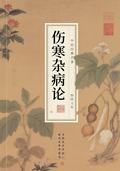 Treatise on Febrile Diseases and Miscellaneous Diseases
"Treatise on Febrile and Miscellaneous Diseases" was written by Zhang Zhongjing, a medical scientist in the late Eastern Han Dynasty, and is known as the foundation work of the clinical school of traditional Chinese medicine. The original book is divided into two parts: Treatise on Febrile Diseases and Synopsis of the Golden Chamber, which systematically summarizes the theory of syndrome differentiation and treatment of exogenous typhoid fever diseases and miscellaneous internal diseases. The bo
—Reads8.4Score—Shelves
Treatise on Febrile Diseases and Miscellaneous Diseases
"Treatise on Febrile and Miscellaneous Diseases" was written by Zhang Zhongjing, a medical scientist in the late Eastern Han Dynasty, and is known as the foundation work of the clinical school of traditional Chinese medicine. The original book is divided into two parts: Treatise on Febrile Diseases and Synopsis of the Golden Chamber, which systematically summarizes the theory of syndrome differentiation and treatment of exogenous typhoid fever diseases and miscellaneous internal diseases. The bo
—Reads8.4Score—Shelves
-
 Notes on Febrile Diseases
"Annotations on Febrile Diseases" is a medical work on Febrile Diseases edited by Ke Qin of the Qing Dynasty. It runs through the idea that "Zhongjing's Six Classics legislate for all diseases, not just for typhoid fever".
—Reads9.4Score—Shelves
Notes on Febrile Diseases
"Annotations on Febrile Diseases" is a medical work on Febrile Diseases edited by Ke Qin of the Qing Dynasty. It runs through the idea that "Zhongjing's Six Classics legislate for all diseases, not just for typhoid fever".
—Reads9.4Score—Shelves
-
 Treatise on Febrile Diseases
"Treatise on Febrile Diseases" was compiled by Fang Youzhi in the Ming Dynasty and was written in the 20th year of Wanli (1592 AD). The whole book is divided into eight volumes. At the end of the volume, there are one chapter each from "Ben Cao Chao", "Or Questions" and "Ji Shu".
—Reads9.4Score—Shelves
Treatise on Febrile Diseases
"Treatise on Febrile Diseases" was compiled by Fang Youzhi in the Ming Dynasty and was written in the 20th year of Wanli (1592 AD). The whole book is divided into eight volumes. At the end of the volume, there are one chapter each from "Ben Cao Chao", "Or Questions" and "Ji Shu".
—Reads9.4Score—Shelves
-
 Ning Kun's Secret Book (Free Public Edition Book)
Gynecology works, signed by the monks of Zhulin Temple. Zhulin Temple is located in Xiaoshan County, Zhejiang Province. It is said that since the Jin Dynasty built the temple after the Five Dynasties, some of the monks in the temple were good at treating women's diseases, and this has been passed down from generation to generation, making it famous all over the world. The works he taught on women's medicine are all kept secret. Since the early Qing Dynasty, various publications based on differen
—Reads8.7Score—Shelves
Ning Kun's Secret Book (Free Public Edition Book)
Gynecology works, signed by the monks of Zhulin Temple. Zhulin Temple is located in Xiaoshan County, Zhejiang Province. It is said that since the Jin Dynasty built the temple after the Five Dynasties, some of the monks in the temple were good at treating women's diseases, and this has been passed down from generation to generation, making it famous all over the world. The works he taught on women's medicine are all kept secret. Since the early Qing Dynasty, various publications based on differen
—Reads8.7Score—Shelves
-
 Human Lun Da Tong Fu (Free Public Edition Book)
"Ren Lun Da Tong Fu" is the essence of the ancient theory of the five elements of the human body. It is the most comprehensive and accurate book on physiognomy. It is also one of only four physiognomy books included in "Sikuquanshu". The book is full of quotes and combines the best of various physiognomy schools. It is an important reference for the ancients to select talents and gain insight into people's hearts. "An Illustration of the Five Elements of the Ancient Chinese Human Body: Human Rel
—Reads8.7Score—Shelves
Human Lun Da Tong Fu (Free Public Edition Book)
"Ren Lun Da Tong Fu" is the essence of the ancient theory of the five elements of the human body. It is the most comprehensive and accurate book on physiognomy. It is also one of only four physiognomy books included in "Sikuquanshu". The book is full of quotes and combines the best of various physiognomy schools. It is an important reference for the ancients to select talents and gain insight into people's hearts. "An Illustration of the Five Elements of the Ancient Chinese Human Body: Human Rel
—Reads8.7Score—Shelves
-
 Records of the Martyred Officials of the Victorious Dynasty (Free Public Edition)
It records the deeds of many courtiers who died for the Ming Dynasty after the fall of the Ming Dynasty. It records and organizes the lives, official positions, and sacrifices of these courtiers in detail. It aims to commend their loyalty and integrity, and also reflects the political situation and social turmoil during the transition between Ming and Qing Dynasties, providing rich information for studying the history and characters of the late Ming Dynasty.
—Reads8.6Score—Shelves
Records of the Martyred Officials of the Victorious Dynasty (Free Public Edition)
It records the deeds of many courtiers who died for the Ming Dynasty after the fall of the Ming Dynasty. It records and organizes the lives, official positions, and sacrifices of these courtiers in detail. It aims to commend their loyalty and integrity, and also reflects the political situation and social turmoil during the transition between Ming and Qing Dynasties, providing rich information for studying the history and characters of the late Ming Dynasty.
—Reads8.6Score—Shelves
-
 Records of the Qing Dynasty Records of the Yongzheng Dynasty (Free Public Edition Book)
It records in detail the important events and decisions in politics, economy, military, culture and other aspects during the reign of Emperor Yongzheng. It includes a series of reform measures implemented by Emperor Yongzheng, such as the transfer of land into acres, and the return of land to local residents, as well as palace affairs, appointment and dismissal of officials, and foreign exchanges. It is an important document for studying the history of the Yongzheng period.
—Reads8.7Score—Shelves
Records of the Qing Dynasty Records of the Yongzheng Dynasty (Free Public Edition Book)
It records in detail the important events and decisions in politics, economy, military, culture and other aspects during the reign of Emperor Yongzheng. It includes a series of reform measures implemented by Emperor Yongzheng, such as the transfer of land into acres, and the return of land to local residents, as well as palace affairs, appointment and dismissal of officials, and foreign exchanges. It is an important document for studying the history of the Yongzheng period.
—Reads8.7Score—Shelves
-
 Huanglan Collection (Free Public Edition)
The compiled edition of Huang Lan involves the compilation and annotation of ancient classics.
—Reads8.6Score—Shelves
Huanglan Collection (Free Public Edition)
The compiled edition of Huang Lan involves the compilation and annotation of ancient classics.
—Reads8.6Score—Shelves
-
 Dayi Jue Milu (Free Public Edition Book)
This book preserves the strong anti-Manchu speeches of Zeng Jing, Lu Liuliang and Yan Hongkui, and reveals the specific plot of the struggle for imperial power among the princes at the end of Kangxi, Yinzhen's accession to the throne and subsequent corresponding measures.
—Reads8.5Score—Shelves
Dayi Jue Milu (Free Public Edition Book)
This book preserves the strong anti-Manchu speeches of Zeng Jing, Lu Liuliang and Yan Hongkui, and reveals the specific plot of the struggle for imperial power among the princes at the end of Kangxi, Yinzhen's accession to the throne and subsequent corresponding measures.
—Reads8.5Score—Shelves
-
 A Brief Introduction to the History of the Ming Dynasty (Free Public Edition Book)
Originally called "A Brief Collection of Ming History", it was written by Zhuang Tingqin in the early Qing Dynasty. Zhuang Tingqin, a wealthy businessman in Nanxun, purchased an unpublished manuscript on the history of the Ming Dynasty from his neighbor Zhu Guozhen's family, invited literary guests to edit it, and added historical facts of the Chongzhen dynasty into this book, which he gave his name to. After Zhuang Tingqin died, his father published the book. The book contained words such as "J
—Reads8.5Score—Shelves
A Brief Introduction to the History of the Ming Dynasty (Free Public Edition Book)
Originally called "A Brief Collection of Ming History", it was written by Zhuang Tingqin in the early Qing Dynasty. Zhuang Tingqin, a wealthy businessman in Nanxun, purchased an unpublished manuscript on the history of the Ming Dynasty from his neighbor Zhu Guozhen's family, invited literary guests to edit it, and added historical facts of the Chongzhen dynasty into this book, which he gave his name to. After Zhuang Tingqin died, his father published the book. The book contained words such as "J
—Reads8.5Score—Shelves
-
 The Lingering Shadow of the Stone House
[Anecdotes and anecdotes of Ma Xulun, a famous educator, social activist, and loyal patriot, and comments on celebrity calligraphy and painting] "Remnants of the Stone House" is a work compiled by Ma Xulun, which compiled his notes of artistic and literary anecdotes from various periods. It records anecdotes since the late Qing Dynasty. The book describes famous figures and their remains during the Republic of China, such as Li Jingxi, Zhang Taiyan, Wang Jing'an, and Li Shutong. Most of them wer
—Reads8.2Score—Shelves
The Lingering Shadow of the Stone House
[Anecdotes and anecdotes of Ma Xulun, a famous educator, social activist, and loyal patriot, and comments on celebrity calligraphy and painting] "Remnants of the Stone House" is a work compiled by Ma Xulun, which compiled his notes of artistic and literary anecdotes from various periods. It records anecdotes since the late Qing Dynasty. The book describes famous figures and their remains during the Republic of China, such as Li Jingxi, Zhang Taiyan, Wang Jing'an, and Li Shutong. Most of them wer
—Reads8.2Score—Shelves
-
 Sou Shen Ji
"Sou Shen Ji" was written by the famous historian Qian Bao in the early Eastern Jin Dynasty. There are 20 volumes in existence. It mainly compiles stories about ghosts, gods and immortals, as well as some trivia and many folklore. Most of them are short in length, simple in plot and rich in imagination. It represents the highest achievement of Chinese supernatural novels.
—Reads8.6Score—Shelves
Sou Shen Ji
"Sou Shen Ji" was written by the famous historian Qian Bao in the early Eastern Jin Dynasty. There are 20 volumes in existence. It mainly compiles stories about ghosts, gods and immortals, as well as some trivia and many folklore. Most of them are short in length, simple in plot and rich in imagination. It represents the highest achievement of Chinese supernatural novels.
—Reads8.6Score—Shelves
-
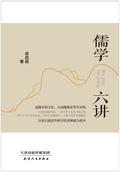 Six Lectures on Confucianism
"Six Lectures on Confucianism" is a popular reading book that Liang Qichao, a master of traditional Chinese culture, explains Confucian culture to general readers. It represents the essence of Liang Qichao's Confucian research. "Six Lectures on Confucianism" systematically narrates the origin, changes, inheritance, evolution and influence of Confucianism in the 2,500 years from Confucius to the end of the Qing Dynasty and the beginning of the Republic of China. It introduces the theoretical prop
—Reads8.3Score—Shelves
Six Lectures on Confucianism
"Six Lectures on Confucianism" is a popular reading book that Liang Qichao, a master of traditional Chinese culture, explains Confucian culture to general readers. It represents the essence of Liang Qichao's Confucian research. "Six Lectures on Confucianism" systematically narrates the origin, changes, inheritance, evolution and influence of Confucianism in the 2,500 years from Confucius to the end of the Qing Dynasty and the beginning of the Republic of China. It introduces the theoretical prop
—Reads8.3Score—Shelves
-
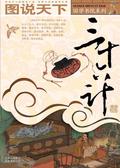 Thirty-Six Strategies
Six six thirty-six, there is a skill in the number, and there is a number in the skill. The principle of yin and yang lies within it. The opportunity cannot be set, and the set will fail. If the enemy is completely victorious and I cannot fight, then: I must surrender; I must make peace; I must leave. If you surrender, you will be completely defeated, if you make peace, you will be half defeated, and if you leave, you will not be defeated. Those who are not defeated will have a chance to win. Th
—Reads9.2Score—Shelves
Thirty-Six Strategies
Six six thirty-six, there is a skill in the number, and there is a number in the skill. The principle of yin and yang lies within it. The opportunity cannot be set, and the set will fail. If the enemy is completely victorious and I cannot fight, then: I must surrender; I must make peace; I must leave. If you surrender, you will be completely defeated, if you make peace, you will be half defeated, and if you leave, you will not be defeated. Those who are not defeated will have a chance to win. Th
—Reads9.2Score—Shelves