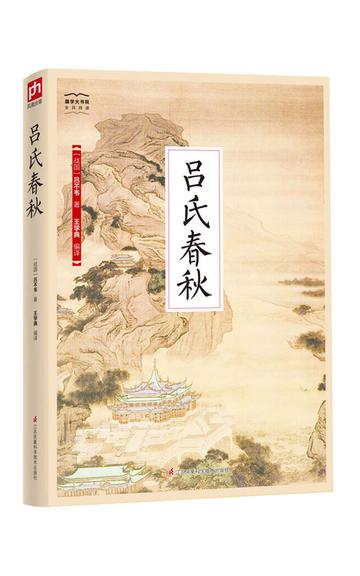
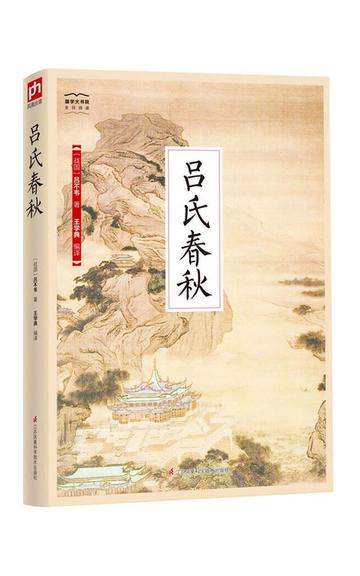
"Lu's Spring and Autumn Annals" collects the mixed and unmixed words of hundreds of schools of thought, covering the principles of heaven and earth, all things and all living beings in ancient and modern times! The content of the whole book is based on the theories of Confucianism and Taoism, integrating the theories of various schools into one. It is an excellent summary of China's political, military, philosophical, and strategic thoughts before the great unification of the Han Dynasty.
Reader comments
"Heaven will no longer be with you, but time will not be with you. If you can't do two jobs, you must do it at the right time." The key to success in doing things is to seize the opportunity. God will not give a person the same opportunity twice. Opportunities are always reserved for those who are prepared. Improving one's own strength is the last word. Lu Buwei boasted that this book was "a word of gold", but after reading it, he found that it was not an exaggeration at all. Lu Buwei and others integrated the thoughts of Confucianism, Taoism, Mohism, Legalism and other schools into this book, taking the essence and discarding the dross, and formed their own unique governance thoughts. It is a very good work, and every word of it tells us the truth, which has benefited us a lot.
This is an important ideological classic in ancient China and a political philosophy work written by Lu Buwei during the Warring States Period. The book summarizes the experiences and thoughts on the political systems, military strategies, and governance of various countries at that time, and is known as one of the important treasures of ancient Chinese thought. The book has a wide range of content, including discussions on politics, military, economics, morality and other aspects, aiming to provide monarchs and officials with methods and principles for governing the country. The views in the book are based on the thoughts of Confucius, combined with the actual conditions of various countries during the Warring States Period, and put forward many far-reaching theories and ideas.
"Lu's Spring and Autumn Annals" is a miscellaneous masterpiece compiled by Lu Buwei, the prime minister of Qin State, who gathered his followers. It was completed around 239 BC, which was the eve of Qin's unification of the six kingdoms. His book "basically takes Taoism as its sect, taking the strengths of each school and discarding the shortcomings, so it can become a family." It is a representative work of miscellaneous schools in the late Warring States period. Developed Laozi's thoughts and integrated human behavior with the natural order through the Twelve Epochs to verify the legitimacy of social management in the natural order.
This book is rich in content and profound in thought. It integrates the theories of various schools of thought and is worth reading. I especially like the philosophy and strategy parts in it, which are very inspiring for me to deal with problems in work and life. Moreover, the writing style is concise and clear, the writing is smooth, and it is very comfortable to read. I recommend you to read it.
"Heaven will no longer be with you, but time will not be with you. If you can't do two jobs, you must do it at the right time." The key to success in doing things is to seize the opportunity. God will not give a person the same opportunity twice. Opportunities are always reserved for those who are prepared. Improving one's own strength is the last word. Lu Buwei boasted that this book was "a word of gold", but after reading it, he found that it was not an exaggeration at all. Lu Buwei and others integrated the thoughts of Confucianism, Taoism, Mohism, Legalism and other schools into this book, taking the essence and discarding the dross, and formed their own unique governance thoughts. It is a very good work, and every word of it tells us the truth, which has benefited us a lot.
This is an important ideological classic in ancient China and a political philosophy work written by Lu Buwei during the Warring States Period. The book summarizes the experiences and thoughts on the political systems, military strategies, and governance of various countries at that time, and is known as one of the important treasures of ancient Chinese thought. The book has a wide range of content, including discussions on politics, military, economics, morality and other aspects, aiming to provide monarchs and officials with methods and principles for governing the country. The views in the book are based on the thoughts of Confucius, combined with the actual conditions of various countries during the Warring States Period, and put forward many far-reaching theories and ideas.
"Lu's Spring and Autumn Annals" is a miscellaneous masterpiece compiled by Lu Buwei, the prime minister of Qin State, who gathered his followers. It was completed around 239 BC, which was the eve of Qin's unification of the six kingdoms. His book "basically takes Taoism as its sect, taking the strengths of each school and discarding the shortcomings, so it can become a family." It is a representative work of miscellaneous schools in the late Warring States period. Developed Laozi's thoughts and integrated human behavior with the natural order through the Twelve Epochs to verify the legitimacy of social management in the natural order.
This book is rich in content and profound in thought. It integrates the theories of various schools of thought and is worth reading. I especially like the philosophy and strategy parts in it, which are very inspiring for me to deal with problems in work and life. Moreover, the writing style is concise and clear, the writing is smooth, and it is very comfortable to read. I recommend you to read it.
The book is good and worth reading