


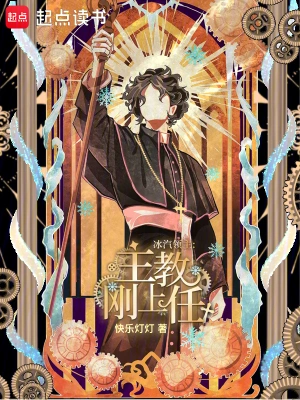
Frostpunk Divine Seat
冰汽神座
- Status
- Ongoing
- Length
- 674k Words
- Genre
- Western Fantasy
- Subgenre
- Mystic Fantasy
- Updated
- 4mo ago
- Source
- Qidian
Stats
Tags
Synopsis
More by this author
In booklists 11


Wushen's Booklist
A niche reading list, handpicked by a ten-year veteran reader. (I don't think there's anything wrong with this description.)



A Ten-Year Veteran Reader’s Shelf of Hidden Gems and Solid Reads for Male Readers
Carefully tending a few promising seedlings 🐾 🎯 This list is mainly for male-audience novels, mostly without heroines. I'll note when the protagonist has a love interest.



Ogmā’s Bookshelf
Fantasy • Supernatural • Light novels • Foreign history DND-style stories are especially recommended.
Prospecting for Gold on the New Releases List
I'm an omnivorous reader who browses the new releases list every day for gems. Whether it's a veteran or a new author, if a book suits my taste, I'll recommend it. I'll keep updating this list.


Private Reading List
A real mix, with books of all kinds. If it's interesting, I'll add it.


Midnight Teahouse
So I won't forget.



New Books Take the Stage: Bring Your Best
Good or bad, I only recommend new books that have some spark. What does having a spark mean? If they make you smile, they’ve got it.



【Fists, the Other Shore, and Alternate Worlds】Books I Like and My Reviews
Most of these are books I'm currently following or have finished. They're all pretty good, with some having especially brilliant concepts and others showing exceptional writing. (I'll share more of my thoughts on authors I'm familiar with. For those I don't know well, I'll just say whether they're good. That's enough.) (I won't remove some books that fall apart later, but I'll add follow-up reviews.)


Notes on Current Affairs
This list will collect some new novels and give them brief reviews. My standards aren't high, so the books here often have flaws. I hope readers will bear with me. Criteria: Excellent in every respect (.....) > Great writing and content, but with some flaws (....) > A few strong points in the writing, content, or subject matter (...).

Looking Forward to Their Next Books
Surely either the writing or the ideas have to be good.
Dragons and Warriors, Swords and Legends
A wondrous civilization of magic, a world of extraordinary wizards. We call it fantasy... There are many reasons to love fantasy so deeply. Perhaps it's the mystery and unpredictability, or perhaps it's the other moving stories hidden within its understated prose. [Main list: obsessed with promising new novels. Game fiction list: restoring the glory of gaming, youth never fades, and we'll never part.] Recommendations are welcome. Just so you know, this list is for fantasy novels.
Readers also read
 Adventurer: Seriously Dependent on Dragons
 Why Is This Knight's Holy Light Red?
 The Sword Saint Begins by Mastering Specialties
 With Full Charm, He Was Won by the Countess That Night
 Journey Through the Endless Night
 The Beast in the Circle
 Nightmare Dive
 Steel, Germs, and the Arcane Doctor
 I Order You to Become the Cult Leader
 Ascended Photon Dragon
 Heavenly Father
 The Corpse Plague of 1916
 Five Thousand Years of Cyber Cultivation
Reader comments 37
Google Translate
The best part of this book is the psychoanalysis and religious exposition at the front. The description of the end of the world at the beginning and the foreshadowing of the introduction create anticipation for the appearance of a messianic figure. In the snow rescue, the application of psychoanalytic theory, the behavior of rescuing others, and the citation of religious quotations portray the protagonist's saint-like leadership temperament and the image of a psychological mentor who heals the soul. It can be said that the previous chapters perfectly demonstrate the characteristics of this book. However, the direction behind it began to advance by leaps and bounds. The conflict between order and faith is quite abrupt, not very logical, and does not fit in with the worldview of this book. Just imagine, if the religion in the book can really pull out the power of several divisions and occupy the position of official orthodox ideology, how could there be extreme hostility from the army from the beginning. Under normal circumstances, at least after initial adjustment, conflicts gradually emerge. Only in the face of a major crisis can conflicts be concentrated and erupt. This is at least the plot at the end of volume one and maybe even volume two. The inner conflict of the protagonist is also very abrupt. Just like before. Generally speaking, the protagonist's inner conflict is placed at the turning point of the main plot, and the protagonist's awakening is the trumpet sounded before victory. In this book, the protagonist's peculiarities have not yet been fully released and must be corrected. When there is not enough foreshadowing, it is necessary to stir up emotion through the inner transformation of the protagonist. This is the level of domestic screenwriters. Finally, there is the issue of ability improvement. Gaining power through the deeds of a saint in front of others is indeed a design that many authors have used and it is easy to use, but it is usually either a reward for completing the dungeon or a summary of the main plot. The sense of gain brought by improved abilities is positively related to the particularity of the protagonist, and requires sufficient plot support. Also, during the decisive battle between the two sides, the combat power was suddenly increased through faith, and a lot of settings were suddenly thrown out, directly turning it into a deus ex machina. Within forty chapters, the conflict between the protagonist and the governor and the protagonist's inner transformation complete the process from foreshadowing to the end. It's like watching a movie in 5 minutes. As for the theme of the story, I belong to the ice steam era players who were tricked into killing. The plot between the bishop and the governor is a bit like the discussion about order and faith in the Ice and Steam Age: Is it all worth it? It's a pity that the author didn't intend to develop the plot in depth. Overall, the plot between the bishop and the governor is not mature. In fact, according to the author's psychoanalytic theory, it is best to follow the invincible operational flow, just like Chen Xi in Shensan III. On the one hand, this allows the protagonist to conduct rational analysis from a detached attitude, thereby continuously strengthening the individual character and highlighting the protagonist's particularity. On the other hand, this can also allow psychoanalytic theory to exert its value, play a role in politics and society, and play a role in promoting the development of the plot rather than remaining as a gimmick. In any case, isn't the Ice and Steam Age a game of hard work and operation? As far as the plot unfolds, the conflict between the bishop and the governor comes at the wrong time. If the governor adopts a easing strategy at the beginning and allows the protagonist to work as a priest in the church before the conflicts between the two parties intensify, then a lot of space can be used to describe the mental state of people in the apocalypse, and the author can fully display his psychoanalysis. On the other hand, the protagonist does not have to be in a contradictory state: he not only recognizes the mental pain caused by the Big Other to the individual, but also uses the Big Other to maintain the mental pain of the individual in order to maintain his dominance.
Is it funny? I only see the mirror stage, the Big Other, the Real, the Symbolic, the Imaginary, the Little A of the Object, the signifier, the signified, the dialectic of desire, the phallus, the divided subject, jouissance, loss, the alienation of the subject, the drive, the suture point, the unconscious, the subject, the Other, the misrecognition, the symbolic order, the original pleasure, the object of desire, the structure of language, symbolic castration, illusion, the schema of desire, the signifier chain, the desire of the subject, the symbolic father , real father, imagined father, topology of desire, splitting of the subject, symbolic exchange, economics of desire, object-cause of desire, cycle of desire, insatisfiability of desire, metonymy of desire, metaphor of desire, dialectic of desire, topology of desire, symbolization of desire, actualization of desire, imagination of desire, symbolization of desire, alienation of desire, suture of desire, drive of desire. Decoupling, vision, de-identification, discipline, enchantment, disenchantment, paradox, alienation, generalization, paradigm, extension, attribution, pluralism, orientation, field, reference, symptom, intelligence, stripping, discourse system, ideology, cynicism, state apparatus, de-identification, de-identification, anti-x narrative, symptoms of the times, power worship, pastoral pastoral, underlying logic, underlying logic, underlying logic, commodity fetishism, surplus value, aesthetic experience.
It can definitely be polished a little more, at least for the first volume.
It's not the author who writes about it. The first 46 chapters are so beautifully written, with artistic conception, the character's personal emotions, and the direction of choice. However, starting from chapter 46, the emotions start to detach, the expression is inappropriate, it feels too rushed, and there is no sense of immersion! After the group fight, the protagonist and other overall characters collapsed, and the emotions were chaotic. Don't you think it's strange with the heroine? It's too fragmented. Then fill in the beginning and the train overturned. It was completely inappropriate at that position and disrupted the structure, you know? It can be explained later. It was really shocking before people said yes.
It actually came in third place. How about this book? Did Shen Nong understand it?
Can only be viewed from a distance, not up close
The beginning is very good, but it doesn't work as it goes on. It's a fantasy about the Middle Ages, theocracy, and steam. It starts well, but it's awkward to write a long spiritual talk at the beginning. The female supporting character inexplicably says that the protagonist is very gentle. The protagonist is obviously very mean. He starts to expose scars. Even if he is comforted later, that's okay. It was not considered gentle, and he was just about the same as a qualified priest, but it was even worse when he arrived in the city. In a world where divine power manifested itself, in a world where the church had a huge influence, and in a world where good deeds were given to divine power, the governor and the soldiers actually openly confronted the bishop and looked completely unbelieving. The world designed by the author is very fragmented, with divine power manifesting and good deeds having feedback. However, the pastor is still very bad. On the one hand, he writes about divine power, but on the other hand, he applies the real church and the confrontation between the church and the imperial power. It seems that the several waves of people are not in the same world.
I read 40,000 words in one sitting. The writing is very strong, the author is quite capable, and the words he writes are quite touching. Combined with the background of the times, a beautiful black curly bishop who rescues the suffering in a harsh environment vividly appears on the page. It is difficult not to recommend 🌹🌹
I keep seeing 176, and it's become more and more abstract lately.
The author should be a graduate student in psychology. It can be seen that there are many theories in psychology. What attracted me most at the beginning were the concepts and settings related to psychology. Although many case stories that try to develop the theory are very superficial and simple in design, they can still reflect the logical and reasonable psychological value. But judging from the writing of the story, almost all the characters have no intelligence, much like the behavioral levels of characters in fairy tale books. It can be seen that the author still needs to accumulate experience in story design, and the character design also needs to be polished. Perhaps due to lack of social experience, I cannot imagine complex character relationships and the behaviors and thoughts of various characters. What is presented is a variety of simple characters that are more facial-like. Especially now, it has begun to shift from a purely psychological background to the collective imagination of current students, which makes the whole story hang in the air. Logically, it does not talk about personal interests, the continuity of social structure, or various ideas and values. It builds a "win with just one mouth" story advancement based on facial makeup characters. In terms of the story advancement method, it is the classic "Philosopher King talks about collectives". On the one hand, he believes that "collectives" are legitimate, but on the other hand, he cannot get rid of the subconscious mind of "controlling collectives" and "eliminating dissent and building collectives." I won't delve deeper into this point. It can only be said that he has not entered society yet and has heard too many stories. Originally I liked the psychological background and themes of this book, but it seems that this book has also gone the way of a fantasy novel. If you want to feel good, I highly recommend watching it.
The first chapter is very good and feels like a masterpiece. At least the first 40 chapters have the potential to be in the top ten for me. Later, I feel that it is a bit high and low. Although it is only Chapter 60, it feels a bit sluggish. Some conflicts are created too deliberately. I think it is unnecessary to write about the protagonist's pain for what his predecessor did. Maybe the author wanted an opportunity to integrate into the world and save the world, but I feel that the protagonist's "divine nature" has been highlighted since the train rescue. I feel that it is a bit superfluous to use conflicts to highlight the protagonist's salvation goal. I think the Thunder Fist City Lord is a bit thin, at least that's what I see so far. I hope the author will get better and better as he writes more. It still has great potential and is worth a read!
It was originally very good to watch, but then the emotional scene shocked me. Fortunately, it was edited again and it was timely. Wouldn't it be better to use your strengths and avoid your weaknesses? Give full play to your strengths and avoid your weaknesses. This is not a college entrance examination. It is an emotional drama. It is a shortcoming that must be made up for. If you really write your strengths well, how many people can you attract.
A good hand of cards is ruined. If you can maintain the standards before it was put on the shelves, write one or two million, maybe you will have a share of the 12th King.