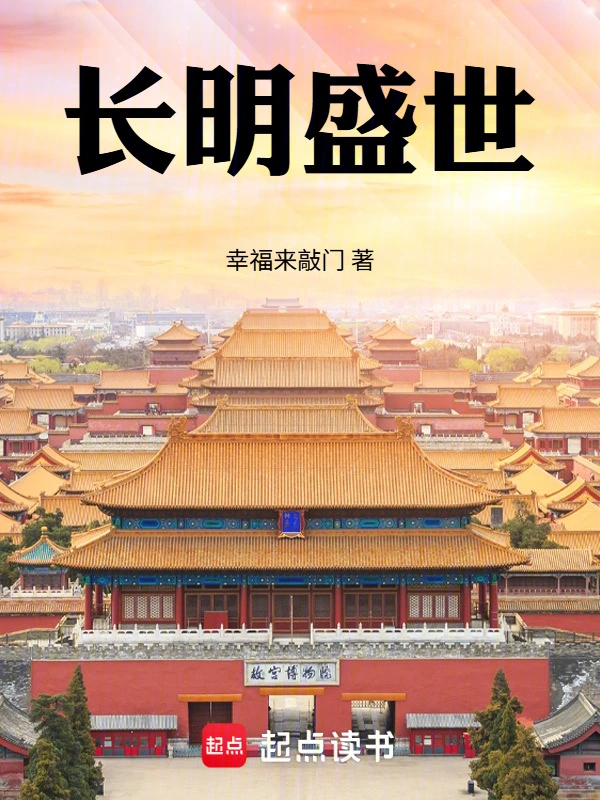
An Age of Eternal Prosperity
长明盛世
- Status
- Ongoing
- Length
- 446k Words
- Genre
- Historical
- Audience
- Male
- Subgenre
- Song-Yuan-Ming Dynasties
- Updated
- 8h ago
- Source
- Qidian
Stats
120Chapters
756Votes
17.4kRecs
31.1kFans
Tags
Honours
Synopsis
More by this author
In booklists 5
China Literature Big IP
Fifteen-year old bookworm, updated from time to time
40Books2.4kFollows1moUpdated

Web Novel Field Guide: Spot the Real Deal at a Glance
This compendium includes: [Monster Type] [** Family · ** Species] [Monster Rank] [Rank One: Fodder] [Rank Two: Elite] [Rank Three: Boss] [Rank Four: Lord] [Rank Five: Epic] [Rank Six: Legendary] [Monster Traits] [Monster Weaknesses] [Monster Overview]
65Books362Follows1moUpdated
Historical Fiction Reading List, Primarily History
Mostly historical fiction. The scale goes up to ten stars, but even a one-star book is worth a look.
54Books52Follows2dUpdated

Catch up on Reading & Gain Weight
Works being updated
27Books33Follows20dUpdated


Guess, Guess, Tap, Tap, Tap, Tap, Tap, Tap, Tap, Tap, Tap, Tap, Tap, Tap, Tap, Tap, Tap, Tap, Tap, Tap, Tap, Tap
Color
100Books2Follows13dUpdated
Readers also read
 Seizing the Direct Descendant in the Red Mansion
 A Literary Master in Ancient Greece
 Germany: 1914
 Great Ming: His Father Is Useless, So He Must Summon the Founding Emperor
 Simultaneous Transmigration: Is Everyone Starting Out in Prison?
 Prime Minister in White
 Daming: Brother Emperor, You Have Harmed Me.
 A Great Industrial Nation, Starting with a Fake Student Abroad
 A Dual Status Panel Descends into the Abyss, and the Assassin's Potion Is Right at the Entrance
 Golden Terrace, Han Moon
 On Qingming, It's a Good Day to Die
 Become an Official
 Kill Through the Siege
 Jiangshan National Color
 Wenkui of Ming Dynasty
 Prime Minister of a Poor Family
 Ming Dynasty Samurai of the Takeda Family
Chapter 5: Death due to poison. In order to prevent the protagonist from going back, he allowed his original body to affect the protagonist. The thought of going back gave the protagonist a headache. You don't want the protagonist to go back and find some special reasons, don't you? You have to deal with this kind of poisonous point. This is a routine from a few years ago.
I said to the author, can we not let the protagonist get screwed like this? The relationship between the family members, which had finally been eased, was dragged into trouble by a government trial case. Do you have to shout out in front of everyone that you can't realize your wish? ! In the future, when he has the ability, let the emperor issue a special edict: earn a royal title for the wife of the principal wife and give a posthumous gift to the biological mother. By then, no one will be able to express any objections. Wouldn't it be nice for everyone to enjoy it? We have to create conflicts artificially, but we still hope to feel a little more pure when reading the novel, and there is no need for such a twisted protagonist!
A predecessor's last wish repeatedly affects the protagonist and is extremely poisonous.
Several anecdotes about marriages between officials and officials in the Ming Dynasty
Many people are influenced by movies and TV dramas and think that children should be treated differently, and that they should pay attention to the order of elders and young ones. The elders cannot get married and the younger ones cannot get married. Civil servants should not marry nobles and nobles, etc. But looking at the treatment of concubines in various dynasties, "Tang Law Commentary: Household Marriage Law": Those who should share the land, house and property should be divided equally among the brothers. "Song Xingtong·Household Marriage Law": Those who should be divided into fields and houses, as well as property, should be divided equally between brothers. "Da Ming Ling·Hu Ling": All legitimate concubine sons, unless there is an official's influence, the eldest descendants will be eliminated first. According to the analysis of the family's property and land, regardless of the birth of wives, concubines, and maids, they will be divided equally according to the number of children. "Laws of the Qing Dynasty": For a man who is a legitimate concubine, all his eldest descendants should be eliminated first, except for his official position. According to his analysis, the family property and land will be divided equally according to the number of children, regardless of the birth of wives, concubines, and maids. Even the more senior people are, the less particular they are about poverty. There are also many high-ranking officials from common people, such as Gu Dingchen, Sun Chengen and so on. A few more representative examples of marriages: 1. Wang Hao Wang Hao, a famous minister of the Ming Dynasty (Tanhua, Shangshu of Hubu, Bachelor of Wuyingdian, posthumously gifted to the Taifu), let's see how he is. The marriage status of each child First look at the son: The eldest son Wang Yanzhe Mother: the stepmother Zhang Marriage: The wife Mao is the daughter of Mao Jue, the deputy censor of the Metropolitan Procuratorate The second son Wang Yan Su Mother: Hu Taiyiren, the concubine, the daughter of the magistrate of Sanhe County Marriage: His wife Chen is the daughter of Chen Juan, the left deputy censor of the Imperial Procuratorate The third son Wang Yanling Mother: Hu Taiyiren, the concubine br>Marriage: Wife Zhu is the daughter of Zhu Xizhou, the number one scholar and the crown prince's Taibao Fourth son Wang Yanzhao Mother: Concubine Wanshi Wife: Unclear, it is not certain whether they are married or not, it is very likely that Wang Yanzhao Hao was not married when she died Let's see her daughter again The eldest queen Miaoqing Mother: Wang Hao's first wife was the Wu family, who was from a prominent local family Marriage: The son of Xu Chao, who has been doing business for generations Xu Jin, Empress Xu Jin was the Minister of the Ministry of Personnel and Minister Second Queen Fuyuan Mother: Stepmother Zhang Marriage: Jinshi, the son of Zhu Xizhao, the imperial envoy Third Queen Shanqing Mother: Stepmother Li family, unknown origin Marriage: Jinshi, son of Shao Bao, Minister of Rites Fourth Queen Miaolong Mother: Hu Taiyiren, a concubine Marriage: Tanhua, Bachelor of Wuyingdian, Jin, Minister of Household Affairs Noble son Five queens Mother: Concubine Hu Taiyiren Marriage: Son of Yan Jing, the prefect of Zhangde Summary: There is no obvious difference in the marriage of Wang Hao's children. There is also a decree in the side room. 2. Chen Yiqin The situation of Chen Yiqin's family is simply the weirdest among the weird. To put it simply, this family does not distinguish between concubines and concubines, and respects two wives. Of course, strictly speaking, the concubine is a concubine, which is even more interesting, because the descendant of this "concubine" is the only father and son Zaifu (Chen Yiqin and Chen Yubi) in the Ming Dynasty. The protagonist is Chen Xin, Chen Yiqin's grandfather. The general process is as follows: Chen Yiqin's great-grandfather Chen Heng, when Chen Yiqin's grandfather Chen Xin was very young, went back to his hometown to sweep the grave, and got engaged to his old neighbor Qiu, and agreed that the children of the two families would get married in the future. But Chen Heng died on his way home after getting engaged. His wife didn't know about it in her hometown, so she married her son Chen Xin to a daughter named Hu. His mother died when Chen Xin was 8 years old. In this case, he would most likely have to rely on his in-laws, so he got married at the age of 15. The relationship between husband and wife is good. In the second year after the marriage, the in-laws and the girl whom the father was engaged to marry came. When it comes to the paperwork for the engagement, the father's wife should be the wife named Qiu. When it comes to the de facto marriage, the mother's wife should be named Hu as the wife. Chen Xin did not want to marry at first, but his wife Hu persuaded him to fulfill his father's promise and was willing to give up his position as the main wife to Qiu. Anyway, they all got married in the end. In theory, the Qiu family is regarded as a concubine. I haven't looked up the collected biographies of other members of his family, so I don't know what to say about this. Later Chen Xin was seriously ill and was about to die, and Hu committed suicide first😥😅😒. Qiu once injured himself, but eventually survived. Mr. Qiu gave birth to three sons. Among them, Chen Yiqin's uncle Chen Daodao became a Jinshi and became an official. He asked someone to write a record. He said that they were both mothers and had the same imperial title regardless of their legitimate concubines. Qiu's grandson is Chen Yiqin. Chen Yiqin and Chen Yubi both reached the position of prime minister. "History of the Ming Dynasty: Biography of Chen Yubi" records: "In the end of the Ming Dynasty, the father and son were the prime ministers and assistants, but the Nanchong Chen family. ' So bloody 3. Lu Bing: Lu Bing's five concubines: The eldest daughter married the Duke Zhu Shi Tai, the second daughter married Yan Shaoting, the grandson of Yan Song and the second son of Yan Shifan, the third daughter married Xu Ying, the third son of Xu Jie, the fourth daughter married Sun Sheng, the descendant of Sun Xiang, the minister of rites, and the fifth daughter married Wu Shou, the son of Wu Peng, the minister of official affairs. (Wu Peng's daughter married Dong Fen) These five daughters were all the children of Lu Bing's side wife, Li. Lu Bing had married four first wives, all of whom died before Lu Bing. Lu Bing would not marry again (the wife-killing demon). Lu Bing and Wu Peng are double in-laws, and Xu Jie's son and Yan Shifan's son are brothers-in-law. Therefore, the legend that Xu Jie married his granddaughter to Yan Song's grandson as a concubine in order to win over the Yan family is too unreliable. So some online comments on concubines and concubines, without looking at the specific circumstances of the specific dynasty, blindly believe that concubines are of low status and can be bought and sold, which is unrealistic. In the imperial examination era, anyone born as a concubine could take the exam to become an official. In the Song Dynasty, the trend of giving gifts to biological mothers began to rise, and the gap narrowed. There is no need to forcefully set up intense conflicts in the plot here. As the saying goes, once the imperial edict is issued, you will live your life as ordered.
The collapse, the entire collapse starting from Chapter 54, has so much foreshadowing, and no one is at fault, so whose fault is it? Is it the protagonist's fault to co-author it? Then I am the reader taking the role of the protagonist, so I was wrong too😭 Fuck you! I think you might as well look at morality and the rule of law, at least they don't mince words.
Why are there still people writing children's books? I'm not asking you to change the world quickly, but you're not even qualified to change, so what do you expect? I don't know why I have to start from a young age. Do you want to write millions of words? A complete historical novel?
Tell me your personal opinion
The following words are all "deep love and responsibility" for the author. This book has almost a hundred chapters written, and it is really not as good as Wen Kui of the Ming Dynasty. Let me give a few examples to illustrate 1. There are too many trivial things and it is too verbose 2. The modern words in the language, such as "Lao Deng" in Chapter 98, are too confusing 3. A character who was so awesome before time travel is so emotional after time travel (such as "sadness" and "tears" in Chapter 98), which is very disconnected. 4. At the beginning, I quite disagreed with the expression "third uncle". It's okay to call "third uncle" in the conversation, but it's weird to still write "third uncle" in the description. Does the third uncle have no name? (I know some books have this way of expression, but those are generally more literary and artistic works that pay attention to "personality") 5. There is also the scene of "not entering the house but buying ginseng for the aunt". I don't understand it. You are an old man before time travel, what are you doing to get angry? Isn't it simply a disease if I don't use the resources? It's inexplicable to stand and stand again.
Introduction to the Provincial Examination in the Thirteenth Year of Jiajing and the Sixteenth Year of Jiajing
In the early Ming Dynasty, the examiners of the rural examinations were instructors from various places. During the Jiajing period, they were presided over by officials from the capital. "History of the Ming Dynasty: Imperial Examination System" records: "In the seventh year of Jiajing, Zhang Chong, the minister of the Ministry of War, said that all provinces would send Beijing officials or Jinshi to take charge of the examination, and two people from each province would go there." However, it was not until the twelfth year of Jiajing that the imperial court issued a new decree. Except for the two capitals, only instructors were used as examiners for the provincial examinations in each province, and Hanlin officials were no longer sent from the capital. (The Ministry of Science and Technology will not be sent back, and the provincial examination chiefs will not send Beijing officials.") The provincial examinations that the protagonist may participate in are the rural examinations in the Jiajing 13th Year and the Jiajing 16th Year. Among them, the chief examiner in the 16th Jiajing Year The examiner is the well-known Xue Yingqi (Gu Xiancheng's teacher) [Introduction to the Fujian Rural Examination in the Thirteenth Year of Jiajing] The Thirteenth Year of Jiajing (153). 4 Years) The examiners of the Fujian Provincial Examination were Zhang Jiaxiu and Sun Liangde. · Zhang Jiaxiu: At that time, he was a Confucian professor in Raozhou Prefecture, Jiangxi Province. He was a native of Haiyan, Zhejiang Province. He was a native of Tongzhou, Zhili Province, and was a Gongshi of Renwu. The first place to be admitted to the Fujian Provincial Examination was Yang Zichong, a native of Fuqing. Official to Tongzhi of Qiongzhou Prefecture(not a Jinshi), Book of Songs Second place: Zheng Fu, student of Xinghua Prefecture School, Third place: Xue Qin, student of Huai'an County School, Book of Changes Fourth place: Wang Yiyan, student of Fuqing County School. Book of Rites. Fifth place: Zhao Heng, student of Zengguang School in Quanzhou Prefecture. Sixth place: Book of Changes Seventh place: Ye Chunze, courtesy name Renfu, student of Fuzhou Prefecture. Shu Jing. Eighth place: Chen Wei, student of Xue Zengguang, Hui'an County Ninth place: Chen Xian, student of Xue Zengguang, Min County. Tenth place: Fang Gui, student of Huai'an County School of Liji. At least. 41 Later passed the Jinshi examination Fuzhou Prefecture: Ye Chunze (Jinshi of 1898) Yang Yimo (Jinshi of Yiwei) Wei Wenyan (Jiachen Jinshi) Hong Shiwen (Jinshi of 1898) Huang Zongqi (Jinshi Yiwei) Lin Dazhang (Jinshi Xinchou) Chen Xian (Jinshi Yiwei) Chen Shiyi (Jinshi Yiwei) Kang Siqian (Jinshi Ding) Wang Boring (Jinshi Yiwei) Lan Jiqing (Jinshi Yiwei) Shu Ting (Jinshi of Yiwei) Wang Yingzhong (Jinshi of Xinchou) Lin Maoju (Jinshi of Jiachen) Zhang Huang (Jinshi of Wuxu) Zheng Xiqi (Jinshi of Yiwei) Wang Yiyan (Jinshi of Yiwei) Huang Renhui (Jinshi of Guichou) ) Weng Shijing (Yiwei Jinshi) Wu Congyi (Yiwei Jinshi) Guo Wancheng (Yiwei Jinshi) Xinghua Prefecture: Zheng Fu (Yiwei Jinshi), second place in the provincial examination Lin Wanchao (Wuxu Jinshi). Zheng Zhifu (Jinshi Yiwei) Fang Dale (Jinshi Xin Chou) Li Yangzhi (Jinshi Xin Chou) Yang Wancheng (Jinshi Yiwei) Chen Ce (Jinshi Yiwei) Kang Dahe (Jinshi Yiwei) Yu Weicun (Wu Xu) Jinshi) Quanzhou Prefecture: Zhao Heng (Jinshi of 1898) Zhou Tianzuo (Jinshi of Yiwei) Guo Liyan (Jinshi of Gengxu) Guo Liangpu (Jinshi of Gengxu) Zhuang Sihuan (Jinshi of 1898) Huang Yangmeng (Jinshi of Xinchou) Hong Tinggui (Jinshi of 1898) Zhang Rui (Jinshi of 1898) Zhangpu County: Lin Ce (Jinshi of 1898) Jianning Prefecture: Zhou Fengqi (Jinshi of Yiwei) ) Yongding County: Zhang Xi (Wuxu Jinshi) Total: 41 people [Yiweike in the 14th year of Jiajing (1535); Wuxuke in the 17th year of Jiajing (1538); Jiajing 20th year (1541) Xin Chou Jinshi; Jiajing 23rd year (1544) Jiachenke Jinshi... Analogy] [Introduction to the Fujian Rural Examination in the 16th year of Jiajing] The chief examiners of the Fujian Provincial Examination in the 16th year of Jiajing's reign (1537) were Xue Yingqi and Yin Yiren. ·Xue Yingqi (chief examiner): At that time, he was a Confucian professor in Jiujiang Prefecture, Jiangxi Province, and was a native of Wujin, Yiwei. ·Yin Yiren (deputy examiner). ): At that time, he was the Confucian magistrate of Zhuji County, Shaoxing Prefecture, Zhejiang Province. He was a native of Anfu, Jiangxi, and was a Gongshi of Wuzi. The first place in the provincial examination (Jie Yuan) was Jinjiang Zhang Ri'an (one saying is Zhang Ri'an), who died young. >. Second place, He Mengbu, student from Changle County School. Third place, Lin Maozhi, student from Putian County School. Fourth place: Zheng Qi, student from Fuzhou Prefecture. Fifth place: Xu Gong, student from Huai'an County School. Student Sixth place: Ou Tianran, a student from Xinghua Prefecture Seventh place: Lin Hong, a student from Min County Eighth place: Lu Qiyi, a student from Changtai County Ninth place: Wang Jianzhong, a student from Huai'an County Tenth place: Chen Shilin, a student from Changle County At least 29 people were confirmed to have passed the Jinshi examination: Fuzhou Prefecture: - Zheng Qi (Jinshi of Gengxu) - Huang Zongqi (Jinshi of 1898) - Lin Maohe (Xin Chou Jinshi) Scholar) - Chen Shilin (Xin Chou Jinshi) - Chen Shifan (Xin Chou Jinshi) - Chen Weiju (Ding Wei Jinshi) - He Yu (Wuxu Jinshi) - Li Shu (Xin Chou Jinshi) Xinghua Prefecture: - Huang Hongbi (Jinshi of 1898) - Chen Yingkui (Jinshi of 1898) - Lin Yingji (Jinshi of 1898) - Qiu Bingwen (Jiachen Jinshi) - Huang Maoguan (Jinshi of 1898) - Yang Jie (Jinshi of 1898) Scholar) - Lin Maozhi (Jinshi of 1898) - Gong Yuncong (Jinshi of Xinchou) - Qiu Huda (Jinshi of Dingwei) Quanzhou Prefecture: - Lin Yixin (Jinshi of Dingwei) - Xue Tianhua (Jinshi of Gengxu) Scholar) - Shi Chaoyi (Jinshi of Guichou) - Shi Huayue (Jinshi of the same discipline) - Xu Xuan (Jinshi of Wuxu) - Huang Zhu (Jinshi of Dingwei) - Zhuang Yingzhen (Jinshi of Dingwei) - Hong Chaoxuan (Jinshi of Xin Chou) Jinshi) - Liu Cunde (Jinshi of 1898) Zhangzhou Prefecture: - Xie Bin (Jiachen Jinshi) - Chen Wu (Xinchou Jinshi) - Lu Qiyi (Jiachen Jinshi) Total: 29 people [Yiwei Ke in the fourteenth year of Jiajing (1535); Wuxu Ke in the seventeenth year of Jiajing (1538); Xin Chou Jinshi in the twentieth year of Jiajing (1541); Jiachen Ke Jinshi in the twenty-third year of Jiajing (1544)... And so on] ------------------- The performance difference is huge. In the 13th year of Jiajing, Fuzhou Prefecture was the absolute overlord of the imperial examination, accounting for half of the Fujian Jinshi with 21 people (accounting for 51% of the total); but by the 16th year of Jiajing, the number of people in Xinghua and Quanzhou was relatively stable, both in 1989. However, Zhangzhou, Yanping, and Jianning Prefectures have always been less successful. 2. The year of admission to the Jinshi is highly concentrated in the second year of the provincial examination Judging from the admissions of these two rural examinations, the vast majority of people are admitted to the Jinshi in the second year after the provincial examination. - There are 16 people in the Jiajing 13th year list who are Yiwei Jinshi; - There are 11 people in the Jiajing 16th year list who are Yiwei Jinshi. This shows that there is a strong continuity between the provincial examination and the subsequent examination. The list of the provincial examination basically predicts the results of the next subject examination. The main force in admissions. • Summary: Judging from the breadth and depth of talent distribution, it is obvious that Xue Yingqi has some blessings from the examiners. Can the protagonist Jiajing pass the exam in Thirteenth Year?
The family relationships in this book are very confusing. Generally speaking, the look and feel really takes up a lot of space. The author is not good at this aspect, so why not simplify it a little and create a normal family of parents?😅
Sanjiang?
Isn't this all okay? I won't mention the family. It's a purely disgusting setting that has the influence of my predecessor. This setting is also purely used to filter and purify.
When it comes to writing about ancient officialdom and imperial examinations, your writing is good. Others have poor plots, poor writing skills, and poor plots and stories.
Wow, I can't stand it anymore. Is the author who wrote about the poor prime minister also a member of the Yishushen sect?
In ancient times, especially in the Ming Dynasty, how could the difference between concubine and concubine be so big? I really don't have any rights, but it's not like I can't even eat a hot meal, right? The protagonist is a bastard, but he can't be bullied by servants, right? A concubine is also a master! The servant was chewing his ear in private, but his eldest son overheard it and he actually stopped talking? I know the author wants to highlight the dramatic contradictions, but it's not like this, right? Is this the same author who wrote about a thin land planted with pines and cypresses, a poor family studying, and a prime minister from a poor family? Are you afraid that your body was taken away from you?
It is easy to write the history of the Ming Dynasty into some parts of the braided drama of the Qing Dynasty❗
"Slaves": Eunuchs in the Ming Dynasty called themselves "slaves". "Emperor": The Ming Dynasty rarely called the emperor this way, but it was commonly used in the Qing Dynasty. "son": The Ming Dynasty princes did not call themselves this in front of the emperor. "Aiqing": Before the Qing Dynasty, emperors rarely called officials this way. "Memorial, Zhezi": This only appeared in the Qing Dynasty. Although it is the same document as the memorial, the difference is huge. "Futai, Fantai, Niantai": These are the names of the Qing Dynasty. Those with "Tai" were all commonly used in the Qing Dynasty, and were rarely used in the Ming Dynasty. "Master": In the Ming Dynasty, only top nobles and first- and second-rank officials were allowed. State and county officials were not called "Master". "Sir": In the Ming Dynasty, it was only used for first- and second-rank officials, nobles, and elders of the father's generation. Prefecture and county officials below the third or fourth rank are not called adults. "Prince": In the Ming Dynasty, people rarely addressed princes as "Prince". This was commonly used in the Qing Dynasty. "My King": This was also a self-proclaimed name only in the Qing Dynasty. "Bank Notes": Only available in the mid-Qing Dynasty. At the end of the Ming Dynasty, only money orders circulated among local acquaintances. "Greetings": Etiquette among officials and bannermen in the Qing Dynasty. This etiquette did not exist in the Ming Dynasty. "Eunuch": In the Ming Dynasty, only senior eunuchs had official positions, and ordinary eunuchs were called eunuchs. It was not until the Qing Dynasty that all eunuchs were collectively called eunuchs. "Our family": Eunuchs in the Ming Dynasty called themselves "I" to their subordinates, not our family. "Military Gate": a title used in the Qing Dynasty to address generals such as admirals. In the Ming Dynasty, civil officials such as governors and governors were called governors. "Kneeling Ceremony": Ming Dynasty officials temporarily knelt down when presenting to the emperor and stood up immediately after the ceremony. Subordinates do not easily bow down to superior officials. In the Qing Dynasty, emperors often knelt down to listen for a long time, and subordinates also generally knelt down and knelt down when meeting their superiors. There are also many words commonly used by banner people after the Qing Dynasty: Leave here, put down, errand, be on errand, return errand, master, reward some future, dare to love, grace, ... Come, ... Be panic, Ye, persuade, weigh, send, dilly-dally, get rid of, we, laoshizi, xiangfu, hutong, see the sky, noon, bashful, scold, wait to see, place, organize, useless, shameless, cool, estimate, beg Boring, quick, defensive, clueless, wilted, accurate, blind, coincidental, ordinary, today, tomorrow, yesterday, the sun, bodyguard, follower, scold, rejoice, toss, make do, miss, talk about, look at See, hit a snag... {"NickName":"Restricting power and supervising power","UserId":464928413}
Did the protagonist reconcile with his family later?
Currently, I see Kuai Tongsheng taking the exam. It was written in the previous chapter that the original character had a bitter feud with his family. After the protagonist took over, he was completely disconnected from the family. Later, he gave up if he wanted to have family fun.
I read two pirated copies, and this one was reprinted
When I read Chao Zai, I had just graduated and was still wandering around the construction site. It was the study of a poor boy who encouraged me to leave the construction site and take the urban investment examination. When I read Zhang Yue's study, it deeply encouraged me and made me return to my hometown from a different place. The characters in the book were in the imperial examination, and we were not the same. Thanks to the doorkeeper, now I am less stressed and can support you. Here is a paragraph about my favorite path to study when I came from a poor family.
Is the protagonist's life experience and experience modeled after Gu Dingchen?
When it comes to Gu Dingchen's life experience, we must first start with his father. Father Gu Dingchen cannot be said to be ungrateful, but at least he can be said to be the representative of a son-in-law who has crossed the river and burned the bridge. 🙂 Gu Dingchen, on the other hand, is an example of a concubine who counterattacked the number one scholar and eventually became the most popular minister. (In fact, Zhai Luan is also a concubine, but he is not as dramatic as Gu Dingchen). Gu Dingchen, whose first name was Gu Tong, also known as Jiuhe and nicknamed Weizhai, was born in Yongli Village, Kunshan. Great-grandfather Gu Daben, named Daozhong, named Yi'an, married Cai, and had two sons, the eldest son Gu Xian, and the second son Gu Liang, Gu Dingchen's grandfather. Grandfather Gu Liang, also known as Shouzhong, also known as Da'an, also known as Genngle, his wife was Wu, and they had three sons, the eldest son Gu Rui, the second son Gu Kai,the youngest son Gu Xun, who is the father of Gu Dingchen. Father Gu Xun, whose courtesy name was Weicheng and whose name was Guixuan, was born on June 25, the 16th year of Yongle (1418). Old Gu's family has lived in Yongli Village for many generations, and they are out-and-out country bumpkins. But Gu Liang had a friend Wu Kai, who was the head of the Ministry of Etiquette. He had no sons or close relatives or nephews. He liked Gu Xun very much after seeing him, so he discussed marriage with his old friend Gu Liang and asked Gu Xun to marry into his family. Gu Liang agreed. So, in the first year of Zhengtong (1436), 18-year-old Gu Xun followed his father's orders and married into the old Wu family. Wu Kai valued his son-in-law very much, and made him head of the house as soon as he entered the house. "All household affairs belong to the public." Gu Xun, whose son-in-law became a city dweller, not only improved his social status, but also made friends with many celebrities and scholars, and the level of his circle of friends was significantly improved. It also accumulated valuable human resources for the education of future generations. Due to the taboo of the Gu family, it is unclear whether Gu Xun changed his surname to Wu after marrying into the family. However, according to historical records, the two sons Gu Shi and Gu Zuo born to Gu Xun and his wife Wu did initially take their mother's surname of Wu. It was not until Gu Dingchen became famous that the family gradually returned to the Gu surname. In the third year of Jingtai (1452), Gu Xun's biological mother passed away. Gu Xun wrote "Yongsi Lu" in memory of his mother. Many celebrities in Kunshan City wrote inscriptions for him, including Ye Wenzhuang Gong Ye Sheng, who later became the left minister of the Ministry of Civil Affairs. (This shows the improvement of social status) In the seventh year of Chenghua (1471), his father-in-law Wu Kai passed away. Gu Xun, who had been married for 36 years, took the assets of his in-laws' family and returned to the family name. He was 54 years old at that time, and his old father Gu Liang was still alive. The son-in-law Gu Xun has no conscience, and his father Gu Liang is also heartless 😅. How did he promise his old friend Wu Kai in the first place, and why did he just sit back and watch his son betray his promise? Gu Xun, who returned to the clan, took great care of his old father and tried his best to make up for the regret that he had not been around to serve him all these years 🙂. He is also very kind. (Using money from his wife's family), he often provides aid and support to the poor in the clan. He teaches his descendants to learn poetry, calligraphy, etiquette, and be loyal and filial. In the eighth year of Chenghua (1472), this 55-year-old good man took in the 37-year-old girl Yang next to his wife Wu 😒. The very old and unmarried maid soon became pregnant. At the end of February 25th in the ninth year of Chenghua (1473), the 38-year-old Maid Yang gave birth to a son, Gu Dingchen. Gu Xun, who is already 56 years old, has a son. Although the lord gave birth to a son, the Yang family's status has not improved. She still makes a living under the strict wife Wu, serving Gu Xun and his wife"Be respectful but cautious" "Be patient in everything, lead to points" There is no trace of anger after being sincere." There are notes and it is said that Gu Xun and his wife Wu were very unkind to Gu Dingchen and drove him out of the house. They also said that their aunt was fierce and did not let them see each other. In the thirteenth year of Chenghua (1477), when Gu Dingchen was 5 years old, his grandfather Gu Liang died at the age of 92. Gu Xun's friendZhu Xuan, who later served as governor of Su Song, like his old father-in-law Wu Kai, saw Gu Dingchen and admired him very much. He felt that the child would definitely become a talent in the future. "It is a great surprise that he will become a national treasure in the future." so he betrothed his daughter to him. In the first year of Hongzhi (1488), 19-year-old Zhu married 16-year-old Gu Dingchen. In the fourth year of Hongzhi (1491), Gu Dingchen was 19 years old, and his aunt Wu passed away at the age of 75. Gu Xun liked reading very much and tried hard to let his children and grandchildren take the imperial examination route. His eldest son Gu Shi became a student member when he was young, but he failed to pass the examination for forty years. His second son Gu Bangshi passed the imperial examination in the eighth year of Zhengde (1513) and was appointed to the Nanchang Prefecture in Jiangxi Province. The second oldest child, Gu Zuo, was not good at studying. Seeing that his father was old, his eldest brother failed in many examinations, his younger brother was young, and there was no one to take care of the family business, Gu Zuo gave up his studies and took charge of the housekeeping, so that his brothers, nephews and nephews could devote themselves to their careers without any worries. (Also very similar to Chen Yanzhi). Gu Zuo's sonGu Qian ranked second and third in the palace examination in the ninth year of Hongzhi's reign (1496). Became the first Jinshi in the Gu family. He was awarded the title of Shujishi of the Hanlin Academy and lateradmiral of academic affairs in the capital. Gu Zuo was very good to his concubine Gu Dingchen, who was good at studying. Gu Dingchen also said that his second brother "loved and cherished" him. "Every night, he would call himself Mr.'S friend to his brother, which was unprecedented." Gu Dingchen lived up to his second brother's expectations. In the provincial examination in the 14th year of Hongzhi (1501), the 29-year-old Gu Dingchen passed the exam. In the imperial examination in the 18th year of Hongzhi (1505), 33-year-old Gu Dingchen passed the first prize and was awarded the title of compilation by the Hanlin Academy. In the same department, there are Chen Qi, Xie Qian's son Xie Pi, Yan Song, Zhai Luan, Zhang Bangqi, Xu Jin, Pan Huang's uncle Pan Dan and uncle Pan Xuan, who are also the elders of the pavilion. And thepoet Zheng Shanfuthe greatConfucian scholar as brilliant as water. The registration record clearly records the biological mother and aunt's mother. (Zhai Luan was also a concubine) Gu Dingchen died on May 26 of that year at the age of 88. Gu Dingchen returned home and Dingyou returned home. On the second day of August, the new emperor Zhengde ascended to the throne of the two palaces and favored his ministers. Gu Dingchen, the number one scholar, also got the opportunity to ask for titles for his parents. Therefore,Gu Xun, who died not long ago, was posthumously given by the imperial court to Wen Linlang and the Hanlin Academy for editing, while Gu Dingchen's maid's biological mother, Yang, was named a native of Tai'an. The aunt Wu was not posthumously named. [According to the rules of the Ming Dynasty at that time, Fan's legitimate mother was present. The mother of the child cannot be sealed. The aunt died. Get and seal. The example of conferring a gift to a military attaché also says: My stepmother is here. The concubine's mother will not be sealed. The stepmother died. The birth mother is present. It is appropriate to be granted a post like his son. My stepmother is here. My aunt is dead. Together with the stepmother. Posthumously given to my aunt. Both his aunt and his biological mother died. Only gifts to my aunt. It is called the master of all functions. All sons should be sealed to their parents. My aunt is here. The mother of the child cannot be sealed. The aunt died. Get and seal. If the mother of the child does not receive a gift. His wife must not be sealed first. This is a ceremony for conferring gifts to civil and military officials. It is different from the clan system. The situation of the Gu family is that the aunt, Wu, has passed away, and the biological mother, Yang, is still alive. According to the rules, he should apply for a joint title for both mothers. However, Gu Dingchen ignored his aunt at this time and only applied for a title for his biological mother. It's obviously against etiquette. In the face of controversy, Gu Dingchen remained silent until Ding You returned to the court at the end of his term. Many people congratulated Yang on her being granted the title, saying that a mother is more valuable than her son, but Yang was unhappy. The reason for her unhappiness was that she was awarded the title alone, while her late mistress Wu, his legitimate wife, did not receive the title. It was really not nice to say it out loud. However, from the time Yang was granted the title to his death, Gu Dingchen did not ask his aunt to be granted the title for at least four or five years, and this matter was openly recorded on Yang's epitaph. It was not until his official career became bigger and bigger that he asked his aunt to be granted a title. It can also be seen from this incident that although the wives and concubines in ancient times were clearly defined as the legitimate concubine, there was still a phenomenon of the concubine not asking for a title for the legitimate mother after coming ashore. In the second year of Zhengde (1507), Gu Dingchen finished mourning for his father. In May of the following year, he returned to the court as an official and participated in the compilation of "Records of Xiaozong". In May of the fourth year of Zhengde (1509), he was promoted to lecturer of the Hanlin Academy and was awarded silver coins. On the second day of October that year, his biological mother Yang passed away at the age of 74. Gu Dingchen, 37, returned to his hometown of Dingyou again in December. Later, Gu Dingchen's official career was prosperous. He successively served as a bachelor of the Hanlin Academy, the right minister of the Ministry of Rites, and the minister of the Ministry of Rites. Finally, in the seventeenth year of Jiajing (1538), he entered the cabinet and became the chief assistant of the cabinet. High-ranking officials can give gifts to their fathers and ancestors for three generations. Therefore, his father Gu Xun, grandfather Gu Liang, and great-grandfather Gu Daben all gave gifts to Doctor Guanglu, Zhu Guo, Shaobao, Prince Taifu, Minister of Rites, and Bachelor of Wuyingdian. The aunt's mother Wu, biological mother Yang, grandmother Wu, and great-grandmother Cai all also donated first-class wives. Looking at this story, the thing that deserves the most condemnation is not Gu Dingchen's aunt, but the feudal ethical system and Gu Dingchen's father. As in this book, everyone is excusable, except the protagonist's garbage dad.
I'm particularly annoyed by such nonsense at home, so naughty
It was foreshadowed that his family was not good to him, so he ran away from home. Then the stepmother began to be whitewashed. Put the responsibility on your father. Later, will he clear his biological father?
Can you skip the drama at home as soon as possible? I don't think it's very interesting. The main protagonist has never dealt with his family before. What the hell is the sudden reconciliation? Are you not going to slap yourself in the face?
An introduction to previous (and current) academic appointments in Fujian during the Jiajing period
According to local chronicles and other historical materials, the order of appointment of Fujian's academic officials (deputy academic envoys/inspectors) during the Jiajing period is roughly as follows: ·Shao Rui: In the fourth year of Jiajing's reign, he served as deputy inspector of education in Fujian. · Guo Chiping: In the eighth year of Jiajing reign, he served as deputy envoy of Fujian Province. He was a direct disciple of Wang Yangming. He once proposed changing Jingzhen Temple to "Yifeng Academy" (also known as Mr. Yifeng Temple), and hired country gentry and Jinshi to teach the academy. ·Jin Benheng: In the eighth year of Jiajing (1529), he was appointed as a scholar in Fujian. During his tenure, Daonan Academy in Fuzhou was rebuilt. · Pan Huang: From the 11th year of Jiajing to the 13th year of Jiajing, he served as deputy envoy to supervise schools. ·Jiang Yida: In the 14th, 15th, and 16th years of Jiajing's reign, he served as a scholar. Chen Shu: In the 17th year of Jiajing's reign (1538), he moved to Fujian to serve as the Deputy Envoy of Tixue. He was of noble character, but later died in office in the eighteenth year of Jiajing (1539) due to a bumpy career and overwork. ·Tian Rucheng: In the 19th year of Jiajing's reign, he served as deputy envoy of Tixue. ·Xiong Ji: There are relevant records in the 24th year of Jiajing (1545). · Zhu Heng: In the 30th year of Jiajing (1551), he served as deputy envoy of Tixue. He was kind-hearted and good at discovering talents. · Li Xun: During the Jiajing period, he was the deputy envoy to Fujian to promote education. · Zongchen: In the thirty-eighth year of Jiajing (1559), he was promoted to Deputy Envoy of Tixue. He died in office the following year and was one of the "Later Seven Sons". The following is a summary of Pan Huang's life and deeds in Fujian, the current Ti scholar (In short, he is a man with a distinguished family background and outstanding knowledge - Yingtianfu Jieyuan, Jinshi The thick thighs of the body) Wuyuan "Nine Jinshis in one family, six ministers and four ministers" Between Chenghua and Jiajing years in the Ming Dynasty, nine people from the Pan clan in Shili, Taoxi were among the Jinshi, including four who were ministers, censors of the capital, and other second-rank officials. Nine Jinshi: Pan Jue, Pan Zhen, Pan Dan, Pan Xuan, Pan Jian, Pan Qi, Pan Huang, Pan Yi and Pan Yi. Among them are Six Books of Four Ministers: Pan Zhen, Pan Dan, Pan Xuan, Pan Huang. The family is extremely prominent, and the preface to the genealogy was written by Zhang Juzheng himself, who was the bachelor of Zhongji Palace at that time, in the third year of Wanli and can be found. First, paste a paragraph: [The person who lived in Taoxi in Wu, if Pu Xihuang (Pan Huang), sent to Nanji, Li Shangshu Four, added Prince Taibao, posthumous title Jiansu. Fangtang Gongjian served as a worker and supervised the eight provinces of Mu. He was promoted to minister and given a title like Jian Su, with the posthumous title of Xiang Yi. On the first day of Hanquan Gong's reign, he sent troops to guard Guangdong and Guangxi. Bifeng Gongzhen also used this position to admonish Annan for disobeying the decree. The result was as he said. He thought about it and was awarded the title of Shangshu. At the beginning of Jiajing period, he inherited the title of Grand Bo Gong from Heaven and protected him with his reputation. He promoted Jinshi for the first time, worshiped passers-by, offered sacrifices to the emperor's mausoleum, lined up the golden gate and entered the purple gate. He was like Fang Bo Zhi Yuan Gong, Qian Xian Dan Gong Jue, and Shi Phosphorus Gong Xuan, all of whom were outstanding and famous ministers at that time. The pastoral guards of Yujunzhou are listed all over the world. Therefore, at that time, there were nine Jinshis in one discipline, six books and four ministers; there were two subjects with six exams, two rankings with four Jinshis, the reputation of Tangdi with four splendors, and Qiaozi with one splendor. How prosperous! Pan Huang (1496--1555), whose courtesy name is Shu, whose name is Puxi, was born in Taoxi, Wuyuan County, South Zhili. In the 14th year of Zhengde, Yingtianfu Jieyuan was awarded the 28th Jinshi in the third place in the 16th year of Zhengde (1521). Nephew of Pan Dan (who later became the Minister of the Ministry of Civil Affairs in Nanjing). Li Guan Yueqing magistrate of the county, two departments of rites and officials. Participated in the compilation of "Minglun Dadian". He successively served as the deputy envoy of Fujian Province and the left minister of the Ministry of Officials. He successively served as the Minister of the Ministry of Household Affairs, the Minister of the Ministry of Industry of Nanjing, and the Minister of the Ministry of War of Nanjing. Died in October of the thirty-fourth year of Jiajing (1555). He was given to Prince Shaobao, given the posthumous title of Jian Su, and given a funeral ceremony. In the 11th year of Jiajing (1532), he served as the deputy envoy to promote education in Fujian Province. During his tenure, he "strictly enforced regulations, provided relief to the poor and scolded the poor, and searched and burned bad teachers in the shops. He recruited boys from the lower counties to study together and established Fu Ren and Discipline. In the second year of his career, Xu Jie and Zhang Gun were invited to serve as scholars. "The scholars were very good at it, and they were famous in the world. They built an academy and gave lectures to the students. They first determined the scholars' grades and then studied literature. In the 11th year of Jiajing's reign, , chaired by Zhang Dalun, Hu Yue, etc., The Fujian Public Security Bureau published the "Collected Works of Mr. Hui'an Zhu Wengong" written by Zhu Xi of the Song Dynasty. Pan Huang was also one of the important participants in promoting the publication of the book. After the catalog, there is "Jiajing Renchenqiu After Jiaxu in July"</ b> Preface. In the preface, it is believed that through the editing of Zhu Xi's "Collected Works", "the master has become a master of eclecticism and advanced studies. After many years of study and accumulation, the relationship between teachers and friends, and the economics are consistent, and the organization is clear and detailed, which is enough to give full play to the "original meaning"." "Collected Notes" and "Quotations" explore the essence of sages through twists and turns, thus fully affirming the status and role of this book in Zhu Xi's Neo-Confucianism. He recalled that during the Qingyuan Party Ban in the Southern Song Dynasty, "the ban on learning was strict, and every word was destroyed. Every time I read "Please Zhan Shuai stop reading the book", I never fail to cover up the book and sigh, which is the most reckless of evil villains." Zhou Zimei's "Tianyige Collection of Books" recorded by Pan In the 13th year of Jiajing reign, Huang engraved two volumes of "Xishan Zhenwen Zhenggong Dushu Ji" written by Song Zhendexiu in Fujian Province. The record says: "Jiajing finely engraved large-character edition, white mouth, eight lines and sixteen characters, with the same annotation. In the previous chapter, there is a narration in the book "Ding Ji" written by Zhu Ding. In the 13th year of Jiajing's reign, Pan Huang of Wuyuan sent a book to Chongzheng Academy in Fujian. There is the engraver's name below the edge of the book. "Wei Chongzheng Academy is Chongzheng Academy, located in Fuzhou. Volume 1 of "Fujian General Chronicles·School Chronicles" of the Republic of China states: "Chongzheng Academy is located in the east of Shenguang Temple. Jiang Baojian, deputy inspector of schools during the Jiajing period of the Ming Dynasty, was later deposed. " "Guochao Xianzonglu": There is literature in Huang Dynasty, friendship and order are cultivated, and scholars' opinions are important. Chronology: In the 14th year of Zhengde, Yingtianfu Jieyuan was established in 1519. In the 16th year of Zhengde, in 1521, he was ranked the 28th Jinshi in the third place. In 1522, he learned about Yueqing County, Wenzhou Prefecture. In 1526, the Ministry of Rites was appointed as the head of the Ritual System Department. In the eleventh year of Jiajing, in 1532, he was promoted to the Deputy Envoy of the Inspection Department of Fujian Province. In 1542, he was appointed as the Inspector of Fujian. In 1546, Taichang Qing of Nanjing moved to the right minister of the household department. In April 1547, the right minister of the household department moved to the left minister of the household department. In September 1550, the Minister of the Ministry of Industry in Nanjing was changed to the Minister of the Ministry of Industry in Nanjing. In April 1553, the Minister of the Ministry of Civil Affairs of Nanjing was changed to the Minister of the Ministry of War of Nanjing. In October 1555, the Minister of the Ministry of War of Nanjing died. He was given the posthumous title of Jian Su and was given a funeral ceremony.
Why don't you promote your old book? I don't even know if I'll release a new one.
There was no publicity! Fortunately, I am very blessed today, come to the door god homepage to take a look 😍
I have read the first two books of Happiness. The Great Ming Dynasty Wenkui is generally good, and the number one scholar from a poor family is passable. The beginning of this book seems stiff and confusing, so I am a little disappointed at the moment. I feel that happiness's knowledge and writing skills are increasing, but my ability to tell stories is declining. Let's keep it up.
Can't stand it
This book is worse than Wen Kui of the Ming Dynasty. It's too watery and too verbose.
The protagonist and the stepmother obviously hate each other. It feels so sad to be filial in front of others. My eyes turned red and I really vomited. Are you hypocritical? Is this the same author who wrote about Wen Kui of Ming Dynasty?
The protagonist of this book is sleek and sophisticated, and he has the air of a successful mentor. He is not as likable as Zhang San and Chao Zai.
It is another routine of modern people to take the eight-part essay test, which is a pointless waste of life.
Chapter 5: Big poison, future generations should be cautious
The advantage of the author's book is that the writing style is more delicate. The disadvantage is that it smells like an old woman's foot wraps and is long. The protagonist traveled to ancient times and basically made no contribution. He did not let you go to ancient times to develop nuclear weapons. But it can't be justified even if there is no social progress at all. Also, the author often likes to quote scriptures. Write a chapter about an allusion
The congratulatory note is here
The congratulations are here, the congratulations are here! Suddenly I heard that the door god has published a new book, and I specially offer a copy of [Wen Si Quan Yong] and 6 [Guaranteed Monthly Tickets]! I wish the door god a bright mind, wonderful pens, literary thoughts, and good luck with the new book! 🤭🤭🤭🐉🐉🐉🤝🤝🤝