


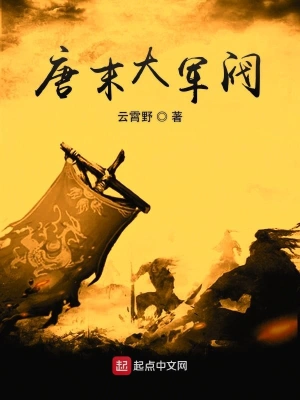
The Great Warlords of the Late Tang Dynasty
唐末大军阀
- Status
- Completed
- Length
- 3.5M Words
- Genre
- Historical
- Subgenre
- Five Dynasties Ten Kingdoms
- Updated
- 3y ago
- Source
- Qidian
Stats
Tags
Synopsis
More by this author
In booklists 10
Books That Seem Interesting (Especially Recommended Fanfiction Like Swallowed Star and Panlong)
Some novels that seem interesting, though the writing may not be that good.
My Favorite Historical Fiction (Mostly Power Struggles and Lesser-Known Dynasties)
Experience the weight of history. This list includes both new and old books. Recommendations are welcome~ (P.S. I recommend some books in the comments.)
Excellent Completed Works
Completed novels I've followed. Give them a try if you like binge-reading finished stories!
Transmigration Through History: Masterpieces from East and West
Transmigrate to ancient times and build an empire
Slow-Burning Gems That Reward a Patient Read
A record of classics from years past: cool-headed, rational protagonists, intelligent supporting characters, exciting plots, and books that reward the reader.
Meticulously Researched History
Books with solid logic and immersive stories
The Tide of History
Some newer books I like. If you're out of things to read, give them a try. Lost contact: Transmigrate to 1630: The Rise of South America The European Expedition Reborn: The Rise of the South Seas Other overseas novels: One Man's War of Resistance One Man's War of Resistance 2 The Gold Rush Nation of 1898 Zhu Xia After the War of Resistance in China: The Legendary Evil God of the War Against Japan The Iron-Blooded Anti-Japanese Army
Books That Can Still Move Me to Tears
Dancing
Collecting New Buds
😄😄 Here are some new books and a few good ones I think are worth reading. If you like them, please give them a thumbs-up. Being in a reading slump is such a pain! Authors who abandon their books are so frustrating. That's all for now (*˘︶˘*).。.:*♡🌸🌸🌸

If You're Out of Books to Read, Come On In
I always feel like I've run out of books, even though there are plenty on this list I haven't finished.
Readers also read
 An Important Town in the Residual Tang Dynasty
 Chronicles of the Red Mansion
 The Corpse Plague of 1916
 In the Ming Dynasty, the Days When the Cows and Horses Turned Over
 Every Man Has a Duty
 The Great Bandit
 The Age of the Yellow Sky
 Overthrow the Ming!
 The Military Governor of Weibo? Not Even a Dog Would Take the Job
 The Prosperous Longwan Era
 The Hegemony of Shu
 The Ambitious Hero of the Late Eastern Han
 The Gallant Outlaw of Water Margin
 The Water Margin's River Dragon
Reader comments 39
Google Translate
There are few novels written in the early Five Dynasties period, and they are pretty good. However, the Yicheng Army's territory is not good. It is between Zhu Wen and Li Keyong and is difficult to find. It is recommended that the author find an opportunity to sell it after acquiring the Taining Army's territory. After all, the geographical location of the Yi Cheng Army is really not good. Selling it to Zhu Wen or Li Keyong will cause the two sides to fight and hinder their development.
I don't know why it's not popular. Is this book very good? Have you all read the brainless articles?
Development Map
The writing is not bad, but the taste of romance is too strong. I often fight against generals when nothing happens. No matter how powerful you are, can you withstand my wave of arrows?
The author's writing is relatively rigorous, the characters are introduced in detail, and the deduction is reasonable. All the characters appeared, talking about their historical status and abilities, the protagonist finally managed to win over them, but in the end it felt like they were just tools, and none of the supporting characters could be remembered by me.
I have read more than 400 chapters so far. The advantage of this book is that the characters are richly described, and each person has their own personality characteristics. The shortcomings are also obvious, which affect the reading experience: 1. A single chapter paragraph is too long. You are writing a novel, not an article. Why do you write a single paragraph so long? 2. Whenever a historical figure or historical event is mentioned, the historical description of the person or event should be mentioned in long sentences, giving people the feeling of filling up the word count. What you are describing is not popular history, and not many people know about it. This is not a history class, so why do you spend so much time introducing it? 3. This is a novel about fighting for hegemony. In addition to the battle between generals, the war should also include the strategies of both sides on the battlefield, and various descriptions of the battlefield. On the battlefield, I only saw the battle between the generals on both sides. After the battlefield, the negotiations between the two sides disappeared. I didn't see anything like strategy or anything else. 4. The most important point is that authors interact with readers. I saw some comments or suggestions from readers in the comment area about this book, but I didn't see much reply from the author. I remember the author seemed to have said that he had written several books, and the results seemed to be average. I want to say that if you don't interact with readers, listen to readers' feelings, and understand readers' needs for books, but just write your own, how can the results be good? These are my current feelings about this book. If you don't like it, don't criticize it. Just read it and laugh.
As I read it, I felt that the timeline was a bit confusing. Other forces grew old and died of old age and died of illness, but the protagonist felt as if time had not passed. From the previous chapters, Yang Xingmi and Li Keyong are not much older than the protagonist. Now these two people are almost dead of old age, and the author writes the protagonist as if he is very young.
The Huangchao Uprising was the last time in history that various barbarians invaded the Central Plains together. However, the situation of this invasion was different from that of the Wuhu. The Wuhu was caused by the Western nomads and the northern nomads who jointly went south to invade the weak Jin Dynasty. This time in the middle and late Tang Dynasty was a direct extension of the consequences of the Huangchao Uprising. The specific reason is that Huang Chao's army killed all the slaves attached to the powerful families in the process of killing the vassal town and the Central Army of the Tang Dynasty, which greatly weakened the Han people's ability to rule the Central Plains generation. As a result, surrounding medium-sized countries could also invade Tang's territory and tear apart the entire empire. I will not discuss the reasons for Huang Chao's uprising here. I am only talking about the impact of this uprising on literati. After the end of the Han Dynasty, almost every rebellion without the support of aristocratic families would only start and end, and would not affect the central government at all. However, Huang Chao made the literati realize that even without the support of aristocratic families, once the bandit-style troops started snowballing, even the army that still had the strength to fight would not be able to completely suppress the rebellion within the entire empire for the time being, because if you force them, they will flee. This also made several stable dynasties after the Tang Dynasty have very strict requirements on the number of local standing troops. For example, the various armies of the Song Dynasty, the Weisuo system of the Ming Dynasty, and the green camp system of the Qing Dynasty. This is all before the local rebellion breaks out, and there is a local army of hundreds or thousands that can suppress it. It also made the literati class madly hostile to any force that started as a peasant army and did not cooperate with the aristocracy, such as the Shun Army in the late Ming Dynasty. On the whole, the Huang Chao Uprising did destroy the foundation for the Tang Dynasty to continue to rule the entire empire. However, because there were actually not many vassal towns and actual warlords in the Tang Dynasty, it was impossible for the peasant army to seize power. A new generation of heroes will inevitably be born among warlords.
Map of vassal and town separatist regimes in the late Tang Dynasty
Yi Cheng Hao Xiao
After reading it carefully, I finally got a rough idea of Li Tianqu's age. When describing Zhu Jin, he said he was similar in age to Li Tianqu. In this way, he was only 18-20 years old in 886. Zhu Jin was 19 years old at that time. However, the author seriously ignored the passage of time when describing it. First, he was granted the title of military governor, and then he resisted Sun Ru's attack and then conquered Sun Confucius and established a military vassal town. After that, he destroyed the Qin clan power, captured the military vassal town of Taining, occupied the Qinhuai land and was close to Yang Xing, and finally, Zhu Wen occupied Chang'an and seized the emperor. This period lasted for more than ten years, and the author did not mention it at all. It's just that cultivation is often mentioned in the first chapter, and the next chapter may be a few years later, just like when Sun Ru defeated Yang Xingmi for a long time and ran out of food, so he went to Li Tianqu's territory to grab food. It was obviously a few years later, but the author didn't even mention it. It wasn't until Zhu Wen was defeated and retreated from Bianliang to Chang'an, and I mentioned that Zhu Yousi was twelve or thirteen years old, that I realized that more than ten years had passed. Because Zhu Yousi was born when Huang Chao was destroyed. At that time, the author specifically mentioned that Li Keyong was 29 years old and Zhu Wen was 30 years old. Actually, he should be 32 years old. But when Li Cunxiao was arrested, the author said that he was 45-46 years old. I got the time wrong myself. I think the author should learn from the Romance of the Three Kingdoms. Others sometimes get the time wrong. However, people have mentioned how many years of cultivation or how many years after the war broke out. Readers can also understand it. Zhuge Liang's sixth chapter in Qishan specifically described how many years of cultivation or how many years later a war broke out. Or two years, although the time adds up to more than ten years, I remember. Zhuge Liang couldn't have lived ten years at that time, but we don't care, at least we seem to have a sense of time, which is really not the case here. Suddenly more than ten years have passed, and the last chapter was a few years ago. There was no description of how much time had passed, only a period of cultivation in Spring and Autumn Calligraphy. How much is this?