


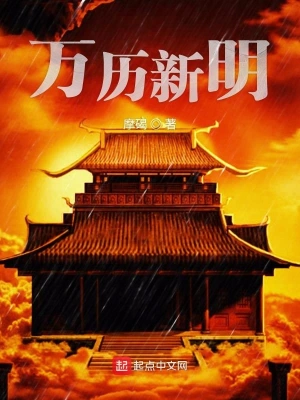
A New Ming Dynasty Under Wanli
万历新明
- Status
- Ongoing
- Length
- 1.2M Words
- Genre
- Historical
- Subgenre
- Song-Yuan-Ming Dynasties
- Updated
- 2d ago
- Source
- Qidian
Stats
Tags
Synopsis
In booklists 31
Explore more →
A Reasonable Reader's Picks: The Logic Should Mostly Hold Up, with a Bit of Everything
I've been an avid reader for almost ten years, so my tastes are pretty varied. I recommend books for readers who want something beyond simplistic fiction: fewer tired tropes, fewer saintly characters, and fewer mindless face-slapping scenes. I also like books with relatable protagonists. More precisely, these characters act in ways that feel human. They can be good or bad, but their choices have to make sense. P.S. Please save and like the list so I can see what you enjoy. The list has reached
A Record of Great Historical Novels
[Historical Fiction Recommendations] Historical novels only I'm mainly recommending some great completed historical novels and promising new ones for everyone to check out! The rankings are full of ups and downs, but I take it all in stride with a smile. Veteran readers, do these books look familiar? I only recommend top-notch historical fiction! Historical fiction fans, come on in. If you like the list, please give it a like, follow me, and save it by clicking the star below. Many thanks fo
Mainly Recommending Lesser-Known Historical Periods
This list focuses on stories from lesser-known historical periods, including the Spring and Autumn and Warring States periods, the Qin and Han dynasties, the Jin, Northern and Southern dynasties, the Five Dynasties and Ten Kingdoms, the transition from the Yuan to the Ming, and foreign history. I'll carefully select books with good writing and compelling stories to recommend. Those with especially original premises and strong writing will get extra attention. These are books that aren't dumbed
Favorite Picks
Finding good books and collecting the best

Talent and Passion in Equal Measure
A writer’s depth determines the dramatic tension of a story and how vivid its characters feel. The passion an author puts in determines a work’s soul. This list doesn’t include formulaic, hollow, and tedious works.

Listening to the Wind Pavilion: A Little Book Nook for Great Reads
Please follow and save this list. I'll update it from time to time. Feel free to recommend books and give them a like in the list's discussion section. Thanks! (Some of the novels I'd added recently seem to have had their recommendations removed for some reason.)
💙 An Honest Book List for Practical Readers ❤ Featured: Sci-Fi, History, Anime and More…
Say no to brainless protagonists and contrived plots. A reading list curated with care. ……………………………………… My promise: Every book on this list is one I've read and enjoyed, and I've read at least the first 100,000 words. [Quality over quantity] ……………………………………… Preferred genres: rebirth and transmigration, science fiction, historical fiction, anime fanfiction... Preferred protagonists: exceptionally smart, selfish and rational, with firm principles... ………………………………………

Ten Years as a Veteran Reader: No Beginner-Level Books
Better than poison, and definitely not toxic. I'm addicted to novels and wasting away by the day.



I Recommend Nothing but Gems
Recommendations from a reader with 12 years of experience. There’s sci-fi, history, urban fiction, and fantasy, but no cultivation novels. See my 40-centimeter biceps? Go ahead and hit me! (๑˙ー˙๑)
History, Reality, and Alternate History
Yanhuang, Yu, Xia, Shang, then Zhou fell to the Warring States age. Qin united the six states, and Ying Zheng became the First Emperor. The Chu-Han divide was marked by Honggou, and Liu Bang won in the end. The Western Han gave rise to Xin under Mang, while the Eastern Han moved its capital to Luoyang. In its final years, the Yellow Turbans arose, and the Three Kingdoms each claimed kingship. The Western Jin became the Eastern Jin, whose capital moved to Jiankang. Tuoba entered the Central Plain

A Fresh Reading List from a Veteran Reader!
Mostly promising new novels!
A World That Makes My Heart Flutter: Like a Dream
Imaginative ideas, smooth logic, and topics I enjoy.
Meticulously Researched History
Books with solid logic and immersive stories
A Little Keepsake
There are too many books on my shelf, and I’m too lazy to organize them. I’m making a list so I don’t lose track of books I’ve been saving for later. I’m always in a reading slump, so I’ll take recommendations of any genre
Personal Favorites
Mostly fantasy and historical fiction. This is my personal reading list. Paratrooper Bai, spare me the nonsense. Most people these days are illiterate idiots. They struggle with long sentences and written language, and even have trouble understanding short, conversational sentences. They can read ten thousand words and still have no idea what the author wrote. They desperately want to identify with the characters and get their so-called thrills. As a result, these works can never become real lit
Transmigrators in the Ming Dynasty
Clever, engaging historical fiction
Always in a Reading Slump
My personal taste

I Hear Everyone Who Follows My Reading List Finds a Partner ٩(๑^O^๑)۶
I don't know how the list is reviewed now, so I have to shorten the recommendations. But I guarantee I've subscribed to every book on it.

If You're Out of Books to Read, Come On In
I always feel like I've run out of books, even though there are plenty on this list I haven't finished.
Wcz and Sl's Library
A weird assortment.
History, Anime, and Interdimensional Wars
This list includes anime-inspired stories, historical fiction, and planar wars. I've read them all and thought they were good, so I'm recommending them to you. Enjoy! With ten years of reading experience, I've already put them to the test.
Recommended Gems With Smooth Pacing, Sound Logic, and Smart Characters
It mainly recommends some high-quality novels with self-consistent logic, smooth rhythm and online IQ in the categories of history, game alien world, time travel, fantasy, derivative fan fiction, and urban life. Basically they are all being serializedʘᴗʘ It's a summary for me (◔◡◔) Of course, a good book doesn't care what category it is in. (๑‾ ꇴ ‾๑) The requirements for novels are still relatively high. (~ ̄△ ̄)~ To avoid poisoning, screening is done before poison testing. ┐(´-`)┌ Rankings,

Zhuhuan Louzhu's Secret Collection
I’ve bought almost all of them
Great Historical Fiction Recommendations
No mindless historical fiction.
Readers also read
 Great Ming: His Father Is Useless, So He Must Summon the Founding Emperor
 A Literary Master in Ancient Greece
 Seizing the Direct Descendant in the Red Mansion
 Germany: 1914
 Forum Troll, Romance Master
 The Sun and Moon Endure Forever
 The Great Bandit
 Hong Kong Films: In Wo Hop To, Uncle Deng Begs Me to Take Charge
 I’m Not a Suit-Wearing Thug, I’m a Chameleon Actor!
 Transmigrated to the Ming Dynasty to Become a Tyrant
 A Plan to Revive the Northern Song
 My Big Brother Is Called Zhu Chongba
Reader comments 52
Google Translate
Even if Wanli strongly supports Zhang Juzheng's reforms, the resistance is very huge. Just talking about population, this thing has not been implemented for a long time and it is impossible to make a statistical estimate at all. However, it took several years in the book to accurately obtain the number of "160 million", which is simply incredible. Basic statistics come from the grassroots. In the mid-to-late Ming Dynasty when land annexation was extremely serious, grassroots corruption was serious. Aristocratic families, country squires and wealthy families have concealed countless people and fields. Can this be completed in a few years? The grassroots are inseparable from the local tycoons. In the Ming Dynasty, wages were extremely low, and the payments were given at various discounts. In fact, the situation was no longer "eating the emperor's salary". What the grassroots "eat" was the "salary" obtained by colluding with the local tyrants to oppress the people. This is a fundamental problem. If it is not solved, the grassroots will not work hard, and local tyrants will cause trouble. The "160 million" number will not be obtained. "The imperial power does not go to the countryside" is even more critical. Administrative units at the village and township levels generally have a very high degree of "autonomy". How many high-quality and loyal officials must the emperor send to count the land and population in the villages and towns step by step? In such a situation where the chain of interests at the grassroots level is extremely complicated, if we want to obtain accurate figures, we can only succeed by relying on a group of "loyal" workers and pragmatists to slowly advance, slowly counting villages and villages one by one, using force to intimidate, policy inducement, and those who can do it. I read more than 200 chapters, and the book already showed a small phenomenon of "all nations coming to Korea". Later, I felt that the Ming Dynasty had already started its internationalization journey in the tenth year of Wanli... I was really surprised. The internal problems of the late Ming Dynasty are extremely complex and serious. However, economic "internationalization" and internal reforms can be carried out at the same time. But for external interference, I think if the late Ming Dynasty wants to solve its own problems, there will be no spare power at all. Three years to destroy the Jurchens and ten years to found the country. I dare not think about whether Wanli will destroy Rome in the 20th year... Personally, I think this book is still very sophisticated, and the overall standard is good, but it is too fast, and it is too optimistic and direct about the reform.
Many people say that sitting on such a reform is seeking death. In fact, it is not the case. In the beginning, they used the information gap and their own family ties to kill Feng Bao. Later, they joined forces with Zhang Juzheng to control Qi Jiguang and ensured some military power. With Qi Jiguang in his hands, and when he entered the capital through Qi Jiguang, he had the political power that could no longer compete with Zhang Juzheng to move the capital. As we know, after the Mingbao Sect sent the heads of 100,000 soldiers, the nobles of the Ming Dynasty no longer had any strong bones, and the civil servants It is even more impossible to resist Zhang Juzheng's power. After all, he is the biggest leader of the civil service. Later, he played a thousand-mile remote control at the border, which directly shocked Li Chengliang, who was just starting out. And the reform of the protagonist is not simply to harm the interests of others. Like Wenwen, although it is a job that requires overtime, it also proves that the path to advancement is open, and as long as the path to advancement is smooth, the civil service will focus on promotion. For other powerful lords of the past generations, large families that have been passed down for hundreds of years, rely on the auction of salt fields and the opening of northeastern sub-fields. Those people won't have much objection. This is a matter of pulling one group at a time. This is what the chairman taught us And King Pan of the Ming Dynasty didn't have to worry about it. The protagonist allowed them to make money openly and benefit them. It was his kindness. Otherwise, according to historical traditions, they could only eat and wait to die So it doesn't move all at once, and everyone waits. It comes in batches. During the Wanli period, it got help from Zhang Juzheng, and as long as it is the spiritual blessing of the two lives of the time traveler, it can be remembered that there are many things in the previous life. Many of the novels we read have written production methods, so it is not surprising that things like Rishenglong
There are different opinions on the cause of death of Emperor Zhengde and Emperor Carpenter. I personally support the conspiracy theory. The first is the actions of Emperor Zhengde and Emperor Carpenter. The second is the timing of death, especially Emperor Carpenter. The emperor died immediately as soon as Wei Zhongxian confronted him and left the capital. The third is the cause of death. In history, few emperors fell into the water and died, and these two caught up. The fourth is the events after Emperor Jiajing and Chongzhen succeeded to the throne. The two of them definitely knew something about the reaction. It is not difficult to understand Jiajing's fear towards the harem, the courtiers, and Chongzhen's fear in the early days of his succession. As for Chongzhen's fear of Wei Zhongxian, I personally think that firstly, he was careless. He only knew that his brother was killed, but he had found the wrong target for revenge. After all, the emperor who had deposed all the factory guards could not ask for too much. Secondly, in order to take back his power, he had a lot of desire for power.
Not cut
Lao Mo's family is sick and he is now seeing a doctor in Beijing. It may take some time to update.
In this book, he directly became the emperor, made drastic reforms internally, from the palace to the local government, and almost destroyed the Qing Dynasty in its infancy. The logic is still online, the author's historical homework is also in place (at least for me), and the excitement is also high. Looking at other historical books, this pattern is incomparable, and the logic with this pattern is rarely comparable to this book. Those whose logic is good may be making up history themselves. The author has raised my aesthetics of historical novels to a certain height. But according to this progress, what will be the final outcome, the unification of Asia, Africa and Europe? Expedition to America? Isn't it about conquering the galaxy? If this kind of reform is carried out, there will be a chain reaction in which there will soon be no cases available. If you write down trivial cases, a pattern will soon start to cycle. Anyway, I'm really looking forward to the author's next story!
Thank you readers for your strong support! Thanks, Lao Mo!
I voted for the monthly vote and complained about it. This book is beautiful because the author did write it with a rigorous attitude, and the game with the ministers was very exciting. There are some shortcomings to complain about. The author is too ambitious and unwilling to allow the protagonist to just control the direction of the carriage of history. He almost wants to transform the carriage into a Lamborghini. He wants to overthrow the orthodoxy of Confucianism, fill the core with science, and enter modernization in advance. This project is too huge, so the plot is very urgent. Within a few chapters, the imperial shop that can buy and sell production technology, newspapers and other super weapons are formed. New technologies appear one after another, and the emperor's control becomes stronger and stronger. However, the author's writing is not convincing and has no sense of substitution. It is too urgent and only has 480,000 words. The recent dozens of chapters have been a bit scattered, and the plot is a bit over-expanded. It is a rare resignation in history, and the protagonist rushes to see the queen halfway. These two things can obviously be written separately in two days. The naoomi who is about to die and the eunuch who kills the king are all out of the control of the protagonist. The readers are not only frustrated, but also it is really unreasonable. We like the author's rigorous and serious attitude very much. I hope the author can re-imagine the plot. Thank you very much.
Writing history books for modern people is better than fast-food Internet articles. You read some classical Chinese articles from time to time, which is embarrassing. On the one hand, you want to show off your own skills. Have you considered that book friends like to read classical Chinese articles? There are also many weird emperors in the Ming Dynasty, and Emperor Wanli is considered mediocre. You actually described that you were afraid that the Queen Mother would join forces with Lao Zhang to dethrone the emperor. I'm afraid you are overthinking. The Ming Dynasty was a world of scholars. If the harem dared to interfere too much in politics, I'm afraid they would be sprayed to death.
After reading the recent edicts and rebellions, the emperor personally stood up for the reform. He was so reckless and led the way. There was always an idea in his mind whether there was a reform faction in the Wanli Dynasty. In other words, apart from the fact that the emperor himself knew the impact of reform on the future and destiny of the country because of time travel, did the world have the basic base and underlying foundation to support the reform. I also read some of the history of Peter I's reforms, the Meiji Restoration and the Westernization Movement, and found that they all had something in common. In addition to the feudal landlord class, a group of new aristocrats had appeared in the country at that time. They had demands for improving their political voice. They were not satisfied with the existing wealth distribution method and wanted to change it. Revolutionary actions were not initiated suddenly by the emperor slapping his forehead. The emperor's actions simply complied with or took advantage of the needs and wishes of another emerging force. This emerging force was real and powerful. They represented more efficient productivity and production methods. In other words, the emperor was not fighting alone against a group of landlords. However, back to the end of the Ming Dynasty, let alone the big bourgeoisie that controlled factories, mines and industries, there was no emerging force that had certain strength and was dissatisfied with the monopoly of political resources by the old feudal landlord class. Take Zhang Juzheng, the biggest tool man who currently cooperates closely with the emperor. First of all, he is a At most, a feudal bureaucrat has the insight of an enlightened gentry and a concern for the country and the people. Secondly, he is a capable politician. But no matter what, his thoughts and ideas are limited by the limitations of the times and class, and must also conform to his own origin and position. He carries out reforms firstly to implement reforms. To develop his political ambitions and leave his own political mark, the second is to crack down on and suppress dissidents through changes to old rules and establish authority to enhance his own voice. The third is to solve the thorny problems facing the court. He can no longer ask for more. He and his opponents have no basis. There is a qualitative difference, or there is no life-and-death class conflict. They may use reforms as a means of subverting officialdom and party struggle, but do not have the consciousness to push the tide of the times and die for it. Whether they have firm determination for reform is a big question mark. So I reflect on it and feel that the emperor set a clear target at the beginning and talked about the reform program. It is not good to overthrow the old system on a large scale. He is too ambitious, and the resistance will increase exponentially, and the basic market is not stable. In fact, Ming Dynasty has a unified domestic market, without external forces and conservative religions. Threat, with a mature bureaucratic governance system, the foundation is much better than that of Japan and Russia. It can extend the industrial chain through colonization, establishment of factories and mines, and education, cultivate emerging forces, slowly increase the bargaining chips in its hands, and strengthen the power of the reformists, instead of engaging in an all-out confrontation with the old landlords on the overall situation from the beginning.
I think those who write about time travel, the harem route, and the imperial system are very vulgar people. Under their own leadership, their country dominates the world, and Chinese culture becomes the world's orthodoxy. From a historical perspective, history is created by the broad masses of the people, not by one person. A great man can only guide history. Dominating the world, long live Chinese culture, is a completely wrong idea. Culture should be diverse, just like genetic diversity. Those species with a single gene have become extinct in the long history of evolution. A culture that is harmless must exist, and should be prosperous and protected. There is no distinction between high and low culture. Various cultures breed different talents. Those scientific innovations are the products of different cultures. Culture gives scientific inspiration. Now, aren't we advocating a community with a shared future for mankind? Seeking common ground while reserving differences and developing together is the best strategy. This kind of novel is deep and meaningful. Not only can you relax your body and mind, but it can also improve the quality of the masses.