Fanqie catalogue
Books by A Smile Worth Three Thousand
- Matches
- 25
Every Fanqie book we index, searchable by title, author or tag.
-
 The Ultimate Dialogue Between the Three Saints from the East and the Buddha's Intention to Come to the West 东方三圣与佛祖西来意的终极对话
This album aims to use the ultimate wisdom of Buddhism (especially the thoughts of Prajna Madhyamaka and Tathagatagarbha) as a mirror to deeply analyze the "nature of inaction" in the Tao Te Ching, the "freedom and harmony of things" in "Zhuangzi" and the philosophical core of Wang Yangming's "mind is reason", and start a dialogue on Eastern thought that spans thousands of years. Through 100 carefully curated episodes, we'll explore: · The similarities and differences between Taoist "Tao" and B
474Reads—Score—Shelves
The Ultimate Dialogue Between the Three Saints from the East and the Buddha's Intention to Come to the West 东方三圣与佛祖西来意的终极对话
This album aims to use the ultimate wisdom of Buddhism (especially the thoughts of Prajna Madhyamaka and Tathagatagarbha) as a mirror to deeply analyze the "nature of inaction" in the Tao Te Ching, the "freedom and harmony of things" in "Zhuangzi" and the philosophical core of Wang Yangming's "mind is reason", and start a dialogue on Eastern thought that spans thousands of years. Through 100 carefully curated episodes, we'll explore: · The similarities and differences between Taoist "Tao" and B
474Reads—Score—Shelves
-
 A Simple Commentary on the Samyukta Agama Sutra 杂阿含经浅释
The Samyukta Agama is a foundational scripture of early Buddhism and one of the four Agamas transmitted in the Northern Buddhist tradition. It is revered as “the foremost of Buddhist scriptures.” Its central teachings, including the five aggregates, the six sense bases, dependent origination, the Four Noble Truths, and the Noble Eightfold Path, form its framework. The text faithfully records how the Buddha taught in response to the needs of his listeners. Spanning fifty fascicles and containing
134Reads—Score—Shelves
A Simple Commentary on the Samyukta Agama Sutra 杂阿含经浅释
The Samyukta Agama is a foundational scripture of early Buddhism and one of the four Agamas transmitted in the Northern Buddhist tradition. It is revered as “the foremost of Buddhist scriptures.” Its central teachings, including the five aggregates, the six sense bases, dependent origination, the Four Noble Truths, and the Noble Eightfold Path, form its framework. The text faithfully records how the Buddha taught in response to the needs of his listeners. Spanning fifty fascicles and containing
134Reads—Score—Shelves
-
 200 Lectures on the Consciousness-Only School: A Text-by-Text Study of the Six Sutras and Eleven Treatises 唯识宗200讲:六经十一论逐典
This series is grounded in the core texts of the Consciousness-Only school's “Six Sutras and Eleven Treatises” and systematically breaks down its teachings over 200 chapters. It explores key concepts ranging from the school's origins and the eight-consciousness system to the three natures and three non-natures, as well as practical paths such as transforming consciousness into wisdom and the five stages and one hundred dharmas. Balancing academic depth with accessible explanations, it uses plain
96Reads5.8Score—Shelves
200 Lectures on the Consciousness-Only School: A Text-by-Text Study of the Six Sutras and Eleven Treatises 唯识宗200讲:六经十一论逐典
This series is grounded in the core texts of the Consciousness-Only school's “Six Sutras and Eleven Treatises” and systematically breaks down its teachings over 200 chapters. It explores key concepts ranging from the school's origins and the eight-consciousness system to the three natures and three non-natures, as well as practical paths such as transforming consciousness into wisdom and the five stages and one hundred dharmas. Balancing academic depth with accessible explanations, it uses plain
96Reads5.8Score—Shelves
-
 A Simple Commentary on the Treatise on the Establishment of Consciousness-Only 成唯识论浅释
The Cheng Weishi Lun is a commentary on the Thirty Verses on Consciousness-Only by Bodhisattva Vasubandhu, written by ten great Indian masters, including Dharmapala, and distilled into a translation by the Great Tang monk Xuanzang. It is a foundational treatise of the Faxiang Consciousness-Only school. Taking “consciousness transforms the myriad dharmas” as its central tenet, the treatise systematically expounds the profound meaning of “all dharmas are consciousness-only” and establishes subtle
67Reads—Score—Shelves
A Simple Commentary on the Treatise on the Establishment of Consciousness-Only 成唯识论浅释
The Cheng Weishi Lun is a commentary on the Thirty Verses on Consciousness-Only by Bodhisattva Vasubandhu, written by ten great Indian masters, including Dharmapala, and distilled into a translation by the Great Tang monk Xuanzang. It is a foundational treatise of the Faxiang Consciousness-Only school. Taking “consciousness transforms the myriad dharmas” as its central tenet, the treatise systematically expounds the profound meaning of “all dharmas are consciousness-only” and establishes subtle
67Reads—Score—Shelves
-
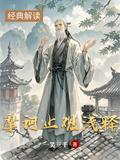 A Simple Commentary on the Great Calming and Contemplation 摩诃止观浅释
The Mohe Zhiguan is a central work by the Tiantai master Zhiyi (538–597), and together with the Fahua Xuanyi and Fahua Wenju, it is known as one of the “Three Great Tiantai Treatises.” Grounded in the theories of “three thousand realms in a single thought” and “the perfect interpenetration of the three truths,” the work systematically explains the practical method of cultivating both calming and contemplation. It brings doctrine together with actual practice and establishes a complete system of
53Reads—Score—Shelves
A Simple Commentary on the Great Calming and Contemplation 摩诃止观浅释
The Mohe Zhiguan is a central work by the Tiantai master Zhiyi (538–597), and together with the Fahua Xuanyi and Fahua Wenju, it is known as one of the “Three Great Tiantai Treatises.” Grounded in the theories of “three thousand realms in a single thought” and “the perfect interpenetration of the three truths,” the work systematically explains the practical method of cultivating both calming and contemplation. It brings doctrine together with actual practice and establishes a complete system of
53Reads—Score—Shelves
-
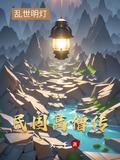 Biographies of Eminent Monks in Republican-Era China 民国高僧传
During the Republic of China era, as the nation faces peril, the four great Buddhist monks of the time, Yinguang, Xuyun, Taixu, and Master Hongyi, emerge alongside Masters Yuanying, Dixian, and Tanxu. They spread salvation to all living beings and promote the Dharma. The eminent monks exchange ideas and encourage one another, debating their views as they work together to save all beings. Based on historical events and their chronology, this book presents vivid characters and authentic accounts.
49Reads—Score—Shelves
Biographies of Eminent Monks in Republican-Era China 民国高僧传
During the Republic of China era, as the nation faces peril, the four great Buddhist monks of the time, Yinguang, Xuyun, Taixu, and Master Hongyi, emerge alongside Masters Yuanying, Dixian, and Tanxu. They spread salvation to all living beings and promote the Dharma. The eminent monks exchange ideas and encourage one another, debating their views as they work together to save all beings. Based on historical events and their chronology, this book presents vivid characters and authentic accounts.
49Reads—Score—Shelves
-
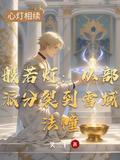 The Lamp of Prajna: From Sectarian Schisms to the Banner of Dharma in the Snowy Land 般若灯:从部派分裂到雪域法幢
After the Buddha entered nirvana, the Hinayana schools became embroiled in a dispute over the doctrine that “the three times truly exist.” Nagarjuna cleaved through the confusion with the “Middle Way of the Eight Negations,” while the brothers Asanga and Vasubandhu realized that “consciousness alone exists, and external objects do not.” Padmasambhava subdued the Bon religion and brought Buddhism to Tibet; Langdarma persecuted Buddhism, staining palm-leaf scriptures with blood. Tsongkhapa donned
42Reads—Score—Shelves
The Lamp of Prajna: From Sectarian Schisms to the Banner of Dharma in the Snowy Land 般若灯:从部派分裂到雪域法幢
After the Buddha entered nirvana, the Hinayana schools became embroiled in a dispute over the doctrine that “the three times truly exist.” Nagarjuna cleaved through the confusion with the “Middle Way of the Eight Negations,” while the brothers Asanga and Vasubandhu realized that “consciousness alone exists, and external objects do not.” Padmasambhava subdued the Bon religion and brought Buddhism to Tibet; Langdarma persecuted Buddhism, staining palm-leaf scriptures with blood. Tsongkhapa donned
42Reads—Score—Shelves
-
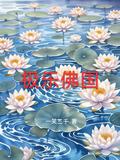 Buddha’s Pure Land 极乐佛国
The novel mainly recounts the protagonist Xinci’s experiences after rebirth in the Western Pure Land of Ultimate Bliss, and his journey from an ordinary mortal to an Equal Enlightenment Bodhisattva. The plot is based primarily on Buddhist classics such as The Ten Essentials of the Pure Land. Its teachings are easy to understand, the story is engaging, and its characters feel vivid and true to life. Written in plain, everyday language, it gives readers a more direct understanding of the Western P
31Reads—Score—Shelves
Buddha’s Pure Land 极乐佛国
The novel mainly recounts the protagonist Xinci’s experiences after rebirth in the Western Pure Land of Ultimate Bliss, and his journey from an ordinary mortal to an Equal Enlightenment Bodhisattva. The plot is based primarily on Buddhist classics such as The Ten Essentials of the Pure Land. Its teachings are easy to understand, the story is engaging, and its characters feel vivid and true to life. Written in plain, everyday language, it gives readers a more direct understanding of the Western P
31Reads—Score—Shelves
-
 A Simple Commentary on the Treatise on the Great Perfection of Wisdom 大智度论浅释
The Dazhidulun was composed by the ancient Indian Bodhisattva Nagarjuna and translated by Kumarajiva during the Later Qin. This monumental work interpreting the Mahaprajnaparamita Sutra is hailed as “the king of treatises.” Taking the wisdom of emptiness as its central teaching, it extensively explains the stages of practice and realization along the bodhisattva path, integrates the teachings of the Mahayana and Hinayana, and deeply elucidates the Middle Way of true reality. This accessible comm
25Reads—Score—Shelves
A Simple Commentary on the Treatise on the Great Perfection of Wisdom 大智度论浅释
The Dazhidulun was composed by the ancient Indian Bodhisattva Nagarjuna and translated by Kumarajiva during the Later Qin. This monumental work interpreting the Mahaprajnaparamita Sutra is hailed as “the king of treatises.” Taking the wisdom of emptiness as its central teaching, it extensively explains the stages of practice and realization along the bodhisattva path, integrates the teachings of the Mahayana and Hinayana, and deeply elucidates the Middle Way of true reality. This accessible comm
25Reads—Score—Shelves
-
 A Simple Commentary on the Blue Cliff Record 碧岩录浅释
An Accessible Commentary on the Blue Cliff Record is a modern interpretation of the Chan Buddhist classic, the Blue Cliff Record. Compiled by Chan Master Yuanwu Keqin, the original work contains one hundred koans and brings together the Linji school's distinctive style. Through forms such as commentary, instruction, and interlinear notes, it reveals Chan's incisive methods and the profound essence of its teachings. Guided by the principle of “mind seals mind,” this accessible commentary explains
22Reads—Score—Shelves
A Simple Commentary on the Blue Cliff Record 碧岩录浅释
An Accessible Commentary on the Blue Cliff Record is a modern interpretation of the Chan Buddhist classic, the Blue Cliff Record. Compiled by Chan Master Yuanwu Keqin, the original work contains one hundred koans and brings together the Linji school's distinctive style. Through forms such as commentary, instruction, and interlinear notes, it reveals Chan's incisive methods and the profound essence of its teachings. Guided by the principle of “mind seals mind,” this accessible commentary explains
22Reads—Score—Shelves
-
 Numbering Stars in the Sea: the Light of Human Reason 数海星图:人类理性之光
This book is based on the two-door structure of Master Zhizhe's interpretation of the Lotus Sutra. It transforms Tiantai's core teachings such as the Five Seasons and Eight Teachings, One Mind and Three Views, One Thought of Three Thousands, and Six Buddhas into easy-to-understand modern language. It does not lose the lineage of the Guan Gang Sect and makes it easier for contemporary people to directly bear the wonderful heart of the Lotus Sutra.
17Reads—Score—Shelves
Numbering Stars in the Sea: the Light of Human Reason 数海星图:人类理性之光
This book is based on the two-door structure of Master Zhizhe's interpretation of the Lotus Sutra. It transforms Tiantai's core teachings such as the Five Seasons and Eight Teachings, One Mind and Three Views, One Thought of Three Thousands, and Six Buddhas into easy-to-understand modern language. It does not lose the lineage of the Guan Gang Sect and makes it easier for contemporary people to directly bear the wonderful heart of the Lotus Sutra.
17Reads—Score—Shelves
-
 A Brief Explanation of the Huayan Sutra 华严经疏钞浅释
"A Brief Interpretation of the Huayan Sutra" is a modern annotation that systematically interprets the "Huayan Sutra" written by Master Cheng Guan of the Tang Dynasty. The eighty-volume "Huayan Sutra Shuchao" written by Master Chengguan is the culmination of the Huayan Sect's collection. It integrates the meaning of the sutra and explains the contemplation and practice in depth. However, the meaning of its text is profound and broad, and many people today are amazed when they study it. This book
17Reads—Score—Shelves
A Brief Explanation of the Huayan Sutra 华严经疏钞浅释
"A Brief Interpretation of the Huayan Sutra" is a modern annotation that systematically interprets the "Huayan Sutra" written by Master Cheng Guan of the Tang Dynasty. The eighty-volume "Huayan Sutra Shuchao" written by Master Chengguan is the culmination of the Huayan Sect's collection. It integrates the meaning of the sutra and explains the contemplation and practice in depth. However, the meaning of its text is profound and broad, and many people today are amazed when they study it. This book
17Reads—Score—Shelves
-
 A Simple Commentary on the Record of the Mirror of the Source 宗镜录浅释
The Zongjing Lu is a monumental work compiled by Chan Master Yongming Yanshou (904–975) of the Later Zhou, gathering the essential teachings of the Chan and doctrinal schools. Its guiding principle is, “Take the One Mind as the source, and illuminate the myriad dharmas like a mirror.” Across one hundred volumes, it encompasses the heart of the Tripitaka and the twelve divisions of scripture. This accessible commentary follows the principles of “interpreting treatises through the sutras and verif
13Reads—Score—Shelves
A Simple Commentary on the Record of the Mirror of the Source 宗镜录浅释
The Zongjing Lu is a monumental work compiled by Chan Master Yongming Yanshou (904–975) of the Later Zhou, gathering the essential teachings of the Chan and doctrinal schools. Its guiding principle is, “Take the One Mind as the source, and illuminate the myriad dharmas like a mirror.” Across one hundred volumes, it encompasses the heart of the Tripitaka and the twelve divisions of scripture. This accessible commentary follows the principles of “interpreting treatises through the sutras and verif
13Reads—Score—Shelves
-
 Delivering All Souls from the Netherworld: The Vow of Ksitigarbha Bodhisattva 幽冥度尽:地藏菩萨本愿行
From Jin Qiaojue, a member of the Silla royal family, to a Buddhist monk who entered the Tang dynasty, and finally to Ksitigarbha Bodhisattva, who vowed, “Until hell is empty, I will not become a Buddha,” he crossed borders and the divide between life and death, knocking on the gates of the underworld with boundless compassion. Beneath the ancient Buddha and the solitary lamp on Mount Jiuhua, he once entered the underworld to save his mother. There he witnessed countless ghosts suffering punishm
11Reads—Score—Shelves
Delivering All Souls from the Netherworld: The Vow of Ksitigarbha Bodhisattva 幽冥度尽:地藏菩萨本愿行
From Jin Qiaojue, a member of the Silla royal family, to a Buddhist monk who entered the Tang dynasty, and finally to Ksitigarbha Bodhisattva, who vowed, “Until hell is empty, I will not become a Buddha,” he crossed borders and the divide between life and death, knocking on the gates of the underworld with boundless compassion. Beneath the ancient Buddha and the solitary lamp on Mount Jiuhua, he once entered the underworld to save his mother. There he witnessed countless ghosts suffering punishm
11Reads—Score—Shelves
-
 A Simple Commentary on the Fahua Wenzhu 法华文句浅释
The ten-fascicle Fahua Wenju, or Words and Phrases of the Lotus Sutra, was expounded by Master Zhiyi of the Sui dynasty and recorded by the Venerable Zhang'an. It is a model for exegesis in the Tiantai school. Through four approaches to interpreting the text, namely causes and conditions, doctrinal classification, the original and the manifested, and contemplation of the mind, it unlocks the full body of the Tathagata's teachings and reveals the Lotus Sutra's perfect and sudden meaning: opening
7Reads—Score—Shelves
A Simple Commentary on the Fahua Wenzhu 法华文句浅释
The ten-fascicle Fahua Wenju, or Words and Phrases of the Lotus Sutra, was expounded by Master Zhiyi of the Sui dynasty and recorded by the Venerable Zhang'an. It is a model for exegesis in the Tiantai school. Through four approaches to interpreting the text, namely causes and conditions, doctrinal classification, the original and the manifested, and contemplation of the mind, it unlocks the full body of the Tathagata's teachings and reveals the Lotus Sutra's perfect and sudden meaning: opening
7Reads—Score—Shelves
-
 The Lineage of the Vinaya School 律宗法脉
The Lineage of the Vinaya is an epic account of the spread of the Dharma across a thousand years. The story begins in distant India, where the Venerable Dharmaguptaka compiles the Vinaya Canon. It then transmigrates through the Western Regions, reaching China for the first time during the turbulent Three Kingdoms period through the efforts of Dharmakala. After taking root during the Wei, Jin, and Southern and Northern Dynasties, the tradition flourishes under the Tang. The Master Daoxuan establi
7Reads—Score—Shelves
The Lineage of the Vinaya School 律宗法脉
The Lineage of the Vinaya is an epic account of the spread of the Dharma across a thousand years. The story begins in distant India, where the Venerable Dharmaguptaka compiles the Vinaya Canon. It then transmigrates through the Western Regions, reaching China for the first time during the turbulent Three Kingdoms period through the efforts of Dharmakala. After taking root during the Wei, Jin, and Southern and Northern Dynasties, the tradition flourishes under the Tang. The Master Daoxuan establi
7Reads—Score—Shelves
-
 Hua Zang World Sea: Vairocana's Perfect Enlightenment of Creation 华藏世界海:毗卢遮那的创世圆觉
When Buddha Vairochana attained supreme enlightenment in the Dharma Realm of Universal Light, he saw a picture that shocked his heart and soul: all living beings possess a Buddha-nature of light that is unique to him, yet they sink into the cosmic dream weaved by their own minds in a single thought of ignorance. He saw stars going extinct in the increase of entropy, saw life experiencing the pain of love and separation in the process of evolution, saw civilization return to dust after its glory
7Reads—Score—Shelves
Hua Zang World Sea: Vairocana's Perfect Enlightenment of Creation 华藏世界海:毗卢遮那的创世圆觉
When Buddha Vairochana attained supreme enlightenment in the Dharma Realm of Universal Light, he saw a picture that shocked his heart and soul: all living beings possess a Buddha-nature of light that is unique to him, yet they sink into the cosmic dream weaved by their own minds in a single thought of ignorance. He saw stars going extinct in the increase of entropy, saw life experiencing the pain of love and separation in the process of evolution, saw civilization return to dust after its glory
7Reads—Score—Shelves
-
 A Brief Commentary on the Yellow Emperor’s Scripture of Hidden Talisman 阴符经浅释
The Yinfu Jing is an ancient Daoist secret classic. Though the entire text is only a little over 300 characters long, it contains profound mysteries concerning the Three Powers of Heaven, Earth, and Humanity. Following the principle of “explaining the classics through the classics,” this introductory commentary draws on the essence of annotations by sages throughout history, including Jiang Shang, Zhuge Liang, and Li Quan, to explain this wisdom-filled treasure in ten systematic chapters: a work
6Reads—Score—Shelves
A Brief Commentary on the Yellow Emperor’s Scripture of Hidden Talisman 阴符经浅释
The Yinfu Jing is an ancient Daoist secret classic. Though the entire text is only a little over 300 characters long, it contains profound mysteries concerning the Three Powers of Heaven, Earth, and Humanity. Following the principle of “explaining the classics through the classics,” this introductory commentary draws on the essence of annotations by sages throughout history, including Jiang Shang, Zhuge Liang, and Li Quan, to explain this wisdom-filled treasure in ten systematic chapters: a work
6Reads—Score—Shelves
-
 Light Pervades the Glazed World: The Vows and Deeds of the Medicine Buddha of the East 琉璃光遍:东方药师佛行愿记
In the distant Eastern Pure Lapis Lazuli World, there once lived a king named Starlight. Seeing all beings trapped in the painful cycle of illness, poverty, and ignorance, he resolutely renounced his throne and made twelve great vows. He vowed to use compassion as medicine to heal the suffering of body and mind, wisdom as a lamp to dispel the darkness of ignorance, and good deeds as a boat to ferry all beings beyond their tribulations. From a diligent and capable ruler, to a monk who practiced a
5Reads—Score—Shelves
Light Pervades the Glazed World: The Vows and Deeds of the Medicine Buddha of the East 琉璃光遍:东方药师佛行愿记
In the distant Eastern Pure Lapis Lazuli World, there once lived a king named Starlight. Seeing all beings trapped in the painful cycle of illness, poverty, and ignorance, he resolutely renounced his throne and made twelve great vows. He vowed to use compassion as medicine to heal the suffering of body and mind, wisdom as a lamp to dispel the darkness of ignorance, and good deeds as a boat to ferry all beings beyond their tribulations. From a diligent and capable ruler, to a monk who practiced a
5Reads—Score—Shelves
-
 The Chan Buddhist Lineage 禅宗法脉
The Chan Lineage is a long Buddhist novel tracing the history and transmission of Chan Buddhism across a thousand years, from the Venerable Kashyapa to Chan Master Xuyun. Strictly grounded in Chan historical records and the sayings of the patriarchs, the novel weaves in measured literary invention and uses vivid stories and wisdom-filled koans to portray the spiritual journeys of the twenty-eight Indian patriarchs and the six Chinese patriarchs. The story begins with “Kashyapa's smile at Vulture
4Reads5.8Score—Shelves
The Chan Buddhist Lineage 禅宗法脉
The Chan Lineage is a long Buddhist novel tracing the history and transmission of Chan Buddhism across a thousand years, from the Venerable Kashyapa to Chan Master Xuyun. Strictly grounded in Chan historical records and the sayings of the patriarchs, the novel weaves in measured literary invention and uses vivid stories and wisdom-filled koans to portray the spiritual journeys of the twenty-eight Indian patriarchs and the six Chinese patriarchs. The story begins with “Kashyapa's smile at Vulture
4Reads5.8Score—Shelves
-
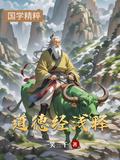 A Simple Commentary on the Tao Te Ching 道德经浅释
The Tao Te Ching, also known as the Laozi, was written by Laozi, the great thinker and philosopher of the pre-Qin era. It is a treasure of ancient Chinese philosophy, political thought, and cosmology, as well as the foundational work of Taoist thought. Though only a little over five thousand characters long, it encompasses countless ideas and profound meanings, and is considered a source of wisdom for Chinese civilization. The book is divided into the Tao section (the first part, chapters one th
4Reads—Score—Shelves
A Simple Commentary on the Tao Te Ching 道德经浅释
The Tao Te Ching, also known as the Laozi, was written by Laozi, the great thinker and philosopher of the pre-Qin era. It is a treasure of ancient Chinese philosophy, political thought, and cosmology, as well as the foundational work of Taoist thought. Though only a little over five thousand characters long, it encompasses countless ideas and profound meanings, and is considered a source of wisdom for Chinese civilization. The book is divided into the Tao section (the first part, chapters one th
4Reads—Score—Shelves
-
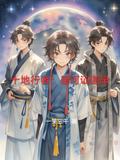 The Ten Landswalker: A Record of Proving the Dao Among the Stars 十地行者:星河证道录
Xuan Jing, once the foremost theorist of the Buddhist kingdom, became obsessed with deducing the “absolute truth” and indirectly caused the civilization of an entire universe, the Brahma Realm, to be annihilated. Consumed by karmic fire, he fell into the cycle of reincarnation. In this life, he is a “problem student” at an interstellar cultivation academy, with a head full of Buddhist sutra formulas and the worst combat skills in his class. Then fate awakened, and his memories of his past life r
3Reads—Score—Shelves
The Ten Landswalker: A Record of Proving the Dao Among the Stars 十地行者:星河证道录
Xuan Jing, once the foremost theorist of the Buddhist kingdom, became obsessed with deducing the “absolute truth” and indirectly caused the civilization of an entire universe, the Brahma Realm, to be annihilated. Consumed by karmic fire, he fell into the cycle of reincarnation. In this life, he is a “problem student” at an interstellar cultivation academy, with a head full of Buddhist sutra formulas and the worst combat skills in his class. Then fate awakened, and his memories of his past life r
3Reads—Score—Shelves
-
 Radiant Years: Reborn in the 1970S, Our Marriage Blooms Like a Song 璀璨时光:重生七零暖婚如歌
Top jewelry designer Lin Xi wakes up one day to find herself inside a period novel, as a pitiful cannon-fodder character who is manipulated by a reborn supporting heroine, abandoned by her educated-youth husband, and destined to die miserably on the street. Looking at her hungry little sister and their utterly destitute home, Lin Xi sneers: “Not a bad script, but the cast has changed!” Terrible relatives? She’ll use a clever scheme to split the family and make them regret everything! A fake-swee
1Reads—Score—Shelves
Radiant Years: Reborn in the 1970S, Our Marriage Blooms Like a Song 璀璨时光:重生七零暖婚如歌
Top jewelry designer Lin Xi wakes up one day to find herself inside a period novel, as a pitiful cannon-fodder character who is manipulated by a reborn supporting heroine, abandoned by her educated-youth husband, and destined to die miserably on the street. Looking at her hungry little sister and their utterly destitute home, Lin Xi sneers: “Not a bad script, but the cast has changed!” Terrible relatives? She’ll use a clever scheme to split the family and make them regret everything! A fake-swee
1Reads—Score—Shelves
-
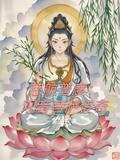 Cihang Pudu: the Legend of Guanyin Bodhisattva 慈航普度:观音菩萨传奇
This book is based on the legend and teachings of Guanyin Bodhisattva in Buddhist classics, and creates an epic novel showing the compassionate incarnation of Guanyin Bodhisattva. The story begins with Avalokitesvara Bodhisattva's initial vow to practice. It tells how through countless eons of practice, she developed great compassion and made the great wish to save all suffering sentient beings, and finally achieved the supreme status of Avalokitesvara with Thousand Arms and Thousand Eyes. Throu
—Reads—Score—Shelves
Cihang Pudu: the Legend of Guanyin Bodhisattva 慈航普度:观音菩萨传奇
This book is based on the legend and teachings of Guanyin Bodhisattva in Buddhist classics, and creates an epic novel showing the compassionate incarnation of Guanyin Bodhisattva. The story begins with Avalokitesvara Bodhisattva's initial vow to practice. It tells how through countless eons of practice, she developed great compassion and made the great wish to save all suffering sentient beings, and finally achieved the supreme status of Avalokitesvara with Thousand Arms and Thousand Eyes. Throu
—Reads—Score—Shelves
-
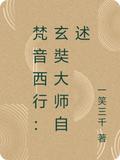 Buddhist Chants Journey West: Master Xuanzang’s Own Account 梵音西行:玄奘大师自述
I am Xuanzang, from Goushi in Luoyang. My surname was Chen, and my given name was Yi. The world called me the Tripitaka Master and the Great Vehicle Deva, but from beginning to end, I was simply a seeker of the Dharma and a traveler on foot. In the third year of the Zhenguan era, I disobeyed orders and traveled west alone. I never imagined that the journey would last seventeen years, taking me through 110 countries and across 50,000 li. The scriptures in the Central Plains contradicted one anot
—Reads5.8Score—Shelves
Buddhist Chants Journey West: Master Xuanzang’s Own Account 梵音西行:玄奘大师自述
I am Xuanzang, from Goushi in Luoyang. My surname was Chen, and my given name was Yi. The world called me the Tripitaka Master and the Great Vehicle Deva, but from beginning to end, I was simply a seeker of the Dharma and a traveler on foot. In the third year of the Zhenguan era, I disobeyed orders and traveled west alone. I never imagined that the journey would last seventeen years, taking me through 110 countries and across 50,000 li. The scriptures in the Central Plains contradicted one anot
—Reads5.8Score—Shelves