


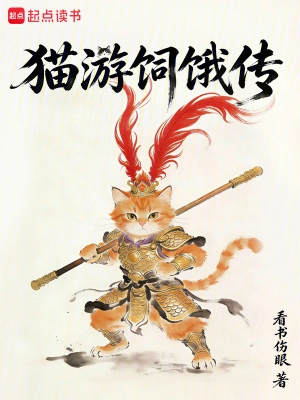
The Cat Gamer's Tale of Feeding Hunger
猫游饲饿传
- Status
- Ongoing
- Length
- 460k Words
- Genre
- Cultivation
- Subgenre
- Mythic Cultivation
- Updated
- 21h ago
- Source
- Qidian
Stats
Tags
Synopsis
More by this author
In booklists 7

🌸Songbai’s Little Book Stall🌸🍀🌟🍋
🍋 Whenever I find a good book, I add it. Most are new, since I don't have the patience for long series. 🍋 🍉 Light novel fan fiction, infinite worlds, xianxia, history, sci-fi and time travel, and so on... Something like that. 🍉 🌸 Most have no romance. The list is capped at 80 books. 🌸
The Carefree Tower of the Mortal World
The mortal world is a vast net. All I wish for is a carefree life.


A Quiet Harbor in This Restless World
🦝 Recommending novels I enjoy and am currently following. 🦊 These are the genres I mainly enjoy: fan fiction, cultivation, historical fiction, light novels, showbiz, and mystery-solving. 🐰 I tend to favor fresh, relaxing, easygoing stories with sound values and a touch of absurd humor, as well as other kinds of traditional feel-good fiction, rather than toxic feel-good drivel. 🦭 When I have time, I'll write more detailed recommendations. When I don't, I'll just add a quick recommendation. I'l
Good Books Worth Revisiting
I recommend some classic stories and also save promising new gems, leaving the title and a recommendation. I'll read them one by one and add the ones that suit me to the list. If you're passing by, please follow. Thanks, everyone.
Changning Book Pavilion
I enjoy stories with sensible characters, kind-hearted themes, and a warm atmosphere, as well as novels without a female lead. I read a range of genres, including xianxia, Western fantasy, cultivation fantasy, and sci-fi. This list is also a personal record, and recommendations for similar books are welcome!

Steer Clear of Toxic Reads, Focus on What Makes Each Story Special (Especially Fanfiction)
I've been reading on Qidian for twelve years. I don't give books ratings or stars ⭐ because everyone has their own tastes. I focus on what makes each book distinctive. The ones on this list have all found their own niche. Reading lets us immerse ourselves in worlds others have created and feel for their characters and stories. A book that suits your taste is hard to find. I read widely and I'm picky, so I'll collect any interesting books I come across here. I hope you find something you like. I
Tangyuan's Animal Protagonist Book List ⭐
This list features novels I, Tangyuan, have read where animals are the protagonists or the main characters have very obvious animal traits. There aren't many novels like these, but the element is so appealing that I decided to make a list dedicated to them. A few things to keep in mind: 1. I have my own reading preferences. I mainly read urban career stories, fanfiction, entertainment-industry stories, and sports fiction. Unless an author I've followed before switches to a new genre, I rarely r
Readers also read
 A Record of a Mortal's Journey to Immortality: From the Start, Lying in Wait at the Seven Mysteries Sect to Take Han Li as My Disciple
 I Opened up a Paradise in the Immortal Cultivation Family
 Mortal: I Have a Proficiency Panel
 Beginning as a Puppet Emperor and Becoming a Saint
 Dating My Manager Is Forbidden
 A Little Fox's Immortal Cult Handbook
 Immortality as a Cat
 Yu-Gi-Oh!: The Boss Is Actually Me
 Martial Saint: My Hard Work Has Paid Off
 I’m Just a Cat, and You Want Me to Stream Skill Grinding?
 Department of Abnormal Pathology
 Xiaoyu and Hogwarts
 Hogwarts' Druid Master
 This Actor Has a Big Problem
 My Favorability System Has a Problem
 I Think This Is Pretty Scientific
 Wan Ning's Prince of Tennis: A Hot-Blooded March
 I Form a Palico Investigation Team in One Piece
Reader comments 53
Google Translate
Some textual research on Journey to the West
In the 13th year of Zhenguan, Chen Guangrui started his studies and won the first prize, and married Miss Yin. On the way to take office, he was killed by the water thief Liu Hong. Miss Yin gave birth to Tang Seng three months later. Even if it took two or three months to take office, Tang Seng was born prematurely, so some people say that Chen Guangrui is the successor and the child is Liu Hong's. Historically, Xuanzang obtained Buddhist scriptures in the early or third year of Zhenguan, but in Journey to the West it is also the thirteenth year of Zhenguan. That is, Xuanzang was born in thirteen years, took revenge in thirteen years, and lived in another world for eighteen years. In fact, the plot of "Jiang Liu'er" has already appeared in Yang Jingxian's Zaju version of "Journey to the West" in the late Yuan and early Ming dynasties. It is relatively rigorous. In the third year of Zhenguan, Chen Guangrui won the first prize and took office with his wife who was eight months pregnant. In the 21st year of Zhenguan, the 18-year-old Tang Monk took revenge and obtained Buddhist scriptures. Xuanzang in history certainly does not have the plot of Jiang Liu. The story of Jiang Liuer comes from the Tang Dynasty's "Cui Weizi" and "Chen Yilang", the Song Dynasty's "Bu Qi Zhuan" and the Yuan drama "Xiangguo Temple Gongsunhe Undershirt" and "Feng Yulan", and was later borrowed from the Ming Dynasty's "Luo Shan Ji". The stories are similar. In fact, if you want to explain it, it is not impossible to explain it. Just think of Jiang Liu'er as Xuanzang's second intention. Xuanzang lost his mother at the age of five and his father at the age of ten, and then became a monk. He left his parents to become a monk when he was young, and he must have missed his parents, so he was born with two minds. Therefore, the 28-year-old Xuanzang's second heart was the 18-year-old Jiang Liuer. Moreover, Jiang Liuer is a ruthless person who can dig out the belly of his enemies, and his character is very different from that of Xuanzang. Many people wonder why the journey to the west is not set to the same time as the third year of Zhenguan in history? In fact, it is mainly the story of Tang Taizong entering the underworld. This story was not originally part of Journey to the West. To add this story to Journey to the West, it must be placed before the study of scriptures. However, Taizong's entry into the underworld, including in "Shuo Tang" and other books, originally happened ten years after the death of Empress Changsun in Zhenguan. If it were placed in the third year of Zhenguan, it would be different from the story everyone usually knows, and it would be difficult to change the book of life and death. Changing the third year of Zhenguan to the twenty-third year of Zhenguan would require adding characters, and changing the thirteenth year of Zhenguan to the twenty-third or thirty-third year would be much simpler. Some people say that the character you is a simplified character, and that is not how ancient Chinese is written. In fact, modern simplified characters have been widely used among the people in the Song Dynasty. So the date of Tang Monk's Buddhist scriptures was moved to thirteen years. By the way, in the original story of Emperor Taizong of the Tang Dynasty entering the underworld, Cui Yu wrote, "Ten years will be the emperor's return to Yangdao." Only ten years of Yangshou were added. There are hundreds of chapters, why do you ignore historical records and original plots and insist on making it the thirty-three years of Zhenguan? Because the Buddhist scriptures were not started until Taizong returned to Yangshi, and it would take Xuanzang more than ten years to return home. The author hopes that when Xuanzang returns to China, he will be greeted by Li Shimin. This will be perfect and consistent with history. Ten years of life are not enough, so Li Shimin must live for twenty more years. The influence of the 100-chapter version of Journey to the West was so great that the Romance of the Sui and Tang Dynasties, which was published in the early Qing Dynasty, and the later biography of the Tang Dynasty that followed the trend, also copied this mistake when writing about the death of Emperor Taizong of the Tang Dynasty. In history, why did Xuanzang go to obtain Buddhist scriptures in the third year of Zhenguan? Historically, in August of the third year of Zhenguan, Li Shimin decided to attack the Turks. In November, the Turks invaded Hexi. In the first month of the fourth year, Li Jing attacked the Khan with three thousand cavalry, marking the beginning of the great victory over the Turks. There is actually some connection between Xuanzang's westward journey and the Tang Dynasty's extermination of the Turks, and that is the frost disaster. Without this severe frost, Xuanzang might not have left Beijing. The northern nomadic people froze to death in large numbers during the frost disaster. This was when they were most eager to obtain food but at their weakest. Historically, Xuanzang had to wait until a frost disaster occurred and the court allowed monks and laypeople to go out and escape. Just after leaving Chang'an, I realized how strict the ancient laws were. Especially when the world has just stabilized and there is no official certificate, who knows whether you are a tax-evading businessman, a rioting gangster, or a Turkic spy? Not to mention going abroad, people traveling across states and counties will be subject to interrogation. Let's talk about Tang Seng's previous life, Golden Chanzi Why is Tang Seng the reincarnation of "Jin Chanzi"? In books such as "Five Lanterns Huiyuan" of the Song Dynasty, there is a metaphor such as "new golden marbles from the red furnace". However, in the "Buddha Tongzai" of the Yuan Dynasty, it was mistakenly copied as "Jin Chanzi". It is normal for "Jin Chan" to be copied as "Jin Chan". As for the so-called "Tongjian of Immortals of All Dynasties" on the Internet, the golden cicada is a burning lamp or something like that. That was made up by the people of the Qing Dynasty. In the drama, Xuanzang's predecessor was "Venerable Pilujia" and he was an Arhat. It was a good setting. Why did he become a golden cicada? It is probably because the marble monk in the Ming Dynasty was so popular, and it is always good to borrow from his reputation. You must know that the various folk Maoshan sects in the south still have Monk Danzi as their founder. This is a big shot. Jinchanzi comes from the golden marbles. After being seen by Feng Menglong, he used his imagination. He felt that the Danzi Monk from "Ping Yao Zhuan" could be combined with the Golden Chanzi from Journey to the West, so he rewrote the "Ping Yao Zhuan" with an additional "egg-born" origin for the Danzi Monk, and he also floated in the water and became a river. Next is the plot of Jinghe Dragon King. I would like to ask everyone, does Tang Monk know magic, or can he pray for rain? During the battle between Che and Chi, Tang Monk clearly told Wukong that he did not know how to pray for rain. But in the Zaju version of Journey to the West, under the decree of Guanyin, Tang Monk formed an altar to pray for rain, meditated for a while, and it rained heavily for three days. Li Shimin then believed that he was an eminent monk, named him Master Tripitaka, and went to the West to obtain Buddhist scriptures. In the "Tang Monk's Book of Buddhist Scriptures" that only exists in Japan, the first picture shows Xuanzang receiving the imperial list in the capital. So Tang Monk used to pray for rain. And this incident has a prototype. It is recorded in "Fayuan Zhulin" of the Tang Dynasty that in the third year of Zhenguan, Emperor Taizong of the Tang Dynasty was simple, sincere and virtuous and served 27 people on Tianmen Street to pray for rain for seven days. There is no information about who these twenty-seven people are. There should be no Xuanzang in history. We can only find records in the "Buddha Statistics" of the Song Dynasty. In March of the third year, Zen Master Jing of Mizhou was ordered to come to Beijing to pray for rain. Therefore, the arrangement of Xuanzang to pray for rain in the early Journey to the West has a historical prototype. In order to highlight Sun Wukong, the current version of Journey to the West has deprived Tang Monk of all his abilities, including the courage to disembowel his enemies. This is certainly a success from a literary point of view. But this also caused the plot of the Jinghe Dragon King to be too blunt. The Jinghe Dragon King, as the general manager of the Eight Waters in Chang'an, did not know the rain task for the next day, because there was no rain the next day, and it was Tang Monk who relied on his Buddhist background to ask for it. There is evidence that the emperor's list in "Tang Monk's Book of Buddhist Scriptures" requires three feet of sweet rain, and the unexpected task the Jinghe Dragon King received was also more than three feet. Three feet, 900 millimeters according to the Tang Dynasty, was equivalent to the annual rainfall in Xi'an during the Tang Dynasty. The super heavy rain came so suddenly. The Dragon King of Jinghe River was good at changing his mission. Buddhism wanted to kill chickens to scare monkeys, so the Dragon King of Jinghe River died because of a slight deviation in rainfall. You must know that in "Ten Thousand Flowers Tower", the fire dragon secretly descended to earth and killed hundreds of thousands of people. In the end, it just turned into a moon dragon colt to assist Wu Quxing's reincarnation of Di Qing. But later the Jade Emperor treated the Jinghe Dragon King's eight dragon sons favorably as compensation. The eldest son, Xiao Huanglong, lives in Huaidu, the second son, Xiaolilong, lives in Jidu, the third son, Qingbei Long, occupies Jiangdu, the fourth son, Red Bearded Dragon, controls Hedu, the fifth son, Fu Laolong, is the Buddha's bell master, and the sixth son, Wen Beast Dragon, is the shrine. In Zhenji, the seventh son Jing Zhonglong guards the Heavenly Palace as the Jade Emperor, the eight sons Mirage conquers Mount Taiyue at Ao Guang, the Dragon King of the East China Sea, and the ninth son Xiaolong wants to wait for Tang Monk in the Heishui River just to take revenge. . Including the Xihai Dragon King, who is the brother-in-law of the Jinghe Dragon King, has a close relationship with the three rhinoceros spirits, and is also highly suspected of revenge. There is a pond in "The Poems of the Tripitaka of the Tang Dynasty" called "Nine Dragon Pond". There is a nine-headed dragon in the pond, which is the prototype of the small dragon on the Heishui River in Journey to the West. "The Records of the Western Regions of the Tang Dynasty" records that there is a large dragon pond between the Agni Kingdom and the Qiuci Kingdom. There are many dragons in the Dalong Pond. They like to turn into stallions and mate with the mares on the shore to give birth to dragon colts. Therefore, Qiuci Kingdom has always been rich in famous horses. This is not so awesome. The dragons will also turn into men, mate with women in the city, and give birth to some powerful "little dragons". According to Journey to the West and Sanyanerpai, the dragon is one of the nine sons of the dragon. The nine sons of the dragon are so weird that they can only be regarded as "half-dragons". Some people say that the dragon is the ancient name for the crocodile, but after thousands of years of evolution, there are various explanations, because many literati have never seen a crocodile, so they just rely on the little knowledge in the book to guess. The author of Journey to the West described the little turtle as a "big turtle". There is a story in "The Surprise" that a scholar went on an overseas adventure and brought back a turtle shell. Hu Shang recognized it as belonging to the turtle and dug out twenty-four luminous pearls, which were priceless. As for praying for rain, if the plot of "The Legend of Zhong Kui" is added, there will be not only Buddhism but also Taoism behind this rain. In the plot of "The Joy of the World", it is said that there has been no rain in Chang'an for three months. Li Shimin asked Yuan Tiangang to find a solution. Yuan Tiangang recommended Du Ping and five others. The five people went to Beijing to pray for rain, which came true immediately. The five Duping brothers, according to the Three Religions Origins and God Collection, were the five bandits in the Northern and Southern Dynasties, and they became the "Five Thieves Generals" after their death. However, in Tian Xia Le, Du Ping became a wealthy man. He sent his four brothers to help people everywhere, and was named the "Five-Road General" by Li Shimin. Zhong Kui also married his sister to Du Ping. I don't know whether the influence of Tianxiale is too great, or whether this view has always been mainstream among the people. Anyway, in the story of Zhong Kui marrying his sister, Du Ping is the groom, and there are many places where the five Du Ping brothers are regarded as the "Five Gods of Wealth". By the way, Guanyin discovered Zhong Kui's serious anti-Buddhist tendency even though he knew that Zhong Kui was a martial arts star in heaven, so he directly sent five poor ghosts and five powerful ghosts to take away Zhong Kui's fortune. There are also stories about the Jinghe Dragon King such as "A Thousand Gold Prescriptions" and "The Story of Liu Yi". "A Thousand Gold Prescriptions" is the story of Sun Simiao and the Jinghe Dragon King when he was young. The Dragon King of Jinghe River in "The Legend of Liu Yi" should be different from the one in Journey to the West. It should be the successor in Journey to the West. As for the Dragon Girl in "Jiyun Tower" and "Phantom Tower", the maid had an affair with Jinghe Longzi. When she saw that the Dragon Girl had married in, she felt jealous and framed her. As a result, the Dragon Girl ended up in the miserable situation of a shepherd. Of course, they also have an advantage, that is, they prevent silly Longzi from having time to have sex with Dragon Girl. Don't underestimate this difference, it is a side reaction to the ancients' view of chastity. The dragon girl in the novels of the Tang Dynasty was "disgusted" by her husband every day. She was played until she no longer wanted to play, and then she met Liu Yi. This shows that the people of the Tang Dynasty were bold and unrestrained and did not care about virgins. Then Wei Zheng killed the Dragon King in his dream. People who have read Journey to the West have many speculations about Wei Zheng's position as "Human Cao Guan", but there is indeed no similar official position in history and there is no way to verify it. There is no way to go into depth on this issue. As mentioned earlier, the current edition of Journey to the West, which has 100 chapters, was composed by the author of various popular stories at the time. In the Journey to the West dramas of the late Yuan and early Ming dynasties, there was no mention of the Jinghe Dragon King. In the original text of "Journey to the West" included in "Yongle Dadian" in the early Ming Dynasty, "Wei Zheng dreamed of killing the Dragon King of Jinghe River", it only said that Wei Zheng was the prime minister and did not mention Cao Guan. So, was it Wu Chengen, or the author of the 100-chapter edition, who coined the term "human caoguan"? Don't forget that there was nearly two hundred years between Yongle and Wanli, during which time there were countless versions of Journey to the West. Okay, did Wu Chengen invent the "man-cao official"? Is it interesting to fight for this? Have. During the Wanli period, Zhang Dafu, a dramatist, wrote a drama called "Fishing Boat", which is about Wei Zheng killing the Dragon King, Taizong entering the underworld, and Liu Quan entering the melon. It is generally believed that he adapted it based on Wu Chengen's version of "Journey to the West", so few scholars pay attention to this "Journey to the West". In fact, there are a large number of settings that are different from Journey to the West and appear to be more original. Therefore, it is very likely that the Hundred Chapters of Journey to the West and Fishing Boat are both adapted from earlier works and are also "same generations". It is mentioned in the fishing boat that Li Lian, the Heavenly Cao officer, captured the Dragon King of Jinghe River, Cui Yu, the Earth Cao officer, collected his soul, and Wei Zheng, the Human Cao officer, executed him. The three old friends had a clear division of labor. Obviously, the setting of "Heaven, Earth and People" is more reasonable. Some people may suspect that Zhang Dafu made up Tiancao and Dicao based on the name Cao Guan, who wrote Journey to the West. However, in the "Etiquette Biography" found in Shanxi, which is older than the 100-chapter version of Journey to the West, the paragraph "The Dragon King of the Jinghe River, Mr. Nan Shen Ke" also has the roles of "Tiancao, Dicao, and Rencao", and the script of "The Dragon King of the Jinghe River" is separate from "Tang Monk's Study of the Scriptures" in that book. Therefore, "Fishing Boat" does not separate several stories from Journey to the West, but follows the early settings of the story. Wu Chengen or other Journey to the West authors borrowed the story of the Jinghe Dragon King and omitted the Heavenly Cao Guan and the Earth Cao Guan, which indeed made the plot more concise, but leaving a lonely Cao Guan seemed rather abrupt, which made readers struggle for so long. By the way, in the Tang Dynasty's "Chao Ye Qian Zai" and "Tang Taizong Enters the Underworld", it was Li Chunfeng who solved the incident of entering the underworld for Li Shimin. This is also consistent with Li Chunfeng's identity as a well-known warlock of his generation. As for why in Journey to the West, Li Chunfeng disappeared and Wei Zheng appeared instead? Because "Beheading the Dragon King of Jinghe River" and "Taizong Entering the Underworld" were two completely unrelated stories in the early days. When the author of Journey to the West absorbed these two stories, he probably combined Wei Zheng and Li Chunfeng into one to save trouble or make it easier for readers to remember. Let's talk about Cui Yu, the local Cao official. In "Journey to the West", Wei Zheng told Li Shimin that Cui Yu was "the order of Cizhou and later promoted to the Minister of Rites". Cizhou is a state, how can Cui Yu be the county magistrate? In fact, in the Dunhuang Bianwen "Tang Taizong Enters the Underworld", it is written as "Fuyang County Lieutenant". In the Yuan drama "Cui Fujun Cuts Off Enemies and Creditors", it is even clearer. "Magistrate of Fuyang County, Cizhou". Cizhou governed two counties in the Sui Dynasty and three counties in the early Tang Dynasty, including "Fuyang County". Therefore, Fuyang County Magistrate or County Lieutenant is Cui Yu's real official position. Why did Wei Zheng lie to Li Shimin? Because in books such as "Tang Taizong Enters the Underworld" and "Fishing Boat". Cui Yu is not dead, but like Bao Qingtian, "the sun cuts off the yang and the night cuts off the yin"! The judge of the underworld is just his part-time job! Now we know why Wei Zheng used a non-existent official name "Cizhou Ling" to deceive Li Shimin. Because he was afraid that the secret would be revealed and that the emperor would know that Cui Yu was serving in this court. If Li Shimin knew about it and used the power of the world to force Cui Yu, wouldn't he be able to resurrect whoever he wanted to be resurrected in the future? Of course, Cui Yu is not afraid of Li Shimin. Judge Cui in "Tang Taizong Enters the Underworld" dared to threaten Li Shimin with the Xuanwu Gate incident. Judge Cui's mention in the book, "Why did he kill his brothers in the front palace and imprison his loving father in the harem" is cited by current researchers as an important historical reference. Next is Taizong entering the underworld. It was said before that Fishing Boat retains many more original settings than the 100-chapter version of Journey to the West, including the one about "Tianfei Empress". Because Mazu has become more and more famous in modern times. So many people forget that "Tianfei" is just a title, similar to "Tianhou" or "Great Emperor", and does not refer to a specific goddess. In fact, before Mazu, Xiangjun, the god of Dongting and Xiangshui, was the water god with the highest status. Qu Yuan's Nine Songs wrote about her. In the fishing boat, Xiangjun was in charge of the people from all over the world, and she shouted at Judge Cui, treating him completely as a subordinate. It was her decision to capture Li Shimin's soul for questioning, and what greeted Li Shimin was the god of the five mountains and four gods under her. Xiangjun seems to have become the fusion of the water god and the god of the underworld, and his status is extremely respected. In the earlier etiquette biography, it was set as "Our Lady of Qingjiang" and the Dragon King of the Four Seas and the Dragon King of the Four Dus. All these settings are not at all influenced by the 100-volume version of Journey to the West, and are obviously inherited from earlier works. The underworld organizational structure of Ksitigarbha and the Ten Kings of Hell began around the Tang Dynasty, and began to gradually heat up in the Song Dynasty. With the help of the Hundred Chapters of Journey to the West, it soared into the sky, completely replacing the traditional Chinese underworld gods such as Taiyi, the God of Suffering, the Ghost Emperor of the Five Directions, and the Dongyue Emperor. A few folk dramas, such as Fishing Boats, are probably the last holdouts.
Come on, come on, let's sing "Hakimi Mambo" to cheer up
Here comes Meow!
Update soon!
Why add so many emoticons? It really affects the reading experience.
I came here on a journey to the west, but ended up staying in the Three Kingdoms. Forget about the Three Kingdoms, nothing can be changed, just the background board, awesome.
The holy fire is shining, meow meow meow meow
There are too many emojis too often... And the main character is actually mentally ill... Really a cat...
It's so boring to put these pictures on the shelves... Why did it become the Romance of the Three Kingdoms?
Originally, the cute side of the cat was not shown at all, and the daily interaction with Wenji was not written. It felt like the plot of the Three Kingdoms was used to make up the word count. If it did not write about daily life, and it would not have the excitement of a short story, it would be very tasteless, tasteless, and it would be a pity to abandon it.
I didn't see the main character opening up in the third chapter, so I skipped to chapter 10 and still didn't see it. I looked at the book review section and wondered, is this the story of 🐱? The description style in the book reminds me of a book, the unfinished Anne. The problem is that Anne is not stupid, but she just doesn't care sometimes, and the subject matter is still Zhutianliu. The author's pure cat journey to the west, I don't feel what's interesting about it
😜😜Writing about cats is the author's comfort zone