


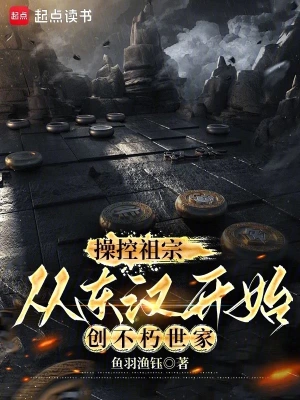
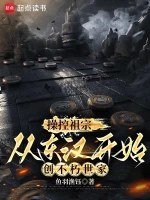
Commanding the Ancestors: Building an Immortal Clan Since the Eastern Han
操控祖宗,从东汉开始创不朽世家
- Status
- Ongoing
- Length
- 1.9M Words
- Genre
- Historical
- Subgenre
- Alternate History
- Updated
- 5mo ago
- Source
- Qidian
Stats
Tags
Synopsis
More by this author
In booklists 17
🌸Songbai’s Little Book Stall🌸🍀🌟🍋
🍋 Whenever I find a good book, I add it. Most are new, since I don't have the patience for long series. 🍋 🍉 Light novel fan fiction, infinite worlds, xianxia, history, sci-fi and time travel, and so on... Something like that. 🍉 🌸 Most have no romance. The list is capped at 80 books. 🌸
【Sanjiang Book Hunt】
Panning for gold in a pile of crap, looking for fun, offbeat books I enjoy. I'll update when I have time.
New-Release Seedlings 🌱 Hot Reads 🌴🍂
Support the official release!
Word Bookshelf
A mix of all kinds of genres, a little bit of everything ❤️

Heavenly Secrets Library
A few books I've read and thought were pretty good
A Temple of Abstract Art, Where Eccentrics Gather
Abstract art, a refined masterpiece Wildly imaginative, utterly unhinged

Feiyu's Picks: 2025'S New Novels with 10,000 Subscribers
The best books that reached 10,000 subscriptions in 2025! Published and reached 10,000 subscriptions in the same year. Because of the list's size limit, only the best books are included. Support official releases! Long live Qidian! Featuring works by highly popular authors! Hidden gems with excellent writing! The best of the 10,000-subscription club, all in one place! Recommendations: He Shou Yue Man Chi, “Laying Low at the Primordial Saint Demon Sect” Guan Guan Gong Zi, “Minglong” Ji Cha, “Moun
Books Worth Reading Three Times or More
A little treat for everyone. I’ve read every one of these multiple times.

Books for Someone Who Wants to Sell Jianbing
Fantasy, xianxia, wuxia, soccer, gaming, and history Looking for promising new authors and fresh releases, plus some chart-toppers. I'm reading all of these.
You Roast Me, I Roast You
Colorful
A Bookshop
Just some books I usually enjoy. I'll add more whenever I feel like it, updates are irregular.
Time-Travel Novels Set in the Song, Yuan, Ming, and Qing Dynasties
Novels about transmigrating to different periods of the Song, Yuan, Ming, and Qing dynasties
Historical Fiction Recommendations
For my own use. These are all books I'm currently reading or planning to read. Feel free to upvote or downvote, everyone, and thanks for helping me sort through them.


Old Favorites Vs. New Buds
This list includes old favorites and promising newcomers. They're all books I've read myself or heard about from friends. If you haven't read them, give them a try. I don't think you'll be disappointed. The list is updated from time to time. I'll add promising new releases and older books that have quietly built up a lot of chapters. If you think the list looks good, click Follow on the right. Thanks! If these books aren't to your taste, just move along quietly. Please don't bash them.
Yu Yin's Library
Recommendations, updated irregularly: Feel-good stories, invincible protagonists, fan fiction, anime, urban, tycoons Featured recommendations I Built a Doomsday Organization Museum of Demon Suppression Top pick: The Sword of Snow Stride I've read every novel on this list. I won't recommend anything that's no good. I'll check the books on this list from time to time. If one gets abandoned, I'll delete it immediately. I'll read recommendations in the comments too, but I'll decide whether to reco
Books I'm Following
All kinds of genres. Mostly books I read myself, with the good ones noted down.
Books I’m Saving for Later
You have to let books pile up, but you can't leave them on your bookshelf, or you'll keep clicking on them. You can't leave them in your library, either, or you'll forget they're there. So I made a list for books I'm saving for later.
Readers also read
 Seizing the Direct Descendant in the Red Mansion
 Germany: 1914
 Great Ming: His Father Is Useless, So He Must Summon the Founding Emperor
 A Literary Master in Ancient Greece
 Simultaneous Transmigration: Is Everyone Starting Out in Prison?
 My Portable Ming Dynasty Court
 Three Kingdoms: Oh No, I've Become a Seductive Enchantress at the End of the Han Dynasty
 A Great Industrial Nation, Starting with a Fake Student Abroad
 A Dual Status Panel Descends into the Abyss, and the Assassin's Potion Is Right at the Entrance
 The Golden Clan: I Lead the Mongol Cavalry to Conquer Europe and Asia
 The Simulation Became Reality: Did I Once Look Down on the Ages?
 Great Ming: I Asked You to Die in Protest, So Why Did You Really Die?
Reader comments 53
Google Translate
Huang Chao: I heard there is a noble family here?😃
The world is buzzing all day long
If you do something, the whole world will be abuzz. If you support a king, Kyushu will be shaken. If there is no more agitation, Shanghai will be done. After reading so many chapters, there are no other adjectives 🙂
I'll give you a suggestion, don't follow the book Su Wang of the Western Zhou Dynasty. After writing about Zhou Hou, it's just disgusting. It's not so much about a thousand-year-old family as it is a thousand-year cancer. The characters are written like dogs💩.
If the protagonist just copies the technology of later generations and adds a few reforms, it will be useless. If a country wants to produce a large number of original inventions and creations, it must carry out systematic changes in ideological foundation, political structure, legal system, social forces and other aspects. The reason why Britain was the first to enter the Industrial Revolution is that after experiencing the ideological changes of the European Renaissance, coupled with the British Glorious Revolution of 1688, the king's rights were further restricted. Britain established the framework of parliamentary sovereignty and the rule of law, and the bourgeoisie, the new aristocracy, and the king formed a check and balance, which allowed British civilians to gain unprecedented freedom. At this time, the degree of freedom of scholars, craftsmen, and farmers in Britain was higher than that of other European countries at the same time, and it was far more liberal than the civilians of China's Ming and Qing dynasties. The high degree of freedom of all British civilians fully inspired everyone's strength. The power of the Chinese emperor was not greatly restricted, and all officials, gentry and landlords were dependent on the imperial power. The freedom of civilians, who account for the vast majority of the country's population, is too low. This system inhibits innovation and hinders social development. China's Zhou Dynasty was a feudal system, and the central government could not control much of the local princes' affairs. The princes competed with each other. During this period, Chinese civilization truly allowed a hundred flowers to bloom. Most of the essence of Chinese civilization came from this period. During the Spring and Autumn Period and the Warring States Period, the "Mo Jing" recorded the principles of optics and mechanics, and the germination of geometry had emerged; the "Gan Shi Xing Jing" recorded astronomical observation data. But from the Qin Dynasty to the Qing Dynasty, there was almost no progress! The institutional innovation of the Spring and Autumn and Warring States periods stagnated after the Qin and Han Dynasties, lacking the ability to dynamically adjust. Since the Qin Dynasty, especially since the Han Dynasty deposed all schools of thought and only respected Confucianism, Chinese civilization has almost stood still and entered a dead end. The Zhou Dynasty and the Spring and Autumn Period and the Warring States Period were similar to the ancient systems of most European countries. They were all feudal systems. Even in successive years of war, less than 10% of the country's total population died directly or indirectly as a result of the war. But from the Qin Dynasty to the Qing Dynasty, every dynasty would kill half or more of the country's population due to war! What is even more tragic is that every time there is a change of dynasty, there is almost no progress in the system and culture! {"NickName":"Restriction and Supervision","UserId":417773267}
Has been raising. But I saw the title of the latest chapter. If Wu Zetian succeeds in usurping the throne, there will be no need to read this book. You are just rewriting the historical sequence, and you can't see any use of Gu's.
Looking at it these days, I have an ominous premonition from the day the author kept saying that Gu Xi had a highlight. Because Gu Xi's glory has already passed, and defeating the natural disaster is enough. If you don't admit defeat, you will be victorious. Doesn't this set up your character? I really don't understand how you want to highlight, but the result is a big mess. I feel that the former Shengtian Banzi has now been turned into a clown by Dong Zhuo. As other book friends said, Gu Xi could have died a long time ago, either in the Yellow Turban or during the reform process, but no one could accept his death here with Dong Zhuo.
What mistakes are easy to make in historical novels❓
Before the Ming Dynasty, the emperor was not called "Emperor". In the Song Dynasty, he was mostly called "Guanjia", and in other dynasties, he was called "Your Majesty". In the Ming Dynasty, the emperor was occasionally called "Emperor", and in most cases he was called "Your Majesty". After Kangxi of the Qing Dynasty, people began to be generally called "Emperor". Princes and princes call themselves: Princes in the pre-Qin and Han Dynasties can be called "Gu", and a few can be called "Ignores". After the Wei, Jin, Southern and Northern Dynasties, the title of "Ignores" gradually became exclusive to the emperor, and princes, princes and princes can only be called "Gu" or "I". Song, Yuan and Ming called themselves "I" or "I". Before the Qing Dynasty, princes and princes rarely called themselves "this king". Starting from the Kangxi year of the Qing Dynasty, princes generally called themselves "this king". In ancient times, women called themselves: "nujia" was a modest name for women after the Song Dynasty. Women in the Han and Tang Dynasties more often called themselves "concubine", and noble women could call themselves "I" and "I". Before the mid-Ming Dynasty, most dynasties used copper coins for daily transactions, with very little gold and silver. It was only in the mid-to-late Ming Dynasty that silver became the mainstream currency. In the late Ming Dynasty, "meeting votes/deposit checks" appeared among the people. There were no unified rules. Most of them were deposits and withdrawals/exchange receipts from acquaintances or local circulation, and were not legal currency. In the early years of Daoguang in the Qing Dynasty (1823): Rishengchang Bank was established, and private banks began to issue standardized banknotes, focusing on cross-regional exchange. They were only circulated in Shanxi merchant trade circles and major commercial ports, and were not yet popular. In the third year of Xianfeng in the Qing Dynasty (1853): the official issued the Ministry of Revenue official banknotes (official banknotes), which were forced to circulate nationwide. At the same time, the network of private banknotes expanded to the whole country, and official and private banknotes ran parallel. The use of banknotes entered an explosive period and became the "starting point of popularization." High-leg tables and chairs only completely replaced the low tables for sitting on the floor in the Song Dynasty. During the Han and Tang dynasties, people knelt and sat on the tables to eat and discuss matters. The furniture was mainly low tables and couches. The memorial system was only established during the Kangxi period of the Qing Dynasty. Officials in the Tang and Song Dynasties used "memorials", "tables" and "statements" when submitting memorials, while in the Ming Dynasty they used "memorials" and "memorials". There is no such thing as "memo" or "zhezi". In ancient formal occasions, the hand-over gesture was performed with the left hand outside and the right hand inside. The right hand outside was a special "unlucky gift" for funerals. "Better greetings" is a unique etiquette of the Qing Dynasty. It was mostly used by subordinates to superiors and juniors to elders. During the Tang and Song dynasties, people often performed cross-hand salutes and bows to greet greetings when they met, and there was no such thing as "sending greetings". {"NickName":"Restriction and Supervision","UserId":417773267} Before the Yuan Dynasty, subordinate officials rarely called superior officials "adult". In some dynasties, subordinates called eunuchs "adult", and in some dynasties, they called their parents and elders "adult". Beginning in the Yuan Dynasty, lower-level officials would occasionally call officials of second-rank and above "sir". From the middle and late Ming Dynasty, only officials of third-rank and above would be called "sir" by their subordinates. Officials with lower ranks could not be called "sir". However, in the late Ming Dynasty, there began to appear a few cases where officials above the fourth rank were called "adult". Before the mid-Qing Dynasty, following the rules of the Ming Dynasty, only officials of third rank or above would be called "adult". Starting from the mid-Qing Dynasty, calling officials "adult" gradually became common for lower-level officials. Attention! ! ! What is mentioned above is that lower-level officials refer to higher-level officials. No matter which dynasty, it is absolutely impossible for higher-level officials to call lower-level officials "sir". Some novels even write about emperors or nobles calling other officials "sir". This is simply contrary to Tiangang! ! ! Finally, let's talk about the problem of civilians calling officials Before the middle and late Qing Dynasty, civilians in various dynasties and generations called officials differently, and most of them called them "officials" and "masters". From the middle to late Qing Dynasty, civilians also called officials "adult".
This type of novel is indeed difficult to write. I feel like the author is stuck. He can neither change too much nor not change at all, which makes the plot less nutritious.
What is meant by historical revisionism is that the author has no imagination and can only refer to history and make slight modifications to create this novel.
Why do I feel like the author can no longer write?
I just read this book the day before yesterday, and I read it all in one go. Why do I have the feeling that the author can't write anymore? No matter what he writes, there are always people who criticize him. When he writes about Gu Xihuo, some people criticize him. When he writes about Gu Xi's death, some people say that his death was hasty. Now when he writes about Gu Chen, some people say that there is too much history. Without the Three Kingdoms and the Jin Dynasty, I can't stand it. No matter what the author writes, a bunch of people will come out to complain. I feel that if he continues to criticize like this, the author may abandon the book under great pressure 😰