


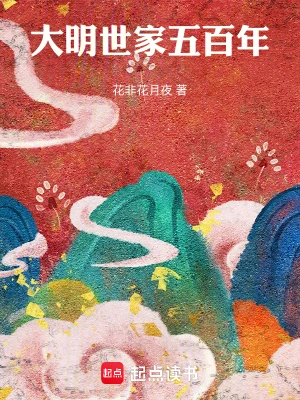
Five Hundred Years of the Great Ming Clan
大明世家五百年
- Status
- Completed
- Length
- 1.6M Words
- Genre
- Historical
- Subgenre
- Song-Yuan-Ming Dynasties
- Updated
- 7mo ago
- Source
- Qidian
Stats
Tags
Synopsis
More by this author
In booklists 10

🔥Highly Recommended New Releases
Recommendation tiers: [Heavenly King potential / Great-level] > [10,000-average potential] > [Excellent potential] > [Worth reading when you're out of books] > [Niche] For new books that haven't gone premium yet, I'll predict whether they'll make the Sanjiang recommendation list. These are books I'm reading or think are good. Quality web fiction, guaranteed. I mainly recommend new books, no ads! My predictions for the Twelve Heavenly Kings of 2026: "Becoming a Saint in the Martial World While
Writing for My Own Enjoyment
My personal tastes.

Good Reads First, Let's Go!
Currently reading
Memories of Passing Years
A record of books I've read and enjoyed: some from the past, some from the present, and some still unfolding. Feel free to chat! If there's an event, I'll ask for your support with a flower or two ^_^
My Ongoing Personal Reads
A bit of everything

You Roast Me, I Roast You
Colorful
Time-Traveling Novels Set in the Tang, Song, Yuan, Ming, and Qing Dynasties
Historical novels about transmigrating into the Tang, Song, Yuan, Ming, and Qing dynasties
Laughing at the Mortal World, Lost in a Reading Slump
I've been a bookworm for ten years. I won't claim to be an expert, but I've developed some taste. If you happen to find this personal reading list in the vast sea of books and enjoy it, that would make me happy. I hope it brings you happiness too!


Books to Save for Later: Good Books I’m Letting Build Up
These are books I've read and personally think are excellent and worth checking out. Some are just getting started, so I'm saving them until they have more chapters. Others are lifesavers when I'm out of things to read.
Historical Fiction Recommendations
For my own use. These are all books I'm currently reading or planning to read. Feel free to upvote or downvote, everyone, and thanks for helping me sort through them.
Readers also read
 An Important Town in the Residual Tang Dynasty
 In the Ming Dynasty, the Days When the Cows and Horses Turned Over
 The Corpse Plague of 1916
 Chronicles of the Red Mansion
 Simultaneous Transmigration: Becoming a Legend Before the Story Begins
 My Portable Ming Dynasty Court
 The Golden Clan: I Lead the Mongol Cavalry to Conquer Europe and Asia
 Starting with Saving Manchester United
 Myriad Worlds: Starting with Darkest Dungeon
 The New Han Dynasty, 1834
 Great Ming: I, Yan Maoqing, Really Am Blessed
 The Emperor Who Made Himself
 Building a Thousand-Year Clan, Starting with King Wu's Campaign Against Zhou
 Building a Divine Dynasty, Starting in the Spring and Autumn Period
Reader comments 48
Google Translate
I would like to make a suggestion, don't let the family have people in high positions all the time. If a family has people who have been in high positions for generations and have outstanding abilities and high morals, then there is a question. Why can the emperor tolerate this family? People who are related to this family will wonder why you haven't usurped the throne. Now I see more of this kind I have understood the novel clearly. This kind of novel is about a family that has been established for many years in history. In order for the family to have peaks and troughs, glory and downfall, we cannot allow generations of people in this family to be in high positions and have outstanding abilities and high moral standards. This will make it impossible to write at the end.
Li Shanchang sought death himself.
Hu Weiyong has been dead for 10 years, and Lao Li is still alive, so he doesn't want to lose his dignity. . (Lao Zhu reminded Hu Weiyong for the second time 5 years after his death that he did not cherish the second chance... Lao Zhu knew that he knew what Lao Zhu meant, and he also knew that Lao Zhu knew that he knew what Lao Zhu meant. In the end, the relationship Getting worse and worse) Yang Guang said that Yang Su was not dead, but Yang Su immediately became ill and died. Li Shimin said that Li Jing was not dead, but Li Jing immediately became ill and died 8 days before Li Shimin died. . Only after seven days did Li Shimin dare to die. . Li Shanchang is 76 years old, 4 years older than Sima Yi. If he insists on not dying, then the whole family will have to die together. .
If the protagonist does not become the emperor, then the protagonist must carry out comprehensive changes that limit the emperor's rights. It is useless if the protagonist just copies the technology of later generations and adds a few reforms. If a country wants to produce a large number of original inventions and creations, it must carry out systematic changes in ideological foundation, political structure, legal system, social forces and other aspects. The reason why Britain was the first to enter the Industrial Revolution is that after experiencing the ideological changes of the European Renaissance, coupled with the British Glorious Revolution of 1688, the king's rights were further restricted. Britain established the framework of parliamentary sovereignty and the rule of law, and the bourgeoisie, the new aristocracy, and the king formed a check and balance, which allowed British civilians to gain unprecedented freedom. At this time, the degree of freedom of scholars, craftsmen, and farmers in Britain was higher than that of other European countries at the same time, and it was far more liberal than the civilians of China's Ming and Qing dynasties. The high degree of freedom of all British civilians fully inspired everyone's strength. The power of the Chinese emperor was not greatly restricted, and all officials, gentry and landlords were dependent on the imperial power. The freedom of civilians, who account for the vast majority of the country's population, is too low. This system inhibits innovation and hinders social development. China's Zhou Dynasty was a feudal system, and the central government could not control much of the local princes' affairs. The princes competed with each other. During this period, Chinese civilization truly allowed a hundred flowers to bloom. Most of the essence of Chinese civilization came from this period. During the Spring and Autumn Period and the Warring States Period, the "Mo Jing" recorded the principles of optics and mechanics, and the germination of geometry had emerged; the "Gan Shi Xing Jing" recorded astronomical observation data. But from the Qin Dynasty to the Qing Dynasty, there was almost no progress! The institutional innovation of the Spring and Autumn and Warring States periods stagnated after the Qin and Han Dynasties, lacking the ability to dynamically adjust. Since the Qin Dynasty, especially since the Han Dynasty deposed all schools of thought and only respected Confucianism, Chinese civilization has almost stood still and entered a dead end. The Zhou Dynasty and the Spring and Autumn Period and the Warring States Period were similar to the ancient systems of most European countries. They were all feudal systems. Even in successive years of war, less than 10% of the country's total population died directly or indirectly as a result of the war. But from the Qin Dynasty to the Qing Dynasty, every dynasty would kill half or more of the country's population due to war! What is even more tragic is that every time there is a change of dynasty, there is almost no progress in the system and culture! {"NickName":"Supervision and Restriction","UserId":406440657}
A bad ending is a bad ending. Every time I have to find various reasons to treat others as fools, I can't read this author's books 😁
I just spent a few hundred points and scrolled through Douyin to find out the ending. A female editor yelled loudly, saying that the book had crossed the line and had to be unfinished.
What mistakes are easy to make in historical novels❓
Before the Ming Dynasty, the emperor was not called "Emperor". In the Song Dynasty, he was mostly called "Guanjia", and in other dynasties, he was often called "Your Majesty". In the Ming Dynasty, the emperor was occasionally called "Emperor", and in most cases he was called "Your Majesty". After Kangxi of the Qing Dynasty, people began to be generally called "Emperor". Princes and princes call themselves: Princes in the pre-Qin and Han Dynasties can be called "Gu", and a few can be called "Ignores". After the Wei, Jin, Southern and Northern Dynasties, the title of "Ignores" gradually became exclusive to the emperor, and princes, princes and princes can only be called "Gu" or "I". Song, Yuan and Ming called themselves "I" or "I". Before the Qing Dynasty, princes and princes rarely called themselves "this king". Starting from the Kangxi year of the Qing Dynasty, princes generally called themselves "this king". In ancient times, women called themselves: "nujia" was a modest name for women after the Song Dynasty. Women in the Han and Tang Dynasties more often called themselves "concubine", and noble women could call themselves "I" and "I". Before the mid-Ming Dynasty, most dynasties used copper coins for daily transactions, with very little gold and silver. It was only in the mid-to-late Ming Dynasty that silver became the mainstream currency. -In the late Ming Dynasty, "meeting votes/deposit checks" appeared among the people. There were no unified rules. Most of them were deposits and withdrawals/exchange receipts from acquaintances or local circulation, and were not legal currency. In the early years of Daoguang in the Qing Dynasty (1823): Rishengchang Bank was established, and private banks began to issue standardized banknotes, focusing on cross-regional exchange. They were only circulated in Shanxi merchant trade circles and major commercial ports, and were not yet popular. In the third year of Xianfeng in the Qing Dynasty (1853): the official issued the Ministry of Revenue official banknotes (official banknotes), which were forced to circulate nationwide. At the same time, the network of private banknotes expanded to the whole country, and official and private banknotes ran parallel. The use of banknotes entered an explosive period and became the "starting point of popularization." High-leg tables and chairs only completely replaced the low tables for sitting on the floor in the Song Dynasty. During the Han and Tang dynasties, people knelt and sat on the tables to eat and discuss matters. The furniture was mainly low tables and couches. The memorial system was only established during the Kangxi period of the Qing Dynasty. Officials in the Tang and Song Dynasties used "memorials", "tables" and "statements" when submitting memorials, while in the Ming Dynasty they used "memorials" and "memorials". There is no such thing as "memo" or "zhezi". In ancient formal occasions, the hand-over gesture was performed with the left hand outside and the right hand inside. The right hand outside was a special "unlucky gift" for funerals. "Better greetings" is a unique etiquette of the Qing Dynasty. It was mostly used by subordinates to superiors and juniors to elders. During the Tang and Song dynasties, people often performed cross-hand salutes and bows to greet greetings when they met, and there was no such thing as "sending greetings". {"NickName":"Supervision and Restriction","UserId":406440657} Before the Yuan Dynasty, subordinate officials rarely called superior officials "adult". In some dynasties, subordinates called eunuchs "adult", and in some dynasties, they called their parents and elders "adult". Beginning in the Yuan Dynasty, lower-level officials would occasionally call officials of second-rank and above "sir". From the middle and late Ming Dynasty, only officials of third-rank and above would be called "sir" by their subordinates. Officials with lower ranks could not be called "sir". However, in the late Ming Dynasty, there began to appear a few cases where officials above the fourth rank were called "adult". Before the mid-Qing Dynasty, following the rules of the Ming Dynasty, only officials of third rank or above would be called "adult". Starting from the mid-Qing Dynasty, calling officials "adult" gradually became common for lower-level officials. Attention! ! ! What is mentioned above is that lower-level officials refer to higher-level officials. No matter which dynasty, it is absolutely impossible for higher-level officials to call lower-level officials "sir". Some novels even write about emperors or nobles calling other officials "sir". This is simply contrary to Tiangang! ! ! Finally, let's talk about the problem of civilians calling officials Before the middle and late Qing Dynasty, civilians in various dynasties and generations called officials differently, and most of them called them "officials" and "masters". From the middle to late Qing Dynasty, civilians also called officials "adult".
The details of this book are exquisite, but the general logic is rubbish. It is recommended not to read this rubbish book.
Let me tell you more about my thoughts
Although I haven't ordered many, I still want to share my thoughts. I think there are several reasons why the rhythm of this book is broken One is that I write something every day that I am not allowed to write. The more I write, the worse my condition becomes. I am not serious and amusing. One is that the existence of the system and ancestors is very weak. I saw some foreshadowing in the early stage, such as the development of industrial technology. But it's all mentioned in one stroke. This is one of the great things about historical writing. I don't know what I was thinking if I completely omitted it. Then there is the area of territorial expansion, which I call Rukai. Although some areas have been recovered and conquered, which is already good, the sense of existence is very weak. The book has become a silver tool producer, and Annan has been offline all year round. The west is not bad, but that's it. Others like Chao and Mongolia are also under economic control. It should be said that the details are inappropriate. This kind of thing that can bring pleasure is often left out and written less. Then there is a self-limitation. I have to write about a world without demons. I think I can write about some natural fantasy things, mainly focusing on spectacle environments, and I can also write about some monsters and ghosts at a level of super low martial arts. Then I can branch out into family branches and display system props to expand the character development.
The plot is repeated too many times
Let's change the protagonist. The group portrait has become a one-man show by Li Xianmu. Since he entered politics, hundreds of chapters have been written to highlight how awesome he is and how senior he is. Everyone respects him and then calls him awesome. If a chapter has 2,000 words, and 500 of them are about Li Xianmu's qualifications and status, you won't be tired of writing it, but the readers will be tired of reading it. I found it boring even if I skipped reading. Just by looking at the chapter titles, I knew that the protagonist's son held a court meeting to discuss reforms. Other officials were shocked and shouted "Awesome" again and again, and then the people said "Awesome" again and again. When something happens, all the other officials are the losers and ask the protagonist's son to make the decision. Then everyone is shocked, the first person in the Ming Dynasty.
I feel sick when I see Shi Jiawen