


The Ming Dynasty's First Tribute Scholar
大明第一贡生
- Status
- Completed
- Length
- 3.5M Words
- Genre
- Historical
- Subgenre
- Song-Yuan-Ming Dynasties
- Updated
- 1y ago
- Source
- Qidian
Stats
830Chapters
0Votes
24kRecs
98.3kFans
Tags
Synopsis
More by this author
In booklists 2
Historical Fiction Reading List, Primarily History
Mostly historical fiction. The scale goes up to ten stars, but even a one-star book is worth a look.
54Books52Follows3dUpdated

Pure Thrills
When I first started reading, I loved fantasy and epic worlds. Later I got into urban stories and wild, imaginative plots, then historical fiction. Now I'm back to fast-paced wish-fulfillment stories. I've been reading for ten years: if the pacing is slow, I won't read it; if it's too short, I won't read it either.
28Books8Follows2yUpdated
Readers also read
 A Guide to Building Civilization in a Primitive Tribe
 My Only Method: I Will Add More Points to Become Stronger at the End of Ming Dynasty
 Daming: Asking for the Throne at the Beginning, Lao Zhule Went Crazy
 My Father Is Wen Tianxiang, and We Win the Battle of Yashan from the Start
 A Record of a Mortal's Journey to Immortality: I Earn Immortality by Grinding Achievements for Rewards
 The Prosperous Longwan Era
 The Ming Dynasty Behind the Mask
 Lord Evolution
 A Record of a Mortal's Journey to Immortality: Choosing Hextech in the Chaotic Star Sea
 In the Hongwu Era, Starting Out as a Rebel
 The Ming Dynasty's Chief Minister
 A Life of Wealth and Glory
 The Commoner’s Gate
 The Dashing Young Prince
 The Bandits of the Ming Dynasty
 The Ming Dynasty’s Greatest Imperial Clan
 A Poor Scholar in the Ming Dynasty
 I Write Furiously in the Ming Dynasty
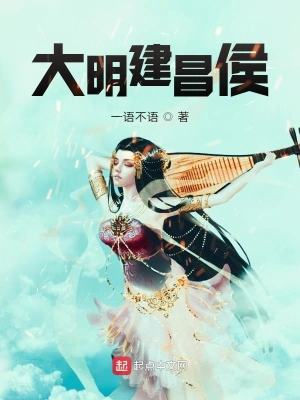 Marquis Jianchang of the Ming Dynasty
Reader comments 36
Google Translate
Generally speaking, emperors whose temple names and posthumous titles contain words such as benevolence, virtue, and filial piety are the kind of emperors who are easily manipulated by scholar-bureaucrats and have both face and dignity among the officials and gentry groups. How come this kind of emperor is not praised and praised to death by the scholar-bureaucrats and nobles?
Is Hongzhi the prosperous age of Zhongxing?
Was the Hongzhi period a prosperous period of Zhongxing? Where did you put Chenghua ZTE? Don't you know Chenghua's cultural and martial arts? The population has been around 53 million during the Jingtai and Tianshun years, and was basically 60 million during the Chenghua years. In the fifteenth year, the population suddenly increased to 70 million, and then dropped to 62 million in the sixteenth year, then 65 million in the 22nd year of Chenghua, and 50 million in the 23rd year. The population has been around 50 million during the Hongzhi period, then suddenly increased to 60 million in the 17th year, and dropped to 46 million in the first year of Zhengde. This not only reveals the roughness of the Ming Dynasty's population statistics, but also reveals the officials and gentry's deception of the court. Chenghua had just experienced the internal refugee rebellions and foreign enemies and border invasions during the Tianshun period. Chenghua gradually solved these problems one by one and suppressed gentry mergers. As a result, the population of Hongzhi dropped by 10 million. What kind of ZTE is this? Chenghua left a relatively stable world to Hongzhi. The Hongzhi period was the period when the population of the Ming Dynasty decreased the most. Is there such a prosperous era?
It is true that smallpox can only be prevented but not cured. Therefore, if you go to ancient times and blow smallpox to cure it, you will feel unhappy about your own death.
I feel that this book is better than the Mingchuan novels of the same period. The male protagonist is a highlight. He is not stingy or stingy. There is no obvious poisonous point at present, but I don't know why the results are not satisfactory? I wonder if the main character's work on science and technology was not written carefully enough? After all, technology feels better. There was also a book recently about nitroglycerin, but it seems more natural to write it together with soap. After all, making soap has glycerin as a by-product. Can the author learn from this aspect? Make the physical chemistry section more fancy? In addition, writing technology trees now also requires innovation, such as making flintlock guns through time travel. Few people write about how to solve the problem of high-quality flint. There are also few people writing about the technology tree for developing electricity. Can it be used to innovate? Recently, there is a book called "The Imperial Master of the Ming Dynasty" that has done very well. That book mainly talks about institutional reform, and the analysis is more in-depth. I saw that the philosophy part was abandoned. But now, if you want to achieve success in the time-travel theme, you have to write deeply or introduce new ones. To be honest, readers will get tired of seeing things like soap, glass, steam engines, etc., But if you dig up and down the industry chain and gain a new perspective, it will be easy to come up with good stories.
The so-called three ministers were actually traitors. Zhu Houzhao fell into the water and died. They were the culprits.
When I read history recently, I feel that novels are more like history, and history is more like novels!
Those in power who do not rebel will be liquidated sooner or later
Han Qing
Good. The tail makes Bohu a bit high. When the imperial examination fraud case broke out, Bohu was still at home waiting for the results to be released. After failing the imperial examination, he became obsessed with calligraphy and painting.
Many people say that the civil servant Jiuxun fights against the protagonist, and the protagonist is too cowardly to fight back. On the contrary, I think this is the most interesting point of this book. The three old men in the civil servant cabinet have been using the mentality of official fighting, but the result is that the protagonist ignores them at all, and they fight with the air. The queen initially thought that the protagonist was going against her to steal the emperor, but now she wants to give the protagonist her two younger brothers. This is a reflection of our daily life. Doesn't this happen often? Originally, I just wanted to work with peace of mind, but I couldn't stand the fact that everyone was scheming with you, and I had to join them in the trouble, so things didn't go as planned. In the book, the emperor plays out the intrigues with the civil servants and the harem. The protagonist only participates as a courtesy when facing the old lady, and does not interfere at all at other times. The emperor also orders a group of Dongchang Jinyiwei and other people to protect the protagonist from being fought, and also gives the protagonist a pass. How cool is this? It's just that the later author made too many typos.