


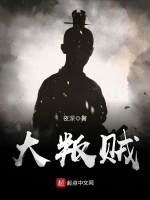
The Great Traitor
大叛贼
- Status
- Completed
- Length
- 3.7M Words
- Genre
- Historical
- Subgenre
- Qing & Republican Era
- Updated
- 4y ago
- Source
- Qidian
Stats
Tags
Synopsis
More by this author
In booklists 15
I Love History, Even Though Real History Is Heavy!
Mainly transmigration novels set in the late Ming and early Qing. I'll also recommend good novels set in the Tang and Song dynasties.



History / Fantasy / Games / Anime: Books Worth Recommending
I'll put up some books I'm reading right now. I'll try to pick more titles that don't show up often on other lists. Rated out of five stars. The scores are entirely based on my own impressions, so take them with a grain of salt. If you know any good books, leave a recommendation in the comments ( '▿ ' ) You're also welcome to share your thoughts or suggestions ฅ( ̳• ◡ • ̳)ฅ And if you like this list, please give me a follow -(¬∀¬)σ I'll regularly remove books that have too few likes and see if



Recently Added New Books by Some Old Authors
Books updated in real time

Top Recommendations
No brainless characters, no amateur writing
Becoming Emperor 🌸 Emperor 🌸 Founding a Country Overseas 🌸 Han Chinese
We descendants of Yan and Huang are invincible under heaven! Let’s write a story of pride for the Han people, and may the Han people endure forever! Lately, I don’t like stories where someone transmigrates and immediately becomes emperor, then gets all kinds of golden fingers and the plot makes no sense. A transmigrator’s greatest advantage isn’t knowing history by heart. It’s that we’ve all had a modern education and know some basic physics and math. Even just being literate could earn you a hi

Books I've Bought in Full (~~)
Only books worth buying in full, with no regrets.
Qidian Masterpieces
I've been reading for many years, practically a veteran. I hope you'll drop by. We're all readers here, so let's chat and share the books I love. Reading lists are such an interesting thing. I never thought I'd be so eager to make one myself. Following an author's smooth prose and the tangled relationships between the protagonists, even shedding silent tears (crying is just an action, after all), can be incredibly satisfying. My tastes are pretty broad, so if you think your writing is good, leav

Old Friends of the Jianghu
Some promising new authors

Stories with Sound Logic
Mostly stories with sound logic, plus a few dark ones

The Qing Dynasty and Republican Era
If you enjoy novels set in the late Qing and early Republican eras, come take a look. Some books I’ve read have since been censored: The Great Hero of the 1911 Revolution, The Great Warlord of the 1911 Revolution, Warlords of the 1911 Revolution, The Iron-Blooded Republic, The Beiyang Warlord, and Speculators of the Republic. Lately, I’ve noticed there are fewer and fewer books on my list…


🔥 Only the Hottest Picks 🔥 New and Classic Novels
One-line recommendations. I only recommend ongoing novels, not abandoned ones. Abandoned novels go straight to the bottom.

Books of All Genres: Mainly Urban, Historical, Sports, and Sensible Feel-Good Fiction
A bit of everything, as long as I think it’s good. I’ve been a bookworm for nearly 20 years. I got tired of Xuan Yu, then Tang Jia San Shao, then Xue Hong, then Chen Dong, and now I’m almost done with Tomatoes, too. That’s my reading journey. By “got tired,” I mean I don’t read that author’s novels much anymore. I like good writing and clever ideas, without awkward scenes where characters are forced to show off. I enjoy both harem stories and pure romance.

Recommended by a Ten-Year Veteran Reader
A pretty mixed bag. I'll keep updating, so if you like the list, please add it to your favorites.


The Idle Fish Bookstall
Cull the tender shoots, chop down the seedlings, water the seeds, invest in new books, and see which newcomers gradually become great authors.
Personal Memories
A record of what I've read.
Readers also read
 My Only Method: I Will Add More Points to Become Stronger at the End of Ming Dynasty
 Daming: Asking for the Throne at the Beginning, Lao Zhule Went Crazy
 My Father Is Wen Tianxiang, and We Win the Battle of Yashan from the Start
 A Guide to Building Civilization in a Primitive Tribe
 Slaughtering My Way Through the Marvel Universe: Starting with The Boys
 The Great Bandit
 A Plan to Revive the Northern Song
 The Road Less Traveled
 The World of the Extreme Path: Tempering My Body Through Terror
 The Sun and Moon Endure Forever
 The Age of the Yellow Sky
 My Big Brother Is Called Zhu Chongba
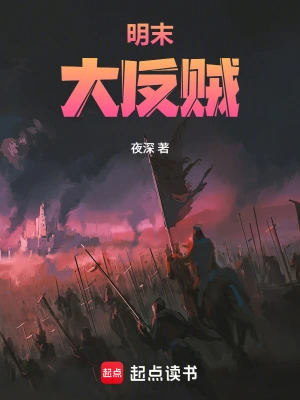 The Great Rebel at the End of the Ming Dynasty
 Laying Low as a Ming Imperial Clansman
 Heaven's Gate
 My Wife and I Both Transmigrated
 A Life of Save-Scumming
 Returning to the Golden Age
 The Witch’s Mystery
Reader comments 50
Google Translate
The Needham Dilemma is a false proposition—On why China failed to modernize smoothly (1)
A topic that has been hotly debated since modern times. ——Using various "comparisons between China and the West" to demonstrate why China failed to modernize. Because they are either stupid or bad, most of the conclusions they draw are very nonsensical: what about the bad nature of the Han people, what about the small peasant economy, and what about the noble marine civilization. Today I want to say All questions similar to this kind of "comparison between China and the West" are false propositions! The premise of this type of question is simply not true. At least three premise errors were made: Error 1 was to compare the Han one nation with the Western N nations. Mistake 2: Even if they are compared from a cultural perspective, what they are comparing is not the tradition of the Han nationality at all, but the "pseudo-tradition" of Manchu colonization. Mistake 3: The Han people must be required to "spontaneously" modernize, without considering that the technologies, industries, sciences, and even ideas of modernization can be easily obtained through learning. Including several ethnic groups in Western Europe, no ethnic group completed modernization independently. Everyone learned from each other. On the one hand, those who make this comparison have "high standards and strict requirements" for the Han people. Once the Han people fail to achieve complete spontaneous modernization, they will criticize the Han people as unworthy and worthless. On the one hand, China (Han) was allowed to single out N ethnic groups in the West, and China was also allowed to cut off an arm of itself (that is, the impact of being colonized by the Qing Dynasty was not considered). The conclusion drawn in this way is naturally that "we are too ferra, we must push everything back, and we must rely on foreign ideas and foreign rule to be saved." The so-called "Another three hundred years of colonization" "Abolition of Chinese characters and Latinization of Chinese characters" "Inviting foreign adults to exchange blood" are all products of this kind of thinking. History Buff: I've always had a question. History buffs: Why did China (Han) fail to modernize smoothly? Why did modernization happen in the West? How to solve the Needham problem? Me: First of all, we need to clearly define, what is modernization? History buffs: (Baidu...) History buffs: There is no clear definition, it probably refers to economic industrialization and commercialization, political legalization and democratization, ideological humanization, scientificization, etc... Me: If you can't give an abstract definition, can you give me a specific process? History buff: I'm not very good at history, but based on my feeling, it's probably the Renaissance, then the great geographical discoveries, the great voyages, then the foundation of modern science and technology, the Enlightenment, and finally the Industrial Revolution, right? Oh, and take into account the logic and mathematics invented by the ancient Greeks, which laid the foundation for modern technology. Me: Okay, just do it this way. Act 1: What is the essence of the West's first modernization? Me: First of all, let me make it clear that the so-called "West" and "East" are just relative geographical concepts and a virtual reference. The people of the Ming Dynasty would think that Timur and Ottoman were both "Western", while these two Muslim countries were properly "Eastern" in the eyes of the Poles and Eastern Romans. Not to mention that in the eyes of the British, Eastern Rome was almost an "ancient Eastern civilization". The so-called "West" and "East" only have a general meaning and cannot be used to analyze problems. Is there anything wrong with my statement? The remnants of Heshang who entered randomly: fart! The West is obviously a maritime civilization! Full of enterprising and pioneering spirit. The farming civilization of Fira in the east is certainly not as good as others! Me: First of all, let me clarify something. There is no such thing as marine civilization. Take France and Germany, the typical so-called "Western countries" in my impression. They are all agricultural civilizations and so-called "small-scale peasant economies." The remnants of the River War: What about Britain, Spain, and the United States? Me: Before the Great Geographical Discovery, the British (Anglo-Saxons) were still farming on the British Isles and were invaded and ruled by the Normans; the Spanish were conquered by the Moors and were still busy recovering their lost lands until the 13th century, and had nothing to do with the sea (except for fishing). As for Americans, the foundation of the founding of the United States is the farmers and craftsmen of the 13 independent states, and it has nothing to do with the ocean. Me: In fact, the "marine civilization" in your mind only lasted a few hundred years from the discovery of geography to the present. Me: In addition, I want to complain that the concept of "marine civilization" concocted by you He (Harmony) Shang faction is itself something that can't even be considered imported. There is no such phrase as ocean civilization or maritime civilization in Western historical research. If you go and search for this article, the most likely thing that will come up is an article on the Tongan Empire in the Pacific Islands (laughing)? It's a word that was invented from beginning to end to be used to make oneself look down upon, so don't talk nonsense here. Me: Back to the topic, specific issues must be analyzed in detail, and "the West" cannot be regarded as a "whole". The so-called "West" and "East" are general terms and cannot be used to analyze specific issues. Is there a problem with my statement? History buffs: No problem. From the perspective of Japan, the Ming Dynasty is still the West. It is just a relative geographical concept. There is nothing difficult to understand. But what does this have to do with what we are about to say? Me: See your question? "Why did modernization happen in the West?" History buff: Does this mean that we should not use the so-called "East" and "West" as the starting point for comparison? So what should be used? Me: Of course I use "ethnic"! History buffs: Tell us! Me: First of all, the modernization path you just sorted out is basically correct: 1. Ancient Greece invented logic and mathematics 2. Renaissance 3. Geographic Discovery 4. The foundation of modern science and technology 5. The Enlightenment Me: The Greeks invented logic and mathematics (discovery to be exact). So are the Greeks and those peoples in Western Europethe same people? History buffs: The Greeks and the Franks, Anglo-Saxons, Visigoths, etc. In Western Europe are indeed not the same people. Me: Yes, what about the Renaissance? Where did the Renaissance originate? History buffs: Northern Italian city-states. Me: The city-states of Venice and Genoa were prosperous in commerce and had been divided for a long time. This fostered a tolerant and open artistic atmosphere and brought about the Renaissance. Right? History buffs: Well, next is the great geographical discovery. History buff: I am familiar with this. It was started by Spain and Portugal. Me: What advantages do Spain and Portugal have that allow them to embark on great geographical discoveries? History buffs: First of all, it must be geography. Looking at the map, you can see that the Iberian Peninsula is the closest to the Americas. , History buffs: Secondly, Liangya is somewhat... "Centralized" in a sense. Many early navigators were heavily funded by the royal family to explore, and there is a sense of "concentrating efforts to do big things." History buffs: It should be these two points that allowed them to take the lead in opening the "Age of Discovery"! Me: That's right. We can make a scenario hypothesis - based on the conditions of the northern Italian city-states, can the New World be discovered? With the political atmosphere and geographical location of Spain and Portugal, can they lead the Renaissance? History buff: I'm afraid that's not possible... The reason I just said is that this thing requires certain conditions. However, the Renaissance provided some spiritual impetus for the geographical discovery. Me: This is what I want to say, the essence of modernization is completed bymulti-ethnic relay. It is impossible for the two teeth to lead the Renaissance, and it is difficult for Venice and Genoa to discover America. However, the two relayed each other and the process continued. The great geographical discovery brought more primitive accumulation. What is the next step? History buffs: the foundation of natural science. Me: Who laid the foundation of natural science? History buffs: It was Newton - an Anglo-Saxon. Principles of Natural Philosophy and Mathematics, published in 1687. Me: What's next? History buffs: The Enlightenment, France has the most developed civil society, so the Enlightenment first appeared there. Me: Just like the previous steps,one nation will move first, and the other nations will follow. The Renaissance spread across Europe from south to north; Ships from all Western Europe in the Age of Discovery flocked to America to participate in the triangular trade; Enlightenment ideas also spread throughout the "West" with the artillery fire of the Revolution and the Napoleonic Code History buffs: Then let me reorganize it. The so-called West took the lead in modernization, is this actually what it is? —— 1. Ancient Greeks: Invented logic and mathematics 2. Northern Italians: Renaissance 3. Iberians: Geographic Discovery 4. Angsans: Founded the foundation of modern science and technology 5. French: Enlightenment Me: Yes. In fact, a step was missed ——1.5 The existence of the Eastern Roman Empire protected the nations of Western Europe from barbarian invasions. Because if unfortunately, during the accumulation period of agricultural society, or was invaded by barbarians on the eve of modern times, resulting in a major decline in productivity, the consequences would be disastrous. History buff: Put it this way, is it true that the so-called advantages of various Western nations are that they are close to each other, have more exchanges, and learn quickly? Me: Yes, that's it. Me: To put it bluntly, the geography of the Western European countries has another advantage - it is the farthest away from the Mongolian Plateau and the Greater Khingan Mountains, the most terrifying source of barbarians in the entire Eurasian continent, and there is also the Eastern Roman nation-state of the Greco-Romans in the middle as a shield to protect them from the suffering of barbarian invasions that interrupt civilization. History buffs: Ah, it's true. The isotherms of the Eurasian continent are tilted. The colder they are toward the east, and the barbarians farther east are more savage and difficult to deal with. History Buff: Can this be explained by the slower modernization of Russia? Is it because we are a little far apart geographically? Me: That's right. History buffs: Among all the subsequent great powers, Japan was the slowest to learn. Is it because Japan is the furthest away geographically? Me: Yes, that's it. History buffs: Is it that simple? Me: It's that simple. History buffs: Then why did China (Han) fail to learn?
This is the backbone of our people
Is the protagonist SB? Not to mention that in the Kangxi Dynasty, even a few days before the Revolution of 1911, if you went to the county government to brag about revolution and rebellion, the protagonist was really not afraid of death? No normal person would do this!
During the heyday of Kangxi and Qianlong, there was rebellion. . How can you rebel if you don't have a violent soldier plug-in? ? Laughing to death
The author speeds up the progress. In 1719, the Qing Dynasty next door almost destroyed the Manchu Qing Dynasty and the whole country was unified. Stop delaying the plot. You are all the ones who killed Kangxi at the same time. It is time to unify the whole country at the same time.
In the late Ming and early Qing dynasties, I felt unhappy when I saw Lao Zhu's family! The great country of Nuo has been defeated like this by you. No matter what the reason is, whether directly or indirectly, you cannot escape the death-seeking behavior of Lao Zhu's family. You will get angry when you see it.
1-2-3 Statistics on your views on the Qing Dynasty!
I'm going to do a statistical survey to see what the Qing Dynasty is in the minds of all my book friends. 1-Hate it. I think the Qing Dynasty is a shame among all the dynasties in our country. 2-Neutral, I have no opinion on the Qing Dynasty. 3-I like it and feel that the Qing Dynasty made outstanding contributions to our country. Boldly deduct the number in your mind and calculate the results in 15 days before reporting them to the general public!
Don't read it. Does anyone recommend a time-traveling one that doesn't show the modern military system? I feel really sick. Aren't the so-called staff officers just the military advisors? Will we have to create a major general, lieutenant general, or something like that later? It's funny just looking at it. The ancient system and the current system are just different names. There is no need to change 🙂🙂
The Kangxi rebellion was still a peasant uprising. It had no base and no early backbone. It was started by a few speculators and then spread to a large area. It was true that the anti-Qing government had the right starting point, but it didn't even have a brain. It's funny. During the Kangxi period, the army that fought with Zhungeer and others was not useless. The Eight Banners were not completely abolished. It is normal for you to use organization and discipline to defeat the Qing Dynasty. As mentioned in the book..., It is really good to write an anti-Qing novel. If it is bad, just start and use the stick. Who dares to say it is bad?
The Ming Dynasty should indeed perish, but the barbaric and ignorant Manchu Qing Dynasty should not take over. It can only be said that the rogue bandits were ineffective.