


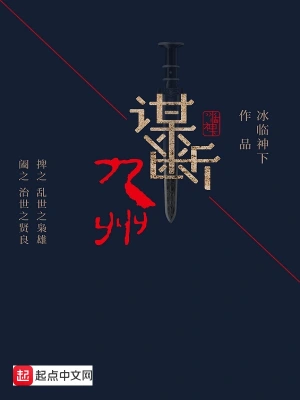
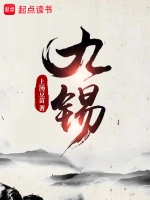
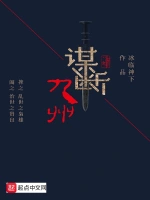
Scheming for the Nine Provinces
谋断九州
- Status
- Completed
- Length
- 1.8M Words
- Genre
- Historical
- Subgenre
- Alternate History
- Updated
- 5y ago
- Source
- Qidian
Stats
Tags
Synopsis
More by this author
In booklists 180
Explore more →
So Good They Leave You Speechless
Rated from 1 to 10. I've been a bookworm for over ten years, and my ratings are very subjective. So far, I haven't given any book above a 7. (I often wonder why I even rate on a scale of 1 to 10.) A 7 is already really high. I checked, and nearly half the books have been abandoned.
A Record of Great Historical Novels
[Historical Fiction Recommendations] Historical novels only I'm mainly recommending some great completed historical novels and promising new ones for everyone to check out! The rankings are full of ups and downs, but I take it all in stride with a smile. Veteran readers, do these books look familiar? I only recommend top-notch historical fiction! Historical fiction fans, come on in. If you like the list, please give it a like, follow me, and save it by clicking the star below. Many thanks fo
Interesting, Smart Reads for Passing the Time: Neither Pretentious nor Dumbed Down
1. At least decent fare, with prose that's readable. 2. The premise or plot should be interesting. No need to bother with mediocre works. I'm no literary intellectual, but I do have some standards for prose. I was pickier about what I read early on. These days I'm tired from work and often just want something light, but I can't stand mindless power-ups and endless hookups. This list is based on those standards. I think these books are pretty good, and ideally they have something special. I've
Jingguan Fangtian's Booklist
"No boys allowed." "What does that mean?" "It means no boys allowed." "Who can understand what you're saying?" "These are the Emperor's sacred words. They're highly effective against the daemons of the Warp." "Where are the daemons??" "You'll know once you've finished saying it."
History
Learn from history
I Love Reading
If you’re in a reading slump or a picky old hand at web novels, give this list a try. I mainly recommend ongoing novels, along with completed classics and masterpieces. Authors I follow most: Yixing Bailu Shang Qingtian, San Tian Liang Jue, Bing Lin Shen Xia, Jie Yu 2, Fang Xiang, Xiao Ding, Zhi Qiu, Er Mu, Chen Ci Lan Diao, Yuan Tong, Fen Nu De Song Shu, Du Shu Zhi Ren, zhttty, and others. I’ve read a great many novels, from middle school until now, like Shennong sampling a hundred herbs. I’v
My Library
I'm recommending these books to fellow readers. I've read every one of them, and I think the authors all write very well. They're all gems, so give them a try. You're bound to find one you like.
Every Book Is a Gem!
Genre doesn't matter, and neither does whether the author is famous. What matters is whether it's good and well written. I only recommend quality books, across all kinds of genres. Reading different kinds of books feels like experiencing different lives. You can't go wrong by saving this list! It'll let you roam across the Six Realms: gods, demons, immortals, monsters, ghosts, and humans. Whether ancient or modern, Chinese or foreign, these books can help readers thrive in any situation, regardl
Good Books: Over a Decade of Reading Hundreds
Ten years of reading, and every book is hard-won
A Taste for Ranting
I haven't found a book I've really loved in ages.
🏥Veteran Military Doctor, Curing Reading Slumps for Years. Follow Me for More Books🏥
A veteran doctor of many years, specializing in treating book droughts 🏥 One day, this old doctor suddenly realized: studying medicine cannot save the Chinese people! So I decisively threw aside my medical texts and, upholding a doctor's compassion and Shennong's spirit of tasting every herb, joined the army of web-novel readers. 🚑🚑🚑🚑🚑🚑 From then on, skipping class became routine, failing exams became everyday life. This is the rhythm of taking pills 💊💊💊💊💊💊💊. Fortunately, I did master the art of
A Collection of Good Books
A big batch of great reads! Here are some good books across all sorts of genres for everyone. I’ve personally tried them all, so you can read with confidence. Of course, if the genres or styles I recommend aren’t for you, just skip them. No need to complain. That’s all.
Pasture...
None
Books of All Kinds
These are books I've read. My opinions are extremely subjective and entirely my own. As for my rating system, I won't include anything below three stars. Three to three and a half stars means a solid read with some appeal. Four stars means a gem, recommended. Four and a half stars means top-tier, highly recommended.
Authors Worth Following: Wuxia, Xianxia, Fantasy, Superpowers, and History
Mostly focused on a few authors

Books with Heart
The more you read without thinking, the more you feel you know. But the more you read and reflect, the more clearly you see how little you know.
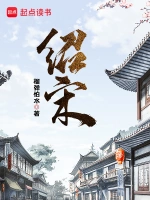
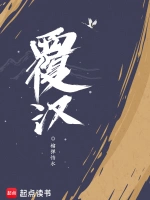
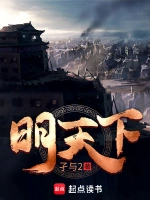
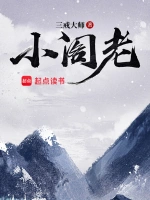
Learning from History
Ever since I was little, I’ve dreamed of becoming a great hero, returning to the past to change the world and make my name immortal. I’m sure lots of people have felt the same way. Alternate-history novels satisfy this desire, which is why transmigration stories have become so popular. If history could happen again, what would you choose? When faced with the sweeping tide of history, every change you make will alter its course. This list will collect and update historical novels from time to t

I Really Can't Read Dumbed-Down Stories
My list of books is pitifully short
Sudo's Library: Personally Collected Completed Novels
This list mainly collects completed books I personally enjoy. Feel free to follow my main list: [Sudong's Library] Mainly featuring good ongoing books
🔥Timeless Masterpieces🔥
☕☕Some books are never forgotten. They only grow more fragrant with the passing years! There's something for everyone: xuanhuan, xianxia, supernatural, Western fantasy, urban, sci-fi, wuxia, gaming, and more! You may not have heard of some of these books, but that doesn't mean they're not good. They're simply not famous. When I recommend a book, I prioritize the writing, then the plot, then originality. Things like the System, style, and setting come after that. 🌴🌴Qidian really does have some gr
Keeping Track of Great Reads: New Picks, Big Ideas, Great Plots, and Feel-Good Stories
A collection of fun and entertaining books. I'll record my reading impressions. Authors are welcome to recommend their own work. Please save the list, follow me, and send flowers. Many books were recommended by friends. My opinions on books I haven't finished may change at any time. I'll give serious consideration to both their strengths and their flaws. Ratings: S: Outstanding hidden gems with brilliant ideas and superb writing. A: Excellent works with imaginative concepts, niche appeal, distin

Yingying's Reading List
Please click in the bottom left corner, and in the bottom-left corner of each book
What My Heart Loves
First, a note: this list isn't limited to novels from the main site. It also includes female-oriented novels. I'm a woman, so please don't be surprised to see those here. These are novels I personally enjoy, with engaging plots and good writing. To me, whether they're from the main site or the female-oriented section, they're all worth reading. I especially like historical fiction, mysteries, crime investigation, historical romance, and xianxia, so most books on my list fall into those categori
AnKing's Reading List
“Within books are golden houses; within books are beauties like jade.” The world of books is enchanting, drawing us into a dream of poetry and picturesque scenes. Maple leaves carry our longing for those we miss. As the autumn wind sighs and the leaves drift down to your fingertips, do you think of the line, “I stop my carriage to admire the maple grove at dusk; frost-red leaves outshine the flowers of February”?
Readers also read
 Germany: 1914
 A Literary Master in Ancient Greece
 Great Ming: His Father Is Useless, So He Must Summon the Founding Emperor
 Seizing the Direct Descendant in the Red Mansion
 Forum Troll, Romance Master
 The Grand Sui Preceptor
 My Neighbor Is the Emperor
 Hong Kong Films: In Wo Hop To, Uncle Deng Begs Me to Take Charge
 I’m Not a Suit-Wearing Thug, I’m a Chameleon Actor!
 The Ambitious Hero of the Late Eastern Han
 Song Beiyun
 Nine Heavens
 The Book of the Dead
 The Demon of the Great Ming
 The Star Spy Family
 Exorcising Demons
 The Boy Emperor
Reader comments 50
Google Translate
As a Mongolian, I couldn't stand it when I read online articles and saw many protagonists starting to attack the grasslands and describing the grassland people as brainless apes. But the author is really great. The description of the characters is very good. Xu Chu has his own stand. Chanyu has Chanyu's dream. The two tribes attacking each other seem real. It even makes me, a Mongolian, willing to see the final defeat of Chanyu. This novel is great. One last thing, Ruzi Emperor is also very good-looking.
The part about giving up being king is really disgusting. An author who is good at writing dark conspiracies has such a big flaw in the structure of his work. A person who assassinated the emperor, a leader of the peasant rebel army, and a person who used various conspiracies to expand his power. This kind of person will not be trusted by the princes in troubled times, and it is impossible to survive. His political life is over. The science of name and reality, for the protagonist, his name is already bad, and he no longer has any strength in his hands, only his brain and tongue, which are useless no matter what. As generous as Liu Bei, he did not dare to use Ma Chao when the Shu Han Dynasty was in decline. The author takes it for granted! ! ! ! ! Also, the main plot of this book is flawed. The first fifty chapters are just a childish attempt to prove that I assassinated the emperor. In the next hundred chapters, it's okay to traverse the princes in order to be useful. Later, if you feel that it is better to pacify the world by yourself, that's fine. But after giving up on becoming king, what is the main line? To pacify the world? In order not to kill the servants, he just walked away and called it unbearable. In troubled times, there is no aura of the protagonist. After this gang breaks up, they will all be the prey of others and they will all die. The chaos in the world was caused by the protagonist. He said it was for the people, but it prolonged the war period and caused more deaths. He said it was for his subordinates, but just walked away. It was easier than throwing away the tools. Hypocritical! I came here as a fan of a dead man, but I ate a poisonous weed and it felt like it was lodged in my throat. I was really disgusted. I accept that the protagonist is confused and frustrated, but I cannot accept the protagonist**.
This plot of giving up the title of king is completely unreasonable.
Exorcism, Book of the Dead, and the Ruzi Emperor were chasing after him. I was really disgusted. The short plot of giving up on becoming king was so unreasonable. The male protagonist went round and round and found that there was no one to persuade, and that others were inferior to him, so he finally made up his mind to become the king. With a lot of clever tricks, he defeated the kings and finally captured the Eastern Capital after going through a lot of hardships. As a result, a princess, who was previously a smart and self-righteous playboy, showed up several times and performed far worse than Xu Chu, Emperor of All Things, and Prince Ning, and unexpectedly came to be in charge of power alone. When the Emperor of All Things died, the ministers were obviously plotting one after another. They were all a bunch of people who had been playing power for decades. Suddenly their IQs were in arrears? Many of these people have fought in the country. How could they lose to a princess who has never seen the world in troubled times and let her take power alone without checks and balances? The author forcibly laid the groundwork for a long time, forcibly improved the princess's resourcefulness, controlled it remotely in Yecheng, and created an image of having no plans left and winning thousands of miles. That would be fine. But then, in order to target the male protagonist, the princess ignored everything and made huge sacrifices to besiege the Eastern Capital? This is obviously a little woman who is driven by her own ambitions and cannot achieve great things. How did she come to be in power? And no one else cares about her and just does what she wants? Isn't this Xiaobaiwen's routine? It's okay to write it this way. That's the tone of Xiaobai's novel. The protagonist's domineering spirit attracts the heroine to target him. As a result, the tone changed again at this time. The protagonist clearly had a chance to win, but at this time, he was so angry that he gave up halfway? The reason is also inexplicable. It is not because of the civilians, but because of the army. Isn't the army born to fight? Isn't it normal for the army to make sacrifices in war? And he didn't mean to die in vain. He first used a small force to lure the enemy into a fight, and then used the main force to encircle and annihilate him. It was a very common strategy, and it didn't even count as a method of war, right? The protagonist actually has a mother's heart. This is really more holy than ordinary mothers. Xu Chu's character is a bit soft-hearted, but he is obviously not such a person. Even if the Holy Mother's heart explodes, the next decision is not to face the difficulties, but to give up on becoming the king? It is obvious that each of these princes is more cruel than the last. If it were not for King Wu, Dongdu would have been in ruins. Wouldn't giving up the title of king be equivalent to giving up the world to them? If you become a counselor, how can you guarantee that you will meet a wise king? How do you ensure that people listen to you? This is a contradiction no matter how you look at it. It is impossible for Xu Chu's mind to make such a decision. From Huanyan to Xu Chu, this plot may be as unreasonable as it is unreasonable, as awkward as it may be, but this is still a conspiracy novel? Just to force the protagonist to be a counselor? I don't like to read cool articles either, and I don't necessarily want to watch King of Kings, but this plot is really disgusting, so I'll give up.
A brief discussion on the writing process of Bing Linshenxia
Starting with "The Book of the Dead", he abandoned various paradigms of online novels and began to experiment with free writing. He chose the declining martial arts theme and created a gloomy and realistic martial arts world from the perspective of a killer. It was in this novel that the author established his personal style, with simple writing, twists and turns, diverse characters, and a full and beautiful character arc. In the later "Drawing Out the Demon", the author once again began to try the fairy tale theme. Different from the original Shuangwen-style writing, this time he did not stand on the shoulders of famous fairy tales, but completely used his own conception and logical deduction to depict an "overhead" fairy world. This leads to the obvious advantages and disadvantages of "Drawing Out the Demons". The advantage is that it is novel and unconventional, giving readers who have read too many templated assembly-line fairy tales a refreshing feeling. Also, because the overall world structure is based on the author's logical deduction, the background setting of the entire story is relatively complete, and there are no major logical flaws. When writing based on other people's settings, there will often be various common sense and logical flaws. If some flaws happen to be in the unacceptable zone of a certain reader, then the reading experience will be very bad. Of course, the shortcomings of "Bad Demon" are also fatal, that is, it is too logical and too vague. Regarding logic, the author mentioned it in the interview after completing the book. Regarding being too vague, the creation mode of online novels determines that the chapters are published as soon as they are written, and the draft cannot be polished and reworked repeatedly, and the preparation cycle is short. This determines that the author cannot spend seven years like JK Rowling to repeatedly conceive of a specific and subtle magical world. Even some unscrupulous fat old man who wrote "A Song of Ice and Fire" drew heavily on the real history of the Wars of the Roses. Therefore, "Drawing Out the Demon" seems reasonable at first glance, but upon closer inspection, it is too vague and lacks texture. The next "Ruzi Emperor" may be regarded as the most recognized by the majority of readers among the author's later books. The author of this book has returned to the field of fictional history that he is good at. This setting not only draws on the real sense of history, but also complements his rigorous writing style. If "Drawing Out the Demon" gives people the impression of a freehand painting of a landscape with freehand brushstrokes and black ink on white paper, then "The Child Emperor" has color. The red of the imperial city, the coldness of the deep palace, the smoke and dust on the hunting road, etc., Have all become palpable. However, the view that "power is only within ten steps and within a thousand miles" and the overt and covert struggles between officials and officials, monarchs and ministers are settings that are both novel and consistent with logical reasoning. This book is both topical and in line with popular tastes, and also has a very personal style. It is full of wise words but also simple and unpretentious. It can be said that it has both topicality and high quality. It can be regarded as a very successful writing attempt. What I admire the most is that the author did not go down the path of assembly line work just because of one success, and started writing novels about the child emperor such as "The Boy Emperor" and "The Female Emperor". Instead, he made a bold move and wrote a completely different novel "The Monster of the Ming Dynasty" with a small character as the protagonist. The success of "The Child Emperor" is only a milestone on his writing journey, not the epitaph of his entire writing career. I have seen too many online writers unable to let go of the baggage of their own success, and have forever become their own repeaters. In contrast, I admire Bingda's pursuit and straightforwardness. In the book "Monsters of the Ming Dynasty", the author uses the things of gods and ghosts to describe the unpredictable nature of people's hearts, and also follows and further develops his unique narrative method. A group of people with different purposes participate in a conspiracy event, each with their own plans and plans, but because of everyone's participation, the event will become unknown chaos and eventually lead to an ending that no one expected. This method of plot planning is not suitable for novels that are too long, but for a novel with more than one million words and four or five main stories like "The Monster of the Ming Dynasty", it is unexpectedly suitable. The plot is often unexpected but reasonable. What makes me most gratified is that compared with the realism of "Emperor", the author's writing skills in this book are on a higher level, concise and full of fireworks, just like Hu Guiyang's bowl of steamed noodles. The noodles are fragrant and warm enough even after hundreds of years of changes. As for "The Conspiracy of Kyushu", I haven't finished the book yet so I can't make a final conclusion. As far as my personal impressions are concerned, I remembered what Bingda said in an interview with readers that he planned to write an epic group portrait novel, but he felt that he was not ready enough to write it in a few years. And "Conspiracy to Determine Nine Provinces" is more like a practice for the epic he planned. This book takes the information asymmetry in "The Child Emperor" to the extreme. The characters in the book only know two or three points of information, and the readers can only see four or five points. Combined with contextual reasoning and analysis, they can guess at most seven or eight points. For example, in the section when the Five Kings conquered the Eastern Capital, from beginning to end, readers only know that Tan Wuwei borrowed the Wu King's cavalry, but they do not know how he led the Luoyang soldiers to fight with the King of the World's headquarters. For example, the betrayal of the King of Shu, readers only know the result but not the process. Readers who like to ponder over and over the details in the text will of course find it very enjoyable and even unfinished, while readers who are used to looking at the overall situation from a God's perspective will be very uncomfortable with this feeling of being in the clouds. Let's write this first. Welcome to discuss
The essential weakness of Xu Chu's thought
Xu Chu's biggest problem is that he believes that there must be a reasonable reason for unifying the world, so he regards the idea of the leader of the force as this reason, but in fact the reason is not the idea, but luck. The idea of governing and uniting the army in power only give you the ability to seize opportunities. If Emperor Yi had not sent Liu Bang to the west, there would have been basically no Liu Bang in the world. If Chen Yu had listened to Li Zuoche, it is hard to say what would have happened if Han Xin attacked Zhao. If it hadn't been for the emptiness in Guanzhong when Li Yuan raised his army, I don't know what would have happened. Yuan Shao died two years earlier and two years later, and the situation in the world was also unknown. Zhu Yuanzhang became emperor in his later years. He sighed to the Forbidden City in Nanjing and Empress Ma, "You are doing a great job if you do it randomly!" Could it be that he unified the world because he had some awesome ideas when he joined the Red Scarf Army? He is just a farmer who wants to earn a living. That's why everyone was so dissatisfied with Xu Chu giving up the throne and the army. In troubled times, only the soldiers and talents in hand are real. If we advance, we can rule the world, if we retreat, we can protect the country and the people. Taking ten thousand steps back, even if you find a master with perfect ideas, how can you guarantee that he will not die from a high fever due to bad food? Zhang Xidi is so awesome, so what about Zhang Wanwu? To put it bluntly, as long as you don't change productivity and introduce industrialization, then everyone will live on land rent. Is there any essential difference if the idea is better or worse? Didn't the Manchus still rule until 1840 when they were so brutal? Do you think Dorgon is like God?
The good-looking plot of Jiuzhou begins with Bingda's seriousness and diligence. Although it is better to rewrite the Ruzi Emperor and the Monster of the Ming Dynasty, if it is left to the end, it is still good in a quantitative sense. Unexpectedly, there was a magical turning point at the end of the third volume, so I looked back and saw that the volume was titled "Broken Name". I had already thought that the road to becoming a king would come to an end here, and the story of the Ruzi Emperor would end here. What Bingda is going against this time is not a small narrative cliché, but a big value cliché, not just a cliché for Xiaobai novels, but a cliché for all online novels: the protagonist becomes bigger and stronger. Xu Chu has been working very hard to become bigger and stronger. He has just accumulated enough strength to conquer the world, but Bing Da allows him to come down on his own. It is inevitable that readers will not accept it. Readers who are still looking for rationality for his abdication based on the original King Cheng logic obviously do not understand. Bingda put all his effort into writing about Xu Chu's counterattack, but in fact, what he really wrote about was his heart that was squeezed again and again. Saints are unkind and emperors are ruthless. He constantly despises his own benevolence as a woman and convinces himself to agree with the value of success recognized by the world. In order to achieve a great cause, anything can become the price with a clear price tag. But his heart finally couldn't bear it anymore, and the last straw was the tenderness of the general who came to the world. Seeking name and seeking reality, one body has two sides, just like the uphill road and the downhill road are the same road. But in the routine of online writing, how to write about the slope? This is not the end, just feel it for a moment and leave it blank. Now the text is only half of it, and there are at least hundreds of thousands of words to be written. The road to becoming a benevolent person is the same as the road to success. It must be written in a real way, in the midst of success and defeat, and in the ups and downs. No matter how it is written later, Bingda's weather is truly admirable. The derailment of values is the real counter-routine, and the story and characters are truly suspenseful. Now everyone is confused and doesn't know what to do next. Bingda is really a monster!
Completely ordered the sixth book, looking forward to the next one
How does "Conspiracy to Destroy Nine Provinces" attract a novice in the political conspiracy world?
How does "Conspiracy to Destroy Nine Provinces" attract a novice in the political conspiracy world? Bingda proved to me that power and strategy can be an element separated from history. Although it borrows some historical settings from the Southern and Northern Dynasties, the stories of the characters in the book are basically based on history, and the plot development revolves around the word power and strategy. The slow writing pace of this book makes it difficult to get into it at the beginning, but it gradually gets better after Chapter 59 "Three People". An emperor who seemed to have potential as a villain boss at first glance was stabbed to death by the protagonist within less than a hundred chapters. A protagonist who was expected to be a counselor actually opened up a new world of combat counselors "stabbing Kyushu". The death of the Emperor of All Things seems to have been foreshadowed in the work information. The death of the emperor is a key to unlocking the troubled times required for the story, and it is also an opportunity for the protagonist Xu Chu to really open his mouth and travel around to conspire to conquer the world. The strategies in Bing Da's writings are different from the "conspiracies of ghosts and gods" with supernatural attributes that are elevated to the level of "using the heaven and earth as the chessboard and the common people as the pawns" in some fairy tales or fantasy novels. Instead, they are limited "mortal strategies" that sink among all living beings. It's not uncommon to find protagonists with the "ultimate strategy" type, but readers with God's perspective will never really marvel at the protagonist's "ultimate strategy", because we all know that this setting is just an internal requirement to achieve the corresponding cool point of the novel, but Bingda uses a restrained writing style to consciously lighten the story. Although the story is still told from a third-person perspective, there is little description of the psychological activities of the characters, and there are no statements such as "XXX has already anticipated the direction of the enemy's march." Instead, the characters are often outlined in a few simple sentences or actions. Of course, the protagonist who lives in the writing of such an author will seem a little pitiful. Recently, in this chapter, a reader wrote an inner narration for Xu Chu, saying "he deeply doubts his identity as the protagonist." Although the protagonist has suffered many setbacks, it does not make people think that Bingda is abusing his master. Since the beginning of the troubled times, Xu Chu first assisted and then became the king, then abdicated and found the true dragon. He vividly performed "how a counselor is made." This may also be Bingda's skill. For me, another highlight of this book is Bingda's attempt to deepen the "core" of the novel while writing about power and strategy. In "Extracting Demons", he unconventionally discussed the "heart of a Taoist priest" to imagine the difference in thinking between Taoists and mortals. In "Conspiracy of Nine Provinces", he used strategies to talk about names and facts, classifying counselors' actions as "according to names and responsibility for facts." Frankly speaking, in the first volume, Xu Chu talked about the theory of name and reality from time to time, which made me feel as if he was forcibly advertising the theory of name and reality. However, as the story develops, the word name and reality are more integrated into the actions of the characters. Xu Chu's quest also brings more readers in this chapter to the discussion rhythm of "name" and "reality". At the same time, Huanyan County advocate Shi Chan also started a wave of discussions or complaints about the concept of "willfulness". These rhythms and discussions made the novel seem not thin but thicker, and also opened up intriguing space for online articles that are often associated with "fast-food reading".
I have read novels for so many years, and I just want to briefly express my feelings. The first online novel. The blasphemy of misty rain in the south of the Yangtze River. I'm sorry, I read 😁 as a pornographic book at the time, but I was deeply attracted to that despicable and shameless fat man with a bottom line. That wretched dragon. He was also deeply attracted by Feng Yue. I have been following Jiangnan Yanyu's books. For the first time, I felt that the world was real. Jiangnan Yanyu once said, I don't write books to make money, I just want to share the world in my heart. But slowly, the novel became more and more close to the same routine and the same plot as the popular novel, and he could no longer see the world in his heart. At this time, I accidentally saw the Sutra of the Dead. That feeling of entering someone else's world is back. That man filled with hatred. The love and hatred of those three people. It attracted me deeply, but I want to say that the dead people of that year should look back at it. It can only be said that Bing Lin Shen Xia has established a style that suits him, whether it is a novel or a novel. Take readers to see the world, including my favorite, Demon-Bashing. But starting from Ruzi Emperor. Bing Linshenxia began to let go. No more accommodating readers, the book is the world, and the characters in it will not be restricted by the author. If you want to read Binglinshenxia, you have to open your mind and immerse yourself in it. I like this feeling very much. Sharing the world in his heart, I think he did it.
The third volume of Abandoning the Throne was too vicious, so I also abandoned the book. This is not like a story about fighting for hegemony. The whole story is full of conspiracies and intrigues. There is no battlefield fighting, and abandoning the king is more like child's play. Many times people have no control over their own actions. If you become king, many people will benefit from you and form an interest group. For example, Zhao Kuangyin rebelled to seize the throne after Chai Rong died, and his subordinates made him a marquis and worshiped the prime minister. Suddenly he said that he would not proclaim himself emperor. What about the titles and official positions he awarded? It is difficult to change from extravagance to frugality. The people below will push you to strive for world hegemony. After the main character was defeated in Dongdu, he was lucky enough to survive and then went on to do whatever he wanted with a shameless face, but suddenly he gave up on his great cause and ignored it. This... Is a bit funny.