Library
Browse and search books
255 novels found
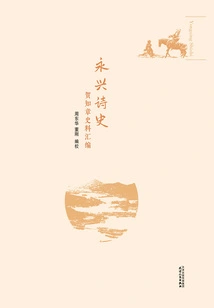
永兴诗史:贺知章史料汇编
Edited By Zhou Donghua And Dong Gang
This book is a compilation of the works of He Zhizhang, a famous poet and calligrapher in the early Tang Dynasty, as well as works related to He Zhizhang, compiled by the editor. He Zhizhang (ca. 659-Ca. 744), Whose courtesy name was Jizhen, called himself Siming Kuangke in his later years, and was a native of Yongxing, Yuezhou (now Xiaoshan, Zhejiang). His poems are famous for their quatrains. In addition to music for worshiping gods and poems based on customs, his landscape and lyrical works are unique in style, fresh and unrestrained. The content of this book includes poems and essays written by He Zhizhang, poems and essays about He Zhizhang's friends and exchanges with him, poems and essays commemorating He Zhizhang in the past dynasties, and relevant historical materials recording He Zhizhang. It is the first "Collection of He Zhizhang" in China, and has great historical significance and academic value for the study of He Zhizhang and related history.
This book is a compilation of the works of He Zhizhang, a famous poet and calligrapher in the early Tang Dynasty, as well as works related to He Zhizhang, compiled by the editor. He Zhizhang (ca. 659-Ca. 744), Whose courtesy name was Jizhen, called himself Siming Kuangke in his later years, and was a native of Yongxing, Yuezhou (now Xiaoshan, Zhejiang). His poems are famous for their quatrains. In addition to music for worshiping gods and poems based on customs, his landscape and lyrical works are unique in style, fresh and unrestrained. The content of this book includes poems and essays written by He Zhizhang, poems and essays about He Zhizhang's friends and exchanges with him, poems and essays commemorating He Zhizhang in the past dynasties, and relevant historical materials recording He Zhizhang. It is the first "Collection of He Zhizhang" in China, and has great historical significance and academic value for the study of He Zhizhang and related history.
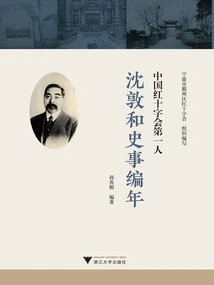
中国红十字会第一人:沈敦和史事编年
Compiled By Sun Shangen
Shen Dunhe (1866-1920), courtesy name Zhongli, was a native of Ningbo, Zhejiang, and a famous social activist and philanthropist in modern China. In his early years, he studied law and politics at the University of Cambridge in England. He has successively served as translator for the Nanyang Minister, teacher at Jinling Tongwen Hall, promoted at the Torpedo School, and promoted at the Jiangnan Naval School. Later, he worked in industry and charity for many years, and served as the General Office of Shanghai-Nanjing Railway and the General Director of China Commercial Bank. He is the author of "Russian National Chronicles", "English National Chronicles", "French National Chronicles" and "German National Chronicles", all of which were included in the supplements of "Xiaofang Huzhai Yu Di Congchao" and had typesetting editions during the reign of Guangxu. In 1906, he published "A Brief Introduction to Unified Dialects" in "Journal of Global China". Centered on Shen Dunhe, the main founder of the Red Cross Society of China, this book comprehensively combs through various historical materials related to him, including newspapers, periodicals, correspondence, books, archives, etc., And arranges his words, deeds, thoughts, life stories and related historical events in chronological order, striving to restore the truth of history.
Shen Dunhe (1866-1920), courtesy name Zhongli, was a native of Ningbo, Zhejiang, and a famous social activist and philanthropist in modern China. In his early years, he studied law and politics at the University of Cambridge in England. He has successively served as translator for the Nanyang Minister, teacher at Jinling Tongwen Hall, promoted at the Torpedo School, and promoted at the Jiangnan Naval School. Later, he worked in industry and charity for many years, and served as the General Office of Shanghai-Nanjing Railway and the General Director of China Commercial Bank. He is the author of "Russian National Chronicles", "English National Chronicles", "French National Chronicles" and "German National Chronicles", all of which were included in the supplements of "Xiaofang Huzhai Yu Di Congchao" and had typesetting editions during the reign of Guangxu. In 1906, he published "A Brief Introduction to Unified Dialects" in "Journal of Global China". Centered on Shen Dunhe, the main founder of the Red Cross Society of China, this book comprehensively combs through various historical materials related to him, including newspapers, periodicals, correspondence, books, archives, etc., And arranges his words, deeds, thoughts, life stories and related historical events in chronological order, striving to restore the truth of history.
中国近代法制史料(全十册)
Liu Naizhong Editor-in-chief Cui Xuesen
This book is a collection of historical materials reflecting the transformation process of China's modern legal system. There are both Chinese writings on China's legal system and Japanese writings on China's legal system. From the late Qing Dynasty to the early Republic of China, Chinese writings on the legal system had various connections with Japan. The authors either studied in Japan or were influenced by Japanese jurisprudence in writing. For example, Wang Hongnian's "Essentials of Constitutional Law" was compiled into this book by Wang, a student of Japanese jurists. Another example is Bao Tingliang's "On the Constitution of the Qing Dynasty", which used Japanese constitutional studies as the object of reference and criticism, and constructed his own constitutional theory on this basis. Japanese treatises on China's legal system, such as "On the Constitution of the Qing Dynasty" written by Kita Onisaburo, later directly became a reference book for the Qing government in drafting the "Draft Imperial Constitution". Some of them have an indirect impact on China, such as Suzuki Basshu's "Constitutional Statement", which was a lecture he gave to the five ministers of the late Qing Dynasty who went abroad to inspect the entourage stranded in Japan. In addition, the "Records of Judicial Investigations Sent to Japan" is an important historical material reflecting the exchanges between the Puppet Manchukuo judiciary and Japan, and the pseudo "Six Laws of the Manchu Empire" is a material for studying the construction of the Puppet Manchukuo legal system.
This book is a collection of historical materials reflecting the transformation process of China's modern legal system. There are both Chinese writings on China's legal system and Japanese writings on China's legal system. From the late Qing Dynasty to the early Republic of China, Chinese writings on the legal system had various connections with Japan. The authors either studied in Japan or were influenced by Japanese jurisprudence in writing. For example, Wang Hongnian's "Essentials of Constitutional Law" was compiled into this book by Wang, a student of Japanese jurists. Another example is Bao Tingliang's "On the Constitution of the Qing Dynasty", which used Japanese constitutional studies as the object of reference and criticism, and constructed his own constitutional theory on this basis. Japanese treatises on China's legal system, such as "On the Constitution of the Qing Dynasty" written by Kita Onisaburo, later directly became a reference book for the Qing government in drafting the "Draft Imperial Constitution". Some of them have an indirect impact on China, such as Suzuki Basshu's "Constitutional Statement", which was a lecture he gave to the five ministers of the late Qing Dynasty who went abroad to inspect the entourage stranded in Japan. In addition, the "Records of Judicial Investigations Sent to Japan" is an important historical material reflecting the exchanges between the Puppet Manchukuo judiciary and Japan, and the pseudo "Six Laws of the Manchu Empire" is a material for studying the construction of the Puppet Manchukuo legal system.
浮梁历代学宫书院记文笺析
Han Xiaoguang Chen Guoqing
Fuliang has been known as the "state of literature" since ancient times, with a prosperous literary style and a gathering of humanities. There were many county magistrates and edicts who came to Fuliang in the past dynasties who valued literature and education. They either donated their salaries to aid students, advocated the construction of academic palaces, purchased academic properties, or established regulations. Xiangxu academies of the past dynasties are spread throughout the city and around the countryside. Education is the foundation of a country. The authors Han Xiaoguang and Chen Guoqing have been engaged in education and literature and history research for many years, and they deeply feel that education has far-reaching significance for the development of social economy and the improvement of social civilization. In order to better summarize and inherit the educational concepts of the predecessors and further carry forward Fuliang's fine tradition of advocating literature and emphasizing education, the author has collected and compiled some documents about Fuliang academies in recent years. He has collated, annotated and briefly analyzed the original text, and compiled it into "Analysis of Documentary Notes of Fuliang Academy Records", hoping to serve as a reference for contemporary friends engaged in education and scholars engaged in research on the history of academies.
Fuliang has been known as the "state of literature" since ancient times, with a prosperous literary style and a gathering of humanities. There were many county magistrates and edicts who came to Fuliang in the past dynasties who valued literature and education. They either donated their salaries to aid students, advocated the construction of academic palaces, purchased academic properties, or established regulations. Xiangxu academies of the past dynasties are spread throughout the city and around the countryside. Education is the foundation of a country. The authors Han Xiaoguang and Chen Guoqing have been engaged in education and literature and history research for many years, and they deeply feel that education has far-reaching significance for the development of social economy and the improvement of social civilization. In order to better summarize and inherit the educational concepts of the predecessors and further carry forward Fuliang's fine tradition of advocating literature and emphasizing education, the author has collected and compiled some documents about Fuliang academies in recent years. He has collated, annotated and briefly analyzed the original text, and compiled it into "Analysis of Documentary Notes of Fuliang Academy Records", hoping to serve as a reference for contemporary friends engaged in education and scholars engaged in research on the history of academies.
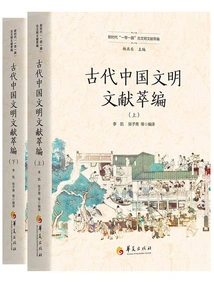
古代中国文明文献萃编(全二册)
Compiled By Li Kai, Zhang Ziqing And Others
History is the best textbook and a sobering agent; especially the glorious Chinese civilization is the spiritual home that modern Chinese people cannot leave. This book collects a large number of ancient Chinese documents (including unearthed documents), follows the example of chronicle-style history books, and is compiled around major events in ancient Chinese history. The annotations strive to be concise and clear. For learners, especially undergraduate students majoring in history and middle school history teachers, it is an essential material for systematic study of ancient Chinese history.
History is the best textbook and a sobering agent; especially the glorious Chinese civilization is the spiritual home that modern Chinese people cannot leave. This book collects a large number of ancient Chinese documents (including unearthed documents), follows the example of chronicle-style history books, and is compiled around major events in ancient Chinese history. The annotations strive to be concise and clear. For learners, especially undergraduate students majoring in history and middle school history teachers, it is an essential material for systematic study of ancient Chinese history.
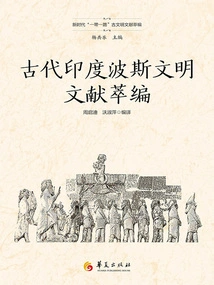
古代印度波斯文明文献萃编
Compiled By Zhou Qidi And Wo Shuping
"Collection of Documents of Ancient Indian and Persian Civilizations" is a volume in the collection of documents on the "Belt and Road" civilizations in the new era. Through a large number of typical classical documents of ancient Persia and ancient India, this book allows readers to more intuitively understand the history of ancient India and ancient Persia and get in touch with ancient civilizations. The Indian part mainly introduces historical materials such as the Vedas and Buddhist scriptures, Kautilya's Arthashastra, Ashoka's stone pillar inscriptions, and Xuanzang's "Records of the Western Regions of the Tang Dynasty" to interpret the history of ancient Indian civilization. The Persian part mainly introduces readers to the civilization of ancient Persia through the "History" of ancient Greek Herodotus, Thucydides' "History of the Peloponnesian War", Xenophon's "Long March" and Arrian's "Expedition of Alexander", several inscriptions of the kings of the Persian Empire, especially Darius's "Behistun Inscription", and the inscriptions of two commercial usurer families during the Persian Empire (Egibe Merchants and Murashu Merchants).
"Collection of Documents of Ancient Indian and Persian Civilizations" is a volume in the collection of documents on the "Belt and Road" civilizations in the new era. Through a large number of typical classical documents of ancient Persia and ancient India, this book allows readers to more intuitively understand the history of ancient India and ancient Persia and get in touch with ancient civilizations. The Indian part mainly introduces historical materials such as the Vedas and Buddhist scriptures, Kautilya's Arthashastra, Ashoka's stone pillar inscriptions, and Xuanzang's "Records of the Western Regions of the Tang Dynasty" to interpret the history of ancient Indian civilization. The Persian part mainly introduces readers to the civilization of ancient Persia through the "History" of ancient Greek Herodotus, Thucydides' "History of the Peloponnesian War", Xenophon's "Long March" and Arrian's "Expedition of Alexander", several inscriptions of the kings of the Persian Empire, especially Darius's "Behistun Inscription", and the inscriptions of two commercial usurer families during the Persian Empire (Egibe Merchants and Murashu Merchants).
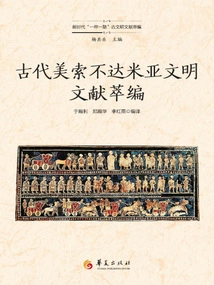
古代美索不达米亚文明文献萃编
Compiled By Yu Dianli, Zheng Dianhua And Li Hongyan
This book is one of a series of collections of ancient civilization documents along the "One Belt, One Road" initiative in the new era. This book is a compilation of original documents from ancient Mesopotamia, one of the birthplaces of civilization. It mainly provides rare original materials for professional students and researchers, and can also give general readers who are interested in ancient Mesopotamian civilization a direct impression. Literary works allow readers to understand the Sumerian and Babylonian understanding of the world, the origin of mankind, and themselves. Inscriptions allow readers to understand the evolution of the ancient Mesopotamian country. Contracts and management documents allow readers to see the vivid economic life of ancient Mesopotamians. Letters allow readers to feel the vivid lives of ancient Mesopotamians.
This book is one of a series of collections of ancient civilization documents along the "One Belt, One Road" initiative in the new era. This book is a compilation of original documents from ancient Mesopotamia, one of the birthplaces of civilization. It mainly provides rare original materials for professional students and researchers, and can also give general readers who are interested in ancient Mesopotamian civilization a direct impression. Literary works allow readers to understand the Sumerian and Babylonian understanding of the world, the origin of mankind, and themselves. Inscriptions allow readers to understand the evolution of the ancient Mesopotamian country. Contracts and management documents allow readers to see the vivid economic life of ancient Mesopotamians. Letters allow readers to feel the vivid lives of ancient Mesopotamians.
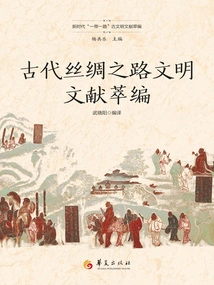
古代丝绸之路文明文献萃编
Compiled By Wu Xiaoyang
This book takes as its object the documents of ancient civilizations that the "One Belt and One Road" traveled and had an important influence on history, and conducts translation, annotation and research on them. It examines the origin of world civilization from a Chinese perspective and displays the development process and glorious achievements of human civilization. It is an important achievement of Professor Yang Gongle from the School of History of Beijing Normal University on this topic. The series covers important documents and materials in major ancient civilization areas along the "Silk Road Economic Belt" and "21st Century Maritime Silk Road". It selects a large number of typical classical documents and collects a large amount of information collected through field investigations. Therefore, it is not only rich in content, but also helps readers understand ancient history more intuitively and touch ancient civilizations. The term "Silk Road" appeared in the 1870s. This concept originated from scholars' true refinement and high-level summary of objective history. Historically, the construction of this avenue was not the work of one person, but the result of the joint development of many pioneers from the East and the West. "Collection of Ancient Silk Road Civilization Documents" explores the rise and development of the ancient Silk Road, allowing readers to better understand the political, economic, and cultural significance of the Silk Road.
This book takes as its object the documents of ancient civilizations that the "One Belt and One Road" traveled and had an important influence on history, and conducts translation, annotation and research on them. It examines the origin of world civilization from a Chinese perspective and displays the development process and glorious achievements of human civilization. It is an important achievement of Professor Yang Gongle from the School of History of Beijing Normal University on this topic. The series covers important documents and materials in major ancient civilization areas along the "Silk Road Economic Belt" and "21st Century Maritime Silk Road". It selects a large number of typical classical documents and collects a large amount of information collected through field investigations. Therefore, it is not only rich in content, but also helps readers understand ancient history more intuitively and touch ancient civilizations. The term "Silk Road" appeared in the 1870s. This concept originated from scholars' true refinement and high-level summary of objective history. Historically, the construction of this avenue was not the work of one person, but the result of the joint development of many pioneers from the East and the West. "Collection of Ancient Silk Road Civilization Documents" explores the rise and development of the ancient Silk Road, allowing readers to better understand the political, economic, and cultural significance of the Silk Road.
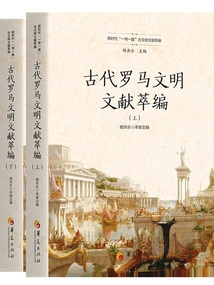
古代罗马文明文献萃编(全二册)
Editor-in-chief Yang Gongle
"Collection of Documents of Ancient Roman Civilization" is an important part of the "One Belt and One Road" ancient civilization literature series, and is divided into two volumes: upper and lower volumes. The first volume mainly selects biographies, autobiographies, letters, speeches, waterways and other works to display the Romans' thoughts and life as well as public buildings closely related to citizen life from multiple levels. The characters in the biographies have distinctive personalities, the autobiographies have unique personalities, the letters are authentic and reliable, the contents of the speeches are moving, and the discussion on waterways is magnificent. Although the content selected in the previous volume is limited and the writing is different, they all reflect the spiritual outlook and material achievements of the Romans. This book has important reference value for people to deeply understand the spiritual and material world of Rome. The second volume mainly focuses on the early Roman society and the Roman Empire in the eyes of foreigners, as well as the Romans' reflections on their own culture, especially the decline of speech. It has profound thoughts and unique perspectives. From here, we can see another "Rome" that is different from the objectively existing "Rome". This is the "Rome" described by scholars. In addition, the second volume also selects some people's views on Roman religion, culture and diplomacy at that time, showing the conflicts between the Eastern Roman Empire, the Western Roman Empire and the Huns, and the relationship between Christianity and Roman traditional culture, providing first-hand information for people to better understand the late Roman Empire.
"Collection of Documents of Ancient Roman Civilization" is an important part of the "One Belt and One Road" ancient civilization literature series, and is divided into two volumes: upper and lower volumes. The first volume mainly selects biographies, autobiographies, letters, speeches, waterways and other works to display the Romans' thoughts and life as well as public buildings closely related to citizen life from multiple levels. The characters in the biographies have distinctive personalities, the autobiographies have unique personalities, the letters are authentic and reliable, the contents of the speeches are moving, and the discussion on waterways is magnificent. Although the content selected in the previous volume is limited and the writing is different, they all reflect the spiritual outlook and material achievements of the Romans. This book has important reference value for people to deeply understand the spiritual and material world of Rome. The second volume mainly focuses on the early Roman society and the Roman Empire in the eyes of foreigners, as well as the Romans' reflections on their own culture, especially the decline of speech. It has profound thoughts and unique perspectives. From here, we can see another "Rome" that is different from the objectively existing "Rome". This is the "Rome" described by scholars. In addition, the second volume also selects some people's views on Roman religion, culture and diplomacy at that time, showing the conflicts between the Eastern Roman Empire, the Western Roman Empire and the Huns, and the relationship between Christianity and Roman traditional culture, providing first-hand information for people to better understand the late Roman Empire.
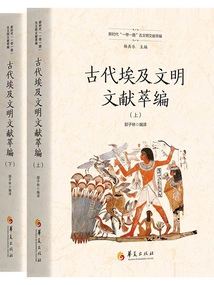
古代埃及文明文献萃编(全二册)
Compiled By Guo Zilin
This book is one of a series of collections of ancient civilization documents along the "Belt and Road Initiative" in the new era, and is divided into two volumes. Documents are the basis of historical research. A large number of documents provide first-hand information for the restoration of the long-standing ancient Egyptian civilization. This book selects and translates more than 160 documents, covering myths and legends, royal systems, personal biographies, correspondence, judicial proceedings, economic activities, religious rituals, edict literature, story literature, odes and poems, etc., Showing the basic characteristics of various ancient Egyptian documents, showing the richness of ancient Egyptian social life, and showing the outstanding contributions of the splendid civilization of ancient Egypt.
This book is one of a series of collections of ancient civilization documents along the "Belt and Road Initiative" in the new era, and is divided into two volumes. Documents are the basis of historical research. A large number of documents provide first-hand information for the restoration of the long-standing ancient Egyptian civilization. This book selects and translates more than 160 documents, covering myths and legends, royal systems, personal biographies, correspondence, judicial proceedings, economic activities, religious rituals, edict literature, story literature, odes and poems, etc., Showing the basic characteristics of various ancient Egyptian documents, showing the richness of ancient Egyptian social life, and showing the outstanding contributions of the splendid civilization of ancient Egypt.
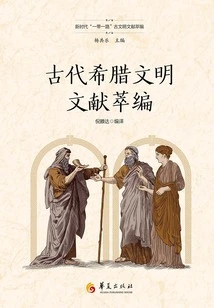
古代希腊文明文献萃编
Compiled By Ni Tengda
This book is one of a series of collections of ancient civilization documents along the "One Belt, One Road" initiative in the new era. The materials collected in this book mainly reflect the political, military and social and cultural development of ancient Greece from the 8th century BC to the 4th century BC. Due to the limited number of documents handed down in early ancient Greece, the materials included in this volume mainly come from works written after the 5th century BC, such as the works of Thucydides, Aristotle, Plutarch, Diodorus, and Arrian. These works are very important sources of information for future generations to study ancient Greek civilization and have extremely high historical value.
This book is one of a series of collections of ancient civilization documents along the "One Belt, One Road" initiative in the new era. The materials collected in this book mainly reflect the political, military and social and cultural development of ancient Greece from the 8th century BC to the 4th century BC. Due to the limited number of documents handed down in early ancient Greece, the materials included in this volume mainly come from works written after the 5th century BC, such as the works of Thucydides, Aristotle, Plutarch, Diodorus, and Arrian. These works are very important sources of information for future generations to study ancient Greek civilization and have extremely high historical value.
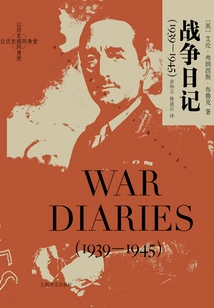
War Diary (1939-1945)
History战争日记(1939—1945)
(uk)alan Francis Brooke
One of the three major documents of the Allies in World War II, the memoirs of the core strategic decision-makers of the Allies, looking at World War II from the perspective of top-level design. British Field Marshal and Chief of the General Staff of the British Empire, Alan Brooke, led most of Britain's major war decisions during World War II. He attended a series of important international conferences held by the Allies during the war and made a significant contribution to winning the war. During World War II, with the exception of the Pacific battlefield that the United States was responsible for, most of the Allied strategic plans in Europe, Africa, and the Atlantic were directly participated in and formulated by Brooke, and sometimes he even persisted against all opinions. Between September 1939 and August 1945, Alan Brooke recorded his daily combat and life experiences, as well as some important thoughts and comments, in the form of a diary, which is of extremely valuable historical value. Because his diary contains many descriptions and evaluations of allied leaders and senior generals such as Churchill, de Gaulle, Marshall, and Eisenhower, it caused huge controversy after its publication.
One of the three major documents of the Allies in World War II, the memoirs of the core strategic decision-makers of the Allies, looking at World War II from the perspective of top-level design. British Field Marshal and Chief of the General Staff of the British Empire, Alan Brooke, led most of Britain's major war decisions during World War II. He attended a series of important international conferences held by the Allies during the war and made a significant contribution to winning the war. During World War II, with the exception of the Pacific battlefield that the United States was responsible for, most of the Allied strategic plans in Europe, Africa, and the Atlantic were directly participated in and formulated by Brooke, and sometimes he even persisted against all opinions. Between September 1939 and August 1945, Alan Brooke recorded his daily combat and life experiences, as well as some important thoughts and comments, in the form of a diary, which is of extremely valuable historical value. Because his diary contains many descriptions and evaluations of allied leaders and senior generals such as Churchill, de Gaulle, Marshall, and Eisenhower, it caused huge controversy after its publication.
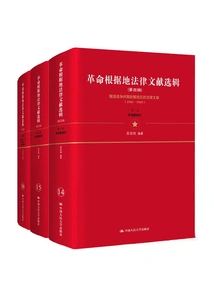
革命根据地法律文献选辑·第四辑(全3卷)
Compiled By Zhang Xipo
"Selected Legal Documents of the Revolutionary Base Areas" selects 8 million words of legal documents from about tens of millions of words of historical materials collected over decades. This volume is a 2.5 Million word selection of legal documents of the People's Government of the Liberated Areas during the Third Civil Revolutionary War. Each document undergoes strict philological research in terms of text form, content, and ideological aspects. It has been carefully inspected, repeatedly collated, and compared by the editor to correct the long-standing errors, distortions, corruptions, and misappropriations to the greatest extent possible and restore the original appearance of history.
"Selected Legal Documents of the Revolutionary Base Areas" selects 8 million words of legal documents from about tens of millions of words of historical materials collected over decades. This volume is a 2.5 Million word selection of legal documents of the People's Government of the Liberated Areas during the Third Civil Revolutionary War. Each document undergoes strict philological research in terms of text form, content, and ideological aspects. It has been carefully inspected, repeatedly collated, and compared by the editor to correct the long-standing errors, distortions, corruptions, and misappropriations to the greatest extent possible and restore the original appearance of history.
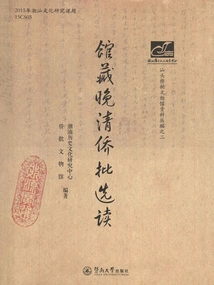
馆藏晚清侨批选读
Compiled By Chaoshan Historical And Cultural Research Center And Others
This book is a special collection of Qing Dynasty overseas Chinese batches collected by the Overseas Chinese Review Museum. It contains 95 batches of batches of batch of batches of batch of batch of batch of batches of batch of batch of batches of batch of batches of batches of batches of batches of batches of batches of batches.
This book is a special collection of Qing Dynasty overseas Chinese batches collected by the Overseas Chinese Review Museum. It contains 95 batches of batches of batch of batches of batch of batch of batch of batches of batch of batch of batches of batch of batches of batches of batches of batches of batches of batches of batches.
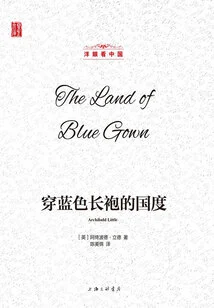
穿蓝色长袍的国度(洋眼看中国)
L
"The Country in Blue Robes" tells the real life of Chinese people in the late 19th and early 20th centuries. In this book, Mrs. Lide observed the clothing, food, housing, transportation, customs, habits, and thoughts and characters of the Chinese people at that time. She traveled around the country and saw the pastoral scenery, street conditions, and the quiet changes that took place in the Chinese people after the penetration of Western lifestyles. She also saw the lives and experiences of foreign expatriates in China and their relationships with ordinary Chinese people.
"The Country in Blue Robes" tells the real life of Chinese people in the late 19th and early 20th centuries. In this book, Mrs. Lide observed the clothing, food, housing, transportation, customs, habits, and thoughts and characters of the Chinese people at that time. She traveled around the country and saw the pastoral scenery, street conditions, and the quiet changes that took place in the Chinese people after the penetration of Western lifestyles. She also saw the lives and experiences of foreign expatriates in China and their relationships with ordinary Chinese people.
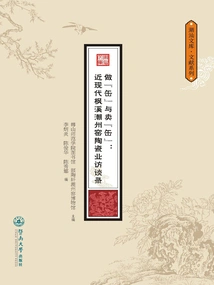
做“缶”与卖“缶”:近现代枫溪潮州窑陶瓷业访谈录
Chief Editor Of Hanshan Normal University Library
This book is an interview record about the modern Fengxi Chaozhou kiln ceramics industry, covering the production and sales of Fengxi ceramics at that time.
This book is an interview record about the modern Fengxi Chaozhou kiln ceramics industry, covering the production and sales of Fengxi ceramics at that time.
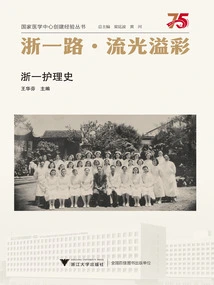
浙一路·流光溢彩:浙一护理史
Editor-in-chief Wang Huafen
"Zhejiang Road · Brilliance" takes the timeline as the main line and traces the history of nursing, introduces the history of key nursing disciplines, reviews major social events, and looks forward to the future of nursing through four chapters: the forest is full of dyes, hundreds of teams are competing for the flow, the pass is as strong as iron, and now we are crossing over from the beginning. This book unlocks the seal of time and records the vivid characters and warm and informative stories in the development of Zhejiang No.1 Nursing. It shows the dedication and growth of Zhejiang No.1 Nurses in clinical, education, scientific research, management and social responsibility from multiple perspectives. It is the common memory of all Zhejiang No.1 Nurses and has high historical and humanistic value. Every nurse can find his or her own footprints, figures, emotions and values in it, thus stimulating our greater professional enthusiasm and energy.
"Zhejiang Road · Brilliance" takes the timeline as the main line and traces the history of nursing, introduces the history of key nursing disciplines, reviews major social events, and looks forward to the future of nursing through four chapters: the forest is full of dyes, hundreds of teams are competing for the flow, the pass is as strong as iron, and now we are crossing over from the beginning. This book unlocks the seal of time and records the vivid characters and warm and informative stories in the development of Zhejiang No.1 Nursing. It shows the dedication and growth of Zhejiang No.1 Nurses in clinical, education, scientific research, management and social responsibility from multiple perspectives. It is the common memory of all Zhejiang No.1 Nurses and has high historical and humanistic value. Every nurse can find his or her own footprints, figures, emotions and values in it, thus stimulating our greater professional enthusiasm and energy.
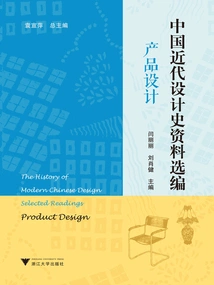
中国近代设计史资料选编(产品设计)
Yan Lili Editor-in-chief Liu Xiaojian
64 documents, nearly 100 design drafts, old photos, and promotional pictures. General introduction to industry, overview of furniture, electrical appliances, glass, ceramics, lacquerware, etc., Introduction of related enterprises, discussion of art education... Understand the basic features of modern Chinese product design from multiple perspectives, as well as touching stories in the era of "saving the nation from extinction" and "recovering rights and interests". This book is one of the series of "Selected Materials on the History of Modern Chinese Design", focusing on modern materials on product design. It selects 64 articles from modern comprehensive journals, industry newspapers, industry survey reports and other documents, as well as nearly a hundred design drafts, old photos, and promotional drawings, and is accompanied by an editor's introduction to the relevant parts. This book is based on the editor's extensive work on compiling modern Chinese product design materials, and will serve as a reference for the study of modern Chinese design history.
64 documents, nearly 100 design drafts, old photos, and promotional pictures. General introduction to industry, overview of furniture, electrical appliances, glass, ceramics, lacquerware, etc., Introduction of related enterprises, discussion of art education... Understand the basic features of modern Chinese product design from multiple perspectives, as well as touching stories in the era of "saving the nation from extinction" and "recovering rights and interests". This book is one of the series of "Selected Materials on the History of Modern Chinese Design", focusing on modern materials on product design. It selects 64 articles from modern comprehensive journals, industry newspapers, industry survey reports and other documents, as well as nearly a hundred design drafts, old photos, and promotional drawings, and is accompanied by an editor's introduction to the relevant parts. This book is based on the editor's extensive work on compiling modern Chinese product design materials, and will serve as a reference for the study of modern Chinese design history.
百年茅盾研究成果史料索引(1920—2020)
Compiled By Lin Chunhua
On April 25, 1920, Huang Housheng published the article "Reflections on Reading the Manifesto of the New Trend Column in Novel" in the fourth issue of Volume 11 of "Novel Monthly", which was the first paper researched for Mao Dun; in December 1931, Shanghai Now Dai Shuju published the first monograph on Mao Dun - "Critical Biography of Mao Dun" edited by Fu Zhiying, which included more than 20 important papers on Mao Dun in the past ten years, which significantly deepened and expanded Mao Dun's research and began to become independent. As of 2020, Mao Dun research has gone through a century of history, with more than a hundred research monographs, essay collections, biographies, information compilations, etc. Published, and thousands of papers published, becoming a prominent discipline in academic research. Based on this, this topic comprehensively collects and organizes the main contents of papers, works and some master's and doctoral theses on Mao Dun from 1920 to 2020. It also focuses on summarizing the contents of papers and works before the 1990s when the Internet was not yet popular. It strives to provide a more systematic, complete and detailed research material for the academic community based on the actual research on Mao Dun.
On April 25, 1920, Huang Housheng published the article "Reflections on Reading the Manifesto of the New Trend Column in Novel" in the fourth issue of Volume 11 of "Novel Monthly", which was the first paper researched for Mao Dun; in December 1931, Shanghai Now Dai Shuju published the first monograph on Mao Dun - "Critical Biography of Mao Dun" edited by Fu Zhiying, which included more than 20 important papers on Mao Dun in the past ten years, which significantly deepened and expanded Mao Dun's research and began to become independent. As of 2020, Mao Dun research has gone through a century of history, with more than a hundred research monographs, essay collections, biographies, information compilations, etc. Published, and thousands of papers published, becoming a prominent discipline in academic research. Based on this, this topic comprehensively collects and organizes the main contents of papers, works and some master's and doctoral theses on Mao Dun from 1920 to 2020. It also focuses on summarizing the contents of papers and works before the 1990s when the Internet was not yet popular. It strives to provide a more systematic, complete and detailed research material for the academic community based on the actual research on Mao Dun.
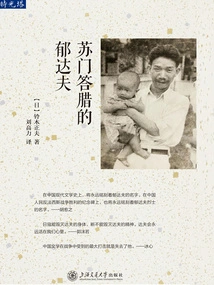
Yu Dafu of Sumatra
History苏门答腊的郁达夫
(japan) Masao Suzuki
When the Pacific War broke out and Singapore fell, Yu Dafu was forced to flee to Indonesia and settled in Sumatra. He hid his identity, opened a local winery, married a wife and had children. He was recruited by the Japanese military police as a translator, and thus mastered a large amount of criminal evidence against the Japanese military police. After Japan surrendered, Yu Dafu disappeared. Masao Suzuki, a Japanese Yu Dafu researcher, devoted half his life to tracing the truth about the martyrdom of Yu Dafu. He had close contact with many military police who were stationed in Indonesia during the Pacific War. He identified and interviewed the military police captain who ordered Yu Dafu's murder, and solved the mystery of Yu Dafu's disappearance. This book is considered an important work on the study of Yu Dafu's activities in Indonesia. In 1996, it won the first Yu Hua and Yu Dafu Martyrs Literature and Art Award. This time, the translation has been revised, and more than 70 precious influential materials have been selected and made public for the first time.
When the Pacific War broke out and Singapore fell, Yu Dafu was forced to flee to Indonesia and settled in Sumatra. He hid his identity, opened a local winery, married a wife and had children. He was recruited by the Japanese military police as a translator, and thus mastered a large amount of criminal evidence against the Japanese military police. After Japan surrendered, Yu Dafu disappeared. Masao Suzuki, a Japanese Yu Dafu researcher, devoted half his life to tracing the truth about the martyrdom of Yu Dafu. He had close contact with many military police who were stationed in Indonesia during the Pacific War. He identified and interviewed the military police captain who ordered Yu Dafu's murder, and solved the mystery of Yu Dafu's disappearance. This book is considered an important work on the study of Yu Dafu's activities in Indonesia. In 1996, it won the first Yu Hua and Yu Dafu Martyrs Literature and Art Award. This time, the translation has been revised, and more than 70 precious influential materials have been selected and made public for the first time.
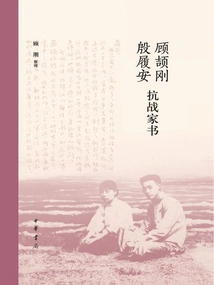
顾颉刚殷履安抗战家书
Gu Chao Organized
"Gu Jiegang and Yin Lu'an's Family Letters of the Anti-Japanese War" contains letters from Gu Jiegang and Yin Lu'an during the Songhu Anti-Japanese War in 1932 and the all-out Anti-Japanese War from 1937 to 1943. On January 23, 1932, Gu Jiegang left Peking to visit his father in Hangzhou. After the "January 28th Incident", he stayed in Hangzhou for several months. After the "July 7th Incident" in 1937, Gu Jiegang was hunted by the Japanese for promoting anti-Japanese aggression. He traveled to Suiyuan, Suzhou, Gansu, Qinghai, Yunnan, Sichuan, Chongqing and other places. During the turbulent years, Gu Jiegang and his family spent less and less time together, and his wife Yin Lu'an worked hard to support the family. Mountains and rivers are ruined, wives and children are separated, family and country are righteous, and children are tender. There is a past behind every letter from home. There is a pair of eyes at the end of every postal route. The feelings are vividly and fully reflected in the letters exchanged, which are story-telling, readable, and life-like. "Gu Yin's Family Letters" is not only a true testimony of how the Gu family, their relatives, friends, and academic colleagues supported the army in the war of resistance during the national crisis, and how they were displaced and struggled to make a living during the war; it is also a true reflection of the life encounters, family changes, and psychological feelings of individuals in the tragic war years; and under the background of a grand historical narrative, it provides vivid details and rich materials to fill the wide historical gaps. It is also an extremely precious archival historical material. At the end of the book are attached letters between Gu Jiegang's eldest daughter, second daughter and their parents, which can be read in conjunction with Gu Yin's family letters, making some of the affairs between the couple coherent and complete, with multi-dimensional perspectives and a unique sense of situation. The organizer has made concise annotations on the characters involved in the letters, their font sizes, aliases, nicknames, backgrounds at the time, relationships between the characters, etc., To make it easier to understand.
"Gu Jiegang and Yin Lu'an's Family Letters of the Anti-Japanese War" contains letters from Gu Jiegang and Yin Lu'an during the Songhu Anti-Japanese War in 1932 and the all-out Anti-Japanese War from 1937 to 1943. On January 23, 1932, Gu Jiegang left Peking to visit his father in Hangzhou. After the "January 28th Incident", he stayed in Hangzhou for several months. After the "July 7th Incident" in 1937, Gu Jiegang was hunted by the Japanese for promoting anti-Japanese aggression. He traveled to Suiyuan, Suzhou, Gansu, Qinghai, Yunnan, Sichuan, Chongqing and other places. During the turbulent years, Gu Jiegang and his family spent less and less time together, and his wife Yin Lu'an worked hard to support the family. Mountains and rivers are ruined, wives and children are separated, family and country are righteous, and children are tender. There is a past behind every letter from home. There is a pair of eyes at the end of every postal route. The feelings are vividly and fully reflected in the letters exchanged, which are story-telling, readable, and life-like. "Gu Yin's Family Letters" is not only a true testimony of how the Gu family, their relatives, friends, and academic colleagues supported the army in the war of resistance during the national crisis, and how they were displaced and struggled to make a living during the war; it is also a true reflection of the life encounters, family changes, and psychological feelings of individuals in the tragic war years; and under the background of a grand historical narrative, it provides vivid details and rich materials to fill the wide historical gaps. It is also an extremely precious archival historical material. At the end of the book are attached letters between Gu Jiegang's eldest daughter, second daughter and their parents, which can be read in conjunction with Gu Yin's family letters, making some of the affairs between the couple coherent and complete, with multi-dimensional perspectives and a unique sense of situation. The organizer has made concise annotations on the characters involved in the letters, their font sizes, aliases, nicknames, backgrounds at the time, relationships between the characters, etc., To make it easier to understand.
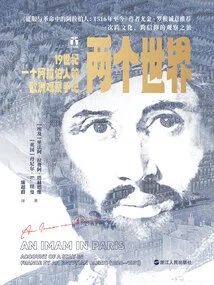
两个世界:19世纪一个阿拉伯人的欧洲观察手记
(egypt) Rifaa Rafea Tahtawi Et Al.
How did the Arab intellectual elite in the 19th century view so-called European civilization? How to mediate the contradictions and conflicts between traditional Islam and European modernity thoughts? Why has this Arab observation been accused of causing trouble for the Islamic world? Since the 19th century, the achievements of the European Industrial Revolution have overshadowed the former glory of the Eastern world. As one of the Eastern countries that opened trade to the West, Egypt was eager to participate and share in the fruits. So starting in the late 1820s, Egypt's ruler Muhammad Ali sent overseas students to Europe to learn the latest knowledge. The author of this book, Rifaa Tahtawi, was one of the first batch of international students sent by Egypt. The international students came to France, the center of Europe at that time, for a five-year visit and study. During this period, Tahtawi recorded his observations of France and even Europe as a whole from the perspective of an Arab intellectual, and even incorporated the ideas of modernity into it. When the traditional Arab society and the European society that advertises "rationality" and "science" met through a group of international students, Tahtawi seemed to be in two completely different worlds. This plunged his observations into a whirlpool of contradictions: How to reconcile the conflict between traditional beliefs and ideas about modernity? How do you view the contradiction between European anti-absolutist trends and the Egyptian political system? ... These are problems that Tahtawi constantly encounters and needs to be solved urgently.
How did the Arab intellectual elite in the 19th century view so-called European civilization? How to mediate the contradictions and conflicts between traditional Islam and European modernity thoughts? Why has this Arab observation been accused of causing trouble for the Islamic world? Since the 19th century, the achievements of the European Industrial Revolution have overshadowed the former glory of the Eastern world. As one of the Eastern countries that opened trade to the West, Egypt was eager to participate and share in the fruits. So starting in the late 1820s, Egypt's ruler Muhammad Ali sent overseas students to Europe to learn the latest knowledge. The author of this book, Rifaa Tahtawi, was one of the first batch of international students sent by Egypt. The international students came to France, the center of Europe at that time, for a five-year visit and study. During this period, Tahtawi recorded his observations of France and even Europe as a whole from the perspective of an Arab intellectual, and even incorporated the ideas of modernity into it. When the traditional Arab society and the European society that advertises "rationality" and "science" met through a group of international students, Tahtawi seemed to be in two completely different worlds. This plunged his observations into a whirlpool of contradictions: How to reconcile the conflict between traditional beliefs and ideas about modernity? How do you view the contradiction between European anti-absolutist trends and the Egyptian political system? ... These are problems that Tahtawi constantly encounters and needs to be solved urgently.
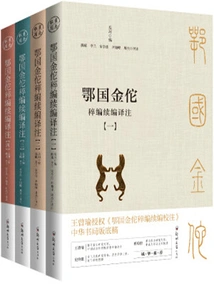
鄂国金佗稡编续编译注(全四册)
Yue Ke
The twenty-eight volumes of "The Collection of Jin Tuoyang of E Kingdom" and the thirty volumes of "The Continuation of Jin Tuoyang of E Kingdom" are the most important and detailed existing historical books recording Yue Fei's deeds. They were compiled by Yue Ke, the grandson of Yue Fei. During the reign of Emperor Ningzong of the Song Dynasty, the imperial court named Yue Fei the King of E, hence the name "E State". "Jintuo" is the name of the square in Jiaxing Fucheng, and Yue Ke once lived in Jintuo Square. After Emperor Gaozong, Qin Hui and others of the Song Dynasty killed Yue Fei, they tampered with official history, resulting in a large number of written materials about Yue Fei being lost or destroyed. It was not until the case of Xiaozong was overturned that Yue Fei's third son Yue Lin reorganized Yue Fei's historical records. During the reigns of Ningzong and Lizong of the Song Dynasty, Yue Lin's son Yue Ke inherited his father's ambition and compiled it into a volume. This book is an annotation and translation of "E Guo Jin Tuo Ye's Compilation" and "E Guo Jin Tuo Ye's Continuation", in order to promote the true deeds of the national hero Yue Fei more widely. The original manuscript is "E Guo Jin Tuo Ye's Compilation and Continuation" provided by Mr. Wang Zengyu (2020 edition of Zhonghua Book Company).
The twenty-eight volumes of "The Collection of Jin Tuoyang of E Kingdom" and the thirty volumes of "The Continuation of Jin Tuoyang of E Kingdom" are the most important and detailed existing historical books recording Yue Fei's deeds. They were compiled by Yue Ke, the grandson of Yue Fei. During the reign of Emperor Ningzong of the Song Dynasty, the imperial court named Yue Fei the King of E, hence the name "E State". "Jintuo" is the name of the square in Jiaxing Fucheng, and Yue Ke once lived in Jintuo Square. After Emperor Gaozong, Qin Hui and others of the Song Dynasty killed Yue Fei, they tampered with official history, resulting in a large number of written materials about Yue Fei being lost or destroyed. It was not until the case of Xiaozong was overturned that Yue Fei's third son Yue Lin reorganized Yue Fei's historical records. During the reigns of Ningzong and Lizong of the Song Dynasty, Yue Lin's son Yue Ke inherited his father's ambition and compiled it into a volume. This book is an annotation and translation of "E Guo Jin Tuo Ye's Compilation" and "E Guo Jin Tuo Ye's Continuation", in order to promote the true deeds of the national hero Yue Fei more widely. The original manuscript is "E Guo Jin Tuo Ye's Compilation and Continuation" provided by Mr. Wang Zengyu (2020 edition of Zhonghua Book Company).
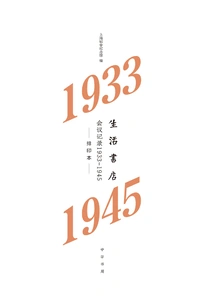
生活书店会议记录1933-1945
Shanghai Taofen Memorial Hall
The minutes of the Life Bookstore meeting are rare archival historical materials unique to the Shanghai Taofen Memorial Hall. They span from 1933 to 1945 and have survived the war of resistance against Japan and the war of liberation, and have been preserved to this day. This batch of files contains a large amount of information, is self-contained, and is relatively complete in preservation. It has been made public in the form of photocopies without modification, deletion, or obscuration. This volume is presented in its entirety in typewritten format. All meeting minutes record the development history of Life Bookstore in detail, fully demonstrating the extraordinary history of "a cultural fortress in the countercurrent" through many aspects such as hard work, migration, persistence in cultural resistance, and unremitting pursuit of truth. It also presents its unique internal management system, institutionalized and humane democratic management, and unique corporate culture. These are not only of great value to the historical research on Taofen, his colleagues, and Life Bookstore, but are also important supplements to the research on the publishing history of the same period.
The minutes of the Life Bookstore meeting are rare archival historical materials unique to the Shanghai Taofen Memorial Hall. They span from 1933 to 1945 and have survived the war of resistance against Japan and the war of liberation, and have been preserved to this day. This batch of files contains a large amount of information, is self-contained, and is relatively complete in preservation. It has been made public in the form of photocopies without modification, deletion, or obscuration. This volume is presented in its entirety in typewritten format. All meeting minutes record the development history of Life Bookstore in detail, fully demonstrating the extraordinary history of "a cultural fortress in the countercurrent" through many aspects such as hard work, migration, persistence in cultural resistance, and unremitting pursuit of truth. It also presents its unique internal management system, institutionalized and humane democratic management, and unique corporate culture. These are not only of great value to the historical research on Taofen, his colleagues, and Life Bookstore, but are also important supplements to the research on the publishing history of the same period.
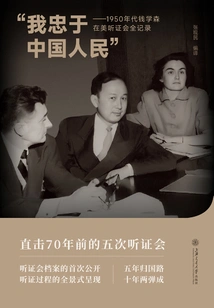
我忠于中国人民:1950年代钱学森在美听证会全记录
Compiled By Zhang Xianmin
This book is the complete record of the five hearings that Qian Xuesen was forced to participate in in the United States. It is compiled and translated into Chinese based on publicly disclosed archival materials. It is the first time that the Chinese version of the full record of the hearings has been published. Qian Xuesen's hearing is an important part of Qian Xuesen's journey back to China, and it is also one of the most important chapters in Qian Xuesen's five-year journey back to China. Qian Xuesen's eloquent answers at the hearing were a vivid reflection of Qian Xuesen's patriotism. This book provides valuable first-hand historical materials for in-depth research on Qian Xuesen, the history of Chinese education abroad in the 20th century, and the history of the international Cold War in the 20th century. It also provides fresh and vivid material for strengthening the ideological and political education and citizen quality education of party members and cadres, scientific and technological workers, and college students in the new era.
This book is the complete record of the five hearings that Qian Xuesen was forced to participate in in the United States. It is compiled and translated into Chinese based on publicly disclosed archival materials. It is the first time that the Chinese version of the full record of the hearings has been published. Qian Xuesen's hearing is an important part of Qian Xuesen's journey back to China, and it is also one of the most important chapters in Qian Xuesen's five-year journey back to China. Qian Xuesen's eloquent answers at the hearing were a vivid reflection of Qian Xuesen's patriotism. This book provides valuable first-hand historical materials for in-depth research on Qian Xuesen, the history of Chinese education abroad in the 20th century, and the history of the international Cold War in the 20th century. It also provides fresh and vivid material for strengthening the ideological and political education and citizen quality education of party members and cadres, scientific and technological workers, and college students in the new era.
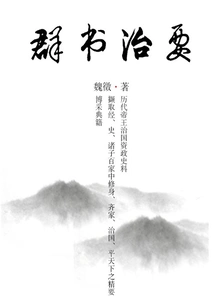
中华传统文化精粹:群书治要
(tang Dynasty) Wei Zheng
"Qunshu Zhiyao" is a masterpiece on political governance composed by the famous admonisher Wei Zheng and ministers Yu Shinan and Chu Suiliang in the early years of Zhenguan, who were ordered by Emperor Taizong Li Shimin of the Tang Dynasty to extract the essence of self-cultivation, country governance, family order, and world peace from the historical materials of previous emperors' governance. The book starts from the Five Emperors and goes down to the Jin Dynasty. It is compiled from more than 14,000 ancient books and more than 89,000 volumes. The whole book has a total of more than 500,000 words. It can be said to be the "Sikuquanshu" of the Tang Dynasty.
"Qunshu Zhiyao" is a masterpiece on political governance composed by the famous admonisher Wei Zheng and ministers Yu Shinan and Chu Suiliang in the early years of Zhenguan, who were ordered by Emperor Taizong Li Shimin of the Tang Dynasty to extract the essence of self-cultivation, country governance, family order, and world peace from the historical materials of previous emperors' governance. The book starts from the Five Emperors and goes down to the Jin Dynasty. It is compiled from more than 14,000 ancient books and more than 89,000 volumes. The whole book has a total of more than 500,000 words. It can be said to be the "Sikuquanshu" of the Tang Dynasty.
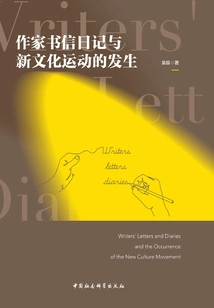
作家书信日记与新文化运动的发生
Wu Chen
Focusing on the letters and diaries of writers, this book conducts in-depth excavations of historical materials related to the occurrence of the New Culture Movement, and explores the historical significance of independent individual writers to the occurrence of the New Culture Movement through the psychological details displayed by writers in their letters and diaries. The work has strong academic rationality, correct stance, combination of history and theory, and strives to restore the historical scene.
Focusing on the letters and diaries of writers, this book conducts in-depth excavations of historical materials related to the occurrence of the New Culture Movement, and explores the historical significance of independent individual writers to the occurrence of the New Culture Movement through the psychological details displayed by writers in their letters and diaries. The work has strong academic rationality, correct stance, combination of history and theory, and strives to restore the historical scene.
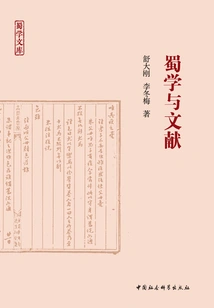
Shu Studies and Literature
History蜀学与文献
Shu Dagang Li Dongmei
This book is a concise reading of Shu studies and its literature. The author reviews the history and connotation of Shu studies by focusing on its origins, evolution, achievements and contributions. By sorting out the origins and categories of Bashu literature, scholars in the past dynasties have collected, organized and researched Bashu literature, and reviewed hundreds of selected Shu classics, re-examining the literature and essence of Shu literature. The author has long been engaged in the compilation of Bashu literature and the research of Bashu academics. He not only attaches importance to the foundation of literature, but also emphasizes the academic vision, and strives to reconstruct the academic system and literature system of Shu studies through Shu studies and literature.
This book is a concise reading of Shu studies and its literature. The author reviews the history and connotation of Shu studies by focusing on its origins, evolution, achievements and contributions. By sorting out the origins and categories of Bashu literature, scholars in the past dynasties have collected, organized and researched Bashu literature, and reviewed hundreds of selected Shu classics, re-examining the literature and essence of Shu literature. The author has long been engaged in the compilation of Bashu literature and the research of Bashu academics. He not only attaches importance to the foundation of literature, but also emphasizes the academic vision, and strives to reconstruct the academic system and literature system of Shu studies through Shu studies and literature.
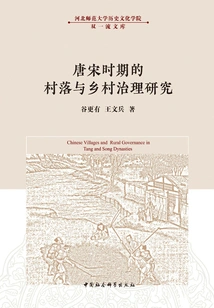
唐宋时期的村落与乡村治理研究
Gu Gengeng Wang Wenbing
This book selects the two keywords "village" and "rural governance" to analyze the two historical worlds that take this as its object: the "historical world centered on the villagers themselves" and the "historical world centered on politics." After the Tang Dynasty, the hometownization of villages and the politicization of villages were two different aspects of the same object. From the perspective of the village, its hometown-oriented community made it a geographical community of villagers. After the Song Dynasty, due to the strengthening of clan nature, many villages also became a blood community; from the perspective of the political power, it was a process of destroying or utilizing the village community in order to strengthen taxation. Previous research has been more from the perspective of the regime, as an observer, studying rural society and the governance process and effectiveness of rural society by the regime, but it has ignored the feelings of the villagers living in it. If we learn from the "participation" method in anthropology and sociology, go deep into the life world of villagers, and understand the village society and the relationship between the political power and rural society at that time from their perspective, we will have a new understanding of the history at that time.
This book selects the two keywords "village" and "rural governance" to analyze the two historical worlds that take this as its object: the "historical world centered on the villagers themselves" and the "historical world centered on politics." After the Tang Dynasty, the hometownization of villages and the politicization of villages were two different aspects of the same object. From the perspective of the village, its hometown-oriented community made it a geographical community of villagers. After the Song Dynasty, due to the strengthening of clan nature, many villages also became a blood community; from the perspective of the political power, it was a process of destroying or utilizing the village community in order to strengthen taxation. Previous research has been more from the perspective of the regime, as an observer, studying rural society and the governance process and effectiveness of rural society by the regime, but it has ignored the feelings of the villagers living in it. If we learn from the "participation" method in anthropology and sociology, go deep into the life world of villagers, and understand the village society and the relationship between the political power and rural society at that time from their perspective, we will have a new understanding of the history at that time.
十通财经文献注释(第五册):皇朝续文献通考
Note By Wang Wensu And Others
This book collects financial documents from the "Tongkao of Qing Dynasty Documents" (originally known as "Tongkao of Imperial Documents"), which was written by Zhang Tingyu and others in the Qing Dynasty; later Ji Huang, Liu Yong and others were commissioned to write it, and was revised by Ji Yun and others. , Was written in the 52nd year of Qianlong's reign (1787), and was included in the "Shitong Financial and Economic Documents" by later generations. The book has 300 volumes, and the format is the same as "Suwen Tongkao". It contains regulations and systems from the early Qing Dynasty to the 50th year of Qianlong's reign.
This book collects financial documents from the "Tongkao of Qing Dynasty Documents" (originally known as "Tongkao of Imperial Documents"), which was written by Zhang Tingyu and others in the Qing Dynasty; later Ji Huang, Liu Yong and others were commissioned to write it, and was revised by Ji Yun and others. , Was written in the 52nd year of Qianlong's reign (1787), and was included in the "Shitong Financial and Economic Documents" by later generations. The book has 300 volumes, and the format is the same as "Suwen Tongkao". It contains regulations and systems from the early Qing Dynasty to the 50th year of Qianlong's reign.
十通财经文献注释(第六册):皇朝续文献通考
Note By Wang Wensu And Others
This book collects financial documents from the "Tongkao of Qing Dynasty Documents" (formerly known as "Tongkao of Imperial Documents"), which was written by Zhang Tingyu and others in the Qing Dynasty. It was written by Hou Ji Huang, Liu Yong and others, edited by Ji Yun and others, and was completed in the 52nd year of Qianlong (1787). It was collected by later generations as "Shitong Financial and Economic Documents", with 300 volumes in total. The format is the same as "Tongkao of Xuwenwen". It contains regulations and systems from the early Qing Dynasty to the fiftieth year of Qianlong.
This book collects financial documents from the "Tongkao of Qing Dynasty Documents" (formerly known as "Tongkao of Imperial Documents"), which was written by Zhang Tingyu and others in the Qing Dynasty. It was written by Hou Ji Huang, Liu Yong and others, edited by Ji Yun and others, and was completed in the 52nd year of Qianlong (1787). It was collected by later generations as "Shitong Financial and Economic Documents", with 300 volumes in total. The format is the same as "Tongkao of Xuwenwen". It contains regulations and systems from the early Qing Dynasty to the fiftieth year of Qianlong.
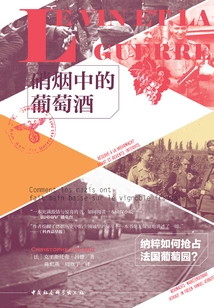
硝烟中的葡萄酒:纳粹如何抢占法国葡萄园?
(france)christophe Lukan
During World War II, French wine was not an ordinary item. In the eyes of Nazi leaders, with France's defeat, French wine became the most precious prize. Beginning in 1940, the Berlin government appointed German wine experts as official representatives, known as "wine overseers," to travel to major French wine regions to coordinate the largest plunder of wine resources ever discovered. The Vichy government played an ambiguous intermediary role, and many French wine professionals also collaborated with the occupiers. This massive plunder became an unbearable tragedy. Today, more than seventy years after the end of the war, it is time to reopen this dusty and bitter archive to let readers understand what really happened. This book completes this detailed investigation based on never-before-published documents and information, truly recreating the Nazis' crazy activities of plundering wine resources in France during World War II. It discloses for the first time many historical materials about the war and trade, and opens the darkest page in the French wine world against the background of German occupation and traitor collaboration.
During World War II, French wine was not an ordinary item. In the eyes of Nazi leaders, with France's defeat, French wine became the most precious prize. Beginning in 1940, the Berlin government appointed German wine experts as official representatives, known as "wine overseers," to travel to major French wine regions to coordinate the largest plunder of wine resources ever discovered. The Vichy government played an ambiguous intermediary role, and many French wine professionals also collaborated with the occupiers. This massive plunder became an unbearable tragedy. Today, more than seventy years after the end of the war, it is time to reopen this dusty and bitter archive to let readers understand what really happened. This book completes this detailed investigation based on never-before-published documents and information, truly recreating the Nazis' crazy activities of plundering wine resources in France during World War II. It discloses for the first time many historical materials about the war and trade, and opens the darkest page in the French wine world against the background of German occupation and traitor collaboration.
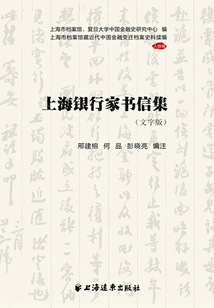
上海银行家书信集(文字版)
Edited And Annotated By Xing Jianrong, He Pin And Peng Xiaoliang
"Shanghai Bankers' Letters Collection" is one of the 2020 Shanghai Cultural Development Fund Book Publishing Special Fund-funded projects "Sequel to the Archives of Modern China's Financial Changes in the Shanghai Municipal Archives Collection". It mainly contains 30 groups of bankers' letters from various bank archives in the Shanghai Municipal Archives Collection. The time ranges from 1918 to 1949. It basically covers all aspects of the development of modern China's financial industry and reflects the influence and role of bankers in the construction of the modern Shanghai financial center. This book can not only understand the mental journey of bankers, but also learn from the management ideas, business strategies, and social responsibilities of modern financiers to help build Shanghai into an international financial center. It is of certain help to those engaged in financial research and study in universities and scientific research institutes, as well as to those working in financial enterprises and institutions.
"Shanghai Bankers' Letters Collection" is one of the 2020 Shanghai Cultural Development Fund Book Publishing Special Fund-funded projects "Sequel to the Archives of Modern China's Financial Changes in the Shanghai Municipal Archives Collection". It mainly contains 30 groups of bankers' letters from various bank archives in the Shanghai Municipal Archives Collection. The time ranges from 1918 to 1949. It basically covers all aspects of the development of modern China's financial industry and reflects the influence and role of bankers in the construction of the modern Shanghai financial center. This book can not only understand the mental journey of bankers, but also learn from the management ideas, business strategies, and social responsibilities of modern financiers to help build Shanghai into an international financial center. It is of certain help to those engaged in financial research and study in universities and scientific research institutes, as well as to those working in financial enterprises and institutions.
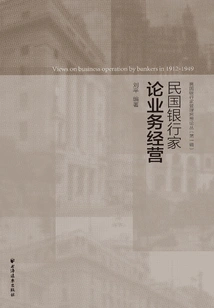
民国银行家论业务经营(民国银行家管理思想论丛·第一辑)
Compiled By Liu Ping
This book mainly reflects the views and ideas of bankers in the Republic of China on bank development strategies, business ideas, business development, risk management and control, branch establishment, external services and other issues.
This book mainly reflects the views and ideas of bankers in the Republic of China on bank development strategies, business ideas, business development, risk management and control, branch establishment, external services and other issues.
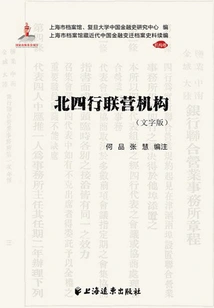
北四行联营机构
He Pin, Edited By Zhang Hui
"Bei Si Xing Joint Venture" is one of the 2020 Shanghai Cultural Development Fund Book Publishing Special Fund-funded projects "The Continuation of Archives and Historical Materials on Modern China's Financial Changes in Shanghai Municipal Archives". It mainly includes the historical materials of Bei Si Xing, rules and regulations, organizational personnel, business operations and other archival materials collected by Shanghai Municipal Archives, in order to reflect the overall overview of the historical changes of Bei Si Xing.
"Bei Si Xing Joint Venture" is one of the 2020 Shanghai Cultural Development Fund Book Publishing Special Fund-funded projects "The Continuation of Archives and Historical Materials on Modern China's Financial Changes in Shanghai Municipal Archives". It mainly includes the historical materials of Bei Si Xing, rules and regulations, organizational personnel, business operations and other archival materials collected by Shanghai Municipal Archives, in order to reflect the overall overview of the historical changes of Bei Si Xing.
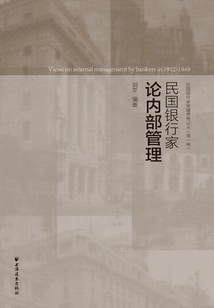
民国银行家论内部管理(民国银行家管理思想论丛·第一辑)
Compiled By Liu Ping
This book mainly reflects the thoughts and assumptions of bankers in the Republic of China on bank internal organization construction, office order, personnel management, talent training, corporate culture construction, etc.
This book mainly reflects the thoughts and assumptions of bankers in the Republic of China on bank internal organization construction, office order, personnel management, talent training, corporate culture construction, etc.
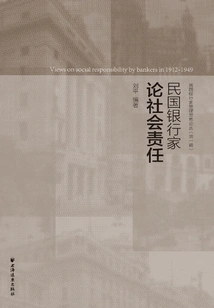
民国银行家论社会责任(民国银行家管理思想论丛·第一辑)
Compiled By Liu Ping
This book mainly reflects the concerns and thinking of bankers in the Republic of China on issues such as the destiny of the country and the nation, China's economic development, coordinated development of industry and commerce, rural finance, wartime finance, and financial consumption concepts. To a certain extent, this is also the ideological basis and starting point for bankers to engage in bank operation and management.
This book mainly reflects the concerns and thinking of bankers in the Republic of China on issues such as the destiny of the country and the nation, China's economic development, coordinated development of industry and commerce, rural finance, wartime finance, and financial consumption concepts. To a certain extent, this is also the ideological basis and starting point for bankers to engage in bank operation and management.
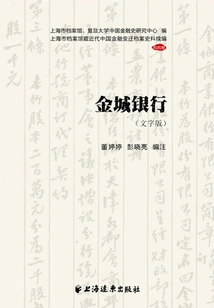
Jincheng Bank (text Version)
History金城银行(文字版)
Edited By Dong Tingting And Peng Xiaoliang
"Jincheng Bank" is one of the 2020 Shanghai Cultural Development Foundation Book Publishing Special Fund-funded projects "The Continuation of Archives and Historical Materials on Modern China's Financial Changes in Shanghai Municipal Archives". The archives and historical materials related to Jincheng Bank selected in this book are all selected from the Jincheng Archives Collection (Quanxuan No. Q264) in the Shanghai Municipal Archives. The content of the book includes the registration and official approval documents of Jincheng Bank during its establishment, the election of directors and supervisors, competition among all parties, government management and restrictions, competition and cooperation among peers, institutional rules such as board of directors and company articles of association in each period, executive meeting minutes, business meeting minutes, business history traceability, and the above. After the liberation of Hainan and the early days of the founding of the People's Republic of China, there were certain reflections on how the decision-makers of Jincheng Bank dealt with the old and new, public and private issues, followed the trend, actively moved closer to the People's Bank of China, actively accepted the leadership of the new government and the People's Bank of China, solicited the help of the People's Bank of China, and actively participated in public-private joint ventures. It is of certain help to practitioners in financial institutions, teachers and students majoring in finance in universities, and financial history enthusiasts.
"Jincheng Bank" is one of the 2020 Shanghai Cultural Development Foundation Book Publishing Special Fund-funded projects "The Continuation of Archives and Historical Materials on Modern China's Financial Changes in Shanghai Municipal Archives". The archives and historical materials related to Jincheng Bank selected in this book are all selected from the Jincheng Archives Collection (Quanxuan No. Q264) in the Shanghai Municipal Archives. The content of the book includes the registration and official approval documents of Jincheng Bank during its establishment, the election of directors and supervisors, competition among all parties, government management and restrictions, competition and cooperation among peers, institutional rules such as board of directors and company articles of association in each period, executive meeting minutes, business meeting minutes, business history traceability, and the above. After the liberation of Hainan and the early days of the founding of the People's Republic of China, there were certain reflections on how the decision-makers of Jincheng Bank dealt with the old and new, public and private issues, followed the trend, actively moved closer to the People's Bank of China, actively accepted the leadership of the new government and the People's Bank of China, solicited the help of the People's Bank of China, and actively participated in public-private joint ventures. It is of certain help to practitioners in financial institutions, teachers and students majoring in finance in universities, and financial history enthusiasts.
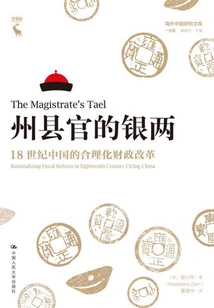
州县官的银两:18世纪中国的合理化财政改革(海外中国研究文库·一力馆)
(us) Zeng Xiaoping
This book is about China before the "arrival of the West". China in the 18th century was not "unchanged", but was undergoing vigorous "change". It was a period of reform that was of great significance to the potential development of a powerful, modern China. "Returning waste to the public" was the culmination of the main area of reform in the fiscal system. It not only solved various problems left over from the previous dynasty, but was also an effective and rational solution to various fiscal crises at that time. Each province implements reforms in accordance with local conditions, enjoys full autonomy, and achieves remarkable results, which is beneficial to the national economy, government officials, and people's livelihood. However, "returning envy to the public for consumption" could not permanently solve all the financial problems of the Qing Dynasty through labor reform. The reform was resisted from the beginning. Coupled with the financial requirements of the centralized state, changes in social and economic conditions, and the fundamental constraints of the traditional economic structure, the later policy of "returning envy to the public" was no longer brilliant. This is a work of "discovering history in China" and a representative work that uses archives to explore Chinese history in detail.
This book is about China before the "arrival of the West". China in the 18th century was not "unchanged", but was undergoing vigorous "change". It was a period of reform that was of great significance to the potential development of a powerful, modern China. "Returning waste to the public" was the culmination of the main area of reform in the fiscal system. It not only solved various problems left over from the previous dynasty, but was also an effective and rational solution to various fiscal crises at that time. Each province implements reforms in accordance with local conditions, enjoys full autonomy, and achieves remarkable results, which is beneficial to the national economy, government officials, and people's livelihood. However, "returning envy to the public for consumption" could not permanently solve all the financial problems of the Qing Dynasty through labor reform. The reform was resisted from the beginning. Coupled with the financial requirements of the centralized state, changes in social and economic conditions, and the fundamental constraints of the traditional economic structure, the later policy of "returning envy to the public" was no longer brilliant. This is a work of "discovering history in China" and a representative work that uses archives to explore Chinese history in detail.
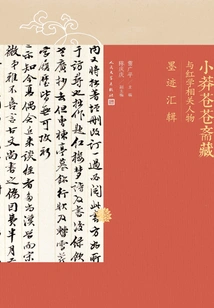
A Collection of Ink Drawings by Xiao Mang Cang Cang Zhai Zang and Figures Related to Redology
History小莽苍苍斋藏与红学相关人物墨迹汇辑
Editor-in-chief Lei Guangping
Xiaomang Cangcangzhai is the library of Tian Jiaying, who was Mao Zedong's secretary. It contains a large number of Qing documents. Our agency once published "Xiaomang Cangcangzhai Collection of Letters of Qing Dynasty Scholars", which has a good double effect. This book is a continuing in-depth development of this topic. In the form of a special topic, it compiles the relevant documents of "Dream of Red Mansions" collected by Xiao Mang Cang Cangzhai, including the calligraphy letters of Cao Yin and the literati in his social circle; the calligraphy and letters of scholars related to the dissemination of "Dream of Red Mansions" (such as letters of Zhou Chun). Analytical papers, literature interpretations, etc. Are written by experts in red science. The collected documents are accompanied by high-resolution original images. It can provide strong empirical documentary materials for the study of Cao Xueqin's family history and the study of the spread of "Dream of Red Mansions".
Xiaomang Cangcangzhai is the library of Tian Jiaying, who was Mao Zedong's secretary. It contains a large number of Qing documents. Our agency once published "Xiaomang Cangcangzhai Collection of Letters of Qing Dynasty Scholars", which has a good double effect. This book is a continuing in-depth development of this topic. In the form of a special topic, it compiles the relevant documents of "Dream of Red Mansions" collected by Xiao Mang Cang Cangzhai, including the calligraphy letters of Cao Yin and the literati in his social circle; the calligraphy and letters of scholars related to the dissemination of "Dream of Red Mansions" (such as letters of Zhou Chun). Analytical papers, literature interpretations, etc. Are written by experts in red science. The collected documents are accompanied by high-resolution original images. It can provide strong empirical documentary materials for the study of Cao Xueqin's family history and the study of the spread of "Dream of Red Mansions".
启蒙·生意·政治:开明书店史论(1926—1953)
Qiu Xuesong
As one of the five major publishing houses in the Republic of China, Kaiming Bookstore has left a mark in the history of modern publishing in China. It has made great contributions in the fields of new literature publishing, ancient book compilation, primary and secondary school textbooks, and youth books. Because of its strict style, it aims to create a good cultural atmosphere, advocate new ideas and life trends, and support new writers. It has gradually won widespread praise from the publishing industry and readers. "Enlightenment·Business·Politics: A History of the Enlightenment Bookstore (1926-1953)" focuses on the Kaiming Bookstore, making full use of the archives collected by local archives and publishing houses, the diaries and letters of the parties involved, newspapers and news commentaries, as well as government laws and regulations, interviews with enlightened people and other first-hand materials, using the writing method of narrative history to reproduce the story for us The twenty-seven years of evolution from the founding of Kaiming Bookstore in 1926 to the merger with Youth Publishing House in 1953 to become China Youth Publishing House provides us with detailed and nuanced cases for understanding the establishment of the publishing system in New China. The rich and complex historical aspects of "publishing" itself are also clearly presented in it.
As one of the five major publishing houses in the Republic of China, Kaiming Bookstore has left a mark in the history of modern publishing in China. It has made great contributions in the fields of new literature publishing, ancient book compilation, primary and secondary school textbooks, and youth books. Because of its strict style, it aims to create a good cultural atmosphere, advocate new ideas and life trends, and support new writers. It has gradually won widespread praise from the publishing industry and readers. "Enlightenment·Business·Politics: A History of the Enlightenment Bookstore (1926-1953)" focuses on the Kaiming Bookstore, making full use of the archives collected by local archives and publishing houses, the diaries and letters of the parties involved, newspapers and news commentaries, as well as government laws and regulations, interviews with enlightened people and other first-hand materials, using the writing method of narrative history to reproduce the story for us The twenty-seven years of evolution from the founding of Kaiming Bookstore in 1926 to the merger with Youth Publishing House in 1953 to become China Youth Publishing House provides us with detailed and nuanced cases for understanding the establishment of the publishing system in New China. The rich and complex historical aspects of "publishing" itself are also clearly presented in it.
崇雅堂书录 崇雅堂碑录(全四册)
Written By Gan Pengyun, Liu Chang, And Edited By Zhao Jiadian
"Chongyatang Shulu" is a catalog compiled by the modern scholar Gan Pengyun for his own book collection. Gan Pengyun always focused on learning while he was in politics. "Chongyatang Shulu" is a catalog compiled by Gan Pengyun based on his large collection of books accumulated over many years. "Shu Lu" has a total of fifteen volumes. The books are generally described according to the classification method of "Sikuquanshu General Catalog". However, the setting of certain categories has been adjusted according to the actual situation of the collected books, reflecting Gan Pengyun's thinking on the origin of ancient classics and academic thoughts. Most of the books recorded in this book are recent engravings and series of books, showing the general situation of ancient book publishing and circulation in the late Qing Dynasty and the Republic of China. At the same time, this bibliography also records a certain number of old manuscripts, refined editions and editions approved by celebrities, which have high edition and academic value. The five-volume "Chongyatang Stele Record" and the four-volume "Supplementary Record" were compiled by Gan Pengyun in order to introduce beginners to the origin of the stele inscriptions in the past dynasties. It was collected from the pre-Qin Dynasty and finally the Qing Dynasty. Each entry records the title of the monument, author, font, time of writing, time of excavation and location in turn. If there is relevant research by predecessors, it will be briefly described.
"Chongyatang Shulu" is a catalog compiled by the modern scholar Gan Pengyun for his own book collection. Gan Pengyun always focused on learning while he was in politics. "Chongyatang Shulu" is a catalog compiled by Gan Pengyun based on his large collection of books accumulated over many years. "Shu Lu" has a total of fifteen volumes. The books are generally described according to the classification method of "Sikuquanshu General Catalog". However, the setting of certain categories has been adjusted according to the actual situation of the collected books, reflecting Gan Pengyun's thinking on the origin of ancient classics and academic thoughts. Most of the books recorded in this book are recent engravings and series of books, showing the general situation of ancient book publishing and circulation in the late Qing Dynasty and the Republic of China. At the same time, this bibliography also records a certain number of old manuscripts, refined editions and editions approved by celebrities, which have high edition and academic value. The five-volume "Chongyatang Stele Record" and the four-volume "Supplementary Record" were compiled by Gan Pengyun in order to introduce beginners to the origin of the stele inscriptions in the past dynasties. It was collected from the pre-Qin Dynasty and finally the Qing Dynasty. Each entry records the title of the monument, author, font, time of writing, time of excavation and location in turn. If there is relevant research by predecessors, it will be briefly described.
上海万国商团文献二种
Compiled By Xu Tao
The content of this book is divided into two parts. Part of it is translated from Eighty-Five Years of the Shanghai Volunteer Corps ("The Eighty-Five Years of the Shanghai Volunteer Corps"), which records the long-term evolution of the Shanghai Volunteer Corps from 1853 to 1938. It is of high documentary value. Most people who want to understand the Shanghai Volunteer Corps will start with this book.
The content of this book is divided into two parts. Part of it is translated from Eighty-Five Years of the Shanghai Volunteer Corps ("The Eighty-Five Years of the Shanghai Volunteer Corps"), which records the long-term evolution of the Shanghai Volunteer Corps from 1853 to 1938. It is of high documentary value. Most people who want to understand the Shanghai Volunteer Corps will start with this book.
Sources on the History of the Hephthalites
Yu Taishan
"Sources on the History of the Hephthalites" is an all-English treatise. It brings together 70 historical materials about Gida in nine languages (Chinese, Greek-Latin, Armenian, Syriac, Arabic, Persian, Sanskrit, and Tibetan). It is the first time that domestic and foreign scholars have conducted the most comprehensive and systematic compilation and research of historical materials about Gida.
"Sources on the History of the Hephthalites" is an all-English treatise. It brings together 70 historical materials about Gida in nine languages (Chinese, Greek-Latin, Armenian, Syriac, Arabic, Persian, Sanskrit, and Tibetan). It is the first time that domestic and foreign scholars have conducted the most comprehensive and systematic compilation and research of historical materials about Gida.
希腊拉丁历史铭文举要
Translated And Annotated By Zhang Qiang And Zhang Nan
"Greek and Latin Historical Inscriptions" is a collection of original historical documents of ancient Greece and Rome. It contains 106 important historical documents from different historical periods of ancient Greece and Rome, covering inscriptions from various historical periods of Western classical history. This book aims to provide basic inscription documents for the study of ancient Greek and Roman history and culture for reference by domestic academic circles.
"Greek and Latin Historical Inscriptions" is a collection of original historical documents of ancient Greece and Rome. It contains 106 important historical documents from different historical periods of ancient Greece and Rome, covering inscriptions from various historical periods of Western classical history. This book aims to provide basic inscription documents for the study of ancient Greek and Roman history and culture for reference by domestic academic circles.
匈奴史料汇编(上下册)
Lin Gan
This book collects the historical materials of the Xiongnu in Chinese classics from the Warring States Period to the fall of Chen in the Southern and Northern Dynasties. And each article is selected and reviewed one by one. Mainly based on the official history, this chronicle is used as the outline, discarding the duplicates, retaining the overflows, correcting the errors, and annotating the discrepancies. The discarded parts are also marked for reference. Therefore, in all the materials collected, there are a large number of notes made by the editor. Most of the notes are: verifying the authenticity of historical facts; verifying the date; determining the location; identifying discrepancies; correcting errors; and analyzing subtle mysteries.
This book collects the historical materials of the Xiongnu in Chinese classics from the Warring States Period to the fall of Chen in the Southern and Northern Dynasties. And each article is selected and reviewed one by one. Mainly based on the official history, this chronicle is used as the outline, discarding the duplicates, retaining the overflows, correcting the errors, and annotating the discrepancies. The discarded parts are also marked for reference. Therefore, in all the materials collected, there are a large number of notes made by the editor. Most of the notes are: verifying the authenticity of historical facts; verifying the date; determining the location; identifying discrepancies; correcting errors; and analyzing subtle mysteries.
文史资料选辑(第一六六辑)
Chinese People's Political Consultative Conference Museum Of Culture And History
"Selected Collection of Cultural and Historical Materials" was initiated in 1959 by Comrade Zhou Enlai's personal initiative and initiated by the Cultural and Historical Materials Research Committee of the National Committee of the Chinese People's Political Consultative Conference. It is an album of historical materials that vividly records the magnificent historical process of Chinese society since the Reform Movement of 1898, featuring "personal experience, personal sighting and personal hearing" of the parties involved. In this collection, there are memories of Wang Zuhu, a former director of the Engine Administration Bureau of the Ministry of Aviation Industry and director of the China Light Gas Turbine Development Center, who witnessed the independent research and development of new China's aircraft engines; memories of Yu Fang's growth experience, member of the 12th National Committee of the Chinese People's Political Consultative Conference and anchor of China People's Broadcasting Station's "News and Newspaper Digest"; Liang Qiuchuan's memories of the literary interactions between his father Haoran and Ye Shengtao. These precious historical materials reveal many little-known inside stories, helping readers understand the ins and outs of many historical events.
"Selected Collection of Cultural and Historical Materials" was initiated in 1959 by Comrade Zhou Enlai's personal initiative and initiated by the Cultural and Historical Materials Research Committee of the National Committee of the Chinese People's Political Consultative Conference. It is an album of historical materials that vividly records the magnificent historical process of Chinese society since the Reform Movement of 1898, featuring "personal experience, personal sighting and personal hearing" of the parties involved. In this collection, there are memories of Wang Zuhu, a former director of the Engine Administration Bureau of the Ministry of Aviation Industry and director of the China Light Gas Turbine Development Center, who witnessed the independent research and development of new China's aircraft engines; memories of Yu Fang's growth experience, member of the 12th National Committee of the Chinese People's Political Consultative Conference and anchor of China People's Broadcasting Station's "News and Newspaper Digest"; Liang Qiuchuan's memories of the literary interactions between his father Haoran and Ye Shengtao. These precious historical materials reveal many little-known inside stories, helping readers understand the ins and outs of many historical events.
文史资料选辑(第一六九辑)
Chinese People's Political Consultative Conference Museum Of Culture And History
"Selected Collection of Cultural and Historical Materials" was initiated in 1959 by Comrade Zhou Enlai's personal initiative and initiated by the Cultural and Historical Materials Research Committee of the National Committee of the Chinese People's Political Consultative Conference. It is an album of historical materials that vividly records the magnificent historical process of Chinese society since the Reform Movement of 1898, featuring "personal experience, personal sighting and personal hearing" of the parties involved. In this collection, there are memories of Wang Zuhu, a former director of the Engine Administration Bureau of the Ministry of Aviation Industry and director of the China Light Gas Turbine Development Center, who witnessed the independent research and development of new China's aircraft engines; memories of Yu Fang's growth experience, member of the 12th National Committee of the Chinese People's Political Consultative Conference and anchor of China People's Broadcasting Station's "News and Newspaper Digest"; Liang Qiuchuan's memories of the literary interactions between his father Haoran and Ye Shengtao. These precious historical materials reveal many little-known inside stories, helping readers understand the ins and outs of many historical events.
"Selected Collection of Cultural and Historical Materials" was initiated in 1959 by Comrade Zhou Enlai's personal initiative and initiated by the Cultural and Historical Materials Research Committee of the National Committee of the Chinese People's Political Consultative Conference. It is an album of historical materials that vividly records the magnificent historical process of Chinese society since the Reform Movement of 1898, featuring "personal experience, personal sighting and personal hearing" of the parties involved. In this collection, there are memories of Wang Zuhu, a former director of the Engine Administration Bureau of the Ministry of Aviation Industry and director of the China Light Gas Turbine Development Center, who witnessed the independent research and development of new China's aircraft engines; memories of Yu Fang's growth experience, member of the 12th National Committee of the Chinese People's Political Consultative Conference and anchor of China People's Broadcasting Station's "News and Newspaper Digest"; Liang Qiuchuan's memories of the literary interactions between his father Haoran and Ye Shengtao. These precious historical materials reveal many little-known inside stories, helping readers understand the ins and outs of many historical events.
文史资料选辑(第一六七辑)
Sponsored By The Literature, History And Study Committee Of The National Committee Of The Chinese People's Political Consultative Conference, The Museum Of Literature And History Of The Chinese People's Political Consultative Conference
"Selected Collection of Cultural and Historical Materials" was initiated in 1959 by Comrade Zhou Enlai's personal initiative and initiated by the Cultural and Historical Materials Research Committee of the National Committee of the Chinese People's Political Consultative Conference. It is an album of historical materials that vividly records the magnificent historical process of Chinese society since the Reform Movement of 1898, featuring "personal experience, personal sighting and personal hearing" of the parties involved. Volume 167 contains 13 articles. These include: Fan Xiaojian, member of the 11th and 12th National Committee of the Chinese People's Political Consultative Conference and former director of the Office of the State Council Leading Group for Poverty Alleviation and Development, reminiscing about the cleanup and rectification of the Rural Cooperation Foundation; Wu Sike, member of the 11th and 12th National Committee of the Chinese People's Political Consultative Conference and former China's plenipotentiary representative to the League of Arab States, recalling his diplomatic work in the Middle East, etc. These precious historical materials reveal many little-known inside stories, helping readers understand the ins and outs of many historical events.
"Selected Collection of Cultural and Historical Materials" was initiated in 1959 by Comrade Zhou Enlai's personal initiative and initiated by the Cultural and Historical Materials Research Committee of the National Committee of the Chinese People's Political Consultative Conference. It is an album of historical materials that vividly records the magnificent historical process of Chinese society since the Reform Movement of 1898, featuring "personal experience, personal sighting and personal hearing" of the parties involved. Volume 167 contains 13 articles. These include: Fan Xiaojian, member of the 11th and 12th National Committee of the Chinese People's Political Consultative Conference and former director of the Office of the State Council Leading Group for Poverty Alleviation and Development, reminiscing about the cleanup and rectification of the Rural Cooperation Foundation; Wu Sike, member of the 11th and 12th National Committee of the Chinese People's Political Consultative Conference and former China's plenipotentiary representative to the League of Arab States, recalling his diplomatic work in the Middle East, etc. These precious historical materials reveal many little-known inside stories, helping readers understand the ins and outs of many historical events.