Library
Browse and search books
699 novels found
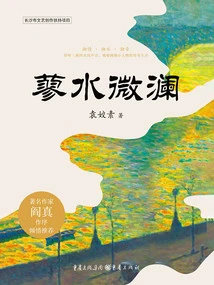
Polygonum Water is Slightly Rippled
General Fiction蓼水微澜
Yuan Jiaosu
This book collects 15 novellas, with the western Hunan region as the background and Hunan culture as the background. It depicts the various life styles of rural society under the changes of the times, portrays the inner world of one little person after another, and tells one emotional story after another of tenderness and deep gratitude. The author's writing style is macroscopic, touching on the imprint of the great era, such as migrant workers, college entrance examinations, left-behind population and other social phenomena; the author's writing style is microscopic, reaching out to the human fireworks of small people's lives and paying attention to their joys and sorrows. For example, "The Housekeeper" reproduces the custom of rural burial through the character Liu Qingyun, thereby conveying the emotional bond between the born and the deceased; "Walking the Satellite" portrays the image of an authoritative rural figure through an unexpected incident, and plays a rich nostalgia ballad; "Liao Shui Wei Lan" borrows the image of Liao Shui to depict the infatuated love of a young man and woman, which is beautiful and intense, bringing people a deep feeling.
This book collects 15 novellas, with the western Hunan region as the background and Hunan culture as the background. It depicts the various life styles of rural society under the changes of the times, portrays the inner world of one little person after another, and tells one emotional story after another of tenderness and deep gratitude. The author's writing style is macroscopic, touching on the imprint of the great era, such as migrant workers, college entrance examinations, left-behind population and other social phenomena; the author's writing style is microscopic, reaching out to the human fireworks of small people's lives and paying attention to their joys and sorrows. For example, "The Housekeeper" reproduces the custom of rural burial through the character Liu Qingyun, thereby conveying the emotional bond between the born and the deceased; "Walking the Satellite" portrays the image of an authoritative rural figure through an unexpected incident, and plays a rich nostalgia ballad; "Liao Shui Wei Lan" borrows the image of Liao Shui to depict the infatuated love of a young man and woman, which is beautiful and intense, bringing people a deep feeling.
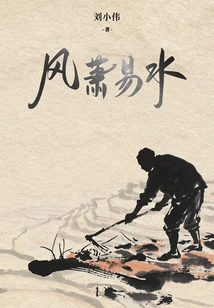
Feng Xiao Yishui
General Fiction风萧易水
Liu Xiaowei
This is a tragic story that revolves around the endless life, honor and disgrace, and life and death dependence between farmers, their land and their homes. The play shows the educational progress and cultural changes in the closed villages of Yixian County, Hebei Province in the central Hebei Plain, the farmers' deep-rooted love for the land and home, and their unrestrained attitude in troubled times. It expresses the traditional Chinese concept of worshiping the land and the deep understanding of the homeland. In particular, it shows the national integrity and unyielding will of farmers who fought tooth and nail to defend their land and homes in the face of the powerful Japanese invaders. It has created unique and rich artistic images such as Jing Guofang, Fan Dashou and Zeng Sanguo. The whole book is full of the simple folk customs of the countryside in the central Hebei plain and the generous and tragic epic style of the people of Yan and Zhao.
This is a tragic story that revolves around the endless life, honor and disgrace, and life and death dependence between farmers, their land and their homes. The play shows the educational progress and cultural changes in the closed villages of Yixian County, Hebei Province in the central Hebei Plain, the farmers' deep-rooted love for the land and home, and their unrestrained attitude in troubled times. It expresses the traditional Chinese concept of worshiping the land and the deep understanding of the homeland. In particular, it shows the national integrity and unyielding will of farmers who fought tooth and nail to defend their land and homes in the face of the powerful Japanese invaders. It has created unique and rich artistic images such as Jing Guofang, Fan Dashou and Zeng Sanguo. The whole book is full of the simple folk customs of the countryside in the central Hebei plain and the generous and tragic epic style of the people of Yan and Zhao.
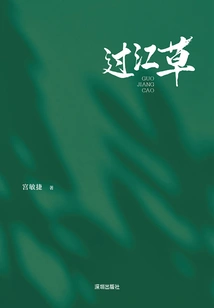
Rivergrass
General Fiction过江草
Gong Jiji
This book is composed of two parts: "The Grass Crossing the River" and "The Change of the Fish". "The Grass Crossing the River" uses the development of Qiqiyeye's (father's) illness as a clue to connect the fate of the Qiqi family and its surrounding characters. "Fish Change" is based on the perspective of Xue Baobao's daughter in "Crossing the River", recording in detail what happened before and after Xue Baobao's death. Everyone in the story always has hope for life no matter what their circumstances are. In the passage of time and the continuation of life, like grass crossing the river, it shows a vigorous and endless power. The author's writing style is beautiful, and the narrative is relaxed and highly contagious. It shows the growth of emotions between people bit by bit, shows the delicacy and romance of the countryside, and expresses the author's simple rural feelings by "moistening things silently".
This book is composed of two parts: "The Grass Crossing the River" and "The Change of the Fish". "The Grass Crossing the River" uses the development of Qiqiyeye's (father's) illness as a clue to connect the fate of the Qiqi family and its surrounding characters. "Fish Change" is based on the perspective of Xue Baobao's daughter in "Crossing the River", recording in detail what happened before and after Xue Baobao's death. Everyone in the story always has hope for life no matter what their circumstances are. In the passage of time and the continuation of life, like grass crossing the river, it shows a vigorous and endless power. The author's writing style is beautiful, and the narrative is relaxed and highly contagious. It shows the growth of emotions between people bit by bit, shows the delicacy and romance of the countryside, and expresses the author's simple rural feelings by "moistening things silently".
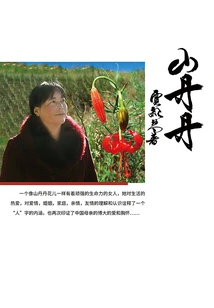
Shandandan
General Fiction山丹丹
Jia Caiqin
It mainly describes the life trajectory of a little rural girl growing up into a family. The reappearance of her love, marriage, family, affection, friendship, etc. Proves the strength and bravery of a girl from the mountains. This work is a simple mountain village romance novel.
It mainly describes the life trajectory of a little rural girl growing up into a family. The reappearance of her love, marriage, family, affection, friendship, etc. Proves the strength and bravery of a girl from the mountains. This work is a simple mountain village romance novel.
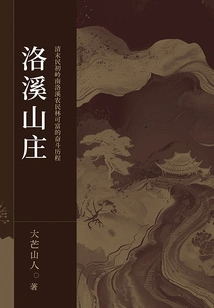
Luoxi Villa
General Fiction洛溪山庄
Damangshan People
"Luoxi Villa" is a rural legendary novel based on the struggle of Lin Kefu, a farmer in Luoxi, Lingnan in the late Qing Dynasty and the early Republic of China. The work takes the struggle of farmer Lin Kefu as the main line, telling the legendary story of how he started from a five-acre field, led his neighbors to build dams, open grain stores, companies, hospitals, and rosin factories, and finally became a wealthy country squire. It shows the gorgeous transformation of a farmer into a country squire. At the same time, through the various life choices of their sons and daughters, such as studying and serving in the army, it depicts the folk customs, customs, and sentiments of the Lingnan area, as well as the complex emotions of young people facing life, death, and death, and demonstrates the perseverance and love of life of the Lingnan people in the midst of social changes.
"Luoxi Villa" is a rural legendary novel based on the struggle of Lin Kefu, a farmer in Luoxi, Lingnan in the late Qing Dynasty and the early Republic of China. The work takes the struggle of farmer Lin Kefu as the main line, telling the legendary story of how he started from a five-acre field, led his neighbors to build dams, open grain stores, companies, hospitals, and rosin factories, and finally became a wealthy country squire. It shows the gorgeous transformation of a farmer into a country squire. At the same time, through the various life choices of their sons and daughters, such as studying and serving in the army, it depicts the folk customs, customs, and sentiments of the Lingnan area, as well as the complex emotions of young people facing life, death, and death, and demonstrates the perseverance and love of life of the Lingnan people in the midst of social changes.
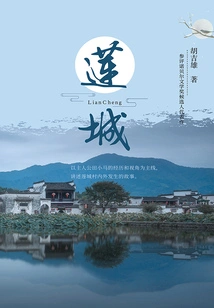
Liancheng
General Fiction莲城
Hu Jixiong
"Liancheng" mainly tells the story of Liancheng Village in the remote mountainous area in the south of the Yangtze River - using the experience and perspective of the protagonist Tian Xiaoma as the main line, it tells the story from the panic caused by a murder outside the village to the discovery of the truth. Tian Xiaoma's parents, Tian Zhonghua and Long Tengfei, raised four children - Tian Xiaolong, Tian Xiaoma, Tian Xiaohua and Tian Xiaoniu. Xiao Ma's father, Tian Zhonghua, who is a private teacher, and his sick mother had no choice but to reluctantly persuade Xiao Ma to apply for a free normal school and give up her dream of going to college. Xiao Ma was depressed and frustrated and was transferred to a remote rural primary school. During the summer, he returned to Liancheng Village in anger and participated in "double robbery", drought relief, disaster relief, and public food delivery. He experienced first-hand the hardships of being a farmer. He won a national award for his writing and was reassigned to teach Chinese in the middle school of Huapu School District. After Tian Xiaolong failed the college entrance examination, his disgraceful father punished him by beating an acre of rice fields a day and carrying them back. He was so tired that he collapsed beside the melon field. After Tian Xiaohua graduated from vocational high school, she fell in love freely and fell in love with "Xiao Gutou", a black mixed-race boy in the village. After being beaten and scolded by her father, the two escaped and went out to work and start a business and became bosses. Tian Xiaoma's uncle Tian Zhenxing's family is struggling in hardships. The eldest son Tian Dashan can be called a "young hero", but he is wrongly accused of being a thief and imprisoned. He doesn't know that Sun Facai, the Sun family member, is behind the scenes. The second son, Tian Dahe, suffered from rheumatism and lost school when he was young. He found it difficult to marry at the age of thirty. The four sisters went out to work to make money, and although they supported their second brother in marrying a wife, things happened to them that were not what they wanted. In the end, Sun Facai was found out the truth and was imprisoned, while Tian Dashan was cleared of his grievances. Tianjia Gate Tower is heading for revival. More than ten years later, Tian Xiaoma received a college diploma, married his old classmate Rong Xiangchun, got promoted, and realized his dream of being a writer. His father got a job and his mother passed away due to illness. His eldest brother Xiaolong became a cadre at the People's Bank of China after repeating his senior year of high school. His younger brother Xiaoniu became a policeman. Tian Xiaoma's former friends in the village also pursued and realized their dreams.
"Liancheng" mainly tells the story of Liancheng Village in the remote mountainous area in the south of the Yangtze River - using the experience and perspective of the protagonist Tian Xiaoma as the main line, it tells the story from the panic caused by a murder outside the village to the discovery of the truth. Tian Xiaoma's parents, Tian Zhonghua and Long Tengfei, raised four children - Tian Xiaolong, Tian Xiaoma, Tian Xiaohua and Tian Xiaoniu. Xiao Ma's father, Tian Zhonghua, who is a private teacher, and his sick mother had no choice but to reluctantly persuade Xiao Ma to apply for a free normal school and give up her dream of going to college. Xiao Ma was depressed and frustrated and was transferred to a remote rural primary school. During the summer, he returned to Liancheng Village in anger and participated in "double robbery", drought relief, disaster relief, and public food delivery. He experienced first-hand the hardships of being a farmer. He won a national award for his writing and was reassigned to teach Chinese in the middle school of Huapu School District. After Tian Xiaolong failed the college entrance examination, his disgraceful father punished him by beating an acre of rice fields a day and carrying them back. He was so tired that he collapsed beside the melon field. After Tian Xiaohua graduated from vocational high school, she fell in love freely and fell in love with "Xiao Gutou", a black mixed-race boy in the village. After being beaten and scolded by her father, the two escaped and went out to work and start a business and became bosses. Tian Xiaoma's uncle Tian Zhenxing's family is struggling in hardships. The eldest son Tian Dashan can be called a "young hero", but he is wrongly accused of being a thief and imprisoned. He doesn't know that Sun Facai, the Sun family member, is behind the scenes. The second son, Tian Dahe, suffered from rheumatism and lost school when he was young. He found it difficult to marry at the age of thirty. The four sisters went out to work to make money, and although they supported their second brother in marrying a wife, things happened to them that were not what they wanted. In the end, Sun Facai was found out the truth and was imprisoned, while Tian Dashan was cleared of his grievances. Tianjia Gate Tower is heading for revival. More than ten years later, Tian Xiaoma received a college diploma, married his old classmate Rong Xiangchun, got promoted, and realized his dream of being a writer. His father got a job and his mother passed away due to illness. His eldest brother Xiaolong became a cadre at the People's Bank of China after repeating his senior year of high school. His younger brother Xiaoniu became a policeman. Tian Xiaoma's former friends in the village also pursued and realized their dreams.
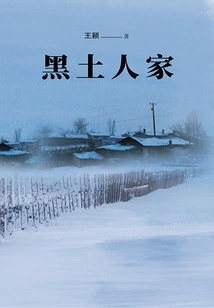
Black Soil People
General Fiction黑土人家
Wang Ying
The novel "Black Earth Family" is based on the clues of Liu Liye and Zhang Shulan's daughter Liu Yin. It tells the life story of ordinary families in the Northeast in the 1970s. Through the daily life of the Liu family and their neighbors, it shows the folk life scenes of the Northeast in the 1970s. It can be said that it is a This textbook is a textbook on Northeastern folk customs, such as pickling sauerkraut, making sticky bean buns, killing New Year pigs, celebrating the New Year, etc., Which vividly reproduces Northeastern folk culture. From a child's perspective, it slowly unfolds to readers a long scroll of product resources and history on the Northeast Plains like a picture of Along the River During the Qingming Festival. The story in the book unfolds against this background. The main plot of this book is about Liu Liye and Zhang Shulan. Zhang Shulan lost her mother in childhood and was abused by her stepmother, so she was forced to live in her uncle's house, where her uncle made the final decision. She married into the Liu family at the age of 16 and became the daughter-in-law who worked as a cook for the family. She followed the life philosophy of "I would rather suffer the body than get the heat on my face." After her father-in-law passed away and the Liu brothers separated, she once again took on the important responsibilities of the Liu family, supporting the old lady and becoming the guarantee of the harmony of the Liu family. The story about Liu Liye's brothers and neighbors is the sub-line of the book, which is mutually dependent on the main line and enriches the big tree of "Black Earth Family". In the incident of Fen Qiucai, Liao Er told the story of the history and personnel of the Gaojiazi village. The Gaojiazi was composed of pioneers and ginseng diggers who traveled to Guandong, and the Liu family, who apparently fled famine, but actually did not want to provide military supplies to the Japanese. In the chapter of Liu Licheng's memories, the sacrifices and contributions made by people on the black soil to the country are reproduced. The old aunt of the Liu family died of illness because she was worried about her son Zhong Weiguo, who had never been heard from. This is also a major foreshadowing of the whole story. This foreshadowing is shown in the last chapter. Zhong Weiguo returned home decades later to pay homage to his parents, and then revealed that he served in the special forces. Another foreshadowing was also revealed in this chapter. Zhong Weiguo's biological father was an underground member of the Chinese Communist Party lurking in the Kuomintang army. It can be seen that "Black Earth Family" can see the feelings of family and country in the love between children and children. The first half of "Black Earth Family" has always shown the harmony and happiness of the Liu family. After Zhang Shulan overspent her health and became ill from overwork, the balance of family harmony tilted. After the old lady went to Liu Lichen's home for retirement, conflicts arose in the family, and this conflict reached its climax in the chapter "Outbreak". This book warns future generations: Don't leave behind in life the regret of "having children who want to raise children but cannot be cared for by relatives." Zhang Shulan's period from her serious illness to her death also became the emotional low point of the book, and the lives of several motherless children were very difficult. At the end of the book, the book uses jumping writing to explain the growth and life of Zhang Shulan's seven children. Their brothers and sisters helped each other, went through the trough, and now live very well, creating a modern version of a harmonious family where blood is thicker than water.
The novel "Black Earth Family" is based on the clues of Liu Liye and Zhang Shulan's daughter Liu Yin. It tells the life story of ordinary families in the Northeast in the 1970s. Through the daily life of the Liu family and their neighbors, it shows the folk life scenes of the Northeast in the 1970s. It can be said that it is a This textbook is a textbook on Northeastern folk customs, such as pickling sauerkraut, making sticky bean buns, killing New Year pigs, celebrating the New Year, etc., Which vividly reproduces Northeastern folk culture. From a child's perspective, it slowly unfolds to readers a long scroll of product resources and history on the Northeast Plains like a picture of Along the River During the Qingming Festival. The story in the book unfolds against this background. The main plot of this book is about Liu Liye and Zhang Shulan. Zhang Shulan lost her mother in childhood and was abused by her stepmother, so she was forced to live in her uncle's house, where her uncle made the final decision. She married into the Liu family at the age of 16 and became the daughter-in-law who worked as a cook for the family. She followed the life philosophy of "I would rather suffer the body than get the heat on my face." After her father-in-law passed away and the Liu brothers separated, she once again took on the important responsibilities of the Liu family, supporting the old lady and becoming the guarantee of the harmony of the Liu family. The story about Liu Liye's brothers and neighbors is the sub-line of the book, which is mutually dependent on the main line and enriches the big tree of "Black Earth Family". In the incident of Fen Qiucai, Liao Er told the story of the history and personnel of the Gaojiazi village. The Gaojiazi was composed of pioneers and ginseng diggers who traveled to Guandong, and the Liu family, who apparently fled famine, but actually did not want to provide military supplies to the Japanese. In the chapter of Liu Licheng's memories, the sacrifices and contributions made by people on the black soil to the country are reproduced. The old aunt of the Liu family died of illness because she was worried about her son Zhong Weiguo, who had never been heard from. This is also a major foreshadowing of the whole story. This foreshadowing is shown in the last chapter. Zhong Weiguo returned home decades later to pay homage to his parents, and then revealed that he served in the special forces. Another foreshadowing was also revealed in this chapter. Zhong Weiguo's biological father was an underground member of the Chinese Communist Party lurking in the Kuomintang army. It can be seen that "Black Earth Family" can see the feelings of family and country in the love between children and children. The first half of "Black Earth Family" has always shown the harmony and happiness of the Liu family. After Zhang Shulan overspent her health and became ill from overwork, the balance of family harmony tilted. After the old lady went to Liu Lichen's home for retirement, conflicts arose in the family, and this conflict reached its climax in the chapter "Outbreak". This book warns future generations: Don't leave behind in life the regret of "having children who want to raise children but cannot be cared for by relatives." Zhang Shulan's period from her serious illness to her death also became the emotional low point of the book, and the lives of several motherless children were very difficult. At the end of the book, the book uses jumping writing to explain the growth and life of Zhang Shulan's seven children. Their brothers and sisters helped each other, went through the trough, and now live very well, creating a modern version of a harmonious family where blood is thicker than water.
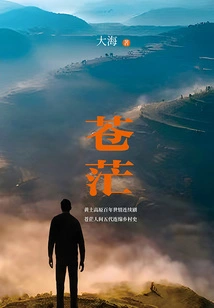
Vast
General Fiction苍茫
Sea
A singer walking on a country road brought out the wonderful stories and songs of three families in a village for more than a hundred years. It can be said that the world of fireworks, the mountains and grassy people, a hundred years of history are pure portraits; the vast current affairs, the joys and sorrows of life, the warmth and coldness of the world are made for listening to songs.
A singer walking on a country road brought out the wonderful stories and songs of three families in a village for more than a hundred years. It can be said that the world of fireworks, the mountains and grassy people, a hundred years of history are pure portraits; the vast current affairs, the joys and sorrows of life, the warmth and coldness of the world are made for listening to songs.
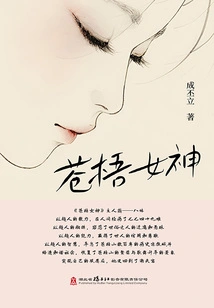
Cangwu Goddess (part 1)
General Fiction苍梧女神(上部)
Cheng Pili
The protagonist Bamei of "Cangwu Goddess" was born in a poor family. In order to give her a way to survive, her parents rewarded her by selling her to Qinjiazhuang to be a child bride. Her husband's grandmother, Mrs. Qin, is a stubborn traditional woman. She not only strictly disciplines her eighth sister, but also bullies and abuses her, making her teenage life in dire straits. Although my husband's mother Qin Mu is a kind and sensible person, she has no status in the Qin family. Although she sympathizes with the eighth sister's situation, there is nothing she can do. Although her husband Gouzai and Bamei had a deep relationship as brothers and friends, he cared for her very much and protected Bamei in every possible way, but he died in a clan fight on Cangwu Mountain on the day of the wedding. Therefore, the eighth sister became the nemesis of Qinjiazhuang's murderous groom. In order to repay the Qin family's kindness in raising her, she also wanted to find a worthy way to die for herself, taking all the responsibility for the clan's war on herself and going to jail instead of the Qin family head. The eighth sister came back from prison. With her superhuman mind, she tolerated the pedantry and ignorance of worldly people; with her superhuman ability, she won the trust and respect of the world; with her superhuman wisdom, she calmed down the centuries-old historical clan fighting in Cangwu Mountain, created a harmonious society, and restored the prosperity and singing scene of Cangwu Mountain. She also won the love of a handsome and talented young man from her rival village, and the two joined hands to move towards the free world of their dreams.
The protagonist Bamei of "Cangwu Goddess" was born in a poor family. In order to give her a way to survive, her parents rewarded her by selling her to Qinjiazhuang to be a child bride. Her husband's grandmother, Mrs. Qin, is a stubborn traditional woman. She not only strictly disciplines her eighth sister, but also bullies and abuses her, making her teenage life in dire straits. Although my husband's mother Qin Mu is a kind and sensible person, she has no status in the Qin family. Although she sympathizes with the eighth sister's situation, there is nothing she can do. Although her husband Gouzai and Bamei had a deep relationship as brothers and friends, he cared for her very much and protected Bamei in every possible way, but he died in a clan fight on Cangwu Mountain on the day of the wedding. Therefore, the eighth sister became the nemesis of Qinjiazhuang's murderous groom. In order to repay the Qin family's kindness in raising her, she also wanted to find a worthy way to die for herself, taking all the responsibility for the clan's war on herself and going to jail instead of the Qin family head. The eighth sister came back from prison. With her superhuman mind, she tolerated the pedantry and ignorance of worldly people; with her superhuman ability, she won the trust and respect of the world; with her superhuman wisdom, she calmed down the centuries-old historical clan fighting in Cangwu Mountain, created a harmonious society, and restored the prosperity and singing scene of Cangwu Mountain. She also won the love of a handsome and talented young man from her rival village, and the two joined hands to move towards the free world of their dreams.
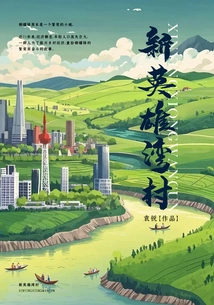
New Hero Bay Village
General Fiction新英雄湾村
Yuan Rui
This book is a realistic novel. It mainly tells the story of a young man named Jian Hao who struggles all the way for the development of his hometown. Tongguanyi is a prosperous small town. However, in the past 20 years, the economy has been slack and the young population has been lost due to migrant work. Only the elderly and children are left in the countryside. Only by re-developing the economy can we retain people. So, headed by Jian Hao, some young people with ideas and the courage to struggle appeared. In order to revitalize the rural economy, they struggled and grew all the way... They experienced failures and encountered difficulties along the way. Some gave up, while some persisted. In the end, some opened B&Bs, and some became bosses... Jian Hao and the heroine Xia Youchen experienced growth together, from strangers to familiarity, to facing and solving difficulties together, and finally gained love for each other, and finally succeeded in regaining the prosperity of Tongcanyi.
This book is a realistic novel. It mainly tells the story of a young man named Jian Hao who struggles all the way for the development of his hometown. Tongguanyi is a prosperous small town. However, in the past 20 years, the economy has been slack and the young population has been lost due to migrant work. Only the elderly and children are left in the countryside. Only by re-developing the economy can we retain people. So, headed by Jian Hao, some young people with ideas and the courage to struggle appeared. In order to revitalize the rural economy, they struggled and grew all the way... They experienced failures and encountered difficulties along the way. Some gave up, while some persisted. In the end, some opened B&Bs, and some became bosses... Jian Hao and the heroine Xia Youchen experienced growth together, from strangers to familiarity, to facing and solving difficulties together, and finally gained love for each other, and finally succeeded in regaining the prosperity of Tongcanyi.
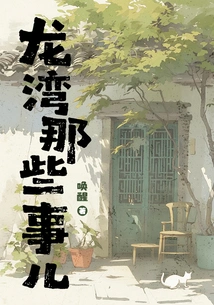
Those Things About Longwan
General Fiction龙湾那些事儿
Wake
In the fertile land of Qianjiang, Liu Hua, a young man from Longwan, passed the college entrance examination score far beyond the cutoff, but he gave up going to college due to family changes, causing a sensation. He had a secret romance with his classmate Xiulan, but due to practical considerations, he chose to stay in his hometown and became a village primary school teacher. He was later promoted to principal, and unexpectedly took over as the village secretary, leading the villagers to prosperity. However, the heavy burden of the family and the security problems in the village followed one after another, especially the provocation of the village bully Xiaogang, which made Liu Hua face unprecedented challenges. While managing the village, Liu Hua also needs to balance family relationships. He is worried about the marriage of his eldest son Dazhi and the rebellion and growth of his younger son Xiaoqiang. An experience of visiting the Longwan ruins gave Liu Hua a deeper understanding of his family history and inspired him to think new...
In the fertile land of Qianjiang, Liu Hua, a young man from Longwan, passed the college entrance examination score far beyond the cutoff, but he gave up going to college due to family changes, causing a sensation. He had a secret romance with his classmate Xiulan, but due to practical considerations, he chose to stay in his hometown and became a village primary school teacher. He was later promoted to principal, and unexpectedly took over as the village secretary, leading the villagers to prosperity. However, the heavy burden of the family and the security problems in the village followed one after another, especially the provocation of the village bully Xiaogang, which made Liu Hua face unprecedented challenges. While managing the village, Liu Hua also needs to balance family relationships. He is worried about the marriage of his eldest son Dazhi and the rebellion and growth of his younger son Xiaoqiang. An experience of visiting the Longwan ruins gave Liu Hua a deeper understanding of his family history and inspired him to think new...
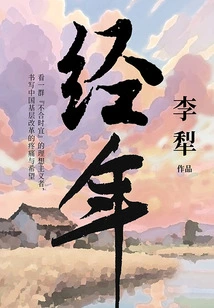
Over the Years
General Fiction经年
Li Li
This book is set in Shimao Village and focuses on the life course of the protagonist Baoyan (Li Baoyan). Baoyan returned to his hometown from the urban waste collection station, took over the mutual aid cooperative that was on the verge of dissolution, and led the villagers to rebuild the rural community. It is interspersed with the rise and fall of the peasant drama club, the game between rural enterprises and capital, and the growth and departure of the younger generation. The novel uses eye-catching emotional and career lines as the main axis, depicts a picture of all living beings in the process of rural modernization, and explores the persistence and reconstruction of traditional rural civilization under the impact of marketization, as well as the ideals and dilemmas of grassroots managers.
This book is set in Shimao Village and focuses on the life course of the protagonist Baoyan (Li Baoyan). Baoyan returned to his hometown from the urban waste collection station, took over the mutual aid cooperative that was on the verge of dissolution, and led the villagers to rebuild the rural community. It is interspersed with the rise and fall of the peasant drama club, the game between rural enterprises and capital, and the growth and departure of the younger generation. The novel uses eye-catching emotional and career lines as the main axis, depicts a picture of all living beings in the process of rural modernization, and explores the persistence and reconstruction of traditional rural civilization under the impact of marketization, as well as the ideals and dilemmas of grassroots managers.
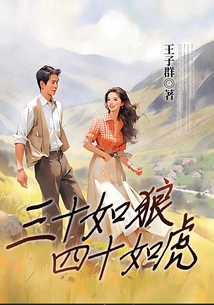
Thirty is Like a Wolf, Forty is Like a Tiger
General Fiction三十如狼,四十如虎
Prince Qun
Twenty years ago, when Yang Cuiling married from her mother's family in Huluwan to Wang Caiyuan's family, she never thought that one day she would have anything to do with a man other than her husband, Deng Jinzhu. What she understood in her heart was what the elders often said: when you marry a chicken, you can follow the dog; A series of things happened after marrying into the Deng family, which changed Yang Cuiling's peaceful life.
Twenty years ago, when Yang Cuiling married from her mother's family in Huluwan to Wang Caiyuan's family, she never thought that one day she would have anything to do with a man other than her husband, Deng Jinzhu. What she understood in her heart was what the elders often said: when you marry a chicken, you can follow the dog; A series of things happened after marrying into the Deng family, which changed Yang Cuiling's peaceful life.
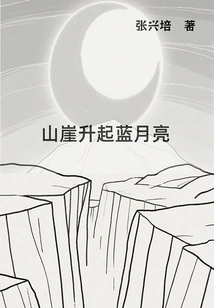
The Blue Moon Rises over the Cliff
General Fiction山崖升起蓝月亮
Zhang Xingpei
In the mid-20th century, a strange hair loss disease occurred in Shanshuiwan Village in the mountainous area of western Hubei, China. Scientist Professor Guang Xi investigated and found that it was selenium poisoning deep in the earth's crust. An environment high in selenium is harmful to health, but selenium is an essential element for the human body. The scientific research team determines safe intake through experiments, develops selenium-rich agricultural products and medicines, and achieves complementarity between high and low selenium areas. After the villagers relocated, they cultivated selenium plants to promote the market, which led to the rise of the selenium industry and was even used for cancer treatment. Local scientific and technological workers and returned talents have promoted the development of selenium resources, formed a medicinal and food industry chain, promoted human health, and made the selenium land in western Hubei a hot spot for scientific research and industry.
In the mid-20th century, a strange hair loss disease occurred in Shanshuiwan Village in the mountainous area of western Hubei, China. Scientist Professor Guang Xi investigated and found that it was selenium poisoning deep in the earth's crust. An environment high in selenium is harmful to health, but selenium is an essential element for the human body. The scientific research team determines safe intake through experiments, develops selenium-rich agricultural products and medicines, and achieves complementarity between high and low selenium areas. After the villagers relocated, they cultivated selenium plants to promote the market, which led to the rise of the selenium industry and was even used for cancer treatment. Local scientific and technological workers and returned talents have promoted the development of selenium resources, formed a medicinal and food industry chain, promoted human health, and made the selenium land in western Hubei a hot spot for scientific research and industry.
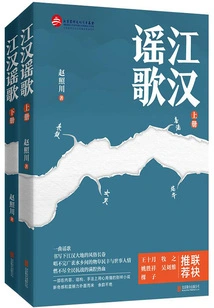
Jianghan Ballads (two Volumes)
General Fiction江汉谣歌(全两册)
Zhao Zhaochuan
The author stopped writing for 20 years and started writing again. Before "Jianghan Ballads" was published, it won the first Xinmang Literary Project Award and was called by the media "a literary version of "Along the River During the Qingming Festival"" and "a banner of custom novels." The seven chapters in the book are not only unique The novel is a complete chapter, with different perspectives, techniques, persons, language rhythms, etc. Zhao Zhaochuan combines realism, absurd magic, stream of consciousness technique, prose style, and field investigation. This is actually the result of his 20 years of in-depth thinking on novel innovation. Crystallization. The novel incorporates the traditional culture of the Jianghan Plain such as funeral drums, mourning, Dragon Boat Festival, dragon boats, ghost festivals, wedding customs, funerals, and banquets. It is very much like a chronicle of customs and culture. The folk songs, folk songs, drum lyrics, chants, and unique flavor foods are also integrated into the book. It is also like a collection of intangible cultural heritage. An independent and unique author, this novel is a work of exploration and innovation, and it is also worth reading by famous writers.
The author stopped writing for 20 years and started writing again. Before "Jianghan Ballads" was published, it won the first Xinmang Literary Project Award and was called by the media "a literary version of "Along the River During the Qingming Festival"" and "a banner of custom novels." The seven chapters in the book are not only unique The novel is a complete chapter, with different perspectives, techniques, persons, language rhythms, etc. Zhao Zhaochuan combines realism, absurd magic, stream of consciousness technique, prose style, and field investigation. This is actually the result of his 20 years of in-depth thinking on novel innovation. Crystallization. The novel incorporates the traditional culture of the Jianghan Plain such as funeral drums, mourning, Dragon Boat Festival, dragon boats, ghost festivals, wedding customs, funerals, and banquets. It is very much like a chronicle of customs and culture. The folk songs, folk songs, drum lyrics, chants, and unique flavor foods are also integrated into the book. It is also like a collection of intangible cultural heritage. An independent and unique author, this novel is a work of exploration and innovation, and it is also worth reading by famous writers.
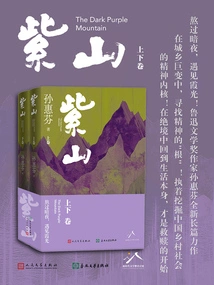
Purple Mountain (upper and Lower)
General Fiction紫山(上下)
Sun Huifen
This is the latest novel by writer Sun Huifen. The story of the first volume took place in 1992. In a village called Xiaoyugou in the northern mountainous area of southern Liaoning, Tang Lisheng, a migrant worker who was very ambitious and had never married a wife in his thirties, suddenly brought a woman named Leng Xiaohuan home from the city to get married. Because his brother occupied the house and refused to let her in, he took his daughter-in-law to her cousin Tang Li's house. But three months after getting married, something unfortunate happened. Tang Lisheng came home in the middle of the night and found his wife and cousin in the shed of the carpenter's shop. He drank pesticide in excitement and was taken home to wait for death after being rescued in the hospital for half a month. The story focuses on and presents the emotional collapse and human entanglement experienced by the three people in three days. The story in the second volume tells the story of Tang Lifu and Leng Xiaohuan, who were once deeply in love but had experienced moral trials and conscience questioning after Tang Lisheng's death. They walked out of the dark hut and faced the long days and boundless countryside and cities. How they were exposed to the rolling torrent in the years when rural urbanization was advancing by leaps and bounds. This is a rural-themed novel that starts from people's moral dilemmas and spiritual dilemmas and explores how human spiritual transcendence occurs. The work describes in detail and in-depth how farmers with "clean souls" in rural China complete their spiritual salvation in the process of urbanization and soul torture.
This is the latest novel by writer Sun Huifen. The story of the first volume took place in 1992. In a village called Xiaoyugou in the northern mountainous area of southern Liaoning, Tang Lisheng, a migrant worker who was very ambitious and had never married a wife in his thirties, suddenly brought a woman named Leng Xiaohuan home from the city to get married. Because his brother occupied the house and refused to let her in, he took his daughter-in-law to her cousin Tang Li's house. But three months after getting married, something unfortunate happened. Tang Lisheng came home in the middle of the night and found his wife and cousin in the shed of the carpenter's shop. He drank pesticide in excitement and was taken home to wait for death after being rescued in the hospital for half a month. The story focuses on and presents the emotional collapse and human entanglement experienced by the three people in three days. The story in the second volume tells the story of Tang Lifu and Leng Xiaohuan, who were once deeply in love but had experienced moral trials and conscience questioning after Tang Lisheng's death. They walked out of the dark hut and faced the long days and boundless countryside and cities. How they were exposed to the rolling torrent in the years when rural urbanization was advancing by leaps and bounds. This is a rural-themed novel that starts from people's moral dilemmas and spiritual dilemmas and explores how human spiritual transcendence occurs. The work describes in detail and in-depth how farmers with "clean souls" in rural China complete their spiritual salvation in the process of urbanization and soul torture.
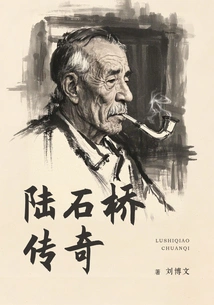
The Legend of Lu Shiqiao
General Fiction陆石桥传奇
Liu Bowen
In the old city, Mr. Wu is considered an anomaly. It's not about how weird he looks, it's just about the frightening cigarette held in Master Wu's hand. Smoking is famous, otherwise how could it make people frightened? Even the children playing in the mud beside Lu Shiqiao could blurt out a few words, bandits, bandits! Smoking is famous, and the name is bandits. This is a bit meaningful. To outsiders, they really think that bandits are coming. They shake their heads and see that under the bright blue sky and white sun, there is no shadow of bandits. Only the muddy water beside the Lushi Bridge shines with turbid light in the reflection of the setting sun.
In the old city, Mr. Wu is considered an anomaly. It's not about how weird he looks, it's just about the frightening cigarette held in Master Wu's hand. Smoking is famous, otherwise how could it make people frightened? Even the children playing in the mud beside Lu Shiqiao could blurt out a few words, bandits, bandits! Smoking is famous, and the name is bandits. This is a bit meaningful. To outsiders, they really think that bandits are coming. They shake their heads and see that under the bright blue sky and white sun, there is no shadow of bandits. Only the muddy water beside the Lushi Bridge shines with turbid light in the reflection of the setting sun.
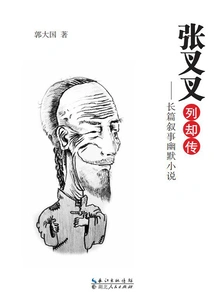
The Biography of Zhang Chacha Lieque
General Fiction张叉叉列却传
Guo Daguo
This is a witty, humorous and elegant country-style novel. The protagonist Zhang Chacha is a down-and-out rural scholar similar to Afanti and Kong Yiji. He is richer than Afanti and more intelligent than Kong Yiji. He has been a bohemian and free-spirited person all his life, but he is greasy by nature and does not do his job properly, so it is difficult for him to become a great person.
This is a witty, humorous and elegant country-style novel. The protagonist Zhang Chacha is a down-and-out rural scholar similar to Afanti and Kong Yiji. He is richer than Afanti and more intelligent than Kong Yiji. He has been a bohemian and free-spirited person all his life, but he is greasy by nature and does not do his job properly, so it is difficult for him to become a great person.
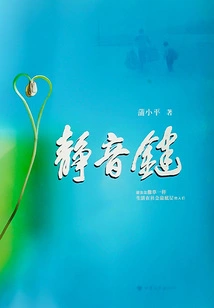
Mute Key
General Fiction静音键
Pu Xiaoping
An inspirational autobiographical novel based on the struggle story of a disabled peasant woman in the West. The heroine was disabled and did not go to college. She learned the tailoring trade and was self-reliant. Unfortunately, her child was deaf. She was caught off guard by the successive changes and suffered all kinds of hardships and humiliations. However, she did not give up her confidence in life and accompanied her child to grow up hard. The heroine struggles desperately in a poor and disabled family, constantly making various efforts to change her destiny, but she has to be busy with the present and constantly falls into the "poverty trap". And she proves time and time again that she must struggle to live a better life.
An inspirational autobiographical novel based on the struggle story of a disabled peasant woman in the West. The heroine was disabled and did not go to college. She learned the tailoring trade and was self-reliant. Unfortunately, her child was deaf. She was caught off guard by the successive changes and suffered all kinds of hardships and humiliations. However, she did not give up her confidence in life and accompanied her child to grow up hard. The heroine struggles desperately in a poor and disabled family, constantly making various efforts to change her destiny, but she has to be busy with the present and constantly falls into the "poverty trap". And she proves time and time again that she must struggle to live a better life.
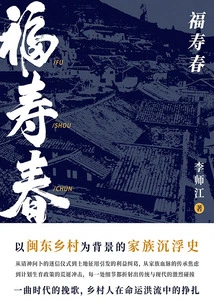
Fu Shouchun
General Fiction福寿春
Li Shijiang
"Fu Shouchun" is set in the countryside of eastern Fujian, focusing on the ups and downs of the family of Li Furen, the Chang couple and their four sons - An Chun, Er Chun, San Chun and Xi Chun. The story begins with a brief period of prosperity when Erchun got married, but gradually declined due to the intertwining of economic pressure and human weakness. The eldest son, Anchun, was indolent and in debt; in the second spring, he went south to Guangzhou, but was in crisis due to misappropriation of family savings; in the third spring, he was idle and became a gangster in the countryside; while the youngest son, Xichun, tried to break free from the shackles of the land, but fell into deeper confusion. As the breadwinner of the family, Chang struggled with livelihood and ethics with the tenacity and shrewdness of a traditional peasant woman, but she gradually became unable to do so under the pressure of the times. The novel describes the "eternity" of rural life in a delicate way: from the superstitious rituals of asking gods for divination to the interest entanglements caused by land expropriation, from the anxiety of inheriting family blood to the absurd impact of the family planning policy, every detail reflects the fierce collision between tradition and modernity. The book has neither the pastoral filter nor the condescending criticism, but uses an almost line drawing method to present the struggle and compromise of rural people in the torrent of destiny. Just like Chang's contradictory behavior when fighting for compensation, it not only reveals the selfishness of human nature, but also contains the helplessness of survival, allowing readers to get a glimpse of the true background of the countryside in the blurred zone of "right and wrong." "Fu Shou Chun" ends with Li Furen finally converting to Buddhism, which is a metaphor for the dissolution and rebirth of the traditional rural spirit. This work is not only an elegy for the disappearing rural life, but also uses the unique writing style of "Eastern Soul and Western Skill" to integrate the readability of genre novels with the philosophy of pure literature. The book depicts the fate of three generations of the Chang family, which not only shows the warmth and shackles of traditional ethics, but also reveals the dual dilemmas of rural economy and faith under the wave of modernization.
"Fu Shouchun" is set in the countryside of eastern Fujian, focusing on the ups and downs of the family of Li Furen, the Chang couple and their four sons - An Chun, Er Chun, San Chun and Xi Chun. The story begins with a brief period of prosperity when Erchun got married, but gradually declined due to the intertwining of economic pressure and human weakness. The eldest son, Anchun, was indolent and in debt; in the second spring, he went south to Guangzhou, but was in crisis due to misappropriation of family savings; in the third spring, he was idle and became a gangster in the countryside; while the youngest son, Xichun, tried to break free from the shackles of the land, but fell into deeper confusion. As the breadwinner of the family, Chang struggled with livelihood and ethics with the tenacity and shrewdness of a traditional peasant woman, but she gradually became unable to do so under the pressure of the times. The novel describes the "eternity" of rural life in a delicate way: from the superstitious rituals of asking gods for divination to the interest entanglements caused by land expropriation, from the anxiety of inheriting family blood to the absurd impact of the family planning policy, every detail reflects the fierce collision between tradition and modernity. The book has neither the pastoral filter nor the condescending criticism, but uses an almost line drawing method to present the struggle and compromise of rural people in the torrent of destiny. Just like Chang's contradictory behavior when fighting for compensation, it not only reveals the selfishness of human nature, but also contains the helplessness of survival, allowing readers to get a glimpse of the true background of the countryside in the blurred zone of "right and wrong." "Fu Shou Chun" ends with Li Furen finally converting to Buddhism, which is a metaphor for the dissolution and rebirth of the traditional rural spirit. This work is not only an elegy for the disappearing rural life, but also uses the unique writing style of "Eastern Soul and Western Skill" to integrate the readability of genre novels with the philosophy of pure literature. The book depicts the fate of three generations of the Chang family, which not only shows the warmth and shackles of traditional ethics, but also reveals the dual dilemmas of rural economy and faith under the wave of modernization.
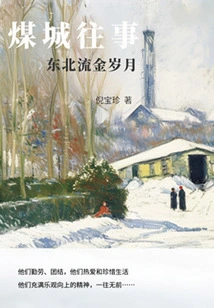
Coal City Past: the Golden Years in Northeast China
General Fiction煤城往事:东北流金岁月
Ni Baozhen
"Once Upon a Time in Coal City: Golden Years in the Northeast" is a novel set in the coal city of Northeast China. It mainly tells the life story of Song Houcheng and Fengzhen's family. They grew up together, went to school together, and worked in the same coal washing plant after graduation. At work, they face financial difficulties and life pressure, but they still work hard and try their best to solve the medical expenses of the elderly workers, while also buying holiday clothes and food for their families. After that, they decided to go to the northeastern coal city to dig coal to make a living. They worked hard and kept sending money home to help their families tide over the difficulties. Eventually, they decided to open a bookkeeping company and restaurant. They experienced various difficulties and challenges, but ultimately succeeded.
"Once Upon a Time in Coal City: Golden Years in the Northeast" is a novel set in the coal city of Northeast China. It mainly tells the life story of Song Houcheng and Fengzhen's family. They grew up together, went to school together, and worked in the same coal washing plant after graduation. At work, they face financial difficulties and life pressure, but they still work hard and try their best to solve the medical expenses of the elderly workers, while also buying holiday clothes and food for their families. After that, they decided to go to the northeastern coal city to dig coal to make a living. They worked hard and kept sending money home to help their families tide over the difficulties. Eventually, they decided to open a bookkeeping company and restaurant. They experienced various difficulties and challenges, but ultimately succeeded.
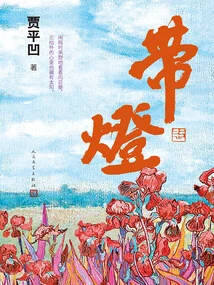
With Light
General Fiction带灯
Jia Pingwa
This book is another surprise that Jia Pingwa has brought to the literary world and readers. The work not only maintains the author's previous artistic characteristics, but also reaches a new literary height. The protagonist of the novel is a female township cadre named "Dai Deng". Her original name is "Ying", which means firefly, and she looks like carrying a lamp patrolling in the dark night. This name also shows the fate of the lamp, which burns and illuminates desperately, but is destined to be weak and powerless and eventually return to dust. Dai Deng is the director of the town's Comprehensive Management Office. She is beautiful, solitary and a bit out of place. She is mainly responsible for handling all disputes and petitions in the countryside. Every day, she faces trivial matters and troubles from farmers. The trivial matters in the countryside are both annoying and sympathetic. Dai Deng fulfills her duties as a township cadre amidst contradictions. She is unwilling to harm the people but also wants to maintain the stability of the grassroots society. From the moment she appeared on the stage, Dai Deng showed a unique detachment. She has a rich heart and rich emotions. She prefers to find peace in the mountains, wind, trees and valleys in the countryside. In 2014, "With Lamp" was awarded "2013 Chinese Good Book".
This book is another surprise that Jia Pingwa has brought to the literary world and readers. The work not only maintains the author's previous artistic characteristics, but also reaches a new literary height. The protagonist of the novel is a female township cadre named "Dai Deng". Her original name is "Ying", which means firefly, and she looks like carrying a lamp patrolling in the dark night. This name also shows the fate of the lamp, which burns and illuminates desperately, but is destined to be weak and powerless and eventually return to dust. Dai Deng is the director of the town's Comprehensive Management Office. She is beautiful, solitary and a bit out of place. She is mainly responsible for handling all disputes and petitions in the countryside. Every day, she faces trivial matters and troubles from farmers. The trivial matters in the countryside are both annoying and sympathetic. Dai Deng fulfills her duties as a township cadre amidst contradictions. She is unwilling to harm the people but also wants to maintain the stability of the grassroots society. From the moment she appeared on the stage, Dai Deng showed a unique detachment. She has a rich heart and rich emotions. She prefers to find peace in the mountains, wind, trees and valleys in the countryside. In 2014, "With Lamp" was awarded "2013 Chinese Good Book".
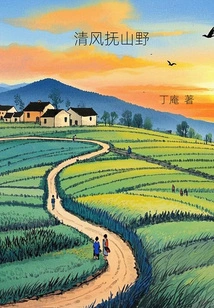
The Breeze Caresses the Mountains and Fields
General Fiction清风抚山野
Ding'an
The novel tells a series of local stories about the "marriage exchange" of Zhang, Zhuang, Yang and other families in several villages at the junction of Tai, Lin and Ji. These primitive, chaotic and wild marriages slowly unfolded in the hometown of Lin Fang, a master of etiquette. They were like a picture of rural customs in Qilu, giving readers a strong impact.
The novel tells a series of local stories about the "marriage exchange" of Zhang, Zhuang, Yang and other families in several villages at the junction of Tai, Lin and Ji. These primitive, chaotic and wild marriages slowly unfolded in the hometown of Lin Fang, a master of etiquette. They were like a picture of rural customs in Qilu, giving readers a strong impact.
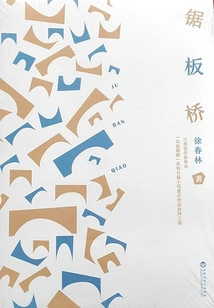
Sawbanqiao
General Fiction锯板桥
Xu Chunlin
Write a story about a woman who cannot see the world, my grandmother, and a small town hero. The first half is about my grandmother who cannot see the world, a story that happened in a time before I was born, and the story hears the world through the eyes of a small town hero. The second half was created through my eyes, and the changes of this era were passed on to my grandmother through me. The story starts from a place of fierce struggle in the old society. Facing unavoidable difficulties, my grandfather, a loyal and virtuous old man, has established a flesh-and-blood image in the novel. Through the shaping of the characters' fate, the novel shows the fate of the town and the people living in the town. By showing the changes in folk customs, folk customs, and villagers, it reflects the great changes in the mountains and villages.
Write a story about a woman who cannot see the world, my grandmother, and a small town hero. The first half is about my grandmother who cannot see the world, a story that happened in a time before I was born, and the story hears the world through the eyes of a small town hero. The second half was created through my eyes, and the changes of this era were passed on to my grandmother through me. The story starts from a place of fierce struggle in the old society. Facing unavoidable difficulties, my grandfather, a loyal and virtuous old man, has established a flesh-and-blood image in the novel. Through the shaping of the characters' fate, the novel shows the fate of the town and the people living in the town. By showing the changes in folk customs, folk customs, and villagers, it reflects the great changes in the mountains and villages.
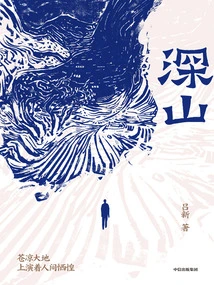
Deep Mountains
General Fiction深山
Lu Xin
"Deep Mountain" is a novel depicting life in the Taihang Mountains in northern Shanxi. "Mouse", a boy as skinny as a bean sprout, Wu Deng, a young man who is brooding over his brother's death, "she" who married far away and was strictly guarded by her parents-in-law, Du Lin, a literary young man who uses his writing to expose the absurdity of the world, Gu Zhenglou, who uses his power to perform banal evil, and another People who suddenly broke in, unidentified people, people who carried coffins while eating melon seeds, people who rushed to buy yellow cloth to make clothes to seek protection from the gods... Everyone has their own way of survival, and they are resisting fate in their own way, trying to break through the surrounding mountains.
"Deep Mountain" is a novel depicting life in the Taihang Mountains in northern Shanxi. "Mouse", a boy as skinny as a bean sprout, Wu Deng, a young man who is brooding over his brother's death, "she" who married far away and was strictly guarded by her parents-in-law, Du Lin, a literary young man who uses his writing to expose the absurdity of the world, Gu Zhenglou, who uses his power to perform banal evil, and another People who suddenly broke in, unidentified people, people who carried coffins while eating melon seeds, people who rushed to buy yellow cloth to make clothes to seek protection from the gods... Everyone has their own way of survival, and they are resisting fate in their own way, trying to break through the surrounding mountains.
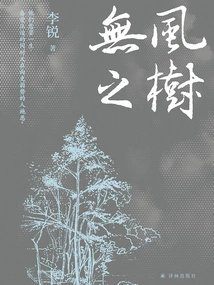
Windless Tree (work by Li Rui)
General Fiction无风之树(李锐作品)
Li Rui
The Sixth Patriarch Huineng pointed to the flag fluttering in the wind at Faxing Temple and explained the world to the monks: "It is not the wind that moves, nor the flags that move, but the hearts of benevolent people." When Gua Laowu summed up the world at the end of his life, he only used two words. These two words were actually just a sound made by him. The small stool he had been sitting on for many years made a slight sound when it fell down - "click". "The original 'prototype' of "The Windless Tree" was a short story "Funeral" in the "Thick Soil" series. This short story only has more than 4,000 words, from 4,000 words to 110,000 words. This is not only a quantitative change, but more importantly, a qualitative change, which is a different perspective and expression. A re-telling of the story will give you a completely different world." "The carnage of class struggle before our eyes, The wars and massacres in the past, poverty, labor, death, human numbness, alienation, inability to communicate, the mutual deprivation between man and nature, the entanglement of good and evil, etc., Etc., All these constituted the miserable situation that the dwarves of Dwarf Ping could not escape. "In the 1970s, Dwarf Ping under the high loess slopes was barren and isolated from the world, and the villagers had their own rules and stories. Nuan Yu, a woman who fled to Dwarenping due to hunger, became the fantasy of all the single men in Dwarenping; director Liu Changsheng came to the village to start work and would stay in Nuanyu's kiln every time; Ku Gen'er, a martyr orphan, honed his extraordinary perseverance in his faith and tried to survive It took one person twenty-four years to manage all the ditches in Dwarenping; the production captain Cao Tianzhu struggled to balance the folk customs and political requirements; the uncle Cao Yongfu was criticized and tortured because he was a rich farmer, and finally hanged himself... The people of Dwarenping are naturally crooked. They have lived a miserable life, being oppressed and at the same time doing evil to the more vulnerable people. "This is a story about me. This is a story about Chinese people. Finally, and most importantly, this is a story about people."
The Sixth Patriarch Huineng pointed to the flag fluttering in the wind at Faxing Temple and explained the world to the monks: "It is not the wind that moves, nor the flags that move, but the hearts of benevolent people." When Gua Laowu summed up the world at the end of his life, he only used two words. These two words were actually just a sound made by him. The small stool he had been sitting on for many years made a slight sound when it fell down - "click". "The original 'prototype' of "The Windless Tree" was a short story "Funeral" in the "Thick Soil" series. This short story only has more than 4,000 words, from 4,000 words to 110,000 words. This is not only a quantitative change, but more importantly, a qualitative change, which is a different perspective and expression. A re-telling of the story will give you a completely different world." "The carnage of class struggle before our eyes, The wars and massacres in the past, poverty, labor, death, human numbness, alienation, inability to communicate, the mutual deprivation between man and nature, the entanglement of good and evil, etc., Etc., All these constituted the miserable situation that the dwarves of Dwarf Ping could not escape. "In the 1970s, Dwarf Ping under the high loess slopes was barren and isolated from the world, and the villagers had their own rules and stories. Nuan Yu, a woman who fled to Dwarenping due to hunger, became the fantasy of all the single men in Dwarenping; director Liu Changsheng came to the village to start work and would stay in Nuanyu's kiln every time; Ku Gen'er, a martyr orphan, honed his extraordinary perseverance in his faith and tried to survive It took one person twenty-four years to manage all the ditches in Dwarenping; the production captain Cao Tianzhu struggled to balance the folk customs and political requirements; the uncle Cao Yongfu was criticized and tortured because he was a rich farmer, and finally hanged himself... The people of Dwarenping are naturally crooked. They have lived a miserable life, being oppressed and at the same time doing evil to the more vulnerable people. "This is a story about me. This is a story about Chinese people. Finally, and most importantly, this is a story about people."
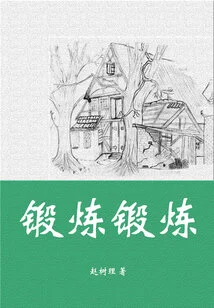
Exercise Exercise
General Fiction锻炼锻炼
Zhao Shuli
Zhao Shuli's novel "Exercise" tells a story about rural social governance and individual behavior transformation. The story takes place in an agricultural cooperative and mainly revolves around two rural women with distinctive personalities and lazy behaviors - "Calf Pain" and "Not Enough to Eat". These two women used physical pain or hunger as an excuse to avoid collective labor, but in fact they were doing it to satisfy their personal interests. Faced with this phenomenon, Yang Xiaosi, the young deputy director of the cooperative, decided to take action and use clever methods to expose and correct their bad behaviors. The novel vividly depicts their cunning and self-deceptive images through a series of dramatic plot designs, such as "calf pain" who pretends to have leg pain during labor but moves forward in private affairs; "not full" who always complains about insufficient food but steals in private. At the same time, it also reflects the conciliatory attitude of some cadres in rural society at that time towards such issues, and how to promote positive changes in farmers' ideological awareness and behavioral habits through education and appropriate "exercise" (that is, tests and corrections in actual labor). "Exercise" is not only a work full of humor and satire, but also profoundly reveals the practical problems in rural social governance, and how to guide and educate the peasant masses through collective wisdom and strength, and promote the development of rural society in a healthier and positive direction.
Zhao Shuli's novel "Exercise" tells a story about rural social governance and individual behavior transformation. The story takes place in an agricultural cooperative and mainly revolves around two rural women with distinctive personalities and lazy behaviors - "Calf Pain" and "Not Enough to Eat". These two women used physical pain or hunger as an excuse to avoid collective labor, but in fact they were doing it to satisfy their personal interests. Faced with this phenomenon, Yang Xiaosi, the young deputy director of the cooperative, decided to take action and use clever methods to expose and correct their bad behaviors. The novel vividly depicts their cunning and self-deceptive images through a series of dramatic plot designs, such as "calf pain" who pretends to have leg pain during labor but moves forward in private affairs; "not full" who always complains about insufficient food but steals in private. At the same time, it also reflects the conciliatory attitude of some cadres in rural society at that time towards such issues, and how to promote positive changes in farmers' ideological awareness and behavioral habits through education and appropriate "exercise" (that is, tests and corrections in actual labor). "Exercise" is not only a work full of humor and satire, but also profoundly reveals the practical problems in rural social governance, and how to guide and educate the peasant masses through collective wisdom and strength, and promote the development of rural society in a healthier and positive direction.
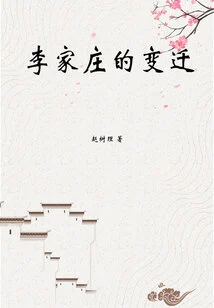
The Changes of Lijiazhuang
General Fiction李家庄的变迁
Zhao Shuli
The book "The Changes of Lijiazhuang" takes Lijiazhuang in rural Shanxi as the background and shows the great changes in Lijiazhuang before and after the Anti-Japanese War through the experience of carpenter Zhang Tiesuo. Zhang Tiesuo's family suffered cruel oppression from the feudal landlord class in the countryside. Warlords and landlords colluded with each other to prey on the common people. The fifteen acres of land that Zhang Tiesuo's grandfather and father had worked hard to buy for two lifetimes was occupied by village chief Li Ruzhen and others. He had no right to seek justice, so he had to leave his hometown and go out to work. In the field, he was hungry and cold, and unexpectedly met his enemy Xiaoxi. In order to survive, he had to work under him. Later, when the situation was turbulent, Xiaoxi's Forty-Eighth Division left behind was disbanded, and Tie Suo had no choice but to return to his hometown...
The book "The Changes of Lijiazhuang" takes Lijiazhuang in rural Shanxi as the background and shows the great changes in Lijiazhuang before and after the Anti-Japanese War through the experience of carpenter Zhang Tiesuo. Zhang Tiesuo's family suffered cruel oppression from the feudal landlord class in the countryside. Warlords and landlords colluded with each other to prey on the common people. The fifteen acres of land that Zhang Tiesuo's grandfather and father had worked hard to buy for two lifetimes was occupied by village chief Li Ruzhen and others. He had no right to seek justice, so he had to leave his hometown and go out to work. In the field, he was hungry and cold, and unexpectedly met his enemy Xiaoxi. In order to survive, he had to work under him. Later, when the situation was turbulent, Xiaoxi's Forty-Eighth Division left behind was disbanded, and Tie Suo had no choice but to return to his hometown...
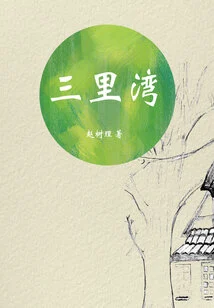
Sanliwan
General Fiction三里湾
Zhao Shuli
"Sanliwan" depicts the conflicts and entanglements in the agricultural cooperative movement in Sanliwan Village in the Liberated Area of North China in the early 1950s, showing the conflict between advanced and backward rural forces, the arduousness of social change, and the important role of outstanding cadres of rural grassroots party organizations in promoting the cooperative movement.
"Sanliwan" depicts the conflicts and entanglements in the agricultural cooperative movement in Sanliwan Village in the Liberated Area of North China in the early 1950s, showing the conflict between advanced and backward rural forces, the arduousness of social change, and the important role of outstanding cadres of rural grassroots party organizations in promoting the cooperative movement.
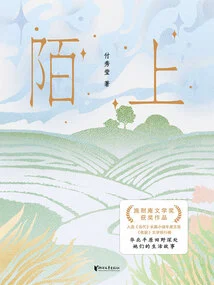
Moshang
General Fiction陌上
Fu Xiuying
This book is a masterpiece of novels by the powerful contemporary writer Fu Xiuying. It has won the Shi Naian Literary Award and was selected into the top five novels of the year by "Contemporary" and the "Harvest" literary ranking. Fangcun, how should I put it, is just the most ordinary small village on the North China Plain. In the village, there are men and women. There are also old people and children. There are also cocks crowing and dogs barking, and there are also right and wrong, grievances and grudges. Some of the crop fields are still planted, while others have stopped growing long ago. There are times when the moon is full and there are times when it is waning. ... As time passes, some things change.
This book is a masterpiece of novels by the powerful contemporary writer Fu Xiuying. It has won the Shi Naian Literary Award and was selected into the top five novels of the year by "Contemporary" and the "Harvest" literary ranking. Fangcun, how should I put it, is just the most ordinary small village on the North China Plain. In the village, there are men and women. There are also old people and children. There are also cocks crowing and dogs barking, and there are also right and wrong, grievances and grudges. Some of the crop fields are still planted, while others have stopped growing long ago. There are times when the moon is full and there are times when it is waning. ... As time passes, some things change.
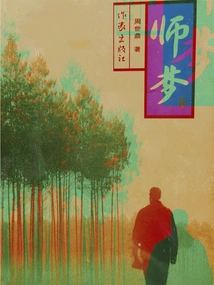
Teacher's Dream
General Fiction师梦
Zhou Shiding
Taking the life of primary school teachers in rural Huaibei as the main line, it unfolds a colorful picture of rural campus life, and uses ordinary language to create a series of vivid characters such as Zheng Guosheng, Ji Haiming, Ji Fangliang, Zhao Yurong, Li Wenqing, and Wei Guangming. It narrates the difficult and broad life of these people under the influence of each movement, and outlines one sketch after another of the human world in a sad tone.
Taking the life of primary school teachers in rural Huaibei as the main line, it unfolds a colorful picture of rural campus life, and uses ordinary language to create a series of vivid characters such as Zheng Guosheng, Ji Haiming, Ji Fangliang, Zhao Yurong, Li Wenqing, and Wei Guangming. It narrates the difficult and broad life of these people under the influence of each movement, and outlines one sketch after another of the human world in a sad tone.
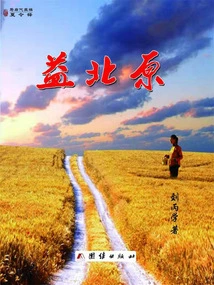
Yibeiyuan
General Fiction益北原
Liu Bingxue
"Yibei Plain" is a chronicle of the 80-year changes in Qilu land in the 20th century, paying tribute to the Mao Dun Literature Award-winning work "White Deer Plain". Based on the folk life of Shandong Yibei Plain during the Republic of China and the ups and downs of characters in various periods after the Anti-Japanese War, the War of Liberation, and the founding of New China as the background, it outlines a small spring and autumn period, small history, small characters, small narratives, and small rivers and lakes. It writes about the suffering of Shandong and Greater China at that time and place, the tenacity and unyielding, bravery and heroism of the people... It is a long historical novel that combines realism, romanticism, and the unique magical color of Yibei Plain.
"Yibei Plain" is a chronicle of the 80-year changes in Qilu land in the 20th century, paying tribute to the Mao Dun Literature Award-winning work "White Deer Plain". Based on the folk life of Shandong Yibei Plain during the Republic of China and the ups and downs of characters in various periods after the Anti-Japanese War, the War of Liberation, and the founding of New China as the background, it outlines a small spring and autumn period, small history, small characters, small narratives, and small rivers and lakes. It writes about the suffering of Shandong and Greater China at that time and place, the tenacity and unyielding, bravery and heroism of the people... It is a long historical novel that combines realism, romanticism, and the unique magical color of Yibei Plain.
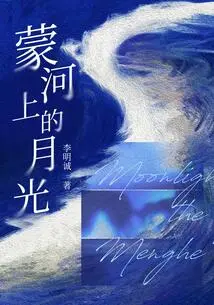
Moonlight on the Meng River
General Fiction蒙河上的月光
Li Mingcheng
This is a long novel integrating love, inspiration, country, humanity, and great love. Chen Sinong, a rural youth from a poor family, failed the college entrance examination and felt that his future was bleak. His old classmate Guo Hongxiu loved him desperately, like a bright moonlight shining on his heart. When people are poor, they want to change. Chen Sinong decided to take out a loan to start a business, and Guo Hongxiu fully supported it. When he became successful, he did not forget his roots and helped the villagers sell agricultural and sideline products, becoming a local celebrity. The works reflect the earth-shaking changes in the new countryside, people's pursuit of truth, goodness and beauty, and their yearning for a happy life. Revitalizing the countryside, achieving common prosperity, and creating a harmonious and beautiful home is everyone's wish and the strongest voice of the times. People with dreams can succeed anywhere. They choose to fight against fate and realize the value of life in their hometown, which has far-reaching positive significance.
This is a long novel integrating love, inspiration, country, humanity, and great love. Chen Sinong, a rural youth from a poor family, failed the college entrance examination and felt that his future was bleak. His old classmate Guo Hongxiu loved him desperately, like a bright moonlight shining on his heart. When people are poor, they want to change. Chen Sinong decided to take out a loan to start a business, and Guo Hongxiu fully supported it. When he became successful, he did not forget his roots and helped the villagers sell agricultural and sideline products, becoming a local celebrity. The works reflect the earth-shaking changes in the new countryside, people's pursuit of truth, goodness and beauty, and their yearning for a happy life. Revitalizing the countryside, achieving common prosperity, and creating a harmonious and beautiful home is everyone's wish and the strongest voice of the times. People with dreams can succeed anywhere. They choose to fight against fate and realize the value of life in their hometown, which has far-reaching positive significance.
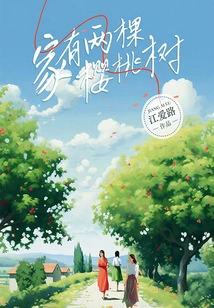
There Are Two Cherry Trees at Home
General Fiction家有两颗樱桃树
Jiangai Road
[Female Growth + Youth Inspiration + Rural Pastoral] The popular writer Jiang Ailu writes the pastoral struggle history of three girls, Ji Xiaoqing, Shen Jing, and Tong Xue. The three girls stepped into Jinhua Township at the same time and completed their own and foreign growth on the barren land! There are two trees in front of my house, one is a cherry tree and the other is also a cherry tree. Three girls with different dreams never imagined that they would have a common goal in Jinhua Township. Shen Jing, a carefree and cute girl, is actually a bold and courageous person who goes to the countryside to work tirelessly for her ideals. Ji Xiaoqing, a calm and rational girl, returned to her hometown to start a business after a breakup. Although she was controversial, she still risked everything to start from scratch. Tong Xue, a lazy and casual sexy beauty, is deeply involved in emotional choices. She escapes from her family and comes to Jinhua Township in order to gain inner peace. Once the symphony of fate plays, you will no longer be alone. Is the future really that simple? Are they really ready to face the challenge?
[Female Growth + Youth Inspiration + Rural Pastoral] The popular writer Jiang Ailu writes the pastoral struggle history of three girls, Ji Xiaoqing, Shen Jing, and Tong Xue. The three girls stepped into Jinhua Township at the same time and completed their own and foreign growth on the barren land! There are two trees in front of my house, one is a cherry tree and the other is also a cherry tree. Three girls with different dreams never imagined that they would have a common goal in Jinhua Township. Shen Jing, a carefree and cute girl, is actually a bold and courageous person who goes to the countryside to work tirelessly for her ideals. Ji Xiaoqing, a calm and rational girl, returned to her hometown to start a business after a breakup. Although she was controversial, she still risked everything to start from scratch. Tong Xue, a lazy and casual sexy beauty, is deeply involved in emotional choices. She escapes from her family and comes to Jinhua Township in order to gain inner peace. Once the symphony of fate plays, you will no longer be alone. Is the future really that simple? Are they really ready to face the challenge?
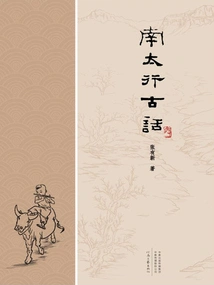
An Ancient Saying from South Taihang
General Fiction南太行古话
Zhang Youxin
This book is a mythological novel that combines myths and legends with real life. The narrative language is beyond the ordinary, and the content is between elegance and vulgarity. Through dozens of folk tales, it reproduces the geographical features, folk customs, rich history and culture, rich local flavor, and the simplicity and innocence of the mountain people in the Jiaoding Mountain area. In particular, by analyzing the ancient people's naming of the mountains, rivers and land, it demonstrates the local people's longing for dignitaries and talented people from the depths of their souls. This reveals the essence of the excellent traditional culture that is extensive and profound, as well as the embodiment and application of these cultural essences in people's daily lives.
This book is a mythological novel that combines myths and legends with real life. The narrative language is beyond the ordinary, and the content is between elegance and vulgarity. Through dozens of folk tales, it reproduces the geographical features, folk customs, rich history and culture, rich local flavor, and the simplicity and innocence of the mountain people in the Jiaoding Mountain area. In particular, by analyzing the ancient people's naming of the mountains, rivers and land, it demonstrates the local people's longing for dignitaries and talented people from the depths of their souls. This reveals the essence of the excellent traditional culture that is extensive and profound, as well as the embodiment and application of these cultural essences in people's daily lives.
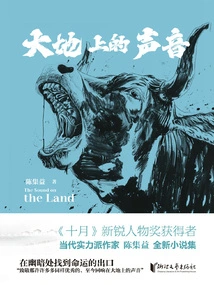
Sounds from the Earth
General Fiction大地上的声音
Chen Jiyi
"Voices from the Earth" is a new collection of novels by Chen Jiyi, winner of the "October" Emerging Character Award. It tells three stories that happened in Wucun, Zhejiang: the talented hunchback and the Wu Opera troupe experienced rise and fall in the mountain villages and cities; the young people from the mountain village went to the small town to go to the market and got into conflicts and entanglements with the castration; and the adopted orphans illuminated the world and lives of others. Chen Jiyi puts the characters in a dark situation, and uses a calm, smooth and powerful narrative to write about the love and pain, persistence and persistence of ordinary people in rural areas in the changing times, reflecting from one side the agitation and changes in the social transformation of southern China's rural areas. The entire collection of novels has a distinct southern tone, and the establishment of this tone does not only come from the Jiangnan sentiment in the traditional sense. The author embeds the heterogeneous sense of avant-garde literature in realism techniques, giving this southern narrative a different weight.
"Voices from the Earth" is a new collection of novels by Chen Jiyi, winner of the "October" Emerging Character Award. It tells three stories that happened in Wucun, Zhejiang: the talented hunchback and the Wu Opera troupe experienced rise and fall in the mountain villages and cities; the young people from the mountain village went to the small town to go to the market and got into conflicts and entanglements with the castration; and the adopted orphans illuminated the world and lives of others. Chen Jiyi puts the characters in a dark situation, and uses a calm, smooth and powerful narrative to write about the love and pain, persistence and persistence of ordinary people in rural areas in the changing times, reflecting from one side the agitation and changes in the social transformation of southern China's rural areas. The entire collection of novels has a distinct southern tone, and the establishment of this tone does not only come from the Jiangnan sentiment in the traditional sense. The author embeds the heterogeneous sense of avant-garde literature in realism techniques, giving this southern narrative a different weight.
The Land is Wide and the Trees Are Wide
General Fiction土广寸木
Wei Sixiao
"In this small land, the four seasons change, rain and snow fall, and people are like insects and ants, running around for their lives, but in the end they are empty-handed." "A Land Wide and an Inch of Wood" is a new masterpiece by the writer Wei Sixiao, and the title of the book is a decomposition of the word "village". Village is an adjective that reflects the situation of everyone who is faced with an overwhelming life. The living beings and daily life of "Xinliu Village" unfold slowly like documentary footage. There are more than a hundred characters, age, sickness and death, joys and sorrows, each face has endless stories. The writing method of "A Wisdom of Land and an Inch of Trees" eliminates the boundaries between fiction and non-fiction, and challenges the traditional imaginative writing of the countryside. The first part, "Partial", focuses on people, things, places and time, thus linking up the character pedigree and various world affairs in Xinliu Village; the second part, "One Year", takes the daily life of mother and son, Lao Fu and "I" as the main line, describing the village's major and minor affairs in one year, involving agricultural production, weddings and funerals, grassroots politics, etc., And panoramically depicts the real landscape of the current countryside. "A Lot of Ground and an Inch of Trees" is like a written documentary about contemporary rural areas, full of close and detailed observations and profound and specific concerns. The life picture of Xinliu Village hides the ghost of history and also reveals the confusion of the times.
"In this small land, the four seasons change, rain and snow fall, and people are like insects and ants, running around for their lives, but in the end they are empty-handed." "A Land Wide and an Inch of Wood" is a new masterpiece by the writer Wei Sixiao, and the title of the book is a decomposition of the word "village". Village is an adjective that reflects the situation of everyone who is faced with an overwhelming life. The living beings and daily life of "Xinliu Village" unfold slowly like documentary footage. There are more than a hundred characters, age, sickness and death, joys and sorrows, each face has endless stories. The writing method of "A Wisdom of Land and an Inch of Trees" eliminates the boundaries between fiction and non-fiction, and challenges the traditional imaginative writing of the countryside. The first part, "Partial", focuses on people, things, places and time, thus linking up the character pedigree and various world affairs in Xinliu Village; the second part, "One Year", takes the daily life of mother and son, Lao Fu and "I" as the main line, describing the village's major and minor affairs in one year, involving agricultural production, weddings and funerals, grassroots politics, etc., And panoramically depicts the real landscape of the current countryside. "A Lot of Ground and an Inch of Trees" is like a written documentary about contemporary rural areas, full of close and detailed observations and profound and specific concerns. The life picture of Xinliu Village hides the ghost of history and also reveals the confusion of the times.
Woman of Hollin River
General Fiction霍林河的女人
Zhai Yan
Along the Huolin River, a virgin land that has never been written down is barren and desolate. However, in this land, there is a story about persistence, choice and love. The work started in the late 1990s, with Hu Laizao as the protagonist and three other girls as the background. By describing their family changes, personal hardships, emotional experiences, and village changes, it shows the strength and bravery of rural women in adversity, as well as their persistent pursuit of a better life. At the same time, it also expresses the persistence and courage of the people along the Huolin River in improving saline-alkali land and building a new countryside in the new era. This work has a strong northeastern atmosphere, a unique perspective, many characters, and a twists and turns in the plot. It is exciting. It is not only a novel, but also a portrayal of the real life of the people in western Jilin. It is also a long narrative poem that shows the great changes and revitalization of China's rural areas.
Along the Huolin River, a virgin land that has never been written down is barren and desolate. However, in this land, there is a story about persistence, choice and love. The work started in the late 1990s, with Hu Laizao as the protagonist and three other girls as the background. By describing their family changes, personal hardships, emotional experiences, and village changes, it shows the strength and bravery of rural women in adversity, as well as their persistent pursuit of a better life. At the same time, it also expresses the persistence and courage of the people along the Huolin River in improving saline-alkali land and building a new countryside in the new era. This work has a strong northeastern atmosphere, a unique perspective, many characters, and a twists and turns in the plot. It is exciting. It is not only a novel, but also a portrayal of the real life of the people in western Jilin. It is also a long narrative poem that shows the great changes and revitalization of China's rural areas.
Human Vegetation
General Fiction人间草木
Xiang Hong
"Human Grass" mainly focuses on the growth of the male protagonist Lu Zigui and three women, and tells the story of the 40-year rural reform process in Qingluo Town, Anhui. Qingluo Town was originally a remote village. Lu Zigui, who was born here, felt the poverty and hardship in rural areas before the large-scale contract work since his childhood. Going to college and leaving the countryside was the motivation for him to study hard. Lu Zigui experienced two ambiguous loves in middle school. One was his first love, the good girl Yu Ruyan. During school, the two supported each other and fell in love with each other. Later, they parted ways due to a misunderstanding by their "sister" Sun Qian; the other was the paranoid rich girl Gu Hongying, who fell in love with the poor boy Lu Zigui despite her family's objections and gave Lu a lot of help in the later period. A few years later, several people went to different destinies, but were intertwined under the pull of fate...
"Human Grass" mainly focuses on the growth of the male protagonist Lu Zigui and three women, and tells the story of the 40-year rural reform process in Qingluo Town, Anhui. Qingluo Town was originally a remote village. Lu Zigui, who was born here, felt the poverty and hardship in rural areas before the large-scale contract work since his childhood. Going to college and leaving the countryside was the motivation for him to study hard. Lu Zigui experienced two ambiguous loves in middle school. One was his first love, the good girl Yu Ruyan. During school, the two supported each other and fell in love with each other. Later, they parted ways due to a misunderstanding by their "sister" Sun Qian; the other was the paranoid rich girl Gu Hongying, who fell in love with the poor boy Lu Zigui despite her family's objections and gave Lu a lot of help in the later period. A few years later, several people went to different destinies, but were intertwined under the pull of fate...
Bumper Harvest
General Fiction丰收
Liu Qibaosheng
The novel is set in Tiancun, an ancient Hakka town in southern Gansu, Jiangxi, and spans the 1970s, 1980s and 1990s. Through the encounters and experiences of four generations of a family, the novel integrates Hakka culture, customs, fantasy stories, etc. To unfold the narrative. It reflects the changes of the times and the development of society. It is a local novel full of Hakka flavor.
The novel is set in Tiancun, an ancient Hakka town in southern Gansu, Jiangxi, and spans the 1970s, 1980s and 1990s. Through the encounters and experiences of four generations of a family, the novel integrates Hakka culture, customs, fantasy stories, etc. To unfold the narrative. It reflects the changes of the times and the development of society. It is a local novel full of Hakka flavor.
Get Rich in the Village
General Fiction村里致富
Prince Qun
This book tells the story of photographer Xie Yi who actively requested to go deep into the grassroots. In fact, he was taking advantage of poverty alleviation to obtain richer photographic materials. Unexpectedly, the poverty situation in the countryside did not satisfy her wish, so she had to cope with the assistance work and was moved by her constant contact with the hard-working and kind-hearted villagers. She was determined to do her best to help them, but was almost kidnapped in the process of securing investment. Xie Yi's fearlessness and kindness made the villagers willing to get close to her, which made Xie Yi accidentally discover the business opportunities that existed among the villagers, and took advantage of the advantage of her best friend being an art dealer to dig deeper, and finally developed a variety of art markets...
This book tells the story of photographer Xie Yi who actively requested to go deep into the grassroots. In fact, he was taking advantage of poverty alleviation to obtain richer photographic materials. Unexpectedly, the poverty situation in the countryside did not satisfy her wish, so she had to cope with the assistance work and was moved by her constant contact with the hard-working and kind-hearted villagers. She was determined to do her best to help them, but was almost kidnapped in the process of securing investment. Xie Yi's fearlessness and kindness made the villagers willing to get close to her, which made Xie Yi accidentally discover the business opportunities that existed among the villagers, and took advantage of the advantage of her best friend being an art dealer to dig deeper, and finally developed a variety of art markets...
The Japanese General Will Be Beautiful
General Fiction日将锦绣
Li Ziyan
The protagonist Liu Jin was born with incomplete fingers and was forced to live in her grandmother's house in the countryside since she was a child. She suffered a lot of unfair treatment due to poverty, worldly prejudice and alienation from family. But under the loving education of her grandma, she quietly planted the dream of "Viola" and learned to live and embroider with her disabled hands. She has also encountered setbacks, experienced pain, and wandered at the critical line of morality; she has also stayed away from the pursuit of true people for the sake of dignity; she even almost died in an accident... After more than 40 years of love and hatred, Liu Jin gritted her teeth and weaved a beautiful world in the countryside, innovated and started businesses with new market concepts, and led many women to realize their colorful dreams. The whole book takes rural revitalization as the main line, with delicate emotions, and creates many vivid characters. The local customs and customs with regional characteristics are the epitome of the great changes in rural areas in the new era. Witness the changes of the times in the stories of ordinary people, and show the persistence of human nature in the fireworks of the world.
The protagonist Liu Jin was born with incomplete fingers and was forced to live in her grandmother's house in the countryside since she was a child. She suffered a lot of unfair treatment due to poverty, worldly prejudice and alienation from family. But under the loving education of her grandma, she quietly planted the dream of "Viola" and learned to live and embroider with her disabled hands. She has also encountered setbacks, experienced pain, and wandered at the critical line of morality; she has also stayed away from the pursuit of true people for the sake of dignity; she even almost died in an accident... After more than 40 years of love and hatred, Liu Jin gritted her teeth and weaved a beautiful world in the countryside, innovated and started businesses with new market concepts, and led many women to realize their colorful dreams. The whole book takes rural revitalization as the main line, with delicate emotions, and creates many vivid characters. The local customs and customs with regional characteristics are the epitome of the great changes in rural areas in the new era. Witness the changes of the times in the stories of ordinary people, and show the persistence of human nature in the fireworks of the world.
Cherries on Pomegranate Tree
General Fiction石榴树上结樱桃
Li Er
"Cherrys on the Pomegranate Tree" is Li Er's masterpiece novel. "A person, as long as he is not blind or deaf, will see and hear a series of "tragedies and comedies" happening in rural China. They do not happen "elsewhere", and they are not just "rural stories." Whether you live in the city or in the countryside, as long as you do not live on the moon, those "tragedies and comedies" will greatly affect your life, your current and future life, unless you think you have no future." "Cherrys on the Pomegranate Tree" is Li Er's work on contemporary rural themes. The novel's language is as diverse as flowers and trees, vivid and humorous, and the characters have distinctive personalities. It is known as an allegory of Chinese rural society. It won the first "Chinese Book Media Award" and the film of the same name adapted from this work was shortlisted for the main competition unit of the 34th Moscow International Film Festival. German Chancellor Merkel sent the German version of "Cherrys on the Pomegranate Tree" to Chinese leaders, and talked to Li Er by name.
"Cherrys on the Pomegranate Tree" is Li Er's masterpiece novel. "A person, as long as he is not blind or deaf, will see and hear a series of "tragedies and comedies" happening in rural China. They do not happen "elsewhere", and they are not just "rural stories." Whether you live in the city or in the countryside, as long as you do not live on the moon, those "tragedies and comedies" will greatly affect your life, your current and future life, unless you think you have no future." "Cherrys on the Pomegranate Tree" is Li Er's work on contemporary rural themes. The novel's language is as diverse as flowers and trees, vivid and humorous, and the characters have distinctive personalities. It is known as an allegory of Chinese rural society. It won the first "Chinese Book Media Award" and the film of the same name adapted from this work was shortlisted for the main competition unit of the 34th Moscow International Film Festival. German Chancellor Merkel sent the German version of "Cherrys on the Pomegranate Tree" to Chinese leaders, and talked to Li Er by name.
When You Are Silent, Read Your Love Letter Aloud
General Fiction沉默时,请大声朗读情书
Liang Yanzeng
This is a story for young people. Ten Northeastern boys, ten stories, ten kinds of memories. This is Shuangyashan City in Heilongjiang Province. It produces coal. It is an out-and-out "coal city". It is also a northeastern city with mining areas, trains, cold winters, wine and blood. There are young people here who never lose when playing cards; young people who have a date at school; young people who go to the game hall and billiard room; young people who take the train to the Songhua River without saying a word and lie on the ice; and young people who want to be knights. Many, many years later, the teenagers were trapped in different places by reality. A taxi driver who travels from Shuangyashan to Beijing, but can only drive around the community; an old man who wants to rush back to his hometown before the end of his life to listen to a song sung by his lost youth to prove that he has never forgotten it. Some realities, some little people, some inseparable fragments in memory, and some phantoms of our past selves are slowly ground and kneaded by life, shaped into distant and unfamiliar shapes, standing in front of us.
This is a story for young people. Ten Northeastern boys, ten stories, ten kinds of memories. This is Shuangyashan City in Heilongjiang Province. It produces coal. It is an out-and-out "coal city". It is also a northeastern city with mining areas, trains, cold winters, wine and blood. There are young people here who never lose when playing cards; young people who have a date at school; young people who go to the game hall and billiard room; young people who take the train to the Songhua River without saying a word and lie on the ice; and young people who want to be knights. Many, many years later, the teenagers were trapped in different places by reality. A taxi driver who travels from Shuangyashan to Beijing, but can only drive around the community; an old man who wants to rush back to his hometown before the end of his life to listen to a song sung by his lost youth to prove that he has never forgotten it. Some realities, some little people, some inseparable fragments in memory, and some phantoms of our past selves are slowly ground and kneaded by life, shaped into distant and unfamiliar shapes, standing in front of us.
The Last Gun King
General Fiction末代枪王
Qilian Mountains
"The Last Gun King" is comparable to the epic story structure of "White Deer Plain". It is a must-read masterpiece after "Wolf Totem" and "Tibetan Mastiff"! The legendary life of a Tibetan hunter at the foot of the Qilian Mountains, the novel stories of grasslands and forests in the Northwest, and the organic integration and combination of many elements of wild animals such as bears, wolves, Tibetan antelopes, etc., Have opened up a new visual field for readers, especially urban readers. Reading this book is like watching a movie. It took eight years and nine drafts to complete this book.
"The Last Gun King" is comparable to the epic story structure of "White Deer Plain". It is a must-read masterpiece after "Wolf Totem" and "Tibetan Mastiff"! The legendary life of a Tibetan hunter at the foot of the Qilian Mountains, the novel stories of grasslands and forests in the Northwest, and the organic integration and combination of many elements of wild animals such as bears, wolves, Tibetan antelopes, etc., Have opened up a new visual field for readers, especially urban readers. Reading this book is like watching a movie. It took eight years and nine drafts to complete this book.
Buy Words
General Fiction买话
Devil
This book is a new novel by the Japanese, one of the famous "Three Musketeers of Guangxi". The novel takes the protagonist Liu Er's experience of returning to his hometown to settle down in old age as the main line, telling the current situation of the countryside and the changes in nostalgia and ethics. At the same time, it uses flashbacks and interludes to trace his mental journey after accidentally becoming a city dweller, and the secret moments in his life, including fruitless love, loveless marriage, hopeless career, and the silent pain hidden in them. The novel not only has the characteristics of the Japanese who are good at finding bridges and gaps between the realist spirit and modernist techniques, but also has a more stable aesthetic style and a deeper understanding of human nature and destiny that have been accumulated over the years after years of immersion. The structure of the novel is exquisite, and the language has the restraint and implication of poetry, as well as the elegance and sharpness of a short essay. Of course, the background is the insight and sophistication of history and human nature in the full-length novel.
This book is a new novel by the Japanese, one of the famous "Three Musketeers of Guangxi". The novel takes the protagonist Liu Er's experience of returning to his hometown to settle down in old age as the main line, telling the current situation of the countryside and the changes in nostalgia and ethics. At the same time, it uses flashbacks and interludes to trace his mental journey after accidentally becoming a city dweller, and the secret moments in his life, including fruitless love, loveless marriage, hopeless career, and the silent pain hidden in them. The novel not only has the characteristics of the Japanese who are good at finding bridges and gaps between the realist spirit and modernist techniques, but also has a more stable aesthetic style and a deeper understanding of human nature and destiny that have been accumulated over the years after years of immersion. The structure of the novel is exquisite, and the language has the restraint and implication of poetry, as well as the elegance and sharpness of a short essay. Of course, the background is the insight and sophistication of history and human nature in the full-length novel.
Holy Place
General Fiction圣地
Li Feng
A young author who was in love with the magnificent scenery and free style of northern Xinjiang came to Kanas alone to find creative inspiration, and accidentally met a group of friends who were also free and uninhibited. Among them were professional outdoor photographers, young Kazakh drivers, urban female white-collar workers who had quit their jobs and traveled, a rich second generation who was about to study abroad, and a local teenager who was engaged in horse rental business. After establishing a "base" in the small town of Burqin, he began to explore like children with his friends. Lakes, forests, wilderness, and deserts, these mysterious and vast border landscapes, shook people's hearts with their majestic beauty. The interesting and fantastic experiences during the journey also made his imagination flow, and he wrote stories that were bizarre, romantic, dreamy, or sad. They were colorful, about love, beauty, and the dream of freedom. There are times when we get together and disperse, but he will always remember the time when he was young, the life in the distance, the pure friends, the vast land full of love and hatred, the eternal holy land in his life.
A young author who was in love with the magnificent scenery and free style of northern Xinjiang came to Kanas alone to find creative inspiration, and accidentally met a group of friends who were also free and uninhibited. Among them were professional outdoor photographers, young Kazakh drivers, urban female white-collar workers who had quit their jobs and traveled, a rich second generation who was about to study abroad, and a local teenager who was engaged in horse rental business. After establishing a "base" in the small town of Burqin, he began to explore like children with his friends. Lakes, forests, wilderness, and deserts, these mysterious and vast border landscapes, shook people's hearts with their majestic beauty. The interesting and fantastic experiences during the journey also made his imagination flow, and he wrote stories that were bizarre, romantic, dreamy, or sad. They were colorful, about love, beauty, and the dream of freedom. There are times when we get together and disperse, but he will always remember the time when he was young, the life in the distance, the pure friends, the vast land full of love and hatred, the eternal holy land in his life.
Big Gray Wolf
General Fiction大苍狼
Zhang Xingjian
"The Big Wolf" tells a legendary, interesting, thrilling and suspenseful humanistic and ecological story from the battle between man and wolf to the harmonious coexistence. The positive significance of this story lies in the interrogation and understanding of the meaning of life, humanistic care and ecological care, and arouses the deep thinking of the whole society to love life and cherish home. The ancient plateau village deep in the Loess Plateau had always been peaceful and peaceful. The invasion of a group of wild wolves made it panic, and a life-and-death battle between man and wolf began. The plot is bizarre, dangerous, and unimaginable suspense makes the story twists and turns. Humans and wolves put themselves in the shoes of humans and wolves, hunt for self-defense, protect their homes, care for survival and life, three-dimensional diversity, all-round display... "The Big Wolf" is the first work to present the story of the Loess Plateau wolf in an all-round, multi-angle, and multi-side three-dimensional manner. This story is written for college and middle school students and the majority of urban and rural youth. Young people like new things or even hunt for novelties. This book caters to their tastes. The popular but charming literary expression and suspenseful plot setting make it more immersive. This work richly and fully describes a series of complex and thrilling legendary stories about humans and wolves on the Loess Plateau. It is different from the prairie wolves written by past writers, and it is also completely different from the western wolf. It is a legend about the living conditions and life and death experiences of the big gray wolf on the vast and rolling loess land. It is little known, mysterious and strange.
"The Big Wolf" tells a legendary, interesting, thrilling and suspenseful humanistic and ecological story from the battle between man and wolf to the harmonious coexistence. The positive significance of this story lies in the interrogation and understanding of the meaning of life, humanistic care and ecological care, and arouses the deep thinking of the whole society to love life and cherish home. The ancient plateau village deep in the Loess Plateau had always been peaceful and peaceful. The invasion of a group of wild wolves made it panic, and a life-and-death battle between man and wolf began. The plot is bizarre, dangerous, and unimaginable suspense makes the story twists and turns. Humans and wolves put themselves in the shoes of humans and wolves, hunt for self-defense, protect their homes, care for survival and life, three-dimensional diversity, all-round display... "The Big Wolf" is the first work to present the story of the Loess Plateau wolf in an all-round, multi-angle, and multi-side three-dimensional manner. This story is written for college and middle school students and the majority of urban and rural youth. Young people like new things or even hunt for novelties. This book caters to their tastes. The popular but charming literary expression and suspenseful plot setting make it more immersive. This work richly and fully describes a series of complex and thrilling legendary stories about humans and wolves on the Loess Plateau. It is different from the prairie wolves written by past writers, and it is also completely different from the western wolf. It is a legend about the living conditions and life and death experiences of the big gray wolf on the vast and rolling loess land. It is little known, mysterious and strange.
River Soul
General Fiction大河之魂
Mei Yu
This is a novel with a clever structure and stories within stories. "The Soul of the River" has a total of five chapters and is divided into three parts. It tells the story of "I", a new farmer in the new era, who established a professional apple cooperative to lead the villagers out of poverty and become prosperous, and traces back to the organization of Zhang Hongye, a middle-aged man, along the river during the Kangxi period of the Qing Dynasty. The six villages established the prototype of a joint-stock enterprise "Liu Gutou" by combining the old stories of dry land boating, thereby condensing the consistent spirit of the Yellow River and the soul of the river, and demonstrating the spiritual power of the people of Hukou who are "simple, pure, tolerant and tolerant, tenacious and innovative". The novel contains stories within stories, breaks the traditional linear narrative, and adopts expression methods such as the interlacing of time and space, changing of persons, and the flow of consciousness. The stories within stories include excerpts from "Hukou Chronicles", award-winning lyrics, folk tunes, and other colorful expressions to organically integrate the old and new stories. It writes about the emotional ups and downs of the old and new generations of the Yellow River children, and the two clues advance in parallel, fully presenting the endless spiritual power of the loess land, recreating the scene of the Hukou children unyielding to their fate and breaking through the difficulties of survival, and singing the endless Yellow River Hukou spirit of "simplicity and purity, observance and tolerance, tenacity and innovation".
This is a novel with a clever structure and stories within stories. "The Soul of the River" has a total of five chapters and is divided into three parts. It tells the story of "I", a new farmer in the new era, who established a professional apple cooperative to lead the villagers out of poverty and become prosperous, and traces back to the organization of Zhang Hongye, a middle-aged man, along the river during the Kangxi period of the Qing Dynasty. The six villages established the prototype of a joint-stock enterprise "Liu Gutou" by combining the old stories of dry land boating, thereby condensing the consistent spirit of the Yellow River and the soul of the river, and demonstrating the spiritual power of the people of Hukou who are "simple, pure, tolerant and tolerant, tenacious and innovative". The novel contains stories within stories, breaks the traditional linear narrative, and adopts expression methods such as the interlacing of time and space, changing of persons, and the flow of consciousness. The stories within stories include excerpts from "Hukou Chronicles", award-winning lyrics, folk tunes, and other colorful expressions to organically integrate the old and new stories. It writes about the emotional ups and downs of the old and new generations of the Yellow River children, and the two clues advance in parallel, fully presenting the endless spiritual power of the loess land, recreating the scene of the Hukou children unyielding to their fate and breaking through the difficulties of survival, and singing the endless Yellow River Hukou spirit of "simplicity and purity, observance and tolerance, tenacity and innovation".