Library
Browse and search books
1,338 novels found
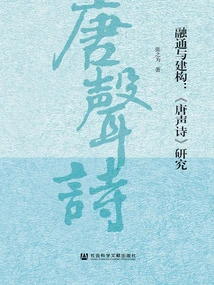
融通与建构:《唐声诗》研究
Zhang Zhiwei
Mr. Ren Bandang's "Tang Sound Poetry" is a masterpiece of interdisciplinary research on music literature. His original "sound poetics", with his extremely pioneering and cutting-edge nature, achieved a breakthrough in the research path and paradigm of Tang poetry, which still has exemplary significance today. This book takes "Tang Sound Poetry" as the research object, elucidates the theory of sound poetry, explores method resources, sorts out academic public cases, analyzes related issues, summarizes the achievements and value of "Tang Sound Poetry", and strives to present the process and achievements of the study of music and literature in the Tang Dynasty in the 20th century.
Mr. Ren Bandang's "Tang Sound Poetry" is a masterpiece of interdisciplinary research on music literature. His original "sound poetics", with his extremely pioneering and cutting-edge nature, achieved a breakthrough in the research path and paradigm of Tang poetry, which still has exemplary significance today. This book takes "Tang Sound Poetry" as the research object, elucidates the theory of sound poetry, explores method resources, sorts out academic public cases, analyzes related issues, summarizes the achievements and value of "Tang Sound Poetry", and strives to present the process and achievements of the study of music and literature in the Tang Dynasty in the 20th century.
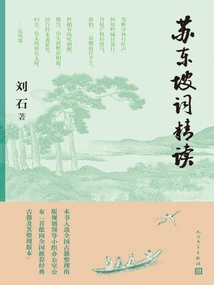
Intensive Reading of Su Dongpo's Ci
Literature苏东坡词精读
Liu Shi
Su Dongpo has always been one of the Chinese people's favorite literati, and his wonderful lyrics have always been recited by people. This book selects more than a hundred of Dongpo's poems, and provides detailed annotations and reviews, allowing readers to appreciate the pride, meditation, joy, tranquility, sadness, and sighs of this "student and heavenly man". The book's word selection is comprehensive and thoughtful, the annotations are clear and easy to understand, the literature is rich and solid, and the interpretation is exquisite and appropriate; the preface briefly and concisely introduces Su Shi's basic life and poetry creation, allowing readers to have a concise understanding of Su Shi's poetry. This book has been reprinted many times since it was published by our publisher under the name "Selected Poems of Su Shi". This reprint, after communicating with the author, the original book has been comprehensively revised, and a number of articles explaining and appreciating Su Dongpo and his works have been added. It is planned to be re-edited as a whole to form a special book with a deeper understanding of Su Dongpo's works to meet the reading needs of public readers.
Su Dongpo has always been one of the Chinese people's favorite literati, and his wonderful lyrics have always been recited by people. This book selects more than a hundred of Dongpo's poems, and provides detailed annotations and reviews, allowing readers to appreciate the pride, meditation, joy, tranquility, sadness, and sighs of this "student and heavenly man". The book's word selection is comprehensive and thoughtful, the annotations are clear and easy to understand, the literature is rich and solid, and the interpretation is exquisite and appropriate; the preface briefly and concisely introduces Su Shi's basic life and poetry creation, allowing readers to have a concise understanding of Su Shi's poetry. This book has been reprinted many times since it was published by our publisher under the name "Selected Poems of Su Shi". This reprint, after communicating with the author, the original book has been comprehensively revised, and a number of articles explaining and appreciating Su Dongpo and his works have been added. It is planned to be re-edited as a whole to form a special book with a deeper understanding of Su Dongpo's works to meet the reading needs of public readers.
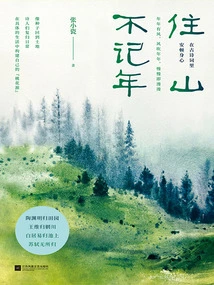
住山不记年
Zhang Xiaoci
Tao Yuanming returned to his hometown, Wang Wei returned to Wangchuan, Bai Juyi returned to Chishang, and Su Shi had nowhere to return. A new work by Zhang Xiaoci, a serious enthusiast of ancient poetry! Countless young people follow the poet to return to daily life and settle down physically and mentally. Be friends with sincere people and be responsible for a piece of land. Nearly 200 famous poems handed down from generation to generation, every sentence is classic! Lots of great giveaways.
Tao Yuanming returned to his hometown, Wang Wei returned to Wangchuan, Bai Juyi returned to Chishang, and Su Shi had nowhere to return. A new work by Zhang Xiaoci, a serious enthusiast of ancient poetry! Countless young people follow the poet to return to daily life and settle down physically and mentally. Be friends with sincere people and be responsible for a piece of land. Nearly 200 famous poems handed down from generation to generation, every sentence is classic! Lots of great giveaways.
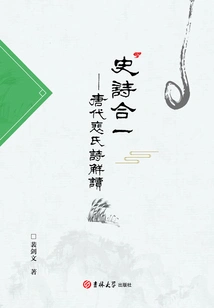
史诗合一:唐代裴氏诗解读
Pei Jianwen
This book is a work on the interpretation and annotation of Tang poetry. A biography of Pei Shouzhen, a poet of the Tang Dynasty, and his poetry interpretations and annotations; a biography of Pei Guangting and his poetry interpretations and annotations; a biography of Pei Di and his poetry interpretations and annotations; a biography of Pei Du and his poetry interpretations It consists of annotations, biographies of Pei Xiu and interpretations and annotations of the poems he created, and biographies of Pei Yizhi and interpretations and annotations of the poems he created. There are a total of 39 biographies of Pei poets in the Tang Dynasty and interpretations and annotations of 234 surviving poems. The whole book takes the poems handed down by the poet Pei of the Tang Dynasty as the research object, improves the life experience of the poet Pei of the Tang Dynasty, analyzes the historical background, theme and artistic style of Pei's poems of the Tang Dynasty, and expounds the characteristics of poetry creation such as response poems, frontier poems, and singing poems in the Tang Dynasty. It has learning and reference value for researchers and practitioners in Tang poetry, Tang literature, and medieval aristocratic literature.
This book is a work on the interpretation and annotation of Tang poetry. A biography of Pei Shouzhen, a poet of the Tang Dynasty, and his poetry interpretations and annotations; a biography of Pei Guangting and his poetry interpretations and annotations; a biography of Pei Di and his poetry interpretations and annotations; a biography of Pei Du and his poetry interpretations It consists of annotations, biographies of Pei Xiu and interpretations and annotations of the poems he created, and biographies of Pei Yizhi and interpretations and annotations of the poems he created. There are a total of 39 biographies of Pei poets in the Tang Dynasty and interpretations and annotations of 234 surviving poems. The whole book takes the poems handed down by the poet Pei of the Tang Dynasty as the research object, improves the life experience of the poet Pei of the Tang Dynasty, analyzes the historical background, theme and artistic style of Pei's poems of the Tang Dynasty, and expounds the characteristics of poetry creation such as response poems, frontier poems, and singing poems in the Tang Dynasty. It has learning and reference value for researchers and practitioners in Tang poetry, Tang literature, and medieval aristocratic literature.
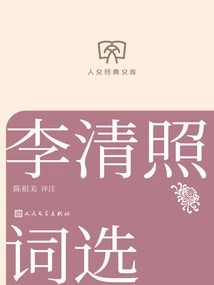
Selected Poems of Li Qingzhao
Literature李清照词选
Commentary By Chen Zumei
Li Qingzhao is a well-known female poet in the Song Dynasty. "There is no poem that is not perfect. Its refinement can win the seat of the window of dreams, and its beauty can directly join the class of jade. She looks down at the women and wants to overwhelm the men." The style of her works was beautiful in her early years and deep in her later years. She was well-known and circulated during her lifetime. His collection of poems, "Yi'an Ci", has been lost. The collection of poems compiled by later generations includes "Shuyu Ci", but the overall number is still small. This small book contains the essence of Li Qingzhao's lyrics throughout his life, and more comprehensively demonstrates the poet's artistic style and creative level. The commentators annotate the important words of each poem and then comment on it, making it easier to understand, which is very suitable for everyone to appreciate the literary charm of a generation of female poets.
Li Qingzhao is a well-known female poet in the Song Dynasty. "There is no poem that is not perfect. Its refinement can win the seat of the window of dreams, and its beauty can directly join the class of jade. She looks down at the women and wants to overwhelm the men." The style of her works was beautiful in her early years and deep in her later years. She was well-known and circulated during her lifetime. His collection of poems, "Yi'an Ci", has been lost. The collection of poems compiled by later generations includes "Shuyu Ci", but the overall number is still small. This small book contains the essence of Li Qingzhao's lyrics throughout his life, and more comprehensively demonstrates the poet's artistic style and creative level. The commentators annotate the important words of each poem and then comment on it, making it easier to understand, which is very suitable for everyone to appreciate the literary charm of a generation of female poets.
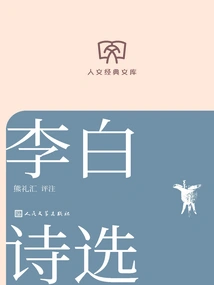
Selected Poems of Li Bai
Literature李白诗选
Commentary By Xiong Lihui
Li Bai is known as one of the two brightest stars in the history of Chinese poetry together with Du Fu. His poems are famous for their boldness and elegance. His poetic talent, his openness of thought, and his artistic spontaneity are all unparalleled in ancient and modern times. "Selected Poems of Li Bai" annotated by Professor Xiong Lihui of Wuhan University, selects more than 160 poems by Li Bai, with classic selections, detailed annotations, and easy-to-understand interpretations. It is an anthology that is very helpful for readers to enter the world of Li Bai's poetry.
Li Bai is known as one of the two brightest stars in the history of Chinese poetry together with Du Fu. His poems are famous for their boldness and elegance. His poetic talent, his openness of thought, and his artistic spontaneity are all unparalleled in ancient and modern times. "Selected Poems of Li Bai" annotated by Professor Xiong Lihui of Wuhan University, selects more than 160 poems by Li Bai, with classic selections, detailed annotations, and easy-to-understand interpretations. It is an anthology that is very helpful for readers to enter the world of Li Bai's poetry.
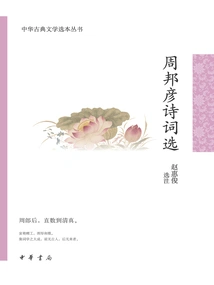
周邦彦诗词选(中华古典文学选本丛书)
Selected Notes By Zhao Huijun
Zhou Bangyan, also known as Meicheng, was born in Qiantang, Hangzhou (now Hangzhou, Zhejiang). Zhou Bangyan was a master of poetry in the Northern Song Dynasty and had great influence in the Song Dynasty. His works have long been respected as "authentic" among Wanyue poets. This book selects Zhou Bangyan's poems and has two appendixes, each with annotations and explanations. The annotations are detailed and appropriate, mainly explaining the meaning of words and explaining allusions; the explanatory notes are based on careful reading of the text, the writing is delicate and beautiful, and it is both readable and academically insightful.
Zhou Bangyan, also known as Meicheng, was born in Qiantang, Hangzhou (now Hangzhou, Zhejiang). Zhou Bangyan was a master of poetry in the Northern Song Dynasty and had great influence in the Song Dynasty. His works have long been respected as "authentic" among Wanyue poets. This book selects Zhou Bangyan's poems and has two appendixes, each with annotations and explanations. The annotations are detailed and appropriate, mainly explaining the meaning of words and explaining allusions; the explanatory notes are based on careful reading of the text, the writing is delicate and beautiful, and it is both readable and academically insightful.
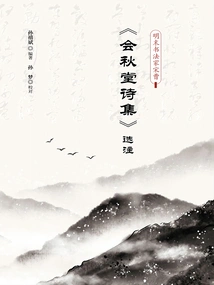
明末书法家宋曹《会秋堂诗集》选注
Compiled By Sun Xibin And Proofread By Sun Meng
As a watcher of Yanfu classical culture and a scholar of Yancheng Ming and Qing history, the author has been making active contributions to the excavation and promotion of Yancheng's ancient cultural heritage by writing celebrity biographies and annotations to celebrity poetry anthologies. Mr. Sun practiced "three nines in winter and three days in summer" and kept writing. After ten years of collecting and sorting, he finally completed the literary and historical monograph "Selected Annotations of "Collection of Poems of Hui Qiutang"".
As a watcher of Yanfu classical culture and a scholar of Yancheng Ming and Qing history, the author has been making active contributions to the excavation and promotion of Yancheng's ancient cultural heritage by writing celebrity biographies and annotations to celebrity poetry anthologies. Mr. Sun practiced "three nines in winter and three days in summer" and kept writing. After ten years of collecting and sorting, he finally completed the literary and historical monograph "Selected Annotations of "Collection of Poems of Hui Qiutang"".
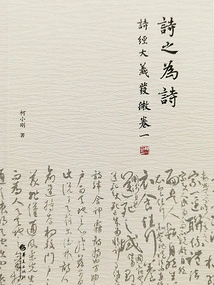
诗之为诗:《诗经》大义发微卷一
Ke Xiaogang
Modern disciplinary divisions often classify The Book of Songs as the research object of literature, philology and history. As a result, the significance of the Book of Songs as a classic book was forgotten, and the poetic tradition carried by the Book of Songs was also cut off. "Poetry as Poetry: The Book of Songs" Dayi Fa Wei Volume 1 is intended to start from the poetic theories of Qi, Lu, Han, and Mao as well as the interpretations of the "Book of Songs" by the Song and Ming dynasties, combined with the awareness of contemporary issues, to reactivate the poetic connotations of the classic interpretation of the "Book of Songs" and respond to the issues of the times. Through Dayi Fawei's classic interpretation work, the author hopes to bring the text of "The Book of Songs" back to the living ideological scene and establish a dialogue between ancient and modern times and a dialogue between China and the West. The format of this book is a chapter-by-chapter interpretation of the Book of Songs. The first volume is presented first, including three introductions and two southern parts. It will take three to four volumes to complete.
Modern disciplinary divisions often classify The Book of Songs as the research object of literature, philology and history. As a result, the significance of the Book of Songs as a classic book was forgotten, and the poetic tradition carried by the Book of Songs was also cut off. "Poetry as Poetry: The Book of Songs" Dayi Fa Wei Volume 1 is intended to start from the poetic theories of Qi, Lu, Han, and Mao as well as the interpretations of the "Book of Songs" by the Song and Ming dynasties, combined with the awareness of contemporary issues, to reactivate the poetic connotations of the classic interpretation of the "Book of Songs" and respond to the issues of the times. Through Dayi Fawei's classic interpretation work, the author hopes to bring the text of "The Book of Songs" back to the living ideological scene and establish a dialogue between ancient and modern times and a dialogue between China and the West. The format of this book is a chapter-by-chapter interpretation of the Book of Songs. The first volume is presented first, including three introductions and two southern parts. It will take three to four volumes to complete.
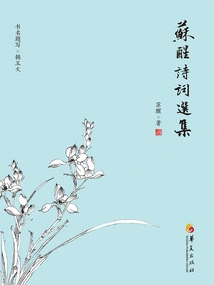
Anthology of Awakening Poems
Literature苏醒诗词选集
Wake
Su Shi was a man of great erudition, great spiritual insight, and a broad-minded attitude towards life. His poems were as expressive as he wanted them to be, springing up wherever he touched them, with many new ideas and wonderful ideas. He was the favorite poet of the Song Dynasty at all times and at home and abroad. This book selects Dongpo's poems, refines them and annotates them, takes into account the results of using the old annotations, selects the good ones, and refutes the errors of the old annotations. The annotations are lively, often combined with "talking about art", the words are concise and concise, and often have new insights, which are very inspiring to readers. The original book has had a great impact since its publication. This book is one of the "Chinese Classical Literature Reading Series Collection".
Su Shi was a man of great erudition, great spiritual insight, and a broad-minded attitude towards life. His poems were as expressive as he wanted them to be, springing up wherever he touched them, with many new ideas and wonderful ideas. He was the favorite poet of the Song Dynasty at all times and at home and abroad. This book selects Dongpo's poems, refines them and annotates them, takes into account the results of using the old annotations, selects the good ones, and refutes the errors of the old annotations. The annotations are lively, often combined with "talking about art", the words are concise and concise, and often have new insights, which are very inspiring to readers. The original book has had a great impact since its publication. This book is one of the "Chinese Classical Literature Reading Series Collection".
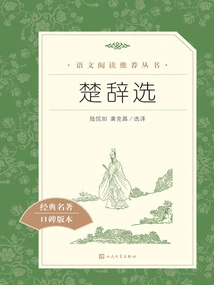
Chu Cixuan
Literature楚辞选
Selected Translations By Lu Kanru And Gong Kechang
"Chu Ci" is a collection of works by Chu poet Qu Yuan and his later scholars during the Warring States Period. When he became emperor of the Western Han Dynasty, Liu Xiang compiled ancient books and compiled their works into a book, named "Chu Ci". From then on, "Chu Ci" became the name of a collection. This is the first personal monograph collection of poems in the history of our country, and is listed as the two major sources of Chinese poetry along with the Book of Songs. Qu Yuan has the largest number of works in "Chu Ci", and the most representative works are Qu Yuan's "Li Sao", "Nine Songs", "Heavenly Questions", etc. Song Yu's "Nine Debates" is also a work that has a great influence on later generations. "Selected Songs of Chu" selects the representative works of Qu Yuan and Song Yu. The annotations are concise and the translation is clear, making it suitable for general readers.
"Chu Ci" is a collection of works by Chu poet Qu Yuan and his later scholars during the Warring States Period. When he became emperor of the Western Han Dynasty, Liu Xiang compiled ancient books and compiled their works into a book, named "Chu Ci". From then on, "Chu Ci" became the name of a collection. This is the first personal monograph collection of poems in the history of our country, and is listed as the two major sources of Chinese poetry along with the Book of Songs. Qu Yuan has the largest number of works in "Chu Ci", and the most representative works are Qu Yuan's "Li Sao", "Nine Songs", "Heavenly Questions", etc. Song Yu's "Nine Debates" is also a work that has a great influence on later generations. "Selected Songs of Chu" selects the representative works of Qu Yuan and Song Yu. The annotations are concise and the translation is clear, making it suitable for general readers.
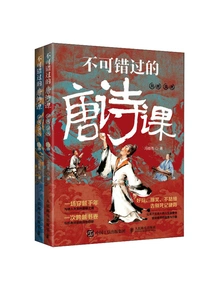
不可错过的唐诗课(全2册)
Feng Wenxiu
"The Tang Poetry Lesson Not to Be Missed" is a set of Tang poetry enlightenment books specially created for children and teenagers. This book takes the life stories of 25 Tang Dynasty poets as the main line and connects their representative poems, allowing readers to naturally understand the artistic conception and emotions of the poems while understanding the ups and downs of their lives. The author uses relaxed and humorous modern language to narrate the stories of "poetry immortals" and "poetry sages", making Tang poetry no longer difficult to understand, but becoming a cultural treasure within reach of children. Through this book, young readers can not only easily learn to memorize Tang poetry, but also feel the warmth and power of Tang poetry from the poet's life experiences, and cultivate a lasting interest in traditional culture.
"The Tang Poetry Lesson Not to Be Missed" is a set of Tang poetry enlightenment books specially created for children and teenagers. This book takes the life stories of 25 Tang Dynasty poets as the main line and connects their representative poems, allowing readers to naturally understand the artistic conception and emotions of the poems while understanding the ups and downs of their lives. The author uses relaxed and humorous modern language to narrate the stories of "poetry immortals" and "poetry sages", making Tang poetry no longer difficult to understand, but becoming a cultural treasure within reach of children. Through this book, young readers can not only easily learn to memorize Tang poetry, but also feel the warmth and power of Tang poetry from the poet's life experiences, and cultivate a lasting interest in traditional culture.
Selected Poems of Sancao
Literature三曹诗精选
Big Salted Fish Proofread
"Three Caos" refers to Cao Cao, his sons Cao Pi and Cao Zhi during the Three Kingdoms period in Chinese history. Due to their political status and remarkable achievements in literature, they had great influence on the literary world at that time, so they were collectively called the "Three Cao" by later generations; the three of them were also collectively known as the "Three Cao of Jian'an" or the "Three Cao and the Seven Sons of Jian'an" together with the "Seven Sons of Jian'an" at the same time. This book is a collection of three famous poems by Cao Cao.
"Three Caos" refers to Cao Cao, his sons Cao Pi and Cao Zhi during the Three Kingdoms period in Chinese history. Due to their political status and remarkable achievements in literature, they had great influence on the literary world at that time, so they were collectively called the "Three Cao" by later generations; the three of them were also collectively known as the "Three Cao of Jian'an" or the "Three Cao and the Seven Sons of Jian'an" together with the "Seven Sons of Jian'an" at the same time. This book is a collection of three famous poems by Cao Cao.
南照北信:鲍照、庾信诗精选
Big Salted Fish Proofread
Bao Zhao was a famous writer and poet in the Southern Song Dynasty. His poems had neat counterpoints and gorgeous diction, and were as refined as picturesque mountains and rivers. Later generations called him "Southern Zhao and Northern Letter" together with Northern Zhou poet Yu Xin. This book is a collection of the best works of Bao and Yu.
Bao Zhao was a famous writer and poet in the Southern Song Dynasty. His poems had neat counterpoints and gorgeous diction, and were as refined as picturesque mountains and rivers. Later generations called him "Southern Zhao and Northern Letter" together with Northern Zhou poet Yu Xin. This book is a collection of the best works of Bao and Yu.
元嘉三大家:鲍照、谢灵运、颜延之诗精选
Big Salted Fish School Notes
The Three Great Masters of Yuanjia are the collective names of the three poets Xie Lingyun, Yan Yanzhi and Bao Zhao who were active in the literary world during the Yuanjia period of Emperor Wen of the Southern Song Dynasty. The three people have different literary styles. They respectively created the landscape poetry school, the temple poetry style and the seven-character song style, and jointly promoted the development of poetry art in the Southern Dynasties. Xie Lingyun was born into a prominent Xie family in the Eastern Jin Dynasty. His landscape poems broke the tradition of metaphysical poetry and focused on the description of natural scenery. Yan Yanzhi was an official until Jin Ziguanglu, and his poetry was famous for its dense use of allusions. He was as famous as Xie Lingyun and was known as "Yan Xie". Bao Zhao came from a poor family. He served as King of Linhai and joined the army. He was good at composing Yuefu poems and innovating the rhyme structure of seven-character poems. He was later killed due to involvement in a rebellion. He was a famous writer and poet with high achievements. This book is a collection of poems by three people.
The Three Great Masters of Yuanjia are the collective names of the three poets Xie Lingyun, Yan Yanzhi and Bao Zhao who were active in the literary world during the Yuanjia period of Emperor Wen of the Southern Song Dynasty. The three people have different literary styles. They respectively created the landscape poetry school, the temple poetry style and the seven-character song style, and jointly promoted the development of poetry art in the Southern Dynasties. Xie Lingyun was born into a prominent Xie family in the Eastern Jin Dynasty. His landscape poems broke the tradition of metaphysical poetry and focused on the description of natural scenery. Yan Yanzhi was an official until Jin Ziguanglu, and his poetry was famous for its dense use of allusions. He was as famous as Xie Lingyun and was known as "Yan Xie". Bao Zhao came from a poor family. He served as King of Linhai and joined the army. He was good at composing Yuefu poems and innovating the rhyme structure of seven-character poems. He was later killed due to involvement in a rebellion. He was a famous writer and poet with high achievements. This book is a collection of poems by three people.
百花词韵:山野(“百花词韵”系列丛书)
Shao Zehua
This book selects thirty-six ancient poems about flowers and pastoral poetry, and integrates culture, customs, folk customs, etc. Into the poems for appreciation. It is accompanied by a large number of exquisite pictures to show the style and charm of flowers written by literati and poets, express the unique beauty of flowers, and popularize basic knowledge about flowers, allowing readers to understand the knowledge about flowers and the charm of Chinese flower culture.
This book selects thirty-six ancient poems about flowers and pastoral poetry, and integrates culture, customs, folk customs, etc. Into the poems for appreciation. It is accompanied by a large number of exquisite pictures to show the style and charm of flowers written by literati and poets, express the unique beauty of flowers, and popularize basic knowledge about flowers, allowing readers to understand the knowledge about flowers and the charm of Chinese flower culture.
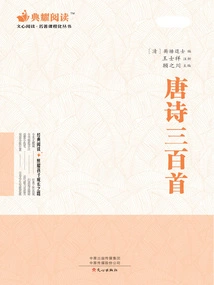
典耀阅读:唐诗三百首
(qing Dynasty) Compiled By Hengtang Retired Scholars And Annotated By Wang Shixiang
"Three Hundred Tang Poems" is the most widely circulated anthology of Tang poems in the past two hundred years. Many people have taken it as an enlightenment reading since childhood. Its influence is far greater than other anthologies of Tang poetry. This anthology has such popularity because it can more accurately and generally reflect the overall development of poetry in the Tang Dynasty. This collection of poems is divided into eight volumes according to the genre of poetry, and each volume contains different numbers of poems. And many poets wrote not only ancient poems, but also Yuefu, rhyme or quatrains. We can focus on the poet and read the works of a certain poet to see what he wrote and how he wrote it. Each poem is carefully annotated and accompanied by a concise commentary. In the "Author Introduction" section, a short biography is also written for each poet, briefly introducing the author's life and creative style. Use the words in "Author Introduction", "Comments" and "Analysis" to understand the meaning of each line of the poem, and then grasp the ideological content of the entire poem, and closely combine it with the test points of the high school entrance examination.
"Three Hundred Tang Poems" is the most widely circulated anthology of Tang poems in the past two hundred years. Many people have taken it as an enlightenment reading since childhood. Its influence is far greater than other anthologies of Tang poetry. This anthology has such popularity because it can more accurately and generally reflect the overall development of poetry in the Tang Dynasty. This collection of poems is divided into eight volumes according to the genre of poetry, and each volume contains different numbers of poems. And many poets wrote not only ancient poems, but also Yuefu, rhyme or quatrains. We can focus on the poet and read the works of a certain poet to see what he wrote and how he wrote it. Each poem is carefully annotated and accompanied by a concise commentary. In the "Author Introduction" section, a short biography is also written for each poet, briefly introducing the author's life and creative style. Use the words in "Author Introduction", "Comments" and "Analysis" to understand the meaning of each line of the poem, and then grasp the ideological content of the entire poem, and closely combine it with the test points of the high school entrance examination.
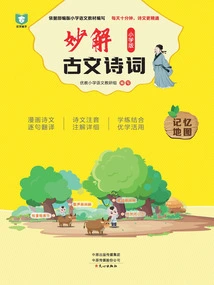
妙解古文诗词(小学版)
Prepared By The Chinese Teaching And Research Team Of Youjiao Primary School
This book is a classical poetry reading book targeting children aged 6 to 12 years old. It has columns such as author introduction, creative background, original phonetic text, word appreciation, animation class, memory map, etc. It also adds music reading and recitation assessment systems, which can automatically generate learning reports to help parents promptly grasp their children's understanding and mastery of the content, determine whether their children have achieved their learning goals, and achieve intelligent online and offline interactions. The book is highly practical and its format is designed with full consideration of the learning characteristics of children. Among them, interesting animations help understanding, memory maps help memorization, reading audios help recitation, full-color and full explanations help aesthetic education, and memorization assessments help improve abilities. It fully reflects that technology empowers education and improves learning effects.
This book is a classical poetry reading book targeting children aged 6 to 12 years old. It has columns such as author introduction, creative background, original phonetic text, word appreciation, animation class, memory map, etc. It also adds music reading and recitation assessment systems, which can automatically generate learning reports to help parents promptly grasp their children's understanding and mastery of the content, determine whether their children have achieved their learning goals, and achieve intelligent online and offline interactions. The book is highly practical and its format is designed with full consideration of the learning characteristics of children. Among them, interesting animations help understanding, memory maps help memorization, reading audios help recitation, full-color and full explanations help aesthetic education, and memorization assessments help improve abilities. It fully reflects that technology empowers education and improves learning effects.
Han Yuefu Songs
Literature汉乐府歌辞
Big Salted Fish Proofread
Han Yuefu hymns are poems collected by the Yuefu official office established by the rulers of the Han Dynasty, and their contents reflect the social life at that time. In addition to recording production and life, they also exposed the cruelty of the ruling class and the cruelty of war, and praised true love and friendship. These poems have simple language, catchy words, rich emotions, and strong narrative. They are an important part of the history of ancient Chinese poetry.
Han Yuefu hymns are poems collected by the Yuefu official office established by the rulers of the Han Dynasty, and their contents reflect the social life at that time. In addition to recording production and life, they also exposed the cruelty of the ruling class and the cruelty of war, and praised true love and friendship. These poems have simple language, catchy words, rich emotions, and strong narrative. They are an important part of the history of ancient Chinese poetry.
Selected Poems by Xie Lingyun
Literature谢灵运诗精选
Big Salted Fish School Notes
Xie Lingyun was a famous poet in the Southern and Northern Dynasties. His literary achievement lies in landscape poetry. Beginning with Xie Lingyun, "landscape poetry" has become a major genre of Chinese literature. This book is a collection of selected works.
Xie Lingyun was a famous poet in the Southern and Northern Dynasties. His literary achievement lies in landscape poetry. Beginning with Xie Lingyun, "landscape poetry" has become a major genre of Chinese literature. This book is a collection of selected works.
Selected Poems of Tao Yuanming
Literature陶渊明诗精选
Big Salted Fish School Notes
Tao Yuanming's poems are simple in style, elegant in language, and do not pursue gorgeous rhetoric. As Zhu Xi commented, "Everyone says that Tao Yuanming's poems are mediocre." There are 125 Tao poems in existence today, among which the five-character poems are the most outstanding. This book is a collection of selected works.
Tao Yuanming's poems are simple in style, elegant in language, and do not pursue gorgeous rhetoric. As Zhu Xi commented, "Everyone says that Tao Yuanming's poems are mediocre." There are 125 Tao poems in existence today, among which the five-character poems are the most outstanding. This book is a collection of selected works.
绝美千年的古诗文
Compiled By He Pengchun
When vernacular meets ancient poetry, you enter the world of beautiful and romantic poetry. Ancient poetry is the essence and precious treasure of traditional Chinese culture. Starting from the "Ode to Fengya" in "The Book of Songs", we have experienced the character of Han and Wei Dynasties, the atmosphere of Tang poetry, the charming lyrics of Song Dynasty, the romantic poetry of Yuan Dynasty, as well as the theory of poetry of Ming Dynasty and the emotion of Qing poetry... These ancient poems not only contain the warmth of human nature, but also carry the beauty of the Orient for thousands of years in words.
When vernacular meets ancient poetry, you enter the world of beautiful and romantic poetry. Ancient poetry is the essence and precious treasure of traditional Chinese culture. Starting from the "Ode to Fengya" in "The Book of Songs", we have experienced the character of Han and Wei Dynasties, the atmosphere of Tang poetry, the charming lyrics of Song Dynasty, the romantic poetry of Yuan Dynasty, as well as the theory of poetry of Ming Dynasty and the emotion of Qing poetry... These ancient poems not only contain the warmth of human nature, but also carry the beauty of the Orient for thousands of years in words.
5 Minutes of Hilarious Poetry: Xin Qiji
Literature5分钟爆笑诗词:辛弃疾篇
Prisoners Of History
Prisoners of History dismantles Xin Qiji's poems with full-on cute comics and hilarious historical stories! It's easy to understand and makes the poems in the textbook "come alive"! This book provides a complete picture of Xin Qiji's life and understands his patriotic emotions and graceful heart. As a doctor of history, the author is good at telling historical stories in a vivid way, and his words are lively and humorous. This book restores a lively and interesting Xin Qiji, allowing his poems to be reproduced in a modern context, breaking the reading barrier of ancient Chinese and making it easier to understand and recite. ... Why must we read Xin Qiji? In the Chinese literary world, there are several people who have their own halo and idol qualities. One is Li Bai from Sichuan, one is Su Shi from Sichuan, and the other is Xin Qiji from Shandong. Xin Qiji is a person worthy of our admiration. His most important background in life is passion and patriotism. His works are full of concerns about the rise and fall of the country, the destiny of the nation, and the pursuit of personal ideals and ambitions. His style of writing is bold and passionate. Its joyful grudges keep us ignited and guided in our ordinary life. Xin Qiji's poems are a true portrayal of his life's emotions and ideals, sometimes bold and passionate, sometimes affectionate. This book uses vivid historical stories, lively and humorous writing, and a combination of comics and text to tell the life of Xin Qiji, who had a true understanding of true feelings and was not afraid of taking the wrong path, and interprets Xin Qiji's important poetic creations in the context of the story.
Prisoners of History dismantles Xin Qiji's poems with full-on cute comics and hilarious historical stories! It's easy to understand and makes the poems in the textbook "come alive"! This book provides a complete picture of Xin Qiji's life and understands his patriotic emotions and graceful heart. As a doctor of history, the author is good at telling historical stories in a vivid way, and his words are lively and humorous. This book restores a lively and interesting Xin Qiji, allowing his poems to be reproduced in a modern context, breaking the reading barrier of ancient Chinese and making it easier to understand and recite. ... Why must we read Xin Qiji? In the Chinese literary world, there are several people who have their own halo and idol qualities. One is Li Bai from Sichuan, one is Su Shi from Sichuan, and the other is Xin Qiji from Shandong. Xin Qiji is a person worthy of our admiration. His most important background in life is passion and patriotism. His works are full of concerns about the rise and fall of the country, the destiny of the nation, and the pursuit of personal ideals and ambitions. His style of writing is bold and passionate. Its joyful grudges keep us ignited and guided in our ordinary life. Xin Qiji's poems are a true portrayal of his life's emotions and ideals, sometimes bold and passionate, sometimes affectionate. This book uses vivid historical stories, lively and humorous writing, and a combination of comics and text to tell the life of Xin Qiji, who had a true understanding of true feelings and was not afraid of taking the wrong path, and interprets Xin Qiji's important poetic creations in the context of the story.
百花词韵:阆苑(“百花词韵”系列丛书)
Shao Zehua
This book selects thirty-six ancient poems about flowers, and integrates culture, customs, folk customs, etc. Into the poetry appreciation, showing the style and charm of flowers written by literati and poets, expressing the unique beauty of flowers, and popularizing basic knowledge about flowers, allowing readers to understand the knowledge about flowers and the charm of Chinese flower culture.
This book selects thirty-six ancient poems about flowers, and integrates culture, customs, folk customs, etc. Into the poetry appreciation, showing the style and charm of flowers written by literati and poets, expressing the unique beauty of flowers, and popularizing basic knowledge about flowers, allowing readers to understand the knowledge about flowers and the charm of Chinese flower culture.
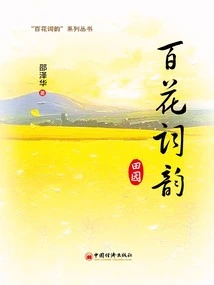
百花词韵:田园(“百花词韵”系列丛书)
Shao Zehua
This book selects thirty-six ancient poems about flowers and pastoral poetry, and integrates culture, customs, folk customs, etc. Into the poems for appreciation. It is accompanied by a large number of exquisite pictures to show the style and charm of flowers written by literati and poets, express the unique beauty of flowers, and popularize basic knowledge about flowers, allowing readers to understand the knowledge about flowers and the charm of Chinese flower culture.
This book selects thirty-six ancient poems about flowers and pastoral poetry, and integrates culture, customs, folk customs, etc. Into the poems for appreciation. It is accompanied by a large number of exquisite pictures to show the style and charm of flowers written by literati and poets, express the unique beauty of flowers, and popularize basic knowledge about flowers, allowing readers to understand the knowledge about flowers and the charm of Chinese flower culture.
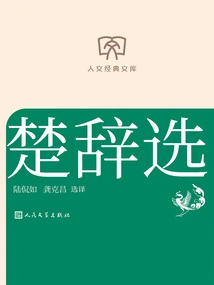
楚辞选(人文经典文库)
Selected Translations By Lu Kanru And Gong Kechang
"Chu Ci" is a collection of works by Chu poet Qu Yuan and his disciples such as Song Yu, Jing Chai, Jia Yi and others during the Warring States Period. When he became emperor in the Western Han Dynasty, Liu Xiang compiled ancient books and compiled their works into a book called "Chu Ci". From then on, "Chu Ci" became the name of a collection. This is the first personal monograph collection of poems in the history of our country, and is listed as the two major sources of Chinese poetry along with the Book of Songs. Qu Yuan has the largest number of works in "Chu Ci", and the most representative works are Qu Yuan's "Li Sao", "Nine Songs", "Heavenly Questions", etc. Song Yu's "Nine Debates" is also a work that has a great influence on later generations. "Selected Songs of Chu" selects the representative works of Qu Yuan and Song Yu. The annotations are concise and the translation is clear, making it suitable for general readers.
"Chu Ci" is a collection of works by Chu poet Qu Yuan and his disciples such as Song Yu, Jing Chai, Jia Yi and others during the Warring States Period. When he became emperor in the Western Han Dynasty, Liu Xiang compiled ancient books and compiled their works into a book called "Chu Ci". From then on, "Chu Ci" became the name of a collection. This is the first personal monograph collection of poems in the history of our country, and is listed as the two major sources of Chinese poetry along with the Book of Songs. Qu Yuan has the largest number of works in "Chu Ci", and the most representative works are Qu Yuan's "Li Sao", "Nine Songs", "Heavenly Questions", etc. Song Yu's "Nine Debates" is also a work that has a great influence on later generations. "Selected Songs of Chu" selects the representative works of Qu Yuan and Song Yu. The annotations are concise and the translation is clear, making it suitable for general readers.
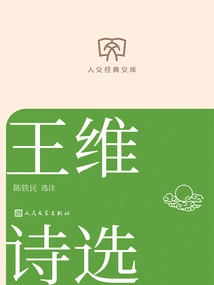
王维诗选(人文经典文库)
Notes Selected By Chen Tiemin
Wang Wei, also known as Mojie, was a poet and painter of the Tang Dynasty. Wang Wei not only studied Zen and learned Taoism, he was also proficient in poetry, calligraphy, painting, music, etc. The name of the poem flourished in the Kaiyuan and Tianbao years, especially in five words. Most of his poems praise landscapes and pastoral areas. Together with Meng Haoran, he is known as "Wang Meng" and is known as the "Poetry Buddha". His calligraphy and painting were so exquisite that later generations regarded him as the "ancestor of Nanzong landscape painting". Wang Wei is a representative of pastoral landscape poetry in the prosperous Tang Dynasty. His poems are "elegant in words, new and comfortable in meaning, pearls in the spring, and painted on the wall. Every word and every sentence is out of the ordinary." He has been praised by all generations and has had a profound influence on future generations. This book is condensed on the basis of the "Collection and Annotations of Wang Wei" by researcher Chen Tiemin, an expert on Wang Wei. The annotations are detailed and clear, making it a good popular reading book.
Wang Wei, also known as Mojie, was a poet and painter of the Tang Dynasty. Wang Wei not only studied Zen and learned Taoism, he was also proficient in poetry, calligraphy, painting, music, etc. The name of the poem flourished in the Kaiyuan and Tianbao years, especially in five words. Most of his poems praise landscapes and pastoral areas. Together with Meng Haoran, he is known as "Wang Meng" and is known as the "Poetry Buddha". His calligraphy and painting were so exquisite that later generations regarded him as the "ancestor of Nanzong landscape painting". Wang Wei is a representative of pastoral landscape poetry in the prosperous Tang Dynasty. His poems are "elegant in words, new and comfortable in meaning, pearls in the spring, and painted on the wall. Every word and every sentence is out of the ordinary." He has been praised by all generations and has had a profound influence on future generations. This book is condensed on the basis of the "Collection and Annotations of Wang Wei" by researcher Chen Tiemin, an expert on Wang Wei. The annotations are detailed and clear, making it a good popular reading book.
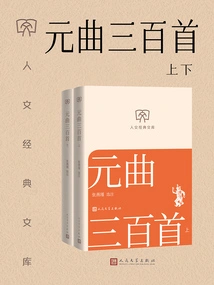
元曲三百首全二册(人文经典文库)
Selected Notes By Zhang Yanjin
Wang Guowei once said that every generation has its own literature, such as the poetry of Chu, the poetry of Han, the parallelism of the Six Dynasties, the poetry of Tang, the lyrics of Song, and the music of Yuan. As a representative of the literature of the Yuan Dynasty, Yuan Opera includes two parts: Zaju and Sanqu. The subject matter of Sanqu in the Yuan Dynasty is diverse and broad, with a mixture of elegance and vulgarity, beauty and ugliness, and the works that focus on retreat from the world and secular tastes best reflect the characteristics of its content; the language is popular and simple, close to spoken language, and it is the most natural literature with natural qualities. This book selects 318 Sanqu from the Yuan Dynasty, including both suites and small songs, with diverse themes and styles. The annotations are clear, rigorous and accurate. By reading this compilation, one can get a glimpse of the whole Sanqu of the Yuan Dynasty and appreciate the style of "quweier".
Wang Guowei once said that every generation has its own literature, such as the poetry of Chu, the poetry of Han, the parallelism of the Six Dynasties, the poetry of Tang, the lyrics of Song, and the music of Yuan. As a representative of the literature of the Yuan Dynasty, Yuan Opera includes two parts: Zaju and Sanqu. The subject matter of Sanqu in the Yuan Dynasty is diverse and broad, with a mixture of elegance and vulgarity, beauty and ugliness, and the works that focus on retreat from the world and secular tastes best reflect the characteristics of its content; the language is popular and simple, close to spoken language, and it is the most natural literature with natural qualities. This book selects 318 Sanqu from the Yuan Dynasty, including both suites and small songs, with diverse themes and styles. The annotations are clear, rigorous and accurate. By reading this compilation, one can get a glimpse of the whole Sanqu of the Yuan Dynasty and appreciate the style of "quweier".
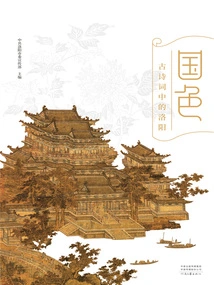
National Color: Luoyang in Ancient Poems
Literature国色:古诗词中的洛阳
Chief Editor Of Luoyang Propaganda Department Of The Communist Party Of China
This book picks out the best poems about Luoyang in the past dynasties, and extracts 106 excellent works by 79 poets, from Zhou to Yuan and Ming Dynasties, highlighting the themes of nature and humanities. The poetry stars are brilliant and have been popular throughout the ages. Because of his poetic mind and insight, he can understand the subtle details of the text and gain deep samadhi.
This book picks out the best poems about Luoyang in the past dynasties, and extracts 106 excellent works by 79 poets, from Zhou to Yuan and Ming Dynasties, highlighting the themes of nature and humanities. The poetry stars are brilliant and have been popular throughout the ages. Because of his poetic mind and insight, he can understand the subtle details of the text and gain deep samadhi.
Liang Shi
Literature梁诗
H
The poetry of the Liang Dynasty is beautiful and diverse. The prosperity of the palace style poetry, the new changes in frontier fortresses and landscapes, the criticism of ethical priorities, and the beauty of form all constitute the specific historical status of the poetry of the Liang Dynasty. Usually, Qi and Liang poems are reviewed together. Shen Deqian integrated the style, rhythm, and poetry into a unified system by selecting and commenting on Qi and Liang poems: affirming the innovation of rhythm and criticizing Qi Mi's style of writing; he praised Xie Tiao and He Xun's "Qing Qi" and denounced Xiao Gang and Xu Ling's "obscene beauty", thus constructing a "retrospective Ming Dao" poetic path. Qi and Liang poems were also preserved in the long history due to Shen Deqian's selection, and there are no more scattered anecdotes. It has been passed down to this day and has become a precious historical material.
The poetry of the Liang Dynasty is beautiful and diverse. The prosperity of the palace style poetry, the new changes in frontier fortresses and landscapes, the criticism of ethical priorities, and the beauty of form all constitute the specific historical status of the poetry of the Liang Dynasty. Usually, Qi and Liang poems are reviewed together. Shen Deqian integrated the style, rhythm, and poetry into a unified system by selecting and commenting on Qi and Liang poems: affirming the innovation of rhythm and criticizing Qi Mi's style of writing; he praised Xie Tiao and He Xun's "Qing Qi" and denounced Xiao Gang and Xu Ling's "obscene beauty", thus constructing a "retrospective Ming Dao" poetic path. Qi and Liang poems were also preserved in the long history due to Shen Deqian's selection, and there are no more scattered anecdotes. It has been passed down to this day and has become a precious historical material.
Nalan Rongruo's Exquisite Poems
Literature纳兰容若词精萃
(qing Dynasty) Written By Nalan Rongruo And Edited By Da Xianyu
"The Essence of Nalan Rongruo's Ci" contains several classic poems by Nalan Rongruo, a famous poet in the Qing Dynasty. Among them are "Golden Thread Song: Thoughts on the Anniversary of the Wife's Death", "Qinyuan Chun: Mourning for the Death", "Breaking Through the Sands of Huanxi" and "Green Shirt Wet All over - Mourning for the Death" written by him in memory of his late wife Lu. These poems are sincere and sincere, and are known as models of mourning poems. In addition, this collection also collects excellent works such as "Long Love", which reflects the poet's homesickness while traveling, "Huanxisha·Outing Couplet" and "Huanxisha·Send a Friend to Yansun", which are sung with friends, as well as "Jiangchengzi·Ode to History" and "Taicheng Road·Washing Table Nostalgic for the Past". Through these poems of different styles, readers can appreciate the depth and elegance, elegance and desolation, glitz and loneliness of Nalan Rongruo's words, and feel the various aspects of life and emotional ups and downs in his writings, as well as his unique temperament and charm as an aristocratic poet. The waves wash away the sand for hundreds of years, and everything will eventually become immortal.
"The Essence of Nalan Rongruo's Ci" contains several classic poems by Nalan Rongruo, a famous poet in the Qing Dynasty. Among them are "Golden Thread Song: Thoughts on the Anniversary of the Wife's Death", "Qinyuan Chun: Mourning for the Death", "Breaking Through the Sands of Huanxi" and "Green Shirt Wet All over - Mourning for the Death" written by him in memory of his late wife Lu. These poems are sincere and sincere, and are known as models of mourning poems. In addition, this collection also collects excellent works such as "Long Love", which reflects the poet's homesickness while traveling, "Huanxisha·Outing Couplet" and "Huanxisha·Send a Friend to Yansun", which are sung with friends, as well as "Jiangchengzi·Ode to History" and "Taicheng Road·Washing Table Nostalgic for the Past". Through these poems of different styles, readers can appreciate the depth and elegance, elegance and desolation, glitz and loneliness of Nalan Rongruo's words, and feel the various aspects of life and emotional ups and downs in his writings, as well as his unique temperament and charm as an aristocratic poet. The waves wash away the sand for hundreds of years, and everything will eventually become immortal.
Qi Shi
Literature齐诗
I
Qi Poems mainly includes poems from the Qi Dynasty in the Southern Dynasties. For Qi poetry, Shen Deqian's criterion for selecting poems is still to implement his "style theory". He believes that compared with the previous dynasties, the style of Qi Dynasty poetry gradually tends to be "Qiyi" (gorgeous and complex) and "Qingyan" (frivolous and showy). Despite this, he still believes that these poems are one of the sources of Tang poetry and an indispensable part of understanding the development of poetry. In the Qi poetry selection, the most prominent and famous poet, who was considered by Shen Deqian to be "unique in his generation", was Xie Tiao. His poetry style was fresh and beautiful, and he was especially good at describing landscapes, which had a profound influence on the development of landscape poetry in later generations. When reading this article, you can focus on Xie Gong's poems.
Qi Poems mainly includes poems from the Qi Dynasty in the Southern Dynasties. For Qi poetry, Shen Deqian's criterion for selecting poems is still to implement his "style theory". He believes that compared with the previous dynasties, the style of Qi Dynasty poetry gradually tends to be "Qiyi" (gorgeous and complex) and "Qingyan" (frivolous and showy). Despite this, he still believes that these poems are one of the sources of Tang poetry and an indispensable part of understanding the development of poetry. In the Qi poetry selection, the most prominent and famous poet, who was considered by Shen Deqian to be "unique in his generation", was Xie Tiao. His poetry style was fresh and beautiful, and he was especially good at describing landscapes, which had a profound influence on the development of landscape poetry in later generations. When reading this article, you can focus on Xie Gong's poems.
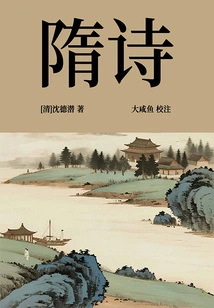
Sui Poetry
Literature隋诗
I
The Sui Dynasty, which began in 581 AD and ended in 618 AD, was an important transitional period in Chinese history that succeeded the Southern and Northern Dynasties and ushered in the Tang Dynasty. In the history of poetry, the poetry of the Sui Dynasty is also a link between the past and the future. It not only carries the legacy of the poetry of the late Southern and Northern Dynasties, but also heralds the rise of Tang poetry. Shen Deqian's original intention in compiling "Origins of Ancient Poetry" was precisely to trace back to the "source" of Tang poetry - he believed that Tang poetry did not come out of thin air, but had its own long development path. Therefore, Sui poetry, as the eve of Tang poetry, occupies a key position in the original version of "The Source of Ancient Poetry". Xue Daoheng, Yang Guang, Wang Zhou and Yu Shiji are important representatives in Sui poetry.
The Sui Dynasty, which began in 581 AD and ended in 618 AD, was an important transitional period in Chinese history that succeeded the Southern and Northern Dynasties and ushered in the Tang Dynasty. In the history of poetry, the poetry of the Sui Dynasty is also a link between the past and the future. It not only carries the legacy of the poetry of the late Southern and Northern Dynasties, but also heralds the rise of Tang poetry. Shen Deqian's original intention in compiling "Origins of Ancient Poetry" was precisely to trace back to the "source" of Tang poetry - he believed that Tang poetry did not come out of thin air, but had its own long development path. Therefore, Sui poetry, as the eve of Tang poetry, occupies a key position in the original version of "The Source of Ancient Poetry". Xue Daoheng, Yang Guang, Wang Zhou and Yu Shiji are important representatives in Sui poetry.
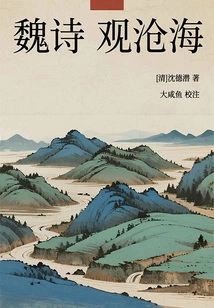
Wei Shi·guan Canghai
Literature魏诗·观沧海
I
Shen Deqian's selection and evaluation of the "Wei Poems" constructs a framework of Cao Wei poetry that is "based on style and teaching of poetry." He affirmed the artistic value of Wei poetry's "quality but not slang, straightness but not wildness" and incorporated it into the Confucian ethical framework. These standards deeply influenced the development of poetics in the Qing Dynasty. From a contemporary perspective, Wei poetry is not only the source of Tang poetry, but also an important source of "realism" and "humanistic spirit" in Chinese poetry. Its value goes beyond Shen Deqian's own comments and is an important hub for understanding the tradition of Chinese poetry. In a word, Wei poetry has completed the transformation of five-character poetry from narrative to lyrical poetry, and has an important status.
Shen Deqian's selection and evaluation of the "Wei Poems" constructs a framework of Cao Wei poetry that is "based on style and teaching of poetry." He affirmed the artistic value of Wei poetry's "quality but not slang, straightness but not wildness" and incorporated it into the Confucian ethical framework. These standards deeply influenced the development of poetics in the Qing Dynasty. From a contemporary perspective, Wei poetry is not only the source of Tang poetry, but also an important source of "realism" and "humanistic spirit" in Chinese poetry. Its value goes beyond Shen Deqian's own comments and is an important hub for understanding the tradition of Chinese poetry. In a word, Wei poetry has completed the transformation of five-character poetry from narrative to lyrical poetry, and has an important status.
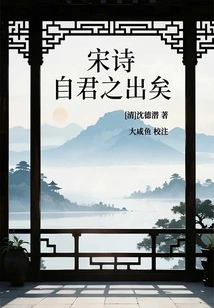
宋诗·自君之出矣
I
Shen Deqian built a poetry pedigree with "character as the foundation and poetry as the teaching" by selecting and commenting on the poetry of the Southern Dynasty and Song Dynasty. From a contemporary perspective, Song poetry is not only the source of Tang poetry, but also an important source of natural aesthetics and social criticism of Chinese poetry, and its aesthetic influence is far-reaching. "Tang poems are implicit, while Song poems are explicit; implicit means the rhyme is beyond the meaning, and revealing means the meaning is in the words." Shen believes that compared with later Tang poetry, Song poetry is more straightforward in emotional expression and emphasizes "the meaning is in the words." The appreciation is beyond words.
Shen Deqian built a poetry pedigree with "character as the foundation and poetry as the teaching" by selecting and commenting on the poetry of the Southern Dynasty and Song Dynasty. From a contemporary perspective, Song poetry is not only the source of Tang poetry, but also an important source of natural aesthetics and social criticism of Chinese poetry, and its aesthetic influence is far-reaching. "Tang poems are implicit, while Song poems are explicit; implicit means the rhyme is beyond the meaning, and revealing means the meaning is in the words." Shen believes that compared with later Tang poetry, Song poetry is more straightforward in emotional expression and emphasizes "the meaning is in the words." The appreciation is beyond words.
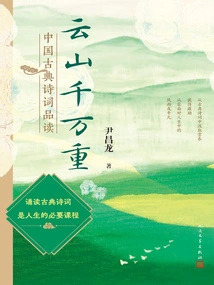
云山千万重:中国古典诗词品读
Yin Changlong
This book is a collection of essays on classical poetry written by Mr. Yin Changlong. The classic poetry of the Tang and Song Dynasties wanders in his writing, and the sensibility of the literati and the rigor of the scholar, as well as the modern stance and classical feelings, are all well integrated into it. The book is divided into ten parts, focusing on aspects such as seasons, geography, cities, literature and history, life, humanities, life, temperament, women, poets, etc. Such classification may not have academic considerations, but it is convenient for readers to review. In each part, the author selects a poem or several related poems, uses about 2,000 words of text, combines with real situations and feelings, and goes deep into the souls of the ancients to explore what the ancients thought. Classical poems and life situations are in harmony.
This book is a collection of essays on classical poetry written by Mr. Yin Changlong. The classic poetry of the Tang and Song Dynasties wanders in his writing, and the sensibility of the literati and the rigor of the scholar, as well as the modern stance and classical feelings, are all well integrated into it. The book is divided into ten parts, focusing on aspects such as seasons, geography, cities, literature and history, life, humanities, life, temperament, women, poets, etc. Such classification may not have academic considerations, but it is convenient for readers to review. In each part, the author selects a poem or several related poems, uses about 2,000 words of text, combines with real situations and feelings, and goes deep into the souls of the ancients to explore what the ancients thought. Classical poems and life situations are in harmony.
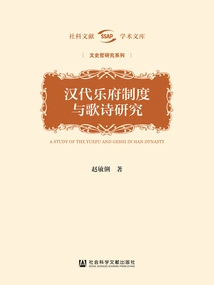
汉代乐府制度与歌诗研究
Zhao Minli
This book is an important achievement of Professor Zhao Minli's many years of research on Han Dynasty poetry. "Song poetry" refers to poetry that can be sung. In early China, poetry and music were integrated, and songs were accompanied by music. This was the basic form of early Chinese poetry. Later, poetry and music gradually separated, and only then did poetry have an independent form of poetic language separated from music. Since the Han Dynasty, it has become two different poetry schools and developed in parallel. The author creatively applies the theory of artistic production to the study of ancient Chinese poetry, combined with the changes in the Yuefu system in the Han Dynasty, to systematically explore the evolution of the special artistic form of "poetry" in the Han Dynasty, revealing its complex generation mechanism, rich content, unique artistic expression, and its special status and huge influence in the history of Chinese poetry.
This book is an important achievement of Professor Zhao Minli's many years of research on Han Dynasty poetry. "Song poetry" refers to poetry that can be sung. In early China, poetry and music were integrated, and songs were accompanied by music. This was the basic form of early Chinese poetry. Later, poetry and music gradually separated, and only then did poetry have an independent form of poetic language separated from music. Since the Han Dynasty, it has become two different poetry schools and developed in parallel. The author creatively applies the theory of artistic production to the study of ancient Chinese poetry, combined with the changes in the Yuefu system in the Han Dynasty, to systematically explore the evolution of the special artistic form of "poetry" in the Han Dynasty, revealing its complex generation mechanism, rich content, unique artistic expression, and its special status and huge influence in the history of Chinese poetry.
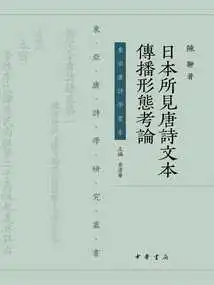
日本所见唐诗文本传播形态考论
Chen Chong
Tang poetry is not only the peak of the development of Chinese classical poetry, but also exerts a sustained and far-reaching influence in East Asian countries, especially Japan. This book conducts research on the text form of Japanese Tang poetry documents, and collects, authenticates and proofreads the precious Tang poetry documents collected in Japan. It mainly starts from three aspects: the first is the study of the text of the old banknote version of "Bai's Collected Works"; the second is the examination of the text form and musical attributes of "New Yuefu" and so on; the third is the lost collection of Sui and Tang Yi poems found in Japan and the identification of forgeries. Through these three special studies, new materials on Tang poetry discovered in recent years and new conclusions obtained by using new methods are presented to the academic world.
Tang poetry is not only the peak of the development of Chinese classical poetry, but also exerts a sustained and far-reaching influence in East Asian countries, especially Japan. This book conducts research on the text form of Japanese Tang poetry documents, and collects, authenticates and proofreads the precious Tang poetry documents collected in Japan. It mainly starts from three aspects: the first is the study of the text of the old banknote version of "Bai's Collected Works"; the second is the examination of the text form and musical attributes of "New Yuefu" and so on; the third is the lost collection of Sui and Tang Yi poems found in Japan and the identification of forgeries. Through these three special studies, new materials on Tang poetry discovered in recent years and new conclusions obtained by using new methods are presented to the academic world.
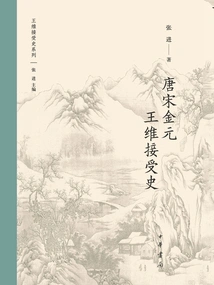
唐宋金元王维接受史
Zhang Jin
This book draws on the theories and research ideas of Western reception aesthetics to comprehensively sort out and discuss readers' acceptance, theoretical interpretation, and effects and influences of Wang Wei's poems and paintings in the Tang, Song, Jin, and Yuan dynasties. It reveals the outstanding characteristics of Wang Wei's poems and paintings, and establishes the influence and status of Wang Wei's poems and paintings in the history of the reception of Tang poetry and the development of literati paintings. It can be seen that the reception effect of Wang Wei's poems and paintings is closely related to factors such as social and political conditions, the aesthetic fashion of the times, readers' expectations and acceptance psychology, and the development and evolution of the poetry and painting art itself.
This book draws on the theories and research ideas of Western reception aesthetics to comprehensively sort out and discuss readers' acceptance, theoretical interpretation, and effects and influences of Wang Wei's poems and paintings in the Tang, Song, Jin, and Yuan dynasties. It reveals the outstanding characteristics of Wang Wei's poems and paintings, and establishes the influence and status of Wang Wei's poems and paintings in the history of the reception of Tang poetry and the development of literati paintings. It can be seen that the reception effect of Wang Wei's poems and paintings is closely related to factors such as social and political conditions, the aesthetic fashion of the times, readers' expectations and acceptance psychology, and the development and evolution of the poetry and painting art itself.
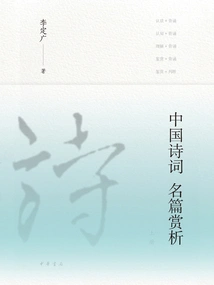
中国诗词名篇赏析(上册)
Li Dingguang
This book is a poetry appreciation book written by Professor Li Dingguang, the academic director of CCTV's "Chinese Poetry Conference". The book selects approximately 600 classic poems from the ten seasons of the program, each of which is accurately annotated and deeply appreciated by Professor Li Dingguang. The content covers poetry, lyrics, and music, arranged chronologically according to the time of creation, and indexed by popular famous sentences, with a clear system. This book not only provides readers with accurate text, pronunciation and background knowledge, corrects many popular fallacies, but also focuses on improving readers' aesthetic appreciation ability. It is an essential guide for learning and reading famous Chinese poems.
This book is a poetry appreciation book written by Professor Li Dingguang, the academic director of CCTV's "Chinese Poetry Conference". The book selects approximately 600 classic poems from the ten seasons of the program, each of which is accurately annotated and deeply appreciated by Professor Li Dingguang. The content covers poetry, lyrics, and music, arranged chronologically according to the time of creation, and indexed by popular famous sentences, with a clear system. This book not only provides readers with accurate text, pronunciation and background knowledge, corrects many popular fallacies, but also focuses on improving readers' aesthetic appreciation ability. It is an essential guide for learning and reading famous Chinese poems.
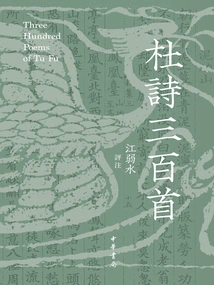
Three Hundred Poems by Du Du
Literature杜诗三百首
Commentary By Jiang Ruoshui
This book selects 300 poems by Du Fu in various styles, integrates the essence of Du Fu's annotations in the past dynasties, absorbs the achievements of today's treatment of Du Fu, strives for new ideas, and makes clear statements. Taking Chinese classical poetry as the foothold and Western modern poetics as the frame of reference, the art of Du Shi's poetry is evaluated. In the intertextual context and comparative perspective, it enriches our feelings and understanding of Du's poetry, and proves that people's hearts are the same in modern and ancient times, and that Chinese and Western literature and theory are the same.
This book selects 300 poems by Du Fu in various styles, integrates the essence of Du Fu's annotations in the past dynasties, absorbs the achievements of today's treatment of Du Fu, strives for new ideas, and makes clear statements. Taking Chinese classical poetry as the foothold and Western modern poetics as the frame of reference, the art of Du Shi's poetry is evaluated. In the intertextual context and comparative perspective, it enriches our feelings and understanding of Du's poetry, and proves that people's hearts are the same in modern and ancient times, and that Chinese and Western literature and theory are the same.
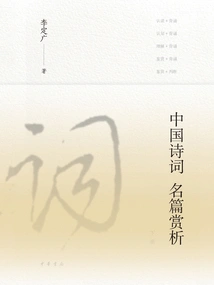
中国诗词名篇赏析(下册)
Li Dingguang
This book is a poetry appreciation book written by Professor Li Dingguang, the academic director of CCTV's "Chinese Poetry Conference". The book selects approximately 600 classic poems from the ten seasons of the program, each of which is accurately annotated and deeply appreciated by Professor Li Dingguang. The content covers poetry, lyrics, and music, arranged chronologically according to the time of creation, and indexed by popular famous sentences, with a clear system. This book not only provides readers with accurate text, pronunciation and background knowledge, corrects many popular fallacies, but also focuses on improving readers' aesthetic appreciation ability. It is an essential guide for learning and reading famous Chinese poems.
This book is a poetry appreciation book written by Professor Li Dingguang, the academic director of CCTV's "Chinese Poetry Conference". The book selects approximately 600 classic poems from the ten seasons of the program, each of which is accurately annotated and deeply appreciated by Professor Li Dingguang. The content covers poetry, lyrics, and music, arranged chronologically according to the time of creation, and indexed by popular famous sentences, with a clear system. This book not only provides readers with accurate text, pronunciation and background knowledge, corrects many popular fallacies, but also focuses on improving readers' aesthetic appreciation ability. It is an essential guide for learning and reading famous Chinese poems.
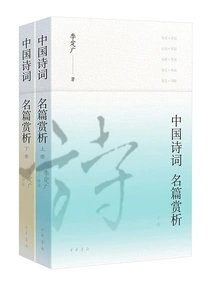
中国诗词名篇赏析(全二册)
Li Dingguang
This book is a poetry appreciation book written by Professor Li Dingguang, the academic director of CCTV's "Chinese Poetry Conference". The book selects approximately 600 classic poems from the ten seasons of the program, each of which is accurately annotated and deeply appreciated by Professor Li Dingguang. The content covers poetry, lyrics, and music, arranged chronologically according to the time of creation, and indexed by popular famous sentences, with a clear system. This book not only provides readers with accurate text, pronunciation and background knowledge, corrects many popular fallacies, but also focuses on improving readers' aesthetic appreciation ability. It is an essential guide for learning and reading famous Chinese poems.
This book is a poetry appreciation book written by Professor Li Dingguang, the academic director of CCTV's "Chinese Poetry Conference". The book selects approximately 600 classic poems from the ten seasons of the program, each of which is accurately annotated and deeply appreciated by Professor Li Dingguang. The content covers poetry, lyrics, and music, arranged chronologically according to the time of creation, and indexed by popular famous sentences, with a clear system. This book not only provides readers with accurate text, pronunciation and background knowledge, corrects many popular fallacies, but also focuses on improving readers' aesthetic appreciation ability. It is an essential guide for learning and reading famous Chinese poems.
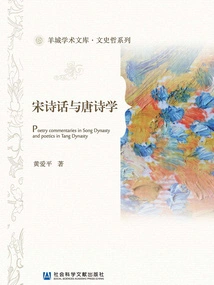
Song Poetry and Tang Poetry
Literature宋诗话与唐诗学
Huang Aiping
The Song Dynasty was a critical period for establishing Tang poetry, and Song Poetry is the main carrier for discussing Tang poetry. This book focuses on the specific relationship between Song Shihua and Tang poetics. It uses statistics, induction, text reading, reception aesthetics and other methods to carefully outline relevant historical materials. It constructs the Tang poetic system in Song Shihua from five aspects: nature, category, genre, poetic method, and writer. It explores the basic connotation of Tang poetics and specifically explains the specific contribution and performance of Song Shihua to the study of Tang poetry. It is of enlightening significance for further understanding the status of Song Shihua in the history of Tang poetics and the study of modern Tang poetry.
The Song Dynasty was a critical period for establishing Tang poetry, and Song Poetry is the main carrier for discussing Tang poetry. This book focuses on the specific relationship between Song Shihua and Tang poetics. It uses statistics, induction, text reading, reception aesthetics and other methods to carefully outline relevant historical materials. It constructs the Tang poetic system in Song Shihua from five aspects: nature, category, genre, poetic method, and writer. It explores the basic connotation of Tang poetics and specifically explains the specific contribution and performance of Song Shihua to the study of Tang poetry. It is of enlightening significance for further understanding the status of Song Shihua in the history of Tang poetics and the study of modern Tang poetry.
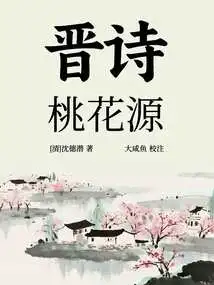
Jin Poetry·peach Blossom Spring
Literature晋诗·桃花源
(qing Dynasty) Written By Shen Deqian And Edited By Da Xianyu
The selection of Jin poems is based on the purpose of "tracing the origins of Tang style and identifying changes in styles", systematically combing the development of poetry from the Western Jin Dynasty to the Eastern Jin Dynasty. It not only presents the gorgeous carvings of "Taikang Style" and the philosophical speculation of "Xuanyan Poetry", but also conveys its literary concepts of style-based and poetic education through sharp comments. Shen Deqian's anthology is an edition that is difficult to surpass among all the anthologies of the past. The blending of philosophy and landscape, the contradiction between rational interest and temperament, and the poeticization of reclusive spirit have far-reaching sustenance. Shen Deqian himself commented that the expansion of themes "laid the foundation for the overall prosperity of Tang poetry." The importance of Jin poetry is self-evident.
The selection of Jin poems is based on the purpose of "tracing the origins of Tang style and identifying changes in styles", systematically combing the development of poetry from the Western Jin Dynasty to the Eastern Jin Dynasty. It not only presents the gorgeous carvings of "Taikang Style" and the philosophical speculation of "Xuanyan Poetry", but also conveys its literary concepts of style-based and poetic education through sharp comments. Shen Deqian's anthology is an edition that is difficult to surpass among all the anthologies of the past. The blending of philosophy and landscape, the contradiction between rational interest and temperament, and the poeticization of reclusive spirit have far-reaching sustenance. Shen Deqian himself commented that the expansion of themes "laid the foundation for the overall prosperity of Tang poetry." The importance of Jin poetry is self-evident.
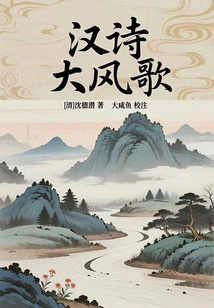
Chinese Poetry·da Feng Song
Literature汉诗·大风歌
I
"Han Poems" selected by Shen Deqian aims at "tracing the roots of Tang poetry" and systematically combs the development of poetry in the Han Dynasty. It not only presents the dual peaks of "Yuefu narrative" and "literati lyricism", but also conveys his literary concept of "poetry as the foundation and style as the sect" through comments. The political lyricism of emperors and heroes, the political and religious function of court poetry, the social picture of Yuefu poetry, the artistic breakthroughs of literati's five-character poetry and narrative poetry, and the true records of folk suffering are all presented in extremely rich ways.
"Han Poems" selected by Shen Deqian aims at "tracing the roots of Tang poetry" and systematically combs the development of poetry in the Han Dynasty. It not only presents the dual peaks of "Yuefu narrative" and "literati lyricism", but also conveys his literary concept of "poetry as the foundation and style as the sect" through comments. The political lyricism of emperors and heroes, the political and religious function of court poetry, the social picture of Yuefu poetry, the artistic breakthroughs of literati's five-character poetry and narrative poetry, and the true records of folk suffering are all presented in extremely rich ways.
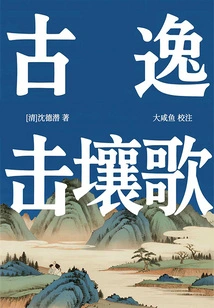
Guyi · Attacking the Soil Song
Literature古逸·击壤歌
I
This is a selected poem by Shen Deqian, a cultural giant who was a poet, poetic critic, and chronicler in the mid-Qing Dynasty. "Guyi" is the opening chapter of the selected poem, which focuses on the original form of poetry before the Tang Dynasty. It mainly includes four categories: ancient ballads, inscriptions and proverbs from the Zhou Dynasty, lyric poems from the Spring and Autumn Period and the Warring States Period, and poems from myths and legends. Mythological elements, political elements, the spiritual dilemma of working people, and the poet's concern for people's livelihood are all reflected in "Gu Yi". Reading it today, it is still catchy.
This is a selected poem by Shen Deqian, a cultural giant who was a poet, poetic critic, and chronicler in the mid-Qing Dynasty. "Guyi" is the opening chapter of the selected poem, which focuses on the original form of poetry before the Tang Dynasty. It mainly includes four categories: ancient ballads, inscriptions and proverbs from the Zhou Dynasty, lyric poems from the Spring and Autumn Period and the Warring States Period, and poems from myths and legends. Mythological elements, political elements, the spiritual dilemma of working people, and the poet's concern for people's livelihood are all reflected in "Gu Yi". Reading it today, it is still catchy.
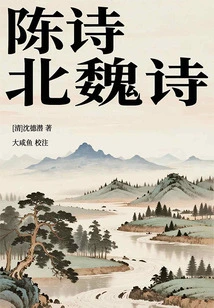
Chen Shi·northern Wei Dynasty Poetry
Literature陈诗·北魏诗
I
Shen Deqian's "Chen Poetry" section tries to include the works of major Chen poets in the Southern Dynasties, and more comprehensively demonstrates the characteristics of the poetic style of this period that tended to be extravagant and gaudy. Although Shen had reservations about this style of judgment, he still regarded it as an important link in the development chain of poetry and believed that it was helpful in understanding the evolution of poetry before the rise of Tang poetry. The poets Xu Ling and Yu Xin can be read carefully. The poetry of the Northern Wei Dynasty mainly embodies simplicity and vigor, loyalty, filial piety, justice, and the collision of grassland culture and Central Plains culture. The "Poetry of Mulan" that readers are familiar with is one of the best works.
Shen Deqian's "Chen Poetry" section tries to include the works of major Chen poets in the Southern Dynasties, and more comprehensively demonstrates the characteristics of the poetic style of this period that tended to be extravagant and gaudy. Although Shen had reservations about this style of judgment, he still regarded it as an important link in the development chain of poetry and believed that it was helpful in understanding the evolution of poetry before the rise of Tang poetry. The poets Xu Ling and Yu Xin can be read carefully. The poetry of the Northern Wei Dynasty mainly embodies simplicity and vigor, loyalty, filial piety, justice, and the collision of grassland culture and Central Plains culture. The "Poetry of Mulan" that readers are familiar with is one of the best works.
Northern Qi Poetry·northern Zhou Poetry
Literature北齐诗·北周诗
I
Shen Deqian selected Northern Qi poetry in order to present the diversity and regional differences in the development of poetry during the Southern and Northern Dynasties. He believes that although the poetry of the Northern Dynasties is not as delicate and refined as the poetry of the Southern Dynasty, it has its own unique simple style, which is indispensable for tracing the origin of poetry and understanding the evolution of poetry style. At the same time, he may also intend to show how poets in the Northern Dynasties carried out literary creation in a relatively harsh environment. The poems of Wen Zisheng, Xu Ling, Lu Sidao and Yang Min are all collected in high quality. They were the most important poets at that time and you can focus on reading them. Northern Zhou poetry is actually an independent volume, and Shen Deqian's starting point for selecting and editing it is also to present the overall picture of poetry in the Southern and Northern Dynasties more completely. Wang Bao and Qu Zizhi are important representatives.
Shen Deqian selected Northern Qi poetry in order to present the diversity and regional differences in the development of poetry during the Southern and Northern Dynasties. He believes that although the poetry of the Northern Dynasties is not as delicate and refined as the poetry of the Southern Dynasty, it has its own unique simple style, which is indispensable for tracing the origin of poetry and understanding the evolution of poetry style. At the same time, he may also intend to show how poets in the Northern Dynasties carried out literary creation in a relatively harsh environment. The poems of Wen Zisheng, Xu Ling, Lu Sidao and Yang Min are all collected in high quality. They were the most important poets at that time and you can focus on reading them. Northern Zhou poetry is actually an independent volume, and Shen Deqian's starting point for selecting and editing it is also to present the overall picture of poetry in the Southern and Northern Dynasties more completely. Wang Bao and Qu Zizhi are important representatives.