Library
Browse and search books
26,502 novels found
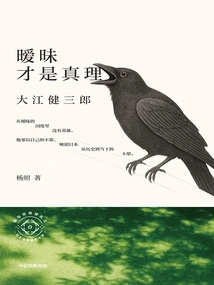
Ambiguity is the Truth: Oe Kenzaburo
Literature暧昧才是真理:大江健三郎
Yang Zhao
This book is a collection of literary criticism by Taiwanese scholar and writer Yang Zhao interpreting Oe Kenzaburo's life and works. It belongs to the second volume of his series "Ten Lectures by Famous Japanese Literary Masters: My Long Struggle with the World". The first volume (five books) of this series has been published. For nearly thirty years, Yang Zhao has continued to study and experience Japanese society, history, and culture. As a generation deeply influenced by Japanese culture, he continues to explore "what Japan is." In 2017, during an unexpected trip, he found an outlet for this problem: exploring Japan through Japanese novelists and their works. In the next five years, Yang Zhao selected 10 Japanese literary giants from different eras: Natsume Soseki, Tanizaki Junichiro, Akutagawa Ryunosuke, Kawabata Yasunari, Dazai Osamu, Mishima Yukio, Endo Shusaku, Oe Kenzaburo, Miyamoto Teru, and Murakami Haruki. Based on social background research, restoration of the mood of the times, original text reading, and excerpts and translations of important passages, he wrote about these 10 literary giants and the century-old Japanese literary history they created.
This book is a collection of literary criticism by Taiwanese scholar and writer Yang Zhao interpreting Oe Kenzaburo's life and works. It belongs to the second volume of his series "Ten Lectures by Famous Japanese Literary Masters: My Long Struggle with the World". The first volume (five books) of this series has been published. For nearly thirty years, Yang Zhao has continued to study and experience Japanese society, history, and culture. As a generation deeply influenced by Japanese culture, he continues to explore "what Japan is." In 2017, during an unexpected trip, he found an outlet for this problem: exploring Japan through Japanese novelists and their works. In the next five years, Yang Zhao selected 10 Japanese literary giants from different eras: Natsume Soseki, Tanizaki Junichiro, Akutagawa Ryunosuke, Kawabata Yasunari, Dazai Osamu, Mishima Yukio, Endo Shusaku, Oe Kenzaburo, Miyamoto Teru, and Murakami Haruki. Based on social background research, restoration of the mood of the times, original text reading, and excerpts and translations of important passages, he wrote about these 10 literary giants and the century-old Japanese literary history they created.
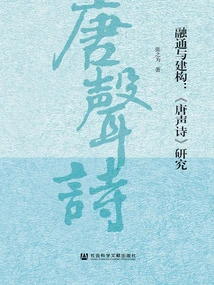
融通与建构:《唐声诗》研究
Zhang Zhiwei
Mr. Ren Bandang's "Tang Sound Poetry" is a masterpiece of interdisciplinary research on music literature. His original "sound poetics", with his extremely pioneering and cutting-edge nature, achieved a breakthrough in the research path and paradigm of Tang poetry, which still has exemplary significance today. This book takes "Tang Sound Poetry" as the research object, elucidates the theory of sound poetry, explores method resources, sorts out academic public cases, analyzes related issues, summarizes the achievements and value of "Tang Sound Poetry", and strives to present the process and achievements of the study of music and literature in the Tang Dynasty in the 20th century.
Mr. Ren Bandang's "Tang Sound Poetry" is a masterpiece of interdisciplinary research on music literature. His original "sound poetics", with his extremely pioneering and cutting-edge nature, achieved a breakthrough in the research path and paradigm of Tang poetry, which still has exemplary significance today. This book takes "Tang Sound Poetry" as the research object, elucidates the theory of sound poetry, explores method resources, sorts out academic public cases, analyzes related issues, summarizes the achievements and value of "Tang Sound Poetry", and strives to present the process and achievements of the study of music and literature in the Tang Dynasty in the 20th century.
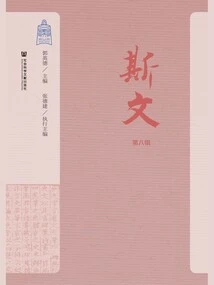
Sven (Volume 8)
Literature斯文(第8辑)
Editor-in-chief Guo Yingde
"Sven" is a large-scale academic journal with the research object of ancient Chinese prose planned to be co-founded by the Institute of Ancient Literature of the School of Liberal Arts of Beijing Normal University and the Ancient Chinese Prose Society. This book is the eighth volume and is divided into seven columns: "Special Articles", "Stylistic Research", "Big Perspective", "Literary Thought Research", "Ideological History Research", and "Prose Research Literature Review". From the perspective of ancient literary ecology, it distinguishes the thought of name and reality from medieval stylistics and textual theory, the historical view of literary culture, stylistic research, and stylistics. Research, "Grand Unification" from the political perspective and "Grand Unification" from the cultural perspective, in-depth thinking on the classic investigation of "Chen Yan", Su Shi and Buddhism, and the systematic compilation of overseas Sinology documents, greatly expand and enrich the research horizons and paradigms of ancient prose, and improve the level of ancient prose research. It is worth reading.
"Sven" is a large-scale academic journal with the research object of ancient Chinese prose planned to be co-founded by the Institute of Ancient Literature of the School of Liberal Arts of Beijing Normal University and the Ancient Chinese Prose Society. This book is the eighth volume and is divided into seven columns: "Special Articles", "Stylistic Research", "Big Perspective", "Literary Thought Research", "Ideological History Research", and "Prose Research Literature Review". From the perspective of ancient literary ecology, it distinguishes the thought of name and reality from medieval stylistics and textual theory, the historical view of literary culture, stylistic research, and stylistics. Research, "Grand Unification" from the political perspective and "Grand Unification" from the cultural perspective, in-depth thinking on the classic investigation of "Chen Yan", Su Shi and Buddhism, and the systematic compilation of overseas Sinology documents, greatly expand and enrich the research horizons and paradigms of ancient prose, and improve the level of ancient prose research. It is worth reading.
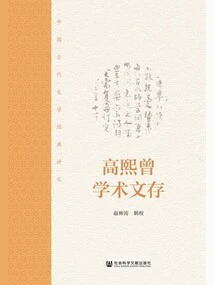
高熙曾学术文存:中国古代文学经典讲义
Edited And Edited By Zhao Lintao
Gao Xizeng (1921-1980), courtesy name Yinfu, was born in Shaoxing and was born into a scholarly family in Beijing. He studied in the Chinese Department of Fu Jen Catholic University in Peking, where he studied under Sun He, Gu Sui, Zhao Wanli and others. He taught at Tsinghua University, Hebei University and other schools, and has profound attainments in ancient Chinese literature, editions, and bibliography. This book selects 23 academic papers by Mr. Gao Xizeng and organizes them into five parts: Poetry, Ci, Music, Novels and Miscellaneous Essays. Some have been published publicly, some are lecture notes given during the year, and some are compiled from manuscripts. The main works of writers analyzed include Du Fu, Liu Yong, Su Shi, Xin Qiji, Li Qingzhao, "The Book of Songs", "The Injustice of Dou E", "Wangjiang Pavilion", "Journey to the West", etc. There are also many postscripts and miscellaneous talks.
Gao Xizeng (1921-1980), courtesy name Yinfu, was born in Shaoxing and was born into a scholarly family in Beijing. He studied in the Chinese Department of Fu Jen Catholic University in Peking, where he studied under Sun He, Gu Sui, Zhao Wanli and others. He taught at Tsinghua University, Hebei University and other schools, and has profound attainments in ancient Chinese literature, editions, and bibliography. This book selects 23 academic papers by Mr. Gao Xizeng and organizes them into five parts: Poetry, Ci, Music, Novels and Miscellaneous Essays. Some have been published publicly, some are lecture notes given during the year, and some are compiled from manuscripts. The main works of writers analyzed include Du Fu, Liu Yong, Su Shi, Xin Qiji, Li Qingzhao, "The Book of Songs", "The Injustice of Dou E", "Wangjiang Pavilion", "Journey to the West", etc. There are also many postscripts and miscellaneous talks.
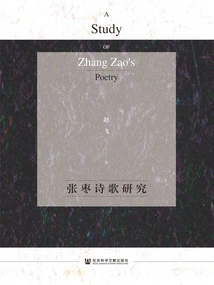
Research on Zhang Zao's Poetry
Literature张枣诗歌研究
Zhao Fei
Zhang Zao is the poet with the most poetic pursuit and research difficulty among contemporary poets. With his outstanding language talent and extraordinary conversion ability, he has pushed modern Chinese poetry to an unprecedented height. This book strives to avoid a monotonous theory of poets, that is, it does not study Zhang Zao's poetry as a closed object, but as an open question, thereby observing how modern Chinese poetry creates a unique tone while breaking through the limitations of form and structure.
Zhang Zao is the poet with the most poetic pursuit and research difficulty among contemporary poets. With his outstanding language talent and extraordinary conversion ability, he has pushed modern Chinese poetry to an unprecedented height. This book strives to avoid a monotonous theory of poets, that is, it does not study Zhang Zao's poetry as a closed object, but as an open question, thereby observing how modern Chinese poetry creates a unique tone while breaking through the limitations of form and structure.
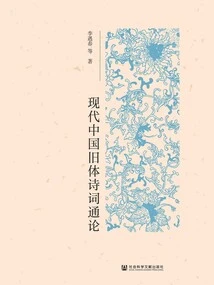
现代中国旧体诗词通论
Li Yuchun Et Al.
This book is a phased result of the National Social Science Foundation's major project "Compilation and Research of the Multi-Volume Chronicle of Modern and Contemporary Chinese Old Style Poetry and Database Construction" (18ZDA263). This book explores the basic issues in the creation and research of modern Chinese old-style poetry in the past century from the perspective of the old-new debate. Although it is directly related to the dispute between the old and the new in the cultural sense, returning to the literary and stylistic sense to explore the dispute between the old and the new is the starting point of this book. In the academic order of century-old Chinese literature centered on New Literature, national traditional old-style literature, including old-style poetry, has long been ignored or devalued. However, in fact, although the century-old Chinese traditional poetry has gone through many battles between the old and the new, such as the May Fourth period, the Anti-Japanese War, etc., It still tenaciously continues the modern lifeline of the long Chinese classical poetry tradition. Compared with the century-old Chinese new poetry creation, the century-old Chinese old-style poetry creation has not only achieved comparable historical achievements as a whole, but in specific historical periods, it may be slightly less popular, or keep pace with it, or even be even more popular. The stylistic destiny of century-old Chinese poetry is related to the current literary education system and media communication methods. There is a voluminous collection of modern Chinese old-style poetry documents. With the large-scale excavation and compilation of century-old old-style documents in the new century, the other side of modern Chinese literary history is increasingly revealed like an iceberg under the sea. Only by breaking through the existing academic mindset of binary opposition between old and new can we objectively explore the creative achievements of old-style poetry by different groups of poets in specific historical periods in the past century, thereby vigorously promoting the canonization process of modern Chinese old-style poetry and welcoming the stylistic renaissance of Chinese poetry tradition in the new century.
This book is a phased result of the National Social Science Foundation's major project "Compilation and Research of the Multi-Volume Chronicle of Modern and Contemporary Chinese Old Style Poetry and Database Construction" (18ZDA263). This book explores the basic issues in the creation and research of modern Chinese old-style poetry in the past century from the perspective of the old-new debate. Although it is directly related to the dispute between the old and the new in the cultural sense, returning to the literary and stylistic sense to explore the dispute between the old and the new is the starting point of this book. In the academic order of century-old Chinese literature centered on New Literature, national traditional old-style literature, including old-style poetry, has long been ignored or devalued. However, in fact, although the century-old Chinese traditional poetry has gone through many battles between the old and the new, such as the May Fourth period, the Anti-Japanese War, etc., It still tenaciously continues the modern lifeline of the long Chinese classical poetry tradition. Compared with the century-old Chinese new poetry creation, the century-old Chinese old-style poetry creation has not only achieved comparable historical achievements as a whole, but in specific historical periods, it may be slightly less popular, or keep pace with it, or even be even more popular. The stylistic destiny of century-old Chinese poetry is related to the current literary education system and media communication methods. There is a voluminous collection of modern Chinese old-style poetry documents. With the large-scale excavation and compilation of century-old old-style documents in the new century, the other side of modern Chinese literary history is increasingly revealed like an iceberg under the sea. Only by breaking through the existing academic mindset of binary opposition between old and new can we objectively explore the creative achievements of old-style poetry by different groups of poets in specific historical periods in the past century, thereby vigorously promoting the canonization process of modern Chinese old-style poetry and welcoming the stylistic renaissance of Chinese poetry tradition in the new century.
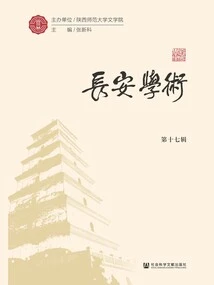
Chang'an Academic (17th Series)
Literature长安学术(第17辑)
Editor-in-chief Zhang Xinke
"Chang'an Academic" is a comprehensive journal on Chinese language and literature research, serving the construction and development of Chinese language and literature disciplines. The content included in the collection involves the content of secondary disciplines under the first-level discipline of Chinese language and literature, including language studies, literary studies (ancient literature, modern and contemporary literature, literary theory and foreign literature, etc.), Philology, etc., In addition to book reviews and other content. The book mainly publishes the latest research results in various disciplines such as Chinese language and literature, aiming to strengthen academic exchanges, display cutting-edge results, and promote the development of Chinese language and literature research. This book is the 17th volume and is divided into five columns: "Ancient Literature", "Modern and Contemporary Literature", "Cultural Communication", "Translations" and "Book Reviews".
"Chang'an Academic" is a comprehensive journal on Chinese language and literature research, serving the construction and development of Chinese language and literature disciplines. The content included in the collection involves the content of secondary disciplines under the first-level discipline of Chinese language and literature, including language studies, literary studies (ancient literature, modern and contemporary literature, literary theory and foreign literature, etc.), Philology, etc., In addition to book reviews and other content. The book mainly publishes the latest research results in various disciplines such as Chinese language and literature, aiming to strengthen academic exchanges, display cutting-edge results, and promote the development of Chinese language and literature research. This book is the 17th volume and is divided into five columns: "Ancient Literature", "Modern and Contemporary Literature", "Cultural Communication", "Translations" and "Book Reviews".
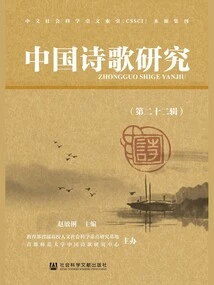
Research on Chinese Poetry (Volume 22)
Literature中国诗歌研究(第22辑)
Editor-in-chief Zhao Minli
"Chinese Poetry Research" is an academic journal sponsored by the Chinese Poetry Research Center of Capital Normal University, covering the study of poetry at home and abroad in ancient and modern times. The columns include research on ancient Chinese poetry, research on modern and contemporary Chinese poetry, research on Chinese poetry theory, research on Chinese ethnic minority poetry, research on contemporary overseas Chinese poetry, research on Chinese and Western comparative poetry, research on the history of poetics and poetic literature, and youth forums. It has a good reputation in academic circles at home and abroad and is an important reference book for poetry lovers and teachers and students.
"Chinese Poetry Research" is an academic journal sponsored by the Chinese Poetry Research Center of Capital Normal University, covering the study of poetry at home and abroad in ancient and modern times. The columns include research on ancient Chinese poetry, research on modern and contemporary Chinese poetry, research on Chinese poetry theory, research on Chinese ethnic minority poetry, research on contemporary overseas Chinese poetry, research on Chinese and Western comparative poetry, research on the history of poetics and poetic literature, and youth forums. It has a good reputation in academic circles at home and abroad and is an important reference book for poetry lovers and teachers and students.
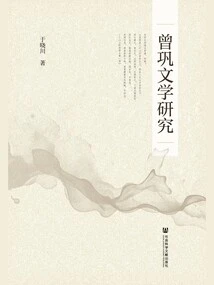
Research on Zeng Gong's Literature
Literature曾巩文学研究
Yu Xiaochuan
This book is divided into two parts. The first two chapters sort out the edition situation of Zeng Gong's poetry collections, and analyze the collection and circulation process of Zeng Gong's poetry collections in the Song, Yuan, Ming and Qing dynasties, as well as the edition situations of "Mr. Zeng Nanfeng's Essence of Literature", "Mr. Nanfeng Zeng Zigu's Collection" and "Yuanfeng's Class Drafts"; the next four chapters examine the more important issues in the study of Zeng Gong's literature. The third chapter examines the formation of Zeng Gong's literary thoughts from the perspective of his more important friendships; the fourth chapter explores the specific manifestation of "Tao" as the core category of Zeng Gong's literature; the fifth chapter analyzes Zeng Gong's articles on how to accumulate knowledge and talents, and learn from the classics and examples; the sixth chapter focuses on Zeng Gong's poetry, and explores his scholar's mentality by interpreting the propositions of "Poor People's Words" and temple-themed poems.
This book is divided into two parts. The first two chapters sort out the edition situation of Zeng Gong's poetry collections, and analyze the collection and circulation process of Zeng Gong's poetry collections in the Song, Yuan, Ming and Qing dynasties, as well as the edition situations of "Mr. Zeng Nanfeng's Essence of Literature", "Mr. Nanfeng Zeng Zigu's Collection" and "Yuanfeng's Class Drafts"; the next four chapters examine the more important issues in the study of Zeng Gong's literature. The third chapter examines the formation of Zeng Gong's literary thoughts from the perspective of his more important friendships; the fourth chapter explores the specific manifestation of "Tao" as the core category of Zeng Gong's literature; the fifth chapter analyzes Zeng Gong's articles on how to accumulate knowledge and talents, and learn from the classics and examples; the sixth chapter focuses on Zeng Gong's poetry, and explores his scholar's mentality by interpreting the propositions of "Poor People's Words" and temple-themed poems.
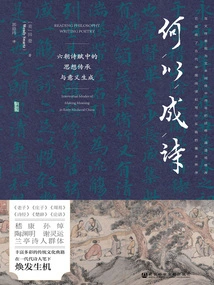
何以成诗:六朝诗赋中的思想传承与意义生成
(us) Tian Ling
The literati class during the Six Dynasties participated in cultural inheritance in a unique and mosaic way and produced exponentially growing cultural wealth. Tian Ling, a professor of Chinese literature at Rutgers University in the United States, used the theory of intertextuality in Western literary theory to examine allusions and citations. He carefully read the poems and poems of Ji Kang, Sun Chuo, Tao Yuanming, Xie Lingyun, and Lanting poets, and explored their complex connections with traditional cultural classics such as Laozi, Zhuangzi, Zhouyi, and even the Book of Songs, Songs of Chu, and the Analects of Confucius. The poets wrote poems between philosophy and literature, creatively used heterogeneous, diverse and ever-changing texts and cultural resources, and demonstrated their colorful creative talents, ideas and inner worlds.
The literati class during the Six Dynasties participated in cultural inheritance in a unique and mosaic way and produced exponentially growing cultural wealth. Tian Ling, a professor of Chinese literature at Rutgers University in the United States, used the theory of intertextuality in Western literary theory to examine allusions and citations. He carefully read the poems and poems of Ji Kang, Sun Chuo, Tao Yuanming, Xie Lingyun, and Lanting poets, and explored their complex connections with traditional cultural classics such as Laozi, Zhuangzi, Zhouyi, and even the Book of Songs, Songs of Chu, and the Analects of Confucius. The poets wrote poems between philosophy and literature, creatively used heterogeneous, diverse and ever-changing texts and cultural resources, and demonstrated their colorful creative talents, ideas and inner worlds.
六朝骈文文体研究
Chen Peng
This book aims to start from the perspective of stylistics, widely absorb the results of stylistics research at home and abroad in ancient and modern times, and conduct a research on the parallel prose of the Six Dynasties that combines historical description and theoretical discussion. It strives to carefully examine the specific parallelization process and artistic gains and losses of various literary styles in the Six Dynasties period from a macro perspective of overall grasp. And an overall investigation of literary criticism and cultural thought; it draws on and absorbs the research results of linguistics and phonology, and combines the knowledge of famous parallel prose masters in the Six Dynasties with the study of the stylistic characteristics of parallel prose, in order to provide a new perspective for a deep understanding of the internal laws of the development of parallel prose in the Six Dynasties and its stylistic functions.
This book aims to start from the perspective of stylistics, widely absorb the results of stylistics research at home and abroad in ancient and modern times, and conduct a research on the parallel prose of the Six Dynasties that combines historical description and theoretical discussion. It strives to carefully examine the specific parallelization process and artistic gains and losses of various literary styles in the Six Dynasties period from a macro perspective of overall grasp. And an overall investigation of literary criticism and cultural thought; it draws on and absorbs the research results of linguistics and phonology, and combines the knowledge of famous parallel prose masters in the Six Dynasties with the study of the stylistic characteristics of parallel prose, in order to provide a new perspective for a deep understanding of the internal laws of the development of parallel prose in the Six Dynasties and its stylistic functions.
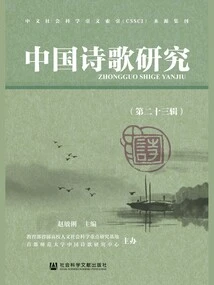
Research on Chinese Poetry (Volume 23)
Literature中国诗歌研究(第23辑)
Editor-in-chief Zhao Minli
"Chinese Poetry Research" is an academic journal sponsored by the Chinese Poetry Research Center of Capital Normal University, covering the study of poetry at home and abroad in ancient and modern times. The columns include research on ancient Chinese poetry, research on modern and contemporary Chinese poetry, research on Chinese poetry theory, research on Chinese ethnic minority poetry, research on contemporary overseas Chinese poetry, research on Chinese and Western comparative poetry, research on the history of poetics and poetic literature, and youth forums. It has a good reputation in academic circles at home and abroad and is an important reference book for poetry lovers and teachers and students.
"Chinese Poetry Research" is an academic journal sponsored by the Chinese Poetry Research Center of Capital Normal University, covering the study of poetry at home and abroad in ancient and modern times. The columns include research on ancient Chinese poetry, research on modern and contemporary Chinese poetry, research on Chinese poetry theory, research on Chinese ethnic minority poetry, research on contemporary overseas Chinese poetry, research on Chinese and Western comparative poetry, research on the history of poetics and poetic literature, and youth forums. It has a good reputation in academic circles at home and abroad and is an important reference book for poetry lovers and teachers and students.
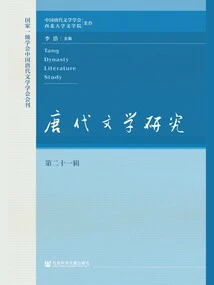
唐代文学研究(第21辑)
Editor-in-chief Li Hao
"Research on Tang Dynasty Literature" is the journal of the Chinese Tang Dynasty Literature Society, a national first-level society, and is co-sponsored by the China Tang Dynasty Literature Society and the School of Literature of Northwest University. This journal mainly publishes academic papers on the study of literature in the Tang Dynasty, covering the study of literary creation and writers in the Tang Dynasty (in addition to the overall comprehensive study, including research on various types of literature and writers such as poems, poems, poems, prose, parallel prose, novels, and popular literature), research on literary documents and historical materials of the Tang Dynasty, research on literary theory and criticism of the Tang Dynasty, interdisciplinary research between Tang Dynasty literature and other disciplines, research on the reception and dissemination history of Tang Dynasty literature, research on Tang Dynasty literature and documents outside the country, etc.
"Research on Tang Dynasty Literature" is the journal of the Chinese Tang Dynasty Literature Society, a national first-level society, and is co-sponsored by the China Tang Dynasty Literature Society and the School of Literature of Northwest University. This journal mainly publishes academic papers on the study of literature in the Tang Dynasty, covering the study of literary creation and writers in the Tang Dynasty (in addition to the overall comprehensive study, including research on various types of literature and writers such as poems, poems, poems, prose, parallel prose, novels, and popular literature), research on literary documents and historical materials of the Tang Dynasty, research on literary theory and criticism of the Tang Dynasty, interdisciplinary research between Tang Dynasty literature and other disciplines, research on the reception and dissemination history of Tang Dynasty literature, research on Tang Dynasty literature and documents outside the country, etc.
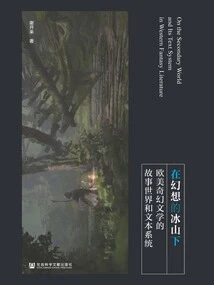
在幻想的冰山下:欧美奇幻文学的故事世界和文本系统
Thanks Kailai
Fantasy literature is a popular literature that emerged in Europe and the United States in the 19th and 20th centuries. It entered China with the tide of informatization and networking at the beginning of the 21st century, and has gradually become a core resource supporting content production in the fields of online novels, animations and games in my country. This book provides an in-depth analysis of classic cases of European and American fantasy literature such as the "Lord of the Rings" series, the "Dragonlance" series and the "Baldur's Gate" series, and creatively proposes an interdisciplinary analytical framework for the study of fantasy literature's chronotope. It explores the multiple meanings of the story world in content creation and cultural production, and the production mechanism of fantasy literature's worldview, multiple discourses, genres and text systems, providing reference for the creation, production and management of Chinese fantasy literature, online literature and content industries.
Fantasy literature is a popular literature that emerged in Europe and the United States in the 19th and 20th centuries. It entered China with the tide of informatization and networking at the beginning of the 21st century, and has gradually become a core resource supporting content production in the fields of online novels, animations and games in my country. This book provides an in-depth analysis of classic cases of European and American fantasy literature such as the "Lord of the Rings" series, the "Dragonlance" series and the "Baldur's Gate" series, and creatively proposes an interdisciplinary analytical framework for the study of fantasy literature's chronotope. It explores the multiple meanings of the story world in content creation and cultural production, and the production mechanism of fantasy literature's worldview, multiple discourses, genres and text systems, providing reference for the creation, production and management of Chinese fantasy literature, online literature and content industries.
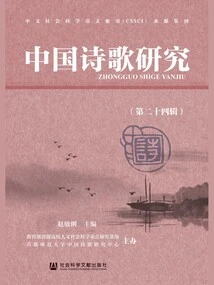
Research on Chinese Poetry (Volume 24)
Literature中国诗歌研究(第24辑)
Editor-in-chief Zhao Minli
"Chinese Poetry Research" is a large-scale academic series founded by the Chinese Poetry Research Center of Capital Normal University. The content covers the study of poetry at home and abroad in ancient and modern times. Since the first issue, it has successively set up columns such as research on ancient Chinese poetry, research on modern and contemporary Chinese poetry, research on Chinese poetry theory, research on Chinese ethnic minority poetry, research on contemporary overseas Chinese poetry, research on Chinese and Western comparative poetry, research on the history of poetry and poetic literature, and youth forums. Among them, the history of poetry, research on poetic literature, and youth forum are featured columns. The former focuses on the summary and organization of academic history and poetics documents, including genealogical results that are extremely valuable but difficult to include in other publications. The latter mainly focuses on the important research results of young scholars and actively supports the growth of the industry. It has a good reputation in academic circles at home and abroad.
"Chinese Poetry Research" is a large-scale academic series founded by the Chinese Poetry Research Center of Capital Normal University. The content covers the study of poetry at home and abroad in ancient and modern times. Since the first issue, it has successively set up columns such as research on ancient Chinese poetry, research on modern and contemporary Chinese poetry, research on Chinese poetry theory, research on Chinese ethnic minority poetry, research on contemporary overseas Chinese poetry, research on Chinese and Western comparative poetry, research on the history of poetry and poetic literature, and youth forums. Among them, the history of poetry, research on poetic literature, and youth forum are featured columns. The former focuses on the summary and organization of academic history and poetics documents, including genealogical results that are extremely valuable but difficult to include in other publications. The latter mainly focuses on the important research results of young scholars and actively supports the growth of the industry. It has a good reputation in academic circles at home and abroad.
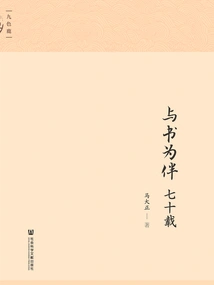
Living with Books for Seventy Years
Literature与书为伴七十载
Ma Dazheng
This book is divided into two categories: leisure reading and professional reading. It tells the story of my seventy-year reading career. The book is divided into "Reading Chapter", "Book Searching Chapter", "Writing Chapter" and "Book Giving Chapter", and also has a "Reminiscence Chapter" to commemorate the fourteen teachers and friends who have passed away, including the author's mentors and teachers, close friends and partners in academic cooperation, and two college classmates who were close friends. They were both mentors and collaborators of the author's academic career. This book is a completely personalized academic recollection, but the author is not an alternative intellectual isolated from society after all. Whether consciously or unconsciously, actively or passively, the author's memories of searching for dreams in a sea of books can reflect the changes of the seventy-year era from one side, as well as the direct or indirect impact of the changes in the author's personal life experience on his reading career. The author's memories and thoughts about his reading career, in which he narrates his experiences and discusses his insights, are not only a review of his own life, but also a reference for those who are interested!
This book is divided into two categories: leisure reading and professional reading. It tells the story of my seventy-year reading career. The book is divided into "Reading Chapter", "Book Searching Chapter", "Writing Chapter" and "Book Giving Chapter", and also has a "Reminiscence Chapter" to commemorate the fourteen teachers and friends who have passed away, including the author's mentors and teachers, close friends and partners in academic cooperation, and two college classmates who were close friends. They were both mentors and collaborators of the author's academic career. This book is a completely personalized academic recollection, but the author is not an alternative intellectual isolated from society after all. Whether consciously or unconsciously, actively or passively, the author's memories of searching for dreams in a sea of books can reflect the changes of the seventy-year era from one side, as well as the direct or indirect impact of the changes in the author's personal life experience on his reading career. The author's memories and thoughts about his reading career, in which he narrates his experiences and discusses his insights, are not only a review of his own life, but also a reference for those who are interested!
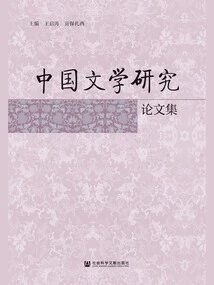
中国文学研究论文集
Gongbao Tashi Editor-in-chief Wang Qitao
"Chinese Literature Research Papers" is a collection of papers sponsored by the School of Chinese Language and Literature of Southwest University for Nationalities. It covers ancient Chinese literature, modern and contemporary Chinese literature, philology, literature and art, comparative literature and other disciplines. It contains a total of 23 papers. It advocates adhering to scientific and constructive principles and encouraging academic innovation under the guidance of Marxist ideas.
"Chinese Literature Research Papers" is a collection of papers sponsored by the School of Chinese Language and Literature of Southwest University for Nationalities. It covers ancient Chinese literature, modern and contemporary Chinese literature, philology, literature and art, comparative literature and other disciplines. It contains a total of 23 papers. It advocates adhering to scientific and constructive principles and encouraging academic innovation under the guidance of Marxist ideas.
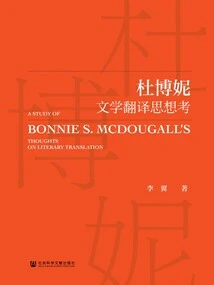
杜博妮文学翻译思想考
Li Yi
This book takes the literary translation thoughts of Australian sinologist Professor Du Boni as its main research object. Du Boni is an internationally renowned researcher, translator and translation theorist of modern and contemporary Chinese literature. Her research covers the entire modern and contemporary Chinese literature, integrating research, translation and teaching. She has made important contributions to the spread of Chinese literature and culture overseas, and has contributed greatly to the improvement of the international influence of Chinese literature and the improvement of cultural soft power. By sorting out, summarizing, theoretically elucidating and practicing verifying Du Boni's literary translation thoughts, the book builds Du Boni's complete translation thought system, presents the full picture of Du Boni's translation thoughts, and further enriches the existing translation research on Du Boni.
This book takes the literary translation thoughts of Australian sinologist Professor Du Boni as its main research object. Du Boni is an internationally renowned researcher, translator and translation theorist of modern and contemporary Chinese literature. Her research covers the entire modern and contemporary Chinese literature, integrating research, translation and teaching. She has made important contributions to the spread of Chinese literature and culture overseas, and has contributed greatly to the improvement of the international influence of Chinese literature and the improvement of cultural soft power. By sorting out, summarizing, theoretically elucidating and practicing verifying Du Boni's literary translation thoughts, the book builds Du Boni's complete translation thought system, presents the full picture of Du Boni's translation thoughts, and further enriches the existing translation research on Du Boni.
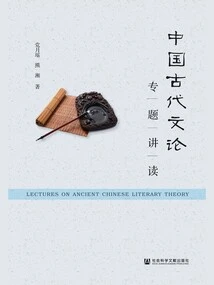
中国古代文论专题讲读
Dang Yueyao Xiong Xiang
The tentative title of this book is "Special Lectures on Ancient Chinese Literary Theory". It is a reading book on ancient Chinese literary theory for undergraduates majoring in Chinese. The focus of this book is mainly reflected in the following two aspects. First, it conducts thematic analysis around the core topics of ancient literary theory, transforms its own research results, and actively absorbs recent academic results. While being academic, it allows students (readers) to understand relevant research trends and deepen their understanding of traditional literary theory. The second is to effectively integrate the sorting out of literary theory themes and the reading of literary theory works. The selection of literary theory focuses more on the annotation of the works but less on the sorting out of theoretical ideas, while the history of literary theory focuses more on the sorting out of theoretical ideas but less on the in-depth interpretation of the works. This book integrates the analysis of classic works into the corresponding thematic context. The focus of reading literary theory works is not on the interpretation of words, but on examining the discourse composition and flow of meaning of literary theory works, that is, solving the problem of "why the author wrote this way", and then indicating a method of close reading of texts. The following is a tentative table of contents. Only part of it is currently completed, and one or two more chapters may be added later.
The tentative title of this book is "Special Lectures on Ancient Chinese Literary Theory". It is a reading book on ancient Chinese literary theory for undergraduates majoring in Chinese. The focus of this book is mainly reflected in the following two aspects. First, it conducts thematic analysis around the core topics of ancient literary theory, transforms its own research results, and actively absorbs recent academic results. While being academic, it allows students (readers) to understand relevant research trends and deepen their understanding of traditional literary theory. The second is to effectively integrate the sorting out of literary theory themes and the reading of literary theory works. The selection of literary theory focuses more on the annotation of the works but less on the sorting out of theoretical ideas, while the history of literary theory focuses more on the sorting out of theoretical ideas but less on the in-depth interpretation of the works. This book integrates the analysis of classic works into the corresponding thematic context. The focus of reading literary theory works is not on the interpretation of words, but on examining the discourse composition and flow of meaning of literary theory works, that is, solving the problem of "why the author wrote this way", and then indicating a method of close reading of texts. The following is a tentative table of contents. Only part of it is currently completed, and one or two more chapters may be added later.
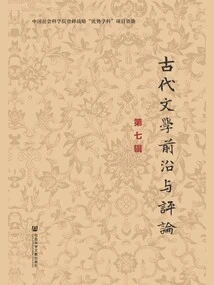
古代文学前沿与评论(第7辑)
Editor-in-chief Liu Yuejin
"Ancient Literature Frontiers and Commentary" is a professional academic journal sponsored by the ancient literature dominant discipline of the Institute of Literature, Chinese Academy of Social Sciences. It aims to reflect the research status of ancient Chinese literature and its cutting-edge developments. It has columns such as special articles, written talks, book reviews, interviews, special comments, cutting-edge reviews, meeting minutes, project developments, argument collections, new materials, and special collections of documents. This book is the seventh volume and is divided into three parts: "Frontiers of Research on The Book of Songs", "Memories of Literature", and "New Horizons for Research on The Scholars".
"Ancient Literature Frontiers and Commentary" is a professional academic journal sponsored by the ancient literature dominant discipline of the Institute of Literature, Chinese Academy of Social Sciences. It aims to reflect the research status of ancient Chinese literature and its cutting-edge developments. It has columns such as special articles, written talks, book reviews, interviews, special comments, cutting-edge reviews, meeting minutes, project developments, argument collections, new materials, and special collections of documents. This book is the seventh volume and is divided into three parts: "Frontiers of Research on The Book of Songs", "Memories of Literature", and "New Horizons for Research on The Scholars".
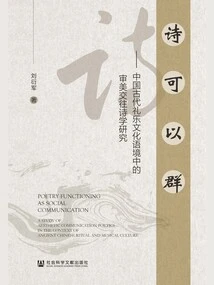
诗可以群:中国古代礼乐文化语境中的审美交往诗学研究
Liu Yanjun
The study of "poetry can be grouped" in this book takes Confucius's poetic thoughts as the core, but it is not limited to Confucius's exposition. It traces the origins and traces, and takes the tradition of poetry communication as the object of investigation. From the ritual and music poetry activities of the pre-Qin Dynasty to the poetry communication activities after the Wei and Jin Dynasties, it explores the specific connotation of the poetry communication tradition in each era and its logical evolution relationship, and reveals the rules of its evolution.
The study of "poetry can be grouped" in this book takes Confucius's poetic thoughts as the core, but it is not limited to Confucius's exposition. It traces the origins and traces, and takes the tradition of poetry communication as the object of investigation. From the ritual and music poetry activities of the pre-Qin Dynasty to the poetry communication activities after the Wei and Jin Dynasties, it explores the specific connotation of the poetry communication tradition in each era and its logical evolution relationship, and reveals the rules of its evolution.
中国现当代小说经典导读
Li Xiaohong
This book is divided into two parts: Chinese modern novels and Chinese contemporary novels. The chapters of the whole book are mainly arranged with time as the longitude and specific writers' works as the latitude. In terms of the selection of chapters, this book covers the major novelists and representative works of different literary schools covered in the course on the history of modern and contemporary Chinese literature. It also includes new works that caused great repercussions in that year or have appeared since the 21st century (mainly works that won the Mao Dun Literature Award). In terms of specific content arrangement, each chapter includes three parts: an introduction to the author, an introduction to the work, and after-class exercises. This book focuses on the analysis of the novel's themes, ideas, and artistic features from two dimensions: writers and works. It aims to guide readers to comprehensively understand the outstanding creative achievements and splendid style of Chinese modern and contemporary novels, grasp the laws of development and evolution of Chinese modern and contemporary novels, and thereby improve readers' ability to analyze and appreciate novels.
This book is divided into two parts: Chinese modern novels and Chinese contemporary novels. The chapters of the whole book are mainly arranged with time as the longitude and specific writers' works as the latitude. In terms of the selection of chapters, this book covers the major novelists and representative works of different literary schools covered in the course on the history of modern and contemporary Chinese literature. It also includes new works that caused great repercussions in that year or have appeared since the 21st century (mainly works that won the Mao Dun Literature Award). In terms of specific content arrangement, each chapter includes three parts: an introduction to the author, an introduction to the work, and after-class exercises. This book focuses on the analysis of the novel's themes, ideas, and artistic features from two dimensions: writers and works. It aims to guide readers to comprehensively understand the outstanding creative achievements and splendid style of Chinese modern and contemporary novels, grasp the laws of development and evolution of Chinese modern and contemporary novels, and thereby improve readers' ability to analyze and appreciate novels.
韩愈古文评点的整理及其研究
Jiang Yunpeng
Since the Song Dynasty, Han Yu's collected works have become the focus of compilation, annotation, and criticism by various literary masters. However, compared with the compilation and research results in editing and annotation, the collation and research of its comments have not achieved much results due to long-term neglect by the academic community. This book starts from collecting and sorting out the original documents of Han Yu's collected works, and takes the comments on Han Yu's ancient writings in the past dynasties as the research object. It divides the development process of Han Yu's ancient writings into the beginning and foundation period (Song Dynasty), the prosperity and development period (Ming Dynasty). Chapter), prosperity and peak period (Qing Dynasty chapter), organized, discussed and explained in three periods, with a total of nine chapters, which not only fully presents the true appearance of Han Yu's ancient literary commentaries in each period, but also deeply clarifies the development context of Han Yu's ancient literary commentaries. In addition, this book also contains a variety of rare and precious commentaries by famous writers that have been ignored by the academic community.
Since the Song Dynasty, Han Yu's collected works have become the focus of compilation, annotation, and criticism by various literary masters. However, compared with the compilation and research results in editing and annotation, the collation and research of its comments have not achieved much results due to long-term neglect by the academic community. This book starts from collecting and sorting out the original documents of Han Yu's collected works, and takes the comments on Han Yu's ancient writings in the past dynasties as the research object. It divides the development process of Han Yu's ancient writings into the beginning and foundation period (Song Dynasty), the prosperity and development period (Ming Dynasty). Chapter), prosperity and peak period (Qing Dynasty chapter), organized, discussed and explained in three periods, with a total of nine chapters, which not only fully presents the true appearance of Han Yu's ancient literary commentaries in each period, but also deeply clarifies the development context of Han Yu's ancient literary commentaries. In addition, this book also contains a variety of rare and precious commentaries by famous writers that have been ignored by the academic community.
四千年文选
Selections By Gao Shizhi And Commentaries By Gao Xiangzhang
"Four Thousand Years of Writings" is an anthology of Chinese literature from past dynasties, with a total of 102 selected articles starting from the pre-Qin Dynasty to modern times. The book was edited, punctuated, and annotated by Mr. Gao Shizhi. Mr. Gao Shizhi is famous for his poetry and calligraphy. He taught at Sichuan University in the early days of the Anti-Japanese War. He compiled his own ancient prose as lecture notes, which have been passed down to the world and were adopted by schools in Sichuan during the Anti-Japanese War. In 1943, the lecture notes were published under the title "Selected Works of Four Thousand Years" by Fuxing Bookstore in Chengdu, Sichuan. In 1996, Mr. Gao Xiangzhang, a descendant of the Gao family, reorganized the book, added annotations and explanations, and published it in 2003. This time the whole book has been revised and reprinted, which makes this well-selected and thoroughly explained university ancient Chinese textbook of the Republic of China more perfect and presented with a new look.
"Four Thousand Years of Writings" is an anthology of Chinese literature from past dynasties, with a total of 102 selected articles starting from the pre-Qin Dynasty to modern times. The book was edited, punctuated, and annotated by Mr. Gao Shizhi. Mr. Gao Shizhi is famous for his poetry and calligraphy. He taught at Sichuan University in the early days of the Anti-Japanese War. He compiled his own ancient prose as lecture notes, which have been passed down to the world and were adopted by schools in Sichuan during the Anti-Japanese War. In 1943, the lecture notes were published under the title "Selected Works of Four Thousand Years" by Fuxing Bookstore in Chengdu, Sichuan. In 1996, Mr. Gao Xiangzhang, a descendant of the Gao family, reorganized the book, added annotations and explanations, and published it in 2003. This time the whole book has been revised and reprinted, which makes this well-selected and thoroughly explained university ancient Chinese textbook of the Republic of China more perfect and presented with a new look.
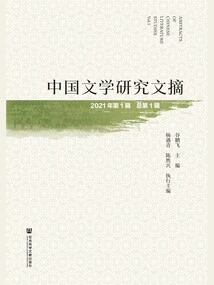
中国文学研究文摘(2021年第1辑\u002F总第1辑)
Editor-in-chief Gu Pengfei
This journal is the first volume of the Chinese literature research paper abstract series. It has five columns: "Ancient Chinese Literature and Philology," "Literary Studies," "Chinese Modern and Contemporary Literature," "Comparative Literature and World Literature," and "Linguistics." It reprints and recommends outstanding papers in the field of Chinese literature research since 2020 in the form of "academic abstracts" and "argument excerpts", and uses "host words" written by column experts as a review and introduction. The selected papers undergo preliminary review by the column team, review by the editor-in-chief, and external review by peer experts. We strive to be less complex and more eloquent among the rich annual academic achievements, and to select the most problem-conscious and original ideas for inclusion in one publication, showing the latest developments and development directions of Chinese literary research.
This journal is the first volume of the Chinese literature research paper abstract series. It has five columns: "Ancient Chinese Literature and Philology," "Literary Studies," "Chinese Modern and Contemporary Literature," "Comparative Literature and World Literature," and "Linguistics." It reprints and recommends outstanding papers in the field of Chinese literature research since 2020 in the form of "academic abstracts" and "argument excerpts", and uses "host words" written by column experts as a review and introduction. The selected papers undergo preliminary review by the column team, review by the editor-in-chief, and external review by peer experts. We strive to be less complex and more eloquent among the rich annual academic achievements, and to select the most problem-conscious and original ideas for inclusion in one publication, showing the latest developments and development directions of Chinese literary research.
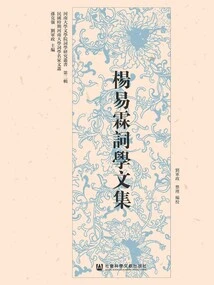
Collected Works of Yang Yilin's Poetry
Literature杨易霖词学文集
Compiled And Edited By Liu Junzheng
This book is one of the second series of the "Chapterology Research Series of the College of Liberal Arts of Henan University" and "The Collection of Famous Poetry Masters of Henan University during the Republic of China". Yang Yilin (1909-1995), whose real name is Yucang, was born in Xiaogu, Qianwei, Sichuan. He once studied at Peking University, was inspired by Zhang Taiyan, and later studied ci under Shao Ruipeng. In 1931, Shao Ruipeng went to Henan University to serve as the director of the Chinese Language Department. Yang Yilin followed him and entered Henan University to continue studying Ci. In addition, he also participated in the singing and singing activities of the teacher-student Ci club organized by Shao Ruipeng, and his singing and lyrics were compiled into "The Remaining Sound of Mountain Birds". After Shao Ruipeng died in Kaifeng, Yang Yilin returned to Sichuan to engage in politics, and then faded out of the field of Ci study. This book is the first work that comprehensively collects and organizes the literature on Yang Yilin's Ci, including "The Rules of Zhou Ci", "Ci Model", "Yang Yilin's Ci", "Collation of Ziyang Zhenren's Ci" and "Miscellaneous Notes on Reading Ci". Among them, "Zhou Ci Dinglu" is the first Ci notation work in the history of Chinese Ci that includes both four-tone notation and flat and oblique notation. The compilation and publication of this book hopes to help Ci researchers gain an in-depth understanding of the academic achievements of Ci scholar Yang Yilin, and to promote the further development of Ci rhythm studies, Ci selection studies, Taoist research and other fields.
This book is one of the second series of the "Chapterology Research Series of the College of Liberal Arts of Henan University" and "The Collection of Famous Poetry Masters of Henan University during the Republic of China". Yang Yilin (1909-1995), whose real name is Yucang, was born in Xiaogu, Qianwei, Sichuan. He once studied at Peking University, was inspired by Zhang Taiyan, and later studied ci under Shao Ruipeng. In 1931, Shao Ruipeng went to Henan University to serve as the director of the Chinese Language Department. Yang Yilin followed him and entered Henan University to continue studying Ci. In addition, he also participated in the singing and singing activities of the teacher-student Ci club organized by Shao Ruipeng, and his singing and lyrics were compiled into "The Remaining Sound of Mountain Birds". After Shao Ruipeng died in Kaifeng, Yang Yilin returned to Sichuan to engage in politics, and then faded out of the field of Ci study. This book is the first work that comprehensively collects and organizes the literature on Yang Yilin's Ci, including "The Rules of Zhou Ci", "Ci Model", "Yang Yilin's Ci", "Collation of Ziyang Zhenren's Ci" and "Miscellaneous Notes on Reading Ci". Among them, "Zhou Ci Dinglu" is the first Ci notation work in the history of Chinese Ci that includes both four-tone notation and flat and oblique notation. The compilation and publication of this book hopes to help Ci researchers gain an in-depth understanding of the academic achievements of Ci scholar Yang Yilin, and to promote the further development of Ci rhythm studies, Ci selection studies, Taoist research and other fields.
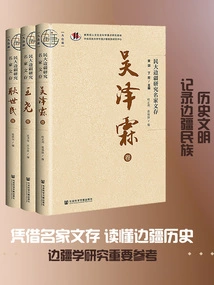
民大边疆研究名家文存(全3卷)
Yuan Jian Editor-in-chief Ding Hong
"Wu Zelin Volume": Wu Zelin (1898-1990), a famous ethnologist, anthropologist, museologist, and former professor at Minzu University of China. After the founding of the People's Republic of China, he conducted ethnological fieldwork in minority areas in southwest China many times. This volume contains nearly 300,000 words of his classic works. The main contents include an introduction to the theoretical methods of anthropology, sociology, and psychology in Western academic circles in the first half of the 20th century, understanding of historical cultural relics and ethnomuseology of ethnic minorities, field surveys of the Miao and Yi people in Guizhou, and research on the trends in world population development and changes from the 19th to the 20th century. "Wang Yao Volume": Wang Yao (1928-2015), a world-famous Tibetologist. He once served as a visiting professor at the University of Vienna in Austria, the University of Bonn in Germany, the University of Toronto in Canada, and a professor at the Tibet College of the University of China for Nationalities. This volume selects about 300,000 words from his classic works. The main contents include research on the phonetics of medieval Tibetan language, ancient Tibetan inscriptions in Xixia and Tibet, textual research on Buddhist scriptures, medieval Tibetan drama culture, Tibetan poetry, etc. The level of many papers has been recognized by the World Tibetology Research Institute. "Geng Shimin Volume": Geng Shimin (1929-2012), a world-renowned expert in Central Asian studies and Western Regions studies. The first generation of ethnic philologist in New China and the first person in China to study the ancient Turkic language. He received the Internationally Renowned Scholar Award from the Humboldt Foundation in Germany and the PLAC Gold Medal, the highest award in the Altai academic community in the world. This volume selects more than 300,000 words from his classic works, mainly focusing on the use of Dunhuang documents to study the linguistics of the Western Regions (Uighur and Turkic), inscriptions, translation of medieval Buddhist scriptures, epic legends, and geographical appraisal. Many of his papers have reached the world's top level and are admired by Turkic scholars around the world.
"Wu Zelin Volume": Wu Zelin (1898-1990), a famous ethnologist, anthropologist, museologist, and former professor at Minzu University of China. After the founding of the People's Republic of China, he conducted ethnological fieldwork in minority areas in southwest China many times. This volume contains nearly 300,000 words of his classic works. The main contents include an introduction to the theoretical methods of anthropology, sociology, and psychology in Western academic circles in the first half of the 20th century, understanding of historical cultural relics and ethnomuseology of ethnic minorities, field surveys of the Miao and Yi people in Guizhou, and research on the trends in world population development and changes from the 19th to the 20th century. "Wang Yao Volume": Wang Yao (1928-2015), a world-famous Tibetologist. He once served as a visiting professor at the University of Vienna in Austria, the University of Bonn in Germany, the University of Toronto in Canada, and a professor at the Tibet College of the University of China for Nationalities. This volume selects about 300,000 words from his classic works. The main contents include research on the phonetics of medieval Tibetan language, ancient Tibetan inscriptions in Xixia and Tibet, textual research on Buddhist scriptures, medieval Tibetan drama culture, Tibetan poetry, etc. The level of many papers has been recognized by the World Tibetology Research Institute. "Geng Shimin Volume": Geng Shimin (1929-2012), a world-renowned expert in Central Asian studies and Western Regions studies. The first generation of ethnic philologist in New China and the first person in China to study the ancient Turkic language. He received the Internationally Renowned Scholar Award from the Humboldt Foundation in Germany and the PLAC Gold Medal, the highest award in the Altai academic community in the world. This volume selects more than 300,000 words from his classic works, mainly focusing on the use of Dunhuang documents to study the linguistics of the Western Regions (Uighur and Turkic), inscriptions, translation of medieval Buddhist scriptures, epic legends, and geographical appraisal. Many of his papers have reached the world's top level and are admired by Turkic scholars around the world.
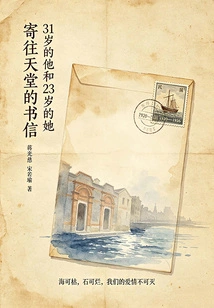
31岁的他和23岁的她:寄往天堂的书信
Jiang Guangci Song Ruoyu
"The sea can dry up, the stone can break, but my love for you will never die." This is a testimony of love that spans a hundred years. Jiang Guangci, a pioneer of modern Chinese revolutionary literature, met his lover Song Ruoyu during the May Fourth Movement. The 96 letters record a deep love that has been affected by the times but remains unswerving. One of them is a revolutionary poet, and the other is a like-minded new woman; they use their pen and ink to fight against distance, and use their faith to protect love. However, fate was cruel. Just one month after her wedding, Song Ruoyu suffered from a recurrence of lung disease and soon passed away at the age of 23. Five years later, 31-year-old Jiang Guangci also died of lung disease. Their story leaves to future generations an immortal legend about love and loss, revolution and ideals. This book was first published in 1927 and contains all extant letters, not a word changed, presented in their original form. This is a true slice of the love outlook of Chinese intellectuals in the early 20th century, and it is also the longest love letter a person wrote in the rest of his life.
"The sea can dry up, the stone can break, but my love for you will never die." This is a testimony of love that spans a hundred years. Jiang Guangci, a pioneer of modern Chinese revolutionary literature, met his lover Song Ruoyu during the May Fourth Movement. The 96 letters record a deep love that has been affected by the times but remains unswerving. One of them is a revolutionary poet, and the other is a like-minded new woman; they use their pen and ink to fight against distance, and use their faith to protect love. However, fate was cruel. Just one month after her wedding, Song Ruoyu suffered from a recurrence of lung disease and soon passed away at the age of 23. Five years later, 31-year-old Jiang Guangci also died of lung disease. Their story leaves to future generations an immortal legend about love and loss, revolution and ideals. This book was first published in 1927 and contains all extant letters, not a word changed, presented in their original form. This is a true slice of the love outlook of Chinese intellectuals in the early 20th century, and it is also the longest love letter a person wrote in the rest of his life.
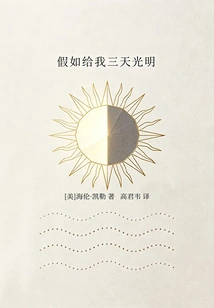
假如给我三天光明(有质量文库)
Helen Keller
"If you were only given three days of light, what would you use to see?" Helen Keller set this question for herself in a dark and silent world. She will use these three days to see relatives, art and life. The text in Gao Junwei's translation is clean and restrained, like a blind man running his fingertips across the raised characters and reading his life word by word. A man who has been blind almost all his life wants to see the whole world with three days of light. But when we keep our eyes open every day, we often forget what we really want to see. This book asks, perhaps, each of us.
"If you were only given three days of light, what would you use to see?" Helen Keller set this question for herself in a dark and silent world. She will use these three days to see relatives, art and life. The text in Gao Junwei's translation is clean and restrained, like a blind man running his fingertips across the raised characters and reading his life word by word. A man who has been blind almost all his life wants to see the whole world with three days of light. But when we keep our eyes open every day, we often forget what we really want to see. This book asks, perhaps, each of us.
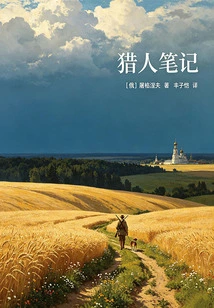
Hunter's Notes (With Quality Library)
Literature猎人笔记(有质量文库)
Turgenev
Deep in the dark forest, who is secretly stalking the little girl picking mushrooms at dusk? Why did the singing coming from the landlord's house late at night make the coachman outside the window burst into tears? Walking across Russia with a shotgun, what did Turgenev see? He saw that farmers understand dignity better than landowners, and saw those humble but hot souls under the pale sky. He didn't shout, just watched quietly, and then wrote everything down in this "Hunter's Notebook". Mr. Feng Zikai's translation is so flavorful, it's as if you can hear the sound of pine needles falling to the ground in the Russian forest. Birds have feathers and people have clothes. Strip away our clothes and class, and what are we left with? This book will tell you the answer. Perhaps, being able to see the tears of the humble is the greatest power of literature. Open it and you will understand why Tolstoy said: "After reading "A Hunter's Notebook", it is even difficult for me to write anymore."
Deep in the dark forest, who is secretly stalking the little girl picking mushrooms at dusk? Why did the singing coming from the landlord's house late at night make the coachman outside the window burst into tears? Walking across Russia with a shotgun, what did Turgenev see? He saw that farmers understand dignity better than landowners, and saw those humble but hot souls under the pale sky. He didn't shout, just watched quietly, and then wrote everything down in this "Hunter's Notebook". Mr. Feng Zikai's translation is so flavorful, it's as if you can hear the sound of pine needles falling to the ground in the Russian forest. Birds have feathers and people have clothes. Strip away our clothes and class, and what are we left with? This book will tell you the answer. Perhaps, being able to see the tears of the humble is the greatest power of literature. Open it and you will understand why Tolstoy said: "After reading "A Hunter's Notebook", it is even difficult for me to write anymore."
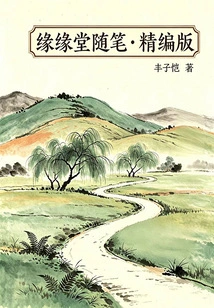
缘缘堂随笔·精编版(有质量文库)
Feng Zikai
Feng Zikai may be the most understanding of life among Chinese literati. He wrote about eating melon seeds, and he was able to write about the Chinese people's "doctorate" skills; he wrote about the white goose, saying that it is full of arrogance, needs to be served when eating, and is more vicious than a dog; about children, they use stools as trains and banana fans as bicycles, and they play more seriously than adults. He hides in Yuanyuan Hall to see the world, and uses the simplest words to describe the most profound human world. You think he is talking about romance and family affairs, but in fact, he is talking about life in every sentence. But it was these trivial matters that he wrote into short chapters that have been handed down from generation to generation. It's no wonder that Zhu Ziqing, Ba Jin, and Junichiro Tanizaki couldn't help but praise a few words. Opening this book, you will find that there are so many poems and philosophies hidden in life that have been deliberately ignored.
Feng Zikai may be the most understanding of life among Chinese literati. He wrote about eating melon seeds, and he was able to write about the Chinese people's "doctorate" skills; he wrote about the white goose, saying that it is full of arrogance, needs to be served when eating, and is more vicious than a dog; about children, they use stools as trains and banana fans as bicycles, and they play more seriously than adults. He hides in Yuanyuan Hall to see the world, and uses the simplest words to describe the most profound human world. You think he is talking about romance and family affairs, but in fact, he is talking about life in every sentence. But it was these trivial matters that he wrote into short chapters that have been handed down from generation to generation. It's no wonder that Zhu Ziqing, Ba Jin, and Junichiro Tanizaki couldn't help but praise a few words. Opening this book, you will find that there are so many poems and philosophies hidden in life that have been deliberately ignored.
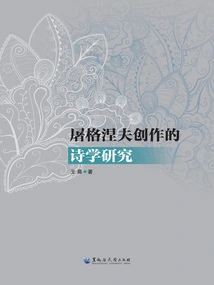
屠格涅夫创作的诗学研究
Wang Chen
This book mainly includes three parts. Research on the themes in Turgenev's novels: the theme of contradiction between ideals and reality, the theme of the relationship between love and obligation, and the theme of social change; analysis of the romantic features in Turgenev's creations: poetic scene descriptions, sincere and profound subjective lyricism, legendary character plots; the poetic expression of Turgenev's world view (philosophical outlook, outlook on life, and outlook on love).
This book mainly includes three parts. Research on the themes in Turgenev's novels: the theme of contradiction between ideals and reality, the theme of the relationship between love and obligation, and the theme of social change; analysis of the romantic features in Turgenev's creations: poetic scene descriptions, sincere and profound subjective lyricism, legendary character plots; the poetic expression of Turgenev's world view (philosophical outlook, outlook on life, and outlook on love).
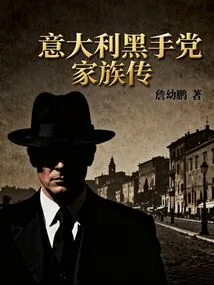
Italian Mafia Family Story
Literature意大利黑手党家族传
Zhan Youpeng
This book not only introduces the origin, development and factions of the Italian Mafia, but also focuses on showing its typical criminal methods and criminal facts in different eras and stages. Combating terrorism and organized crime remains a major obligation in today's society. Only by understanding more about the mafia can we attack with more intensity. They committed murder and arson in Sicily, committing all kinds of crimes, but they were responsible for the smooth landing of the British and American Allied Forces during World War II. The fascists were rampant in the world, but Sicily did not buy their fault. When Mussolini inspected Sicily, the hat on his head was missing. The only animals that greeted him were beggars - Sicily will always be the world of the Mafia. After the death of "Godfather" Vizzini, a generation of powerful hero Cutolo rose from the ground. Sicily will always be bloody, and there will be no end to the anti-terrorist earthquake...
This book not only introduces the origin, development and factions of the Italian Mafia, but also focuses on showing its typical criminal methods and criminal facts in different eras and stages. Combating terrorism and organized crime remains a major obligation in today's society. Only by understanding more about the mafia can we attack with more intensity. They committed murder and arson in Sicily, committing all kinds of crimes, but they were responsible for the smooth landing of the British and American Allied Forces during World War II. The fascists were rampant in the world, but Sicily did not buy their fault. When Mussolini inspected Sicily, the hat on his head was missing. The only animals that greeted him were beggars - Sicily will always be the world of the Mafia. After the death of "Godfather" Vizzini, a generation of powerful hero Cutolo rose from the ground. Sicily will always be bloody, and there will be no end to the anti-terrorist earthquake...
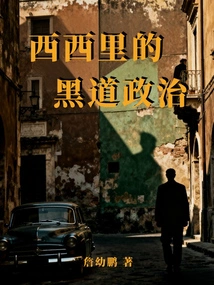
Sicilian Mafia Politics
Literature西西里的黑道政治
Zhan Youpeng
Is the underworld a political model? Is there such a political model in human history? Why is there a mafia political model? What kind of political model is underworld politics? Have. The political model in Sicily is such a political model - mafia politics. This is the political model that is generally accepted by the people in Sicily - Italian law is in name only in Sicily. From civilians to officials, only Mafia laws are practiced on the island, and this has lasted for nearly a hundred years. This book analyzes the history of the Italian Mafia, the largest underworld organization in the world today, through story writing, and explores the true meaning of the underworld political model.
Is the underworld a political model? Is there such a political model in human history? Why is there a mafia political model? What kind of political model is underworld politics? Have. The political model in Sicily is such a political model - mafia politics. This is the political model that is generally accepted by the people in Sicily - Italian law is in name only in Sicily. From civilians to officials, only Mafia laws are practiced on the island, and this has lasted for nearly a hundred years. This book analyzes the history of the Italian Mafia, the largest underworld organization in the world today, through story writing, and explores the true meaning of the underworld political model.
契诃夫短篇小说中梦的语言解析
Li Huo Dong Dan
This book selects dream fragments from Chekhov's novels and conducts an in-depth analysis of them to integrate and analyze the use of words in the language of this famous Russian short story writer, including writing techniques and writing creativity. The content includes an explanation of the Russian entries and word combinations related to "dreams" in Chekhov's novels; the types and analysis of the description of the characters' dreams in Chekhov's novels, and exploring how Chekhov can reflect the relationship between real characters in the dreams of the novel; and distinguishing reality from fiction from the narration of the characters' dreams in Chekhov's novels.
This book selects dream fragments from Chekhov's novels and conducts an in-depth analysis of them to integrate and analyze the use of words in the language of this famous Russian short story writer, including writing techniques and writing creativity. The content includes an explanation of the Russian entries and word combinations related to "dreams" in Chekhov's novels; the types and analysis of the description of the characters' dreams in Chekhov's novels, and exploring how Chekhov can reflect the relationship between real characters in the dreams of the novel; and distinguishing reality from fiction from the narration of the characters' dreams in Chekhov's novels.
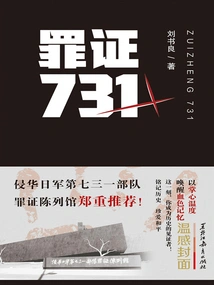
Evidence 731
Literature罪证731
Liu Shuliang
"Evidence 731" was planned to commemorate the 80th anniversary of the victory of the Chinese People's War of Resistance Against Japanese Aggression and the World Anti-Fascist War. It is a documentary literary work based on authoritative historical materials. The book is divided into seven chapters, systematically exposing the truth about the crimes of the Japanese invaders who committed "massacre" in the name of "science". The content covers the establishment of Unit 731, in vivo experiments, implementation of germ warfare, destruction of evidence after defeat, sheltering war criminals after the war, and the struggle of righteous people. The book uses first-hand historical materials as the narrative skeleton and restores the historical truth with evidence. This book is of great significance in exposing Japan's crimes of aggression against China, promoting patriotism and peace education, strengthening national memory, and condensing the national spirit.
"Evidence 731" was planned to commemorate the 80th anniversary of the victory of the Chinese People's War of Resistance Against Japanese Aggression and the World Anti-Fascist War. It is a documentary literary work based on authoritative historical materials. The book is divided into seven chapters, systematically exposing the truth about the crimes of the Japanese invaders who committed "massacre" in the name of "science". The content covers the establishment of Unit 731, in vivo experiments, implementation of germ warfare, destruction of evidence after defeat, sheltering war criminals after the war, and the struggle of righteous people. The book uses first-hand historical materials as the narrative skeleton and restores the historical truth with evidence. This book is of great significance in exposing Japan's crimes of aggression against China, promoting patriotism and peace education, strengthening national memory, and condensing the national spirit.
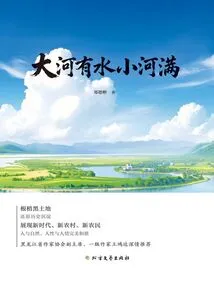
大河有水小河满
Zheng Debin
This book is a realistic script that focuses on the current great practice of rural poverty alleviation in China and delicately describes the vicissitudes of farmers' lives. This book uses a panoramic creative approach to describe a poor village in a remote area of Northeast China - Xiaohe Village, Sanhe Town, Jianghe County. The farmers strive unremittingly for the pursuit of a better life. With the full support of the adjacent wealthy Dahe Village and relevant departments, they achieve great changes in the countryside and achieve common prosperity. The plot of this book has ups and downs. It not only depicts the villagers' solidarity in the face of natural disasters and gritted their teeth when encountering market risks, but also shows the ideological awakening in the collision of concepts. Some people cling to tradition and refuse to change, while others break through resistance and boldly innovate. In contradictions and reconciliations, it outlines the true spectrum of human nature in the construction of new rural areas. The language style of the work is unique and distinctive, with rich northeastern dialect intertwined with local slang, which not only carries the fragrance of earth, but also reveals the cheerfulness and humor of the villagers, making every character vivid before your eyes, and comprehensively showing the new era, new countryside, new farmers, hard work, and the spirit of changing families.
This book is a realistic script that focuses on the current great practice of rural poverty alleviation in China and delicately describes the vicissitudes of farmers' lives. This book uses a panoramic creative approach to describe a poor village in a remote area of Northeast China - Xiaohe Village, Sanhe Town, Jianghe County. The farmers strive unremittingly for the pursuit of a better life. With the full support of the adjacent wealthy Dahe Village and relevant departments, they achieve great changes in the countryside and achieve common prosperity. The plot of this book has ups and downs. It not only depicts the villagers' solidarity in the face of natural disasters and gritted their teeth when encountering market risks, but also shows the ideological awakening in the collision of concepts. Some people cling to tradition and refuse to change, while others break through resistance and boldly innovate. In contradictions and reconciliations, it outlines the true spectrum of human nature in the construction of new rural areas. The language style of the work is unique and distinctive, with rich northeastern dialect intertwined with local slang, which not only carries the fragrance of earth, but also reveals the cheerfulness and humor of the villagers, making every character vivid before your eyes, and comprehensively showing the new era, new countryside, new farmers, hard work, and the spirit of changing families.
Editor's Talk
Literature编辑杂谈
Wei Xiran
The content of this book is mainly the immature insights and thoughts of the author who have been engaged in publishing work for more than ten years. It is divided into three parts: insights on publishing, theoretical exploration and book reviews. The Publishing Insights section explores the author's preliminary thoughts and understanding of the development of the publishing industry, talent and quality management. The Theoretical Exploration section provides a superficial analysis and discussion of the technical problems encountered in the author's editing work. The Book Review section is the author's simple insights and evaluations after reading the book.
The content of this book is mainly the immature insights and thoughts of the author who have been engaged in publishing work for more than ten years. It is divided into three parts: insights on publishing, theoretical exploration and book reviews. The Publishing Insights section explores the author's preliminary thoughts and understanding of the development of the publishing industry, talent and quality management. The Theoretical Exploration section provides a superficial analysis and discussion of the technical problems encountered in the author's editing work. The Book Review section is the author's simple insights and evaluations after reading the book.
诺贝尔文学获奖者的文本解读
Zhang Dongmei
This book selects representative writers from many Nobel Prize winners in literature, and conducts textual reading and classification analysis of their works. By selecting the main life experiences and emotional tendencies of the writers, establishing connections with the selected works, it tells what the writers inherited and learned from the literary heritage of their own country and other countries, the influence they received from writers of different schools at the same time, and their most important artistic pursuits and interests. Based on the original appearance of the classic translation, this book tells the story of literature, highlights the connections between important plots and events in the work, and directly quotes highlights from the text, striving to enable readers to understand the story connotation and artistic style of the original work in the shortest possible time. At the same time, it pays attention to the text from a cultural perspective, provides different cultural interpretations and cultural dialogues for different texts, and attempts to elaborate on each text in the field of history and culture.
This book selects representative writers from many Nobel Prize winners in literature, and conducts textual reading and classification analysis of their works. By selecting the main life experiences and emotional tendencies of the writers, establishing connections with the selected works, it tells what the writers inherited and learned from the literary heritage of their own country and other countries, the influence they received from writers of different schools at the same time, and their most important artistic pursuits and interests. Based on the original appearance of the classic translation, this book tells the story of literature, highlights the connections between important plots and events in the work, and directly quotes highlights from the text, striving to enable readers to understand the story connotation and artistic style of the original work in the shortest possible time. At the same time, it pays attention to the text from a cultural perspective, provides different cultural interpretations and cultural dialogues for different texts, and attempts to elaborate on each text in the field of history and culture.
Frontiers of Literary Theory (Volume 24)
Literature文学理论前沿(第24辑)
Editor-in-chief Wang Ning
"Frontiers of Literary Theory" (biannual) was founded in 2004. As the journal of the Chinese and Foreign Literary Theory Society and the only Chinese publication of the International Society of Literary Theory, it is currently one of the largest circulation journals in the humanities and social sciences in my country. This book is the 24th volume. It has three columns: "Exploration of Frontier Theoretical Trends", "Marxism and World Literature Research" and "Diaspora and Postcolonial Criticism", with a total of nine articles. These articles stand at the forefront of international literary theory and cultural studies, conduct in-depth research on hot topics of widespread concern in today's academic circles, and provide new interpretations.
"Frontiers of Literary Theory" (biannual) was founded in 2004. As the journal of the Chinese and Foreign Literary Theory Society and the only Chinese publication of the International Society of Literary Theory, it is currently one of the largest circulation journals in the humanities and social sciences in my country. This book is the 24th volume. It has three columns: "Exploration of Frontier Theoretical Trends", "Marxism and World Literature Research" and "Diaspora and Postcolonial Criticism", with a total of nine articles. These articles stand at the forefront of international literary theory and cultural studies, conduct in-depth research on hot topics of widespread concern in today's academic circles, and provide new interpretations.
学林新语:从文学阐述到文化评论
Liu Jingsong
This book contains a total of 28 articles, all of which have been published in publications such as "Macau Daily", "Macau Studies", "Journal of Macau Polytechnic", and "Teachers' Magazine". The book is divided into four parts, namely Xue Lin's New Words, Commentary, Creative World, and Interviews with Famous Artists. Xue Lin's new discourse elaborates on the literary value of Lin Zhongying's prose, Lu Xiang's father's cultural pursuit, and the cultural significance of Cheng Xiangwei's poems; the commentary on "Facing the Sea for Thirty Years", "She Said: Happy Cloudy Days", "Lu Xun and Gu Jiegang" "" and other articles provide unique reviews; the "Creative World" chapter collects the author's literary works at different stages, including narratives and life insights, which are quite vivid; the "Interviews with Famous Artists" chapter contains the author's interviews with Yang Yunzhong, Yang Yi, and Jin Guoping.
This book contains a total of 28 articles, all of which have been published in publications such as "Macau Daily", "Macau Studies", "Journal of Macau Polytechnic", and "Teachers' Magazine". The book is divided into four parts, namely Xue Lin's New Words, Commentary, Creative World, and Interviews with Famous Artists. Xue Lin's new discourse elaborates on the literary value of Lin Zhongying's prose, Lu Xiang's father's cultural pursuit, and the cultural significance of Cheng Xiangwei's poems; the commentary on "Facing the Sea for Thirty Years", "She Said: Happy Cloudy Days", "Lu Xun and Gu Jiegang" "" and other articles provide unique reviews; the "Creative World" chapter collects the author's literary works at different stages, including narratives and life insights, which are quite vivid; the "Interviews with Famous Artists" chapter contains the author's interviews with Yang Yunzhong, Yang Yi, and Jin Guoping.
戏曲与俗文学研究(第11辑)
Edited By Huang Shizhong
This book provides a platform for the textual research of Chinese popular literature. The book takes the study of ancient operas and popular literature as its main object, features empirical research, attaches great importance to the discovery and utilization of first-hand documentary materials, and emphasizes the investigation, cataloging, and textual research of basic literature. It especially emphasizes the research of textual research on literature and materials, that is, it focuses on author research, important event research, edition literature research, collection of catalogs for collectors at home and abroad, research on rare documents, and collection and interpretation of new literature materials. Opera, popular literature, literature, and empirical evidence are the key words that distinguish this book from other similar publications.
This book provides a platform for the textual research of Chinese popular literature. The book takes the study of ancient operas and popular literature as its main object, features empirical research, attaches great importance to the discovery and utilization of first-hand documentary materials, and emphasizes the investigation, cataloging, and textual research of basic literature. It especially emphasizes the research of textual research on literature and materials, that is, it focuses on author research, important event research, edition literature research, collection of catalogs for collectors at home and abroad, research on rare documents, and collection and interpretation of new literature materials. Opera, popular literature, literature, and empirical evidence are the key words that distinguish this book from other similar publications.
古代文学前沿与评论(第6辑)
Editor-in-chief Liu Yuejin
"Ancient Literature Frontiers and Commentary" is a professional academic journal sponsored by the ancient literature dominant discipline of the Institute of Literature, Chinese Academy of Social Sciences. It aims to reflect the research status of ancient Chinese literature and its cutting-edge developments. It has columns such as special articles, written talks, book reviews, interviews, special comments, cutting-edge reviews, meeting minutes, project developments, argument collections, new materials, and special collections of documents. This book is the sixth volume and is divided into three parts: "Album: Commemorating the 130th Anniversary of the Birth of Mr. Wang Boxiang", "Album: Commemorating the 120th Anniversary of the Birth of Mr. Yu Pingbo", and "Album: Commemorating the 110th Anniversary of the Birth of Mr. Qian Zhongshu".
"Ancient Literature Frontiers and Commentary" is a professional academic journal sponsored by the ancient literature dominant discipline of the Institute of Literature, Chinese Academy of Social Sciences. It aims to reflect the research status of ancient Chinese literature and its cutting-edge developments. It has columns such as special articles, written talks, book reviews, interviews, special comments, cutting-edge reviews, meeting minutes, project developments, argument collections, new materials, and special collections of documents. This book is the sixth volume and is divided into three parts: "Album: Commemorating the 130th Anniversary of the Birth of Mr. Wang Boxiang", "Album: Commemorating the 120th Anniversary of the Birth of Mr. Yu Pingbo", and "Album: Commemorating the 110th Anniversary of the Birth of Mr. Qian Zhongshu".
多丽丝·莱辛小说的身份书写策略
Natsuno
Lessing began her writing in 1950. Her writing on identity not only reflects the characteristics of the times in identity writing in literature, such as the writing of inter-identity and the recognition of the constructive nature of identity discourse; it also pays full attention to hot issues in the context of the times: such as post-colonial identity construction, female identity politics, and marginalized identity writing, etc. As for Lessing's basic strategies for writing identity, she also brings the theoretical awareness of modern and postmodern literature's exploration of forms, such as the strategic significance of spatial narrative, body narrative, and narrative means for identity writing. This book chooses to explore Lessing's literary creation from the perspective of identity writing.
Lessing began her writing in 1950. Her writing on identity not only reflects the characteristics of the times in identity writing in literature, such as the writing of inter-identity and the recognition of the constructive nature of identity discourse; it also pays full attention to hot issues in the context of the times: such as post-colonial identity construction, female identity politics, and marginalized identity writing, etc. As for Lessing's basic strategies for writing identity, she also brings the theoretical awareness of modern and postmodern literature's exploration of forms, such as the strategic significance of spatial narrative, body narrative, and narrative means for identity writing. This book chooses to explore Lessing's literary creation from the perspective of identity writing.
惊艳你的眼:你不知道的四大名著角落
Compiled By Shunshun
Ma Ruifang said: Carrying "Dream of Red Mansions" on your back can travel to the end of the world. Zhou Siyuan said: "Water Margin" is full of masculine genes. Shen Bojun: "The Romance of the Three Kingdoms" has the greatest influence on national character. Qian Wenzhong: "Journey to the West" directly reflects the character of the Han nation. Today, how do we read... Should we look at the characters in famous novels with different eyes? Zhuge Liang is the embodiment of wisdom in people's minds. One of the four classic classics, "The Romance of the Three Kingdoms", has successfully shaped his image. How much do you know about his story? What kind of new interpretation does Li Kui give in "Water Margin"? What we know and what is in books only accounts for a small part of the historical process, and most of it is unknown. Any historian only grasps a piece of the historical sea, and studies only one aspect or a certain field. Life goes on and history cannot repeat itself, but we must look at history with modern eyes. The purpose of this book is not to convey the so-called "knowledge", or what we have recorded in dictionaries, encyclopedias and related reference books, we will not repeat it here. Our proposition is to let readers view our book from a different perspective and trigger new awareness and experience in readers.
Ma Ruifang said: Carrying "Dream of Red Mansions" on your back can travel to the end of the world. Zhou Siyuan said: "Water Margin" is full of masculine genes. Shen Bojun: "The Romance of the Three Kingdoms" has the greatest influence on national character. Qian Wenzhong: "Journey to the West" directly reflects the character of the Han nation. Today, how do we read... Should we look at the characters in famous novels with different eyes? Zhuge Liang is the embodiment of wisdom in people's minds. One of the four classic classics, "The Romance of the Three Kingdoms", has successfully shaped his image. How much do you know about his story? What kind of new interpretation does Li Kui give in "Water Margin"? What we know and what is in books only accounts for a small part of the historical process, and most of it is unknown. Any historian only grasps a piece of the historical sea, and studies only one aspect or a certain field. Life goes on and history cannot repeat itself, but we must look at history with modern eyes. The purpose of this book is not to convey the so-called "knowledge", or what we have recorded in dictionaries, encyclopedias and related reference books, we will not repeat it here. Our proposition is to let readers view our book from a different perspective and trigger new awareness and experience in readers.
Commentary on Selected Modern Poems
Literature评理近体诗词选
Wu Pingli
"Selected Reviews of Modern Style Poems" contains more than 500 modern style poems, covering five major chapters: lyrics and music, Qilu, Qijue, Wulu, and Wujue. The works are based on rhythm and have a wide range of themes, including chants of mountains and rivers, sentiments about festivals, memories of classmates, reflections on life, and both family and country feelings and interest in life. The text is concise and elegant, with profound artistic conception. The true character is revealed in the contrast between plain and oblique lines. It not only inherits the rhythmic beauty of classical poetry, but also integrates the vivid experience of contemporary life, showing the author's profound literary accomplishment and rich life experience. It is a masterpiece of poetry that is both artistic and ideological.
"Selected Reviews of Modern Style Poems" contains more than 500 modern style poems, covering five major chapters: lyrics and music, Qilu, Qijue, Wulu, and Wujue. The works are based on rhythm and have a wide range of themes, including chants of mountains and rivers, sentiments about festivals, memories of classmates, reflections on life, and both family and country feelings and interest in life. The text is concise and elegant, with profound artistic conception. The true character is revealed in the contrast between plain and oblique lines. It not only inherits the rhythmic beauty of classical poetry, but also integrates the vivid experience of contemporary life, showing the author's profound literary accomplishment and rich life experience. It is a masterpiece of poetry that is both artistic and ideological.
One Less Poet Means One Less Night
Literature少一个诗人就少一个夜晚
Konoha
"One Less Poet, One Less Night: New Thoughts and New Voices in Centennial New Poetry" is a collection of poetry reviews created by poet and critic Konoha in recent years, including his critical texts on important poets and poetic propositions in the context of Centennial New Poetry. The title of the book "One less poet means one less night" comes from a small poem written by Konoha himself, which means that each poem is a unique spark lit by an individual in the darkness. He weaves the warp and weft of the structure with "Poet's Chapter" and "Poetry Thought Chapter", and his eyes travel through the grand star map of century-old new poetry. He not only gazes at the shining poetic constellations such as Feng Zhi, Mu Dan, Haizi, Xichuan, Zheng Min, Bei Dao, Zhai Yongming, etc., But also asks about "future poetics". ", "AI and Poetry" and other fluid and urgent contemporary poetic propositions, especially examining the dispersion of meaning brought about by the rapid development of technology, questioning the uniqueness of human emotions and the vitality of poetry in the game of "AI and Love", and trying to identify a spiritual night sky for habitation.
"One Less Poet, One Less Night: New Thoughts and New Voices in Centennial New Poetry" is a collection of poetry reviews created by poet and critic Konoha in recent years, including his critical texts on important poets and poetic propositions in the context of Centennial New Poetry. The title of the book "One less poet means one less night" comes from a small poem written by Konoha himself, which means that each poem is a unique spark lit by an individual in the darkness. He weaves the warp and weft of the structure with "Poet's Chapter" and "Poetry Thought Chapter", and his eyes travel through the grand star map of century-old new poetry. He not only gazes at the shining poetic constellations such as Feng Zhi, Mu Dan, Haizi, Xichuan, Zheng Min, Bei Dao, Zhai Yongming, etc., But also asks about "future poetics". ", "AI and Poetry" and other fluid and urgent contemporary poetic propositions, especially examining the dispersion of meaning brought about by the rapid development of technology, questioning the uniqueness of human emotions and the vitality of poetry in the game of "AI and Love", and trying to identify a spiritual night sky for habitation.
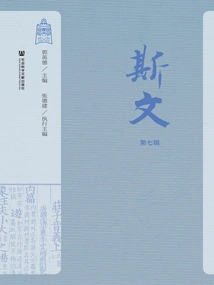
Sven (Volume 7)
Literature斯文(第7辑)
Editor-in-chief Guo Yingde
"Sven" is a large-scale academic journal with the research object of ancient Chinese prose planned to be co-founded by the Institute of Ancient Literature of the School of Liberal Arts of Beijing Normal University and the Ancient Chinese Prose Society. This book is the seventh volume, focusing on the latest scientific research results in the field of ancient Chinese prose research, ancient Chinese prose stylistic research, literary thought research, such as the collection and arrangement of new materials on ancient prose, exploration of new methods for ancient prose research, comments and praise of new treatises on ancient Chinese prose research, in order to build a platform for ancient Chinese prose research, and communicate practical experience in theories and methods in ancient Chinese prose research.
"Sven" is a large-scale academic journal with the research object of ancient Chinese prose planned to be co-founded by the Institute of Ancient Literature of the School of Liberal Arts of Beijing Normal University and the Ancient Chinese Prose Society. This book is the seventh volume, focusing on the latest scientific research results in the field of ancient Chinese prose research, ancient Chinese prose stylistic research, literary thought research, such as the collection and arrangement of new materials on ancient prose, exploration of new methods for ancient prose research, comments and praise of new treatises on ancient Chinese prose research, in order to build a platform for ancient Chinese prose research, and communicate practical experience in theories and methods in ancient Chinese prose research.
戏曲与俗文学研究(第10辑)
Edited By Huang Shizhong
This book provides a platform for the textual research of Chinese popular literature. The book takes the study of ancient operas and popular literature as its main object, features empirical research, attaches great importance to the discovery and utilization of first-hand documentary materials, and emphasizes the investigation, cataloging, and textual research of basic literature. It especially emphasizes the research of textual research on literature and materials, that is, it focuses on author research, important event research, edition literature research, collection of catalogs for collectors at home and abroad, research on rare documents, and collection and interpretation of new literature materials. Opera, popular literature, literature, and empirical evidence are the key words that distinguish this book from other similar publications.
This book provides a platform for the textual research of Chinese popular literature. The book takes the study of ancient operas and popular literature as its main object, features empirical research, attaches great importance to the discovery and utilization of first-hand documentary materials, and emphasizes the investigation, cataloging, and textual research of basic literature. It especially emphasizes the research of textual research on literature and materials, that is, it focuses on author research, important event research, edition literature research, collection of catalogs for collectors at home and abroad, research on rare documents, and collection and interpretation of new literature materials. Opera, popular literature, literature, and empirical evidence are the key words that distinguish this book from other similar publications.