Fanqie library
Browse
- Titles
- 1.3k
Every Fanqie book we index, searchable by title, author or tag.
-
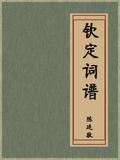 Imperial Ci Pu (Free Public Edition Book)
It is also called "Kangxi Ci Pu", or "Ci Pu" for short. Poetry works. It was first engraved in the 54th year of Kangxi reign (1715). Forty volumes. This book was compiled by reading the previous word scores and comparing them with each other. Any errors in the tone, segmentation, sentence pronunciation and rhyme of the old scores were corrected according to the original words. There are 826 tones and 2,306 styles collected from the Tang, Five Dynasties, Song and Yuan dynasties. The tunes are arr
15Reads8.5Score—Shelves
Imperial Ci Pu (Free Public Edition Book)
It is also called "Kangxi Ci Pu", or "Ci Pu" for short. Poetry works. It was first engraved in the 54th year of Kangxi reign (1715). Forty volumes. This book was compiled by reading the previous word scores and comparing them with each other. Any errors in the tone, segmentation, sentence pronunciation and rhyme of the old scores were corrected according to the original words. There are 826 tones and 2,306 styles collected from the Tang, Five Dynasties, Song and Yuan dynasties. The tunes are arr
15Reads8.5Score—Shelves
-
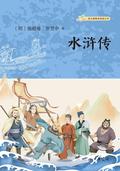 Water Margin (Three Volumes)--Recommended Reading Series for Chinese Classes
"Water Margin" is my country's first chapter-length novel with the theme of peasant uprising. The plot of the book revolves around the clue of "officials forcing people to rebel", showing the whole process of a group of "heroes" who could not bear the oppression of tyranny, rising up and gathering in Liangshan to be recruited. It composes a heroic epic with rich content, profound thoughts, and outstanding art, reflecting the profound class contradictions in society and the resistance struggle of
14Reads8.0Score—Shelves
Water Margin (Three Volumes)--Recommended Reading Series for Chinese Classes
"Water Margin" is my country's first chapter-length novel with the theme of peasant uprising. The plot of the book revolves around the clue of "officials forcing people to rebel", showing the whole process of a group of "heroes" who could not bear the oppression of tyranny, rising up and gathering in Liangshan to be recruited. It composes a heroic epic with rich content, profound thoughts, and outstanding art, reflecting the profound class contradictions in society and the resistance struggle of
14Reads8.0Score—Shelves
-
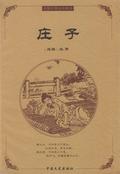 Zhuangzi
The book "Zhuangzi" reflects Zhuangzi's critical philosophy, art, aesthetics, aesthetics, politics, society and many other aspects. There are originally seven inner chapters, twenty-eight outer chapters, fourteen miscellaneous chapters, three explanatory chapters, fifty-two chapters, and more than 100,000 words. After Guo Xiang deleted it, it was divided into three parts: inner chapter, outer chapter and miscellaneous chapter. There are thirty-three chapters, more than 200 large and small fables
13Reads9.2Score—Shelves
Zhuangzi
The book "Zhuangzi" reflects Zhuangzi's critical philosophy, art, aesthetics, aesthetics, politics, society and many other aspects. There are originally seven inner chapters, twenty-eight outer chapters, fourteen miscellaneous chapters, three explanatory chapters, fifty-two chapters, and more than 100,000 words. After Guo Xiang deleted it, it was divided into three parts: inner chapter, outer chapter and miscellaneous chapter. There are thirty-three chapters, more than 200 large and small fables
13Reads9.2Score—Shelves
-
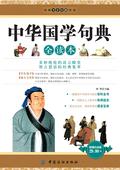 Complete Reader of Chinese Traditional Chinese Sentences
Chinese culture is extensive and profound, and Chinese characters are endlessly mysterious. The long history has created a vivid and wonderful language and characters for us. Every word and every sentence is a story, which affects the nerves of Chinese civilization and is the crystallization of the wisdom of Chinese culture over thousands of years. This book is a wonderful compilation of famous Chinese classics passed down from generation to generation. It is also a treasure trove of language fo
13Reads8.6Score—Shelves
Complete Reader of Chinese Traditional Chinese Sentences
Chinese culture is extensive and profound, and Chinese characters are endlessly mysterious. The long history has created a vivid and wonderful language and characters for us. Every word and every sentence is a story, which affects the nerves of Chinese civilization and is the crystallization of the wisdom of Chinese culture over thousands of years. This book is a wonderful compilation of famous Chinese classics passed down from generation to generation. It is also a treasure trove of language fo
13Reads8.6Score—Shelves
-
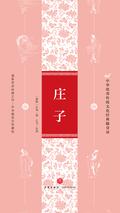 Zhuangzi
"Zhuangzi" was written by Zhuangzi, a famous thinker, philosopher, writer, and representative of the Taoist school in the middle of the Warring States Period. It is a treasure among ancient Chinese classics. Both in terms of philosophical thought and literary language, the work has had a profound and huge influence on thinkers and writers of all ages in our country, and plays an extremely important role in the history of thought and literature in our country. There are thirty-three works in tota
13Reads9.2Score—Shelves
Zhuangzi
"Zhuangzi" was written by Zhuangzi, a famous thinker, philosopher, writer, and representative of the Taoist school in the middle of the Warring States Period. It is a treasure among ancient Chinese classics. Both in terms of philosophical thought and literary language, the work has had a profound and huge influence on thinkers and writers of all ages in our country, and plays an extremely important role in the history of thought and literature in our country. There are thirty-three works in tota
13Reads9.2Score—Shelves
-
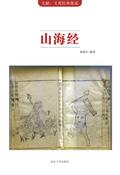 Classic of Mountains and Seas
The content includes: the author and the book of the Classic of Mountains and Seas, an overview of the content of the Classic of Mountains and Seas, the geographical content of the Classic of Mountains and Seas, the interpretation of the content of the Classic of Mountains and Seas, the value and influence of the Classic of Mountains and Seas, and the research and development of the Classic of Mountains and Seas.
12Reads8.5Score—Shelves
Classic of Mountains and Seas
The content includes: the author and the book of the Classic of Mountains and Seas, an overview of the content of the Classic of Mountains and Seas, the geographical content of the Classic of Mountains and Seas, the interpretation of the content of the Classic of Mountains and Seas, the value and influence of the Classic of Mountains and Seas, and the research and development of the Classic of Mountains and Seas.
12Reads8.5Score—Shelves
-
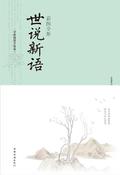 Colorful Illustrations Explain the World and Tell New Stories
This book looks at the society of two thousand years ago from the perspective of modern people, explores the subtle details, and provides a creative interpretation of the anecdotes of famous people in the Wei and Jin Dynasties recorded in "Shishuoxinyu". Through the interesting details of some people and some things, readers can appreciate the charm of that era while also deeply enlightening their own hearts.
11Reads9.2Score—Shelves
Colorful Illustrations Explain the World and Tell New Stories
This book looks at the society of two thousand years ago from the perspective of modern people, explores the subtle details, and provides a creative interpretation of the anecdotes of famous people in the Wei and Jin Dynasties recorded in "Shishuoxinyu". Through the interesting details of some people and some things, readers can appreciate the charm of that era while also deeply enlightening their own hearts.
11Reads9.2Score—Shelves
-
 Zhouyi's Interpretation of the Same Contract
Written by Song Chen Xianwei. Xiao Wei's courtesy name is Zongdao, his nickname is Baoyizi, and he is from Huaiyang. There was also a Taoist priest named Youshengguan in Lin'an between Jiading and Duanping. This book was published by his disciple Wang Yi in the first year of Duanping, with a microscopic preface. The order in the book is based on Peng Xiao's original work. A song about his cauldron is also attached to the end of the volume from the Peng edition. However, it is divided into three
11Reads8.5Score—Shelves
Zhouyi's Interpretation of the Same Contract
Written by Song Chen Xianwei. Xiao Wei's courtesy name is Zongdao, his nickname is Baoyizi, and he is from Huaiyang. There was also a Taoist priest named Youshengguan in Lin'an between Jiading and Duanping. This book was published by his disciple Wang Yi in the first year of Duanping, with a microscopic preface. The order in the book is based on Peng Xiao's original work. A song about his cauldron is also attached to the end of the volume from the Peng edition. However, it is divided into three
11Reads8.5Score—Shelves
-
 Guiguzi Tianmui Lingwen
. Author unknown. Volume Two. Original source: Method Class of Dongshen Department of "Orthodox Taoist Canon".
10Reads8.2Score—Shelves
Guiguzi Tianmui Lingwen
Guiguzi Tianmui Lingwen. Author unknown. Volume Two. Original source: Method Class of Dongshen Department of "Orthodox Taoist Canon".
10Reads8.2Score—Shelves
-
 The Wisdom of Confucius (2021 Revised Edition)
"The Wisdom of Confucius" is a philosophical reading written by Lin Yutang that interprets Confucius' thoughts. In Mr. Lin Yutang's view, Confucius' thoughts are not only "mottos for life" and "moral cultivation", but also a kind of deep rational thinking, a persistent pursuit of the meaning of life, full of poetic emotional content, and a religious character of "ultimate concern". Confucius' thoughts have been passed down from generation to generation, permeating the blood of each of us and bec
10Reads8.6Score—Shelves
The Wisdom of Confucius (2021 Revised Edition)
"The Wisdom of Confucius" is a philosophical reading written by Lin Yutang that interprets Confucius' thoughts. In Mr. Lin Yutang's view, Confucius' thoughts are not only "mottos for life" and "moral cultivation", but also a kind of deep rational thinking, a persistent pursuit of the meaning of life, full of poetic emotional content, and a religious character of "ultimate concern". Confucius' thoughts have been passed down from generation to generation, permeating the blood of each of us and bec
10Reads8.6Score—Shelves
-
 Mengqiu Through the Ages (Free Public Edition Book)
This book was probably written by Chen Yue for Tong Meng when he was teaching in his hometown. In the form of four-character rhymes, it briefly describes the rise and fall of the dynasties from the founding of the world to the Yuan Dynasty. Each dynasty describes its founder and its founder and its founder, and then mentions the emperors who made great achievements during the period. It briefly introduces the history in a nutshell and is easy to grasp. It is a good children's education book.
9Reads8.6Score—Shelves
Mengqiu Through the Ages (Free Public Edition Book)
This book was probably written by Chen Yue for Tong Meng when he was teaching in his hometown. In the form of four-character rhymes, it briefly describes the rise and fall of the dynasties from the founding of the world to the Yuan Dynasty. Each dynasty describes its founder and its founder and its founder, and then mentions the emperors who made great achievements during the period. It briefly introduces the history in a nutshell and is easy to grasp. It is a good children's education book.
9Reads8.6Score—Shelves
-
 Zhufanzhi (Free Public Edition Book)
Chinese and foreign communication works. This book was written in the first year of Baoqing (1225). About 28,000 words. The volume records more than 40 state affairs of Champa (now central Vietnam), Chenla (now Cambodia), Srivijaya, Suji, Nanbi, Tianzhu (India), Dashi (Iran), Morocco (Morocco), Silla (North Korea), and Waguo (Japan). The coverage ranges from Japan and North Korea in the east to the customs, products, ethnic groups, religious culture and other places in North Africa and Morocco i
9Reads8.5Score—Shelves
Zhufanzhi (Free Public Edition Book)
Chinese and foreign communication works. This book was written in the first year of Baoqing (1225). About 28,000 words. The volume records more than 40 state affairs of Champa (now central Vietnam), Chenla (now Cambodia), Srivijaya, Suji, Nanbi, Tianzhu (India), Dashi (Iran), Morocco (Morocco), Silla (North Korea), and Waguo (Japan). The coverage ranges from Japan and North Korea in the east to the customs, products, ethnic groups, religious culture and other places in North Africa and Morocco i
9Reads8.5Score—Shelves
-
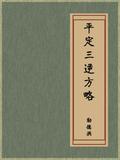 Strategies for Pingding the Three Countermeasures (Free Public Edition Book)
Thematic history book. Le Dehong was the Minister of Rites of the Kangxi Dynasty and a bachelor of Wuying Palace. In the early Qing Dynasty, the Ming Dynasty's surrendered generals Wu Sangui, Shang Kexi, and Geng Jingzhong were granted vassal status in Yunnan, Guangdong, and Fujian respectively for their meritorious service in the Qing Dynasty's unification of the world, and were called the Three Feudatories. Each of them had heavy troops, occupied several provinces, and became domineering, form
9Reads8.7Score—Shelves
Strategies for Pingding the Three Countermeasures (Free Public Edition Book)
Thematic history book. Le Dehong was the Minister of Rites of the Kangxi Dynasty and a bachelor of Wuying Palace. In the early Qing Dynasty, the Ming Dynasty's surrendered generals Wu Sangui, Shang Kexi, and Geng Jingzhong were granted vassal status in Yunnan, Guangdong, and Fujian respectively for their meritorious service in the Qing Dynasty's unification of the world, and were called the Three Feudatories. Each of them had heavy troops, occupied several provinces, and became domineering, form
9Reads8.7Score—Shelves
-
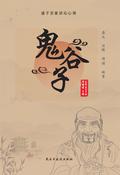 Guiguzi
"Guiguzi", also known as "CE", is the work of Wang Xu, the famous Taoist and strategist of the Warring States Period, "Guiguzi". It is said that it was compiled by scholars after Mr. Guigu based on his remarks. The book focuses on Machiavellian tactics and debate skills. "Gui Guzi" is a summary of the lobbying experience of politicians. It incorporates the essence of Gui Guzi's lifelong academic research, and its value is self-evident. It has been studied by ancient Chinese military strategists,
8Reads8.4Score—Shelves
Guiguzi
"Guiguzi", also known as "CE", is the work of Wang Xu, the famous Taoist and strategist of the Warring States Period, "Guiguzi". It is said that it was compiled by scholars after Mr. Guigu based on his remarks. The book focuses on Machiavellian tactics and debate skills. "Gui Guzi" is a summary of the lobbying experience of politicians. It incorporates the essence of Gui Guzi's lifelong academic research, and its value is self-evident. It has been studied by ancient Chinese military strategists,
8Reads8.4Score—Shelves
-
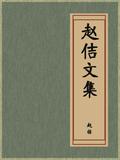 Collected Works of Zhao Ji
Song Huizong, named Zhao Ji (May 5, 1082 AD - June 4, 1135 AD), was the 11th son of Shenzong and the younger brother of Zhe Zong. He was the eighth emperor of the Song Dynasty. Zhao Ji was successively named King of Suining and King Duan. Zhezong died of illness in the first month of 1100 AD without any children, so Queen Xiang made him emperor in the same month. In the second year, the year was changed to "Jianzhong Jingguo". During the 25th year of Emperor Huizong's reign (February 23, 1100 -
8Reads8.6Score—Shelves
Collected Works of Zhao Ji
Song Huizong, named Zhao Ji (May 5, 1082 AD - June 4, 1135 AD), was the 11th son of Shenzong and the younger brother of Zhe Zong. He was the eighth emperor of the Song Dynasty. Zhao Ji was successively named King of Suining and King Duan. Zhezong died of illness in the first month of 1100 AD without any children, so Queen Xiang made him emperor in the same month. In the second year, the year was changed to "Jianzhong Jingguo". During the 25th year of Emperor Huizong's reign (February 23, 1100 -
8Reads8.6Score—Shelves
-
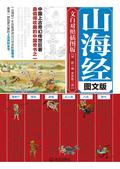 Classic of Mountains and Seas
"The Classic of Mountains and Seas" is a strange book in ancient China. The author and the time of its completion are unknown. It was compiled by Liu Xin of the Western Han Dynasty. There are 18 chapters in the book, about 31,000 words. It records the names and geographical locations of more than 500 famous mountains, the names, origins and directions of rivers of more than 300 rivers, the names of more than 40 countries and the customs and customs of distant foreign peoples, more than 100 histo
8Reads8.3Score—Shelves
Classic of Mountains and Seas
"The Classic of Mountains and Seas" is a strange book in ancient China. The author and the time of its completion are unknown. It was compiled by Liu Xin of the Western Han Dynasty. There are 18 chapters in the book, about 31,000 words. It records the names and geographical locations of more than 500 famous mountains, the names, origins and directions of rivers of more than 300 rivers, the names of more than 40 countries and the customs and customs of distant foreign peoples, more than 100 histo
8Reads8.3Score—Shelves
-
 Additional Book of the Ten Medicine Gods (Free Public Version)
Summary of the "Additional Book of Ten Medicines" According to the original biography of Ming Dynasty, Ge Qiansun, courtesy name Kejiu, was from Changzhou. When his father Ying Lei took his name as a doctor, he wrote two volumes of "Methods of Physicians". My grandson was tall and strong, physically strong, and good at medicine. "Ancient and Modern Medical Traditions" says: Ge Kejiu was famous as Qiansun and the son of Zhen's father. He was very practical in medicine and had a kind heart. He wou
8Reads8.6Score—Shelves
Additional Book of the Ten Medicine Gods (Free Public Version)
Summary of the "Additional Book of Ten Medicines" According to the original biography of Ming Dynasty, Ge Qiansun, courtesy name Kejiu, was from Changzhou. When his father Ying Lei took his name as a doctor, he wrote two volumes of "Methods of Physicians". My grandson was tall and strong, physically strong, and good at medicine. "Ancient and Modern Medical Traditions" says: Ge Kejiu was famous as Qiansun and the son of Zhen's father. He was very practical in medicine and had a kind heart. He wou
8Reads8.6Score—Shelves
-
 Mao Zhenjun, the Commander of the Shangqing Dynasty, Practiced Zhimi Jue
The commander of the Shangqing Dynasty ordered Mao Zhenjun to practice Zhimi Jue. No author? One roll. Original source: Method Class of Dongshen Department of "Orthodox Taoist Canon".
8Reads8.5Score—Shelves
Mao Zhenjun, the Commander of the Shangqing Dynasty, Practiced Zhimi Jue
The commander of the Shangqing Dynasty ordered Mao Zhenjun to practice Zhimi Jue. No author? One roll. Original source: Method Class of Dongshen Department of "Orthodox Taoist Canon".
8Reads8.5Score—Shelves
-
 The Wise Doctor Knows
"Mingyi Zhizhang" is a comprehensive medical book. A total of ten volumes. Huangfu Zhong of the Ming Dynasty wrote the annotations, Wang Kentang revised and supplemented it, and Shao Congzhen participated in the revision. The year of writing is unknown. There are four kinds of Ming Dynasty editions and more than ten Qing Dynasty editions.
8Reads8.9Score—Shelves
The Wise Doctor Knows
"Mingyi Zhizhang" is a comprehensive medical book. A total of ten volumes. Huangfu Zhong of the Ming Dynasty wrote the annotations, Wang Kentang revised and supplemented it, and Shao Congzhen participated in the revision. The year of writing is unknown. There are four kinds of Ming Dynasty editions and more than ten Qing Dynasty editions.
8Reads8.9Score—Shelves
-
 Sandong Taoist Living in the Mountain Cultivation Department
This book introduces the basic knowledge and specific steps of the Qi-Qi method in detail, emphasizing the effects of longevity and longevity through breathing adjustments and rituals. The book also discusses the refining methods of inner elixirs and the use of talismans, to achieve immortality through internal practice and external use of talismans. In addition, this book also emphasizes the behavioral taboos and preparations that ascetics need to pay attention to during practice to ensure safe
7Reads8.5Score—Shelves
Sandong Taoist Living in the Mountain Cultivation Department
This book introduces the basic knowledge and specific steps of the Qi-Qi method in detail, emphasizing the effects of longevity and longevity through breathing adjustments and rituals. The book also discusses the refining methods of inner elixirs and the use of talismans, to achieve immortality through internal practice and external use of talismans. In addition, this book also emphasizes the behavioral taboos and preparations that ascetics need to pay attention to during practice to ensure safe
7Reads8.5Score—Shelves
-
 Records of Yongli (Free Public Edition Book)
Written by Fuzhi (1619-1692), King of the Qing Dynasty. The husband's courtesy name is Ernong, his name is Jiang Zhai, and he is from Hengyang, Hunan. Later he lived in Shichuanshan, Hengyang, and was known as Mr. Chuanshan in the world. Chongzhen promoted people. He once participated in the regime of King Gui, but later felt that state affairs could not be done, so he lived in seclusion and engaged in writing for nearly forty years. He has studied astronomy, geography, calendar, mathematics, et
7Reads8.5Score—Shelves
Records of Yongli (Free Public Edition Book)
Written by Fuzhi (1619-1692), King of the Qing Dynasty. The husband's courtesy name is Ernong, his name is Jiang Zhai, and he is from Hengyang, Hunan. Later he lived in Shichuanshan, Hengyang, and was known as Mr. Chuanshan in the world. Chongzhen promoted people. He once participated in the regime of King Gui, but later felt that state affairs could not be done, so he lived in seclusion and engaged in writing for nearly forty years. He has studied astronomy, geography, calendar, mathematics, et
7Reads8.5Score—Shelves
-
 Materia Medica
The content of the book is based on the third and fourth volumes of Li Shizhen's "Compendium of Materia Medica" of the Ming Dynasty, which treat various diseases as the outline. The heavenly stems are used as the divisions of songs and formulas for various diseases. There are 113 general categories and more than a thousand disease topics listed. Each article details the use of medication, prescriptions, tests, cases, acupuncture, moxibustion, Bianstone, wine, pills, powders, ointments, elixirs,
6Reads8.5Score—Shelves
Materia Medica
The content of the book is based on the third and fourth volumes of Li Shizhen's "Compendium of Materia Medica" of the Ming Dynasty, which treat various diseases as the outline. The heavenly stems are used as the divisions of songs and formulas for various diseases. There are 113 general categories and more than a thousand disease topics listed. Each article details the use of medication, prescriptions, tests, cases, acupuncture, moxibustion, Bianstone, wine, pills, powders, ointments, elixirs,
6Reads8.5Score—Shelves
-
 Tan Hu Ou Lu (Free Public Edition Book)
This is a collection of notes and novels by Xu Zhenya, a representative writer of the Mandarin Duck and Butterfly School in modern times. The contents are mostly anecdotes, social anecdotes, and the elegant interests of literati. "Talking about tigers" refers to the strange and amazing things talked about, which reflects the social style and mentality of literati in the late Qing Dynasty and the early Republic of China.
6Reads8.7Score—Shelves
Tan Hu Ou Lu (Free Public Edition Book)
This is a collection of notes and novels by Xu Zhenya, a representative writer of the Mandarin Duck and Butterfly School in modern times. The contents are mostly anecdotes, social anecdotes, and the elegant interests of literati. "Talking about tigers" refers to the strange and amazing things talked about, which reflects the social style and mentality of literati in the late Qing Dynasty and the early Republic of China.
6Reads8.7Score—Shelves
-
 Yellow Books (Free Public Edition Books)
Written in 1656, it is the author's early political work. Through commenting on history, the author's patriotism is elucidated. It put forward the principle that national interests are above all else, and explained benevolence and righteousness as "loving others with benevolence, not giving them control but fulfilling their selfish interests. Using righteousness to control me, not loving others selfishly but respecting their doubts." ("Appointment of Officials") The highest significance of benev
5Reads8.7Score—Shelves
Yellow Books (Free Public Edition Books)
Written in 1656, it is the author's early political work. Through commenting on history, the author's patriotism is elucidated. It put forward the principle that national interests are above all else, and explained benevolence and righteousness as "loving others with benevolence, not giving them control but fulfilling their selfish interests. Using righteousness to control me, not loving others selfishly but respecting their doubts." ("Appointment of Officials") The highest significance of benev
5Reads8.7Score—Shelves
-
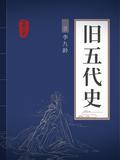 History of the Old Five Dynasties
"Old History of the Five Dynasties", formerly known as "History of the Five Dynasties", also known as "Book of Liang, Tang, Jin, Han and Zhou", is an official history book compiled by the order of Emperor Taizu of the Song Dynasty. Xue Juzheng supervised the study, and fellow students such as Lu Duoxun, Hu Meng, Zhang Dan, Liu Jian, Li Mu, and Li Jiuling were included. The historical materials that can be referenced in the book are quite complete, and there are actual records from each dynasty i
5Reads8.1Score—Shelves
History of the Old Five Dynasties
"Old History of the Five Dynasties", formerly known as "History of the Five Dynasties", also known as "Book of Liang, Tang, Jin, Han and Zhou", is an official history book compiled by the order of Emperor Taizu of the Song Dynasty. Xue Juzheng supervised the study, and fellow students such as Lu Duoxun, Hu Meng, Zhang Dan, Liu Jian, Li Mu, and Li Jiuling were included. The historical materials that can be referenced in the book are quite complete, and there are actual records from each dynasty i
5Reads8.1Score—Shelves
-
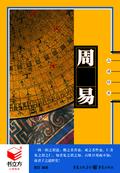 Zhouyi
The wisdom of "The Book of Changes" is like a clear spring, stretching far and wide and inexhaustible. An ancient poem says: "After mandarin duck embroidery, you only follow the king's instructions, and don't judge gold needles with others." However, this book lifts the mysterious veil of "The Book of Changes" and reveals the mandarin ducks and gold needles. "The Lord Buddha is holding flowers, and Kasyapa is smiling." I hope that more people will have a clear understanding and will gain enlight
5Reads8.3Score—Shelves
Zhouyi
The wisdom of "The Book of Changes" is like a clear spring, stretching far and wide and inexhaustible. An ancient poem says: "After mandarin duck embroidery, you only follow the king's instructions, and don't judge gold needles with others." However, this book lifts the mysterious veil of "The Book of Changes" and reveals the mandarin ducks and gold needles. "The Lord Buddha is holding flowers, and Kasyapa is smiling." I hope that more people will have a clear understanding and will gain enlight
5Reads8.3Score—Shelves
-
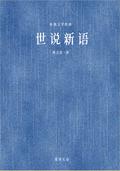 Shishuoxinyu
"Shishuoxinyu" is a representative work of metaphysics "note novels" during the Wei, Jin, Southern and Northern Dynasties in China. It is a short story in the form of notes of conversations and anecdotes. Its content mainly records the words, deeds and anecdotes of some celebrities from the late Eastern Han Dynasty to the Wei and Jin Dynasties. The books contained in the book are all historical figures, but some of their remarks or stories are based on rumors and are not entirely consistent with
5Reads8.7Score—Shelves
Shishuoxinyu
"Shishuoxinyu" is a representative work of metaphysics "note novels" during the Wei, Jin, Southern and Northern Dynasties in China. It is a short story in the form of notes of conversations and anecdotes. Its content mainly records the words, deeds and anecdotes of some celebrities from the late Eastern Han Dynasty to the Wei and Jin Dynasties. The books contained in the book are all historical figures, but some of their remarks or stories are based on rumors and are not entirely consistent with
5Reads8.7Score—Shelves
-
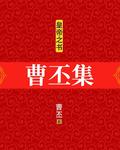 The Emperor's Book: Collection of Cao Pi
[Collected Works of Cao Pi, the founder of the Jin Dynasty and the founder of the Wei Kingdom in the Three Kingdoms] Emperor Wen of Wei, Cao Pi, was capable of both literary and martial arts, and was very handsome. His literary skills were comparable to Cao Zhi's, and his military skills could defeat Deng Zhan. He was a top intellectual figure in the Three Kingdoms era. The "Nine Ranks Zhongzheng System", the official selection system initiated and formulated by Cao Pi, was a beacon of light for
5Reads8.9Score—Shelves
The Emperor's Book: Collection of Cao Pi
[Collected Works of Cao Pi, the founder of the Jin Dynasty and the founder of the Wei Kingdom in the Three Kingdoms] Emperor Wen of Wei, Cao Pi, was capable of both literary and martial arts, and was very handsome. His literary skills were comparable to Cao Zhi's, and his military skills could defeat Deng Zhan. He was a top intellectual figure in the Three Kingdoms era. The "Nine Ranks Zhongzheng System", the official selection system initiated and formulated by Cao Pi, was a beacon of light for
5Reads8.9Score—Shelves
-
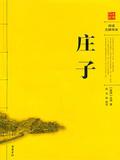 Zhuangzi
This book selects 100 classic famous sentences from "Zhuangzi" and provides detailed annotations. It also includes the origin of the famous sentences, background stories, and modern situational applications.
4Reads9.1Score—Shelves
Zhuangzi
This book selects 100 classic famous sentences from "Zhuangzi" and provides detailed annotations. It also includes the origin of the famous sentences, background stories, and modern situational applications.
4Reads9.1Score—Shelves
-
 Hongfenlou (Free Public Edition Book)
There have always been two ways to manage chaos in the country: loyalty and evil. Being loyal means forgetting one's own interests for the sake of the public, forgetting one's family for the sake of the country, always thinking of serving the king, and always putting wealth and fame aside.
4Reads8.7Score—Shelves
Hongfenlou (Free Public Edition Book)
There have always been two ways to manage chaos in the country: loyalty and evil. Being loyal means forgetting one's own interests for the sake of the public, forgetting one's family for the sake of the country, always thinking of serving the king, and always putting wealth and fame aside.
4Reads8.7Score—Shelves
-
 Selected Poems of Chen Zilong
Chen Zilong (1608-1647) was an official and writer in the late Ming Dynasty. His initial name was Jie, with the courtesy names Wozi, Maozhong, and Renzhong, and his nicknames were Dazun, Haishi, and Yifu. Han nationality, from Huating, Songjiang, South Zhili (now Songjiang, Shanghai). He was a Jinshi in the tenth year of Chongzhen. He once served as a promotion official in Shaoxing. He promoted the military department to Shizhong based on his merits. He was ordered to die in Ming Dynasty. When t
4Reads8.5Score—Shelves
Selected Poems of Chen Zilong
Chen Zilong (1608-1647) was an official and writer in the late Ming Dynasty. His initial name was Jie, with the courtesy names Wozi, Maozhong, and Renzhong, and his nicknames were Dazun, Haishi, and Yifu. Han nationality, from Huating, Songjiang, South Zhili (now Songjiang, Shanghai). He was a Jinshi in the tenth year of Chongzhen. He once served as a promotion official in Shaoxing. He promoted the military department to Shizhong based on his merits. He was ordered to die in Ming Dynasty. When t
4Reads8.5Score—Shelves
-
 Guiguzi
"Guiguzi" is collected for four reasons. One is its important status: it is a two-thousand-year-old strategy masterpiece and a wonder in traditional Chinese culture. 2. Practical eloquence: one person's argument is more important than the treasure of nine tripods, and a three-inch tongue is stronger than a million teachers. Three profound wisdoms: wisdom can be used for things that no one can understand, and planning can be used for things that no one can use. Four exquisite collections: The con
3Reads8.3Score—Shelves
Guiguzi
"Guiguzi" is collected for four reasons. One is its important status: it is a two-thousand-year-old strategy masterpiece and a wonder in traditional Chinese culture. 2. Practical eloquence: one person's argument is more important than the treasure of nine tripods, and a three-inch tongue is stronger than a million teachers. Three profound wisdoms: wisdom can be used for things that no one can understand, and planning can be used for things that no one can use. Four exquisite collections: The con
3Reads8.3Score—Shelves
-
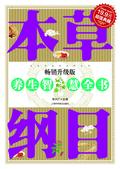 Compendium of Materia Medica, a Complete Book of Health Wisdom
The "Compendium of Materia Medica", known as the "Pharmacopoeia", has had a profound impact on later generations of food therapy, diet and cooking, medicine, zoology, plant science and daily life health care. This book selects the essence of stones, herbs, fruits, trees, insects, etc. From the "Compendium of Materia Medica", introduces them according to the functional classification of medicinal materials, cites classics for each medicinal material, and details its alias, meridian distribution o
3Reads8.1Score—Shelves
Compendium of Materia Medica, a Complete Book of Health Wisdom
The "Compendium of Materia Medica", known as the "Pharmacopoeia", has had a profound impact on later generations of food therapy, diet and cooking, medicine, zoology, plant science and daily life health care. This book selects the essence of stones, herbs, fruits, trees, insects, etc. From the "Compendium of Materia Medica", introduces them according to the functional classification of medicinal materials, cites classics for each medicinal material, and details its alias, meridian distribution o
3Reads8.1Score—Shelves
-
 Shangxuan Gaozhen's Red Book of Extending Life
This book is a public book and is a work published by writers, artists and other individuals who are not restricted by copyright laws, and is available for readers to read and communicate.
3Reads8.4Score—Shelves
Shangxuan Gaozhen's Red Book of Extending Life
This book is a public book and is a work published by writers, artists and other individuals who are not restricted by copyright laws, and is available for readers to read and communicate.
3Reads8.4Score—Shelves
-
 Selected Poems of Lu Zhaolin
Lu Zhaolin, a poet in the early Tang Dynasty. His courtesy name was Shengzhi, and his nickname was Youyouzi. He was a Han nationality from Fanyang, Youzhou (now Zhuozhou City, Hebei Province). His birth and death dates are unknown. Lu Zhaolin was born in a prominent family. There are 7 volumes of "The Collection of Lu Sheng" and "The Collection of Youyouzi" compiled and annotated by Zhang Xie in the Ming Dynasty. Lu Zhaolin's poems are composed of parallel prose, which is best in the form of son
3Reads8.7Score—Shelves
Selected Poems of Lu Zhaolin
Lu Zhaolin, a poet in the early Tang Dynasty. His courtesy name was Shengzhi, and his nickname was Youyouzi. He was a Han nationality from Fanyang, Youzhou (now Zhuozhou City, Hebei Province). His birth and death dates are unknown. Lu Zhaolin was born in a prominent family. There are 7 volumes of "The Collection of Lu Sheng" and "The Collection of Youyouzi" compiled and annotated by Zhang Xie in the Ming Dynasty. Lu Zhaolin's poems are composed of parallel prose, which is best in the form of son
3Reads8.7Score—Shelves
-
 Collected Works of Li Zhiyi
Li Zhiyi (1048~1117) was a poet in the Northern Song Dynasty. His courtesy name is Uncle Duan, and his nickname is Guxi layman and Guxi old farmer. Han nationality, from Wudi (Qingyun County), Cangzhou. Zhezong Yuanyou was the editor of the Privy Council at the beginning, and he was responsible for judging Yuanzhou. At the end of Yuanyou's reign, he followed Su Shi in the Dingzhou shogunate and advocated rewards day and night. In the incense and medicine storehouse of Yuanfu Zhongjian, Shi Yu, t
2Reads8.5Score—Shelves
Collected Works of Li Zhiyi
Li Zhiyi (1048~1117) was a poet in the Northern Song Dynasty. His courtesy name is Uncle Duan, and his nickname is Guxi layman and Guxi old farmer. Han nationality, from Wudi (Qingyun County), Cangzhou. Zhezong Yuanyou was the editor of the Privy Council at the beginning, and he was responsible for judging Yuanzhou. At the end of Yuanyou's reign, he followed Su Shi in the Dingzhou shogunate and advocated rewards day and night. In the incense and medicine storehouse of Yuanfu Zhongjian, Shi Yu, t
2Reads8.5Score—Shelves
-
 Collected Works of Liu Xiyi
Liu Xiyi (ca. 651-Ca. 680), Poet of the Tang Dynasty. His name was Tingzhi, his courtesy name was Yanzhi (his first name was Tingzhi), Han nationality, from Ruzhou (now Ruzhou City, Henan Province). In the second year of Emperor Gaozong's reign, he became a Jinshi and was good at playing the pipa. His poems are famous for their song lines, mostly about love affairs, their words are soft and gorgeous, and they are often sentimental. The original biography of "Old Book of Tang Dynasty" states that
2Reads8.6Score—Shelves
Collected Works of Liu Xiyi
Liu Xiyi (ca. 651-Ca. 680), Poet of the Tang Dynasty. His name was Tingzhi, his courtesy name was Yanzhi (his first name was Tingzhi), Han nationality, from Ruzhou (now Ruzhou City, Henan Province). In the second year of Emperor Gaozong's reign, he became a Jinshi and was good at playing the pipa. His poems are famous for their song lines, mostly about love affairs, their words are soft and gorgeous, and they are often sentimental. The original biography of "Old Book of Tang Dynasty" states that
2Reads8.6Score—Shelves
-
 Romance of the Song Palace and Eighteen Dynasties (Free Public Edition Book)
This book begins with the birth of Zhao Kuangyin, the "sweet child" in Jiama Camp, and ends with Zhao Bing's death at sea when Lu Xiufu takes over Song Huaizong. It narrates more than three hundred years of Chinese history. The first half focuses on the secrets of the palace, and the second half focuses on military and state affairs. The content is not limited to the "Song Palace", but also includes Meng Mengchang, the Lord of Shu, Li Yu of the Southern Tang Dynasty, Liu Yuan of the Southern Han
2Reads8.6Score—Shelves
Romance of the Song Palace and Eighteen Dynasties (Free Public Edition Book)
This book begins with the birth of Zhao Kuangyin, the "sweet child" in Jiama Camp, and ends with Zhao Bing's death at sea when Lu Xiufu takes over Song Huaizong. It narrates more than three hundred years of Chinese history. The first half focuses on the secrets of the palace, and the second half focuses on military and state affairs. The content is not limited to the "Song Palace", but also includes Meng Mengchang, the Lord of Shu, Li Yu of the Southern Tang Dynasty, Liu Yuan of the Southern Han
2Reads8.6Score—Shelves
-
 Chronicles of Jingkang (Free Public Edition Book)
Also known as "The Record of Lonely Minister Crying Blood". Miscellaneous History. The incident started from the beginning of November of the first year of Jingkang (1126), when the Wu Jin people invaded the capital, and ended on the first day of May of the following year when King Kang ascended the throne in Nanjing. The author happened to be in Bianjing at that time, deploring the loss of the capital and the relocation of the two emperors. He wrote this book to arouse the hearts of loyal minis
2Reads8.7Score—Shelves
Chronicles of Jingkang (Free Public Edition Book)
Also known as "The Record of Lonely Minister Crying Blood". Miscellaneous History. The incident started from the beginning of November of the first year of Jingkang (1126), when the Wu Jin people invaded the capital, and ended on the first day of May of the following year when King Kang ascended the throne in Nanjing. The author happened to be in Bianjing at that time, deploring the loss of the capital and the relocation of the two emperors. He wrote this book to arouse the hearts of loyal minis
2Reads8.7Score—Shelves
-
 Essentials of Materia Medica
"Compendium of Materia Medica Must-Read Series-Essentials of Materia Medica (Volume 1 and 2)" is an official Materia Medica edition of the Ming Dynasty. It was compiled by Liu Wentai, the judge of Taiyuan Hospital, and others under the orders of the Ming Dynasty. This book is based on the "Zhenglei Materia Medica", removing the complex and redundant, and making additions to keep it concise and concise. The book has 42 volumes, including 1 volume of table of contents, containing 1815 medicines an
2Reads8.4Score—Shelves
Essentials of Materia Medica
"Compendium of Materia Medica Must-Read Series-Essentials of Materia Medica (Volume 1 and 2)" is an official Materia Medica edition of the Ming Dynasty. It was compiled by Liu Wentai, the judge of Taiyuan Hospital, and others under the orders of the Ming Dynasty. This book is based on the "Zhenglei Materia Medica", removing the complex and redundant, and making additions to keep it concise and concise. The book has 42 volumes, including 1 volume of table of contents, containing 1815 medicines an
2Reads8.4Score—Shelves
-
 Collected Works of Fan Zengxiang
Fan Zengxiang (1846-1931) was an official and writer in the Qing Dynasty. His original name was Fan Jia, also known as Fan Zeng, also known as Jiafu, alias Fanshan, nicknamed Yunmen, and later nicknamed Tianqin Laoren. He was a native of Zitong Lane, Xizheng Street, Liujiaoting Street, Enshi City, Hubei Province. A Jinshi of Guangxu, he served successively as the magistrate of Weinan, the chief envoy of Shaanxi, and the governor of Liangjiang. When the Revolution of 1911 broke out, he took refug
2Reads8.1Score—Shelves
Collected Works of Fan Zengxiang
Fan Zengxiang (1846-1931) was an official and writer in the Qing Dynasty. His original name was Fan Jia, also known as Fan Zeng, also known as Jiafu, alias Fanshan, nicknamed Yunmen, and later nicknamed Tianqin Laoren. He was a native of Zitong Lane, Xizheng Street, Liujiaoting Street, Enshi City, Hubei Province. A Jinshi of Guangxu, he served successively as the magistrate of Weinan, the chief envoy of Shaanxi, and the governor of Liangjiang. When the Revolution of 1911 broke out, he took refug
2Reads8.1Score—Shelves
-
 A Thousand Pieces of Gold
This masterpiece of medicine in the Tang Dynasty systematically summarizes the medical achievements before the Tang Dynasty and includes a large number of prescriptions and clinical treatment methods.
2Reads8.8Score—Shelves
A Thousand Pieces of Gold
This masterpiece of medicine in the Tang Dynasty systematically summarizes the medical achievements before the Tang Dynasty and includes a large number of prescriptions and clinical treatment methods.
2Reads8.8Score—Shelves
-
 Chronicles of the Imperial Peace of Taiwan (Free Public Edition Book)
In the fifty-third year of Qianlong's reign in the Qing Dynasty (1788), it was compiled under the order of Emperor Gaozong. At the end of the 51st year of Qianlong's reign, the massive Lin Shuangwen Uprising broke out in Changhua, Taiwan and other places. This was also an unprecedented armed anti-Qing struggle in the history of the Tiandihui, which greatly shocked the ruling class of the Qing Dynasty. The limit of this book is: from the beginning of the Lin Shuangwen Uprising in Taiwan, reported
2Reads8.5Score—Shelves
Chronicles of the Imperial Peace of Taiwan (Free Public Edition Book)
In the fifty-third year of Qianlong's reign in the Qing Dynasty (1788), it was compiled under the order of Emperor Gaozong. At the end of the 51st year of Qianlong's reign, the massive Lin Shuangwen Uprising broke out in Changhua, Taiwan and other places. This was also an unprecedented armed anti-Qing struggle in the history of the Tiandihui, which greatly shocked the ruling class of the Qing Dynasty. The limit of this book is: from the beginning of the Lin Shuangwen Uprising in Taiwan, reported
2Reads8.5Score—Shelves
-
 Pei Ziyulin (Free Public Edition Book)
It is a collection of aspirational novels written in the style of Shishuoxinyu, which mainly records the words, deeds, and anecdotes of characters in the Han, Wei and Jin dynasties. The book covers many well-known figures, showing their personalities, talents and demeanor through vivid and interesting stories, reflecting the social scene, cultural atmosphere and the spiritual world of scholars at that time, and has certain reference value for later generations of literary creation and historical
2Reads8.3Score—Shelves
Pei Ziyulin (Free Public Edition Book)
It is a collection of aspirational novels written in the style of Shishuoxinyu, which mainly records the words, deeds, and anecdotes of characters in the Han, Wei and Jin dynasties. The book covers many well-known figures, showing their personalities, talents and demeanor through vivid and interesting stories, reflecting the social scene, cultural atmosphere and the spiritual world of scholars at that time, and has certain reference value for later generations of literary creation and historical
2Reads8.3Score—Shelves
-
 Collected Works of Zheng Min
Zheng Min (? - 710) Tang poet. The courtesy name is Wenjing, a native of Cang County (belonging to Cangzhou), Hebei Province. He died in the first year of Jingyun, Emperor Ruizong of Tang Dynasty. He was promoted to Jinshi at the age of seventeen. During the reign of Empress Wu, Zhang Yi's brother recommended him as a censor in the palace. After Zhang Yi stepped down, he was demoted to the position of chief minister of Xuanzhou. During the reign of Emperor Zhongzong of the Tang Dynasty, he serve
2Reads8.5Score—Shelves
Collected Works of Zheng Min
Zheng Min (? - 710) Tang poet. The courtesy name is Wenjing, a native of Cang County (belonging to Cangzhou), Hebei Province. He died in the first year of Jingyun, Emperor Ruizong of Tang Dynasty. He was promoted to Jinshi at the age of seventeen. During the reign of Empress Wu, Zhang Yi's brother recommended him as a censor in the palace. After Zhang Yi stepped down, he was demoted to the position of chief minister of Xuanzhou. During the reign of Emperor Zhongzong of the Tang Dynasty, he serve
2Reads8.5Score—Shelves
-
 Hara Yoko French
. Written by Zhao Yizhen of the Ming Dynasty and compiled by Liu Yuanran. Volume Two. Original source: Taixuan Department of "Orthodox Taoist Canon".
1Reads8.5Score—Shelves
Hara Yoko French
Hara Yoko French. Written by Zhao Yizhen of the Ming Dynasty and compiled by Liu Yuanran. Volume Two. Original source: Taixuan Department of "Orthodox Taoist Canon".
1Reads8.5Score—Shelves
-
 Er Bi Ken Xi (Free Public Edition Book)
Although "Er Bi Ken Qi" belongs to the Ming and Qing legal genre of "Litigation Secret Books", the editor often adds comments or annotations to the included legal documents, which can reflect the litigation strategies and legal opinions of the lawyers at that time to a considerable extent, making the book even more precious and worthy of being edited and published for wider academic use.
1Reads8.1Score—Shelves
Er Bi Ken Xi (Free Public Edition Book)
Although "Er Bi Ken Qi" belongs to the Ming and Qing legal genre of "Litigation Secret Books", the editor often adds comments or annotations to the included legal documents, which can reflect the litigation strategies and legal opinions of the lawyers at that time to a considerable extent, making the book even more precious and worthy of being edited and published for wider academic use.
1Reads8.1Score—Shelves
-
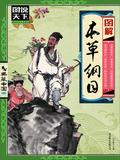 The World Illustrated: an Illustrated Compendium of Materia Medica
The book "Illustrated Compendium of Materia Medica" is one of the "Pictures describing the world and collecting China". "Compendium of Materia Medica" was compiled by Li Shizhen, a medical scientist in the Ming Dynasty, on the basis of inheriting and summarizing the achievements of materia medica before the Ming Dynasty and conducting multi-faceted research. It took decades to compile. It has always enjoyed the reputation of "the great classic of oriental medicine". It is called a pharmaceutical
1Reads8.3Score—Shelves
The World Illustrated: an Illustrated Compendium of Materia Medica
The book "Illustrated Compendium of Materia Medica" is one of the "Pictures describing the world and collecting China". "Compendium of Materia Medica" was compiled by Li Shizhen, a medical scientist in the Ming Dynasty, on the basis of inheriting and summarizing the achievements of materia medica before the Ming Dynasty and conducting multi-faceted research. It took decades to compile. It has always enjoyed the reputation of "the great classic of oriental medicine". It is called a pharmaceutical
1Reads8.3Score—Shelves
-
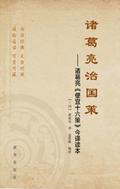 Zhuge Liang's Strategies for Governing the Country: a Current Translation of Zhuge Liang's "Sixteen Cheaper Strategies"
"Zhuge Liang's State Governing Policy" outlines the basic outline of Zhuge Liang's state governance policy of "promoting and strengthening Shu" during the Three Kingdoms period. It is a masterpiece of political philosophy that can be used as a reference for state governance and politics. It still has reference and guiding significance for today's state governance.
1Reads8.1Score—Shelves
Zhuge Liang's Strategies for Governing the Country: a Current Translation of Zhuge Liang's "Sixteen Cheaper Strategies"
"Zhuge Liang's State Governing Policy" outlines the basic outline of Zhuge Liang's state governance policy of "promoting and strengthening Shu" during the Three Kingdoms period. It is a masterpiece of political philosophy that can be used as a reference for state governance and politics. It still has reference and guiding significance for today's state governance.
1Reads8.1Score—Shelves
-
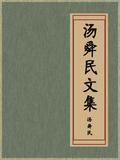 Collected Works of Tang Shunmin
Tang Shunmin, a dramatist in the late Yuan and early Ming dynasties, was named Juzhuang. His name, date of birth and death, and life story are unknown. He was a native of Xiangshan (now Zhejiang). It is not his ambition to supplement the county officials. Later, he fell into despair. So funny, I have been friends with Jia Zhongming for a long time. When Emperor Wen was in Yan's residence, he was very favored and favored frequently during Yongle period. He composed a large number of Yuefu, sets,
1Reads8.6Score—Shelves
Collected Works of Tang Shunmin
Tang Shunmin, a dramatist in the late Yuan and early Ming dynasties, was named Juzhuang. His name, date of birth and death, and life story are unknown. He was a native of Xiangshan (now Zhejiang). It is not his ambition to supplement the county officials. Later, he fell into despair. So funny, I have been friends with Jia Zhongming for a long time. When Emperor Wen was in Yan's residence, he was very favored and favored frequently during Yongle period. He composed a large number of Yuefu, sets,
1Reads8.6Score—Shelves