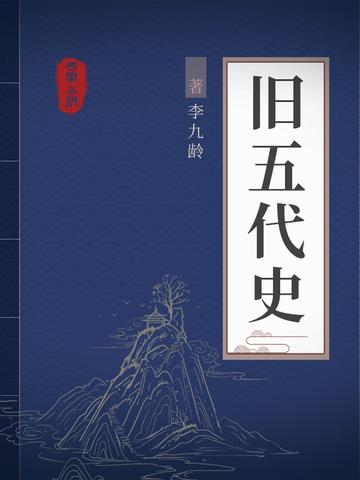
"Old History of the Five Dynasties", formerly known as "History of the Five Dynasties", also known as "Book of Liang, Tang, Jin, Han and Zhou", is an official history book compiled by the order of Emperor Taizu of the Song Dynasty. Xue Juzheng supervised the study, and fellow students such as Lu Duoxun, Hu Meng, Zhang Dan, Liu Jian, Li Mu, and Li Jiuling were included. The historical materials that can be referenced in the book are quite complete, and there are actual records from each dynasty in the Five Dynasties. From the time Zhu Wen proclaimed himself emperor of the Tang Dynasty in 907 AD to the establishment of the Northern Song Dynasty in 960 AD, five dynasties including the Later Liang, Later Tang, Later Jin, Later Han, and Later Zhou appeared in the Central Plains. Outside the Central Plains, there were Wu, Southern Tang, Wuyue, Chu, There are ten small countries, including Fujian, Southern Han, Qian Shu, Hou Shu, Nanping, and Northern Han. In the surrounding areas, there are also regimes established by ethnic minorities such as Khitan, Tubo, Bohai, Dangxiang, Nanzhao, Khotan, and Dongdan. They are customarily called the "Five Dynasties and Ten Kingdoms". "History of the Old Five Dynasties" records this period of history.
Reader comments
This book is of great historical value! It records the history of the Five Dynasties and Ten Kingdoms period, giving me a deeper understanding of that chaotic era. I particularly like the descriptions of war scenes in the book, such as "The emperor sent his uncle Cong to lead an army to attack it. Soon, Zhao Fan, the governor of Bizhou, came to surrender." In just a few strokes, the tense atmosphere of the war and the joy of victory are vividly displayed.



This book is of great historical value! It records the history of the Five Dynasties and Ten Kingdoms period, giving me a deeper understanding of that chaotic era. I particularly like the descriptions of war scenes in the book, such as "The emperor sent his uncle Cong to lead an army to attack it. Soon, Zhao Fan, the governor of Bizhou, came to surrender." In just a few strokes, the tense atmosphere of the war and the joy of victory are vividly displayed.