Fanqie library
Browse
- Titles
- 1.5k
Every Fanqie book we index, searchable by title, author or tag.
-
 Sun Tzu's Art of War·guiguzi·yin Fu Jing
"The Art of War" is the earliest extant military book in China and the earliest military work in the world. It is known as the "Sacred Book of Military Science". Taoist and military philosophy are expressed everywhere. "Gui Guzi" is a summary of the lobbying experience of politicians. It incorporates the essence of Gui Guzi's lifelong academic research, and its value is self-evident. As a representative work of political strategists, this book provides a lot of reference for future generations t
53Reads8.5Score—Shelves
Sun Tzu's Art of War·guiguzi·yin Fu Jing
"The Art of War" is the earliest extant military book in China and the earliest military work in the world. It is known as the "Sacred Book of Military Science". Taoist and military philosophy are expressed everywhere. "Gui Guzi" is a summary of the lobbying experience of politicians. It incorporates the essence of Gui Guzi's lifelong academic research, and its value is self-evident. As a representative work of political strategists, this book provides a lot of reference for future generations t
53Reads8.5Score—Shelves
-
 Lingbao Immeasurable Man's Excellent Sutra Talismans
This book is a public book and is a work published by writers, artists and other individuals who are not restricted by copyright laws, and is available for readers to read and communicate.
53Reads8.3Score—Shelves
Lingbao Immeasurable Man's Excellent Sutra Talismans
This book is a public book and is a work published by writers, artists and other individuals who are not restricted by copyright laws, and is available for readers to read and communicate.
53Reads8.3Score—Shelves
-
 Huang Di Nei Jing Instruction Manual (Women's Edition)
"Huangdi Neijing User's Manual (Women's Chapter)" takes the health-preserving theory of "Huangdi Neijing" as the core. On the premise of allowing readers to have a comprehensive and in-depth understanding of "Huangdi Neijing" and its health-preserving principles, it presents the health-preserving theories in "Huangdi Neijing" to readers in a simple and easy-to-understand manner. In addition, when it comes to meridians and acupuncture points, the "Huangdi Neijing User's Manual (Female)" also uses
53Reads9.2Score—Shelves
Huang Di Nei Jing Instruction Manual (Women's Edition)
"Huangdi Neijing User's Manual (Women's Chapter)" takes the health-preserving theory of "Huangdi Neijing" as the core. On the premise of allowing readers to have a comprehensive and in-depth understanding of "Huangdi Neijing" and its health-preserving principles, it presents the health-preserving theories in "Huangdi Neijing" to readers in a simple and easy-to-understand manner. In addition, when it comes to meridians and acupuncture points, the "Huangdi Neijing User's Manual (Female)" also uses
53Reads9.2Score—Shelves
-
 Thirty-Six Strategies
"Thirty-six Strategies" is a military book that brings together ancient Chinese outstanding military thoughts and struggle experience. The year of writing and author are difficult to verify accurately. The book contains six sets of strategies: victory strategy, enemy strategy, and attack strategy. Each set has six strategies, totaling thirty-six strategies, such as crossing the sea from the sky, encircling Wei and rescuing Zhao, etc. These strategies are not only used in military affairs, but ar
53Reads9.2Score—Shelves
Thirty-Six Strategies
"Thirty-six Strategies" is a military book that brings together ancient Chinese outstanding military thoughts and struggle experience. The year of writing and author are difficult to verify accurately. The book contains six sets of strategies: victory strategy, enemy strategy, and attack strategy. Each set has six strategies, totaling thirty-six strategies, such as crossing the sea from the sky, encircling Wei and rescuing Zhao, etc. These strategies are not only used in military affairs, but ar
53Reads9.2Score—Shelves
-
 Shen Nong's Herbal Classic
"Shen Nong's Materia Medica", also known as "Ben Cao Jing" or "Ben Jing", was written under the name "Shen Nong" and was actually written in the Han Dynasty. It is one of the four classic works of traditional Chinese medicine and the earliest known work on traditional Chinese medicine. "Shen Nong's Materia Medica" is divided into three volumes and contains 365 kinds of medicines. It is divided into upper, middle and lower grades according to the three-grade classification method. The text is sim
53Reads9.3Score—Shelves
Shen Nong's Herbal Classic
"Shen Nong's Materia Medica", also known as "Ben Cao Jing" or "Ben Jing", was written under the name "Shen Nong" and was actually written in the Han Dynasty. It is one of the four classic works of traditional Chinese medicine and the earliest known work on traditional Chinese medicine. "Shen Nong's Materia Medica" is divided into three volumes and contains 365 kinds of medicines. It is divided into upper, middle and lower grades according to the three-grade classification method. The text is sim
53Reads9.3Score—Shelves
-
 The Ten Books on Cultivation and Enlightenment
"Ten Books on Cultivation" is compiled from the Taoist Alchemy Sutra. It collects dozens of works from the late Tang, Five Dynasties, Song and Yuan Dynasties, most of which are monographs on inner alchemy. The book collects dozens of alchemy and health-preserving works from the Sui, Tang and Song dynasties, describing all aspects of the theories and practices of alchemy, health-preservation, and guidance before the Yuan Dynasty. It is extremely rich in content and is a major collection of Taoist
53Reads9.2Score—Shelves
The Ten Books on Cultivation and Enlightenment
"Ten Books on Cultivation" is compiled from the Taoist Alchemy Sutra. It collects dozens of works from the late Tang, Five Dynasties, Song and Yuan Dynasties, most of which are monographs on inner alchemy. The book collects dozens of alchemy and health-preserving works from the Sui, Tang and Song dynasties, describing all aspects of the theories and practices of alchemy, health-preservation, and guidance before the Yuan Dynasty. It is extremely rich in content and is a major collection of Taoist
53Reads9.2Score—Shelves
-
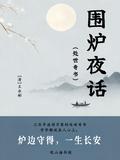 Evening Talk Around the Fireplace (A Wonderful Book on Life)
[Traditional Chinese Studies | Family Education | Life Wisdom | Sober Introspection | Confucian Self-cultivation] The Qing Dynasty classic "Night Talk around the Fireplace", "Cai Gen Tan" and "Xiaochuang Youji" are collectively known as the three great books on life. The book contains 221 household mottos, which are life mottos written by the scholar Wang Yongbin while chatting around the fire on a cold night. The writing style is simple and down-to-earth, with no obscure and mysterious principl
53Reads7.9Score—Shelves
Evening Talk Around the Fireplace (A Wonderful Book on Life)
[Traditional Chinese Studies | Family Education | Life Wisdom | Sober Introspection | Confucian Self-cultivation] The Qing Dynasty classic "Night Talk around the Fireplace", "Cai Gen Tan" and "Xiaochuang Youji" are collectively known as the three great books on life. The book contains 221 household mottos, which are life mottos written by the scholar Wang Yongbin while chatting around the fire on a cold night. The writing style is simple and down-to-earth, with no obscure and mysterious principl
53Reads7.9Score—Shelves
-
 Sima Fa
"Sima Fa" is an important pre-Qin military work in ancient China. It was probably written in the early Warring States period. According to the "Historical Records: Biography of Sima Ranju": "King Wei of Qi (356 BC - 320 BC) asked the officials to follow the ancient Sima's art of war and append Rangju to it, so it was called "Sima Rangju's art of war"." The Han Dynasty had a high opinion of "Sima Law". During the reign of Emperor Wu, "officials who were proficient in martial arts were selected ba
52Reads8.4Score—Shelves
Sima Fa
"Sima Fa" is an important pre-Qin military work in ancient China. It was probably written in the early Warring States period. According to the "Historical Records: Biography of Sima Ranju": "King Wei of Qi (356 BC - 320 BC) asked the officials to follow the ancient Sima's art of war and append Rangju to it, so it was called "Sima Rangju's art of war"." The Han Dynasty had a high opinion of "Sima Law". During the reign of Emperor Wu, "officials who were proficient in martial arts were selected ba
52Reads8.4Score—Shelves
-
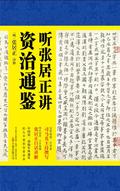 Listen to Zhang Juzheng's Lecture on Zizhi Tongjian
This book is Zhang Juzheng's commentary and analysis of "Zi Zhi Tong Jian". After each paragraph of the original text of "Zi Zhi Tong Jian", there are Zhang Juzheng's comments, which can be said to be every word, full of profound philosophy. Zhang Juzheng served as a lecturer and aide to Emperor Muzong Longqing of the Ming Dynasty, and as a scholar and banquet officer to Emperor Wanli Emperor Shenzong of the Ming Dynasty. He can be said to be the emperor's teacher for two generations. The whole
52Reads9.3Score—Shelves
Listen to Zhang Juzheng's Lecture on Zizhi Tongjian
This book is Zhang Juzheng's commentary and analysis of "Zi Zhi Tong Jian". After each paragraph of the original text of "Zi Zhi Tong Jian", there are Zhang Juzheng's comments, which can be said to be every word, full of profound philosophy. Zhang Juzheng served as a lecturer and aide to Emperor Muzong Longqing of the Ming Dynasty, and as a scholar and banquet officer to Emperor Wanli Emperor Shenzong of the Ming Dynasty. He can be said to be the emperor's teacher for two generations. The whole
52Reads9.3Score—Shelves
-
 Suwen Six Qi Xuanzhu Secret Words
The book consists of sixteen volumes, with a total of twenty-four chapters. Volume 1 contains the Five Yun Yuan Tong Ji Chapter and the Ying Sui Buxie Ji Chapter. Volume 2, Chapter of Listing Fortune Talisman of Heaven and Earth. Volume Three, Li Tian Yuan Ding Hua Ji Chapter. Volume four, the chapter of Li Tianyun plus Lin Ji. Volume 5 lists the climate and fortune chronicles. Volume 6 contains the chapters of "The Punishment of the Heavens" and the "Ping Zhengji" of the Yin Deficiency. Volume
52Reads9.3Score—Shelves
Suwen Six Qi Xuanzhu Secret Words
The book consists of sixteen volumes, with a total of twenty-four chapters. Volume 1 contains the Five Yun Yuan Tong Ji Chapter and the Ying Sui Buxie Ji Chapter. Volume 2, Chapter of Listing Fortune Talisman of Heaven and Earth. Volume Three, Li Tian Yuan Ding Hua Ji Chapter. Volume four, the chapter of Li Tianyun plus Lin Ji. Volume 5 lists the climate and fortune chronicles. Volume 6 contains the chapters of "The Punishment of the Heavens" and the "Ping Zhengji" of the Yin Deficiency. Volume
52Reads9.3Score—Shelves
-
 Taishang Laojun Said That Chang Qingjing Sutra Commentary·bai Yuchan
Taoist books. They are shining classics and excellent works in the treasure house of Chinese traditional culture. They are expressed in various forms and reflect the brilliant picture of Chinese classical literature.
52Reads8.5Score—Shelves
Taishang Laojun Said That Chang Qingjing Sutra Commentary·bai Yuchan
Taoist books. They are shining classics and excellent works in the treasure house of Chinese traditional culture. They are expressed in various forms and reflect the brilliant picture of Chinese classical literature.
52Reads8.5Score—Shelves
-
 Creating French Style (Free Public Edition Book)
The architectural technical specifications compiled by Li Jie of the Northern Song Dynasty detailed the craftsmanship standards for woodwork, color painting, etc., And represented the highest achievement of ancient Chinese architecture.
51Reads8.7Score—Shelves
Creating French Style (Free Public Edition Book)
The architectural technical specifications compiled by Li Jie of the Northern Song Dynasty detailed the craftsmanship standards for woodwork, color painting, etc., And represented the highest achievement of ancient Chinese architecture.
51Reads8.7Score—Shelves
-
 Minister
"Shangshu" is the earliest collection of historical documents in our country, respected as "the ancestor of political books and the source of historical books". Records important historical facts in the fields of politics, religion, thought, philosophy and other fields during the Yu, Xia, Shang and Zhou dynasties. Its documentary value is extremely high, providing first-hand information for studying the evolution of ancient political systems and cultural inheritance and development, and occupies
51Reads8.3Score—Shelves
Minister
"Shangshu" is the earliest collection of historical documents in our country, respected as "the ancestor of political books and the source of historical books". Records important historical facts in the fields of politics, religion, thought, philosophy and other fields during the Yu, Xia, Shang and Zhou dynasties. Its documentary value is extremely high, providing first-hand information for studying the evolution of ancient political systems and cultural inheritance and development, and occupies
51Reads8.3Score—Shelves
-
 Youyang Zazu (Free Public Edition Book)
This book records certain folklore stories for the first time, and they are the earliest basis for studying certain types of legends. The "Summary of the General Catalog of Sikuquanshu" believes that it specializes in "weird and unfounded talk, absurd and nonsensical things". In addition to recording a lot of natural science knowledge and customs, it also records some alchemy content.
51Reads9.2Score—Shelves
Youyang Zazu (Free Public Edition Book)
This book records certain folklore stories for the first time, and they are the earliest basis for studying certain types of legends. The "Summary of the General Catalog of Sikuquanshu" believes that it specializes in "weird and unfounded talk, absurd and nonsensical things". In addition to recording a lot of natural science knowledge and customs, it also records some alchemy content.
51Reads9.2Score—Shelves
-
 Yuzhao Shenying
The ancient four-pillar and eight-character numerology classic Ziping is the earliest extant four-pillar and eight-character numerology work. It can be called the pioneering work of four-pillar and eight-character numerology. It is also known as "Yuzhao Ding Zhen Jing" and "Yu Zhao Shen Ying Ding Zhen Jing". Xu Sheng, a master of numerology in the Song Dynasty, completed it on the basis of Guo Pu in the Jin Dynasty. It was listed in the arithmetic category by the "Yongle Dadian" of the Ming Dyna
51Reads9.4Score—Shelves
Yuzhao Shenying
The ancient four-pillar and eight-character numerology classic Ziping is the earliest extant four-pillar and eight-character numerology work. It can be called the pioneering work of four-pillar and eight-character numerology. It is also known as "Yuzhao Ding Zhen Jing" and "Yu Zhao Shen Ying Ding Zhen Jing". Xu Sheng, a master of numerology in the Song Dynasty, completed it on the basis of Guo Pu in the Jin Dynasty. It was listed in the arithmetic category by the "Yongle Dadian" of the Ming Dyna
51Reads9.4Score—Shelves
-
 Zhang Qicheng Talks About the Yellow Emperor's Internal Classic: Chinese People's Wisdom of Life
This book is a systematic interpretation of the life philosophy content of the Huangdi Neijing. As the founder of the "Five Classics of Chinese Studies" system that studied under the masters of the Yellow Emperor's Inner Canon and was familiar with medicine, Yi studies, Confucianism, Taoism, and Buddhism, Zhang Qicheng calmly moved between medicine and philosophy, focusing on the integration of the "Huang Emperor's Inner Canon" and the "Yijing" to extract the wisdom of life that has nourished th
51Reads9.4Score—Shelves
Zhang Qicheng Talks About the Yellow Emperor's Internal Classic: Chinese People's Wisdom of Life
This book is a systematic interpretation of the life philosophy content of the Huangdi Neijing. As the founder of the "Five Classics of Chinese Studies" system that studied under the masters of the Yellow Emperor's Inner Canon and was familiar with medicine, Yi studies, Confucianism, Taoism, and Buddhism, Zhang Qicheng calmly moved between medicine and philosophy, focusing on the integration of the "Huang Emperor's Inner Canon" and the "Yijing" to extract the wisdom of life that has nourished th
51Reads9.4Score—Shelves
-
 The Yellow Emperor's Jiuding Shendan Sutra
"The Yellow Emperor's Nine Cauldrons Divine Alchemy Sutra" was written by an alchemist. It has twenty volumes in total and is referred to as "The Nine Cauldrons Divine Alchemy Sutra". The book holds that if you want to live forever, it is impossible to obtain the golden liquid of the divine elixir. Breathing guidance, letting go of the old and absorbing the new, and taking herbs can prolong life, but it will not avoid death. Only taking the divine elixir can make people live in the world. Theref
51Reads8.4Score—Shelves
The Yellow Emperor's Jiuding Shendan Sutra
"The Yellow Emperor's Nine Cauldrons Divine Alchemy Sutra" was written by an alchemist. It has twenty volumes in total and is referred to as "The Nine Cauldrons Divine Alchemy Sutra". The book holds that if you want to live forever, it is impossible to obtain the golden liquid of the divine elixir. Breathing guidance, letting go of the old and absorbing the new, and taking herbs can prolong life, but it will not avoid death. Only taking the divine elixir can make people live in the world. Theref
51Reads8.4Score—Shelves
-
 Read Some "The Art of War" by Sun Tzu Every Day
"Sun Tzu's Art of War" is concise, concise and highly philosophical. Except for a few chapters that talk about specific war issues, the rest can be regarded as "principles". Today, people not only rely on its guidance during war operations, but also get inspiration from it when conducting various activities such as politics, economics and even sports competitions. This book selects nearly a hundred far-reaching and meaningful sentences from "The Art of War", divided into chapters such as war, ge
50Reads9.0Score—Shelves
Read Some "The Art of War" by Sun Tzu Every Day
"Sun Tzu's Art of War" is concise, concise and highly philosophical. Except for a few chapters that talk about specific war issues, the rest can be regarded as "principles". Today, people not only rely on its guidance during war operations, but also get inspiration from it when conducting various activities such as politics, economics and even sports competitions. This book selects nearly a hundred far-reaching and meaningful sentences from "The Art of War", divided into chapters such as war, ge
50Reads9.0Score—Shelves
-
 Fetal Breath Meridian Notes
This book is a public book and is a work published by writers, artists and other individuals who are not restricted by copyright laws, and is available for readers to read and communicate. Aggregation of licensed electronic rights.
50Reads8.7Score—Shelves
Fetal Breath Meridian Notes
This book is a public book and is a work published by writers, artists and other individuals who are not restricted by copyright laws, and is available for readers to read and communicate. Aggregation of licensed electronic rights.
50Reads8.7Score—Shelves
-
 The Essentials of the Golden Chamber
Synopsis of the Golden Chamber is the miscellaneous disease part of Treatise on Febrile and Miscellaneous Diseases written by Zhang Zhongjing, a famous medical scientist in the Eastern Han Dynasty. It is also the earliest existing book in my country that discusses the diagnosis and treatment of miscellaneous diseases. It was originally called Synopsis of the Golden Chamber. The "Golden Chamber" is a place where ancient emperors' sacred teachings and records are stored, which means that the conte
50Reads9.4Score—Shelves
The Essentials of the Golden Chamber
Synopsis of the Golden Chamber is the miscellaneous disease part of Treatise on Febrile and Miscellaneous Diseases written by Zhang Zhongjing, a famous medical scientist in the Eastern Han Dynasty. It is also the earliest existing book in my country that discusses the diagnosis and treatment of miscellaneous diseases. It was originally called Synopsis of the Golden Chamber. The "Golden Chamber" is a place where ancient emperors' sacred teachings and records are stored, which means that the conte
50Reads9.4Score—Shelves
-
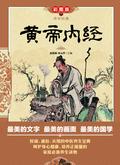 Yellow Emperor's Internal Classic
The essence of health care contained in the "Huangdi Neijing" is carefully compiled in this book. The profound theories of the original text are expressed in popular language and concise charts and images, making abstract concepts visual, profound theories popular, and complex issues concrete. Through vivid hand-drawn illustrations and graphic tables, the book vividly interprets the hidden images, meridians, qi, blood, body fluids and other knowledge in the "Huangdi Neijing", comprehensively int
50Reads8.8Score—Shelves
Yellow Emperor's Internal Classic
The essence of health care contained in the "Huangdi Neijing" is carefully compiled in this book. The profound theories of the original text are expressed in popular language and concise charts and images, making abstract concepts visual, profound theories popular, and complex issues concrete. Through vivid hand-drawn illustrations and graphic tables, the book vividly interprets the hidden images, meridians, qi, blood, body fluids and other knowledge in the "Huangdi Neijing", comprehensively int
50Reads8.8Score—Shelves
-
 Zhouyi Shangshi Xue
This work "Zhouyi Shangshi Xue" is written by Shanchenghe
50Reads9.1Score—Shelves
Zhouyi Shangshi Xue
This work "Zhouyi Shangshi Xue" is written by Shanchenghe
50Reads9.1Score—Shelves
-
 Plain Calligraphy
"Su Shu" occupies an extremely important position in ancient Chinese works on self-cultivation and governance, wisdom in life, and life strategy. This book, which has only six chapters, 132 sentences, and 1,360 words in its original text, is similar to a "quotation style" book. It has been regarded by hermit masters and counselors throughout the ages as a strategy secret book that has not been passed down through the ages and a perfect guide for achieving great things. It has been widely circula
50Reads8.6Score—Shelves
Plain Calligraphy
"Su Shu" occupies an extremely important position in ancient Chinese works on self-cultivation and governance, wisdom in life, and life strategy. This book, which has only six chapters, 132 sentences, and 1,360 words in its original text, is similar to a "quotation style" book. It has been regarded by hermit masters and counselors throughout the ages as a strategy secret book that has not been passed down through the ages and a perfect guide for achieving great things. It has been widely circula
50Reads8.6Score—Shelves
-
 Three Lives Conference
Twelve volumes. Originally there was no name of the author, only the title "Written by Yuwu Shanren" in the first volume. "History of the Ming Dynasty·Yiwenzhi" contains twelve volumes of Wanmin Yu's "San Ming Huitong", which is consistent with the number of volumes in this volume, but "Tonghui" is used as "Huitong". Today's examination of the "Xingxue Dacheng" monograph on the Five Elements was written by Wan Minying. This book's monograph on Xu Ziping's horoscope should also be written by Wan
50Reads9.3Score—Shelves
Three Lives Conference
Twelve volumes. Originally there was no name of the author, only the title "Written by Yuwu Shanren" in the first volume. "History of the Ming Dynasty·Yiwenzhi" contains twelve volumes of Wanmin Yu's "San Ming Huitong", which is consistent with the number of volumes in this volume, but "Tonghui" is used as "Huitong". Today's examination of the "Xingxue Dacheng" monograph on the Five Elements was written by Wan Minying. This book's monograph on Xu Ziping's horoscope should also be written by Wan
50Reads9.3Score—Shelves
-
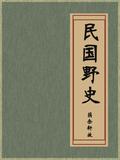 Unofficial History of the Republic of China (Free Public Edition Book)
"Unofficial History of the Republic of China" compiles anecdotes, anecdotes, and interesting stories published in newspapers and periodicals during the Republic of China, covering politics, economy, culture, military, etc. Because the collection criteria are: interesting, requiring readers to look up to the sky and laugh; uproarious; stimulating; interesting political events, strange folk stories; and evocative of the people of the Republic of China. Therefore, most of the articles collected in
49Reads8.7Score—Shelves
Unofficial History of the Republic of China (Free Public Edition Book)
"Unofficial History of the Republic of China" compiles anecdotes, anecdotes, and interesting stories published in newspapers and periodicals during the Republic of China, covering politics, economy, culture, military, etc. Because the collection criteria are: interesting, requiring readers to look up to the sky and laugh; uproarious; stimulating; interesting political events, strange folk stories; and evocative of the people of the Republic of China. Therefore, most of the articles collected in
49Reads8.7Score—Shelves
-
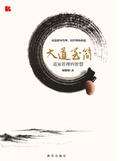 From Dao to Simplicity: the Wisdom of Taoist Management
From the perspective of the development history of Taoism, during the Spring and Autumn Period, the Warring States Period, and even the Qin and Han Dynasties, although both the Lao-Zhuang School and the Yang-Zhu School had a certain influence, the Huang-Lao School had the greatest influence. During the Spring and Autumn Period and the Warring States Period, and even later during the Han Dynasty, the Huang-Lao School was not only the orthodox school of Taoism, but also had the largest number of p
49Reads8.7Score—Shelves
From Dao to Simplicity: the Wisdom of Taoist Management
From the perspective of the development history of Taoism, during the Spring and Autumn Period, the Warring States Period, and even the Qin and Han Dynasties, although both the Lao-Zhuang School and the Yang-Zhu School had a certain influence, the Huang-Lao School had the greatest influence. During the Spring and Autumn Period and the Warring States Period, and even later during the Han Dynasty, the Huang-Lao School was not only the orthodox school of Taoism, but also had the largest number of p
49Reads8.7Score—Shelves
-
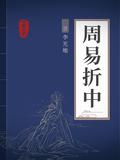 Zhouyi Compromise
"Zhezhong of the Book of Changes" collects the sayings of various great Confucian scholars and examines the past and present. It contains millions of words. Although the explanation is subtle, it is easy to understand and rare. Today's people's difficulty in reading is mostly due to their lack of knowledge of ancient Chinese prose. They look for the meaning of the text and find it difficult to interpret the meaning. Reading this book is like studying the Book of Changes with ancient scholars, ge
49Reads8.9Score—Shelves
Zhouyi Compromise
"Zhezhong of the Book of Changes" collects the sayings of various great Confucian scholars and examines the past and present. It contains millions of words. Although the explanation is subtle, it is easy to understand and rare. Today's people's difficulty in reading is mostly due to their lack of knowledge of ancient Chinese prose. They look for the meaning of the text and find it difficult to interpret the meaning. Reading this book is like studying the Book of Changes with ancient scholars, ge
49Reads8.9Score—Shelves
-
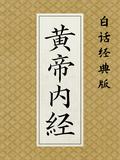 Huang Di Nei Jing (Vernacular Classic Edition)
The Yellow Emperor's Internal Classic, a modern vernacular fully translated classic version. "Huangdi Neijing" is divided into two parts: "Lingshu" and "Suwen". It is the earliest medical classic in China and one of the four classics of traditional medicine (the other three are "Difficult Classic", "Treatise on Febrile and Miscellaneous Diseases" and "Shen Nong's Materia Medica"). "Huangdi Neijing" is a comprehensive medical book. Based on Huang-Lao Taoist theory, it established the "Yin-Yang Fi
48Reads8.5Score—Shelves
Huang Di Nei Jing (Vernacular Classic Edition)
The Yellow Emperor's Internal Classic, a modern vernacular fully translated classic version. "Huangdi Neijing" is divided into two parts: "Lingshu" and "Suwen". It is the earliest medical classic in China and one of the four classics of traditional medicine (the other three are "Difficult Classic", "Treatise on Febrile and Miscellaneous Diseases" and "Shen Nong's Materia Medica"). "Huangdi Neijing" is a comprehensive medical book. Based on Huang-Lao Taoist theory, it established the "Yin-Yang Fi
48Reads8.5Score—Shelves
-
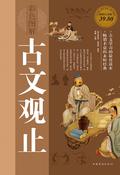 Colorful Illustrations of Ancient Texts
"Colorful Illustrations of Ancient Chinese Prose" adds columns such as explanations, annotations, translations, and writing methods on the basis of the original work. It comprehensively displays the work's theme, creative background, warning philosophy, and writer's situation from multiple angles. It also provides phonetic notation for rare and variant characters to facilitate readers' reading. In terms of explaining the text with pictures, we carefully drew scenic spots, historical sites, scene
48Reads8.4Score—Shelves
Colorful Illustrations of Ancient Texts
"Colorful Illustrations of Ancient Chinese Prose" adds columns such as explanations, annotations, translations, and writing methods on the basis of the original work. It comprehensively displays the work's theme, creative background, warning philosophy, and writer's situation from multiple angles. It also provides phonetic notation for rare and variant characters to facilitate readers' reading. In terms of explaining the text with pictures, we carefully drew scenic spots, historical sites, scene
48Reads8.4Score—Shelves
-
 Classic of Mountains and Seas: the Oldest Natural History Book
"The Classic of Mountains and Seas" is a work that records ancient Chinese mythology, geography, plants, animals, minerals, products, witchcraft, religion, medicine, folk customs, and ethnicity. The cultural phenomena it reflects are vast and all-encompassing. In addition to preserving rich mythological materials, it also involves a variety of academic fields, such as: philosophy, aesthetics, religion, history, geography, astronomy, meteorology, medicine, animals, plants, minerals, folklore, eth
48Reads8.7Score—Shelves
Classic of Mountains and Seas: the Oldest Natural History Book
"The Classic of Mountains and Seas" is a work that records ancient Chinese mythology, geography, plants, animals, minerals, products, witchcraft, religion, medicine, folk customs, and ethnicity. The cultural phenomena it reflects are vast and all-encompassing. In addition to preserving rich mythological materials, it also involves a variety of academic fields, such as: philosophy, aesthetics, religion, history, geography, astronomy, meteorology, medicine, animals, plants, minerals, folklore, eth
48Reads8.7Score—Shelves
-
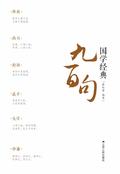 Nine Hundred Sentences of Chinese Classics
This book is a careful choice for Chinese studies experts to popularize Chinese studies education. From the perspective of "cultivating the mind and cultivating one's nature, harmonizing the family and governing the country", this book selects classic quotes from the Four Books, Five Classics, and hundreds of schools of thought to meet the current urgent needs of Chinese people to understand the essence of Chinese studies, inherit traditional culture, and improve spiritual literacy. The content
48Reads8.5Score—Shelves
Nine Hundred Sentences of Chinese Classics
This book is a careful choice for Chinese studies experts to popularize Chinese studies education. From the perspective of "cultivating the mind and cultivating one's nature, harmonizing the family and governing the country", this book selects classic quotes from the Four Books, Five Classics, and hundreds of schools of thought to meet the current urgent needs of Chinese people to understand the essence of Chinese studies, inherit traditional culture, and improve spiritual literacy. The content
48Reads8.5Score—Shelves
-
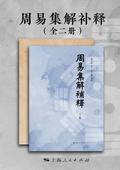 Commentary on the Zhouyi Collection (Two Volumes)
The traditional "Book of Changes" is mainly divided into two schools: Xiang Shu Yi and Yi Li Yi. In the Han and Wei dynasties, Xiang Shu Yi was the main school. Since Wang Bi came out, Yi Li Yi flourished, while Xiang Shu Yi declined. Its theory was preserved in the "Collected Commentary of Zhou Yi" by Li Dingzuo of Tang Dynasty. "The Supplementary Commentary to the Book of Changes" (two volumes in total) mainly contains the Xiangshuyi studies of the Han and Tang dynasties. It explains the "Zhou
48Reads9.0Score—Shelves
Commentary on the Zhouyi Collection (Two Volumes)
The traditional "Book of Changes" is mainly divided into two schools: Xiang Shu Yi and Yi Li Yi. In the Han and Wei dynasties, Xiang Shu Yi was the main school. Since Wang Bi came out, Yi Li Yi flourished, while Xiang Shu Yi declined. Its theory was preserved in the "Collected Commentary of Zhou Yi" by Li Dingzuo of Tang Dynasty. "The Supplementary Commentary to the Book of Changes" (two volumes in total) mainly contains the Xiangshuyi studies of the Han and Tang dynasties. It explains the "Zhou
48Reads9.0Score—Shelves
-
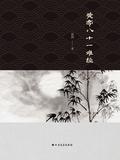 The Eighty-One Difficulties of the Yellow Emperor
Chinese traditional cultural thoughts have a long history and are highly original, original and literary. The early ideological forms were very distinctive, with extensive and profound contents such as religious theology, Chinese medicine classics, ancient military art, Confucianism, Taoism, Buddhism and hundreds of schools of thought, Feng Shui metaphysics, Twenty-Four Histories, customs and geography, etc. This series of "Original Books on Classic Chinese Studies and Essence Culture" retains t
48Reads9.1Score—Shelves
The Eighty-One Difficulties of the Yellow Emperor
Chinese traditional cultural thoughts have a long history and are highly original, original and literary. The early ideological forms were very distinctive, with extensive and profound contents such as religious theology, Chinese medicine classics, ancient military art, Confucianism, Taoism, Buddhism and hundreds of schools of thought, Feng Shui metaphysics, Twenty-Four Histories, customs and geography, etc. This series of "Original Books on Classic Chinese Studies and Essence Culture" retains t
48Reads9.1Score—Shelves
-
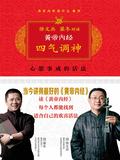 Huangdi Neijing: Four Qi to Regulate the Spirit
"Four Qi Adjusting the Spirit" is the second chapter in the "Huangdi Neijing·Su Wen". This is a classic life science book that teaches us how to adjust our diet, life, and work according to the climate changes throughout the year, so that our body can absorb the positive energy from various environments better and faster, and thus live a strong and self-sufficient life. Rather than saying it is a wonderful analysis of a great Chinese classic, it is better to say that it is a human revelation abo
48Reads9.3Score—Shelves
Huangdi Neijing: Four Qi to Regulate the Spirit
"Four Qi Adjusting the Spirit" is the second chapter in the "Huangdi Neijing·Su Wen". This is a classic life science book that teaches us how to adjust our diet, life, and work according to the climate changes throughout the year, so that our body can absorb the positive energy from various environments better and faster, and thus live a strong and self-sufficient life. Rather than saying it is a wonderful analysis of a great Chinese classic, it is better to say that it is a human revelation abo
48Reads9.3Score—Shelves
-
 Immortal Health Secrets
Sutra Name: Immortal's Secret Technique of Health Preservation. It is said that Liu Jing, the minister of Huangmen, first taught it from Taibai Mountain in the second year of Zhao Yongning (357), and later corrected it by Baoyizi (Chen Xianwei), a Taoist priest in the Northern Song Dynasty. One roll. Original source: "Orthodox Taoist Canon", Dongshen Department's Various Techniques Category.
48Reads8.8Score—Shelves
Immortal Health Secrets
Sutra Name: Immortal's Secret Technique of Health Preservation. It is said that Liu Jing, the minister of Huangmen, first taught it from Taibai Mountain in the second year of Zhao Yongning (357), and later corrected it by Baoyizi (Chen Xianwei), a Taoist priest in the Northern Song Dynasty. One roll. Original source: "Orthodox Taoist Canon", Dongshen Department's Various Techniques Category.
48Reads8.8Score—Shelves
-
 The Essentials of the Golden Chamber
"Jingui Yaolue Prescriptions", referred to as "Jingui Yaolue", was written by Zhang Ji (Zhang Zhongjing) of the Eastern Han Dynasty. It was written around the beginning of the third century. It was originally the miscellaneous disease part of "Treatise on Febrile and Miscellaneous Diseases" and was once lost. The book consists of 3 volumes and 25 articles in total, covering 64 types of diseases and 262 prescriptions. The principle of treating the disease before it is diagnosed to prevent its spr
48Reads9.3Score—Shelves
The Essentials of the Golden Chamber
"Jingui Yaolue Prescriptions", referred to as "Jingui Yaolue", was written by Zhang Ji (Zhang Zhongjing) of the Eastern Han Dynasty. It was written around the beginning of the third century. It was originally the miscellaneous disease part of "Treatise on Febrile and Miscellaneous Diseases" and was once lost. The book consists of 3 volumes and 25 articles in total, covering 64 types of diseases and 262 prescriptions. The principle of treating the disease before it is diagnosed to prevent its spr
48Reads9.3Score—Shelves
-
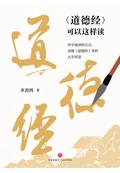 The Tao Te Ching Can Be Read Like This
Lao Tzu said, "The best good is like water." If you understand what is true and good, you can only act to benefit others and yourself; Lao Tzu said, "Knowing how to stop is not dangerous." If you know how to stop everything in moderation, you will not encounter danger; Lao Tzu said, "He who conquers himself is strong." A truly strong person is one who can constantly defeat himself: … The Tao Te Ching is known as the "King of All Classics", with its exquisite words and essence, containing great w
48Reads8.7Score—Shelves
The Tao Te Ching Can Be Read Like This
Lao Tzu said, "The best good is like water." If you understand what is true and good, you can only act to benefit others and yourself; Lao Tzu said, "Knowing how to stop is not dangerous." If you know how to stop everything in moderation, you will not encounter danger; Lao Tzu said, "He who conquers himself is strong." A truly strong person is one who can constantly defeat himself: … The Tao Te Ching is known as the "King of All Classics", with its exquisite words and essence, containing great w
48Reads8.7Score—Shelves
-
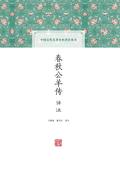 Chunqiu Gongyang Translation Notes
"Chun Qiu Gongyang Zhuan" mainly expounds the meaning and theory of "Chun Qiu", and also studies the literary theory and historical facts of "Chun Qiu". It is the earliest recognized biography among the "Three Biography of Spring and Autumn". This book is based on the Commentary on the Thirteen Classics. Each chapter is preceded by a title explanation. The annotations are precise and the translation is smooth and easy to understand.
47Reads8.3Score—Shelves
Chunqiu Gongyang Translation Notes
"Chun Qiu Gongyang Zhuan" mainly expounds the meaning and theory of "Chun Qiu", and also studies the literary theory and historical facts of "Chun Qiu". It is the earliest recognized biography among the "Three Biography of Spring and Autumn". This book is based on the Commentary on the Thirteen Classics. Each chapter is preceded by a title explanation. The annotations are precise and the translation is smooth and easy to understand.
47Reads8.3Score—Shelves
-
 Hold the Qijing
This work "Holding the Qi Sutra" is written by an unknown author
47Reads8.3Score—Shelves
Hold the Qijing
This work "Holding the Qi Sutra" is written by an unknown author
47Reads8.3Score—Shelves
-
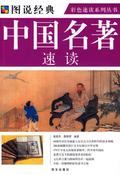 Speed Reading of Chinese Classics
This book is a reference book to help readers quickly learn and master Chinese classics. It selects 60 of the most famous, most valuable, most influential, and most widely circulated classics in Chinese history. These works are must-reads for studying Chinese politics, economy, military, medicine, science and technology, etc. The editor has set up columns such as "Author Introduction", "Background Tips", "Content Summary", "Reading Guide", "Work Evaluation", "Celebrity Reviews", "Celebrity Quote
47Reads8.6Score—Shelves
Speed Reading of Chinese Classics
This book is a reference book to help readers quickly learn and master Chinese classics. It selects 60 of the most famous, most valuable, most influential, and most widely circulated classics in Chinese history. These works are must-reads for studying Chinese politics, economy, military, medicine, science and technology, etc. The editor has set up columns such as "Author Introduction", "Background Tips", "Content Summary", "Reading Guide", "Work Evaluation", "Celebrity Reviews", "Celebrity Quote
47Reads8.6Score—Shelves
-
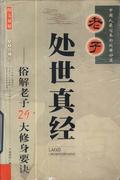 Lao Tzu's Scripture on Life - Popular Interpretation of Lao Tzu's 29 Tips for Self-Cultivation
This book adheres to the principle of making the past serve the present, and uses a new perspective and popular and poetic language to explain Laozi's philosophy of life, such as "great achievements are born from inaction" (sages do things without doing anything, and teach without words), "don't go too far after everything arises" (when the Tao is used, there is a surplus), "silence is gold, reticence is blessing" (talking too much is poor, it is better to stay in the middle), etc., Which inspir
47Reads9.3Score—Shelves
Lao Tzu's Scripture on Life - Popular Interpretation of Lao Tzu's 29 Tips for Self-Cultivation
This book adheres to the principle of making the past serve the present, and uses a new perspective and popular and poetic language to explain Laozi's philosophy of life, such as "great achievements are born from inaction" (sages do things without doing anything, and teach without words), "don't go too far after everything arises" (when the Tao is used, there is a surplus), "silence is gold, reticence is blessing" (talking too much is poor, it is better to stay in the middle), etc., Which inspir
47Reads9.3Score—Shelves
-
 Lingbao Jingming's New Secret Method of Cultivating the Seal of the Nine Elders to Subdue Demons
Lingbao Jingming newly cultivates the secret method of subduing demons with the seal of the Nine Elders. Written by He Shoucheng of Song Dynasty. One roll. Original source: Method Category of Dongxuan Department of "Orthodox Taoist Canon".
47Reads8.6Score—Shelves
Lingbao Jingming's New Secret Method of Cultivating the Seal of the Nine Elders to Subdue Demons
Lingbao Jingming newly cultivates the secret method of subduing demons with the seal of the Nine Elders. Written by He Shoucheng of Song Dynasty. One roll. Original source: Method Category of Dongxuan Department of "Orthodox Taoist Canon".
47Reads8.6Score—Shelves
-
 Baopuzi Outer Chapter
Baopuzi said: In the past, I traveled to the mountains of Yuntai, where I built comfortable people and met officials there. The official said: "Obviously, I am in charge of the eight tyrants, and the Chinese and barbarians have returned together, so I have to serve in the wilderness; while I traveled to Baicheng to practice martial arts, I mingled with the birds and beasts. However, the customs of the times have changed, and the affairs of the world have not been restrained. Therefore, those who
47Reads9.2Score—Shelves
Baopuzi Outer Chapter
Baopuzi said: In the past, I traveled to the mountains of Yuntai, where I built comfortable people and met officials there. The official said: "Obviously, I am in charge of the eight tyrants, and the Chinese and barbarians have returned together, so I have to serve in the wilderness; while I traveled to Baicheng to practice martial arts, I mingled with the birds and beasts. However, the customs of the times have changed, and the affairs of the world have not been restrained. Therefore, those who
47Reads9.2Score—Shelves
-
 Taixuan Book
. No author. Three volumes. Original source: Taixuan Department of "Orthodox Taoist Canon". Collated version: "Tao Zang Ji Yao", included in the fifth volume of the upgraded collection.
47Reads8.7Score—Shelves
Taixuan Book
Taixuan Book. No author. Three volumes. Original source: Taixuan Department of "Orthodox Taoist Canon". Collated version: "Tao Zang Ji Yao", included in the fifth volume of the upgraded collection.
47Reads8.7Score—Shelves
-
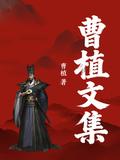 Collected Works of Cao Zhi
He is the son of Cao Cao and the younger brother of Cao Pi, but he has been trapped in the shackles of imperial power all his life; he is the pinnacle of Jian'an character, a legend of a poem in seven steps, and the brightest meteor in the history of Chinese literature - "The Collected Works of Cao Zhi" contains not only poems, but also the monologue of a genius' soul torn apart by the times. This anthology brings together the essence of Cao Zhi's life: the heroic "White Horse" depicts the chiva
47Reads8.5Score—Shelves
Collected Works of Cao Zhi
He is the son of Cao Cao and the younger brother of Cao Pi, but he has been trapped in the shackles of imperial power all his life; he is the pinnacle of Jian'an character, a legend of a poem in seven steps, and the brightest meteor in the history of Chinese literature - "The Collected Works of Cao Zhi" contains not only poems, but also the monologue of a genius' soul torn apart by the times. This anthology brings together the essence of Cao Zhi's life: the heroic "White Horse" depicts the chiva
47Reads8.5Score—Shelves
-
 Historical Records
"Historical Records" is a biographical history book written by Sima Qian, a historian of the Western Han Dynasty. It is the first biographical general history in Chinese history. It records a history of more than 3,000 years from the legendary Huangdi era to the fourth year of Emperor Wu of the Han Dynasty.
46Reads9.2Score—Shelves
Historical Records
"Historical Records" is a biographical history book written by Sima Qian, a historian of the Western Han Dynasty. It is the first biographical general history in Chinese history. It records a history of more than 3,000 years from the legendary Huangdi era to the fourth year of Emperor Wu of the Han Dynasty.
46Reads9.2Score—Shelves
-
 The Complete Works of Sun Tzu's Art of War: Strategies for Decisive Victory
"The Complete Works of Sun Tzu's Art of War" tells the story of strategizing and decisive strategies. "The Art of War" is my country's oldest military book and one of the world's military books. It is a dazzling treasure in China's classical military cultural heritage and an important part of Chinese cultural tradition. Its content is extensive and profound, its thoughts are profound and rich, and its logic is rigorous. It has always been highly respected and has numerous students. The whole boo
46Reads8.9Score—Shelves
The Complete Works of Sun Tzu's Art of War: Strategies for Decisive Victory
"The Complete Works of Sun Tzu's Art of War" tells the story of strategizing and decisive strategies. "The Art of War" is my country's oldest military book and one of the world's military books. It is a dazzling treasure in China's classical military cultural heritage and an important part of Chinese cultural tradition. Its content is extensive and profound, its thoughts are profound and rich, and its logic is rigorous. It has always been highly respected and has numerous students. The whole boo
46Reads8.9Score—Shelves
-
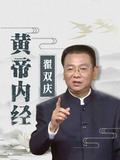 Yellow Emperor's Internal Classic
What good ways to maintain health can we learn from the "Huangdi Neijing"?
46Reads8.5Score—Shelves
Yellow Emperor's Internal Classic
What good ways to maintain health can we learn from the "Huangdi Neijing"?
46Reads8.5Score—Shelves
-
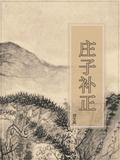 Zhuangzi's Correction
Liu Wendian, the author of Zhuangzi's Supplement and Correction, was born in Hefei, Anhui Province. During the Anti-Japanese War, he taught at Southwest Associated University in Kunming and Yunnan University. After the victory, the three schools of Southwest Associated University, namely Peking University, Tsinghua University, and Nankai University, moved back to their old locations in Peking and Tianjin. Mr. Liu stayed at Yunda University and died of illness in Kunming in 1958. He stayed in Yun
46Reads9.6Score—Shelves
Zhuangzi's Correction
Liu Wendian, the author of Zhuangzi's Supplement and Correction, was born in Hefei, Anhui Province. During the Anti-Japanese War, he taught at Southwest Associated University in Kunming and Yunnan University. After the victory, the three schools of Southwest Associated University, namely Peking University, Tsinghua University, and Nankai University, moved back to their old locations in Peking and Tianjin. Mr. Liu stayed at Yunda University and died of illness in Kunming in 1958. He stayed in Yun
46Reads9.6Score—Shelves
-
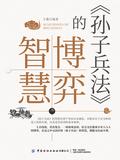 The Game Wisdom of "Sun Tzu's Art of War"
"Sun Tzu's Art of War" is a 2,500-year-old book on the art of war written by Sun Wu, a general of the Wu State whose ancestral home was Le'an, Qi State during the Spring and Autumn Period. Its content is broad and profound, its thoughts are sophisticated and rich, and its logic is rigorous and rigorous. It is a concentrated expression of the essence of ancient military thought. Now it has gone global and has been translated into many languages and published overseas. It also plays an important
45Reads8.9Score—Shelves
The Game Wisdom of "Sun Tzu's Art of War"
"Sun Tzu's Art of War" is a 2,500-year-old book on the art of war written by Sun Wu, a general of the Wu State whose ancestral home was Le'an, Qi State during the Spring and Autumn Period. Its content is broad and profound, its thoughts are sophisticated and rich, and its logic is rigorous and rigorous. It is a concentrated expression of the essence of ancient military thought. Now it has gone global and has been translated into many languages and published overseas. It also plays an important
45Reads8.9Score—Shelves