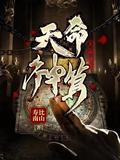
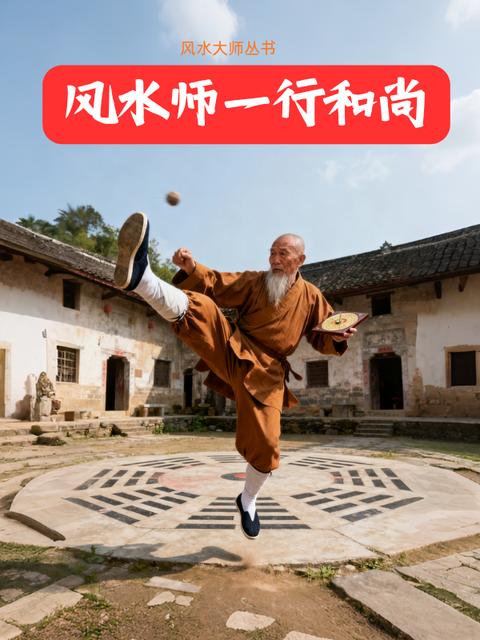
The Feng Shui Master, Master Yixing
Six-year-old Zhang Sui, later known as Master Yixing, squats beside a melon field and dispels the superstition that “the River God has sent disaster” with a single remark. He points out that the field has a deadly “reverse bow water” feng shui configuration. By reshaping the irrigation channel into an S, he turns misfortune into good fortune. Half a month later, the withered seedlings flourish again, revealing the makings of a feng shui prodigy. But who could have guessed that a stone tablet engraved with a star chart, unearthed during the canal work, would uncover astronomical secrets from the previous dynasty and attract the covetous attention of Wu Sansi’s faction? His flight to protect the treasure and escape danger begins.
As a youth, he breaks a trapped-dragon formation, recognizes cursed sites, and distinguishes false letters. He uses a bronze south-pointing compass to measure qi and mugwort to cleanse homes and drive away evil spirits. As an adult, he is ordered to compile a new calendar. In Chang’an, he sees through the baleful feng shui formation of the “Dragon-Slaying Mirror,” uses a flood in the Luo River to break the Burning Heaven Formation, and relies on his paired instruments, the armillary sphere and the Luo River Divine Map, to predict earthquakes, tsunamis, and volcanic ash, saving countless people from natural disasters. Against Persian sorcerers’ blood-sacrifice formations and Turkic cavalry cursed with blood magic, he breaks through with a combination of esoteric mantras and feng shui formations. He even travels to the Kunlun Mountains to seek the origins of the paired instruments and unlocks a protective formation for the world’s qi channels in the Mogao Caves, turning feng shui wisdom into a weapon for defending the nation and bringing peace to the realm.
But the crises never end. Remnants of Wu Sansi’s faction hide a nation-destroying talisman in the calendar; sorcerers from the Western Regions seek to freeze the Tang dynasty with a deep cold. Even volcanic eruptions in the distant island realm of Yingzhou, now Japan, and strange shifts in the qi channels of the Maya civilization in the Americas are connected to the Tang dynasty’s qi. Yixing pours his heart into writing A Guide to Surviving the Great Freeze and trains disciples to pass on his legacy. Before his death, he leaves behind a vision and a lesson: “A heart devoted to protecting the people matters more than instruments.” Yet on the paired instruments’ star chart, an anomaly in the qi channels pointing toward unknown seas continues to flicker; the Maya priests speak of “a disturbance at the global qi-channel junction.”

 I Held Up Banners and Livestreamed to Ruin My Ex-Husband's Reputation, Only to Learn the Truth After He Died!
 The Last 30 Days: We Agreed, Neither of Us Would Cry!
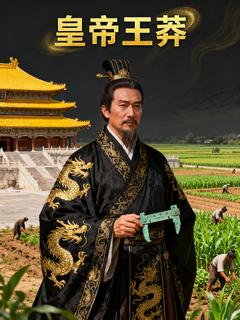 Transmigrating as Emperor Wang Mang
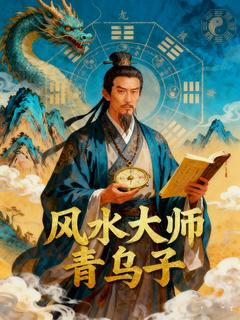 Feng Shui Master Qing Wu Zi
 Feng Shui Master Fu Botong
 Feng Shui Master Futu Hong
 Feng Shui Master Zeng Congzheng
 Feng Shui Master Liao Bing
 Feng Shui Master Zeng Hebin
 Feng Shui Master Liao Jinjing
 The Greatest Feng Shui Master in History
 Feng Shui Master Guan Lu