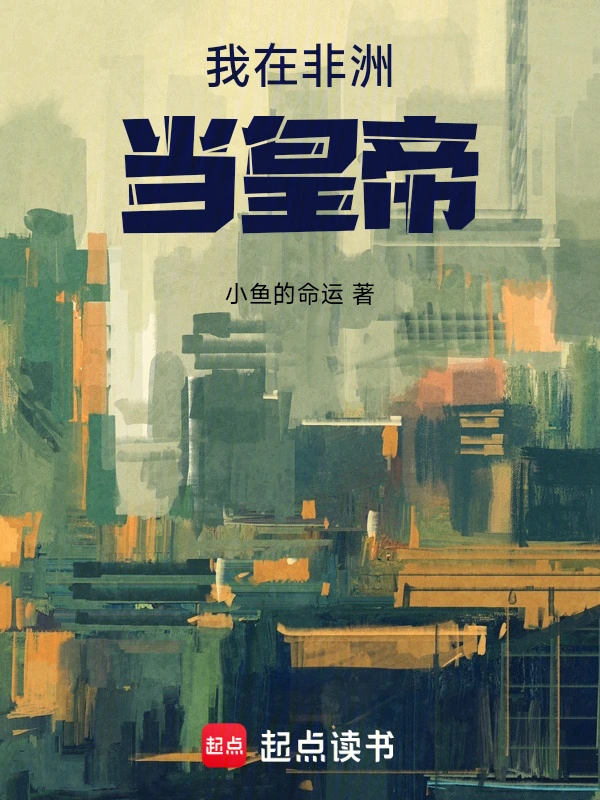
I Became Emperor in Africa
我在非洲当皇帝
- Status
- Ongoing
- Length
- 843k Words
- Genre
- Historical
- Audience
- Male
- Subgenre
- World History
- Updated
- 8h ago
- Source
- Qidian
Stats
289Chapters
493Votes
12.5kRecs
25.7kFans
Tags
Honours
Synopsis
More by this author
In booklists 2




Qidian's Major Franchises
A twenty-year veteran reader, recommending promising works from every genre. Readers are also welcome to recommend their own masterpieces in the comments. I'll read them all, and add suitable ones to the list.
52Books365Follows7dUpdated



My Personal Picks from Qidian
No chasing trending hits here, just hidden gems I've read word by word and truly loved. I picked each one for myself, with readers who love stories as much as I do in mind. I hope we'll meet here and share an exciting journey.
47Books43Follows13dUpdated
Readers also read
 Red Mansion: I Studied Abroad in Modern Times
 Traveling Through the Water Margin: Starting with Rescuing Wu Dalang
 The Nine Tripods
 Red Mansion: Pretending to Be an Ancestor of the Jia Family
 Dating My Manager Is Forbidden
 I Became the Founding Father of America
 Transmigrating to 1570: The Rise of South America
 Yu-Gi-Oh!: The Boss Is Actually Me
 Martial Saint: My Hard Work Has Paid Off
 1912 Starting from Southeast Asia
 I Am a Great Power
 The Winds of 1898: Building a Warlord Empire in the Nanyang
 Back in the Past to Become a Tycoon
 The Opening Deduction, American Tycoon
Population required by industrial countries
1. Definition of core concepts The industrial countries referred to in this article are not simply economies with a small number of processing plants. They need to establish a large modern machine industry, have a complete military industry system, and be able to independently produce guns, ammunition, steel, and railway equipment, and be able to independently mobilize a modern army and navy; agricultural colonies that rely solely on exporting raw materials are excluded. Two and three core conclusions 1. Shallow industrialization (military industry is semi-autonomous and relies on imports for a large amount of equipment): the general lower limit is 8 million-10 million people; 2. A complete industrial country (can independently conduct major power wars and has a complete military Industry-steel-chemical industry chain): The safety threshold is more than 25 million people, and the ideal scale is more than 40 million people; 3. Population less than 5 million: Regardless of natural resource endowment, it is almost impossible to build a complete modern industry, and only a dependent processing economy can be developed. 3. The underlying logic of the era: Modern heavy industry was a hard consumption of manpower Heavy industry in 1900 was labor-intensive + resource-intensive. A complete industrial country required five types of manpower support: 1. Agricultural population: produce food to support urban workers, the army, and bureaucrats, and avoid food crises caused by wartime maritime blockades. 2. Industrial workers: Serving mining, steel, chemical industry, railways, ports, heavy industry requires a huge amount of manual labor. 3. Technical intellectual class: engineers, chemists, military officers, and administrative staff, adapted to new technologies of the second industrial revolution such as chemical industry, artillery, and electricity. 4. Mobilizable troops: The army can be recruited during wartime, but workers in mines and arsenals are key positions and cannot go to the front line in large numbers. 5. Domestic market and tax population: Provide a tax base to support national investment in railways, ports, arsenals, and education. Important Reality: Not the entire population can be converted into workers. In the advanced industrial countries of Western Europe, the urban industrial and commercial population only accounts for 30-45% of the total population, and the remainder is the agricultural population. Taking a total population of 10 million as an example, the urban population is only 3-4 million, and the real industrial workers are only 1-1.8 Million. Distinction between the fourth and third types of economies 1. Dependent processing economy: It only has light industries such as textiles and food, and all steel and weapons are outsourced. It is not an industrial country. 2. Shallow semi-industrial countries (partially industrialized): can smelt pig iron, manufacture rifles, and small artillery; high-grade alloy steel, large warships, and key chemical raw materials need to be imported, and can maintain railways, but heavy-duty locomotives rely on outsourcing. 3. A complete sovereign industrial power: a complete closed loop of mining, smelting, machinery, chemical industry, and military industry. It can independently manufacture battleships, heavy artillery, and smokeless gunpowder. It can largely get rid of overseas imports during wartime. 5. Population threshold and cases of shallow semi-industrial countries 1. Extreme exception: Belgium (local population of 7.6 Million) Belgium has strong industrial strength, but this model cannot be copied. Dependence: Close to France and Germany, intermediate semi-finished products can be imported, the Belgian colony provides resource dividends, and products are exported to overseas markets; Weaknesses: It is unable to build its own main battleships and relies on imports of some special steel and chemical raw materials. Only under ideal external conditions, a population of more than 7 million can reach the threshold of semi-industrialization. 2. Ordinary independent country (no external dividends): threshold 8-10 million population. Take a hypothetical semi-industrial country with a population of 10 million as an example: agricultural population 6.5-7 Million; urban population 3.0-3.5 Million; industrial workers 1.2-1.6 Million; technocrats 15-250,000; field force mobilization limit 15-250,000. The shortcomings are obvious, including the inability to build heavy battleships and poor resistance to maritime blockade. 3. Negative case: Sweden has a population of 5.6 Million. Although Sweden has good iron ore resources and a certain foundation in the military industry, it imports a large amount of heavy machinery and chemicals, which can only be considered a shallow industrialization and cannot reach the level of a fully industrialized country. 6. Population threshold and manpower allocation of a complete industrial country 1. The lower safety limit is 25 million people, reference sample Austria-Hungary (51 million). The manpower structure of a population of 25 million: agricultural population 14 million-16 million; urban population 9 million-11 million; industrial workers 4 million-5 million; technical, military officers, and administrative personnel 50-700,000; a field army of 60-900,000 can be mobilized, while retaining core workers in the rear. Only at this scale can we simultaneously maintain blast furnaces, mines, chemical plants, arsenals, and shipyards, and take into account food self-sufficiency. If the population is less than 20 million, manpower will be highly stressed. 2. The ideal scale is more than 40 million people. Germany has 67 million, the British mainland has 45 million, and France has 39.6 Million. They have sufficient tax base, labor force, and military resources, and can withstand the huge consumption of major power wars. For example, France has excellent industrial technology, but its population is far less than that of Germany, which resulted in a gap in military strength during wartime and has long been plagued by insufficient population. 7. Other necessary conditions for industrialization (adequate population does not mean automatically becoming an industrial country) 1. Literacy rate and basic education: The literacy rate in Western European industrial countries is 80-95%; Russia in 1914 had a huge population of 170 million, but the literacy rate was only 20-25%. Its industry was concentrated in a few areas, and it was a semi-industrial country overall, relying on imports for a large amount of equipment. 2. Mineral resources: Coal and iron ore are the basis of heavy industry; for example, Japan's population has reached the standard, but local iron ore and coal are scarce, and a large amount of ore needs to be imported. 3. Capital and transportation infrastructure: Railways, ports, and mines require long-term and large capital investment. 4. Social structure: Serfdom and slavery will restrain the labor force and cannot release free industrial workers. 8. Special case: Japan (1914, population 52 million) Japan's population meets the population threshold of a complete industrial country and can produce its own heavy artillery, warships, and smokeless gunpowder. However, its shortcoming is that the local iron ore and coal are insufficient, and raw materials must be imported from overseas. This case proves that population is only a necessary condition, and resource shortcomings will still constrain the country's industrial development.
It starts in 1878, the protagonist is almost 20 years old, and there are still 6 years left for the Berlin Congress to carve up Africa. The timeline of this book is so long that it is written to the end of World War II. At this time, we hope to have an imperial system. You, a yellow race, build a republic in Africa. The protagonist with strong abilities can easily be manipulated by Western capital to dismember the country after his death. Then, yellow race people are divided into four categories like China at that time (first-class whites, second-class blacks, third-class browns represented by India, and fourth-class Chinese)
In Africa before 1880, European and American powers only occupied coastal areas. The Berlin Conference began to carve up Africa in 1884. They basically occupied Africa in about 30 years, resulting in nearly 30 million people from the end of the 19th century to the beginning of the 20th century. When black people enter the Americas, the protagonist has great potential. With Tangshan's sufficient immigrants, the Tang people's agricultural awareness, the construction of industrial civilization, and the protagonist's ability to create and manage, he can basically seize East Africa in 1900 and establish the foundation of a rudimentary industrial empire.
Xiaoyu writes about the founding of a country by plutocrats, using the perspective of a small person to participate in the management and development of the country. With the experience of the first two books, it should be more reasonable, and you can look forward to it first hand
Can the territory exceed that of being a police officer in South Africa? At least it is larger than this territory
Some fair evaluations of a competing book. This book avoids such problems
I read this novel for no other reason than
1. Please explain, is the story you gave the protagonist used to write erotic stories? When you encounter a useless Italian policeman and don't resist, you are immediately arrested? The handguns of the time could not hurt someone who was prepared. 2. A yellow man, in Southern Europe after the Second Opium War, the protagonist actually fantasizes about negotiating with others to save his life? Are you a kindergarten author? What are you fantasizing about? 3. You are also an old author, having written more than 10 million words. Not so brainless, right?
How can you immigrate if you don't have a boat? Do you know how much it costs to immigrate? If 100 people take a boat to Africa, it would be good if 50 of them survive.
I see a lot of people asking what to do with black people. Please refer to the book on entrepreneurship. Black people are used to build territory, and they will definitely be cleared later.
The total area of the five East African countries is nearly 2 million square kilometers.
Among the five East African countries, there is no one region in Africa with the most superior natural conditions and livable conditions. The five East African countries refer to the five countries of Tanzania, Kenya, Uganda, Rwanda and Burundi centered on Lake Victoria, the "Eye of Africa", and belong to the southern part of the broad East African geographical division. If we only consider the climate, topography, water and soil, temperature and humidity, and natural living environment provided by God, without any modern development factors, the five East African countries are undoubtedly the most livable, comfortable, and most suitable areas for human natural life in Africa. 1. Perfect temperature adaptation Most of the five countries are located on the East African Plateau and around the equator, with an altitude of 1,000 meters to 2,500 meters. The temperature is constant like spring all year round, with an average annual temperature of 18°C-24°C. There is no intense heat or severe cold, and the temperature difference between the four seasons is extremely small. It is a rare four-season constant temperature comfort zone in Africa. 2. Avoid the two extreme climate regions in Africa This is not like the Sahara Desert in North Africa, which is extremely dry, windy and sandy, and extremely hot in summer; nor is it like the Congo Basin in West Africa and Central Africa, which is characterized by high temperature and humidity all year round, muggy and sticky rain forest miasma. 3. Sufficient precipitation but neither wet nor dry Tropical plateau climate, uniform precipitation, dense rivers and lakes (Lake Victoria, East African Rift Valley Lake Group), sufficient water sources, neither desert drought nor rain forest stuffiness, and the body feels excellent. 4. Fewer epidemic mosquitoes The plateau altitude naturally suppresses mosquito reproduction. Compared with the tropical rainforests of West and Central Africa, the innate natural risks of malaria, tropical miasma, and poisonous insect breeding are much lower. 5. The terrain is livable and suitable for settlement and reproduction Mainly composed of gentle plateaus and savannas, with alternating mountains, river valleys, and flatlands, the land is fertile, the field of vision is broad, and there are no large areas of bitter cold frozen soil or contiguous deserts. It is the most suitable landform for human settlement in Africa. 6. Very few natural disasters There are no typhoons, hurricanes, sustained floods, extreme cold waves and snowstorms. There are only sporadic volcanoes in the local rift zone. The overall natural stability is far better than other regions in Africa. 7. Compared with economically developed island countries Indian Ocean island countries such as Seychelles, Mauritius, etc., Although these countries are relatively economically developed, the islands are hot and humid all year round, have typhoon seasons, are small in area, and have a single terrain. In fact, their livability is far inferior to that of the vast and warm East African Plateau.
Even after writing so many books, I am still embarrassed to write because my strength really doesn't allow it.
Drive high and go low, the quality is getting worse and worse, it is a pity to abandon it, and it is tasteless.
As of Chapter 207, the map of the territory actually controlled by the bicycle troops after they expanded southward
I read a novel in which the protagonist, a Chinese, was a Chinese at the end of the 19th century. After occupying Cuba, his subordinates said that he should go to the monarchy, and other subordinates said that he should go to the republic. Then the protagonist said that he came to help the people live a good life, so he chose to go to the republic. Oh my God, it disgusts me to death. On the territory at the doorstep of the United States, and Chinese only account for one-third, they don't dare to build a republic. At that time, Cuba was a place dominated by white people, with blacks accounting for only a small half. Logically speaking, the ending of the protagonist will not be better than that of Ran Min, and the Chinese there will become slaves.
This opening... Are you sure it's the old author? He got penicillin out of nowhere and within a few hours. He said he didn't understand medicine, so he started human experiments on more than a dozen people. Even after he was imprisoned, he was very confident that he could cure more than a dozen sailors. Didn't the protagonist really know that he was doing human experiments? Those who don't know better think that they are using things provided by the system. I read a historical simulation novel, and it took more than half a month to simulate time, use royal resources, and create cultivation and equipment. They also tried their best to create a "sterile" environment. It depends on whether fate is tough or not. Shouldn't your genre be more sophisticated? Writing modern and contemporary literature is pure YY! How about giving the protagonist a system? At least it's reasonable
It must be an imperial system. If you play republic at this time, you will kill yourself.
The electric three-wheeler is so awesome to the author. If you can't justify the processing difficulty, just wait to abandon the book. That's from mineral collection and purification to physical manufacturing. You wouldn't think that making an electric three-wheel is really simple, right? If it were simple, it wouldn't have become popular since the 2000s. You wouldn't have thought of the oil crisis many times before.
The content is very poor, and the author does not know what penicillin is. And if you throw a scientist who is very skilled in making penicillin into it, the success rate of his production will not exceed 40%. Equipment determines success, not people. How do you say this? It's an event of betting on probability. You can be a magician and a liar, but you can't be a miracle doctor. You can't always ask your patient to win with a probability of 1/3. He can't always win. For many serious cases like this, well, it will take at least a dozen times. There is a 1/3 probability that if you draw the wrong one, you will die. In this case, if another terminal patient is cured, hundreds or even thousands of people will enter the lottery, and only one person will survive.
1. A lot of the plot feels the same as the one from 10 years ago 2. It is far different from the one in East Africa. East Africa at least explained the source of development funds (banks + Franco-Prussian War + American economic crisis + the birth of a German aristocrat and a local snake can ride on the German 2 Development Express). How much can this veteran military doctor earn? The cost of immigration is not small. The initial development of industry and agriculture requires funds, which cannot be obtained by farming, setting up a few factories, and selling a few bottles of medicine. 3. The Italian leather is not thick enough to fool the British. East Africa can also develop rad 2 + Austro-Hungarian and German leather. How can it prevent the British when it is developed? 4. The Berlin Conference is coming soon. How can we hold on to this time? Even if you hold on to the late stage, how can you develop to the surrounding areas? The British 2c plan has stuck you (Egypt to South Africa). How do you develop to the central part? Below is Portugal (the younger brother of Great Britain, and Portugal also has a pink plan), and above is Ethiopia (Italian target). The most important thing is that you are on the coast of the Indian Ocean, which is the core interest of the British. Once it develops to threaten the security of the Indian Ocean, the British will attack you (in this era, the Indian Ocean is the core interest of the British, France is only developing in Indochina, and the British will immediately attack Burma to separate India from Indochina). The timing of choosing the protagonist is really bad 5. Even if the protagonist wants to be the younger brother of Great Britain, Great Britain in the mid-Victorian period simply doesn't like the protagonist
Without air conditioning, no industry could develop in tropical Africa. Even if black people are used as consumables, the machinery cannot withstand continuous high temperatures.
There are too many loopholes in historical time-travel novels. A modern person, who accidentally traveled to ancient times, can just remember so many details in history (better than a history expert). With thousands of years of history, it is impossible for historical experts to remember every detail of a certain period of history in just a few years. Unless he is a historical expert who specializes in a certain period of history, does the protagonist who travels through time happen to be a historical expert who specializes in a certain period of history? Don't say that the protagonist was a lover of historical novels before time travel. Don't be ridiculous. Historical details are not something that historical novels can cover, it's not the same thing at all! Even if the protagonist happens to be an expert specializing in the history of a certain period. If you travel to ancient times, what can you do? This involves another big loophole in historical fiction. The protagonist can draw drawings of various machines and weapons, understand metallurgy and metal processing, chemical industry, and improve agricultural tools. In fact, these loopholes can be easily solved. When the protagonist goes to sleep at night, his consciousness leaves the body and returns to the modern world. If you don't understand something, you can look up information in the modern world. This solves various loopholes in historical time travel novels. {"NickName":"Restriction and Supervision","UserId":417773267}
For immigrants, you can be a second-rate trafficker.
There are quite a lot of Chinese in Nanyang. Recruiting people from Nanyang is feasible in one province and two provinces.
Haha/Chinese people in the 18th century still dreamed of being a chaebol abroad? 🙂What kind of brain circuit is this? Why do you dominate? Indian companies have guns and ships. 😁Who can you hire if you have money?
There should be more maps with important cities and transportation routes marked. After all, most readers are not familiar with Africa.
Clan House Records
The protagonist: Liu Yide (1858-) travels to Genoa, Italy in 1878. He is about 20 years old at the beginning, so his birth year is set as 1858. Chemist, inventor, and now Governor of the Italian Africa Company. Madams: 1. Monica Cornaro, whose birth date is unknown, is the principal wife of the protagonist, the successor of the former Duke of Cornaro of the Kingdom of Sicily, and the owner of the Italian Africa Company. In the autumn of 1878, she married Liu Yide on the ship returning to Regina from France, and gave birth to a son in the summer of the following year. 2. Nina, whose birth date is unknown, is French, was the Duke of La Vita before the Revolution, and was Monica's best friend. She gave birth to a son in 1879. 3. Fatima Ismail (1853-), an Egyptian princess, met Liu Yide when she mistakenly boarded a ship to East Africa in the spring of 1878. Children: 1. Liu Zonghan (1879-), the eldest son, his mother is Monica. 2. Liu Zonglin (1879-), the second son, a concubine, 4 months younger than Liu Zonglin, his mother is Nina.
What a coincidence
Being a police officer in South Africa is pretty good, driving the black people to the north, and then the south is full of yellows and whites. But that book is a bit British.
Why is this book so slow? Is the author doing it just for the sake of word count, or because he has to write in such detail?
This author's book has more water than just water