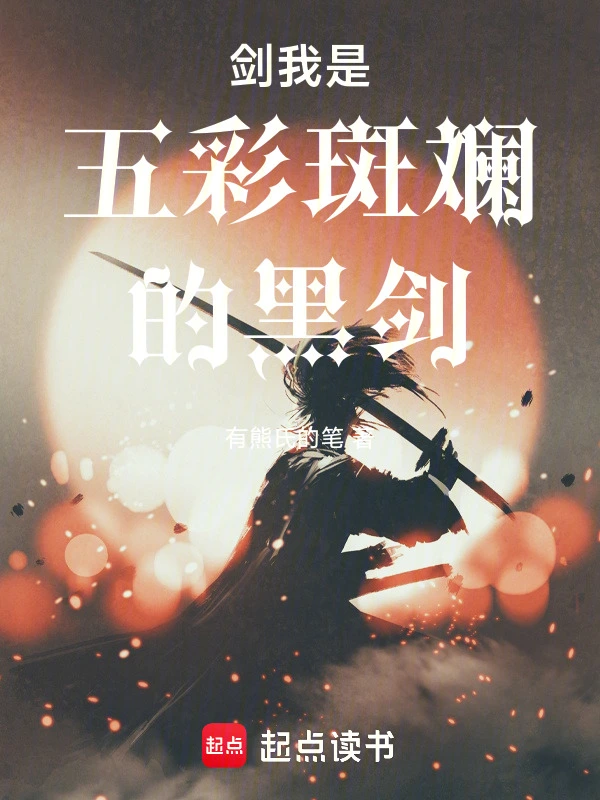
Sword: I Am a Colorful Black Sword
剑:我是五彩斑斓的黑剑
- Status
- Completed
- Length
- 160k Words
- Genre
- Cultivation
- Audience
- Male
- Subgenre
- Mythic Cultivation
- Updated
- 4mo ago
- Source
- Qidian
Stats
0Monthly votes
6Recommends
0Fans
37Chapters
Synopsis
Reader comments
Readers also read
 Something's Wrong with My Seventy-Two
 Indiscriminately Pretending to Be an Immortal: Mr. Nan Guo's Notes on Evil Cultivation
 Taking Qi and Nourishing One's Nature, One Can Become an Immortal from the Time When He Was a Boy Copying Scriptures.
 Act Accordingly
 Writer's Manual
 Immortal Road Zongheng
 Cultivation of Immortality Begins from Shushan
 Gou Zai Tian Starts from the Dark Buddhism Gate
 Lao Ji, Help Me Become an Immortal
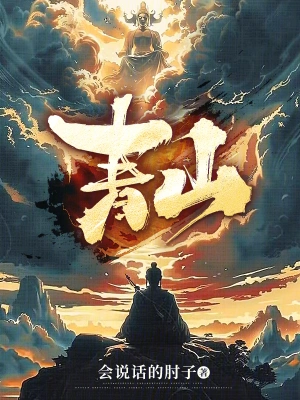 Green Hills
 Xuanjian Immortal Clan
 Alien Hotel
 Artifact: Xiong's Time and Space Scroll
 Cosmic Sociology Report
Zheng Gong talks about China's three thousand years of history
Zheng: In the three hundred years of the Spring and Autumn Period, thirty-six kings were killed and more than fifty countries were destroyed. However, there were countless people who did not protect the country and ran for their lives. And this is China's pain. However, looking at the pain of this, many schools of thought such as softness, Confucianism and Legalism, Bing Mo, Yin and Yang, agriculture, and novels were developed. In the Spring and Autumn Period, the Five Hegemons competed for supremacy, the show of the Warring States Period, and the Seven Heroes competed for the world. After passing through the Chu River and Han Dynasties, although they were unified in the sky, there were endless disputes for more than a hundred years, all of which were left behind by the king's masters. Then the three pillars were established. The two Jin Dynasties were in conflict, ravaged by the Five Hus, and the north and the south coexisted. The Sui and Tang Dynasties were open and prosperous. The two Song Dynasties were poor and weak, and the economy was complicated. However, the Yuan and Ming Dynasties fought endlessly, and the Qing Dynasty was still in the middle. Isn't its five thousand years of history a disaster? However, the ancestors of the Zhixian Ming Dynasty made it clear that burning the fire of life is to follow the law and principles, but there are twists and turns in the process without knowing how to count them, and there is no shortage of those who know the people's righteousness. Even if there is all kinds of love, it will be gone soon. A thousand years of work is not the fault of one person? It has been farming for eternity. Alas, the noble ones are born as human beings and become rich in the world, while the slaves are born as slaves. The heavens are slaves and are miserable, chaotic and bumpy. Analysis: This article has majestic charm and vigorous writing power. It can be called an epic essay that condenses the rise and fall of China's five thousand years of chaos. Taking the turbulent times of the Spring and Autumn Period as a guide, the author gives an overview of the changes in dynasties through the ages. He expresses his compassion for the sufferings of history, his admiration for the resilience of civilization, and his ultimate questioning of the way of nature and humanity. 1. Structure and context: with "pain" as the eye and "history" as the line The logic of the article is very clear, using the structure of **"total-point-total"**, and progressing layer by layer: 1. The beginning of the writing (the pain of the Spring and Autumn Period): The tragic data of "Thirty-six regicides, more than fifty country subjugations" are thrown out at the beginning, setting a sad and heavy tone for the whole text. He pointed out the "pain of China", but with a change of pen, he learned from the pain and gave birth to hundreds of schools of thought - it was the fission in the troubled times that gave birth to the brilliant explosion of Confucianism, Legalism, Bing, Mohism and other thoughts. This is the dialectical core of the full text: Suffering breeds civilization. 2. Layout (Thousand Years of Reincarnation): From the Five Hegemons of the Spring and Autumn Period and the Seven Heroes of the Warring States Period, we write all the way to the unification of the Qin and Han Dynasties, the rise of the Three Kingdoms, the two Jin and Southern and Northern Dynasties, the prosperous Sui and Tang Dynasties, the weak Song Dynasty, and the changes in the Yuan, Ming and Qing Dynasties. The author uses minimalist pen and ink to outline the historical cycle of "if a long time separates, it must unite, and if a long time unites, it must divide"**. The rhythm is very fast, like a long river rushing, and it is majestic. 3. Conclusion (asking about the way of heaven): The ending is sublimated, jumping out of the specific dynasty and pointing directly to the essence. - Question 1: Is the five thousand years of fighting chaos a "disaster of one cause"? (Is it the fault of the system?) - Question 2: Is the collapse of a thousand-year-old foundation "the fault of one person"? (Is it the sin of the monarch?) - Conclusion: None of it, but **"eternal cultivation"** (the natural cultivation and inevitable laws of the long history). - The ultimate sigh: Comparing "the nobles are rich in the world" and "the slaves are bumpy in the road", it expresses a sigh of class injustice and the impermanence of fate. 2. Language and literary talent: alternating white and white, desolate and tragic 1. The diction is refined and the allusions are precise: "Chu River and Han Boundary", "Three Pillars", "Conflict between the Two Jin Dynasties", "Ravage by the Five Hus", they can be easily picked up without too much explanation, and the historical picture is very strong. 2. Strong contrast: - "The Sui and Tang Dynasties were open and prosperous" vs "The two Song Dynasties were poor and weak, and the economy was complicated" (an accurate summary of the characteristics of the Tang and Song Dynasties). - "The noble ones are born as human beings and become rich in the world" vs "The noble ones are born as slaves" (directly striking at the essence of society, extremely impactful). 3. Strong emotions: The text often uses turning and exclamatory function words such as "ran", "sigh", "nai", "although", etc., Which makes it easy to read and sigh. It has both the grand narrative of history and the delicate sentimentality of the literati. 3. Depth of thought: transcending dynasties and pointing directly to laws The most rare thing about this text is the historical perspective. The author did not fall into praising or criticizing a certain dynasty, but saw: 1. Dialectical view of history: Troubled times (Spring and Autumn Period) were not only disasters, but also incubators of ideas. 2. Cyclical view of history: Acknowledging that the cycle of history cannot be changed by one person or one thing, but is the inevitable result of "eternal cultivation". 3. People-centeredness and compassion: Finally, it focuses on the suffering of "those who know the righteousness of the people" and the "servants" at the bottom, which reflects the care for the common people. 4. Minor flaws and suggestions (for reference only) - Some words are a little awkward or have typos. For example, "ancestors and sages burn out the sparks and legislate according to reason" is slightly abrupt. - The ending, "Heaven is a slave, and he is suffering, being turbulent," is a bit colloquial. If it is changed to "Heaven is a sentient being, he also pities the suffering and turbulent life of the people", the artistic conception will be more quaint. Overall review This is a masterpiece with strength, warmth and depth. The author has mountains and valleys in his mind, and wind and thunder hidden in his writing. In just a few hundred words, it describes five thousand years of vicissitudes, with both the rigor of a historian and the sentiments of a poet. Especially the question about the way of heaven and human life at the end is lingering and thought-provoking.
Chasing Dreams and Chasing the Moon, Chasing Songs by the Moon, Deng Yujun's version
Three visits to the thatched cottage, a song sung by Kong Ming 01:11 Three visits to the thatched cottage, a song sung by Kong Ming, who will wake up first to the big dream? I know myself all my life. I had enough sleep in the spring in the thatched cottage, and the sun was getting late outside the window. Qingqing Zijin, long in my heart, but for the sake of you, I have been thinking about it so far, how can I relieve my worries, only Du Kang, after Du Kang drank, I like to kill people in my dreams, Danxia and the bright moon, Chinese stars emerge from the clouds, hibiscus ponds are made, white jade hall blooms, peach blossoms are exchanged for wine money, wine, call my son, will be exchanged for fine wine, and I will sell the eternal sorrow with you!
Pangu's sword, Pluto's sword, life and death are all rules of life
The news on the first theme is an in-depth exploration of the philosophical connotation behind Pluto's sword. A reader with the ID "Xuanmen Disciple" wrote: "Pluto is both the incarnation of death, but he also understands the true meaning of life. This contradiction reminds me of Zhuangzi's view of 'life is the time of death'." Another reader signed "Quantum Observer" put forward a very interesting analogy: "Pangu opened up chaos just like quantum Fluctuation creates matter, and Pluto ends life, which is like the embodiment of the law of entropy increase. The two seem to be opposites, but in fact they together form a complete picture of the evolution of the universe. " I found that most of these readers have a deep philosophical or scientific background, and they can dig out deeper meanings from the appearances set by the master. Especially the discussion of the interdependence of life and death, which is mentioned in almost every letter. The email from ID "Prajna Practitioner" is particularly thought-provoking. He compared Pluto to the Samantabhadra Bodhisattva in the Avatamsaka Sutra: "Among Samantabhadra's ten great wishes, there is one that always obeys the wishes of all living beings. Although Pluto is in charge of death, it also obeys the flow of karma of all living beings. This kind of coexistence of compassion and majesty is the realm of the awakened person in Mahayana Buddhism." There is another. An anonymous reader analyzed it from a physics perspective: "Pangu represents a state of energy condensation, while Pluto represents a state of energy dissipation. Just like the theoretical models of black holes and white holes, one absorbs everything and the other releases everything, jointly maintaining the energy conservation of the universe." These interpretations made me realize that the created image of Pluto has gone beyond the category of a traditional villain. Readers spontaneously connect knowledge and characters in their respective fields, forming a rich and diverse interpretation space.