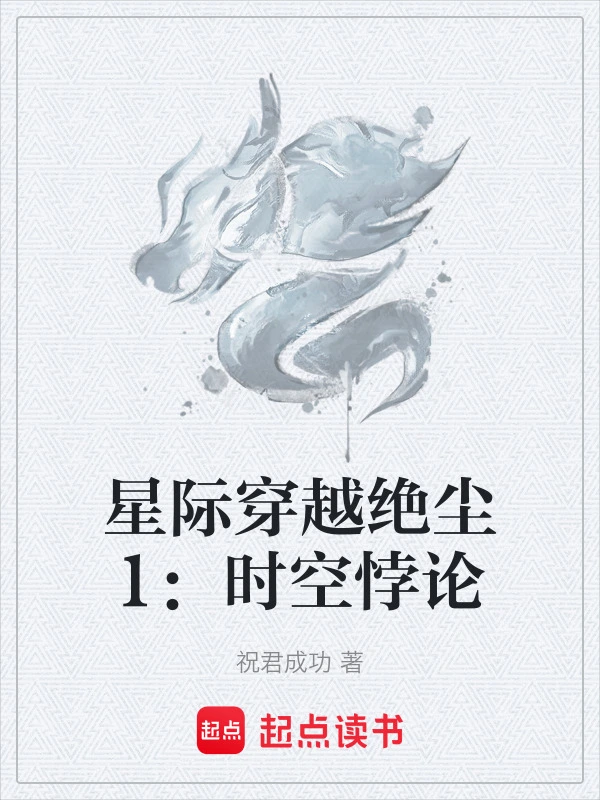
Interstellar 1: Paradox of Space and Time
星际穿越绝尘1:时空悖论
- Status
- Ongoing
- Length
- 1.6M Words
- Genre
- Eastern Fantasy
- Audience
- Male
- Subgenre
- Eastern Xuanhuan
- Updated
- 9mo ago
- Source
- Qidian
Stats
0Monthly votes
8Recommends
0Fans
240Chapters
Synopsis
Reader comments
Readers also read
 I Just Traveled Through Time and Became a Superman. Do You Think This Is the World of Immortality?
 Heaven Devouring Holy Demon
 Immortal Martial Arts Began with the Great Sui War God
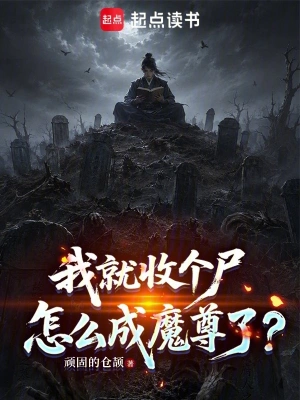 I Just Collected a Corpse, Why Did I Become a Demon?
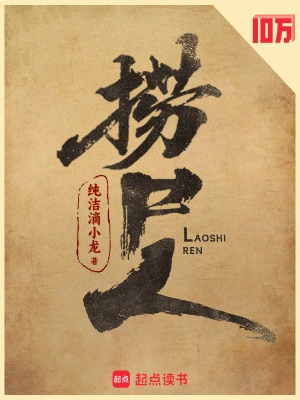 Corpse Hunter
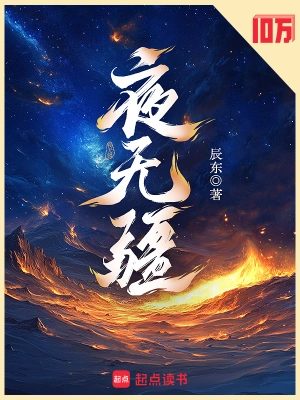 Night Without Borders
 How Can You Become an Immortal If You Don't Have Money?
 Alien Hotel
 99 Days Before the College Entrance Examination
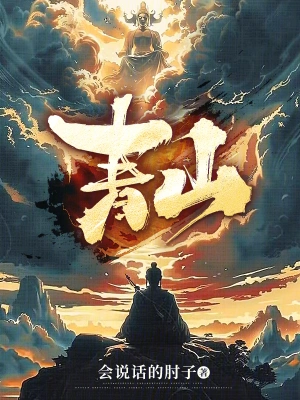 Green Hills
 Xuanjian Immortal Clan
 Become a God from Water Monkey
 Zhou Jun's Collection of Emotional Quotes and Poems
 Letters from the West Wind: Old Ways and Unsent Letters from Home
 Appreciation of Mr. Xingyun's Original Collection of Poems
 The Habitat of the Soul: Xingyun's Poetry
 Interstellar 2: Cradle of Decreasing Entropy
The dark river in the cloth pattern
"The Dark River in the Texture of Cloth" 1. Geology on the Loom The cloth spit out by the old loom Every warp and weft is a rubbing of the movement of the earth's crust. The waves of indigo are the suicide note of the receding tide of the ancient sea in the Third Age, The uncut threads are like dormant volcanoes, The anger that remains silent under the iron. When grandma's thimble scratches the satin surface, it always wakes up the Devonian fish— Those fossil lines are in the form of fibers, migratory in the cracks of the cotton yarn. 2. The time and space tunnel pierced by the needle When the embroidery needle penetrated the heart of the peony flower, the tip of the needle actually dug an underground river. The riverbed is formed by the nails of dyers of past generations, floating in the water are unopened engagement contracts, half of gunpowder formulas, and all washed and faded promises. The cat under the embroidery stand suddenly arched its back and growled. Its pupils reflected the scene at the bottom of the river: The copper coins sunk by the Ming Dynasty water miners were growing dark green algae eyelashes. 3. Cloth code and hydrological archives The densest stitches are hidden in the interlayer of the lining, Use Morse code to record the flood season. Whenever the plum rain soaks the south of the Yangtze River, these raised knots become braille, reciting the "Shui Jing Zhu" on a humid night. And that piece of homespun cloth that has been soaked in thirty-six heavy rains has long since evolved into a water storage organ - its texture can swallow the entire tributary of the Yangtze River, the unborn delta sleeps in its folds. 4. The mapping of the universe in the dye vat The dye vat is not only a container, it is also a shrunken chaotic system. When isatis root collides with alumite, nebula begins to condense on the cloth. The dark blue background color is the cosmic background radiation, the white spots are virtual particles that have not yet collapsed, and the purple spots that accidentally splash out, are just like the embers of a supernova explosion. When the cloth drying rack stretches across the courtyard, the Milky Way has a shadow on the ground. 5. Signs of rising tide in the underground river Thirty years after the cloth fermented at the bottom of the box, the underground river began to rise. First the salty smell oozes from the stitches, then all the embroidery threads automatically unravel, swimming back to the dye vat like a sea snake. Finally the whole piece of cloth flew into the air, wrapped in the dialect that my grandmother had not spoken, rushing towards the direction of the moon. Only a proverb made up of water stains is left on the ground: "The end of the cloth pattern is the home of all rivers." 6. The sound of weaving and geological rhythm The rhythm of the loom, is actually the breathing frequency of the continental plates. Every pedal impact corresponds to the rise of a certain mountain range. And the pi of the spindle rotation, is exactly the angular speed of the earth's rotation. When Grandma counted the nine thousand yarns, her wrinkles suddenly turned into contour lines - one of which pointed to the textile factory deep in the mantle, where there was flame silk spun from magma.
An ultimate symphony of reason and true love emotions
When a good book is closed, your world has just been opened - this is the wonderful experience brought by "Interstellar 1: Space-Time Paradox". It is not just a book, but an invitation to think about the universe, time and the nature of human nature. If your bookshelf is still missing a science fiction masterpiece that you can read again and again and discover new lands every time, then this is it. An ultimate symphony of reason and emotion When you open this book, you will first be shocked by its grand imagination. The author has constructed a time and space travel system that is logically rigorous and convincing. Different from those works that simply regard "travel" as a tool, "Paradox of Time and Space" takes "paradox" itself as the object of dissection. It does not avoid the most difficult causal problems in space-time theory, but bravely faces it, and uses exquisite plot design to weave these paradoxes into the core engine that drives the story. You will see the characters struggling in the torrent of time, and every tiny choice may be like a butterfly effect, setting off huge waves in the sea of stars a thousand years later. This rigorous deduction based on scientific hypothesis makes the whole story full of intellectual challenges and pleasure. But the most touching thing about this book is that it has an extremely warm heart wrapped in a cold and hard-core science fiction shell. It is essentially a story about "choice" and "price". When the survival of human civilization and the most precious emotions of individuals are placed at two ends of the scale, how should the protagonist make a choice? The author does not give cheap answers, but allows readers to suffer and think about moral dilemmas with the characters. You will cry for their courage, be heartbroken by their sacrifice, and be moved by the brilliance of their humanity that blooms in desperate circumstances. This perfect blend of rational thinking and emotional resonance is the most unique charm of this book. Three reasons worth collecting 1. A meticulously constructed imaginary universe From the physical principles of the spacecraft to the evolutionary logic of alien ecology, every setting can withstand scrutiny. The author uses words to build a sophisticated and magnificent museum of the universe. You can completely immerse yourself in it and believe in the authenticity of this world. This kind of solid world-building is the cornerstone of top science fiction works. 2. A group of flesh-and-blood "people" The characters in the book, whether they are scientists shouldering heavy responsibilities or alien pioneers struggling to survive, are not tools to promote the plot. They possess complex motivations, deep fears, and deep beliefs. You will understand their every decision and even see your own reflection in them. 3. A hymn dedicated to the human spirit In the endless scale of time and space, individual life is as small as dust, but it is the love, courage and sense of responsibility bursting out of this dust-like life that have become the strongest force against the cold laws of the universe. What this book ultimately leaves you with is not admiration for technology, but a deep respect for the indomitable spirit of human civilization. Who should add this book to their collection? • Science fiction lovers: If you love the conceptual sophistication and philosophical depth in the works of Arthur C. Clarke and Ted Chiang, this book will be a treasure for you. • Readers looking for in-depth reading: tired of superficial plots and eager for a work that can trigger long-term thinking and dialogue with oneself. • Every inner explorer: When you look up at the stars, you will question your own existence. This book will be an excellent guide on your journey of exploration. "Interstellar 1: The Paradox of Space and Time" is a mirror that reflects the majesty of the stars and the sea, and also reflects the truest humanity deep in our hearts. It deserves a prominent place on the bookshelf because the questions it raises are worth pondering over a lifetime. Open it, start an adventure through time and space, and re-understand human beings - this existence that is both small and great in the vast universe.