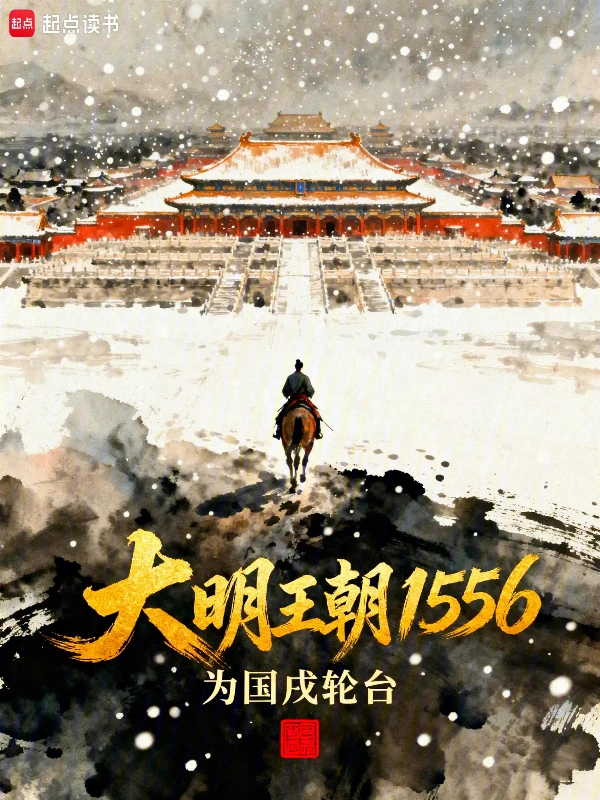
Ming Dynasty 1556
大明王朝1556
- Status
- Completed
- Length
- 1.4M Words
- Genre
- Historical
- Audience
- Male
- Subgenre
- Song-Yuan-Ming Dynasties
- Updated
- 2mo ago
- Source
- Qidian
Stats
0Monthly votes
29.7kRecommends
100.8kFans
348Chapters
Tags
Synopsis
Reader comments
In booklists 3
History Book List, Mainly History.
Mainly history. Full Stars: Ten stars, you can watch it from one star to the next.
48Books45Follows5moUpdated
Fishing Book List
Fishing time, easy reading ~
10Books35Follows5moUpdated


Guess, Guess, Tap, Tap, Tap, Tap, Tap, Tap, Tap, Tap, Tap, Tap, Tap, Tap, Tap, Tap, Tap, Tap, Tap, Tap, Tap, Tap
Color
89Books2Follows12dUpdated
Readers also read
 1914 Begins with the Rejection of the Schlieffen Plan
 Please Call Me Your Majesty the Tsar
 In the Red Mansion: Escort Daiyu to Beijing at the Beginning
 Talker in the Song Dynasty
 Daming: I, Yan Maoqing, Really Smoked
 Emperor of the Song Dynasty 1066
 Ming Dynasty Veterinary Medicine, Who Saved Zhu Biao's Life at the Beginning
 The Tang Dynasty Began with the Heian Shi Rebellion
 Reveal the Truth!
 Northern Song Dynasty: Starting from the Interception of Hu Zhaoji's Throne
 The Fierce Ministers of the Song Dynasty
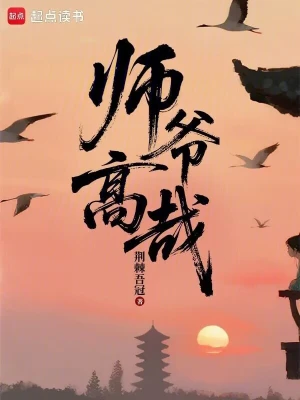 Master, Gao Zai
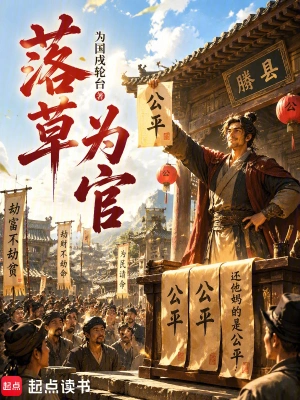 Become an Official
I want to know if this book is about purging the Donglin Party.
If the protagonist does not become the emperor, then the protagonist must carry out comprehensive changes that limit the emperor's rights. It is useless if the protagonist just copies the technology of later generations and adds a few reforms. If a country wants to produce a large number of original inventions and creations, it must carry out systematic changes in ideological foundation, political structure, legal system, social forces and other aspects. The reason why Britain was the first to enter the Industrial Revolution is that after experiencing the ideological changes of the European Renaissance, coupled with the British Glorious Revolution of 1688, the king's rights were further restricted. Britain established the framework of parliamentary sovereignty and the rule of law, and the bourgeoisie, the new aristocracy, and the king formed a check and balance, which allowed British civilians to gain unprecedented freedom. At this time, the degree of freedom of scholars, craftsmen, and farmers in Britain was higher than that of other European countries at the same time, and it was far more liberal than the civilians of China's Ming and Qing dynasties. The high degree of freedom of all British civilians fully inspired everyone's strength. The power of the Chinese emperor was not greatly restricted, and all officials, gentry and landlords were dependent on the imperial power. The freedom of civilians, who account for the vast majority of the country's population, is too low. This system inhibits innovation and hinders social development. China's Zhou Dynasty was a feudal system, and the central government could not control much of the local princes' affairs. The princes competed with each other. During this period, Chinese civilization truly allowed a hundred flowers to bloom. Most of the essence of Chinese civilization came from this period. During the Spring and Autumn Period and the Warring States Period, the "Mo Jing" recorded the principles of optics and mechanics, and the germination of geometry had emerged; the "Gan Shi Xing Jing" recorded astronomical observation data. But from the Qin Dynasty to the Qing Dynasty, there was almost no progress! The institutional innovation of the Spring and Autumn and Warring States periods stagnated after the Qin and Han Dynasties, lacking the ability to dynamically adjust. Since the Qin Dynasty, especially since the Han Dynasty deposed all schools of thought and only respected Confucianism, Chinese civilization has almost stood still and entered a dead end. The Zhou Dynasty and the Spring and Autumn Period and the Warring States Period were similar to the ancient systems of most European countries. They were all feudal systems. Even in successive years of war, less than 10% of the country's total population died directly or indirectly as a result of the war. But from the Qin Dynasty to the Qing Dynasty, every dynasty would kill half or more of the country's population due to war! What is even more tragic is that every time there is a change of dynasty, there is almost no progress in the system and culture! {"NickName":"Supervision and Restriction","UserId":406440657}
What mistakes are easy to make in historical novels❓ Before the Ming Dynasty, the emperor was not called "Emperor". In the Song Dynasty, he was mostly called "Guanjia", and in other dynasties, he was often called "Your Majesty". From the Ming Dynasty, the emperor was occasionally called "Emperor", and in most cases he was called "Your Majesty". After Kangxi of the Qing Dynasty, people began to be generally called "Emperor". Princes and princes call themselves: Princes in the pre-Qin and Han Dynasties can be called "Gu", and a few can be called "Ignores". After the Wei, Jin, Southern and Northern Dynasties, the title of "Ignores" gradually became exclusive to the emperor, and princes, princes and princes can only be called "Gu" or "I". Song, Yuan and Ming called themselves "I" or "I". Before the Qing Dynasty, princes and princes rarely called themselves "this king". Starting from the Kangxi year of the Qing Dynasty, princes generally called themselves "this king". In ancient times, women called themselves: "nujia" was a modest name for women after the Song Dynasty. Women in the Han and Tang Dynasties more often called themselves "concubine", and noble women could call themselves "I" and "I". Before the mid-Ming Dynasty, most dynasties used copper coins for daily transactions, with very little gold and silver. It was only in the mid-to-late Ming Dynasty that silver became the mainstream currency. -In the late Ming Dynasty, "meeting votes/deposit checks" appeared among the people. There were no unified rules. Most of them were deposits and withdrawals/exchange receipts from acquaintances or local circulation, and were not legal currency. In the early years of Daoguang in the Qing Dynasty (1823): Rishengchang Bank was established, and private banks began to issue standardized banknotes, focusing on cross-regional exchange. They were only circulated in Shanxi merchant trade circles and major commercial ports, and were not yet popular. In the third year of Xianfeng in the Qing Dynasty (1853): the official issued the Ministry of Revenue official banknotes (official banknotes), which were forced to circulate nationwide. At the same time, the network of private banknotes expanded to the whole country, and official and private banknotes ran parallel. The use of banknotes entered an explosive period and became the "starting point of popularization." High-leg tables and chairs only completely replaced the low tables for sitting on the floor in the Song Dynasty. During the Han and Tang dynasties, people knelt and sat on the tables to eat and discuss matters. The furniture was mainly low tables and couches. The memorial system was only established during the Kangxi period of the Qing Dynasty. Officials in the Tang and Song Dynasties used "memorials", "tables" and "statements" when submitting memorials, while in the Ming Dynasty they used "memorials" and "memorials". There is no such thing as "memo" or "zhezi". In ancient formal occasions, the hand-over gesture was performed with the left hand outside and the right hand inside. The right hand outside was a special "unlucky gift" for funerals. "Better greetings" is a unique etiquette of the Qing Dynasty. It was mostly used by subordinates to superiors and juniors to elders. During the Tang and Song dynasties, people often performed cross-hand salutes and bows to greet greetings when they met, and there was no such thing as "sending greetings". Before the Yuan Dynasty, lower-level officials rarely called superior officials "adult". In some dynasties, subordinates called eunuchs "adult", and in some dynasties, they called their parents and elders "adult". Beginning in the Yuan Dynasty, lower-level officials would occasionally call officials of second-rank and above "sir". From the middle and late Ming Dynasty, only officials of third-rank and above would be called "sir" by their subordinates. Officials with lower ranks could not be called "sir". However, in the late Ming Dynasty, there began to appear a few cases where officials above the fourth rank were called "adult". Before the mid-Qing Dynasty, following the rules of the Ming Dynasty, only officials of third rank or above would be called "adult". Starting from the mid-Qing Dynasty, calling officials "adult" gradually became common for lower-level officials. Attention! ! ! What is mentioned above is that lower-level officials refer to higher-level officials. No matter which dynasty, it is absolutely impossible for higher-level officials to call lower-level officials "sir". Some novels even write about emperors or nobles calling other officials "sir". This is simply contrary to Tiangang! ! ! Finally, let's talk about the problem of civilians calling officials Before the middle and late Qing Dynasty, civilians in various dynasties and generations called officials differently, and most of them called them "officials" and "masters". From the middle to late Qing Dynasty, civilians also called officials "adult". {"NickName":"Supervision and Restriction","UserId":406440657}
The more I read, the less likely I am to rebel. Historical novels really require rebellion to be enjoyable.
If the fiscal and taxation system can be improved, it will be a victory. Only when the central treasury has money can we have other possibilities for doing things. Otherwise, other reforms will be carried out directly. To be honest, unless a new interest class or group can be cultivated to fight against the conservatives whose interests have been harmed, the result will be the same. It is no different from Wang Anshi and Zhang Juzheng, and everyone will die and the government will cease. Shang Yang's reform was to cultivate a group of people who benefited from military merit to fight against the original aristocracy.
Ordinary people encountered ancient household registration in the Ming Dynasty
Unless you rebel, you will not be able to stand up and take part in the imperial examination. This is much worse than a temporary residence permit. In the final analysis, ancient cities simply cannot bear such a large population, and even modern cities were only abolished in the later stages. In ancient times, there was a shortage of jobs due to productivity and technology, and the upper-level leadership could not enter the age of navigation. They could only annex inland resources and job involution. Over time, factional struggles were inevitable. Referring to the modern small Smecta, the positions were not divided enough, let alone the bureaucratic positions in the agricultural economy. In order for the protagonist to start the Ming Dynasty windmill, it is estimated that he can only expand the land resources by expanding the property raids. Jiajing is very strong, and the later emperors actually opened the sea. If they don't open it, there is no profit. They simply open it and everyone makes their own money, but they can't go to the West like Yongle to eat alone. The emperors after Yongle seemed to be the referees in Jiajing, but the eunuch cholera court understood that they were actually competing for limited jobs 😄
It makes people feel that the Donglin Party is not so hateful anymore, because this kind of Ming Dynasty is not worth it
Highly recommended, a good book, a rare book. Conspiracy theories are popular nowadays. It is rare that this book leads the way. After reading it, I felt a sense of great righteousness in my heart, and the image of a noble gentleman appeared on the page. However, the update is too slow. If you keep up with it, one chapter a day is not enough.
The title of your book has been changed. The actions of the protagonist are not at all consistent with the Donglin Party in history. At the same time, there was no Donglin Party during the Jiajing period. If I hadn't read this book and saw this title, I wouldn't have the slightest desire to read it.
The writing is okay
Is it because the protagonist, an ancient man, thinks too hard? I feel completely integrated into the thinking mode of ancient people. I think it is better to retain the thinking mode of modern people? Also, I'm halfway through this book, which is full of plot lines. Temple struggle. In fact, I think that since we are modern people, we still have to take a more technical approach, and some uncomplicated technologies can still be used. After all, as a modern person, if you don't come up with some shocking creations of later generations, you will always feel that you are no different from a famous official in ancient times, and the sense of substitution is not enough.
Constitutional monarchy
Judging from the best result of the Ming Dynasty, it is estimated that the establishment of a constitutional monarchy. Through a series of reforms, political parties are cultivated. Promote agricultural industries, coupled with economic regulation, open up new territories in the maritime era, transfer internal conflicts, and finally establish a prime minister and cabinet and establish a constitutional monarchy.
Ask a question
Where does the author intend to place the Southeastern nobles? For example, is Xu Jie the BOSS?
Can you, the author, be more precise? Can you add more updates? ! !
I have forgotten the protagonist's wife
I'm curious, how will the protagonist resolve the emperor's accusation and restore his reputation?
After much deliberation, is it only you who choose to resign?
Two days later, it was a thrilling read. I just watched a few paragraphs of "The Ming Dynasty" a few days ago and got bored and started reading some articles. I didn't expect to see this. I found it interesting after reading the first few chapters. The author's skills become more extraordinary as he goes on. His favorite stories are collecting salt, controlling water, reducing vassals, scientific examinations, and beheading officials. They are all very exciting. I don't care if the author is slower. I just hope that the story can be complete. I like this story so much. How ideal it is. I love watching Lao Du fight with Taoist priests.
Come on, updates are too slow
I thought there would be an overthrow of the emperor or at least a constitutional system
I saw that the previous writing was about cultivating students and developing ideas, so I thought it would go in this direction in the end, but the ending was direct
Jiajing was actually the best time for the Ming Dynasty to break through the shackles set by the moth scar. Ming ministers are like clouds. The emperor is also smart. As long as Jiajing could have Chongzhen's diligence and perseverance, the Ming Dynasty might be able to live for more than a hundred years.
What's going on? The ending is gone? Should I change it?
This article is so well written, especially the part about controlling the Yellow River. It really shows the protagonist's momentum to risk his life to block the Yellow River. It's very shocking. I'll give you all the monthly tickets, come on!
I watched it all afternoon, and I charged 50 to finish it in one go. I was so happy with just one word.
Good book, recommended by a 20-year-old bookworm
When I first read this book, I thought it was a cliché and useless. Read it carefully, this book is worth reading Highly recommended
I've read the latest chapter, and it's not bad. I should praise or criticize. After writing, the author obviously knows what his readers like to read, and there is no such thing as bloody love. The old gods in the Qidian Historical District have come to an end one after another. The level of this book can be regarded as a god.
The embodied protagonist who creates peace for all eternity
The author just insists on updating it. I support it.
Author, can you please add more updates?
Next month's update will depend on whether you do a good job or not!
Please update more
Can you post more? I feel better soon. I feel comfortable watching them together.
I haven't read either of the two books. At first glance, I thought that one of you copied whom?
Things will get better in the future 😁, great gods can look forward to it